
Paris is easily one of my favourite cities in the world, and I’ve been photographing it for well over a decade. Every trip, I come back to the same spots and find new ways to shoot them, and every trip, I discover something new.
This is not a list of 40 Instagram spots. This is my personal pick of the locations I keep returning to with a camera, with the specific tips I’ve learned from shooting each one over the years: what lens to bring, what time to arrive, where exactly to stand, and what to watch out for.
Let’s get into it.
Table of Contents:
The Best Photography Locations in Paris
1. The Rooftop of the Arc de Triomphe
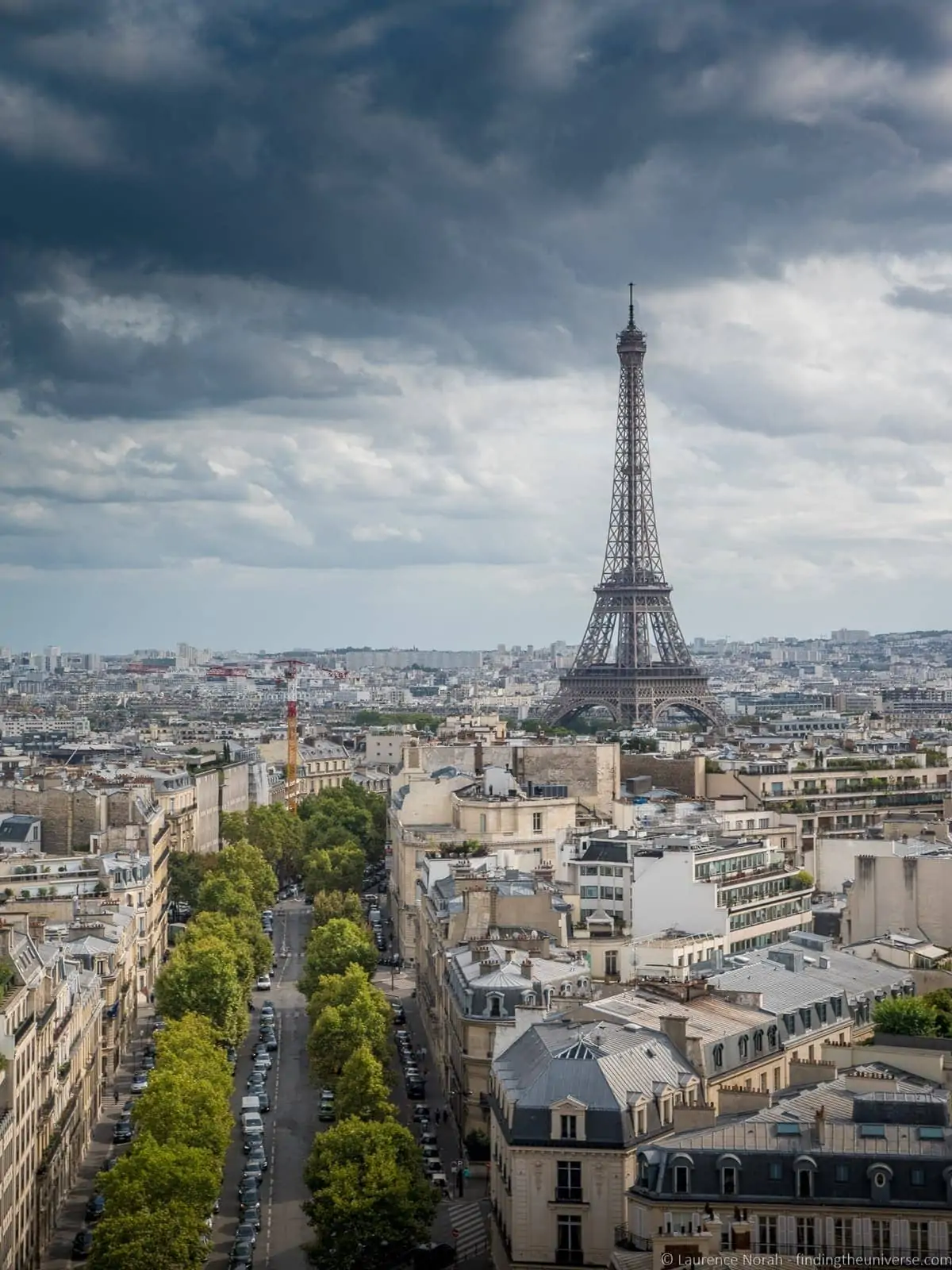
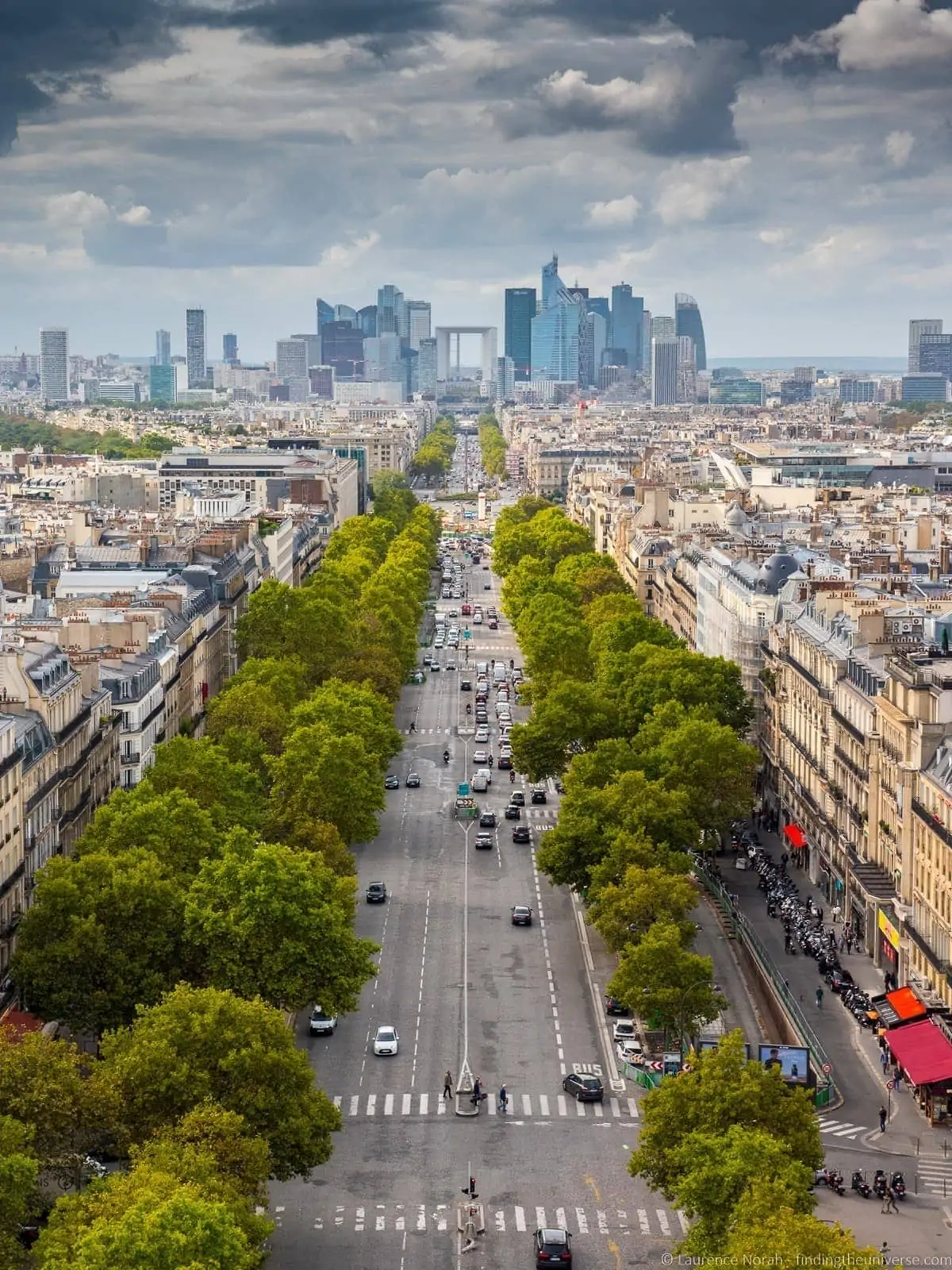
If you want one elevated view of Paris that puts the whole city into context, climb the Arc de Triomphe. The rooftop terrace sits about 50 metres above the Place Charles de Gaulle, and from up there you get a full 360-degree panorama: the Champs-Élysées stretching away in one direction, the Eiffel Tower perfectly framed in another, and the twelve avenues radiating outward like spokes of a wheel. Those avenues make for incredible leading lines in your compositions.
I love this spot at sunset, when the light catches the limestone buildings and the whole city turns gold. As the sun drops, the Eiffel Tower starts its sparkle, and the Champs-Élysées lights up below you. It’s one of those views where you could burn through a memory card without really trying.
A few practical things to know. Tripods are banned at the Arc de Triomphe (along with selfie sticks), so you’re shooting handheld. That means bumping your ISO higher than you might like and relying on your lens’s image stabilisation. I’d bring a wide-angle (my 16-35mm f/4 is perfect here) for the panoramic shots, and if you have a fast prime, it’ll help in the lower light after sunset. Shoot in burst mode during blue hour to give yourself the best chance of a sharp frame.
There are 284 steps to the top and no shortcut (the lift is reserved for visitors with reduced mobility). Budget 45 minutes to an hour for the full visit. Get there at least an hour before sunset to secure your spot and shoot through the light change. You can book rooftop entry tickets in advance on GetYourGuide, which I’d recommend to skip the queue. You’ll find the latest prices on the official Arc de Triomphe site.
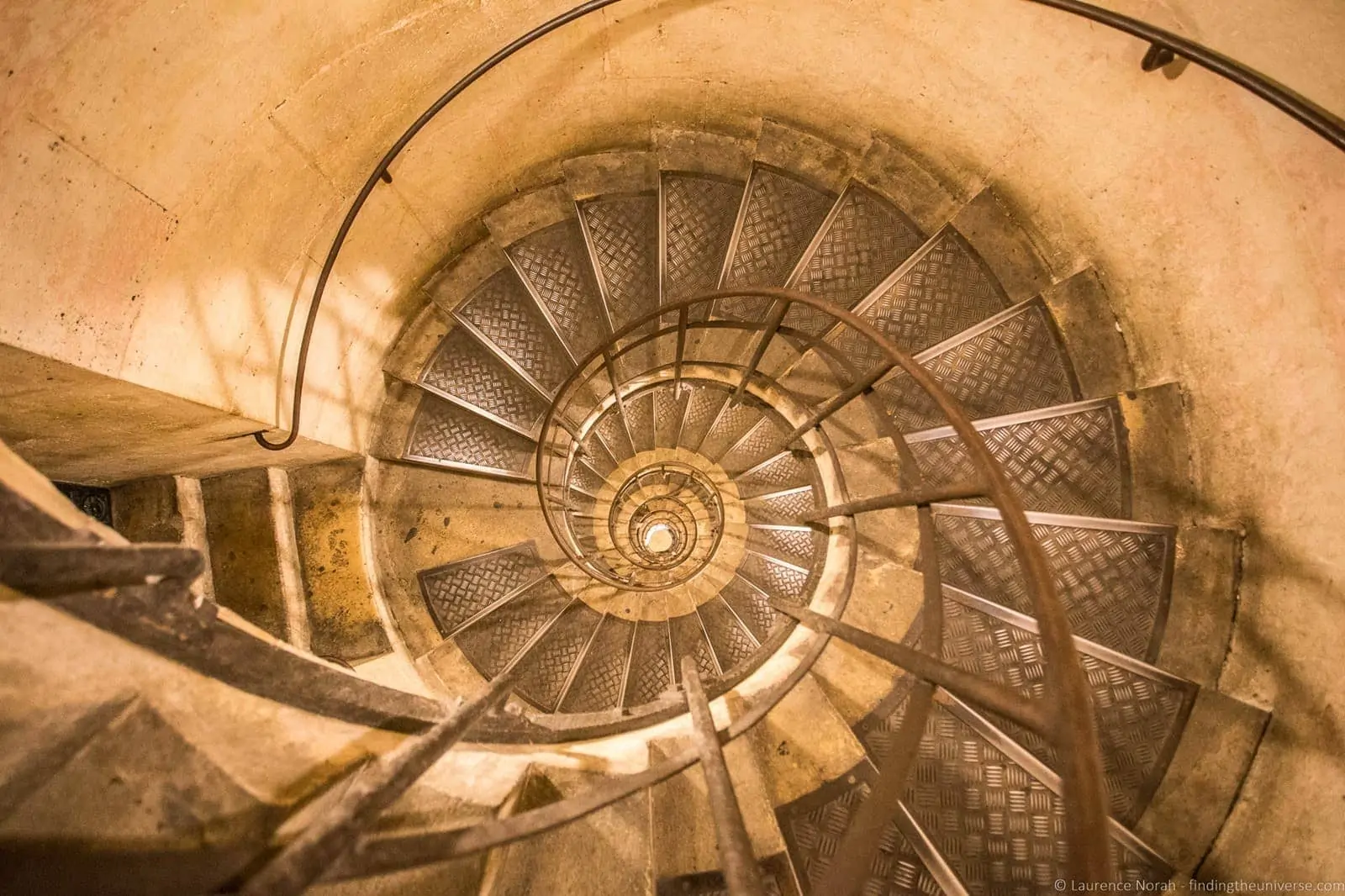
One more thing: don’t rush back down. The spiral staircase itself is worth a few shots looking straight down.
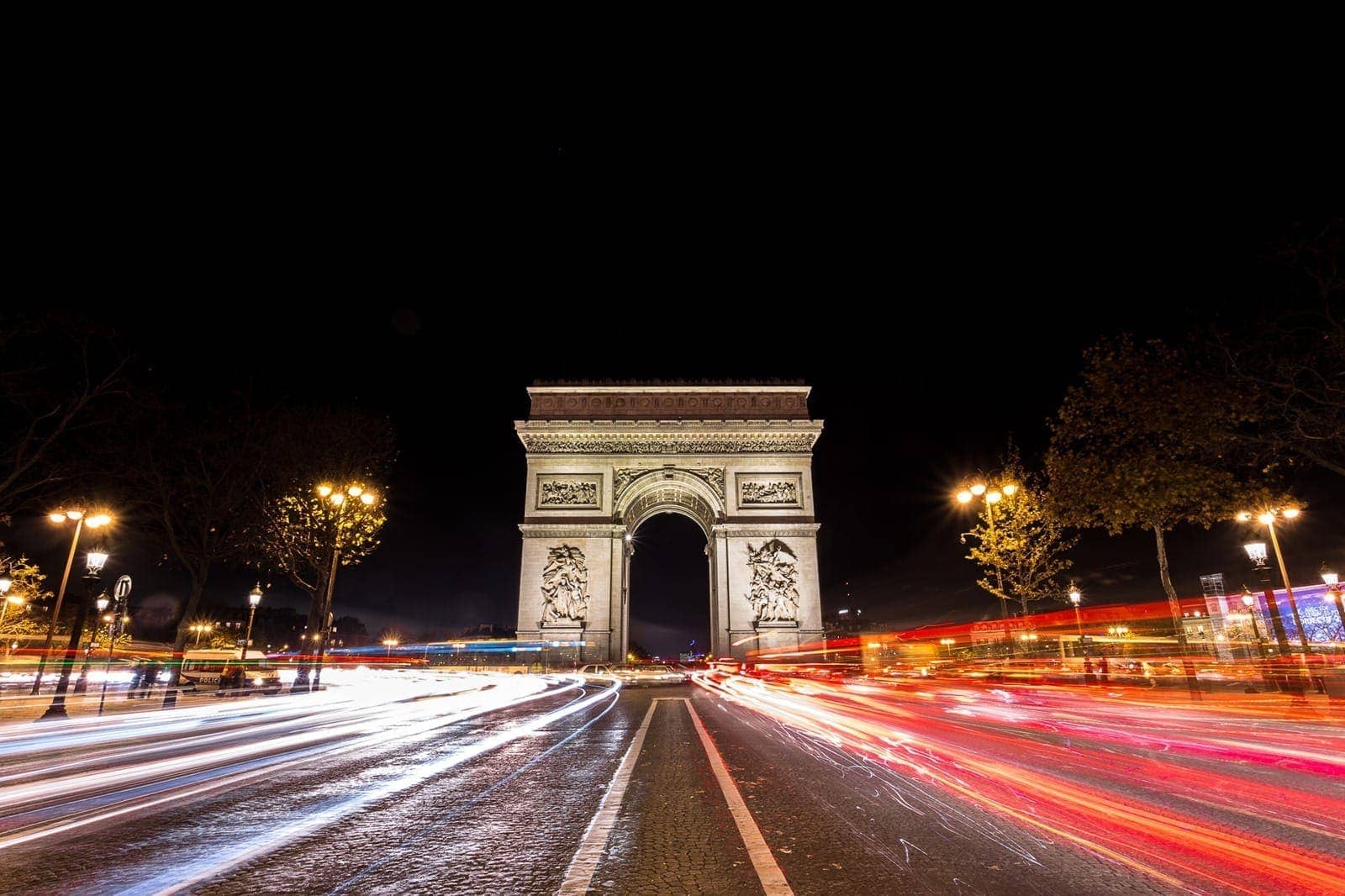
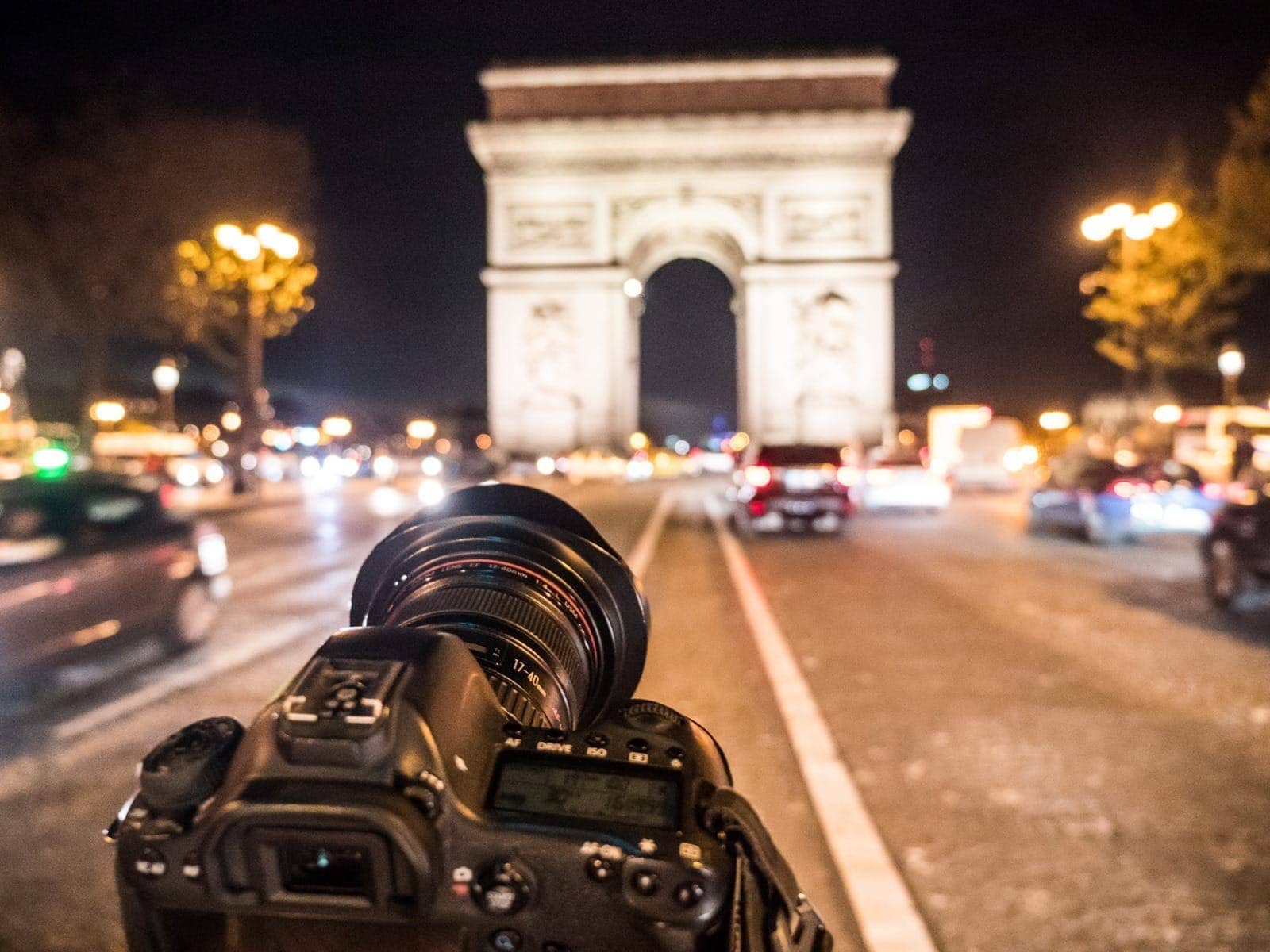
The Arc is also a brilliant subject from street level. My favourite shot is from a pedestrian crossing a short way down the Champs-Élysées, where you can set up a tripod and use a long exposure (2-4 seconds) to turn the car headlights and tail lights into streaming trails leading toward the Arc. This works best at dusk and into blue hour.
2. The Trocadéro
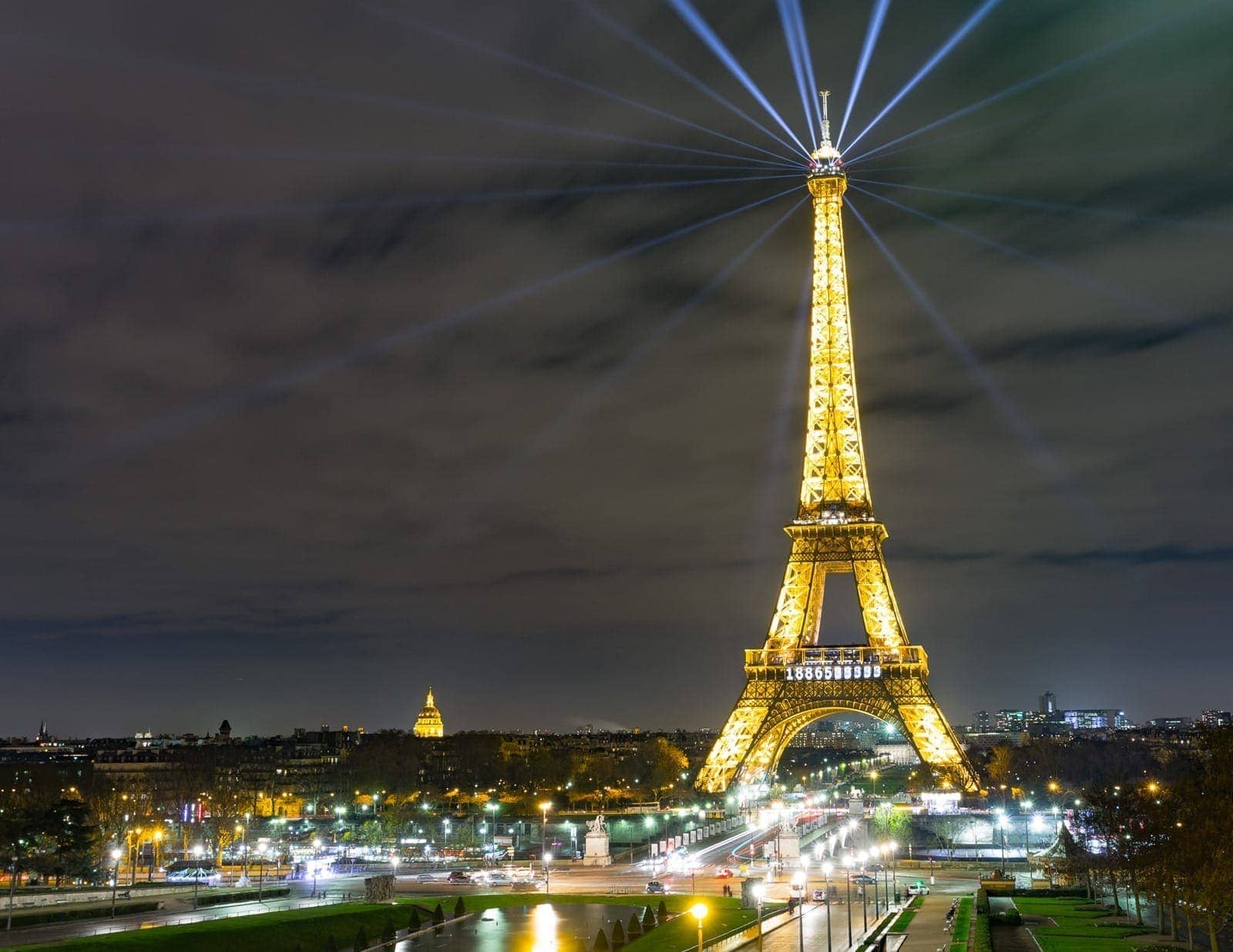
The Trocadéro is my favourite ground-level spot for photographing the Eiffel Tower, and it’s where I’ve taken some of my favourite Paris shots over the years. The elevated terrace across the river gives you a slightly raised angle on the tower, with the Jardins du Trocadéro and its fountains spreading out below.
Sunrise is the time to be here. Arrive around 30 minutes before first light and you’ll have the esplanade almost to yourself. As the sky brightens behind you, the tower catches the early warmth and the city has that quiet, just-waking-up quality that you can’t fake. By mid-morning the crowds will be thick and the light will be flat, so get here early or skip it until evening.
For lenses, I usually bring both my 16-35mm f/4 and 70-200mm f/2.8 here. The wide-angle gets the full tower with the fountains as foreground (when they’re running), and the telephoto lets you isolate details or frame the tower more tightly against the sky. A tripod is fine here, and if you’re shooting at dawn or dusk, you’ll want one.
When the fountains are going, they line up perfectly with the Eiffel Tower and make a great foreground element. Time it right and you can get the fountain spray catching the light with the tower behind it.
3. Along the Seine
The Seine runs through the middle of Paris, and walking along its banks is one of the best ways to find photographs. I keep coming back to a few spots in particular.
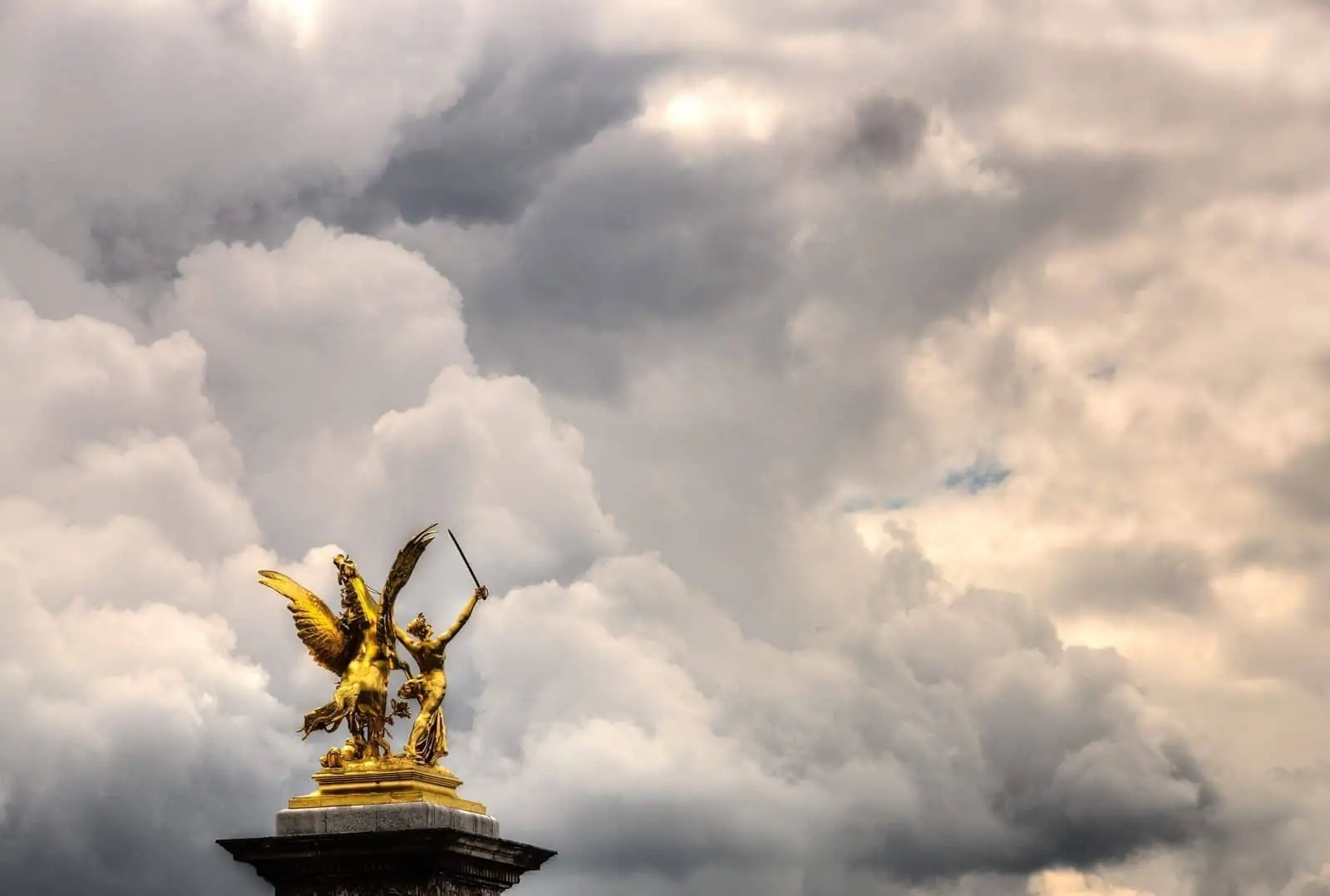
Pont Alexandre III is, for my money, the most photogenic bridge in Paris. The Art Nouveau lampposts, the gilded sculptures, and the views it offers of both the Eiffel Tower and the Invalides dome make it a goldmine. I like to shoot from the bridge itself at blue hour, when the lampposts are lit and the sky still has colour. A wide-angle lens captures the ornate metalwork with the Eiffel Tower behind, and if you shoot from the south side of the bridge looking northwest, you can frame the tower between the lamp columns.
The lower embankments (the quais) are worth exploring too. Walk along the river between Pont Neuf and Pont de la Tournelle during blue hour and you’ll pass the bouquinistes (the second-hand booksellers with their green metal boxes), catch reflections on the water, and see the river traffic creating nice light trails if you’re set up with a tripod.

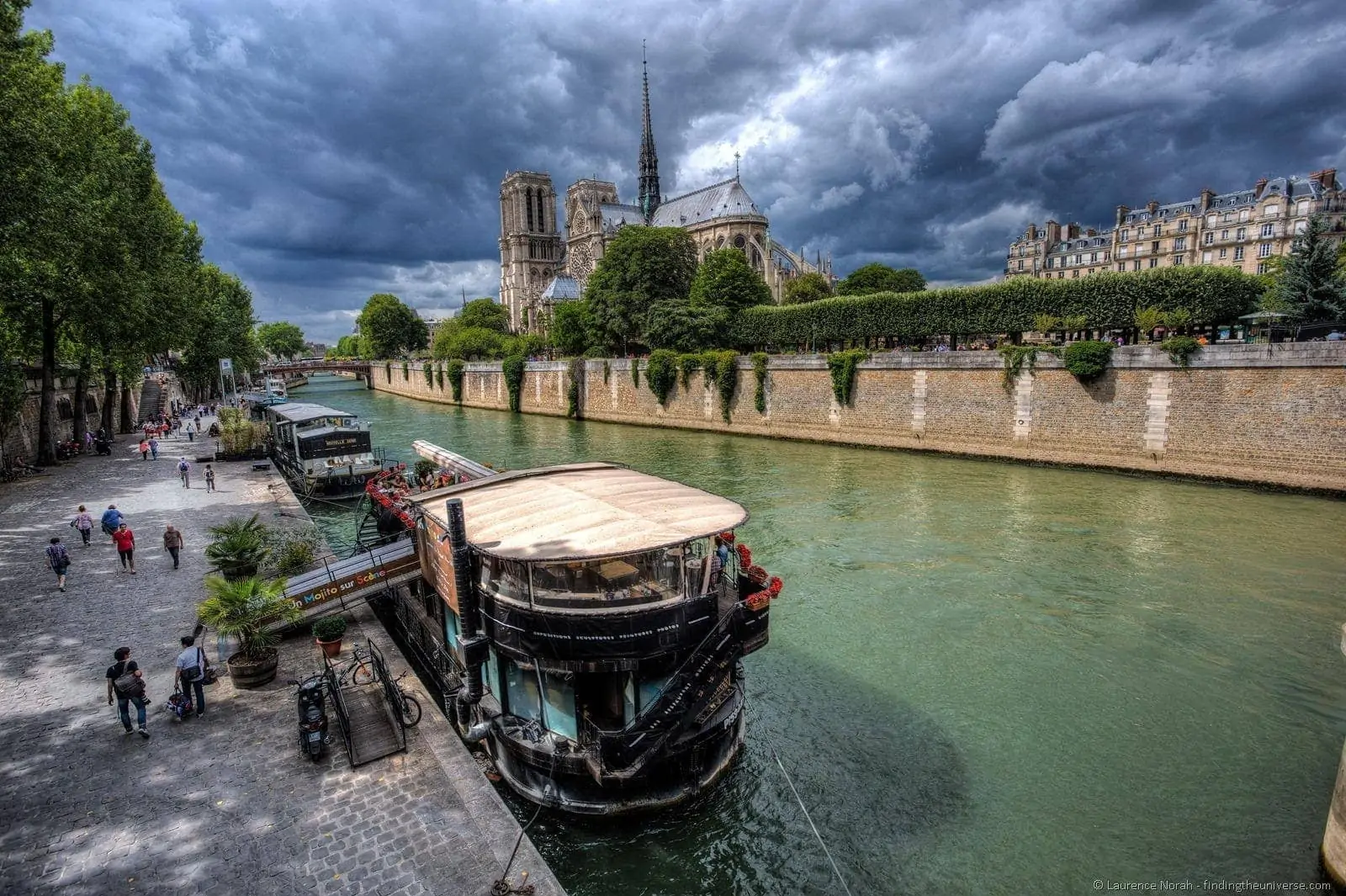
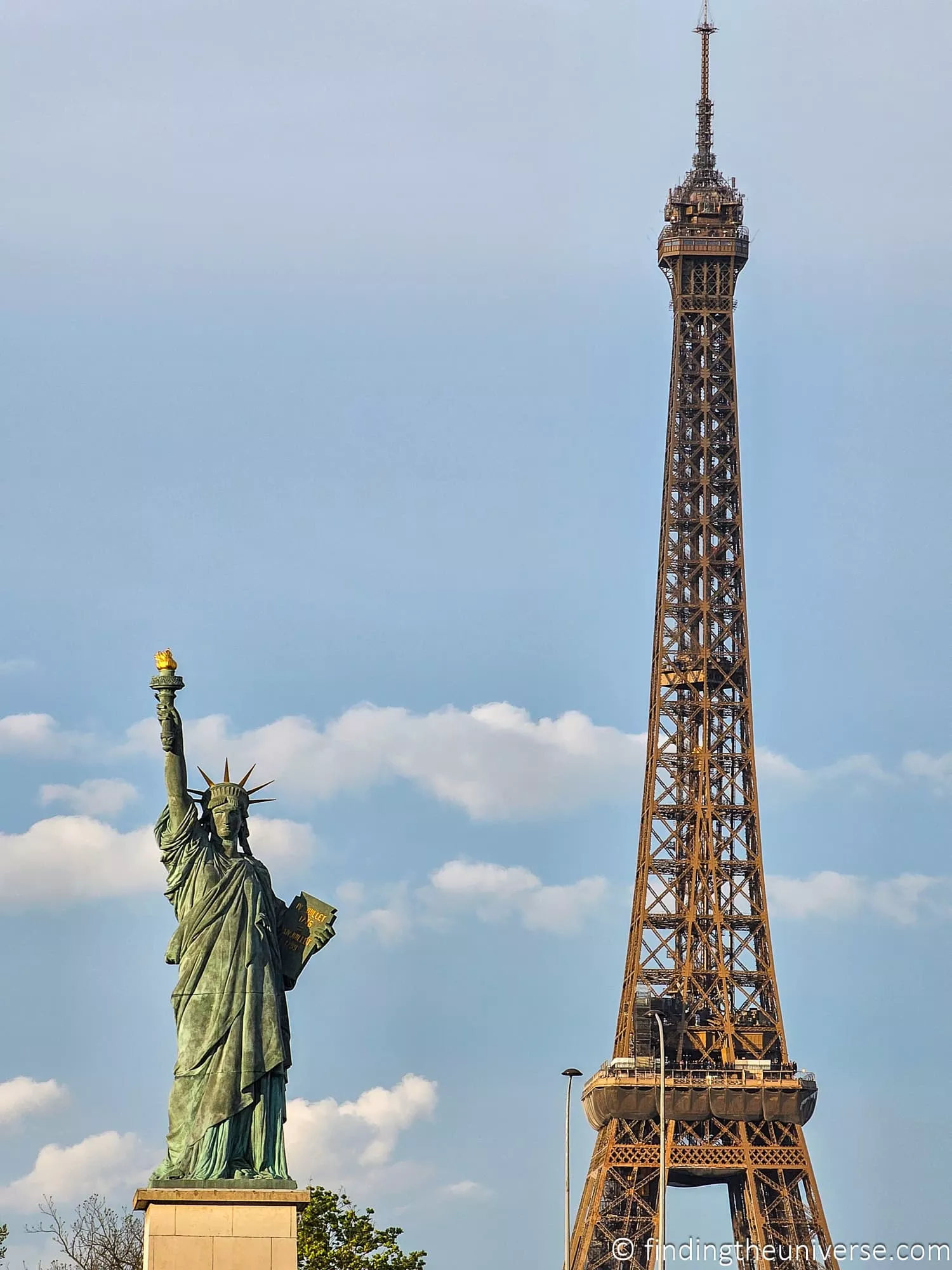
For the Seine generally, a tripod and a moderate wide-angle (24-35mm equivalent) are your best tools. The water reflections are strongest when the surface is calm and the city lights are on, so the half hour after sunset is prime time.
4. Notre Dame
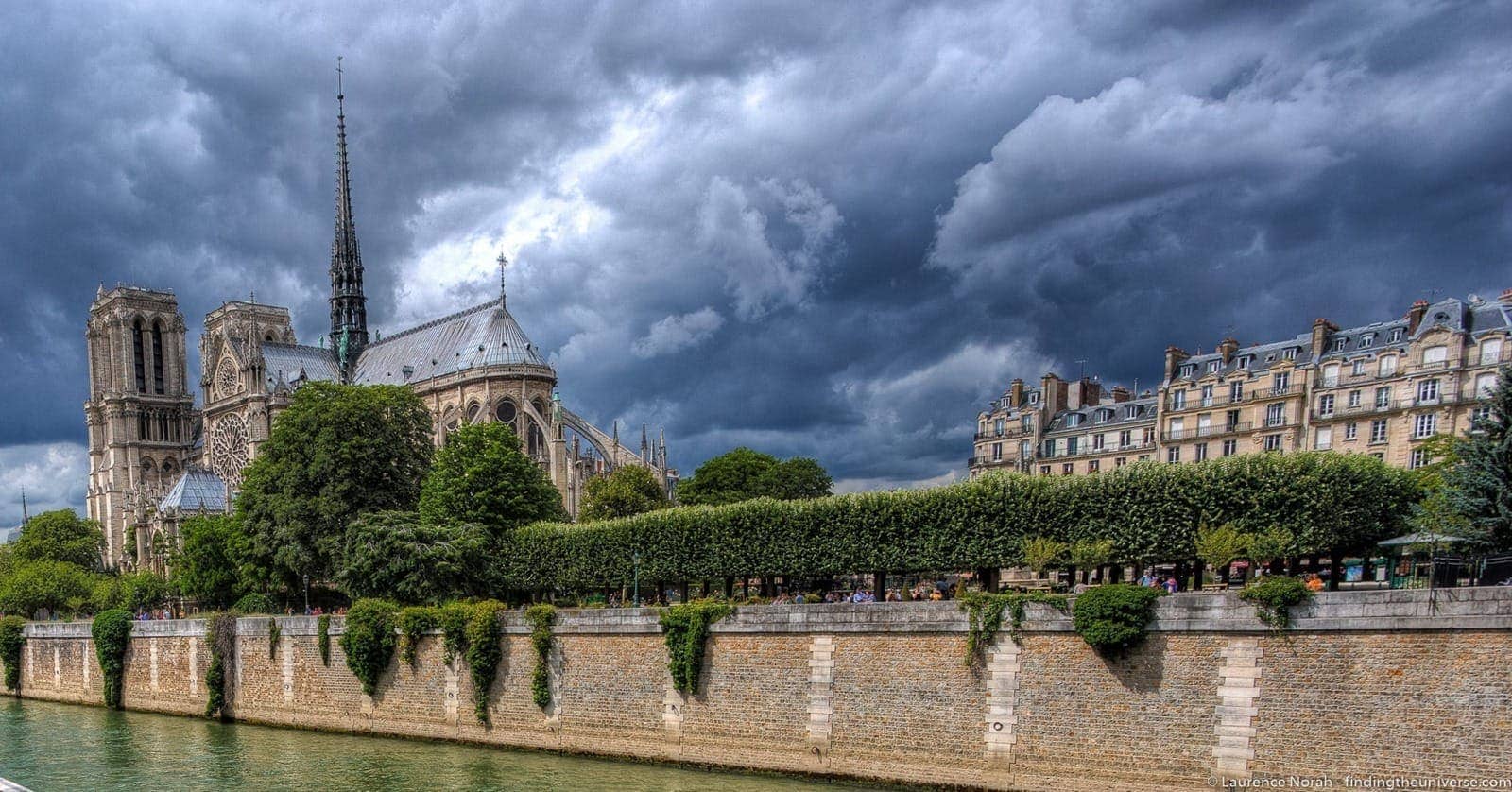
Notre Dame reopened in December 2024 after five years of restoration following the 2019 fire, and the exterior is noticeably cleaner than it was before. All that soot and grime from centuries of city pollution is gone, and the pale stone almost glows now.
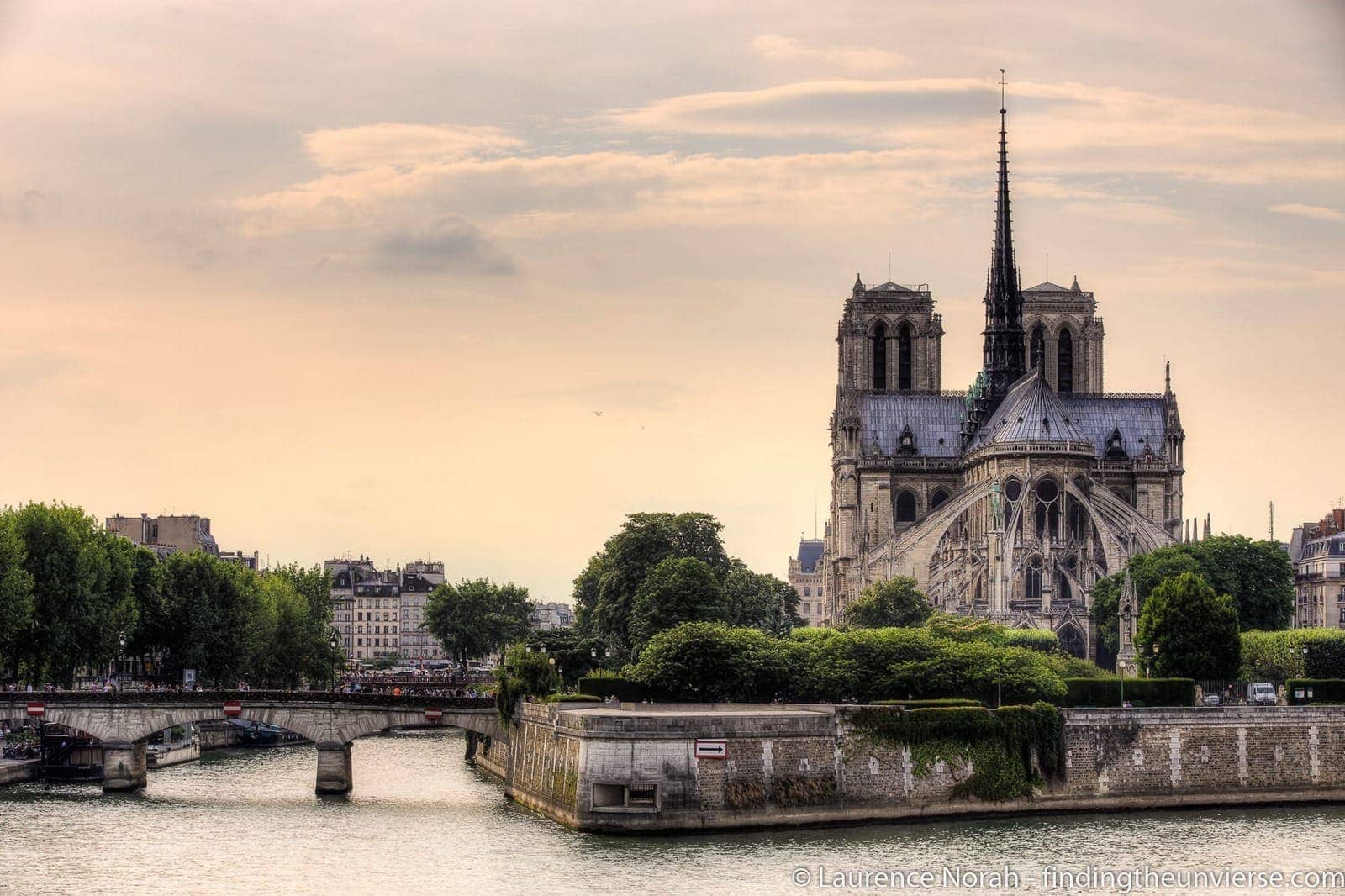
The front facade is the obvious shot, but I’ve always thought the real photographic interest is around the back, where the flying buttresses are. Those Gothic arches are extraordinary to look at and to shoot.
To get the best buttress shots, you have two options. The first is from Pont de la Tournelle, a few minutes walk southeast, where a longer lens (70-200mm range) lets you compress the buttresses against the cathedral. The second, and my preferred option, is to go underneath the Pont de l’Archevêché and down to the banks of the Seine itself. From the waterline, with a wide-angle, you get Notre Dame towering above you with its reflection in the river.
Dawn and dusk are the best times here. The cathedral faces west, so the front catches afternoon and evening light beautifully, while the eastern side (with the buttresses) is best in the morning.
5. Sainte-Chapelle
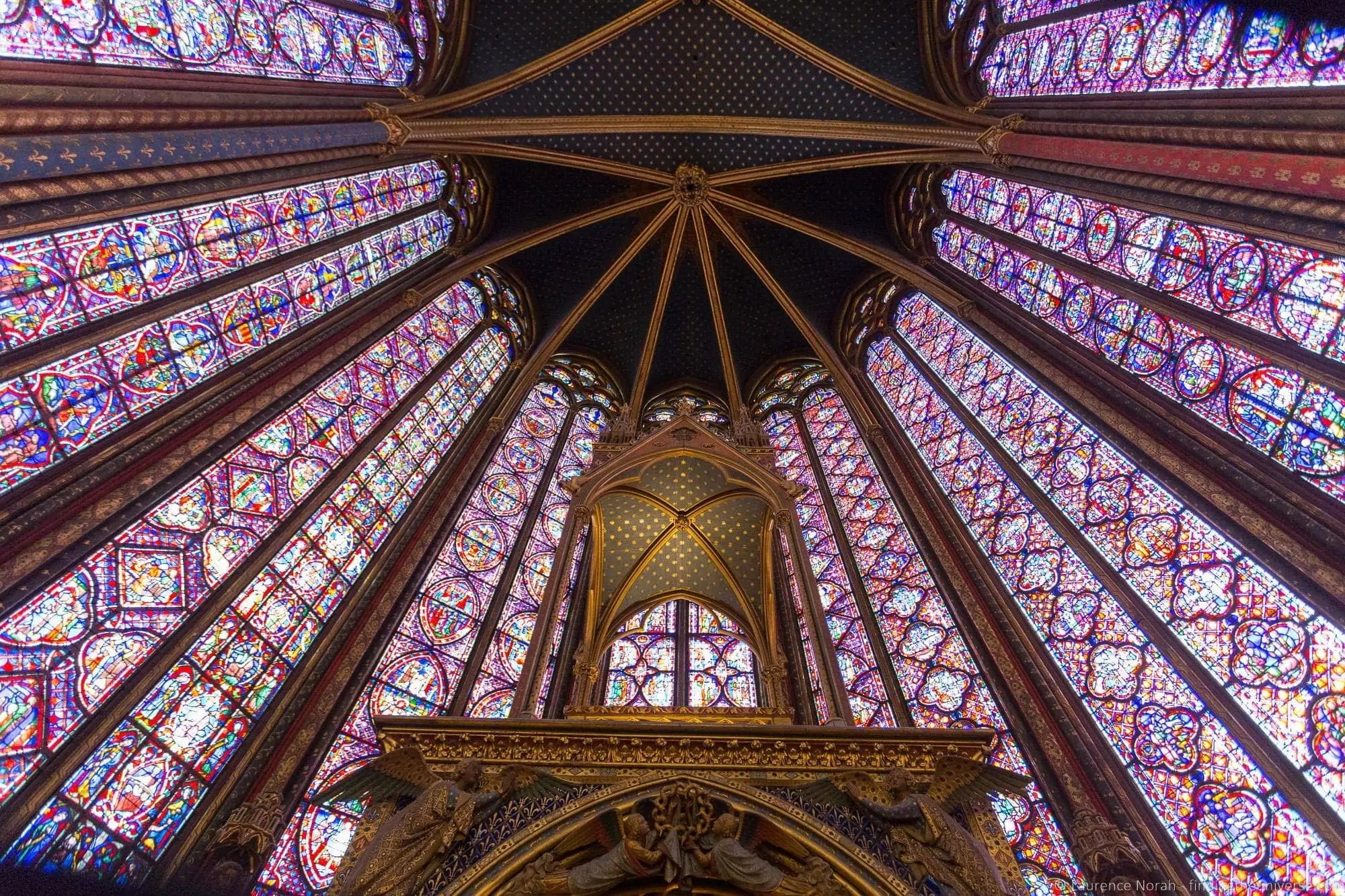
If you photograph interiors at all, Sainte-Chapelle is one of the most extraordinary indoor subjects you’ll find anywhere. The upper chapel is essentially a cage of 13th-century stained glass, and when the sun hits those windows, the whole room fills with colour. It’s one of those places where you just stand there for a minute before you even think about the camera.
Photographically, it’s a challenge. Tripods are not allowed, flash is banned, and the contrast between the bright windows and the darker interior is massive. Here’s what I’ve found works: bring your widest, fastest lens (my 16-35mm f/4 with image stabilisation does the job, but a faster prime would be better). Push your ISO up to 1600-3200 and shoot in aperture priority, letting the camera work out the exposure. Bracket your shots if your camera supports it, because the dynamic range in there will exceed what a single exposure can handle.
The key to a good Sainte-Chapelle shot is timing your visit for a sunny day. The windows only come alive when direct sunlight is passing through them. A cloudy day and you’ll wonder what all the fuss was about. Late morning through early afternoon is when the light is best for most of the windows. Tickets are €22 (€16 for EEA residents), and I’d buy them in advance from the official site to skip the security queue.

6. Place du Concorde and the Tuileries Gardens
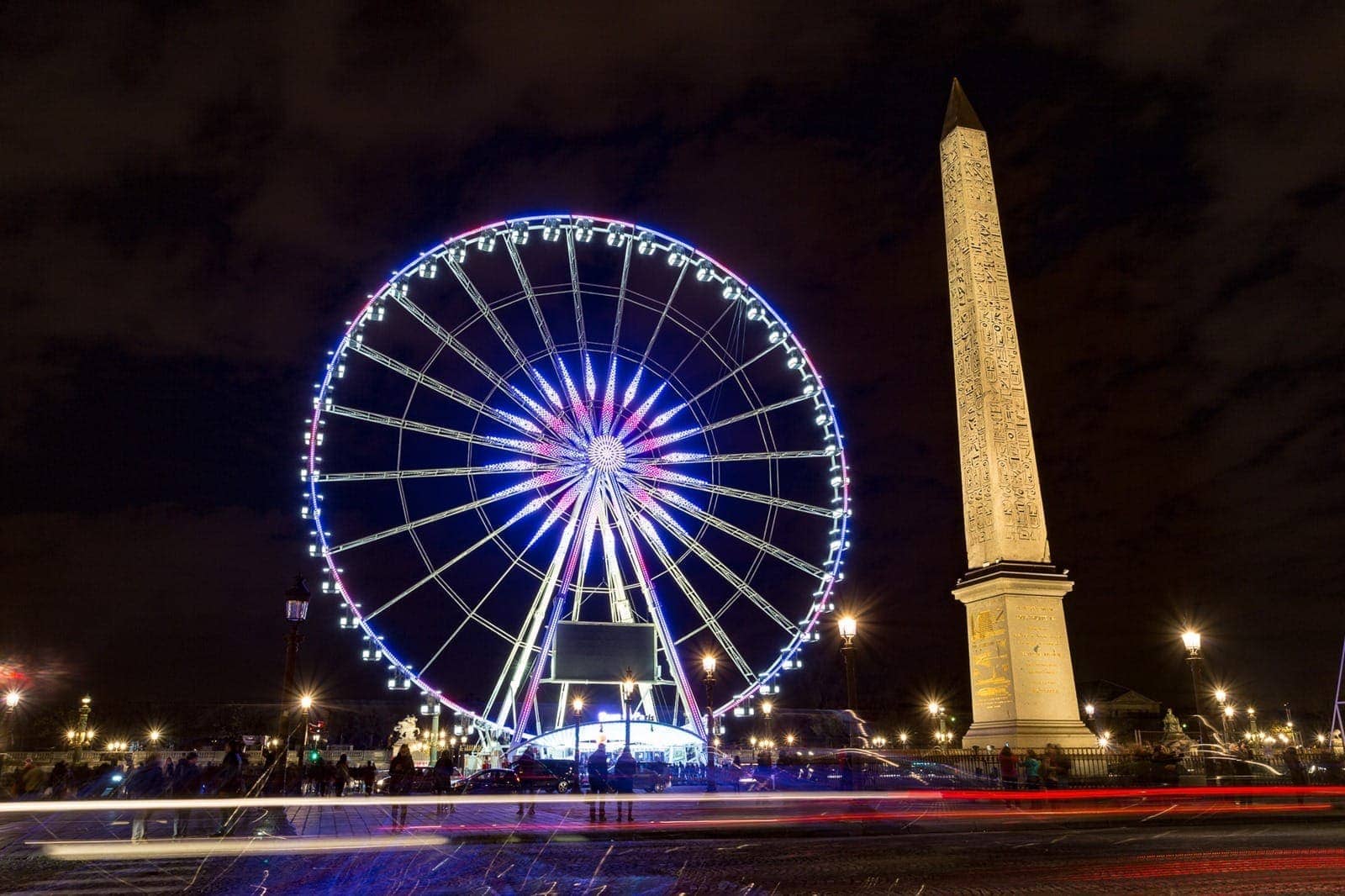
The Place du Concorde sits at the hinge of Paris, connecting the Champs-Élysées in one direction with the Tuileries Gardens and the Louvre in the other. At its centre is the 3,000-year-old Obelisk of Luxor, brought from Egypt in 1833 (no small feat, given it weighs around 250 tonnes). This was also the site of Louis XVI’s execution during the Revolution, which is the sort of thing that makes Paris such a layered place to photograph.
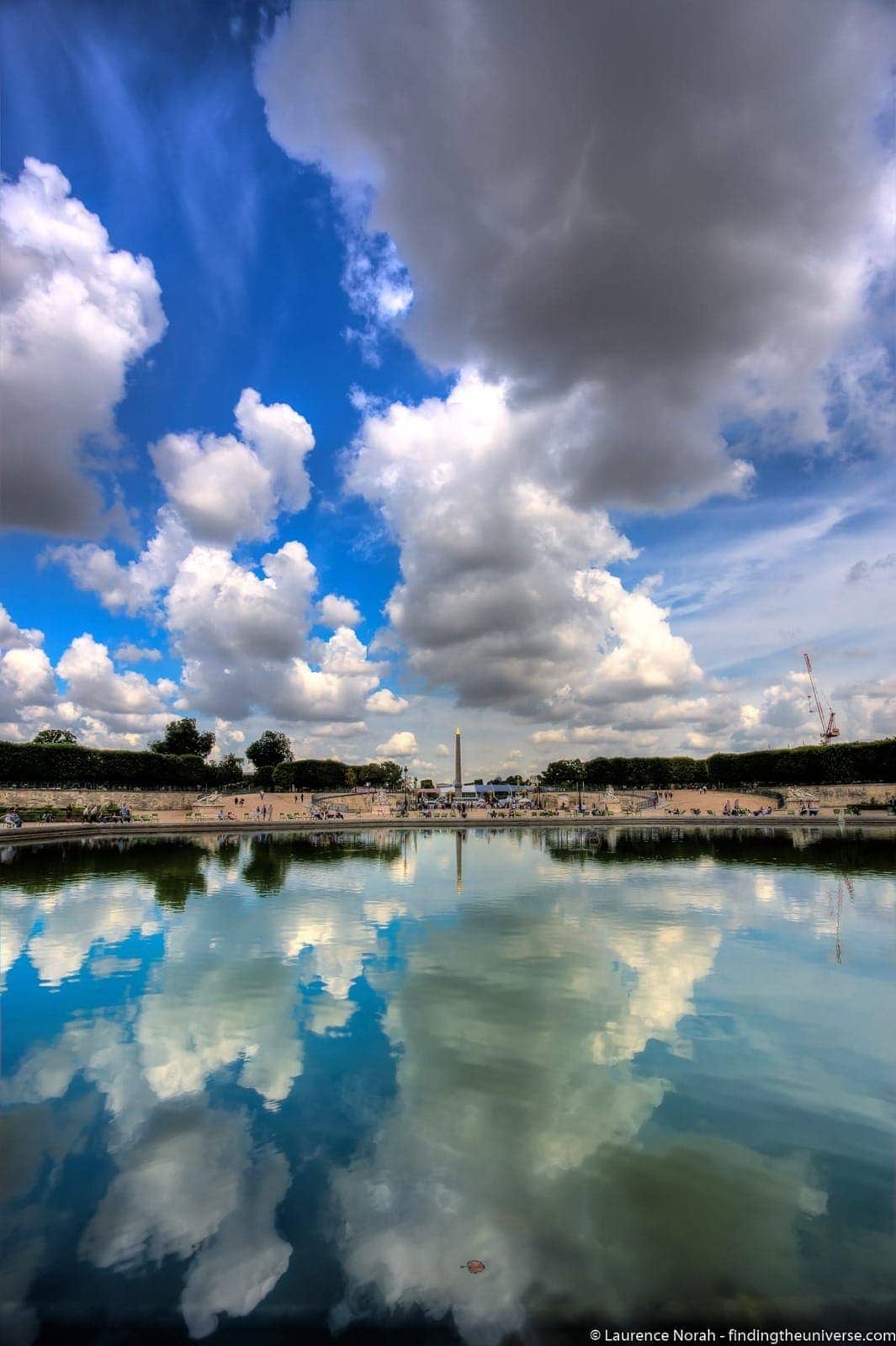
My favourite angle here is from the Tuileries Gardens, using the large octagonal pond to get a reflection of the obelisk and the surrounding buildings. On a still evening with a tripod, you can get mirror-perfect reflections with the city lights starting to glow behind.
Lens-wise, a mid-range zoom or wide-angle works best. The space is open and expansive, so you need something that can take in the full scene. A 24-70mm range is ideal, and a tripod is a must for the reflection shots at dusk.
7. The Louvre
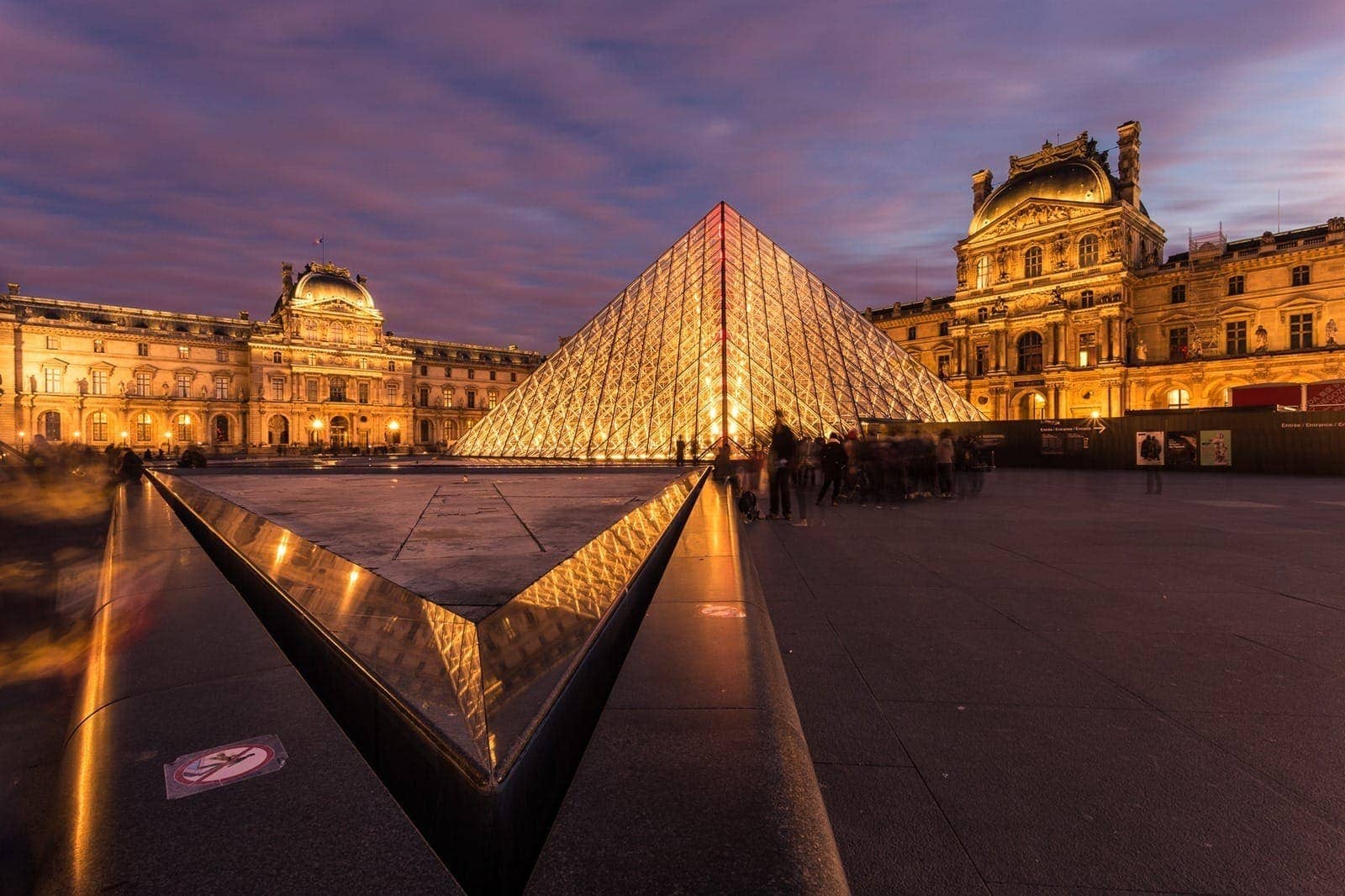
The Louvre museum is worth visiting for what’s inside, obviously, but for photography purposes you want to be outside. The glass pyramid sitting in contrast to the classical stone of the museum building is one of the great architectural juxtapositions in Paris, and it gives you leading lines, reflections, and geometric shapes to work with all day long.
Dusk is the best time. The pyramid lights up from within, and the museum facades are beautifully lit, creating this warm glow against the blue hour sky. I shoot from several angles: straight on to catch the symmetry of the pyramid against the palace, from low down to use the smaller surrounding pyramids as foreground, and from the Cour Carrée (the enclosed courtyard behind the main pyramid) for a quieter, less crowded composition.
The Louvre courtyard is one of the few central Paris locations where you can actually get decent shots throughout the day. The pyramid catches the light differently depending on the time, and on sunny days the reflections in the water features around its base add another layer. Bring a wide-angle for the full courtyard shots and a mid-range zoom for details of the pyramid structure against the classical architecture.
8. Montmartre and the Sacré-Cœur
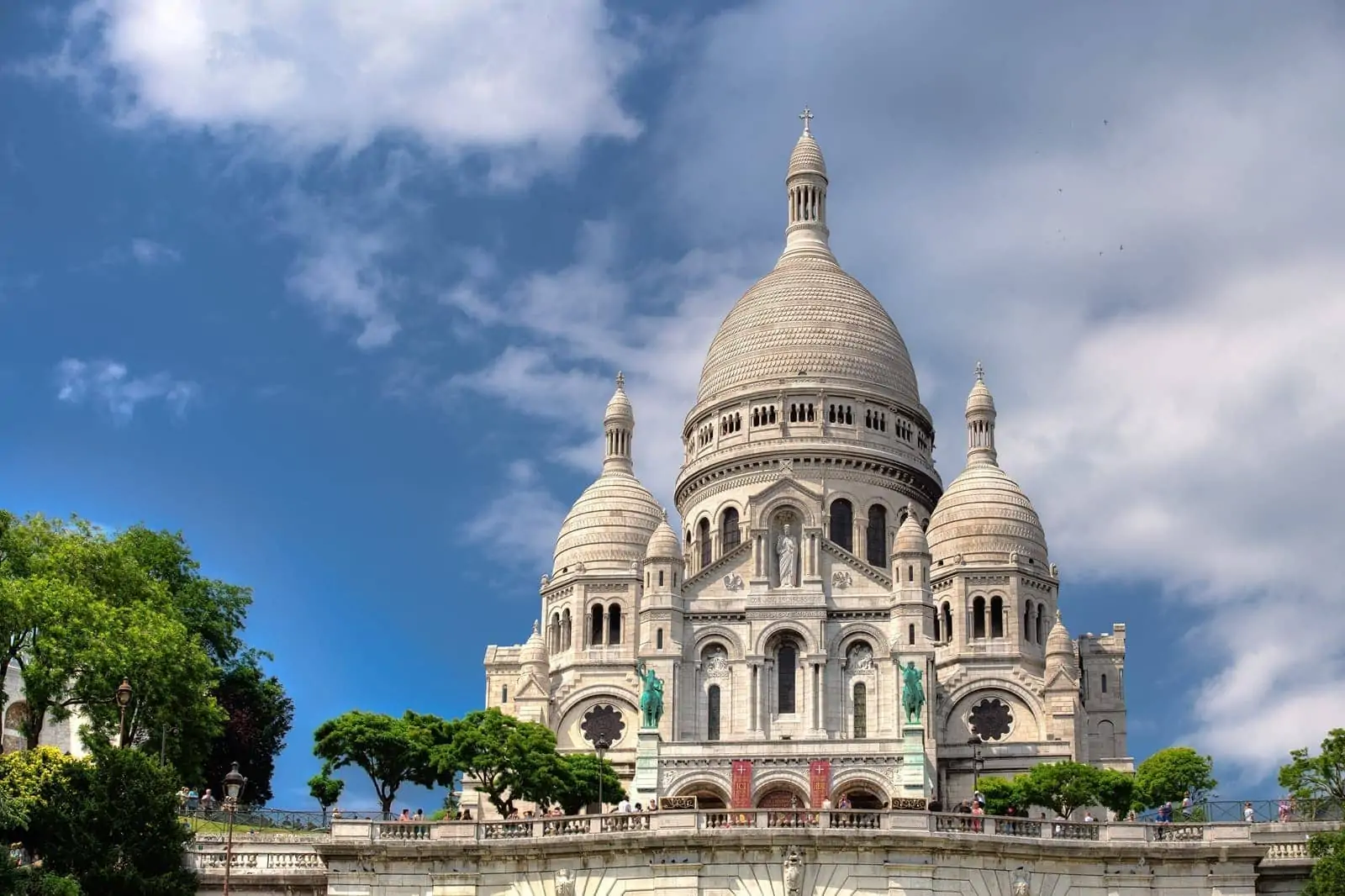
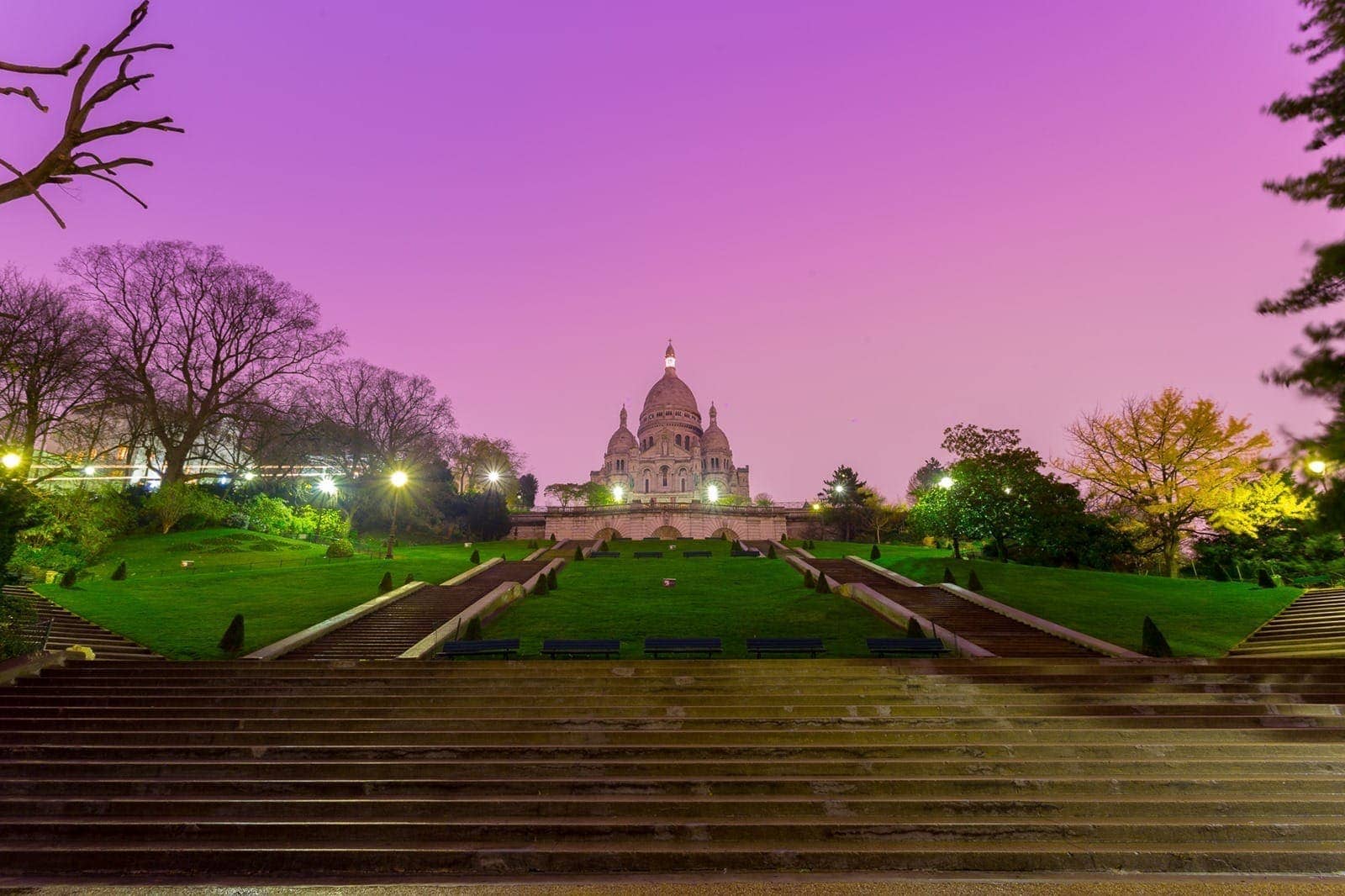
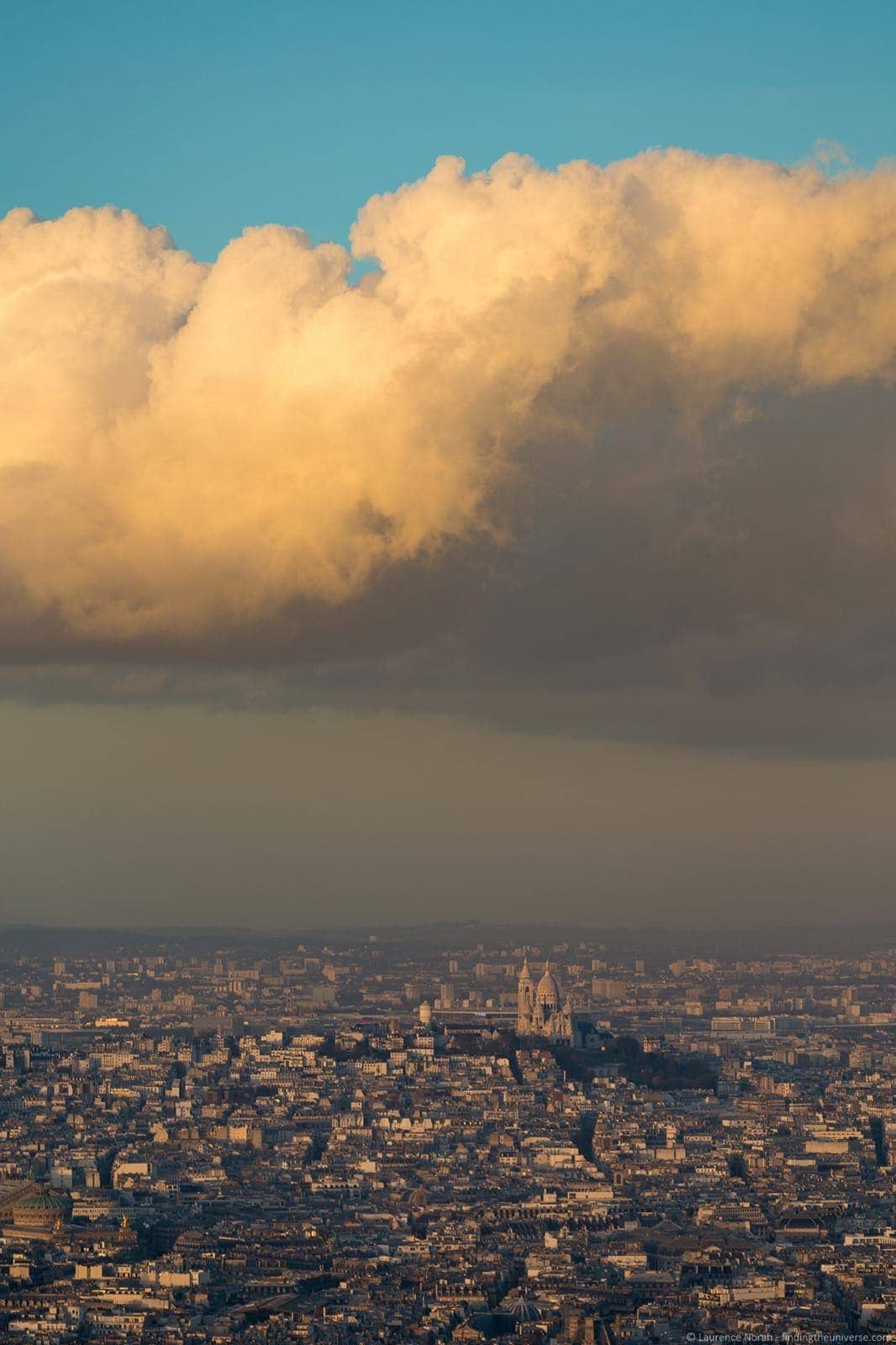
Montmartre is one of those rare Paris neighbourhoods where you could spend a full day with a camera and never run out of things to shoot. The hill itself offers panoramic views of the city from the steps below the Sacré-Cœur, the basilica is a subject in its own right, and the cobbled streets and alleyways of the surrounding area are perfect for street photography.
For the panoramic view, sunrise is my pick. The Sacré-Cœur faces south, which means the front is in shadow at sunrise, but the view over the city is facing into the rising light. The steps and the grassy slope below are empty at dawn and packed by mid-morning, so early arrival pays off here more than almost anywhere else in Paris.
Don’t skip the Place du Tertre, just behind the basilica. It’s famous for its portrait painters and street artists, and on a busy day it’s a great spot for candid street photography. The narrow streets around it (Rue Norvins, Rue Lepic) are full of character too, with colourful shopfronts and cafe terraces spilling onto the pavement.
I bring my 16-35mm for the panoramic views and switch to the 70-200mm for street details and candid shots from a comfortable distance.
9. The Moulin Rouge
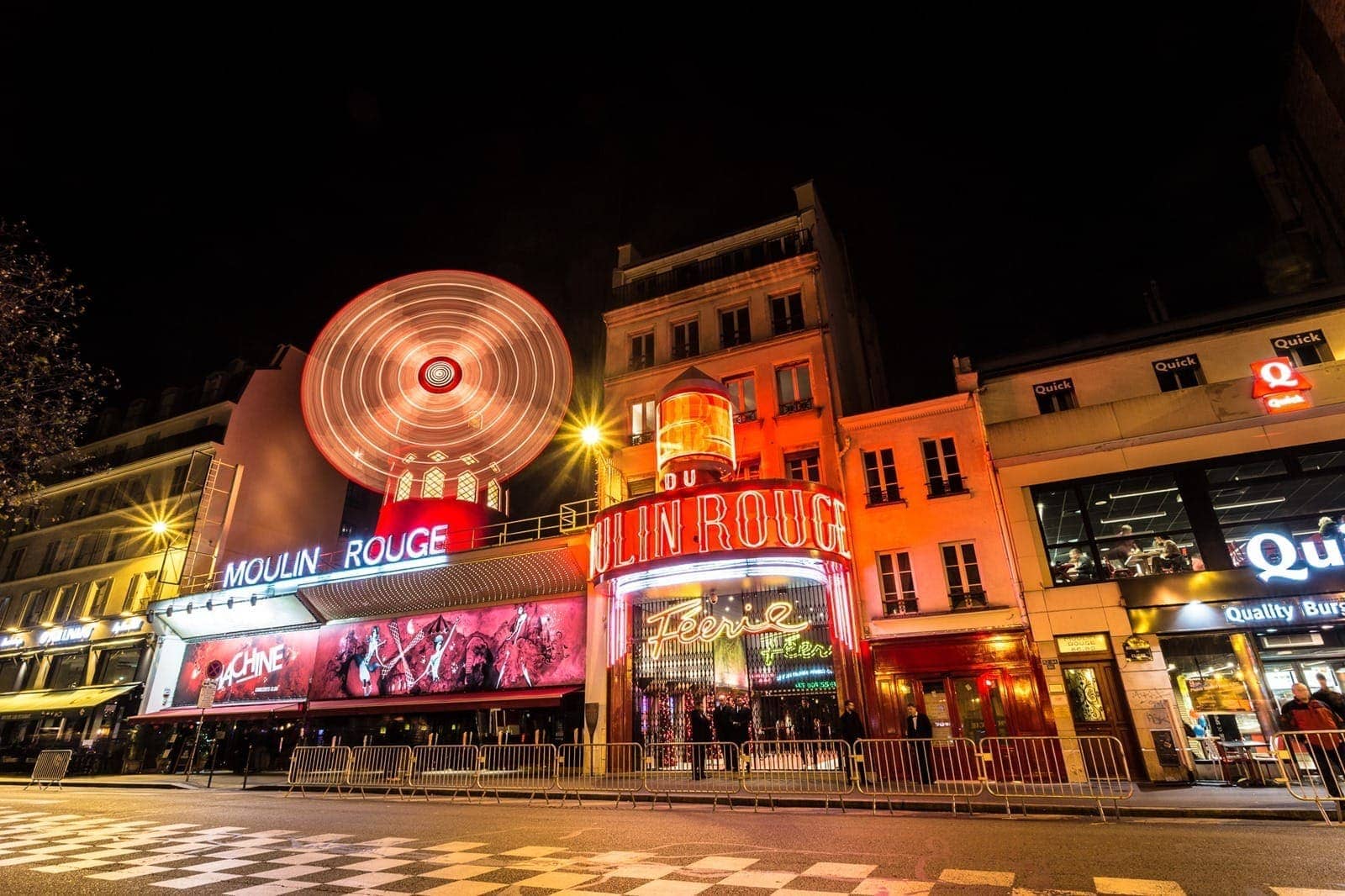
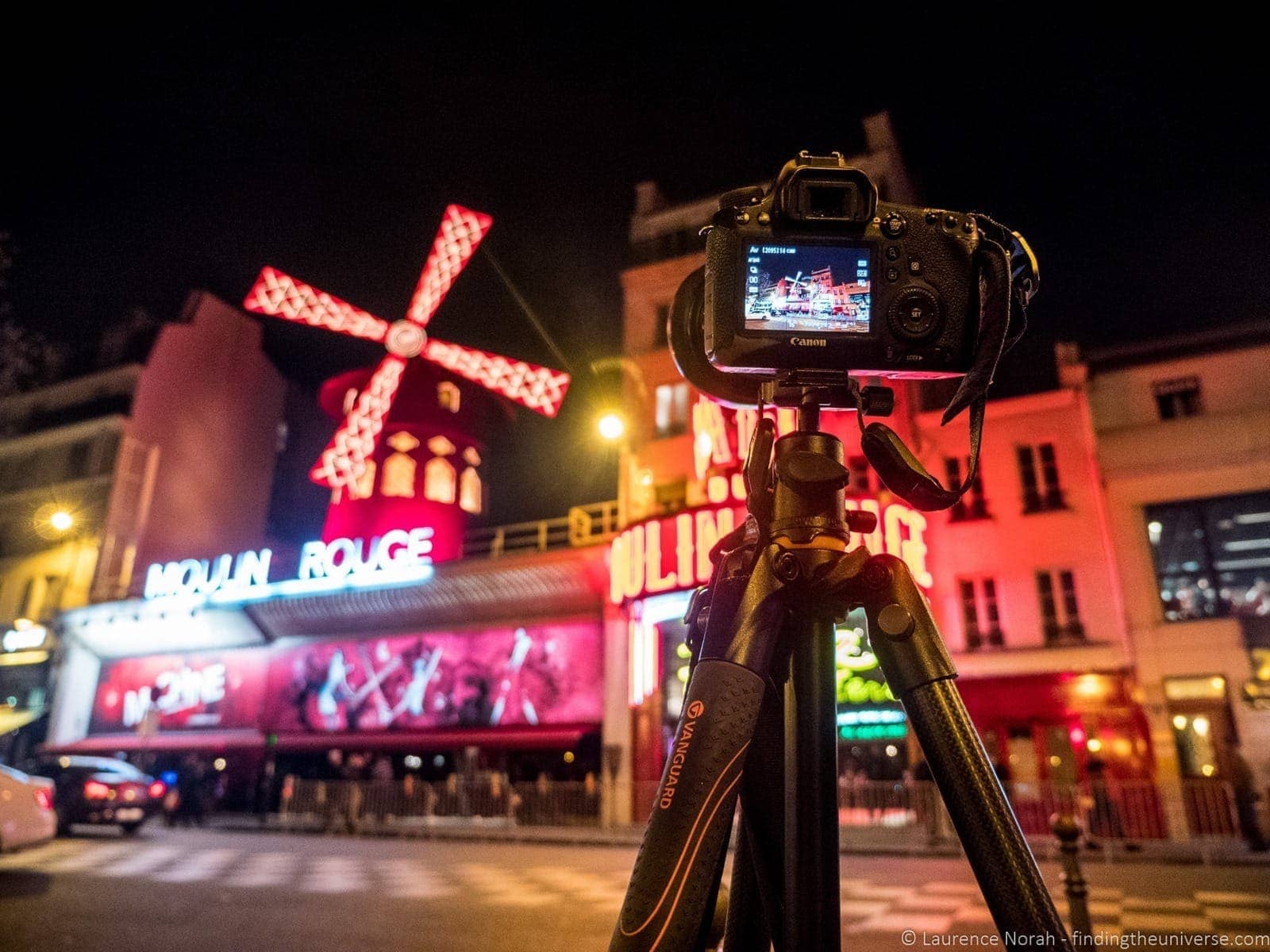
I very much enjoyed our visit to the Moulin Rouge, even though you can’t take pictures inside the show. The exterior, though, is almost as iconic as the performance itself, and it’s a fantastic subject for night photography.
The shot here is a long exposure from across the boulevard, using the red windmill as your focal point. Set up your tripod on the opposite pavement, use an exposure of 2-8 seconds (depending on traffic), and the cars passing along Boulevard de Clichy will create light trails that add energy and movement to the shot. The windmill itself will have a lovely rotational blur if it’s turning.
Position yourself so you can get both the light trails from the cars and the windmill in frame. A 24-35mm focal length works well. You’ll want an ND filter if there’s any ambient light left, and a remote release or your camera’s timer to avoid shake. This is Montmartre’s neighbourhood, so it combines naturally with a Sacré-Cœur sunset followed by a walk down to the Moulin Rouge for blue hour and night shots.
A Few General Photography Tips for Paris
A couple of things I’ve picked up from photographing this city over the years that apply to all of the locations above.
Golden hour and blue hour are everything. Paris is a city of stone and light, and it looks its absolute best when the light is low and warm. Midday sun flattens the architecture and fills the streets with harsh shadows. Get up early or stay out late, and you’ll see a completely different city.
Bring a tripod if you can. Several of my favourite shots from Paris (the Arc de Triomphe light trails, the Moulin Rouge, the Seine reflections) are long exposures. A travel tripod like my Vanguard VEO range is small enough to carry all day. Just be aware that tripods are banned inside most museums and monuments (including the Arc de Triomphe rooftop and Sainte-Chapelle), so know before you go.
Two-lens strategy. I rarely carry more than two lenses in Paris. My usual combination is a 16-35mm wide-angle for architecture, interiors, and big cityscapes, and a 70-200mm for details, street scenes, and compressing perspective on landmarks. That covers about 95% of what I want to shoot. If I’m going specifically to Sainte-Chapelle or another dark interior, I’ll swap the telephoto for a fast prime.
Watch the weather forecast. Overcast days kill Sainte-Chapelle and flatten the skyline views, but they’re actually great for the Seine (softer light on the water) and for street photography in Montmartre (the narrow streets are harsh in direct sun). Plan your shooting day around what the weather gives you.
If you want to learn more about travel photography techniques, I run an online travel photography course that covers everything from camera settings to composition to post-processing, with one-on-one feedback from me throughout.
Where to Stay in Paris
Paris has no shortage of accommodation options, and we’ve stayed in everything from hotels to hostels to apartments over the years. If you’re here primarily for photography, staying fairly central will save you a lot of travel time getting to these locations. The 1st, 4th, and 6th arrondissements put you within walking distance of most of the spots on this list.
Here are some places we recommend, depending on budget. You can see all the listings for Paris on Booking.com here.
- Hôtel Dress Code, a well-reviewed 4-star hotel a few hundred metres from the Opéra Garnier
- Hôtel Eiffel Turenne, a solid 3-star within a ten-minute walk of the Eiffel Tower
- Hôtel France Louvre, a 3-star on Rue de Rivoli near the Marais and the Louvre
- Ateliers de Montmartre, an apartment in Montmartre with views of the Sacré-Cœur
- The People – Paris Marais, a well-located hostel in the Marais
- Generator Paris, a popular hostel near Paris Gare de l’Est
If you prefer an apartment, Plum Guide carefully curate their listings so the quality tends to be high. See their Paris listings here. We also have a guide to the best alternatives to Airbnb if you want more options.
You can also check out our page full of travel resources for tips on getting the best deals.
More Paris Resources
Paris is a city you could photograph for a week and barely scratch the surface. If you’ve got more time, or if you want help planning the rest of your trip around your photography, here are some of our other Paris guides.
- Our detailed one day Paris itinerary, 2-day Paris itinerary, and 3-day Paris itinerary will help you plan your time
- Our guide to getting around Paris covers the metro, buses, and Navigo passes
- Our guide to attending the Moulin Rouge show in Paris
- Jess has a guide to the best restaurants in Paris over on Independent Travel Cats
- Her review of the Paris Pass is worth a read if you’re planning to visit several paid attractions
- If you want a guidebook, the Rick Steves Paris guide and the Lonely Planet Paris guide are both solid options
- My guide to the best travel camera if you’re thinking about upgrading before your trip
- My other photography location guides for destinations around the world
- Our guide to avoiding common Paris scams
Frequently Asked Questions About Photography in Paris
What are the best photography locations in Paris?
My top picks are the Arc de Triomphe rooftop for panoramic city views, the Trocadéro for the classic Eiffel Tower shot, Pont Alexandre III for the most photogenic bridge in the city, Notre Dame for Gothic architecture, and Sainte-Chapelle for interior photography. Each one rewards a different approach and lens choice.
The Louvre pyramid at dusk, Place du Concorde with its Tuileries reflections, Montmartre for street photography and sunrise panoramas, and the Moulin Rouge for night-time long exposures round out my favourites.
What camera gear should I bring for photographing Paris?
A two-lens setup covers most situations: a wide-angle (16-35mm range) for architecture and big cityscapes, and a telephoto (70-200mm) for details and street scenes. A tripod is essential for evening and night shots along the Seine, at the Moulin Rouge, and at Place du Concorde, though be aware that tripods are banned inside most monuments and museums.
For interiors like Sainte-Chapelle, a fast wide-angle lens and a camera with good high-ISO performance will help. Image stabilisation is your friend in the many locations where tripods aren’t allowed.
What is the best time of day to photograph Paris?
Golden hour (the hour after sunrise and before sunset) and blue hour (the 30-40 minutes after sunset when the sky is deep blue and city lights are on) produce the best results. Midday sun is harsh and unflattering on the stone architecture.
Sunrise is particularly rewarding because the crowds are thin and the light is soft. The Trocadéro, Montmartre, and the Seine riverbanks are all at their best at first light.
Can you use a tripod in Paris?
On the streets, bridges, and in public parks, yes. Inside monuments and museums, almost universally no. The Arc de Triomphe rooftop, Sainte-Chapelle, the Louvre, and Notre Dame all ban tripods. Plan your interior shots for handheld work with high ISO and image stabilisation.
Is the top of the Arc de Triomphe good for photography?
It’s one of the best viewpoints in Paris. The 360-degree panorama takes in the Eiffel Tower, the Champs-Élysées, Sacré-Cœur, and the twelve radiating avenues that create perfect leading lines. The main limitation is that tripods are banned, so you’ll need to shoot handheld with higher ISO settings. Sunset and blue hour are the best times to visit.
What is the best elevated viewpoint in Paris for photography?
The Arc de Triomphe rooftop is my top pick. Tour Montparnasse, which was previously the go-to recommendation, closed in March 2026 for a multi-year renovation and won’t be available for some time. The Arc gives you a wider view of the city layout and includes the Eiffel Tower in frame, which Montparnasse couldn’t offer. The Sacré-Cœur steps in Montmartre are a free alternative with a south-facing panorama over the rooftops.
Pamela Cook says
I will definitely be going up the Montparnasse Tower to take photos next time I am in Paris, though, to be honest, I had never heard of it nor considered going up it before! So many thanks for that!
Laurence Norah says
I highly recommend it, it offers amazing views especially at sunset! Enjoy 🙂
Katy says
Great post with lots of useful info.
Laurence Norah says
Thanks Katy 🙂
Andy says
Thanks for the super useful tips! Can I check the unextended height of your tripod? Trying to compare that with mine for the shooting at top of the Montparnasse Tower.
Laurence Norah says
My pleasure. The VEO 2 I was using has a maximum height of 59″ extended, and I’d say the center column is probably around 16″ of that. I couldn’t get my camera to the cutouts without fully extending the center column, so a taller tripod would definitely have been better.
Andy says
Thanks again. I am buying a new one anyway so will take that into considerations. And may I also know if you have any recommended spots for taking the Mont Saint Michel (isolated as an island) – have been reading comments online that it will no longer fully submerged even in high tides 🙁 i hope they are not true.
Laurence Norah says
Sure thing. I have a post on visiting, but I don’t know about the submergence. I know the bridge is different to how it used to be, but it was already there when I visited.
https://www.findingtheuniverse.com/normandy-2-day-itinerary-d-day-beaches-mont-st-michel/
The pictures in that were taken from the marsh, from around here: https://goo.gl/maps/CbiPGTe8C5C2
I liked all the little rivulets and waterways that gave some fun composition options 🙂 I was there for sunset, but sunrise would be great too as the light will fall onto the Mont.
Melita says
Great post! I’m using this guide for my trip in a couple of days. Thank you.
Laurence Norah says
Our pleasure and thanks! Have a wonderful trip, and do let us know how it goes!
PiotrekKulczycki says
Thanks for recommendations, Paris is photogenic, but it’s good to know the right spots 😉
Arturo Paulino says
LOVE this post! I’ve been to Paris several times and I learned a couple NEW sites for my next visit. One more location I’d add is ON TOP of the Arc of Triumphe https://www.facebook.com/arturophoto/photos/a.565015060257157.1073741851.266132613478738/565015360257127/?type=3&theater
Laurence says
Thanks Arturo 🙂 That’s a good tip for sure – I’ve been on top of the Arc and it’s a great view!