
Glasgow is one of our favourite Scottish cities, and one of the things we like most about it is how easy it is to leave for the day. The city itself is well worth a day or two before you venture out, and our 2 day Glasgow itinerary covers how we’d spend that time. From here you can be on the banks of Loch Lomond in under an hour, in the medieval streets of Stirling in 45 minutes, walking around the same castle that doubled as Castle Leoch in Outlander, or chasing whisky in the rolling country just north of the city. I lived in Edinburgh for four years and have come back to Glasgow many times since, both as a base and as a stop on longer Scotland trips, and the day-trip options here are arguably better than anywhere else in the country.
Below we walk through our twelve favourite day trips from Glasgow, with practical notes on how to do each one yourself by car, by train or bus, or by guided coach tour. We’ve focused on what we’d actually book and what we’d skip, what each option costs in 2026, and where the day plays out best for different kinds of trip.
We’ll also cover where to stay in Glasgow, what we’d do differently if we were planning the trips from scratch today, and answer the questions most readers ask us about day trips from this city.
Quick take: Most first-time visitors should pick three day trips, not ten: one Highland-flavoured day (Loch Lomond, or Oban and Glen Coe), one castle-or-history day (Stirling, Outlander locations, or Burns Country), and one easy half-day close to the city (Falkirk or the Clydeside Distillery). Loch Ness is doable as a day trip but a punishing one. Base yourself in Inverness instead if you can. The Glasgow Subway went fully contactless on 16 March 2026, which makes the in-city legs of any of these trips easier than they used to be.
For the quick category picks: Falkirk (the Kelpies plus the Falkirk Wheel) is our pick for the best half-day. Loch Lomond and the Trossachs is the best full-day. Stirling is the best without a car. Oban and Glen Coe is the best for Highland scenery. The Outlander filming locations day tour is the best for history. Glengoyne is the best for whisky.
Table of Contents:
The Best Day Trips from Glasgow
Below you’ll find our twelve favourite day trips from Glasgow, in no particular order. They are all worthwhile, and the right one for you varies with transport, time, and which version of Scotland you’re after; a car opens up more, but the train options here are strong.
We’d also highly suggest you spend some time exploring Glasgow itself if you’re staying here. Start with our guide to things to do in Glasgow, and see the end of the post for more reading. If you’re using public transport for any of these trips, the Glasgow Subway is now fully contactless (since 16 March 2026): tap in and out at any of the 15 stations, the system caps fares at £3.40 for a day or £15.50 for a week, and a single hop is £1.80. You no longer need a smart card or a paper ticket to use it.
1. Loch Lomond & The Trossachs National Park
The most popular day trip from Glasgow is also one of the easiest. Loch Lomond is the largest freshwater loch in Britain by surface area, and the southern end of it sits just 40 minutes’ drive from Glasgow city centre.
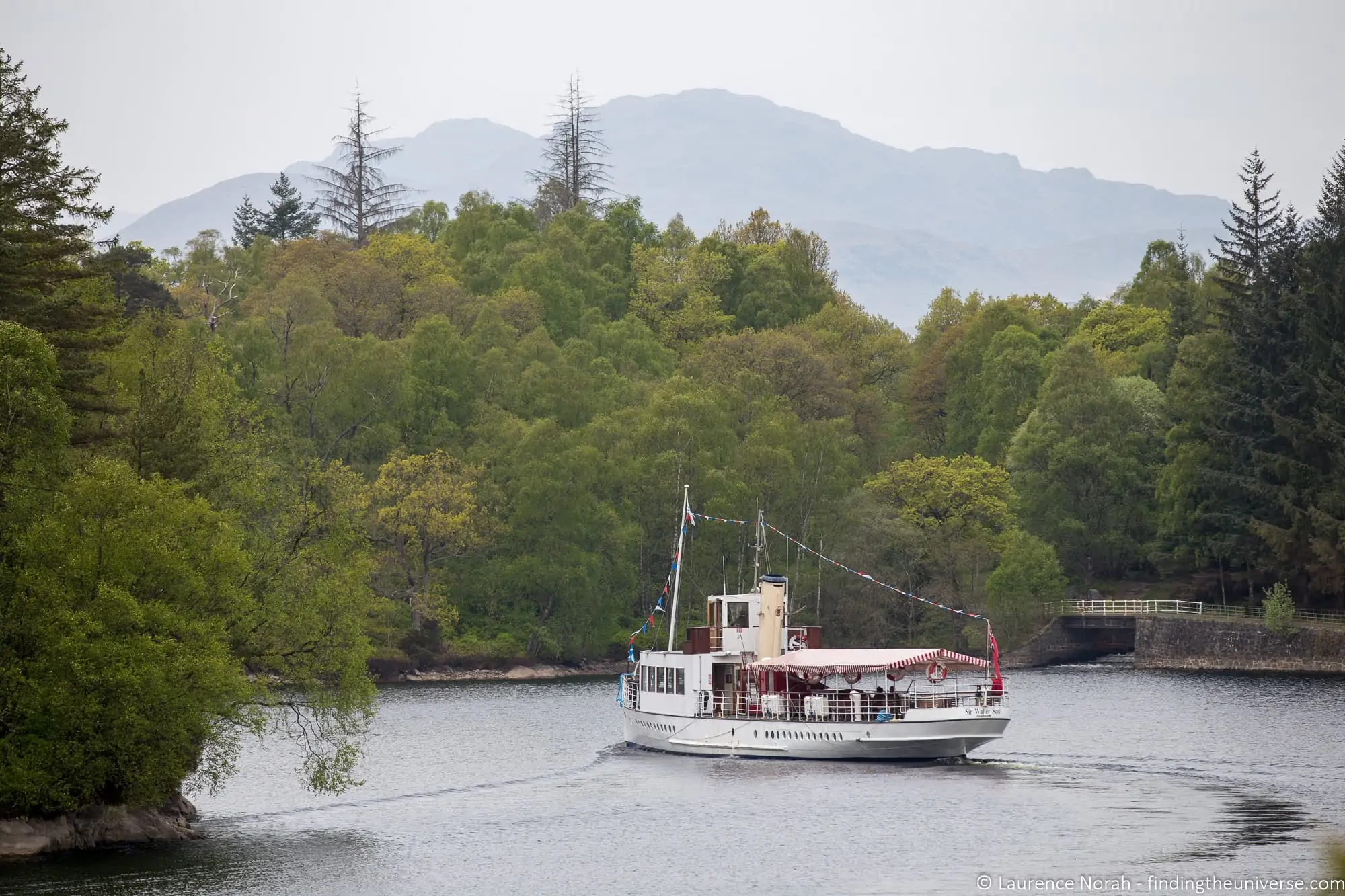
Loch Lomond is the headline, but the surrounding Trossachs National Park is where most of the variety lives. The pretty village of Luss sits on the loch’s western shore with views straight up the water. Inland you’ll find Loch Katrine, where the Victorian steamboat Sir Walter Scott runs cruises between late March and late October (currently from around £13 per adult; check lochkatrine.com for the exact 2026 tariff). Beyond that there are kayaking and paddleboarding rentals at Balloch, a couple of adventure parks, walking trails of every length, and an ancient stone circle near Cashel for anyone who likes their landscape with a bit of pre-history attached.
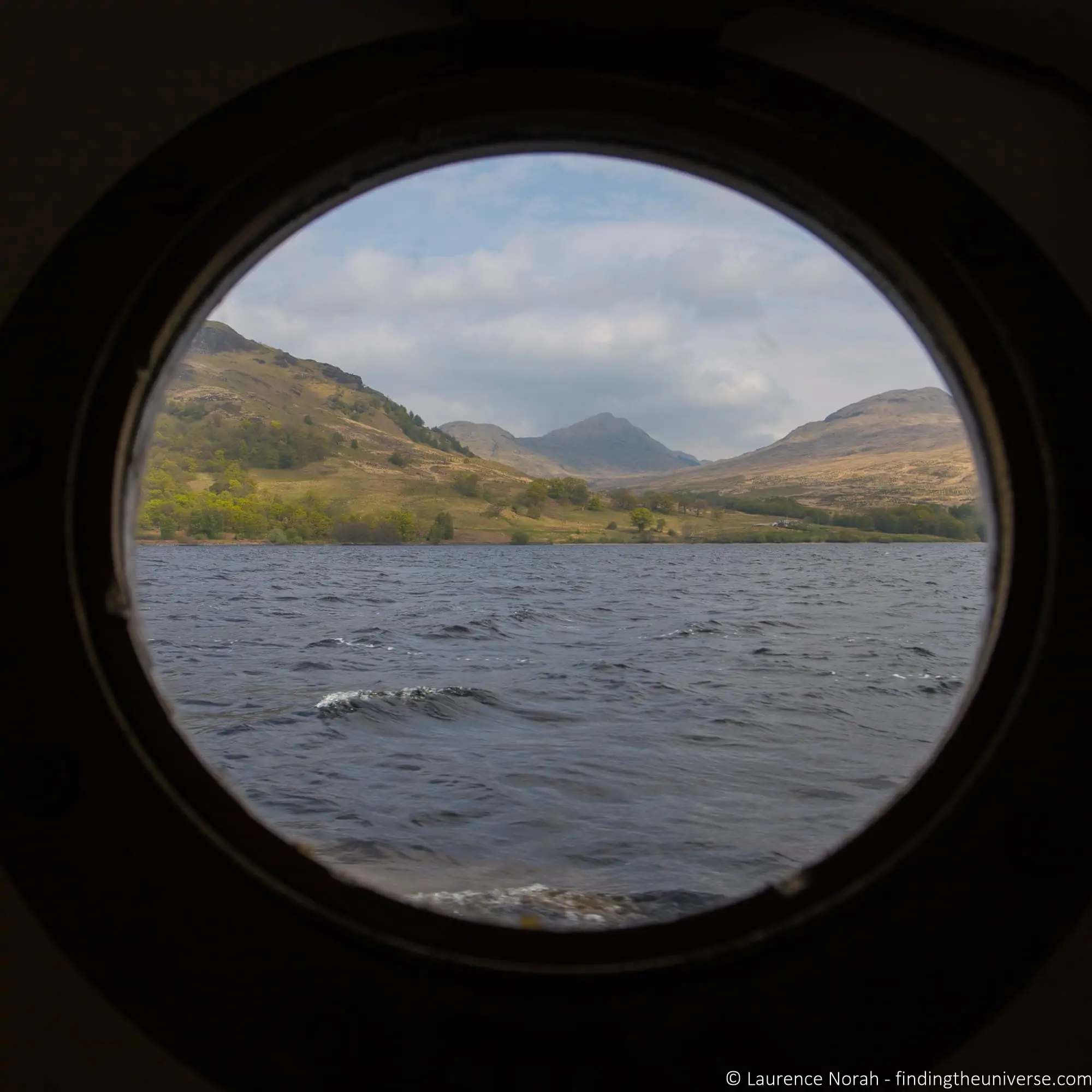
You can pretty much fill a whole day at Loch Lomond without trying. Our guide to things to do in Loch Lomond covers our favourites in more depth. If you’ve got an extra hour, the Devil’s Pulpit at Finnich Glen is a short detour off the route between Glasgow and the loch’s southern end, and one of Scotland’s most photogenic gorges.
How to Get to Loch Lomond from Glasgow
Loch Lomond’s southern shore is only 25 miles from Glasgow, so driving yourself is the most flexible option, and the cheapest if you’re a group. Check car rental prices on Discover Cars here; they compare the major hire companies to find the best price for your dates.
Public transport works, with caveats. Trains run from Glasgow Queen Street to Balloch in around 50 minutes; from Balloch you can pick up cruises on the loch and connect to waterbus services to Inversnaid and Rowardennan. Trains also serve Tarbet and Ardlui further up the loch, both of which have their own waterbus stops. Find train times and tickets here.
Inside the park there’s a network of local buses; the Traveline Scotland journey planner is the easiest way to thread routes together.
An easier option if you don’t want to drive or plan a multi-hop bus day is to take a tour. We’ve used Rabbie’s Trail Burners for several trips around Scotland and like that their buses seat no more than 16 people, which means you don’t queue at every stop and the driver-guides actually know everyone’s name. Their full-day Glasgow-departure tour, Stirling Castle, Loch Lomond and Cruise, pairs the loch with Stirling Castle and a Loch Katrine cruise on the way back.
2. Burns Country, Ayrshire, and Culzean Castle
South-west of Glasgow, the Ayrshire coast is one of Scotland’s most underrated stretches, and a day here is a bit quieter and more rural than anything you can do up in the Highlands.
This is Robert Burns country. Burns is Scotland’s national poet, best known internationally for writing Auld Lang Syne, the song most of the world hums at midnight on New Year’s Eve. Burns Night, held on his birthday (25 January), is a fixed point in the Scottish calendar, with poetry readings, traditional dancing, and a haggis-and-whisky supper. If you happen to be in Scotland in late January, it’s worth seeking one out.
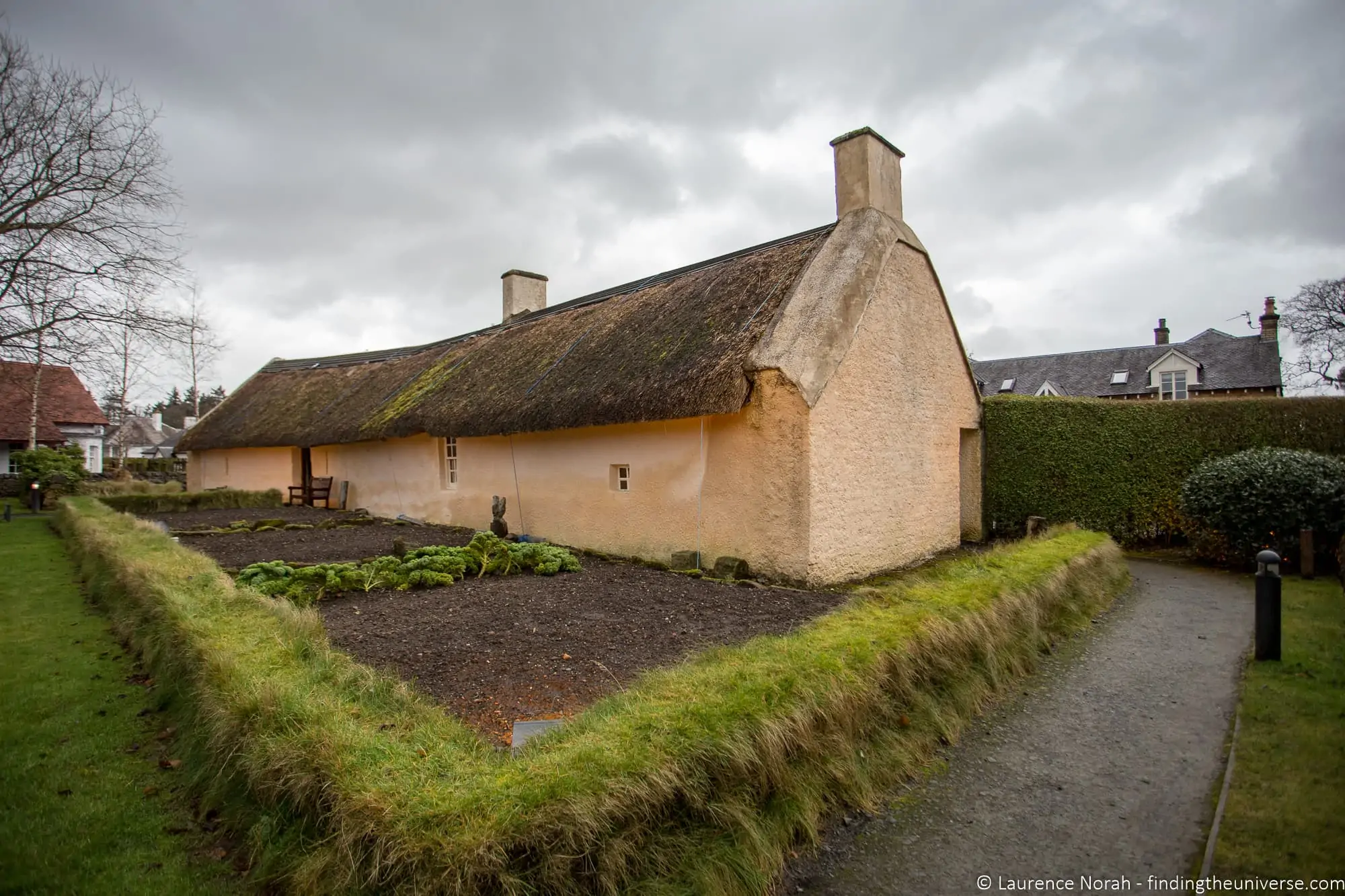
Burns lived in several places around Scotland, but Ayrshire is the region most closely associated with him. He was born in Alloway, and today you can visit both the original cottage of his birth and the very good Burns Birthplace Museum (currently around £14 adult, free for NTS members; check the latest on the NTS site). Alloway is also home to the “Brig o’ Doon”, an old stone bridge that features in his poem Tam o’ Shanter, and the crumbling Alloway Auld Kirk where the poem’s witches dance.
Other Burns-linked sites in the area include Bachelor’s Club in Tarbolton, Souter Johnnie’s Cottage in Kirkoswald, and the Burns House Museum in Mauchline. True completists will also want to head further south to Dumfries, where the annual Burns Big Supper Festival is held, and where Burns spent his final years.
Ayrshire is more than Burns, though. The coastline here is dotted with attractions; the headline is Culzean Castle, high on the cliffs above the Firth of Clyde.

This 18th-century castle, designed by Robert Adam, has rooms you can tour, gorgeous formal gardens, a country park with woodland walks, a beach, and an on-site café. Admission is currently around £20 per adult (free for NTS members). It’s a pretty easy half-day from Glasgow, and one of the more architecturally interesting castles in the country.
Many of the attractions in this part of Scotland are National Trust for Scotland (NTS) properties, and if you’re planning to visit more than two or three you’ll save money on an NTS membership. 2026 prices are around £79 for a single annual membership, £140 for joint, and £158 for a family membership. We have a joint membership and it has paid for itself several times over across the UK (NTS membership also covers many National Trust properties in England, Wales and Northern Ireland through reciprocal access). The NTS site is the authoritative reference for current pricing.
How to Visit the Ayrshire Coast from Glasgow
The two easiest ways to explore the Ayrshire coast are to drive yourself or to take a guided tour. For the former, you can pick up a hire car in Glasgow and plan your own route; with a whole day you can comfortably see the main Burns sites and Culzean Castle. The total round trip is around 100 miles.
For a tour, the one we recommend (and have done ourselves) is the Culzean Castle, Burns Country & the Ayrshire Coast tour with Rabbie’s. It’s a full day, starts and finishes in Glasgow, and ticks off most of what you’d want to see.
Public transport is possible but slower. The train runs from Glasgow Central to Ayr in around 50 minutes, and from Ayr you can pick up a local bus to Alloway. From there it’s about a 20-minute walk down to the Burns Cottage and museum. Culzean Castle is harder to reach without a car; the nearest train station (Maybole) is around four miles away and requires a taxi or a long walk to finish. Traveline Scotland handles the route planning.
3. Outlander Filming Locations near Glasgow
The original Outlander series concluded with its eighth and final season on Starz in May 2026, so the show is now a closed loop. That hasn’t slowed visitor numbers at the filming locations, and the news this year is the prequel series Outlander: Blood of My Blood, which uses several new Scottish locations and adds fresh life to the trail.
Glasgow itself doubled as several locations across the original series, and a few sites in the city are worth a wander:
- Glasgow Cathedral, which stood in for the Parisian L’Hôpital des Anges in Season 2. It’s free to visit and one of the few medieval cathedrals in Scotland to survive the Reformation more or less intact.
- University of Glasgow’s Gilmorehill campus, which doubled as Harvard in Season 3. You can wander the cloisters and quadrangles freely.
- Kelvingrove Park, used for several Boston scenes in Season 3, free and open year-round.
- Pollok Country Park (about which more in section 8), which stood in for various outdoor scenes in Seasons 2 and 4, ranging across Scotland, France and North Carolina.
- Park Circus, a Georgian crescent in Glasgow’s West End. New for the Blood of My Blood prequel, the elegant terraces stood in for an 18th-century town setting. It’s a beautiful piece of architecture in its own right and free to walk around at any time.
The main locations within driving distance of Glasgow include:
- Doune Castle, the 14th-century fortress that played Castle Leoch in Outlander, the Winterfell pilot in Game of Thrones, and Castle Anthrax in Monty Python and the Holy Grail. Adult admission is £10 if you book online or £11 walk-up. The audio tour is narrated by Sam Heughan (Jamie in Outlander) and Terry Jones (Monty Python), which alone is worth the price of entry.
- Balvaird Castle, a 15th-century stone tower house in Perthshire, also used in the prequel. It’s open in summer with free access; check Historic Environment Scotland for current dates.
- Bannockburn House, near Stirling, another Blood of My Blood location. It’s run by a community trust and only opens on selected days (usually weekends and event days), so check before you build a day around it.
- Falkland, a small town in Fife where the 1940s Inverness scenes were shot. Easy to wander, no admission, more atmospheric than you’d expect.
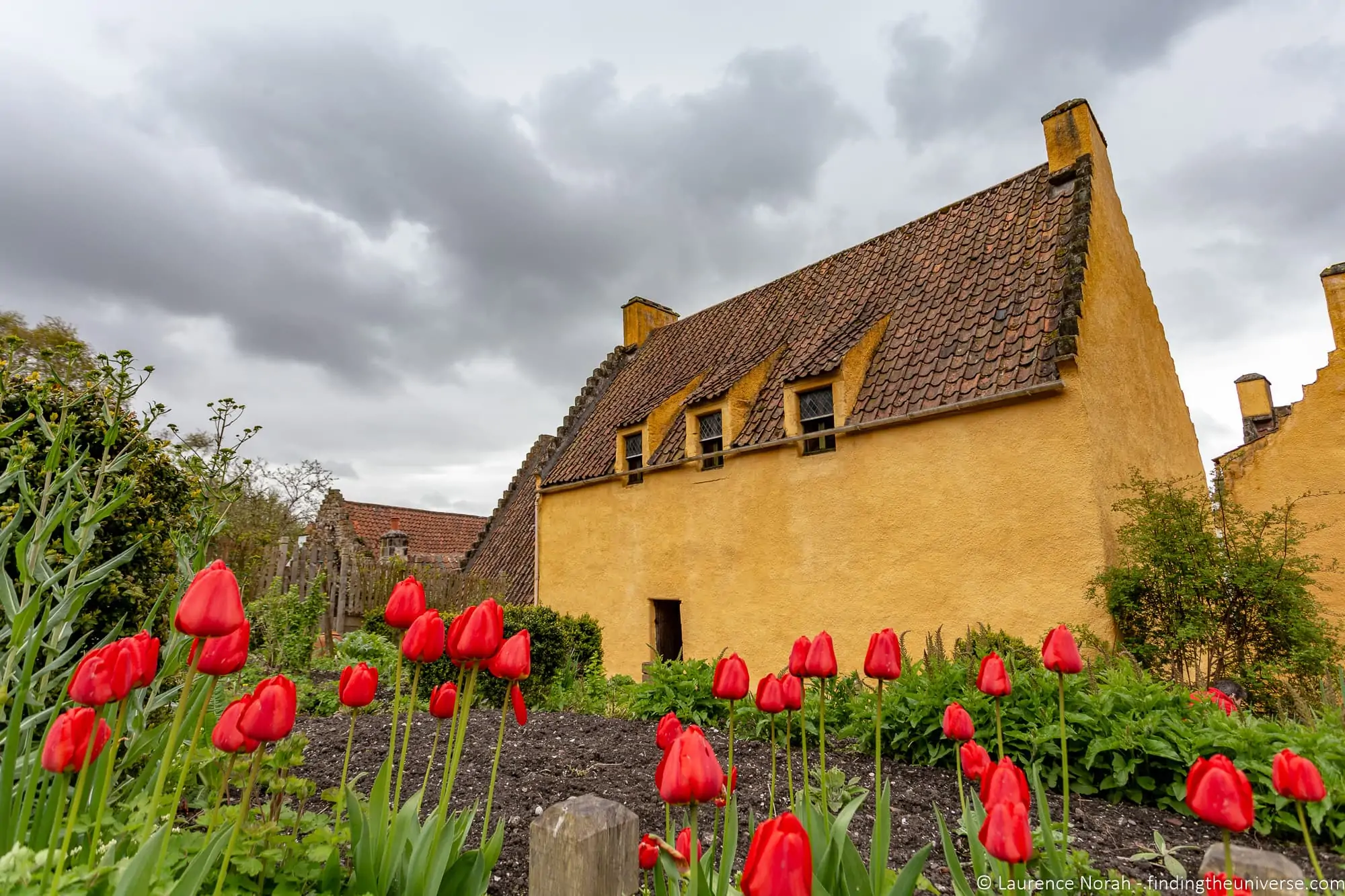
- Culross, also in Fife, a near-perfectly preserved 17th-century village now in NTS care. Played Cranesmuir in the show, and the Mercat Cross and the gardens of Culross Palace are instantly recognisable. Entry to the village is free; the palace and gardens are paid (NTS member free).
- Hopetoun House, near South Queensferry, which played the Duke of Sandringham’s stately home. The 2026 season runs Thursday to Monday, 3 April to 27 September, and the visitor tour has been updated this year with new Outlander scenes added.
- Midhope Castle, the stark tower that stands in for Jamie’s family home Lallybroch. Sits on the Hopetoun estate; you can only see the outside, and access is sometimes closed for filming or farming. Adult admission is £9.50, opening daily from 27 February 2026. Check hopetoun.co.uk before travel.
- Blackness Castle, a battleship-shaped fortress on the Firth of Forth that played Fort William. Adult admission £7.50 online / £8.50 walk-up.
- Linlithgow Palace, the birthplace of Mary Queen of Scots, which played Wentworth Prison. Adult admission £10 online / £11 walk-up, beautiful even without the Outlander association.
For more locations across the country, see our detailed guide to Outlander filming locations in Scotland.
How to See the Outlander Filming Locations from Glasgow
The Glasgow locations are easy to do on foot or by public transport in a half day. For Park Circus, walk up from Kelvingrove via Woodlands Road; you’ll pass Glasgow University on the way.
The locations outside Glasgow are spread across central Scotland, with most clustered in Fife or around Falkirk. The cleanest way to see several in a day is either to hire a car, or to take a tour.
For tours, Rabbie’s do a full day Outlander trip out of Glasgow, The Outlander Adventure, which takes in Culross, Blackness Castle, Doune Castle, Falkland and Midhope Castle. Jess and I did their Glasgow Outlander day trip before either of us had seen a single episode of the show, and we still enjoyed the day. Culross, Blackness and Doune are worth the day out on their own.
If you’re visiting several Historic Environment Scotland properties on the same trip (Doune, Blackness, Linlithgow, plus the likes of Edinburgh Castle and Stirling Castle), the Historic Scotland Explorer Pass is a sensible buy. It covers entry to over 70 HES sites for 3 or 7 days and pays for itself quickly if you’re moving fast.
4. Take a Tour of Whisky Distilleries near Glasgow
You can’t come to Scotland and skip the whisky. Even if you’re not yet convinced by the spirit itself (Jess is still working on it), distillery visits are usually historically interesting, frequently in attractive buildings or settings, and a useful crash course in how the country’s most exported drink is made.

Laurence’s favourite Scotch is Laphroaig (Islay, well out of day-trip range from Glasgow), but the Lowlands distilleries near Glasgow produce a lighter, often triple-distilled style that’s a good starting point for newer drinkers. For the full picture across Scotland, our guide to Scottish whisky distilleries covers the wider regions. Here are the four near Glasgow we’d point you to:
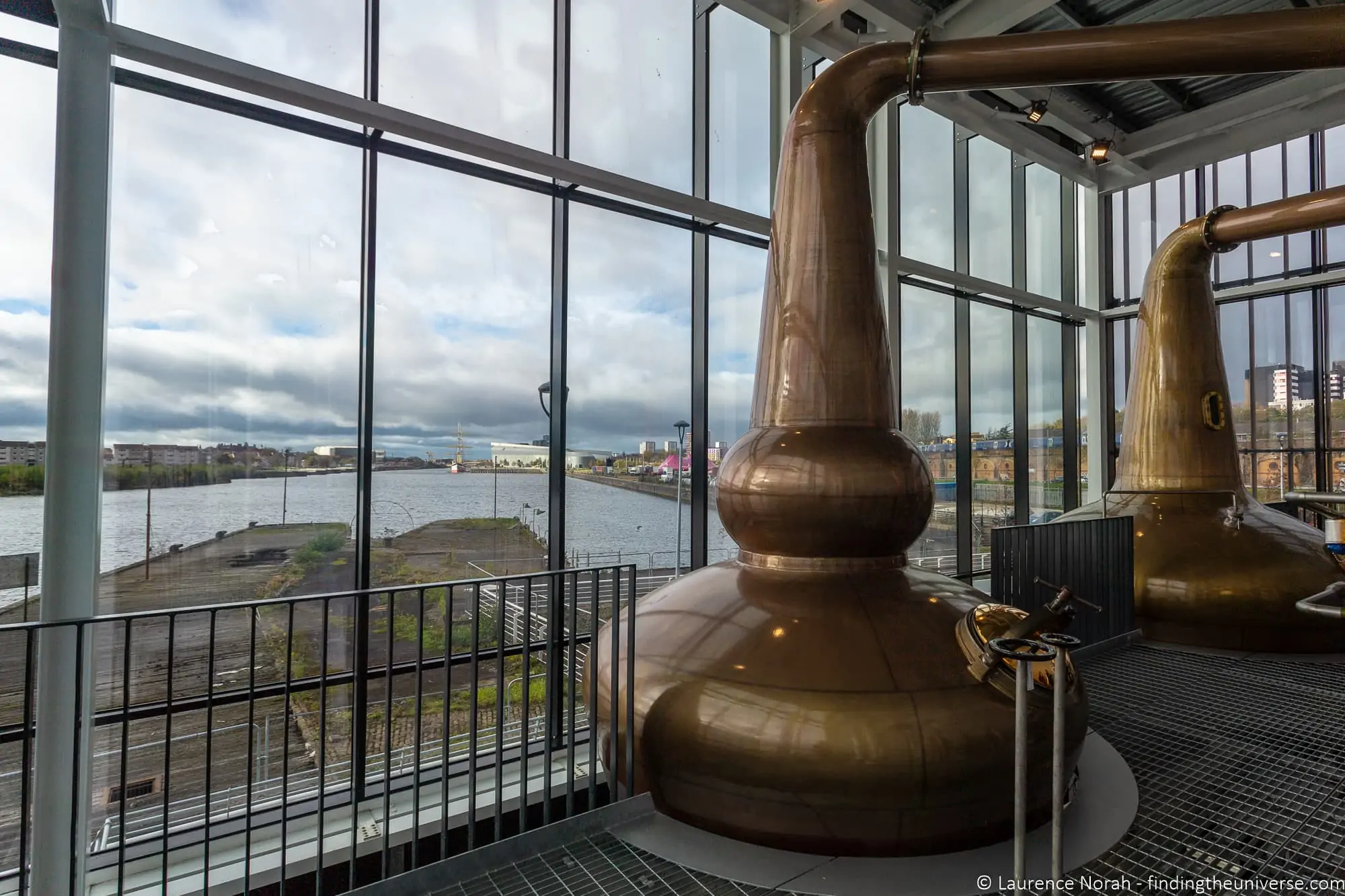
- The Clydeside Distillery. The most central option, on the banks of the River Clyde in the former Pumphouse building at Queen’s Dock, ten minutes’ walk from the SEC. Opened in 2017, with their first single malt released in 2021. Standard 60-minute tour is £19.50pp, hourly between 10:00 and 16:00.
- Auchentoshan Distillery, just outside Glasgow in Clydebank. Has been producing Lowland triple-distilled malts since 1800. The cheapest tour (“Distilled Different”) is 60 minutes and £12. Distillation here is currently paused, so what you’re seeing on the tour is the still house at rest. The visitor centre and tastings remain open as normal.
- Glengoyne Distillery, on the boundary between the Lowlands and the Highlands about 30 minutes north of Glasgow on the A81. Our favourite of the local distilleries. The cheapest tour and tasting is currently £25 for 75 minutes. They have been distilling on the same site for over 200 years using the slowest stills in Scotland. You can read about our visit here.
- Deanston Distillery, an 18th-century former cotton mill that has been a distillery since 1965. Less than a mile from Doune Castle, which makes it the obvious pairing with an Outlander day. Tours from around £20.
Pricing changes more often than the distilleries’ websites get refreshed, so confirm the latest on the distillery’s own site before you book.
How to Get to the Whisky Distilleries near Glasgow
We’d advise against driving to the whisky distilleries unless you have a committed designated driver. Most distilleries will let you take your sample home rather than drink it in the bar, but it isn’t the same experience, and drink-driving limits in Scotland are very low (50mg of alcohol per 100ml of blood, lower than the rest of the UK).
If you don’t want to drive, public transport works well for the closer options. The Clydeside is easily reached on foot or by Subway from the city centre. Take the Subway (now fully contactless since 16 March 2026, capped at £3.40 for the day) to Govan or Cessnock and walk across to Queen’s Dock. The Glasgow’s hop-on-hop-off bus has a stop right by the distillery if you’d rather see the city at the same time.
For Auchentoshan, take the train from central Glasgow to Dalmuir (around 20 minutes), then a four-minute bus ride or 20-minute walk across to the distillery. For Glengoyne, the B10 bus runs from central Glasgow and takes about an hour. For Deanston, take the train to Stirling and pick up the 59 bus the rest of the way; that’s also about an hour.
For up-to-date timetables on all of these, Traveline Scotland is the authoritative source.
If you’d rather take a tour, you have a couple of routes. The simplest is to take a tour that pairs a distillery visit with other sights (better value for time and money than a distillery-only day):
- Rabbie’s full-day Stirling Castle, Loch Lomond and Cruise tour, which pairs the loch and castle with a Loch Katrine cruise (no distillery on this one, but a great Highland-edge sampler).
- A private full-day distillery tour via Viator that pairs Glengoyne and the Clydeside distillery with a Loch Lomond cruise. Pricier but flexible if you want a deep whisky day.
5. Stirling
Stirling is Scotland’s smallest and one of its most historically important cities. Like Edinburgh, it’s built around a medieval castle on a defensible volcanic plug, with a medieval old town curving down the hill from the castle gates.
Stirling’s hilltop has been fortified for over 2,000 years; the current castle dates largely from the 15th and 16th centuries. For a long stretch of Scottish history it effectively controlled the way into the Highlands. Any army moving north out of the Lowlands had to pass within sight of Stirling. For a period in the late medieval era, Stirling was the capital of Scotland, though it has only officially been a city since 2002.

Stirling Castle is the obvious centrepiece; adult admission is £18.50 online or £20.50 walk-up. The Great Hall and the recently restored Royal Palace are the standout interiors, and there’s enough on the site to easily fill half a day.
A couple of miles north, the National Wallace Monument looms above the plain. Built in 1869, this 220-foot Victorian tower commemorates Sir William Wallace, the 13th-century Scottish freedom fighter played by Mel Gibson in Braveheart. It overlooks the site of the Battle of Stirling Bridge, where Wallace defeated the English army under King Edward I in 1297. Admission is around £16.50 per adult; check the latest on the official site before you visit.
Beyond the castle and the monument, Stirling has a compact medieval old town worth a wander, with the Church of the Holy Rude (where the infant James VI was crowned in 1567) and the Cowane’s Hospital almshouses both on the walking route up to the castle. You can fill a day comfortably without driving anywhere else.
How to Get to Stirling from Glasgow
The easiest way to get to Stirling from Glasgow is by train: a direct service runs every half hour, takes around 50 minutes, and drops you a 15-minute walk from the castle. Find train times and book tickets here.
You can also drive (around 45 minutes to an hour depending on traffic), which is the better option if you want to combine Stirling with Falkirk or visit the Wallace Monument on the same trip, both of which are awkward without your own wheels.
A tour is the third option. Rabbie’s runs the Stirling Castle, Loch Lomond and Cruise tour from Glasgow that pairs the castle with a Loch Katrine cruise, which is a great way to combine two of the headline trips into one day.
6. Falkirk
Falkirk sits between Glasgow and Edinburgh, less than half an hour from either by train. If you only have a half day to spare, this is the easiest meaningful trip out of the city.
The headline attraction is the Kelpies, two 100-foot stainless-steel horse heads at the entrance to the Forth and Clyde Canal in The Helix park. They are the largest equine sculptures in the world, and even by Scottish standards an absurdly photogenic landmark.
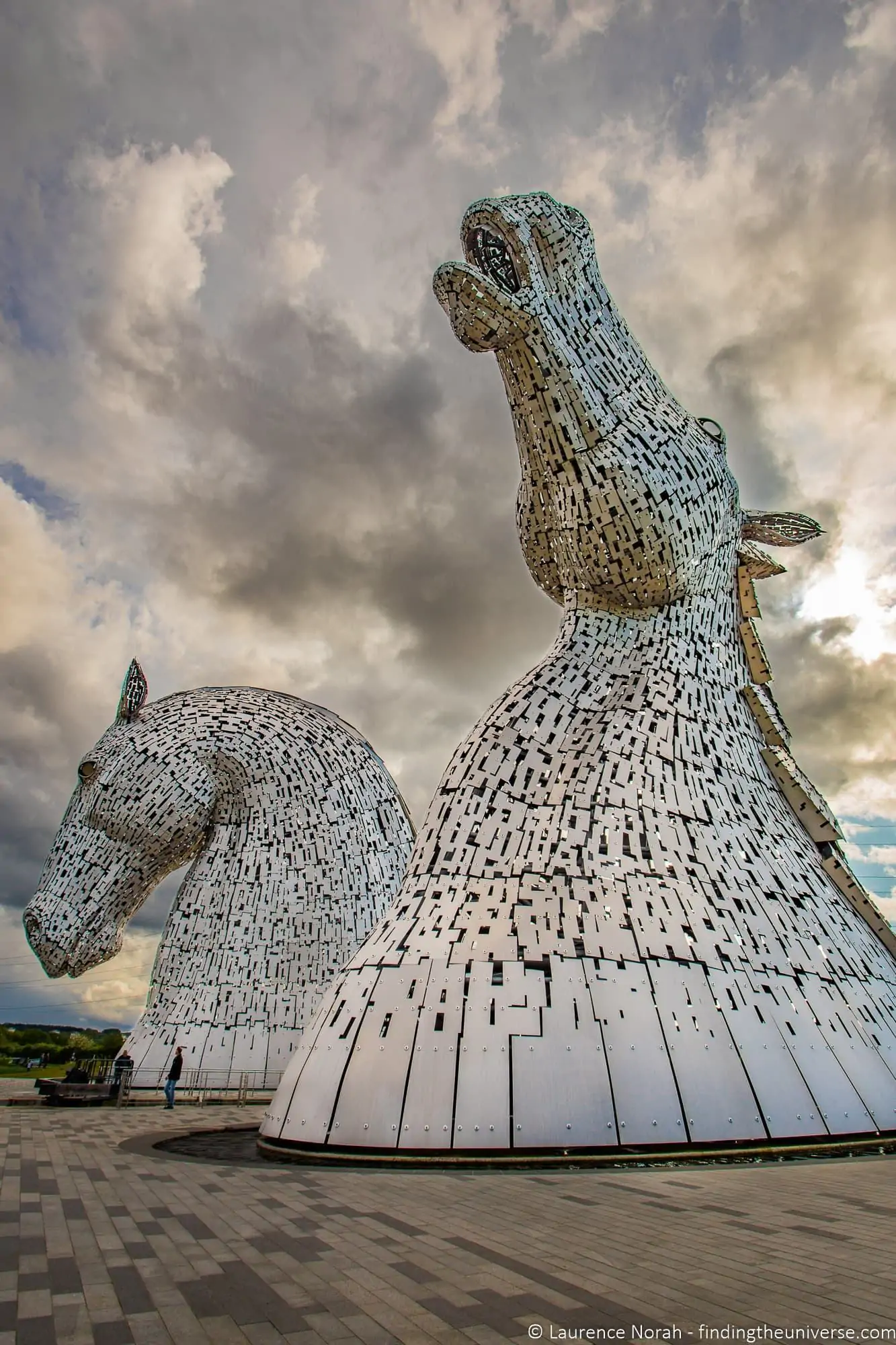
A kelpie in Scottish mythology is a shape-shifting water spirit, usually appearing as a horse, that lures people into water to eat them. Cheerful folklore, this one. The statues are free to view (and to walk around) and there are guided tours that take you inside the heads for a small fee.
The other big Falkirk landmark is the Falkirk Wheel. This is the only rotating boat-lift in the world, designed to reconnect the Forth and Clyde Canal with the Union Canal (the two canals that, together, let you take a canal boat from Glasgow to Edinburgh). Watching it operate is engineering theatre worth catching. You can ride the boat lift as part of a one-hour canal boat tour; tickets are £17.95 adult, £16.50 concession, £9.80 child (5-15).

The third Falkirk stop worth flagging is Callendar House, a 14th-century mansion redesigned in the 19th century to look like a French chateau. The grounds are free and open year-round, and admission to the house is also free. The grounds include a surviving section of the UNESCO-listed Antonine Wall, the Roman Empire’s brief northern frontier.
How to Get to Falkirk from Glasgow
Driving from Glasgow takes around 30 to 45 minutes, and is the easiest way to see all three Falkirk attractions in a day (they’re spread out and not walkable between).
Trains are the alternative. There are two stations in Falkirk (High and Grahamston), and trains from Glasgow Queen Street take around 25 minutes. Once in Falkirk, you’ll want to use local buses or a taxi between the attractions; the Kelpies are about 1.5 miles east of Falkirk High station, and the Wheel is a similar distance west. Tickets for the train are bookable here; local bus timetables are at Traveline Scotland.
7. Edinburgh
Edinburgh is of course the obvious day trip, and one you should not dismiss because it’s the obvious one. Even after a full day you will not have scratched the surface of what makes the Scottish capital one of the most rewarding city visits in Europe, but a day will let you see the headline sights, get a feel for the place, and decide whether to come back for longer.
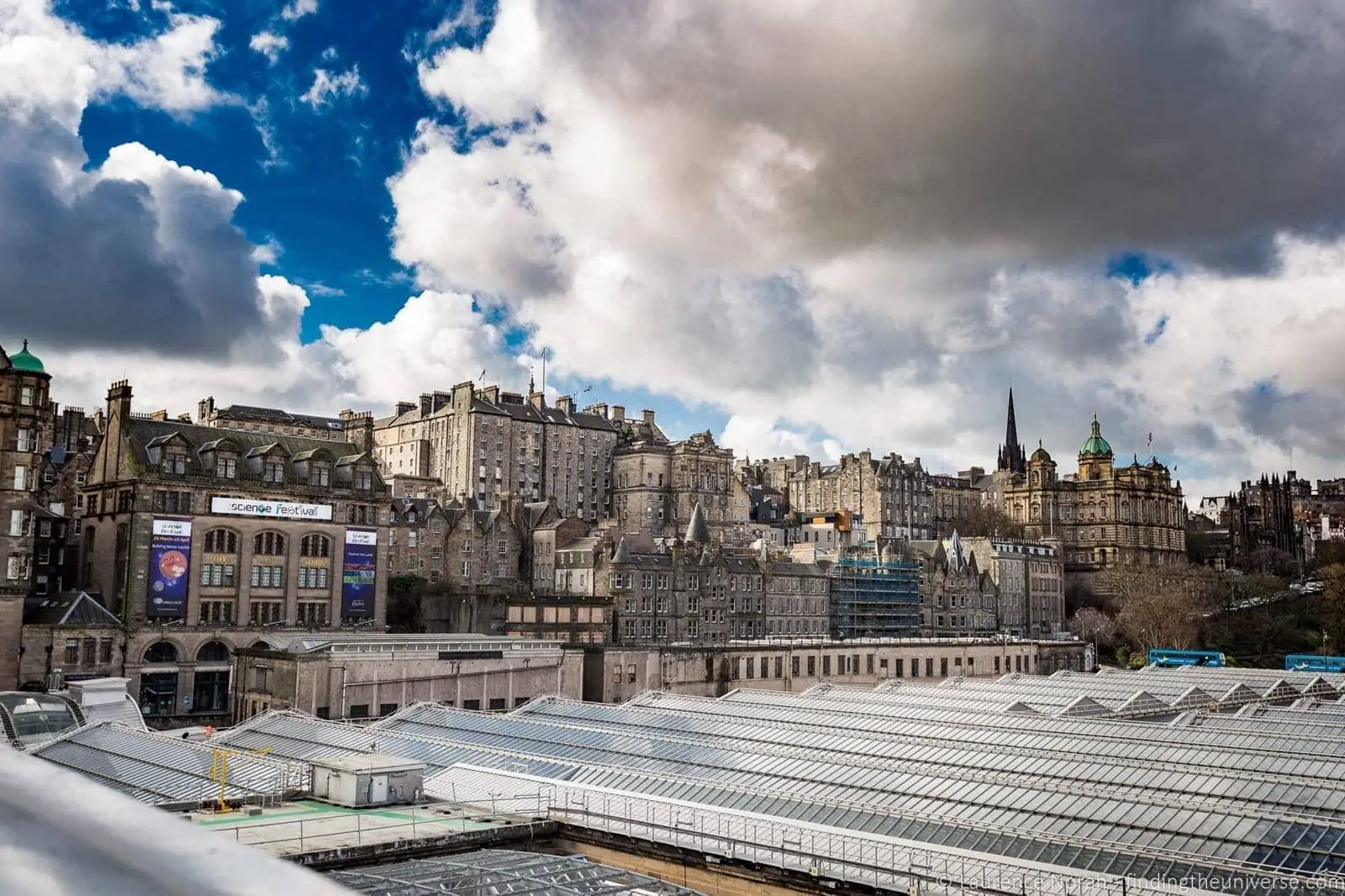
For a day trip I’d suggest building the day around Edinburgh Castle in the morning (book online in advance), then walking the Royal Mile down to the Palace of Holyroodhouse, with stops at the National Museum of Scotland or the Scottish National Gallery on the way back up. If you have two days in Edinburgh, we’ve got a guide; for a full list of things to do in Edinburgh, see our dedicated article.
Harry Potter fans should make time for Edinburgh’s Harry Potter sites, which J.K. Rowling drew on while writing the books.
In August, when Edinburgh hosts the Fringe and the International Festival, many visitors stay in Glasgow and day-trip across because Edinburgh hotel prices triple. The same logic applies at Hogmanay, Scotland’s New Year celebration. I’ve lived through five Hogmanays in Edinburgh; in normal years the city is full but bookable, but if you’re catching the Street Party itself, the Glasgow-base-plus-train approach is one many people take.
How to Get to Edinburgh from Glasgow
Glasgow and Edinburgh are connected by train every 15 minutes from Queen Street (Edinburgh Waverley) and Central (Edinburgh Haymarket). Journey time is 50-55 minutes. The train drops you in the centre of Edinburgh within walking distance of the major sights. Book tickets here.
National Express and Citylink run buses between the two roughly every 20 minutes, taking 60-90 minutes depending on traffic. Book bus tickets here.
Driving is the third option, a trip we’ve taken many times. The M8 connects the two cities directly. Avoid the morning and evening rush hours: between 7-9am and 4-6:30pm the motorway is reliably slow.
We haven’t found any tours that run from Glasgow to Edinburgh on a day-trip basis (most multi-day Scotland tours start in Edinburgh and head outwards), so this is one you’ll need to do on your own steam.
8. National Museum of Rural Life & Pollok House
Two attractions on the southern edge of Glasgow that pair nicely as a quieter, more rural-flavoured half-day without leaving the city’s outer ring.
The National Museum of Rural Life is jointly run by NTS and National Museums Scotland. It’s set on a working farm in East Kilbride, and covers Scottish rural and agricultural life with both an exhibition space and the original 1950s farmhouse, with farm animals to meet. Adult admission is around £12 (free for NMS or NTS members). Good for families.

A short distance south of central Glasgow sits Pollok House, the 18th-century home of the Stirling Maxwell family. After a two-and-a-half year, £4 million refurbishment, Pollok House reopened in May 2026, so if you came past pre-pandemic this is a good moment to come back. It’s open daily April to October, 10:00 to 16:30 (last entry 16:00), and remains in NTS care under a long-term contract with Glasgow City Council. It’s one of the most engaging stately homes in central Scotland, and the Spanish art collection is well worth the visit on its own (look out for the El Greco).
While you’re at Pollok, the surrounding Pollok Country Park is also home to The Burrell Collection, the eclectic 9,000-piece art collection assembled by shipping magnate Sir William Burrell and gifted to the city. The collection reopened in March 2022 after a six-year £68 million refurbishment, and was named UK Art Fund Museum of the Year in 2023. It’s free to visit, and the building is now one of the best museum spaces in the UK. Opening hours are Monday to Thursday and Saturday 10:00 to 17:00, Friday and Sunday 11:00 to 17:00, closed Christmas Day and New Year’s Day. The collection ranges from Chinese ceramics and medieval European stained glass to Degas and Cézanne, all displayed in a building that blends the original mid-century glass-and-stone aesthetic with the new top-lit galleries.
Together, Pollok House and the Burrell are easily a half-day; add Rural Life and you’re at a full day. The two Pollok sites are a 25-minute walk apart through the park.
How to Get to Pollok and Rural Life from Glasgow
For Rural Life, the easiest route by public transport is the X1 bus from central Glasgow, which takes about 30 minutes. By car, it’s a 20-minute drive south on the M77.
For Pollok House and the Burrell, take the train from Glasgow Central to Pollokshaws West (15 minutes). From the station it’s a 25-minute walk through the park to Pollok House, or 20 minutes to the Burrell. Parking on site is free at both. Bus routes 3 and 57 from central Glasgow also stop at the Pollok Country Park gates.
9. Oban and Glen Coe
For a Highland-flavoured day from Glasgow, the route up the western edge of Loch Lomond, through the pretty historic town of Inveraray, past the ruins of Kilchurn Castle, to Oban and on into Glen Coe is a superb one. It’s the day trip that gives you the broadest sense of what Highland Scotland actually feels like. If you want more time in the Highlands and Skye, we’ve also reviewed Rabbie’s five-day tour.

Oban is sometimes called the seafood capital of Scotland (fair, in our experience), and is also the main ferry port for the Inner Hebrides (Mull, Iona, the Outer Hebrides via island-hopping). It’s a working fishing port with a Victorian seafront and McCaig’s Tower (a Colosseum-shaped folly) up on the hill.
Glen Coe is one of Scotland’s most cinematic landscapes, the kind of glen where the weather and the rock combine to do most of the work for any photographer. It’s also home to one of Scotland’s ski resorts and was a Harry Potter filming location (Hagrid’s hut sat in front of the Buachaille Etive Mòr).
The natural loop back to Glasgow runs down through Glen Coe, along Loch Lomond, and into the city, making for a complete circle.
How to Get to Oban and Glen Coe from Glasgow
The two practical options are driving yourself or taking a guided tour.
You can get to Oban by train from Glasgow Queen Street (a beautiful journey of around three hours, through the Trossachs and along Loch Awe), but you’ll have very limited Glen Coe options without your own transport. Glen Coe is roughly an hour’s drive north of Oban and not well served by public transport, so the train works only if you only want Oban.
If you’d rather take a tour, we recommend Rabbie’s Oban, Glen Coe, Highland Lochs & Castles day tour, which loops through all the highlights and is one of the best-value full-day Highland samplers from Glasgow.
10. Loch Ness
If you’ve heard about the Highlands and want to push deeper into them, Loch Ness is the obvious magnet. Whether you should do it as a day trip from Glasgow is a separate question.
Loch Ness is the home of Nessie, the loch’s possibly-imaginary monster, and the most famous of Scotland’s lochs by some distance. It’s also the largest lake in the UK by volume. If you added up the water in every lake in England and Wales together, you’d still have less than the volume of Loch Ness alone.
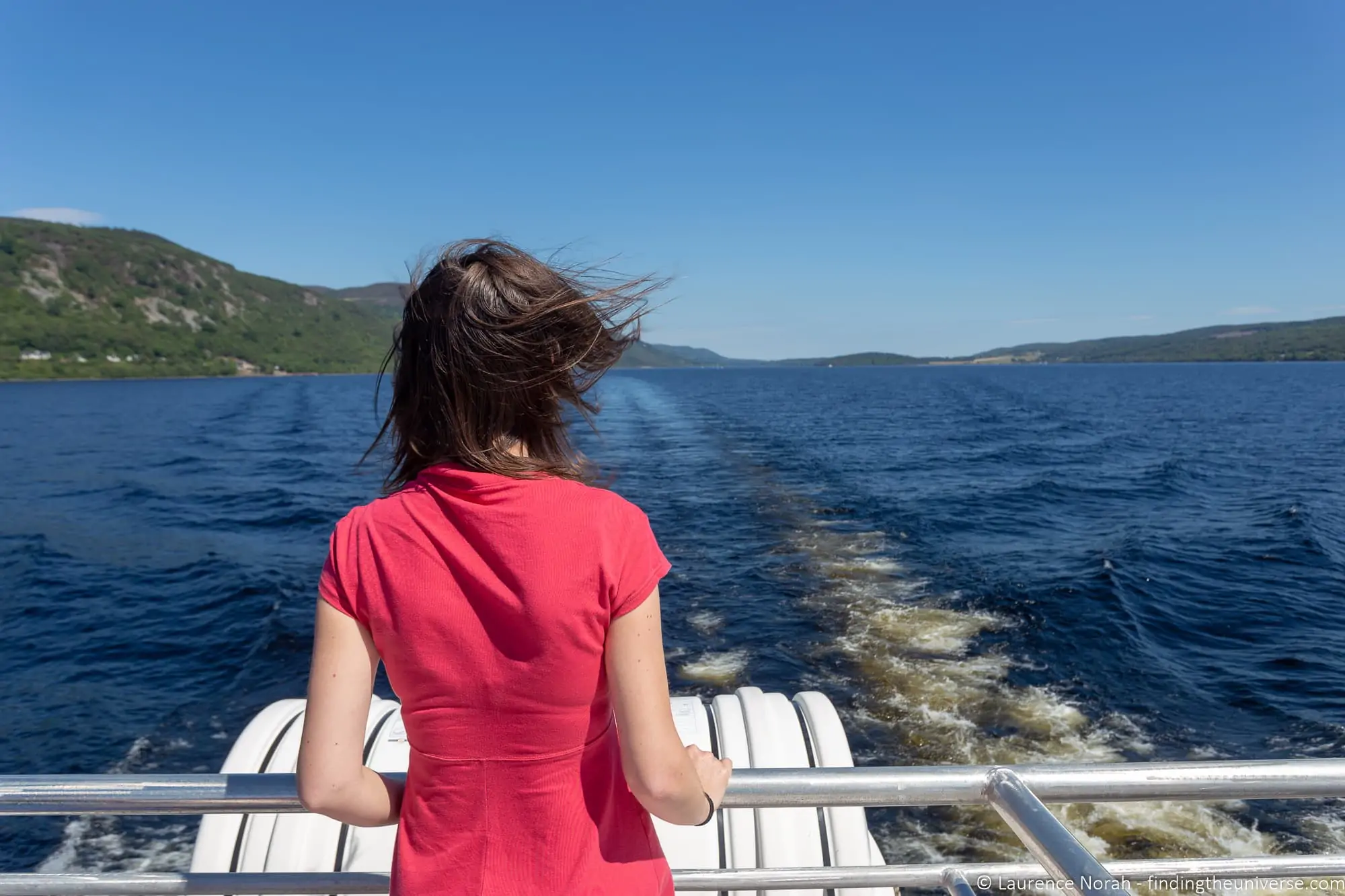
Beyond Nessie-spotting, you can take a cruise on the loch (multiple operators run from Inverness, Drumnadrochit and Fort Augustus), explore the ruins of Urquhart Castle (adult £14 online / £16 walk-up), and visit the cute villages around the loch’s edge.
The reason to think hard about this one as a day trip is the driving. Glasgow to Loch Ness is around 3.5 to 4 hours each way. Even with no stops, that’s seven to eight hours in a vehicle for a couple of hours at the loch. We’ve done it, and we really wouldn’t do it again that way. If you can possibly stretch this to two days with an overnight in Inverness, that’s a much better trip; you can take in Glen Coe and the Great Glen properly on the way.
Alternatively, base yourself in Inverness for a few days. It’s a beautiful small city and the natural base for the central Highlands, and we have a guide to the best day trips from Inverness that covers Loch Ness properly. That said, if you really only have the one day and Loch Ness is a bucket-list item, here’s how to make it work.
How to Get to Loch Ness from Glasgow
The two viable options are to drive yourself or take a tour.
Public transport works but only just. You can take the train from Glasgow Queen Street to Inverness (around 3.5 hours), then a local bus to the loch. By the time you’ve made the round trip you’ve spent the day on transport, with very little actual loch-time. We don’t recommend it.
A full-day Rabbie’s tour from Glasgow is the most practical no-car option. Their Loch Ness, Glencoe & the Highlands tour packs in Glen Coe, the Great Glen, and time for a Loch Ness cruise. It’s a long day (12 hours plus) but well-paced.
If you drive, plan a loop that takes the A82 up through Glen Coe on the way out, runs along Loch Ness, and returns down the A9 via the Cairngorms. Don’t try to do this as an out-and-back on the A82; the loop is more interesting and not much slower.
11. St. Andrews and the Kingdom of Fife
St. Andrews is the spiritual home of golf, the location of Scotland’s oldest university (founded 1413), and a small medieval town with the ruined cathedral that was once the most important in Scotland. It sits across the Firth of Forth from Edinburgh in the region known as the Kingdom of Fife.
The town itself is compact and walkable. The Old Course on the West Sands is the most famous golf course in the world; even if you don’t play, walking the Swilcan Bridge or watching from the public footpath that runs through the course is a quiet pleasure. The cathedral ruins are free to walk around, with the adjacent St. Andrews Cathedral Museum and St. Rule’s Tower (free to climb, great views) both run by Historic Environment Scotland. St. Andrews Castle, also HES, has the famous mine and counter-mine from the 1546 siege (currently closed to visitor access, but the castle interpretation explains them in detail).
If you have a car and a full day, the Kingdom of Fife pairs beautifully with St. Andrews. The fishing villages of the East Neuk (Crail, Anstruther, Pittenweem, St. Monans) string along the coast south of St. Andrews and are some of the prettiest small harbours in Scotland. Anstruther has the multiple-award-winning Anstruther Fish Bar (some of the best fish and chips in the UK, in our experience). Falkland Palace, the renaissance hunting lodge of the Stuart kings (and an Outlander filming location), sits inland.
The East Neuk villages on a sunny summer day are about as good as the Scottish coast gets. On a wet November Tuesday, less so. Check the forecast.
How to Get to St. Andrews from Glasgow
St. Andrews is famously not on the train network. A long-running campaign to restore the rail link was rejected by the Scottish Government in 2025, so the future is buses. Buses from Glasgow Buchanan Street to St. Andrews take around two and a half hours via Edinburgh or Dundee.
Driving takes around 90 minutes via the M80, the Clackmannanshire Bridge and the M90. Parking in St. Andrews is metered but plentiful at the West Sands and at Petheram Bridge car park. Compare car hire here.
For a tour, Rabbie’s runs a full-day St. Andrews and the Kingdom of Fife tour from Glasgow that loops through St. Andrews, several of the East Neuk villages, and back via Falkland. This is the easiest way to see the full region without your own car.
12. Isle of Arran
Arran is the southernmost of Scotland’s large islands and is often called “Scotland in miniature”: one side of the island has the Highland geology and dramatic peaks, the other has the rolling hills and farmland of the Lowlands. It’s the easiest of the Scottish islands to do as a day trip, and really the only one we’d put forward as a serious day-trip candidate from Glasgow.
Brodick is the main town and ferry port. From there you can hire a bike, take the island circular bus, or set out on foot for Goatfell, the island’s highest peak (874 metres, a four-to-six hour return walk that’s strenuous but not technical, with one of the best summit panoramas in Scotland). Brodick Castle sits a short walk north of the town, the former seat of the Dukes of Hamilton, with formal gardens (Adult around £18, NTS member free).
On the north of the island, the Lochranza Distillery (also known as the Isle of Arran Distillery) is one of Scotland’s youngest serious distilleries; tours and tastings are bookable on their site. Lochranza also has a 13th-century castle ruin and a small population of red deer that wander the village.
The thing to remember about Arran as a day trip is the ferry. Miss the last ferry back and you’re staying the night, whether you’d planned to or not.
How to Get to the Isle of Arran from Glasgow
The Isle of Arran ferry runs from Ardrossan to Brodick, takes around 55 minutes, and is operated by CalMac. The train from Glasgow Central to Ardrossan Harbour takes around 50 minutes and is timetabled to meet the ferry. The combined journey works well as a day trip, though it does mean a relatively early start and watching the clock for the return.
Driving means taking the ferry as a foot passenger and using the island’s bus, or paying for the car ferry, which needs booking well ahead in summer. The bus circular runs roughly hourly in summer.
For a guided tour, Rabbie’s runs an Isle of Arran day tour from Glasgow that handles the ferry timings, loops the island, and gets you back to the city the same day. It’s the lowest-stress way to do it.
Full List of Suggested Day Trip Tours from Glasgow
To make this easier to pick from, here’s the full list of tours we recommend that depart from Glasgow.
- Stirling Castle, Loch Lomond and Cruise (Rabbie’s, full day)
- Culzean Castle, Burns Country & the Ayrshire Coast (Rabbie’s, full day)
- The Outlander Adventure (Rabbie’s, full day)
- Oban, Glen Coe, Highland Lochs & Castles (Rabbie’s, full day)
- Loch Ness, Glencoe & the Highlands (Rabbie’s, full day)
- St. Andrews and the Kingdom of Fife (Rabbie’s, full day)
- Isle of Arran day tour (Rabbie’s, full day)
- Private Distillery Day Tour (Viator, full day, private)
- Glasgow hop-on-hop-off bus (GetYourGuide, in-city 2-day ticket; pairs well with a distillery half-day)
You can also see all the day trips Rabbie’s runs from Glasgow here.
What We’d Do Differently
We’ve done versions of most of these day trips over the years, and a few patterns have emerged that we wish we’d known the first time around.
Pick three day trips, not seven. The biggest mistake we made on our first long Glasgow trip was trying to fit a day trip into every available day. By day four you stop noticing the scenery, your photos start blurring together, and you spend the second half of every day too tired to enjoy anything. Three day trips across a week is about right. Use the other days for Glasgow itself and for slow afternoons.
Don’t do Loch Ness as a one-day round trip if you can help it. We’ve said this above and we’ll say it here too. Seven to eight hours of driving for two hours at a loch is an endurance event, not a day trip. Either give it two days and stay in Inverness, or pick a closer Highland option (Oban and Glen Coe gives you the same scenic feel with half the driving).
Book ahead for the headline attractions. Doune Castle has been busy since Outlander started in 2014; the Sam Heughan audio tour means the carpark is regularly full. Book online for Stirling Castle, Edinburgh Castle and Doune Castle in summer. The online price is also lower than the walk-up price by a couple of pounds at every HES site.
Don’t drive to a whisky distillery without a designated driver. We’ve watched too many visitors arrive at Glengoyne realise mid-tour that they can’t actually drink the whisky they came for. Most distilleries will give you the sample in a sealed dram bottle to take home, but it isn’t the same. Take a tour, take the bus, or share the day with a non-drinker.
Check Sunday opening before you build a Sunday around a museum. Many smaller Scottish museums close on Sundays or open late (Burns Cottage opens at 11am on Sundays, for example, not 10am). The big national museums and HES sites don’t have this issue.
If you’re doing two or more NTS sites in a day, get the membership. Single £79 covers all visits in a year. Burns Cottage, Culzean Castle, Pollok House and Brodick Castle are all NTS; if your trip even touches two of those, the membership pays for itself before you leave Glasgow. Same logic applies to Historic Scotland: the 14-day Explorer Pass (around £48 adult) covers most of the Outlander castles plus Stirling and Edinburgh and pays back fast.
Watch the weather and have a wet-day reserve. Glen Coe in driving rain is still beautiful, but the East Neuk fishing villages aren’t, the Kelpies aren’t, and the Wallace Monument view isn’t. Keep a city-day option (the Burrell, the National Museum of Rural Life, Stirling Castle interior) ready for the inevitable wet day. Scotland gives you those, we always plan around them now.
Don’t underestimate the Scottish midge from May to September. This is more relevant to the Highland-edge day trips (Loch Lomond, Glen Coe, Loch Ness) than to the central belt or coast. Carry repellent. Smidge is the locally preferred brand and works.
Where to Stay in Glasgow
Glasgow has a wide range of accommodation at a wide range of prices, and we’ve enjoyed staying in the city across several visits. The recommendations below are ones we’ve stayed at or that consistently come up in our circles; for the full range, the Booking.com filters work well to narrow by area, price and property type.
See all Glasgow accommodation on Booking.com here, or browse by hotels, apartments, guesthouses, and hostels.
Our four picks across price and style:
For a mid-range central hotel, our pick is the Leonardo Royal Hotel Glasgow on Jamaica Street. We’ve stayed here when it was the Jury’s Inn; it was rebranded after the IHG-to-Leonardo handover and reopened in 2024 after a £6.8 million refurbishment. Excellent central location and good value.
For serviced apartments in the centre, the Native Glasgow occupies the Edwardian Anchor Line building on St Vincent Place and has apartment-style suites with kitchens, great if you want more space than a hotel room.
For boutique luxury, the Kimpton Blythswood Square Hotel is a five-star in a Georgian terrace on Blythswood Square in the city centre, with a spa and one of Glasgow’s better hotel bars.
For modern value, Yotel Glasgow has small efficient cabin-style rooms in the city centre, ideal if you mostly need a bed and a base.
You can also see our list of Airbnb alternatives for more options.
Frequently Asked Questions
What’s the Best Day Trip from Glasgow Without a Car?
For the easiest car-free day trip, Stirling. A direct train from Glasgow Queen Street runs every half hour, takes 50 minutes, and drops you a 15-minute walk from the castle gates. From the castle you can walk the medieval old town and Stirling itself without needing any other transport.
Loch Lomond is the close runner-up: a 50-minute train from Glasgow Queen Street to Balloch, then walk to the loch shore for the cruise pier.
For a half-day, the Falkirk Wheel and the Kelpies are both reachable by train, though you’ll want a local taxi or bus between the two within Falkirk itself.
What’s the Best Day Trip from Glasgow by Train?
Stirling and Edinburgh are the two strongest train day trips. Both have direct services running multiple times an hour from Glasgow Queen Street, take under an hour, and put you in walking distance of all the main sights at the other end.
Edinburgh gives you the bigger city experience; Stirling gives you the better single attraction (Stirling Castle) and a quieter old town. If you can do both on separate days, do.
How Long Does It Take to Get to Loch Lomond from Glasgow?
Around 40 minutes by car to the loch’s southern end at Balloch, or 50 minutes by train from Glasgow Queen Street to Balloch station. The northern end of the loch (Tarbet, Ardlui) is around an hour and a quarter by car.
Bus tours typically allow around half an hour of transit each way.
Can You Do Loch Ness as a Day Trip from Glasgow?
Yes, but we wouldn’t recommend it unless you have no other choice. The drive is 3.5 to 4 hours each way, which means seven to eight hours in a vehicle for a couple of hours at the loch.
A guided tour (Rabbie’s run a full-day Loch Ness, Glen Coe and Highlands tour) is the most practical no-car option and is around 12 hours door to door.
If you can stretch it to two days with an overnight in Inverness, the trip is much more rewarding. Better still, base yourself in Inverness for a few days and treat the loch as a half-day from there.
What’s the Best Outlander Day Trip from Glasgow?
For a full immersion in the show, take Rabbie’s Outlander Filming Locations day tour, which covers Doune Castle, Blackness Castle, Linlithgow Palace and Culross in one full day.
If you have a car, you can build a more flexible day around the same locations plus Hopetoun House and Midhope Castle (Jamie’s family home Lallybroch on screen), which the bus tours don’t visit due to filming-related access restrictions.
For the new Outlander: Blood of My Blood prequel locations specifically, Park Circus in Glasgow itself is free to walk around at any time; Doune Castle, Balvaird Castle, and Bannockburn House (limited open days, weekends only) are the other three.
Can You Visit Whisky Distilleries from Glasgow Without a Car?
Yes. The Clydeside Distillery is the easiest, a short Subway ride or walk from the city centre. Auchentoshan is reachable via train to Dalmuir plus a short bus or walk. Glengoyne is doable on the B10 bus (about an hour each way). Deanston requires a train to Stirling and a bus to the distillery.
If you want to visit more than one distillery in a day without driving, a guided tour is the more sensible option. Rabbie’s day tours typically pair a distillery visit with other Highland attractions.
Is Edinburgh Worth Visiting as a Day Trip from Glasgow?
Yes, even though Edinburgh deserves longer. A day will let you see Edinburgh Castle, walk the Royal Mile, see one or two of the major free museums, and get a feel for the city. You won’t see everything, but the day is well-spent. Trains between the two cities run every 15 minutes, so you can come back another day for more.
During the Edinburgh Festival in August and at Hogmanay, many people stay in Glasgow specifically to day-trip into Edinburgh because of the price difference in accommodation.
How Many Day Trips Can You Do from Glasgow in a Week?
Three full-day trips across a week is what we’d suggest. Add a couple of half-day trips (Falkirk, Pollok and the Burrell) for two more days, and you’ve still got two days in Glasgow itself.
Trying to fit a full day trip into every available day burns most people out by mid-week, and you end up not really seeing any of them properly.
Further Reading
We’ve lived and travelled across Scotland over many years, and have put together a wide range of content to help you plan your trip. Some pieces we think will pair well with this one:
- Our companion guide to 2 days in Glasgow and Loch Lomond, which goes deeper on the Glasgow + Loch Lomond combination.
- Our guide to things to do in Glasgow, and our photo essay on the street art of Glasgow.
- Our guide to things to do in Loch Lomond.
- For other Scottish cities: things to do in Edinburgh and things to do in Aberdeen. Harry Potter fans will also want to read about Harry Potter locations in Edinburgh and Harry Potter filming locations in Scotland.
- For the Highlands and islands: visiting the Isle of Skye, our Glen Coe photo essay, our North Coast 500 road trip planning guide, and our 5 Day Isle of Skye and Scottish Highlands itinerary.
- Our detailed guide to visiting Glen Coe.
- We have guides to day trips from other Scottish cities: best day trips from Inverness, best day trips from Edinburgh, and best day trips from Aberdeen.
- For a deeper guidebook on Scotland, we recommend the Rick Steves Scotland 2026 edition. The Rick Steves guides are our go-to for practical detail without the bloat.
And that’s our guide to the best day trips from Glasgow. As always, do let us know your feedback and questions in the comments below.
Sandra says
Thank you so much. Planning a trip to Scotland in the future and your site was most helpful x
Laurence Norah says
My pleasure Sandra – have a wonderful trip and do let us know if you have any questions!
Laurence