
The popular Outlander TV show and book series is set primarily in Scotland, and many Outlander filming locations are also real-life locations that you can visit on a trip to Scotland.
A visit to these filming locations is often a must for fans of the TV show, where they can see the locations that have brought the show to life.
We’re going to share all our favourite Outlander filming locations around Scotland that you can actually visit yourself.
This is based on our own explorations in Scotland from our time living there, as well as a specific tour of Outlander locations that we took.
If you’re an Outlander fan who is travelling with friends or family who haven’t seen the show, we still recommend bringing them along on your Outlander adventure.
You definitely don’t need to be a fan of the TV show or to have watched many episodes to enjoy visiting the locations, as many of them are interesting and scenic. After all, that’s often why they were chosen to be in the show!
The majority of the Outlander filming locations in Scotland can be easily visited as a day trip from Edinburgh or day trip from Glasgow, although you would need more than one day to visit all of them. However, basing yourself in either Edinburgh or Glasgow is likely the best option as this will let you access most of the filming sites quite easily.
I’ll take you through all our favourite Outlander filming locations in Scotland, with everything you need to visit them yourself. The original series has now told its whole story, with the eighth and final season having aired in May 2026, so this guide covers all eight seasons. Note that it contains spoilers, as I describe the scenes and events that happen at each location.
Let’s get started!
Table of Contents:
Visiting the Outlander Locations: A Quick Take
Short on time? Here’s the quick version.
Outlander was filmed almost entirely in Scotland, and around 40 of its filming locations are real places you can go and see. Some are working castles and palaces, others are free public parks and village streets. They’re scattered right across the country, but the majority sit within day-trip distance of Edinburgh, Glasgow and the Fife coast, with a handful more up in the Highlands.
The original series has now finished. The eighth and final season aired in May 2026, so the story is complete, and this guide covers all eight seasons. The wider Outlander universe carries on, though. The prequel series, Outlander: Blood of My Blood, has brought its own set of visitable Scottish locations, and I’ve covered those in their own section further down.
A few things worth knowing before you go. Some of the most famous “locations” aren’t quite what fans expect. Craigh na Dun, the standing stone circle, was a Styrofoam set and was never a real place. Lallybroch, which is Midhope Castle, is a roofless shell you can only admire from the outside. Plenty of others though, like Doune Castle, Blackness Castle and the village of Culross, are every bit as memorable in person as they look on screen.
Where is Outlander Filmed?
Outlander is primarily filmed in Scotland. Much of the filming takes place at the Wardpark Studios near Glasgow. However, a number of scenes have been shot at locations all across country. Even those scenes which are set outside of Scotland, such as those set in North Carolina (USA) and France, were also filmed in Scotland.
Although almost all of Outlander has been filmed in Scotland, a few filming locations outside of Scotland have been used, including Prague, Czech Republic and Cape Town, South Africa. Some scenes have also been filmed in England.
For the first few seasons of the show, many publicly accessible and well-known locations in Scotland were used.
However, as the show became ever more popular, the studio had to move to more studio shooting, shooting on private estates, and more off the beaten path filming locations, to avoid all the fans hoping to catch a glimpse of the stars. This is why you will find more locations from earlier seasons of the show in this guide.
In addition to using our travel guide to Outlander filming locations, we can also recommend picking up the official companion books to Outlander, available here for the Seasons 1 & 2, and here for Seasons 3 & 4.
They have hundreds of photos of the sets, information from the crew and cast on the filming process and locations, and lots more to get you excited about visiting the real-life Outlander locations!
40+ Outlander Filming Locations in Scotland
There are a great many locations where Outlander was filmed in Scotland. Here are some of our favourite locations.
These are not in a strict order – we’ve grouped some together that are easier to visit together, and tried to list some of the more iconic locations first.
However, everyone has their own idea of which are the best Outlander locations, so you are welcome to pick and choose which ones you want to visit of course!
Kinloch Rannoch – Craigh Na Dun
One of Outlander’s most well-known moments is when Claire travels back through time at the Craigh na Dun stone circle.
Fans visiting Scotland are always keen to know how to visit the standing stones from Outlander. Unfortunately, you can’t actually visit them because they don’t exist. The stone circle in the show was created out of Styrofoam, and the set was built on private land near the village of Kinloch Rannoch.
The good news is that you can of course visit Kinloch Rannoch as the surrounding scenery as seen in the show is very much real. Loch Rannoch in particular is beautiful, and there’s lovely Highland scenery in the area.
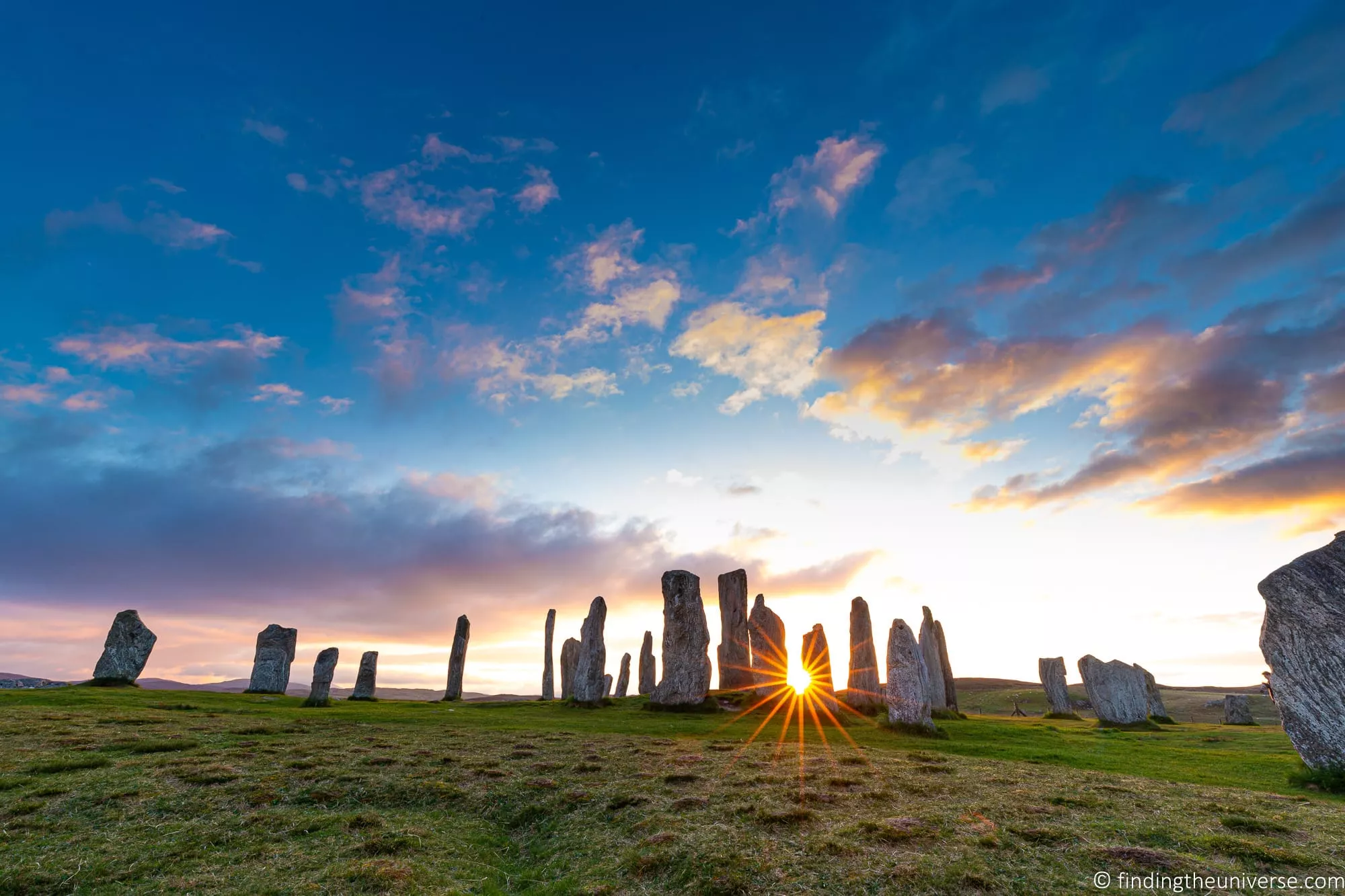
If you would prefer to see some standing stones, you have a great many options in Scotland. First, the stone circle that is believed to have inspired the look of the stones at Craigh na Dun is the 5,000 year old Callanish stone circle on the island of Lewis & Harris.
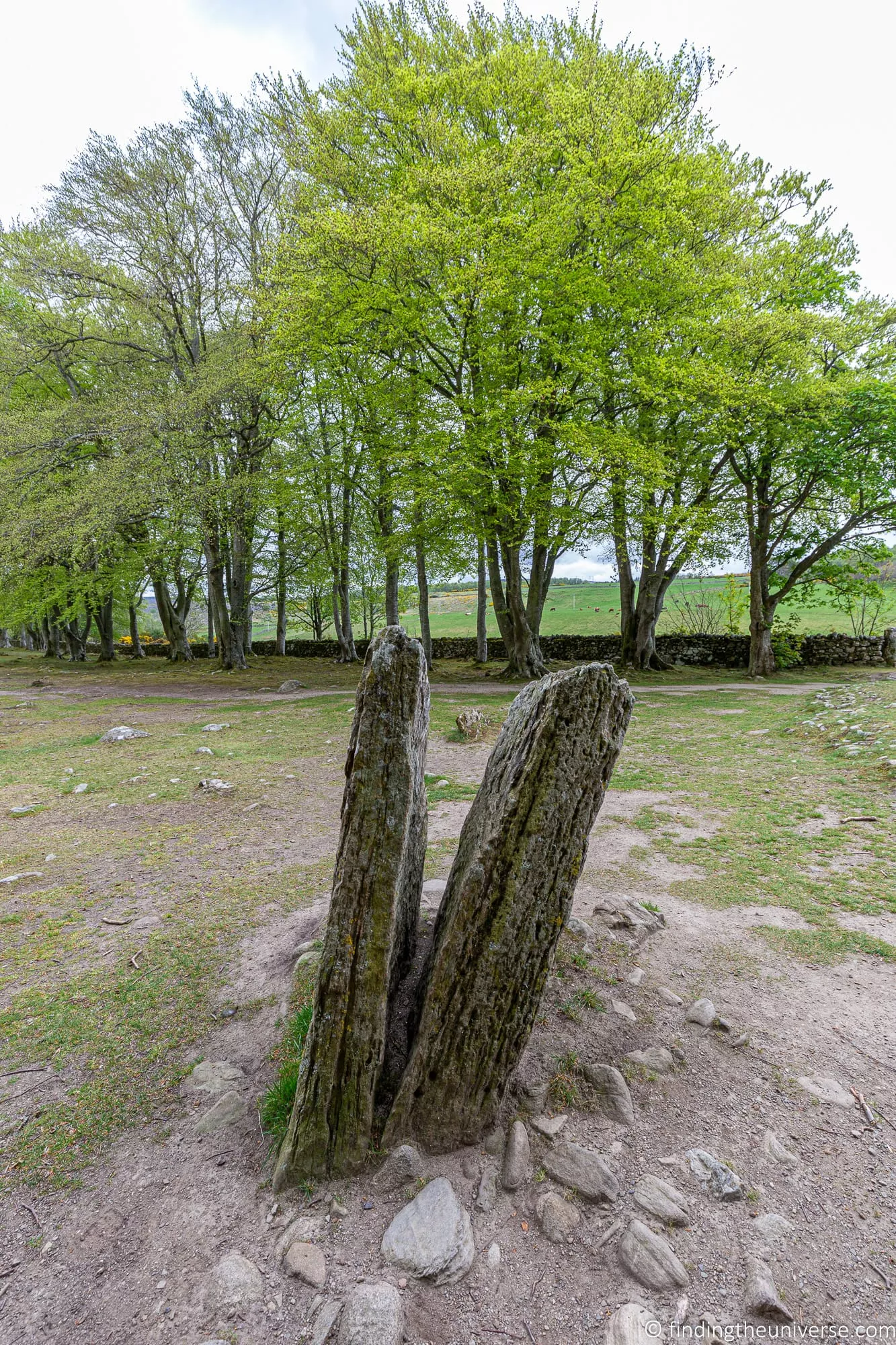
Another popular option are the Clava Cairns near Inverness, where there’s a split stone similar to the one from the show.
In terms of visiting, the village of Kinloch Rannoch is on the shores of Loch Rannoch. This is around a two hour drive from Edinburgh, Glasgow, or Inverness. It’s not on any public transport routes so you will have to have your own vehicle to visit.
Clava Cairns is a lot easier to visit, being found just a few miles outside of Inverness. A number of tours include the Clava Cairns on their day trips from Inverness, such as this one. It’s also visited on longer tours from Edinburgh, such as this 2 day tour.
The Callanish standing stones will require you to visit Lewis & Harris, either using your own vehicle, or on a tour like this.

Doune Castle – Castle Leoch
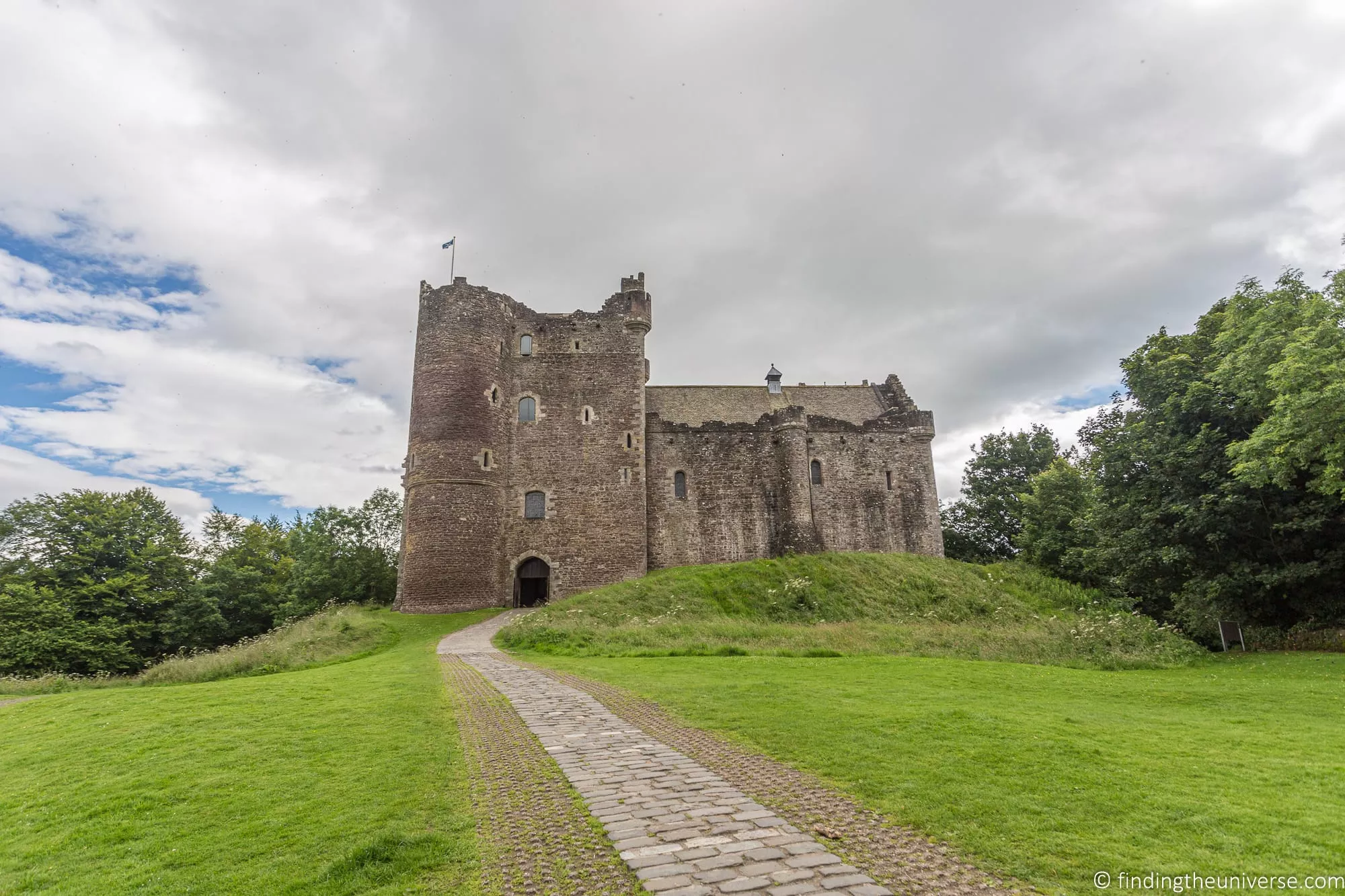
Doune Castle, found just outside the village of Doune, is a 15th century medieval stronghold found around an hour’s drive from both Edinburgh and Glasgow.
Doune Castle features as Castle Leoch, the Mackenzie family home, in the first season of Outlander. Both exteriors and interiors of the castle were used for a number of scenes and a small village was built outside the front entrance of the castle to appear in the show.
There is also a Clan MacKenzie in real life, and their family home is at Castle Leod. This is found about 14 miles north west of Inverness. Whilst it served as the inspiration to Castle Leoch in the Outlander novels, it was not chosen as a filming location. However, many fans still wish to visit Castle Leod. You can see more about Castle Leod in my section on related Outlander locations further on in this guide.
Doune Castle is no stranger to the silver screen. Before Outlander, it was well known as the filming location of the Monty Python and the Holy Grail. The TV show Game of Thrones also shot early scenes here, with the castle standing in for Winterfell.
Doune Castle is open for visitors, and you can learn about both the Outlander and Monty Python filming when you visit. It’s operated by Historic Environment Scotland, and there’s an entry fee, which at the time of writing is £10 for an adult ticket booked online. It’s free to enter if you’re a Historic Scotland member. English Heritage members get half-price entry in their first year of membership, and free entry from the second year onwards.
If you plan on visiting several Historic Scotland sites, and there are quite a few on this list, it’s worth looking at the Historic Scotland Explorer Pass. This is now a single pass valid for 14 consecutive days, and it covers one visit to each staffed Historic Scotland site. At the time of writing it costs £48 for an adult, £39 for a concession, £29 for a child and £100 for a family. It is a popular pass and only a limited number are sold, so it can sell out a week or more in advance in peak season.
Doune Castle is a popular attraction in Scotland, and is included on a number of tours from Edinburgh, including this group tour. You can also visit it on a tour from Glasgow like this.
Of course, if you have your own transport you can also visit Doune Castle by car. In addition, a public bus runs from Stirling to Doune, and you can get to Stirling by train from locations around Scotland. You can check train times and book tickets here, and you can get general public transport information for Scotland on the Traveline Scotland website here.
Hill of Row – Fraser’s Ridge
Whilst you are visiting Doune, you might try searching out the iconic Fraser’s Ridge location where Jamie and Claire live in North Carolina. The log cabin they live in is actually found on the Hill of Row, a stretch of high ground to the south east of Doune. However, the background in many of these scenes is added separately using scenes from North Carolina.
The exact location of the cabin, which features from Season 4 of the show onwards, is not publicly known. However, it is believed to be in woodlands not too far from the David Stirling memorial if you are feeling adventurous!
Culloden Battlefield
The Culloden Battlefield, just outside of Inverness, was the culminating point of the Jacobite rebellion, which the Outlander series largely revolves around.
This battlefield saw the Jacobite army defeated by British forces in 1746, with a great loss of life, largely on the Jacobite side.
The Battle of Culloden features in Outlander in Episode 12 of Season 2. The principal filming location for the battle scenes was Cumbernauld Glen, a beautiful ancient woodland found between Falkirk and Glasgow. The real Battle of Culloden is a historical monument with thousands of war graves, and so was not used for the battle scenes in the show.
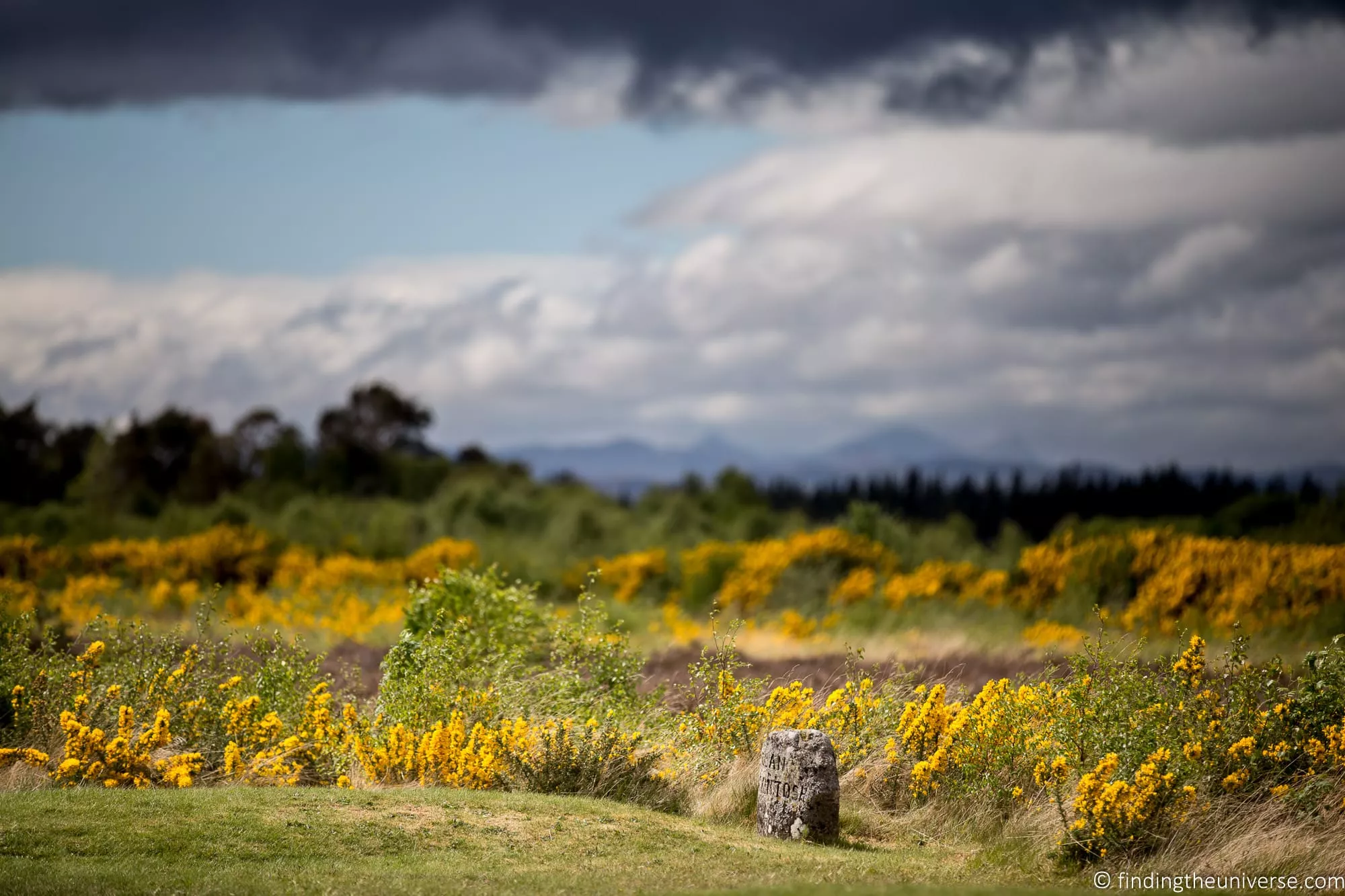
However, later on in Episode 12 of Season 2, we see Claire in 1960s Scotland visiting the Clan Fraser memorial stone at the Battle of Culloden. This was filmed at the actual battlefield, and the Clan Fraser memorial stone can be visited today. There are also memorial stones to many of the other clans as well as the English fallen around the site.
Culloden Battlefield is open for visitors. The site is managed by the National Trust for Scotland, and there is a fee to visit the visitor centre. It’s free for National Trust members. Overseas visitors can buy a National Trust Explorer Pass which grants access to over 300 properties across the UK for a number of days.
You can see details of opening hours and prices here.
Culloden Battlefield is 5 miles east of Inverness. You can reach it in around 40 minutes by public bus from Inverness, or you can drive yourself in around 15 minutes. Alternatively, you can visit it on a tour like this.
Blackness Castle – Fort William
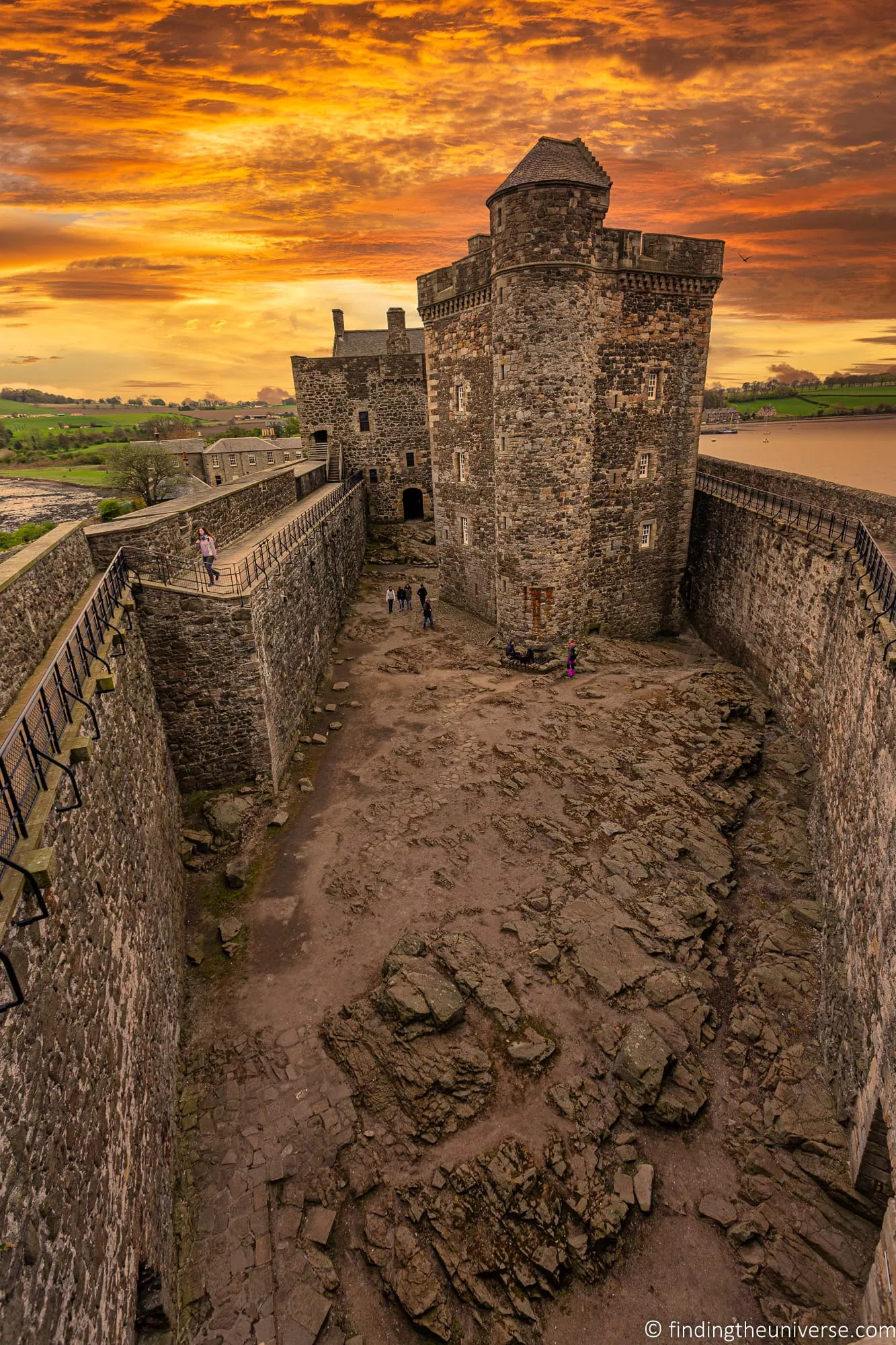
One of my favourite Outlander filming locations in Scotland is the spectacular Blackness Castle. This 15th century sea fortress is found 45 minutes’ drive from Edinburgh, and it stood in for Fort William in Season 1 & Season 2 of Outlander.
Specific scenes filmed at Blackness Castle include Jamie being given lashes in the courtyard by Black Jack Randall, and Jamie and Claire escaping later on in the season. In Season 2, Brianna and Roger visit Fort William, and Blackness Castle reprises its role.
The castle is quite a feat of engineering. It looks much like a ship, with a tall triangular shaped wall surrounding the imposing central keep.
Blackness Castle is operated by Historic Environment Scotland, and there’s an entry fee, currently £7.50 for an adult ticket booked online. It’s free for Historic Scotland members, and English Heritage members get half-price entry in their first year of membership and free entry after that.
Blackness Castle is also visited on a number of day trips, including this tour of Outlander filming locations near Edinburgh.
Blackness Castle can of course be visited by car, and there’s parking on site. By public transport, the best option is to take the train to Linlithgow from either Edinburgh or Glasgow, and then take a local bus out to Blackness.
You can check train times and book tickets here, and you can get general public transport information for Scotland on the Traveline Scotland website here.
Culross – Cranesmuir
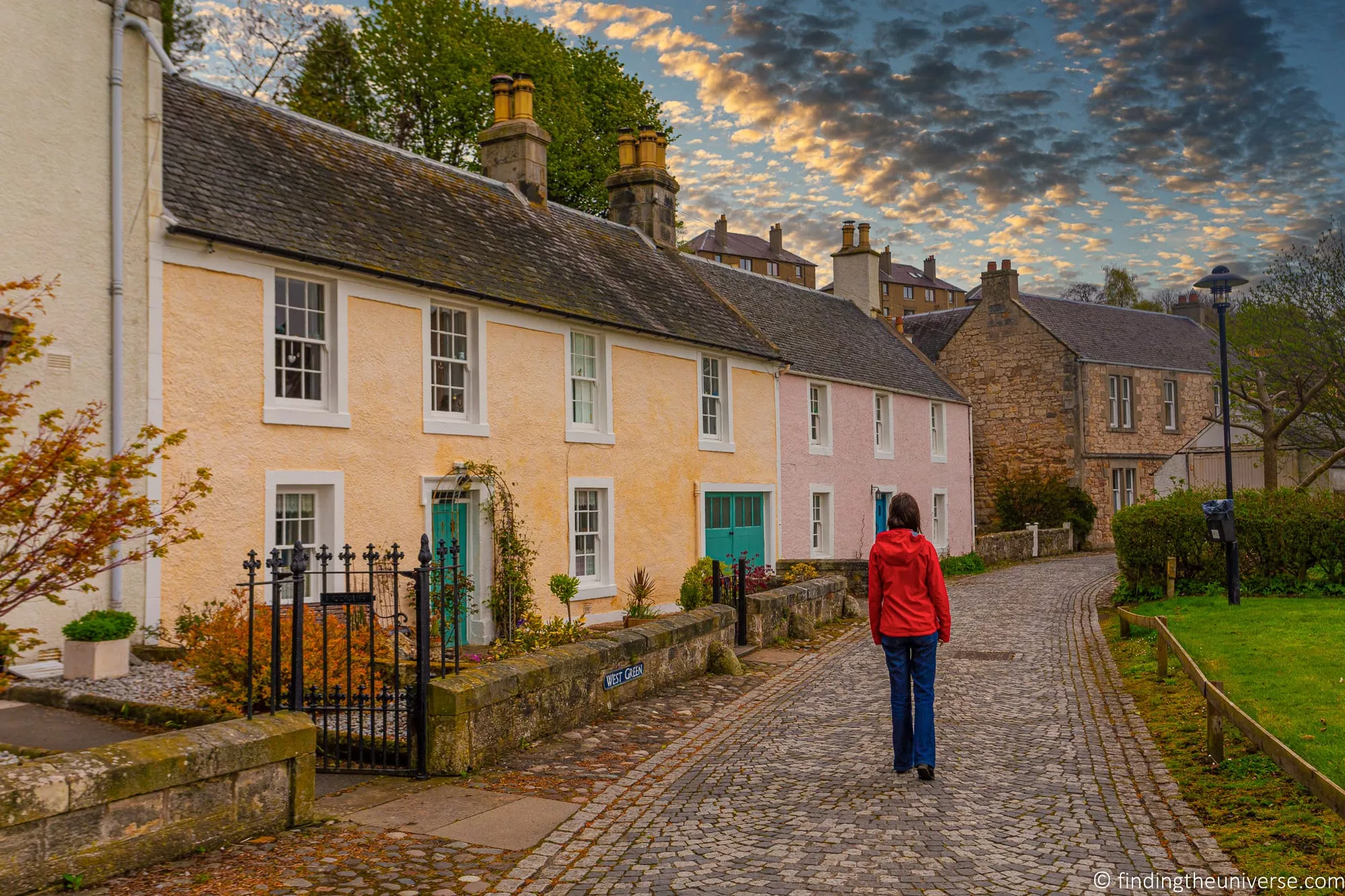
The beautiful village of Culross was used for multiple scenes across a number of Outlander seasons. Fans will likely associate it most with the fictional village of Cranesmuir, featured in Season 1 of Outlander as the home of Geillis Duncan. Part of the village were actually repainted for the show to more muted shades of grey and brown.
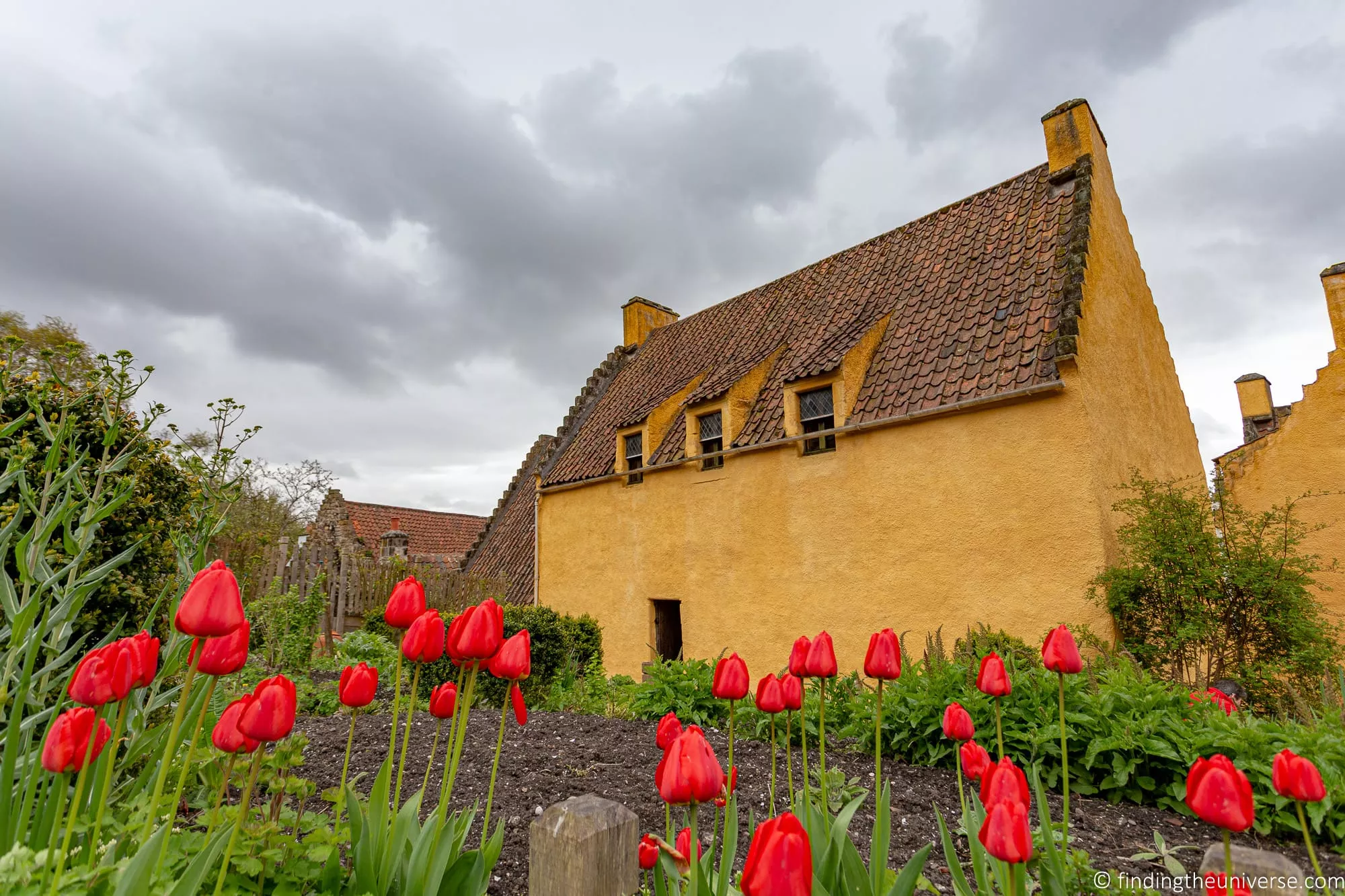
Culross is also where you’ll find Culross Palace. This featured in Outlander as Geillis Duncan’s parlour. The garden to the rear of the palace featured as the Castle Leoch herb garden, where you see Claire gathering plants for medicinal use in Episode 3 of Season 1.
Culross Palace also appeared as a tavern in Season 2 of the show, and the village re-appeared in Season 4 as the location of Balriggan Cottage, the home of Laoghaire.
When you visit Culross, you will quickly see why the Outlander crew were so keen to use it. The village is one of the finest examples of a 17th century burgh (an autonomous municipal corporation) surviving today. It was a port city on the Firth of Forth and an important coal and salt trading town.
After the 18th century the towns fortunes declined, and it became a bit of a ghost town. This worked in its favour from a preservation perspective, as many of the buildings survived largely unchanged to the present day.
Parts of the town, including Culross Palace, are preserved by the National Trust for Scotland. The village itself is free and open to visitors, however Culross Palace has an entry fee, which is currently £14 for an adult. It’s free for National Trust members. Note that Culross Palace is a National Trust for Scotland property, so it isn’t covered by the Historic Scotland Explorer Pass. Overseas visitors can buy a National Trust Explorer Pass which grants access to over 300 properties across the UK for a number of days.
You can see details of opening hours and prices here.
Culross is an easy 45 minute drive from Edinburgh, and can also be reached by public transport from Edinburgh in around 90 minutes. It can also be visited as a day trip from Edinburgh on a tour like this.
Midhope Castle – Lallybroch
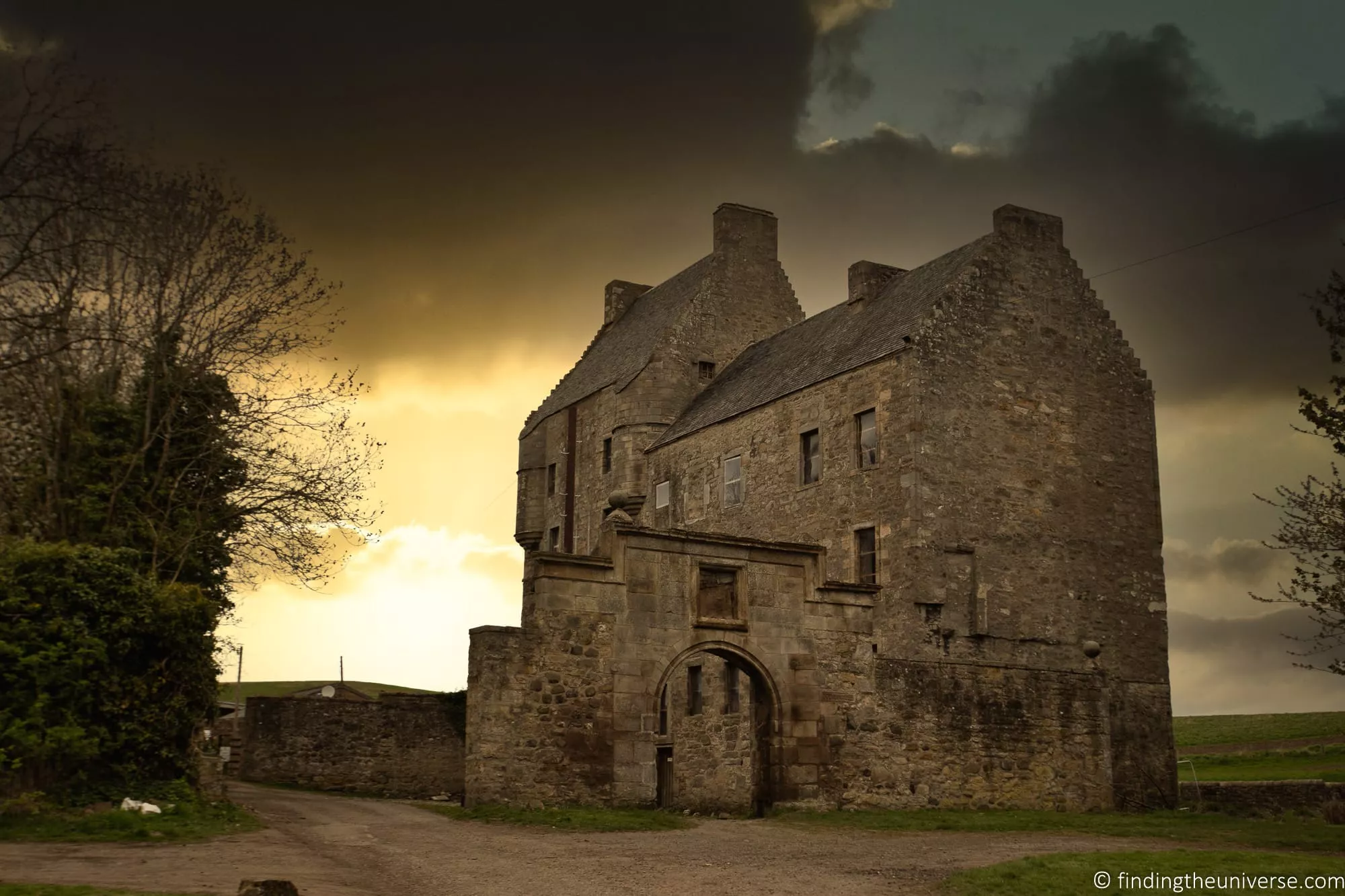
Midhope Castle is a 15th century tower house found just on the outskirts of Edinburgh on the Hopetoun Estate. Outlander fans will instantly recognise the building as Lallybroch, the family home of Jamie Fraser. It primarily featured in the first two seasons of the show.
The building itself is actually derelict inside, although the exterior is fairly intact. For the show, only the exteriors were used. It’s not possible to go inside the castle, and there wouldn’t be much to see if you could.
As a result of the popularity of the location and its close proximity to Edinburgh, the owners of the estate charge a small fee for parking on site. It’s also not open year round – you’ll want to check opening times and pricing on the website here.
Access can close due to work on the estate or farming activities, so you will definitely want to check it is open to avoid a wasted visit. Tour operators may have access at time when they are not allowing regular visitors so taking a tour can be a good way to visit here.
To visit, you can either drive yourself or take a taxi from the city, or come as part of an organised tour.
Hopetoun House – Duke of Sandringham’s Residence
Midhope Castle is on the grounds of Hopetoun Estate, where you’ll also find the spectacular 17th century Hopetoun House. This is one of Scotland’s most impressive stately homes. Of course, it was also a filming location for Outlander, primarily as the Duke of Sandringham’s residence.
In Season 1, the Red Drawing Room inside the house was used as the interior of the Duke’s home. Exteriors were also used, with the Sea Trail and West Lawn used as the duel location between the Duke and the McDonald clan leader. A sword fight from Season 1 played out on the rear steps of the house.
Season 2 of the show featured a number of scenes set in Paris. The courtyard behind the Stables Tearoom stepped in for a Parisian street for some of this season.
Hopetoun House is open for visitors seasonally, and you can visit both the house and the grounds. There’s a fee to visit. You’ll want to have your own transport as there’s no easy public transport access. Alternatively, you can visit on a day tour from Edinburgh or this.
If you have your own vehicle, then we’d recommend including Midhope Castle, Blackness Castle, Abercorn Church, and Linlithgow Palace on your Outlander itinerary, as they are all close to each other. Culross is also quite close by.
You can see more about prices and opening times to plan your visit to Hopetoun House and Estate here.
Abercorn Church – Frank’s Grave
The tiny village of Abercorn is between Hopetoun House and Midhope Castle, and is where you’ll find the 11th century Abercorn Church. This is a very pretty small parish church, where you’ll also find a small museum.
Abercorn Church appeared in Season 4 of the show, as a graveyard in 1960s Boston where Frank is buried. Bree visits his grave to pay her respects in Episode 7 of the season, and Abercorn Church was the filming location for the scene.
Abercorn Church is free to visit. You will likely want your own car, and we’d suggest including the other nearby locations on your trip out here, including Hopetoun House and Midhope Castle.
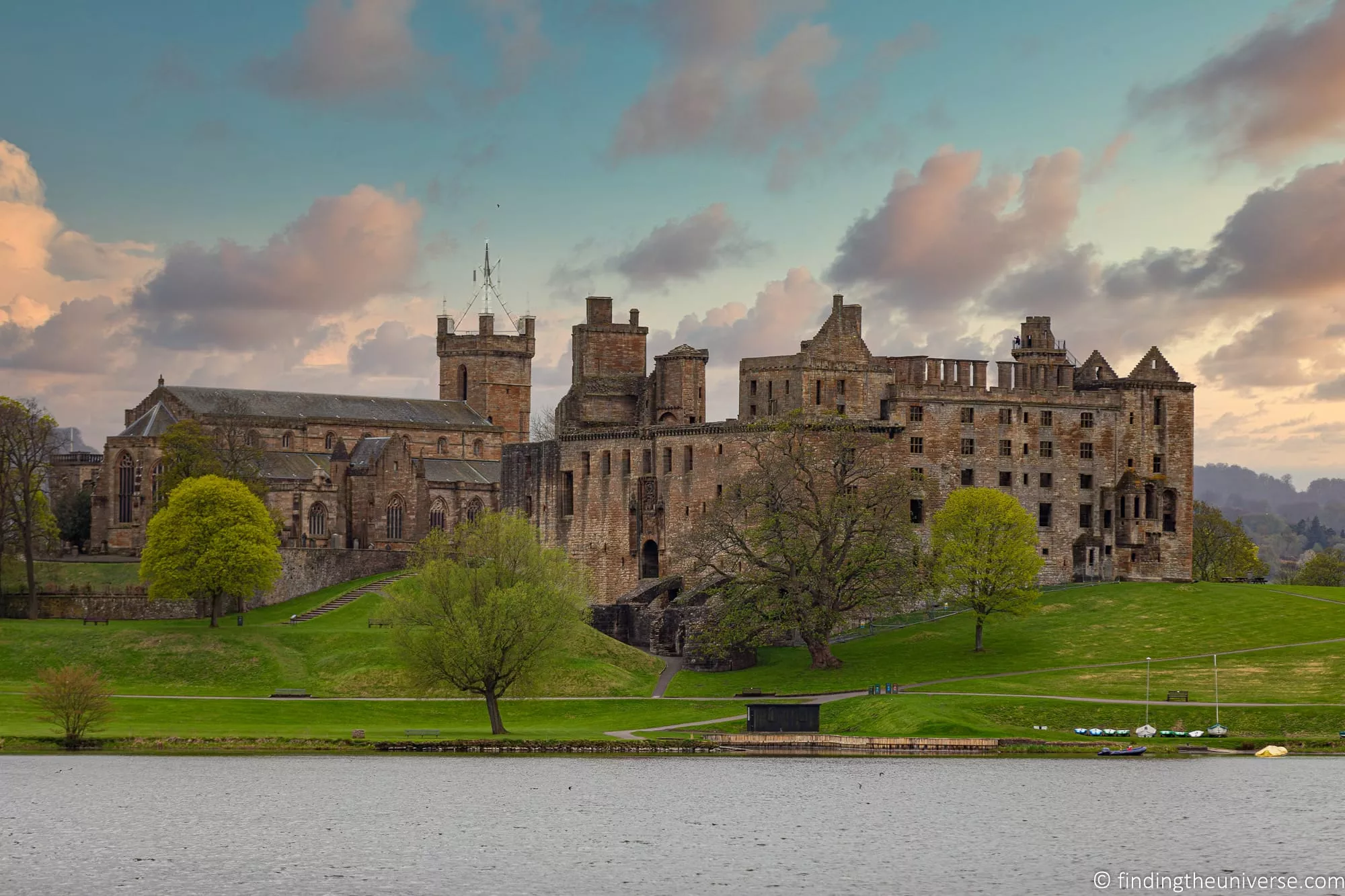
Linlithgow Palace – Wentworth Prison
Once a residence of the monarchs of Scotland, the massive 15th century Linlithgow Palace was destroyed by fire in 1746. Today, the ruin is still an impressive structure, with most of the walls surviving (if not the roof).
Linlithgow Palace was used in Season 1 of Outlander, as the filming location for Wentworth Prison. It was here that Jamie was held and abused by Captain “Black Jack” Randall.
Linlithgow Palace is in the town of Linlithgow, around a 20 mile drive west of Edinburgh, or 30 miles east of Glasgow. It’s easy to reach by public transport as there’s a train station, which offers access to Edinburgh (about a 20 minute train ride away) and Glasgow (about a 30 minute train ride away). You can check train times and book tickets here.
Of course, you can also visit Linlithgow on a guided tour of Outlander locations such as this one.
Linlithgow Palace is operated by Historic Environment Scotland, and there’s an entry fee, currently £10 for an adult ticket booked online. It’s free for Historic Scotland members, and English Heritage members get half-price entry in their first year and free entry after that. Note that at the time of writing the King’s Bed Chamber and the Court Kitchen are closed to visitors, although the rest of the palace is open.
If you’re visiting several Historic Scotland sites, the Historic Scotland Explorer Pass is worth considering. See the Doune Castle section above for how it works.
Newhailes House – Governor Tryon’s Home, North Carolina
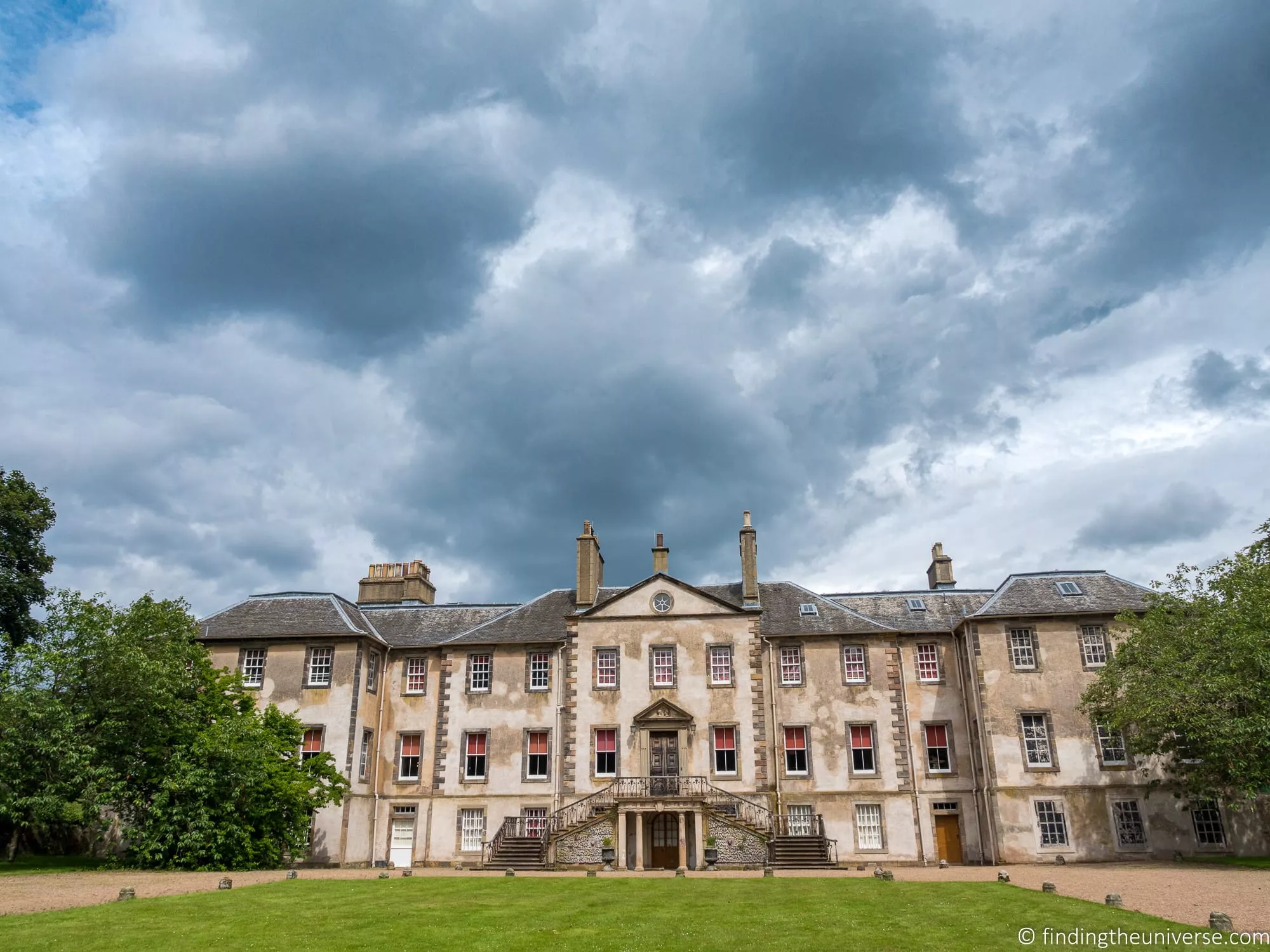
Newhailes house is a 17th century Palladian mansion, found just 6 miles outside of Edinburgh in Musselburgh. It was used as Governor Tryon’s home in North Carolina in Season 4 of the show.
In Episode 1 of Season 4, Jamie chats with the Governor about land grants. The show was filmed in the Dining Room and Library of Newhailes House, both of which can be visited (although when we visited photography wasn’t allowed inside).
Newhailes House and Grounds are operated by the National Trust for Scotland, and there’s a fee to visit. It’s free for National Trust members. Overseas visitors can buy a National Trust Explorer Pass which grants access to over 300 properties across the UK for a number of days.
You can see opening times and prices here.
Newhailes House can easily be visited by car from Edinburgh, it’s around a 20 minute drive. Alternatively, you can take a bus or train from Edinburgh to Musselburgh, and then it’s a short walk to the estate.
Craigmillar Castle – Ardsmuir Prison
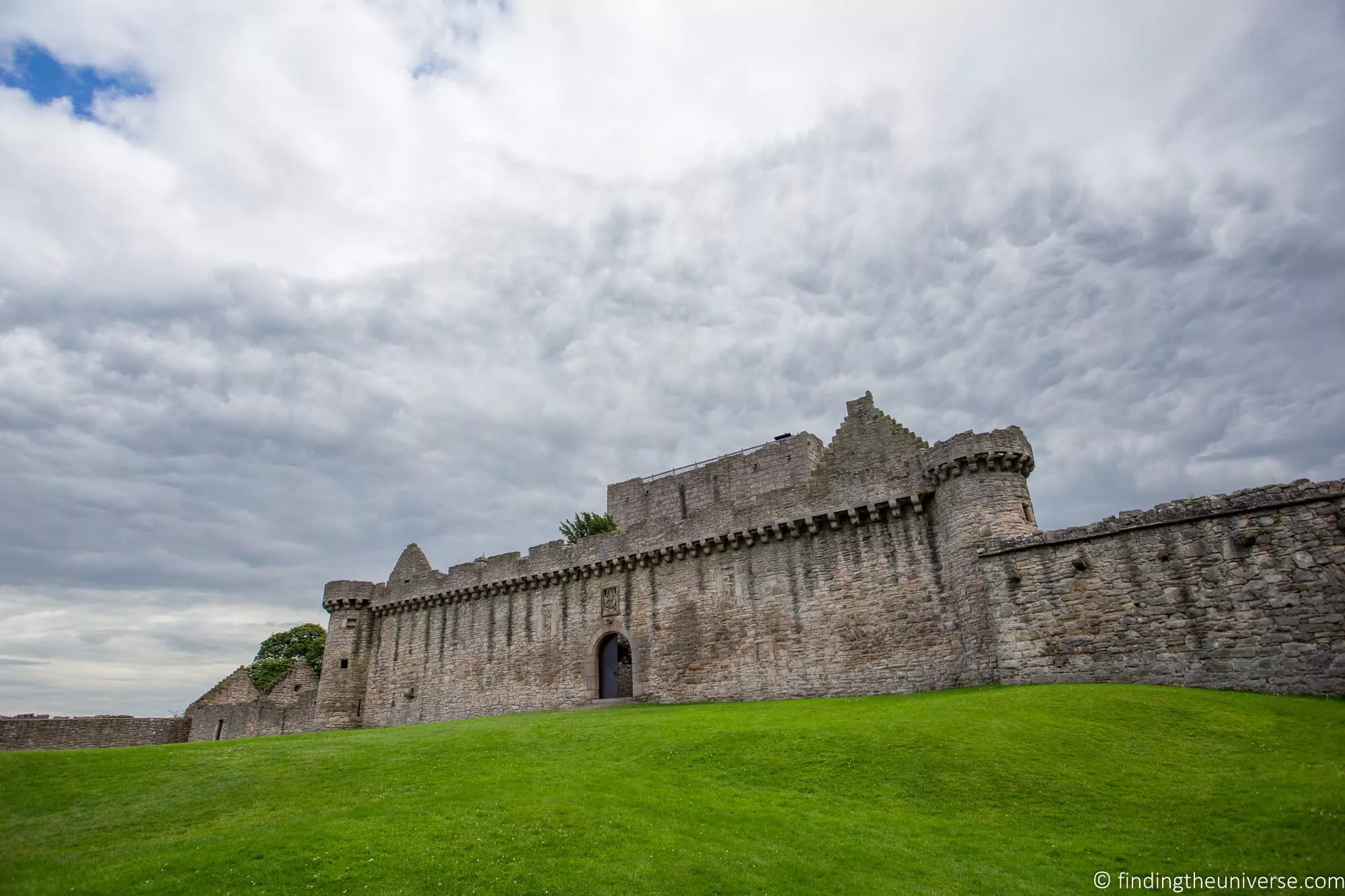
Whilst many people are aware of Edinburgh’s famous city centre castle, there is another castle just outside the city centre – Craigmillar Castle. It is one of the places we recommend to those looking for lesser known things to do in Edinburgh.
Dating from the late 14th century, Craigmillar Castle is an impressive castle to visit. The walls in some places are over three metres thick! Today much of the castle is ruined, but the main structure is still obvious and it is fun to explore all the different parts of the castle. Its most famous historical visitor was probably Mary, Queen of Scots.
Craigmillar Castle appeared in Season 3 of Outlander, where it filled the role of Ardsmuir Prison. It was here that Jamie and a number of other Jacobite rebels were imprisoned following the Battle of Culloden. In the show, this was set in the Scottish Highlands, but in real life it’s just outside Edinburgh and easy to visit.
Many parts of the castle featured in the show, including the internal courtyard, the castle exteriors, and some of the internal stairways.
Craigmillar Castle is operated by Historic Environment Scotland and there’s an entry fee, currently £7.50 for an adult ticket booked online. It’s free for Historic Scotland members, and English Heritage members get half-price entry in their first year and free entry after that. Advance booking is required, and note that the Northwest Gilmour Tower is currently closed for conservation work.
If you’re visiting several Historic Scotland sites, the Historic Scotland Explorer Pass is worth considering. See the Doune Castle section above for how it works.
You can see prices and opening times on the official website here.
You can easily reach Craigmillar Castle from Edinburgh. It’s around a four mile drive by car, or around 35 minutes by bus to Craigmillar, followed by a short walk.
Backhouse Close, Edinburgh – A. Malcolm’s Print Shop
Edinburgh is well known for its closes or narrow little alleyways that are generally found running off the Royal Mile.
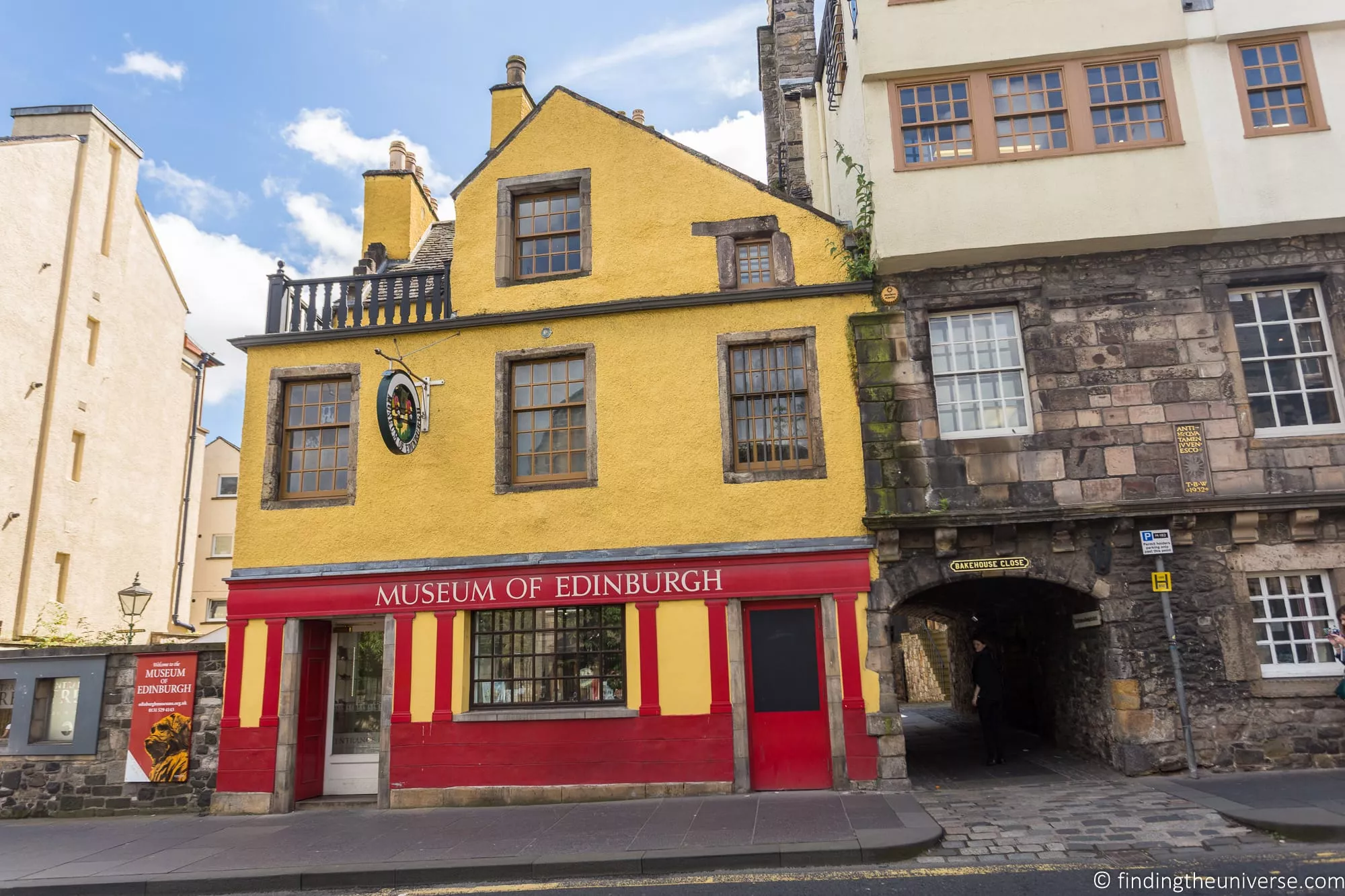
One of these, Backhouse Close, was the filming location of Alexander Malcolm’s print shop in the 5th Episode of Season 3. Claire walks down Backhouse Close (renamed Carfax Close in the show) to visit the shop and reunite with Jamie. You’ll see her walk up the exterior stairs here before entering the shop for their reunion.
The inside of the shop was actually a set, so it can’t be visited, but the exterior looks very similar to how it did in the show, despite it being set in the 18th century. Backhouse Close is easy to find, it’s right next to the Museum of Edinburgh.
Backhouse Close was also used other filming locations for the show, to depict scenes of various Edinburgh streets. One notable scene that was shot here was when Jamie leads Claire to his less than salubrious lodgings (the brothel operated by Madame Jeanne).
There actually was a real life brothel on this street in Edinburgh, the Cock and Strumpet, at the present day Acheson House. This 17th century building features as the outside of Jamie’s lodgings in Outlander.
It’s easy to visit this location yourself.
Summerhall, Edinburgh – Lecture Hall
Summerhall is one of our favourite venues in Edinburgh. It has its own on-site gin distillery, microbrewery, and entertainment space, as well as a variety of venues for lectures, entertainment, and festival events. It was originally built and used as a teaching college for veterinarians.
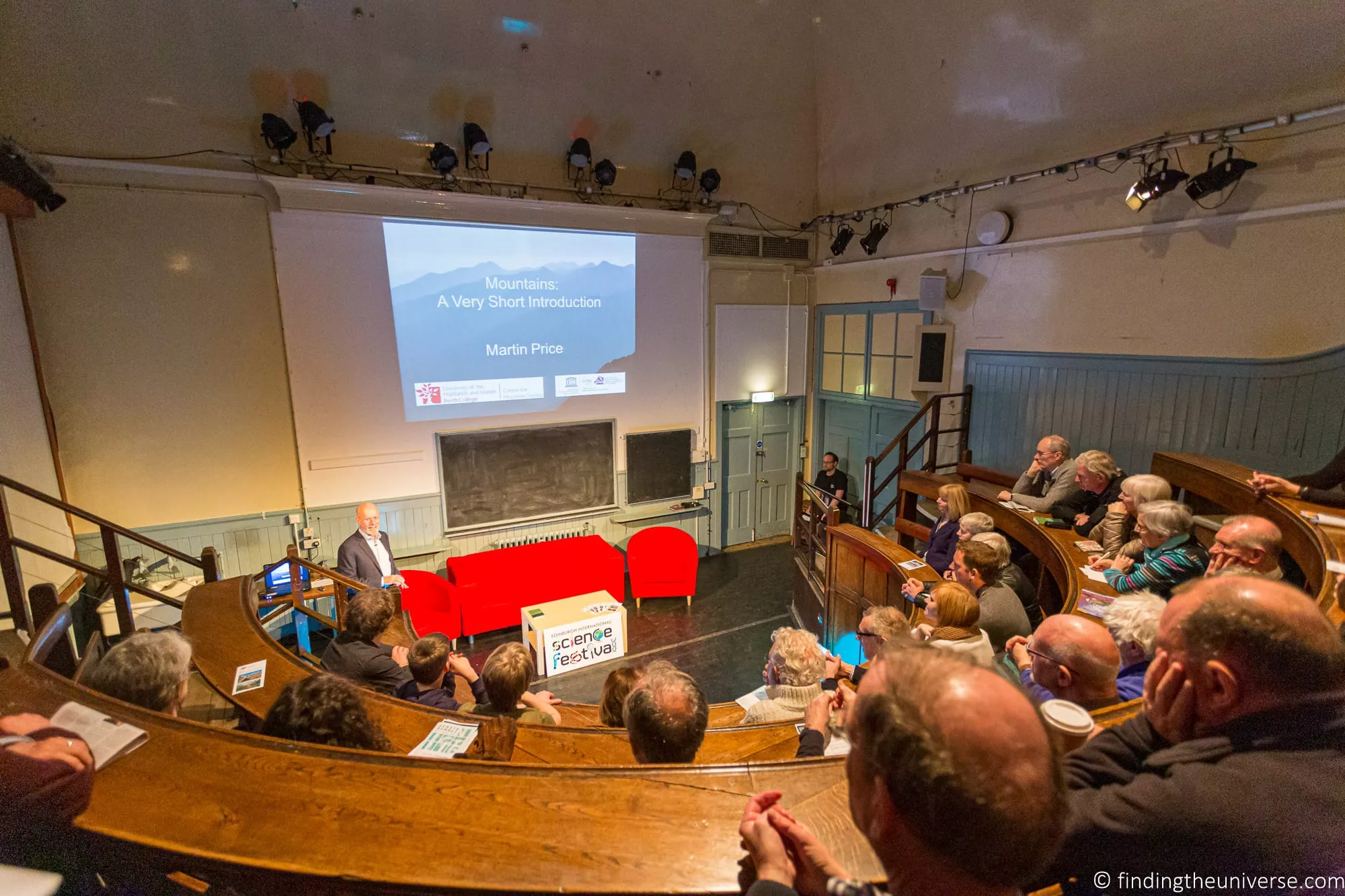
One of its rooms is an original lecture theatre that would have been used as a teaching space when Summerhall was a veterinary school. It has distinctive curved wooden seating, and was used for teaching anatomy. The design gave all the students a good view of any animal dissections!
This is the last surviving room of its type in the UK. It was used for Season 3 of Outlander, and it was here in Episode 2 that we see Claire starting her medical studies in Boston in the middle of the 20th century. It’s also here that she meets Joe Abernathy for the first time.
Parts of Summerhall are open to the public, although the anatomy lecture hall isn’t always open. We actually attended a lecture here during the Edinburgh Science Festival, and it’s also a popular Edinburgh Fringe venue. So if you want the full lecture experience (minus the dissection!), this is a good way to visit. Alternatively, you should contact Summerhall directly prior to your visit and ask if you can visit the room.
Signet Library – Governor’s Mansion, Jamaica
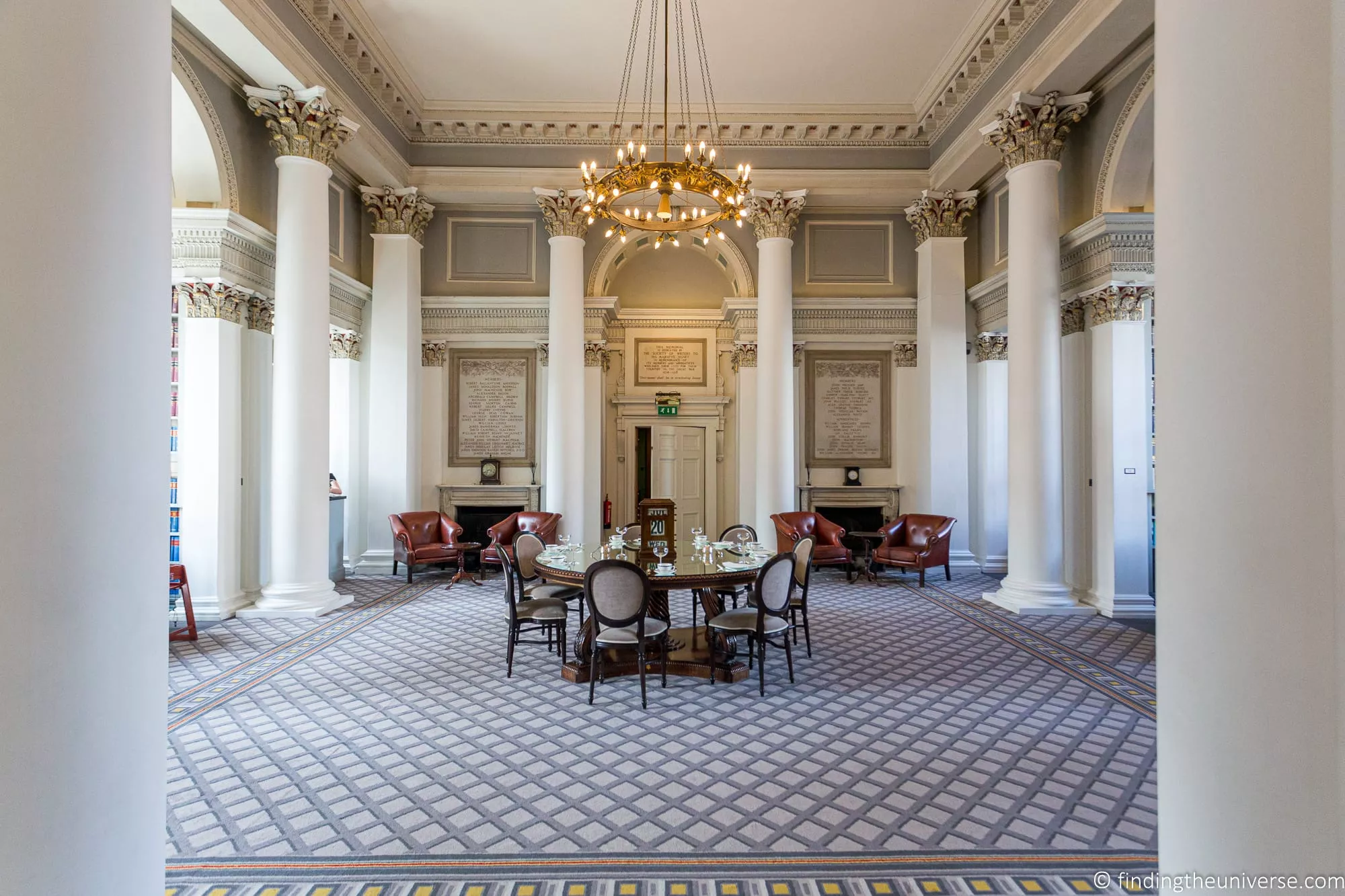
One of our favourite places for afternoon tea in Edinburgh is at the beautiful Colonnades restaurant, which is found in the downstairs room of the Signet Library building just off the Royal Mile.
The upstairs room was the filming location for the Governor’s Mansion in Jamaica for Episode 12 of Season 3. Jamie and Claire visit the mansion to meet the governor, and these scenes were shot in both the downstairs and upstairs rooms of the Signet library.
For visiting, the upstairs rooms are generally off limits to the public as they are being used as private offices. However, you can visit the downstairs, and the best way to do that is by booking one of the delicious afternoon teas!
Dunure Beach & Castle – Ayr Harbour & The Silkies’ Isle
The small village of Dunure on Scotland’s west coast was used for a number of scenes in Outlander. First, the harbour here was used as Ayr harbour, where Jamie and Claire board the Artemis to Jamaica in Episode 9 of Season 3. In Season 4, Outlander returned to this location, and this is where Brianna boards the ship to North Carolina in Episode 7.
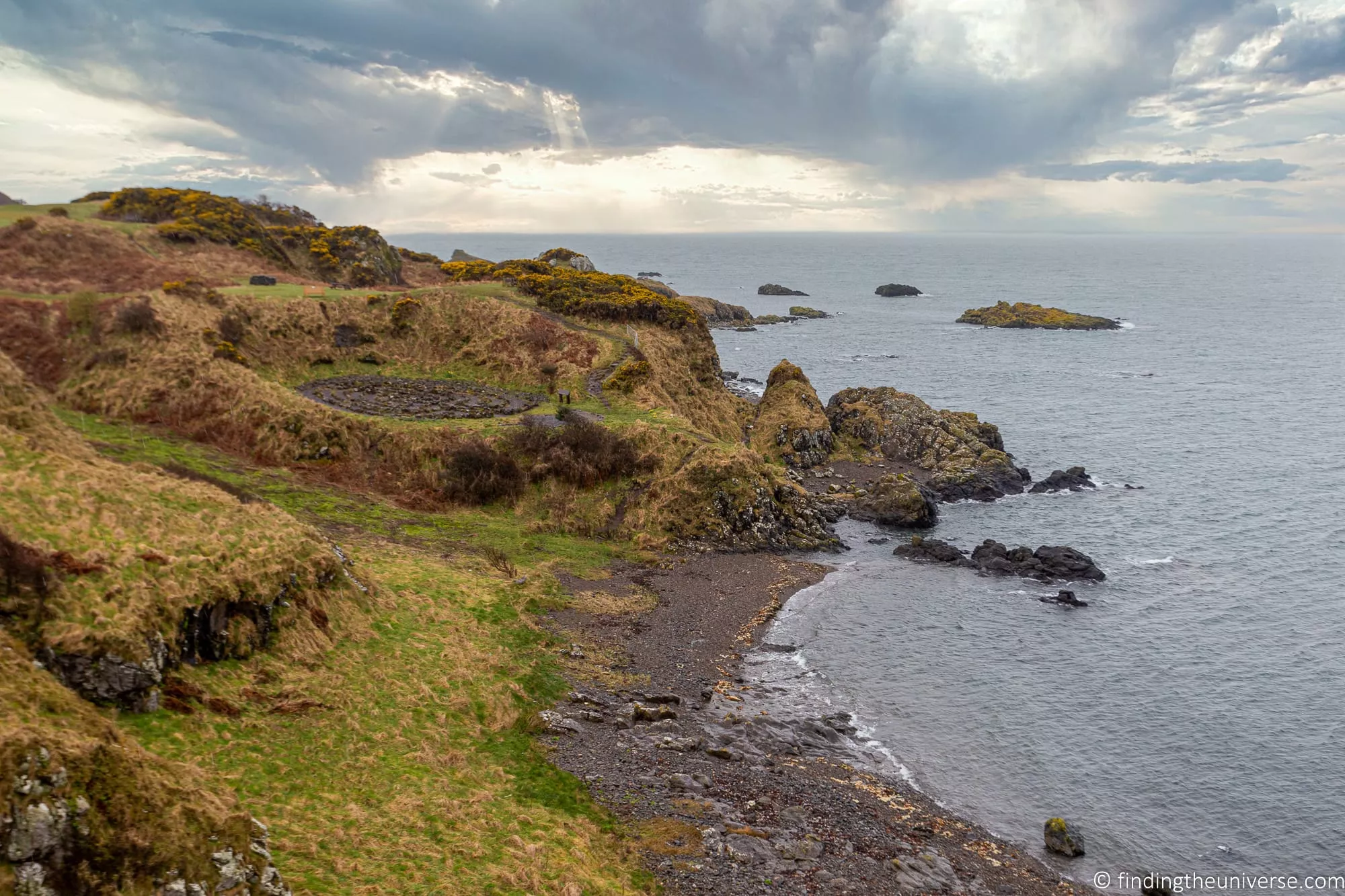
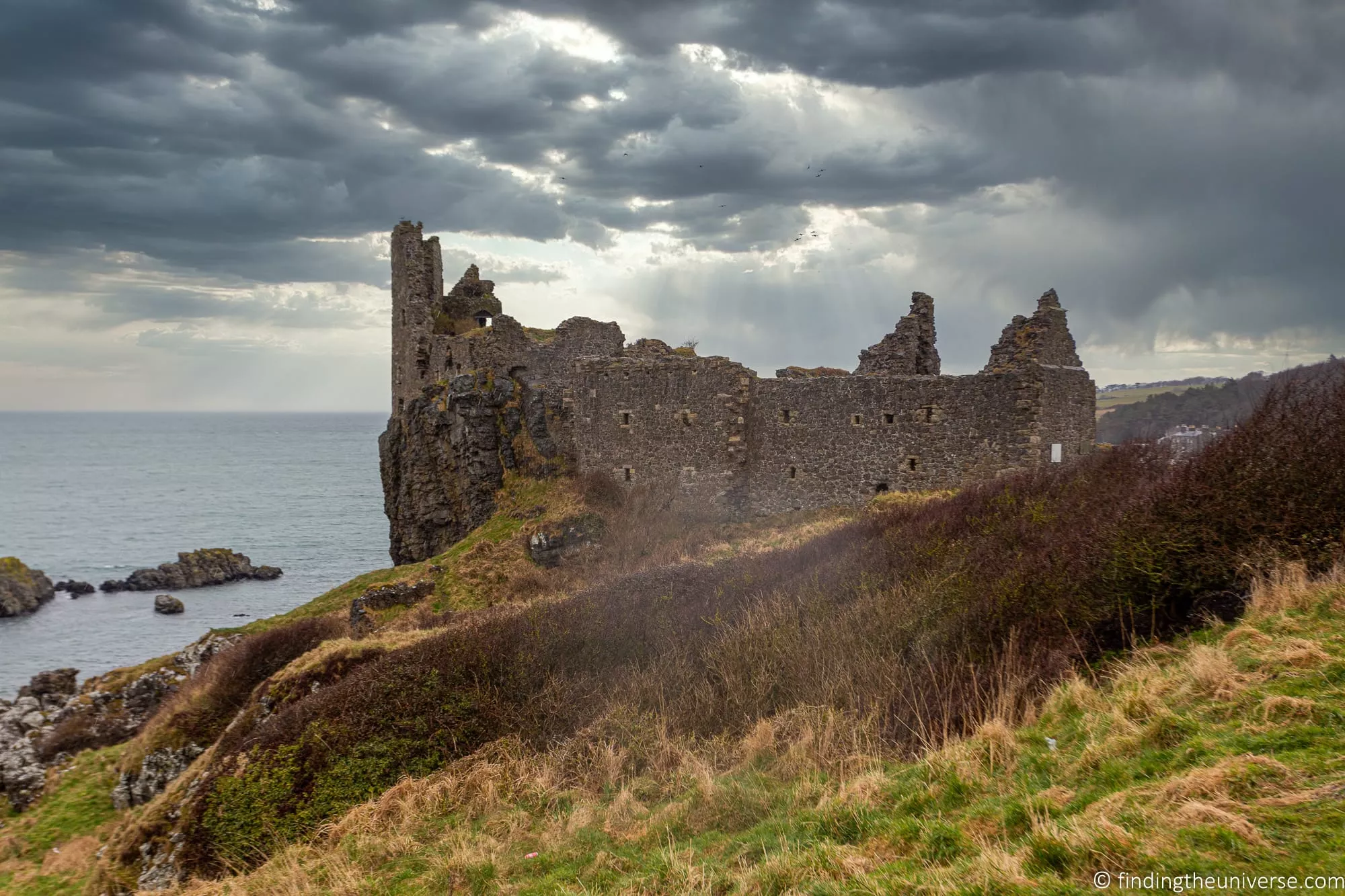
As well as the harbour scenes in Seasons 3 and 4 of the show, the nearby coastline and the ruins of Dunure Castle were also used as an Outlander filming location. In Season 3, during a flashback in episode 8, Jamie escapes Ardsmuir Prison and travels to the Silkies’ Isle.
In the books the Silkies’ Isle is depicted as being one of three small islands found off the far north coast of Scotland. However, the filming location that was used for the Silkie’s Isle wasn’t actually an island at all, it’s the shore near Dunure. It’s just the magic of the camera that makes you think it’s an island. You’ll see Jamie swimming from the beach here, and exploring Dunure Castle in search of Claire. He doesn’t find Claire, but he does find the MacKenzie treasure.
Other scenes from these episodes were also shot here, including the scene where Jamie and Claire watch Young Ian being kidnapped by pirates, which was filmed on the beach.
Both Dunure Harbour and Castle are free to visit. The Castle is in ruins and some parts are fenced off for safety, but you can still visit the exterior.
The easiest way to visit Dunure is to drive. It’s around an hours drive south of Glasgow, or two hours from Edinburgh. Another option is to take public transport, with public buses running to Dunure. You can check bus times for Scotland at traveline.
Finally, you can also take a tour which includes this castle. We’ve done this tour, which was a lovely day out although not specifically focused on Outlander filming locations.
Glen Coe – Opening Credits & Ardsmuir
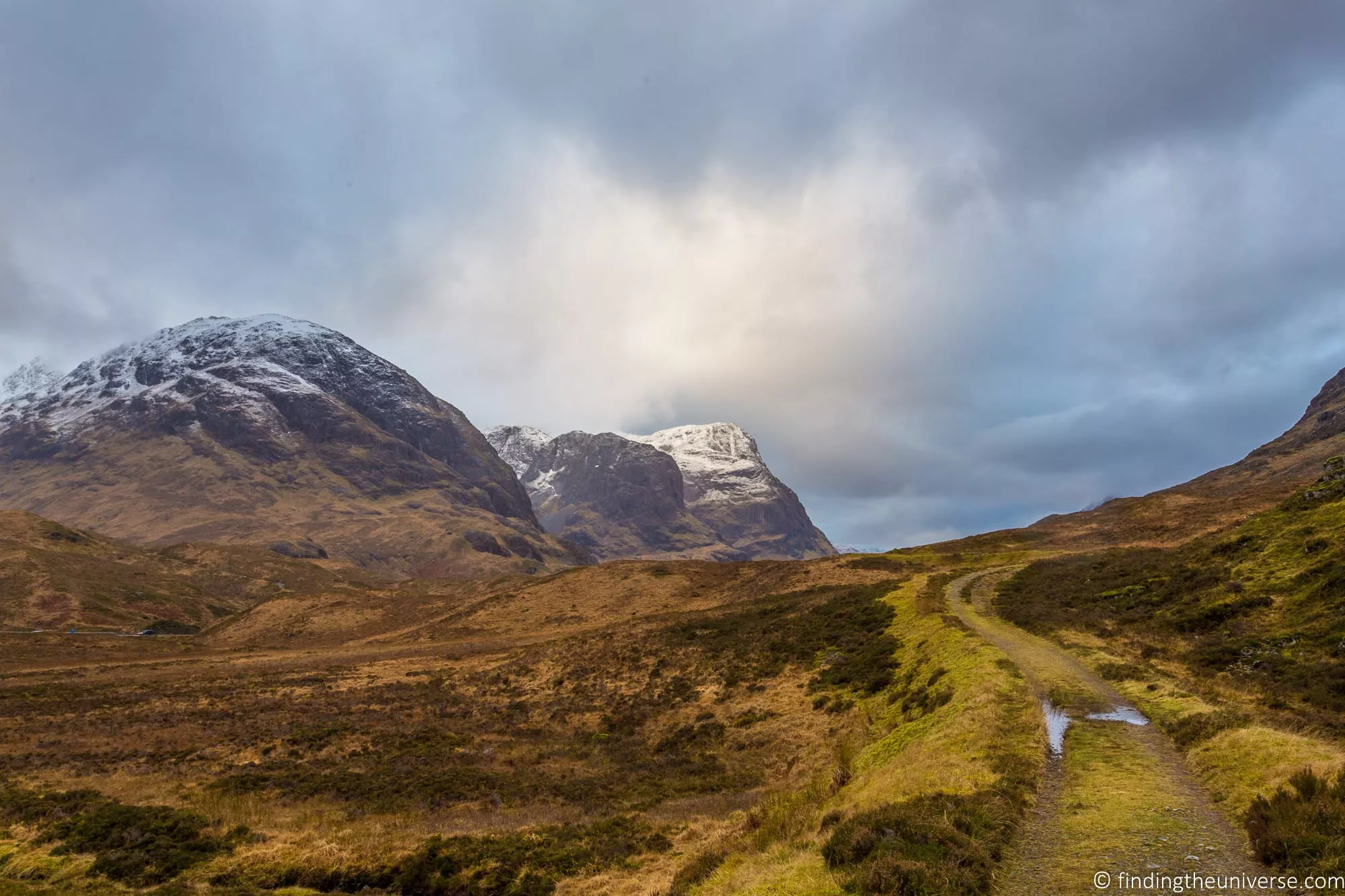
The opening credits from Outlander feature a range of different scenes from the show, from many of the filming locations around Scotland. One of the standout locations though is the beautiful Glen Coe Valley, which is one of Scotland’s most beautiful valleys.
Glen Coe also appears in the first episode of season 6 of Outlander, when we see a flashback to Jamie’s time at Ardsmuir. The prisoner’s argument and other flashback scenes are shot against the backdrop of the Glen Coe valley.
Glen Coe has appeared in numerous films, including James Bond’s Skyfall, the Harry Potter series, and the Highlander. It’s not hard to see why – the valley is spectacular and scenic, and is a favourite amongst landscape photographers and visitors to Scotland in general.
Glen Coe is around a 2.5 hour drive from Edinburgh or Glasgow. It can also be visited on a day trip from either city, including on a tour like this or like this from Edinburgh, and one like this from Glasgow. If you’re visiting Scotland in winter, Glen Coe is also a popular destination for skiing in Scotland!
See more on visiting Glen Coe in our detailed guide to visiting Glen Coe which has everything you need to plan your trip.
Highland Folk Museum – Village where rent is collected
Found in Newtonmore in the Cairngorms National Park, the Highland Folk Museum is a large outdoor museum that explores what life in the Highlands has been like over the last few hundred years.
The Museum actually started on the island of Iona in 1935, and it moved a number of times before settling on its present day location in Newtonmore in the 1980s. Today, the site takes up 80 acres and is home to numerous buildings and artifacts which run from the 1700s to the 1900s.
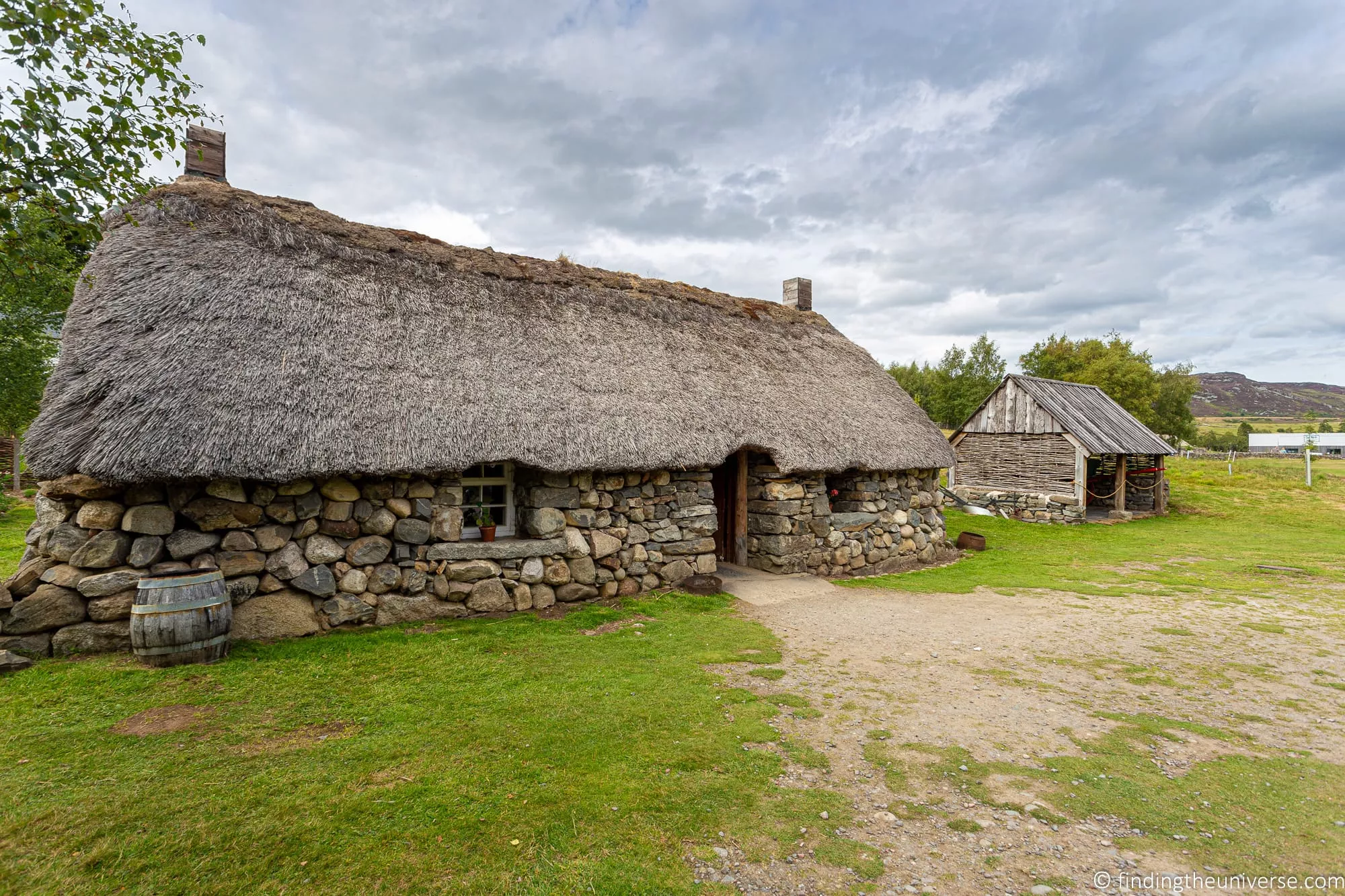
Outlander fans will be particularly interested in the reconstruction of a 1700s township, which features a number of beautiful old thatched buildings. In Episode 5 of the first Season of Outlander, Claire and Jamie visit a village to collect rent, and the village in the show was the 1700s township in the Highland Folk Museum.
Very little set building had to be done as the village is so authentic already, so if you want to really step into the world of Outlander, this is definitely one of the best locations to do just that! As well as the houses here, there are also costumed docents who do period-relevant demonstrations. So it all feels very authentic.
The Highland Folk Museum is in the Cairngorm National Park, 16 miles from Aviemore, or 44 miles (1 hour drive) from Inverness. It is easy to visit by car, and there are also train and bus services to the town of Newtonmore. You can see timetables here.
The museum is also visited on a number of tours, including this 2 day tour from Edinburgh and this 4 day tour from Edinburgh.
At the time of writing, and when we visited, entry was by donation. Of course, museums like this can only survive if visitors do donate – you can read more about the importance of donating to free museums here.
Falkland – Inverness
In the first and second seasons of the show, we find Claire in Inverness at various time points including the mid 20th century and the 18th century.
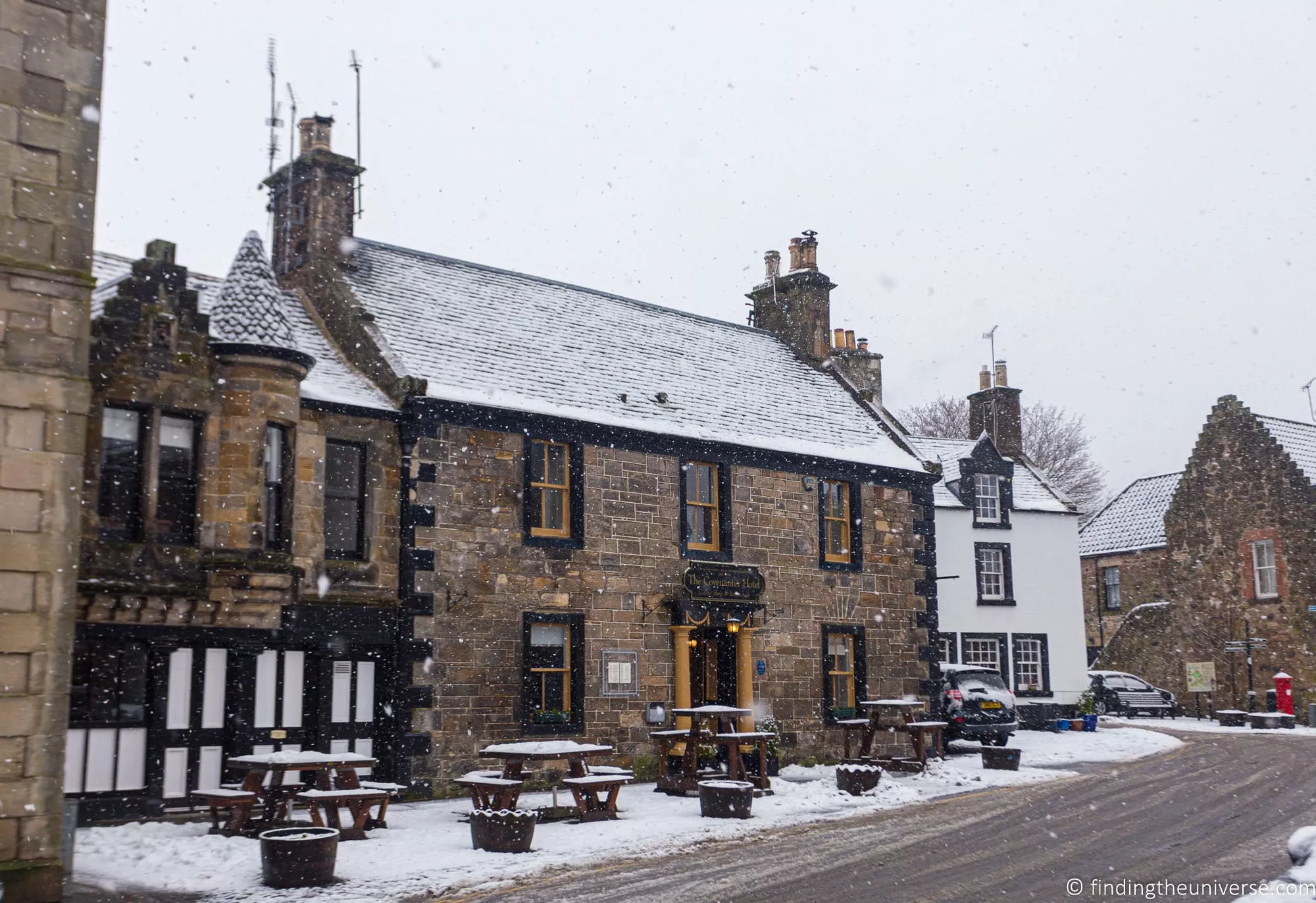
Whilst the real city of Inverness is very picturesque, clearly the Outlander crew decided it wasn’t quite the look they wanted. As a result, scenes depicting Inverness were actually filmed in the village of Falkland which is found in Fife.
General street scenes featuring the buildings of Falkland were used as Outlander locations. Examples include the Covenantor Hotel as Mrs. Baird’s Guesthouse, where Frank and Claire take their honeymoon in Episode 1 of Season 1. It’s a real hotel, and you can book here to stay the night if you want! Just be aware that only the exteriors of the building were used in the show.
Another easily recognisable location from the first episode of the show is the Bruce Fountain in the centre of the village. This was where we saw Jamie’s ghost staring up at Claire. A number of other buildings and locations in Falkland also appeared as background or shop windows in the first and second seasons of the show.
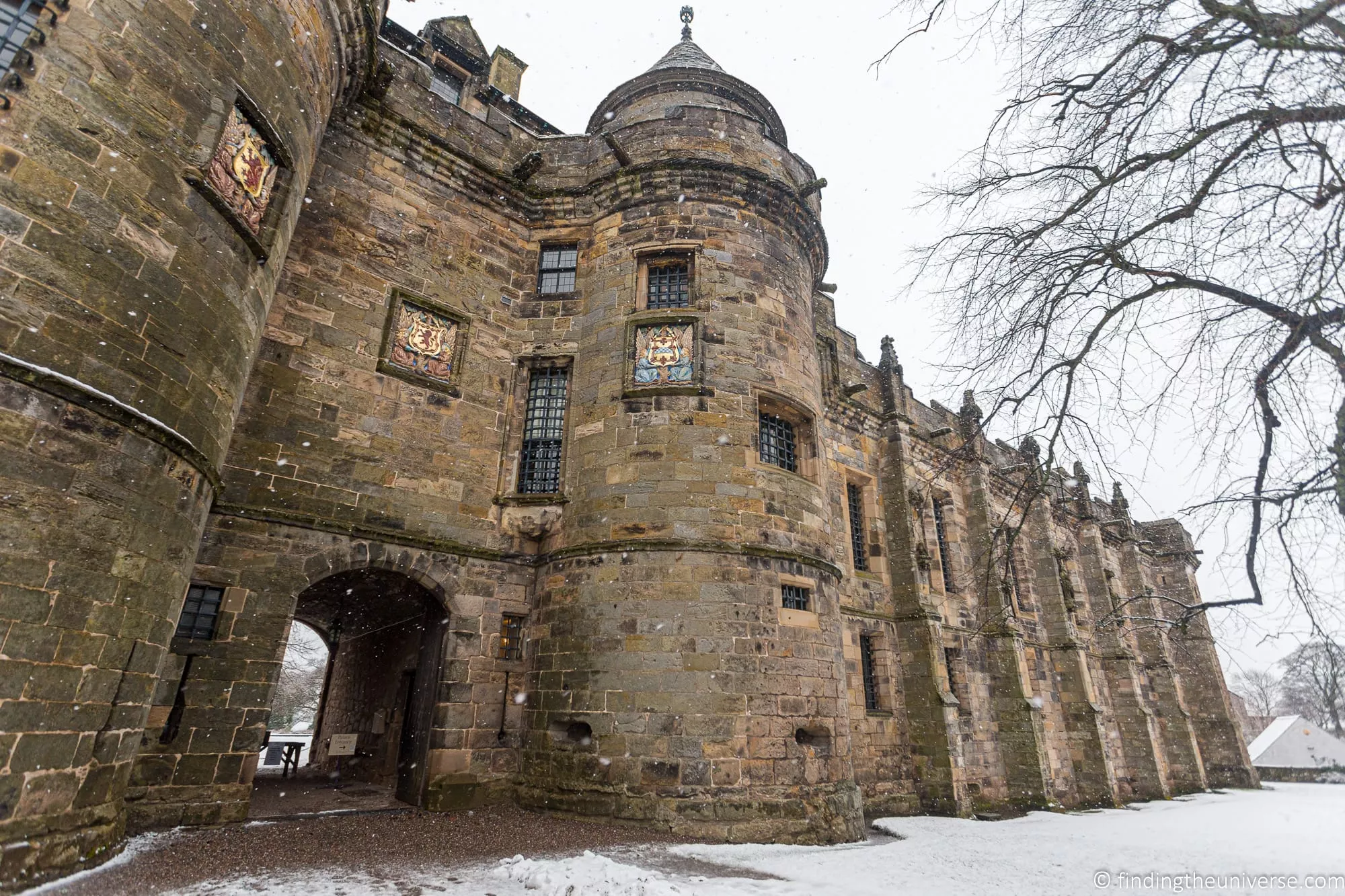
In addition, the cellar kitchen of Falkland Palace was also used as an apothecary room in Episode 12 of Season 2.
Falkland, being a village, is of course free to visit. Falkland Palace is operated by the National Trust for Scotland, and there’s a fee to visit. It’s free for National Trust members. Overseas visitors can buy a National Trust Explorer Pass which grants access to over 300 properties across the UK for a number of days.
You can get to Falkland in around an hour by car from Edinburgh. By public transport, you can take the train to nearby Markinch, and then take a local bus.
Falkland is included on this tour, which also visits Anstruther where you could visit the Scottish Fisheries museum and see the “Reaper”, which was used as the vessel that transported Claire and Jamie to France at the end of Season 1.
Drummond Castle Gardens – Versailles
Drummond Castle Gardens are a series of formal gardens on the Drummond Castle estate in Perthshire. The castle itself consists of a tower house dating from the 15th century and a mansion dating from the 17th century, although they were both rebuilt in the 19th century.
Unfortunately, the castle itself cannot be visited as it is a private residence. The good news for Outlander fans is that it is actually the gardens which are the star attraction, and these are open to the public.
In Episode 2 of Season 2 of Outlander, Claire and Jamie visit the spectacular palace of Versailles, just outside Paris. This palace is famed for its incredible gardens, and the gardens at Drummond Castle were deemed the best option in Scotland for recreating the Versailles look.
Of course, the gardens at Versailles were built on a scale that was only possible by a European monarch, and the Drummond Castle gardens aren’t quite the same. But they are still beautiful in their own right, and well worth a visit. In the show, the gardens are used with a computer generated backdrop of the palace of Versailles for some scenes.
There is a fee for visiting the Drummond Castle gardens, and you can find out more about prices and opening times on the official website here.
The best way to reach Drummond Castle is with a car. It’s around a 90 minute drive from Glasgow or Edinburgh. By public transport you will want to travel to Crieff or Muthill, from where you can take a taxi for the last few miles of the journey.
Gosford House – Versailles
Found just outside of Edinburgh near the town of Longniddry, Gosford House is a 19th century neoclassical mansion.
Along with Drummond Castle, Gosford House was used as a filming location for Versailles. Specifically, the house was used as the Versailles stables. If you’ve visited Versailles, you’ll be aware that the stables were a extravagant affair, capable of housing over 2,000 horses and home to over 1,500 workers!
The exterior of Gosford House was used to stand in for the stables in Season 2 of Outlander, in Episode 5. You can see Jamie outside the stables discussing a horse purchase with the Duke of Sandringham.
However, it’s worth bearing in mind that some computer wizardry was used in order to make the building look like a French 18th century building rather than a 19th century neoclassical mansion!
Gosford House is open for tours on some days of the year, and they also sometimes run Outlander specific tours. You can read more about opening times and prices here.
Gosford House is around 17 miles east of Edinburgh. You can reach it be car or public transport from Edinburgh in around 45 minutes.
Dunkeld House Hotel Grounds – North Carolina wilderness
Dunkeld House Hotel is around a 90 minute drive north of Edinburgh and Glasgow. It’s a beautiful 4* luxury country house hotel set in 280 acres of land, dating from 1897.
Despite the home itself being picturesque, it wasn’t actually featured in the show. Instead, the woodlands of the property were used to stand in for the North Carolina wilderness in Season 4 of the show. Jamie, Claire, and Young Ian journey through the wilderness here on their way to save Roger from the Mohawk in Episode 10 of Season 4.
As a hotel, Dunkeld House is obviously open for guests (check prices and book online here), and there’s also a spa and restaurant on site. We can also recommend visiting nearby Dunkeld when you are in the area, as the ruined cathedral there is beautiful.
Faskally Forest – Mohawk Village
Just north of Pitlochry, a little further on from Dunkeld, is Faskally Forest. Created as a model woodland in the 19th century, today the forest is managed by Forestry and Land Scotland. There are a series of lovely walks here, some of which take you around Loch Dunmore.
Faskally Forest featured in Season 4 of Outlander as the location of the Mohawk village where Roger is held in the last four episodes of the show. Quite an elaborate set was created here, including wigwams and canoes, although nothing remains today. However, this is a lovely part of the world, and the walks through the forest are well worth the visit.
You will need your own transport to visit Faskally forest.
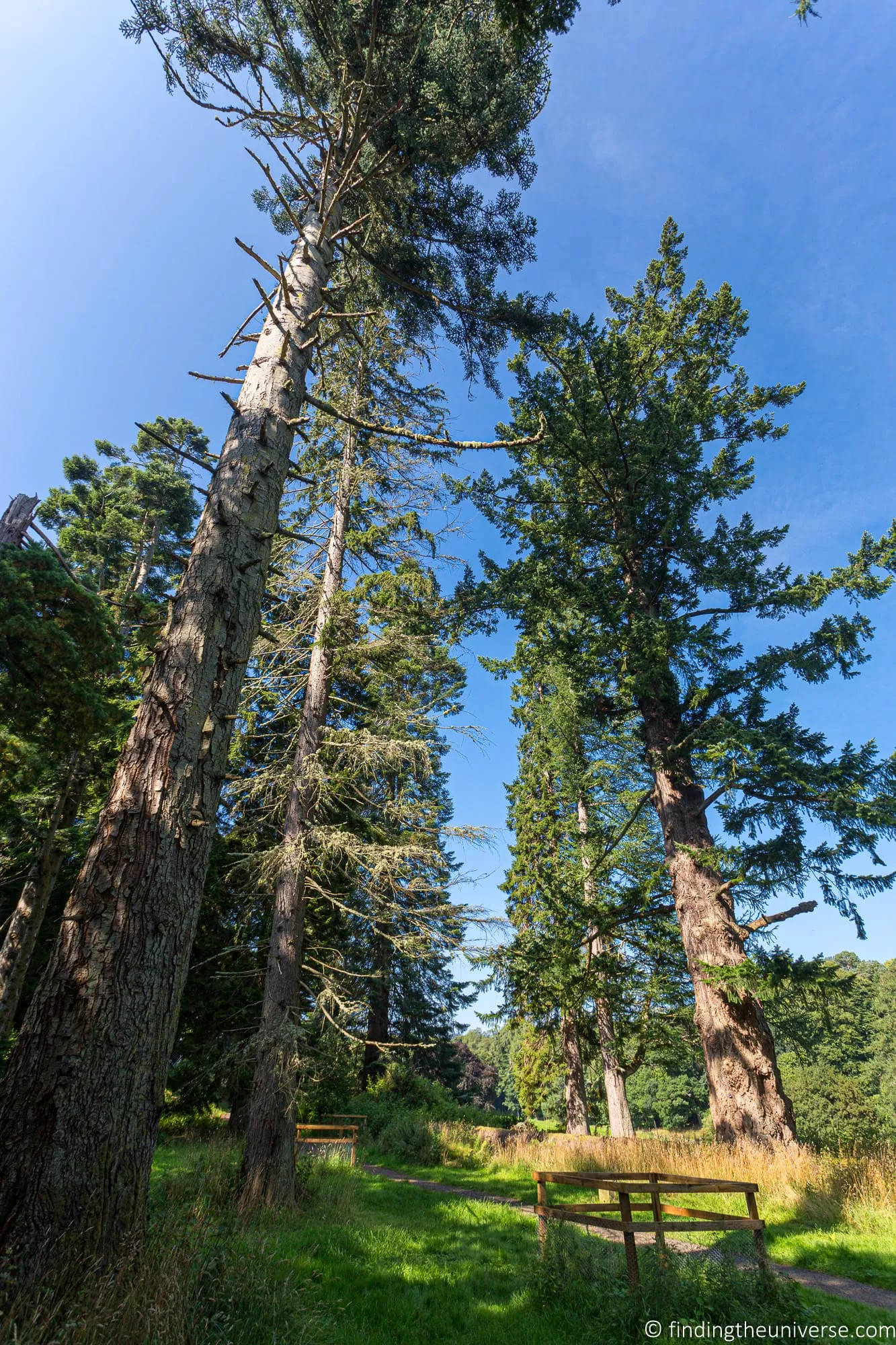
Tibbermore Parish Church – Cranesmuir Church
Tibbermore Parish Church is a small church dating from 1632, found in the tiny village of Tibbermore, just to the west of Perth.
Tibbermore Parish Church was used in the 11th Episode of Season 1 of Outlander, as the location where Claire and Gellis are tried for witchcraft.
In the show, this takes places in Cranesmuir Church. Other scenes from Cranesmuir were filmed in Culross, but Tibbermore is actually just outside Perth. The magic of TV! We assume it was chosen because it has a natural layout for a trial. The church looks pretty much exactly the same in real life as it does in the show.
Tibbermore is a 15 minute drive by car from Perth, which is the nearest city, or you can take a bus from Perth. You can also travel by car from Edinburgh or Glasgow in around an hour. If you want to travel by public transport from these locations, you’ll want to head to Perth first and then take a local bus. You can see public transport timetables here.
The church is no longer operational as a church, and is managed by the Scottish Redundant Churchs Trust. It is possible to visit, however you’ll need to arrange your visit in advance with the keyholder. This is easy to do if you plan ahead, and you can see the details on the official website for the church here.
Dean Castle – Beaufort Castle
Dean Castle is found to the south west of Glasgow in Kilmarnock, East Ayrshire. The castle, which sits in the Dean Castle Country Park, has two parts, a Keep and a Palace.
The Keep is a defensive structure which dates from 1350, and features very thick walls and minimal windows. The original Palace building dated from the 1300’s, however it was destroyed in a fire in 1735, and was restored in the mid-20th century.
Ok, let’s talk about Outlander. Dean Castle was the filming location for Beaufort Castle in Season 2 of the show. It’s the home of Jamie’s grandfather Lord Lovat, and appears in episode 8 of the show when Claire and Jamie visit Lord Lovat.
The castle and the country park are free to access, and are maintained by East Ayrshire council. There are also sometimes free tours of the castle.
From Glasgow it’s around a 30 minute drive to Dean Castle Country Park. You can also take the bus from Glasgow, which takes around 35 minutes. You can see public transport timetables here.
Note there is a real Beaufort Castle in Scotland as well, which is found near Inverness, but this was not used in filming of the show.
Troon – Coastal Port
Troon is a popular coastal town in South Ayrshire from where you can get lovely views of the Isle of Arran. It has some gorgeous beaches, and one of these beaches is where Jamie, Claire, and Murtagh board the Christabel ship bound for Paris at the end of Season 1.
If you’re looking for this location, you’ll want to head to the Troon south beach. Specifically, the area around the sand dunes is where the filming took place.
As a side note, you can actually see the actual ship as well, although in another part of Scotland. The ship that was used was a 1902 two-masted sailing lugger called “Reaper”, which today lives in the Scottish Fisheries Museum in Anstruther, Fife. So when you are exploring the Outlander locations in Fife, don’t forget to add this to your list!
Troon can be easily reached by train from Glasgow in under an hour. You can check train times and book tickets here. It’s also possible to drive here, which will take around 40 minutes from Glasgow or around 2 hours from Edinburgh.
Drumlanrig Castle – Bellhurst Manor
Drumlanrig Castle is in the south west of Scotland, in the Dumfries & Galloway region. The castle, which is the home of the Duke and Duchess of Buccleuch and Queensberry dates from the mid-17th century. It’s an impressive construction, known for its use of pink sandstone.
It’s also a big place. The castle has 120 rooms, 17 turrets and four towers! It’s also home to a well known art collection, which includes a painting by Rembrandt and one by Leonardo Da Vinci.
Of course, you’re interested in the Outlander scenes filmed at Drumlanrig Castle. Well, in Season 2 of Outlander, the castle was used as the location of Bellhurst Manor. Fans will recognise this as the Duke of Sandringham’s estate, which featured in the 11th Episode of Season 2.
Many locations were used for the show, both inside and outside the castle. You’ll see an army camp set up in the grounds, with the castle in the background. Inside, a number of rooms were used for filming the episode, including the reception room, dining room, and salon. In addition, the bedroom where Claire is locked in is one of the bedrooms, the one made famous as the location where in real life Bonnie Prince Charlie slept one night.
Outlander fans will have plenty to experience at Drumlanrig Castle. The Castle is open on some days of the year and there’s a fee to visit. Both the grounds and the castle itself can be visited. For the castle, you can only visit on a guided tour. You can check prices here.
The castle is in a fairly remote location, so we advise having your own transport in order to visit.
Callendar House – Bellhurst Manor
Whilst Drumlanrig Castle was the setting of Bellhurst Manor for the majority of the scenes, it wasn’t the only real-world location used.
Callendar House, which is found in Falkirk, is a grand 19th century mansion that was built in the style of a French Renaissance chateau around a previous 14th century tower house. It’s been visited by many notable historical figures, including Mary Queen of Scots, Oliver Cromwell, Bonnie Prince Charlie, and Queen Victoria.
The kitchen in Callendar House stood in for the Bellhurst Manor kitchen in the 11th episode of Season 2. It’s a fully working kitchen of the Georgian period, so was perfect for the show.
Callendar House is operated by the Falkirk Community Trust and is open to the public. There’s a self-guided tour of the home, which has a number of permanent exhibitions. The Georgian kitchen itself has costumed staff who actually create food here as well, giving you a really authentic insight into a working Georgian kitchen.
Callendar House is free to visit. Whilst here, don’t forget to visit the Antonine Wall in the grounds, which was built by the Romans as a more northern version of Hadrian’s Wall. Other attractions in Falkirk include the Falkirk wheel and the Kelpies statues.
Falkirk is around 25 miles west of Edinburgh. It is well connected, and you can get here by train or bus from towns and cities around Scotland. You can also drive yourself of course.
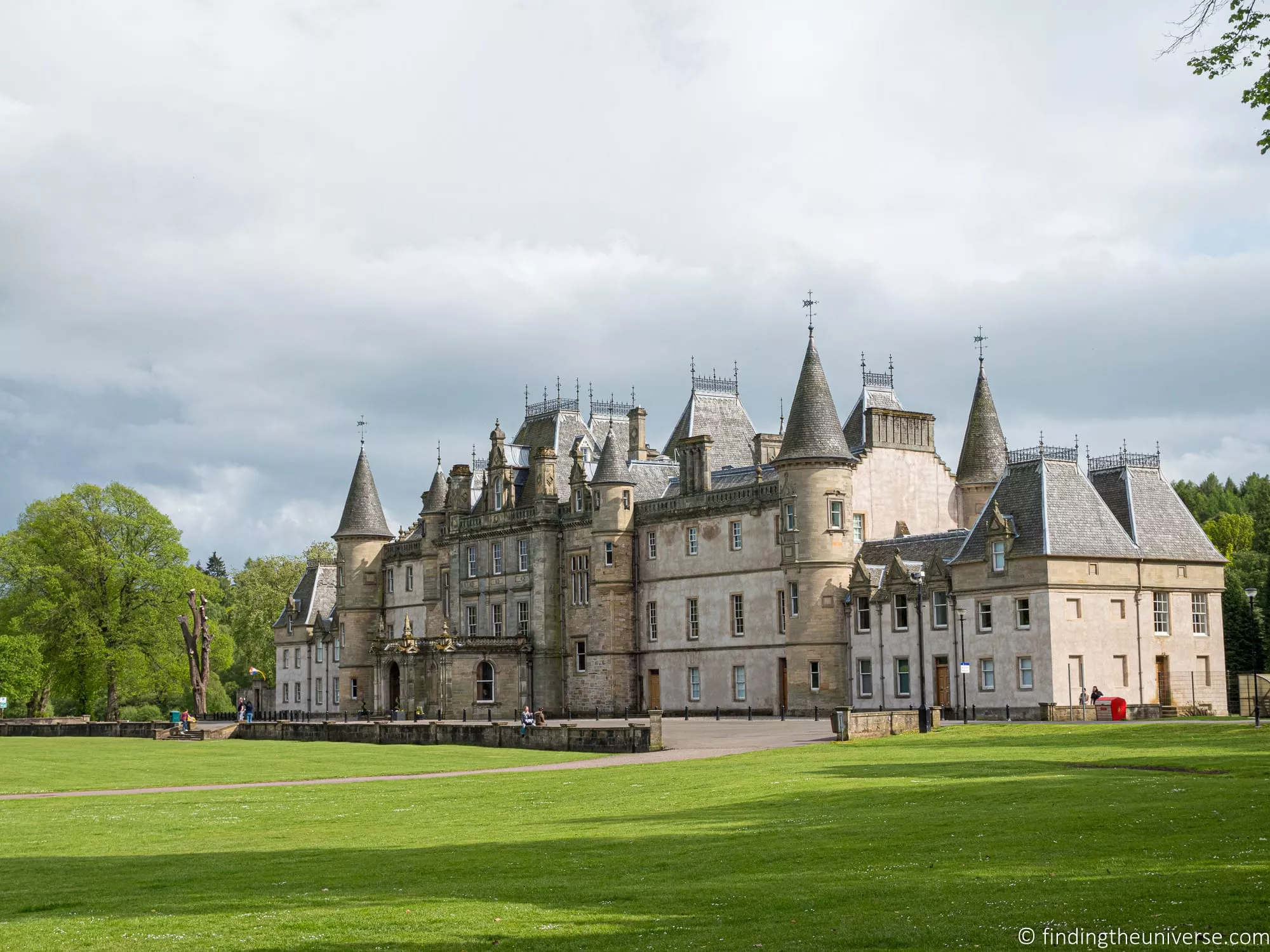
Muiravonside Country Park – Battle of Prestonpans
Not too far from Callendar House is the Muiravonside Country Park. This is a 170 acre country park which is also operated by the Falkirk Community Trust.
The park has walking trails through woodland and parkland, a mini farm that demonstrates farming practices, a children’s play area, a cafe, and a sculpture trail. They also run a variety of events and activities throughout the year. It’s a popular place for families.
The park also featured in Outlander, specifically in Season 2 of the show, where it was the location of the Battle of Prestonpans in Episode 10. Shots such as Dougal testing the British rifle and many of the battle scenes were filmed on location.
Muiravonside Country Park is free to visit and open year round. It’s around a 45 minute drive from Edinburgh, just past Linlithgow. You will want your own transport as it’s not easy to reach by public transport.
Preston Mill – Lallybroch Mill
Preston Mill is a very pretty old mill, found in the village of East Linton to the east of Edinburgh. The mill, which is one of the oldest working water-driven meal mills in Scotland, dates from the 19th century. However, there has been a mill in this location since at least the 16th century.
Preston Mill appeared in a number of scenes in the first Outlander Season. First, when we see Jamie repairing a waterwheel at Lallybroch in Episode 12, this is the Preston Mill waterwheel.
In addition, the museum exhibition room that you can visit at Preston Mill was also used for Outlander. It was the location of the court ante-room from the witch trial in Episode 11. The rest of the trial was filmed at the previously mentioned Tibbermore Church.
Preston Mill is a National Trust for Scotland property, and there is an entry fee. It’s free for National Trust members. Overseas visitors can buy a National Trust Explorer Pass which grants access to over 300 properties across the UK for a number of days.
You can see opening hours and prices on the official website here.
Preston Mill is 23 miles east of Edinburgh, and you can visit by both public bus or train from Edinburgh. By train, you’ll want to travel to North Berwick and then take a local bus service to East Linton. You can see public transport timetables here. It’s also possible to drive from Edinburgh, which should take around 40 minutes.
Preston Mill can also be visited as part of this private tour, which has departures from multiple locations in Scotland including Edinburgh and Glasgow.
Aberdour Castle – Monastery
Aberdour Castle, which dates from around 1200, is one of the oldest castles in Scotland. It’s found in the village of Aberdour in Fife. The original medieval part of the castle has lost its roof, but the more recent 17th century addition is still covered up.
Aberdour Castle featured in the first Season of Outlander as the abbey where Claire tends to the wounds that Jamie received from “Black Jack” Randall in Episode 16. Multiple locations were used, including exterior shots of the castle, the stables, and the upstairs gallery. Staff on site will be able to direct you to specific locations if you have any questions.
Aberdour Castle is operated by Historic Environment Scotland. It’s open year round, and there’s an entry fee, currently £7.50 for an adult ticket booked online. You can see full prices and opening hours online here. It’s free for Historic Scotland members, and English Heritage members get half-price entry in their first year and free entry after that.
If you’re visiting several Historic Scotland sites, the Historic Scotland Explorer Pass is worth considering (see the Doune Castle section above for how it works).
Aberdour Castle is easy to get to by car from Edinburgh, it takes around 40 minutes. There’s also a train station in Aberdour offering direct services to Edinburgh, which takes around 30 minutes. You can check train times and book tickets here.
Kinross House – Wilmington Gathering
Kinross House is a beautiful large Scottish Palladian mansion, around 45 minutes’ drive from Edinburgh.
It featured in season six, episode five of the show, where we meet Flora MacDonald at an event in Wilmington. Flora is a real historical character who helped Bonnie Prince Charlie escape government troops and flee the country following his defeat at the Battle of Culloden.
She also emigrated to North Carolina, so her being in Wilmington at a function generally fits historically at least, even if the timing might be a little off.
Many of the interior shots of this event were filmed in Kinross Estate, which is obvious if you compare the scenes from the show with the images on the estate website, especially the upright white columns in the room where the event takes place.
Kinross Estate is not generally open to the public, but you can hire the whole estate out if you feel like hosting your own event!
Dysart Harbour – Le Havre Port
Dysart harbour is a very picturesque harbour on the Fife Coastline. The harbour dates back to the mid 15th century, and is still in active use today. Over time it has seen a wide variety of goods pass through, including salt and coal. Today it is primarily leisure and fishing boats using the harbour.
Dysart harbour was used as the French port of Le Havre in the first episode of Season 2 of Outlander. We see Claire and Jamie arrive in 1745 France with Murtagh aboard the Christabel.
The show had shots of much of the harbour, as well as the harbourmasters’ house, although the old buildings in the background shots aren’t actually there, in reality it’s just a large wall! The harbourmasters’ house however was used in the show, as the guesthouse where they get rooms.
Another scene that appeared to be shot at this location was Jared’s wine warehouse. However, this was actually shot at Deanston Distillery, near Doune Castle, not here.
Dysart harbour is easy to visit. You can take a direct train from Edinburgh to Kirkcaldy, and then take a local bus to Dysart. Alternatively, it’s around a 50 minute drive from Edinburgh.
Deanston Distillery – Jared’s Wine Warehouse
There is obviously more to Scotland than Outlander locations. We think visiting a Scottish whisky distillery whilst in Scotland is a must for any visitor, even those who might not particularly like whisky.
The good news for Outlander fans is that you can combine a visit to a whisky distillery with an Outlander filming location.
Deanston Distillery, which is found just next to the village of Doune, is a Scotch whisky distillery found in a former cotton mill. It’s been producing whisky since 1966, and you can take a tour of the distillery, learn how whisky is made, and sample the product.
Deanston Distillery was the filming location of Jared’s wine warehouse in Season 2 of the show. We see Claire entering the warehouse in Episode 1 of Season 2, where Claire goes to inspect some men suffering from smallpox.
The location used for this shooting was the Deanston Distillery maturation warehouse, where the magic happens to turn the spirit in the barrels into Scotch whisky. Whisky casks and wine barrels are actually the same, and whisky is often matured in old wine barrels for the flavour. The only inauthentic point in the scene is that the liquid in the barrels in the background is definitely not wine!
You can visit Deanston distillery, and you can see tour times and price on their website here. It’s close to Doune Castle, the filming location for Castle Leoch, so it would make sense to visit the two together.
You can reach Deanston distillery by car in around an hour from Edinburgh. In addition, a public bus runs from Stirling to Doune, and you can get to Stirling by train from locations around Scotland.
We visited Deanston distillery on this tour from Edinburgh.

Glasgow Cathedral – L’Hopital Des Anges, Paris
Glasgow is Scotland’s largest city, and with the film studios located nearby, you would expect to find a few Outlander filming locations here. And you would not be disappointed! Our next few locations are all in Glasgow.
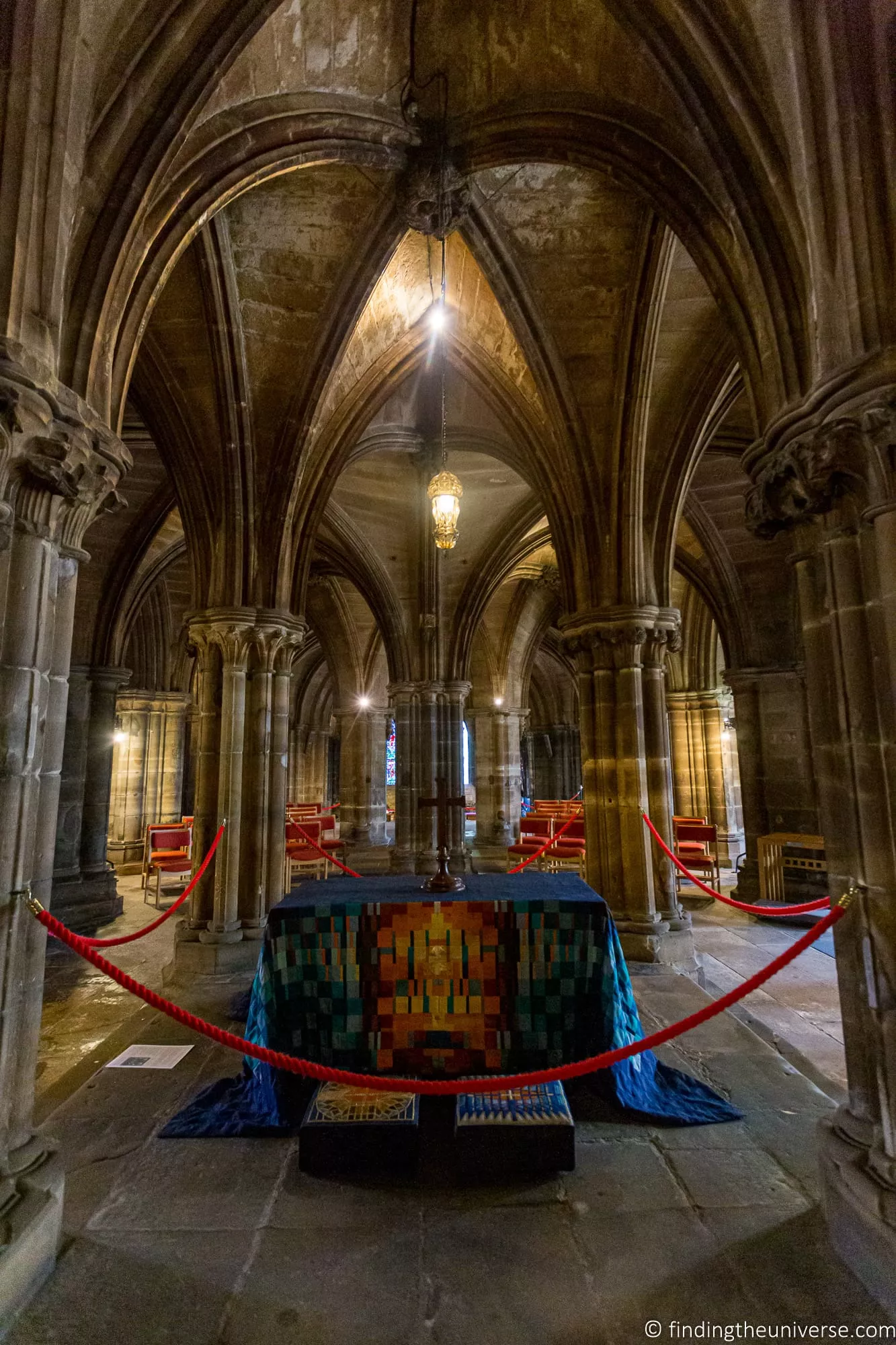
We’ll start with the oldest building in the city, which is Glasgow Cathedral. This dates from 1136, making it the oldest cathedral on mainland Scotland. The cathedral is dedicated to St. Mungo, the patron saint of Glasgow, who is buried within. The cathedral is very much worth a visit when you are in the city, and is one of our recommended things to do in Glasgow.
Outlander used the cathedral crypt as the filming location of the Parisian hospital, L’Hôpital des Anges. This appears in Season 2 of the show a number of times, as Claire works here and tends to patients. She also recovers here after losing her baby.
The exterior of the cathedral is not featured in the show. The exterior shots of the hospital were actually filmed in Prague.
Glasgow Cathedral is looked after by Historic Environment Scotland, and is free to visit, although donations are of course welcome. It is an active place of worship, so there are events and masses taking place here. You can find out more about opening times and plan your visit on the official website here.
University of Glasgow – Harvard University
Founded in 1451, Glasgow University is one of the oldest universities in the English speaking world. It’s a large affair, which is today spread out across multiple campuses around the city.
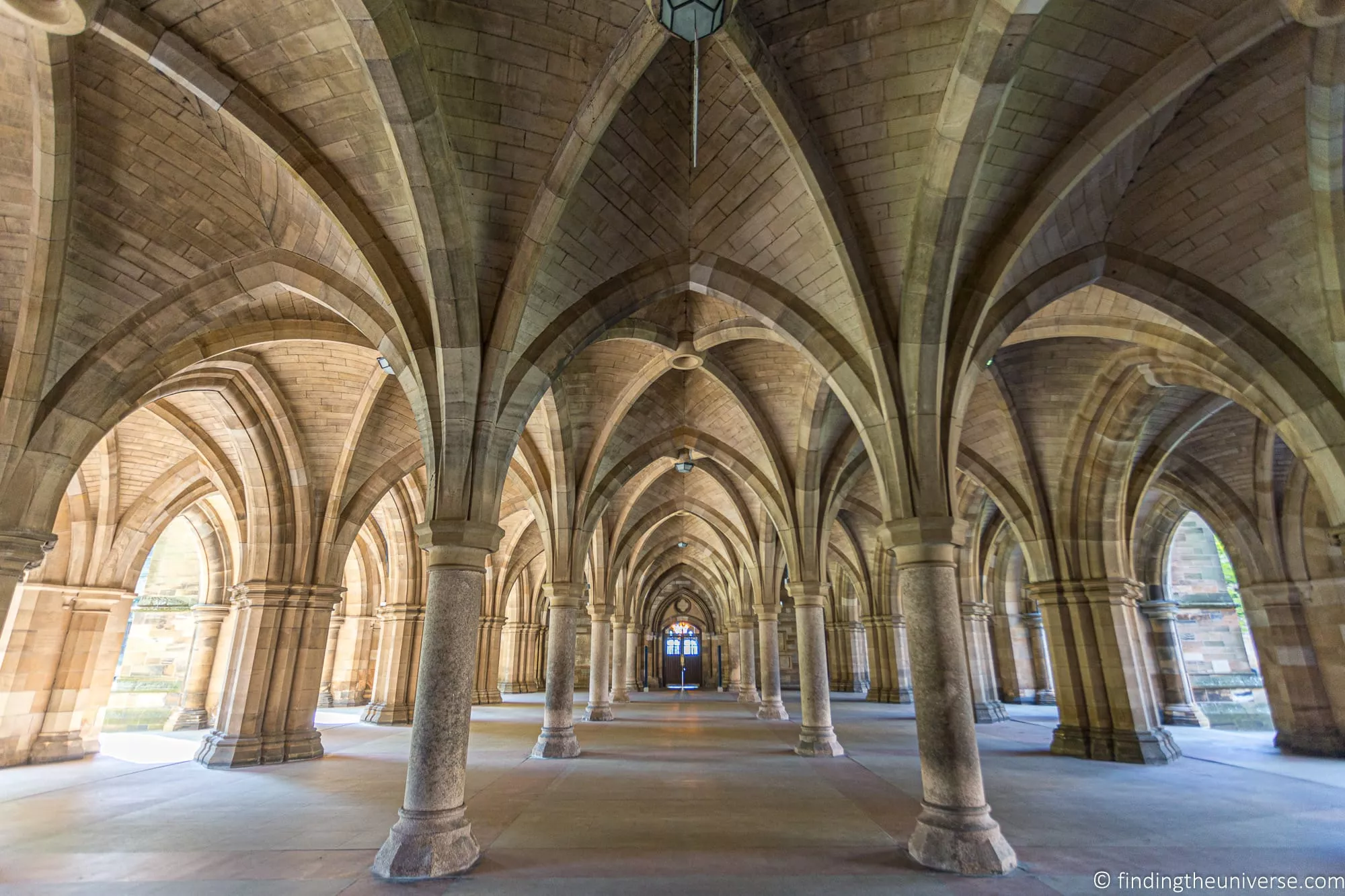
The main campus today, and the one that Outlander fans will want to visit, is Gilmorehill. This is a little to the west of the city centre, and was built in 1870 in a glorious Gothic revival style.
Despite bearing no real resemblance to the real-life Harvard University in Boston, Gilmorehill campus was chosen as the filming location for the Harvard University scenes. These were shot at a number of different locations, including the gorgeous cloisters which appeared in Episode 5 of Season 3.
Parts of the University of Glasgow is open to visitors, and you can take a self-guided tour of the main highlights. It’s free to visit – see more on the official website here.
Kelvingrove Park – Boston Park
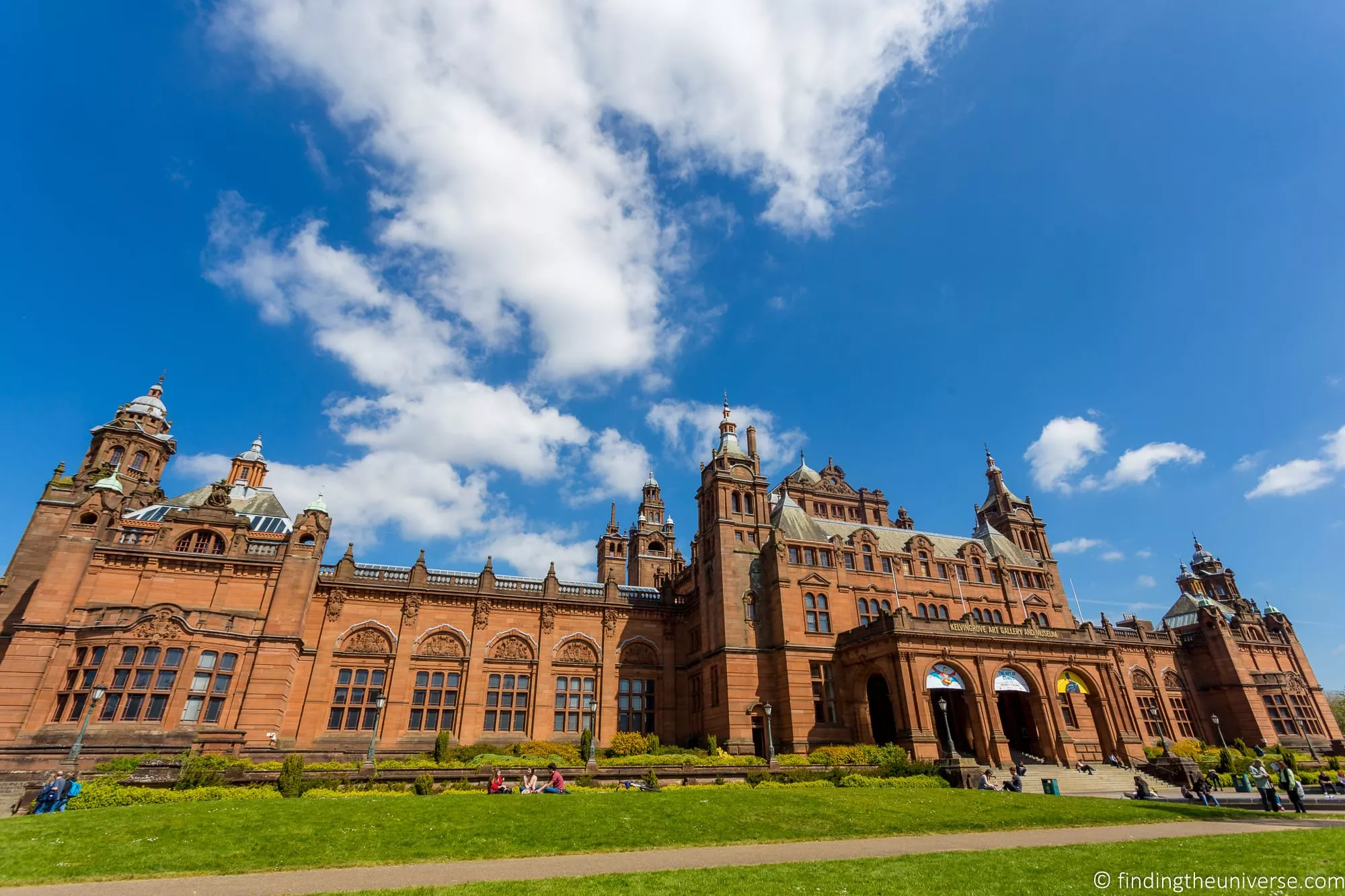
Next to the University of Glasgow you will find Kelvingrove Park, one of Glasgow’s oldest public parks which dates from 1852. The 85 acre park is home to a number of walking trails and monuments, as well as the excellent Kelvingrove Art Gallery and Museum.
Kelvingrove Park was used in Episode 2 of Season 3 of Outlander. In this episode, we see Claire walking through a Boston park pushing a pram, which is actually Kelvingrove park. She passes a bagpiper busking, and crosses a bridge. The bridge that she crosses is the Prince of Wales bridge which is located near the bandstand.
Kelvingrove Park is free to visit and it is open year round.
Dowanhill Street Glasgow – Furey Street Home, Boston
Glasgow was a popular location for filming scenes set in Boston! Another location the Outlander team used to depict 1940s Boston in Season 3 of the show was Dowanhill Street.
Dowanhill Street is a long residential street in the west end of Glasgow, not too far from the university. It runs from Victoria Crescent Road at it’s north end to Dumbarton Road at the south end, and it’s around a third of a mile long.
The street is home to many old Victorian era houses made of red brick, and was used as the location for Claire and Frank’s home on Furey Street. The house used was number 124 which is at the north end of the street, between Downside Road and Victoria Crescent Road.
The interiors of the house were not shot here, it was just used for external scenes. The street appeared throughout the first episodes of Season 3 as we progress from the 1940s to the 1960s.
Please be aware if you visit that this is a street of private residences, as is the house that was used. Whilst you are of course welcome to stroll the street and imagine yourself in mid 20th century Boston, do be respectful of the owners and don’t venture onto private property.
Glasgow City Chambers – City of Westminster Register Office
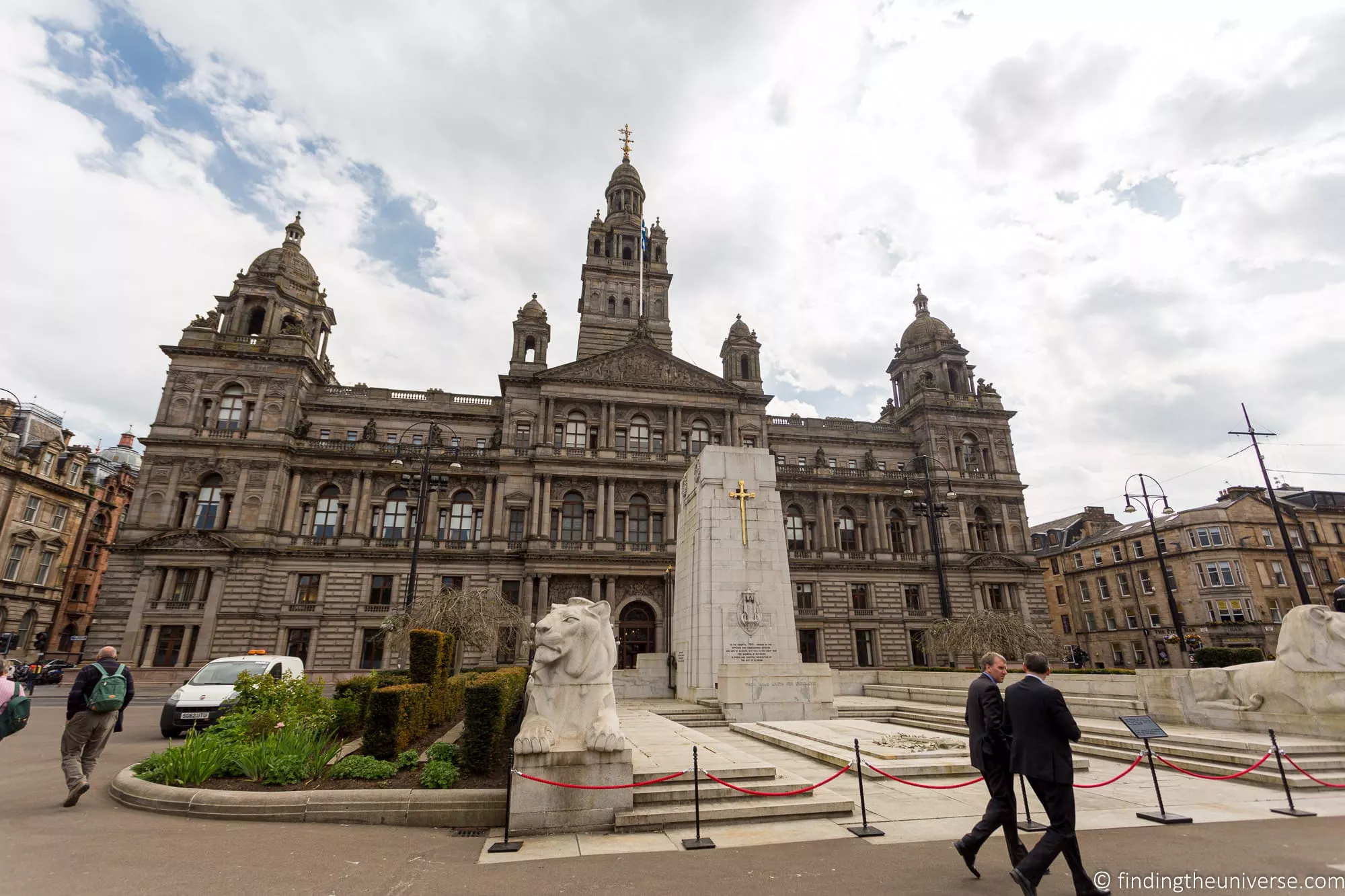
The Glasgow City Chambers are an impressive civic building found on George Square – the city’s main civic square. The chambers are the home of the local government in Glasgow, and they are also where you’ll find the Glasgow City Council registration office. This is where births, deaths and marriages are registered in the city.
It is appropriate therefore that this was where, in Episode 7 of Season 1, Frank and Claire get engaged. This is set in the City of Westminster in London, but it was actually filmed in Glasgow, at number 45 John Street, which is where you’ll find the entrance to the Glasgow City registration office.
Only the outside of the building was used for the show. However, we can recommend taking a free tour of the Glasgow City chambers. These run twice a week on working days. You can find out more about tour times here.
Pollok Country Park – Castle Leoch & French Countryside
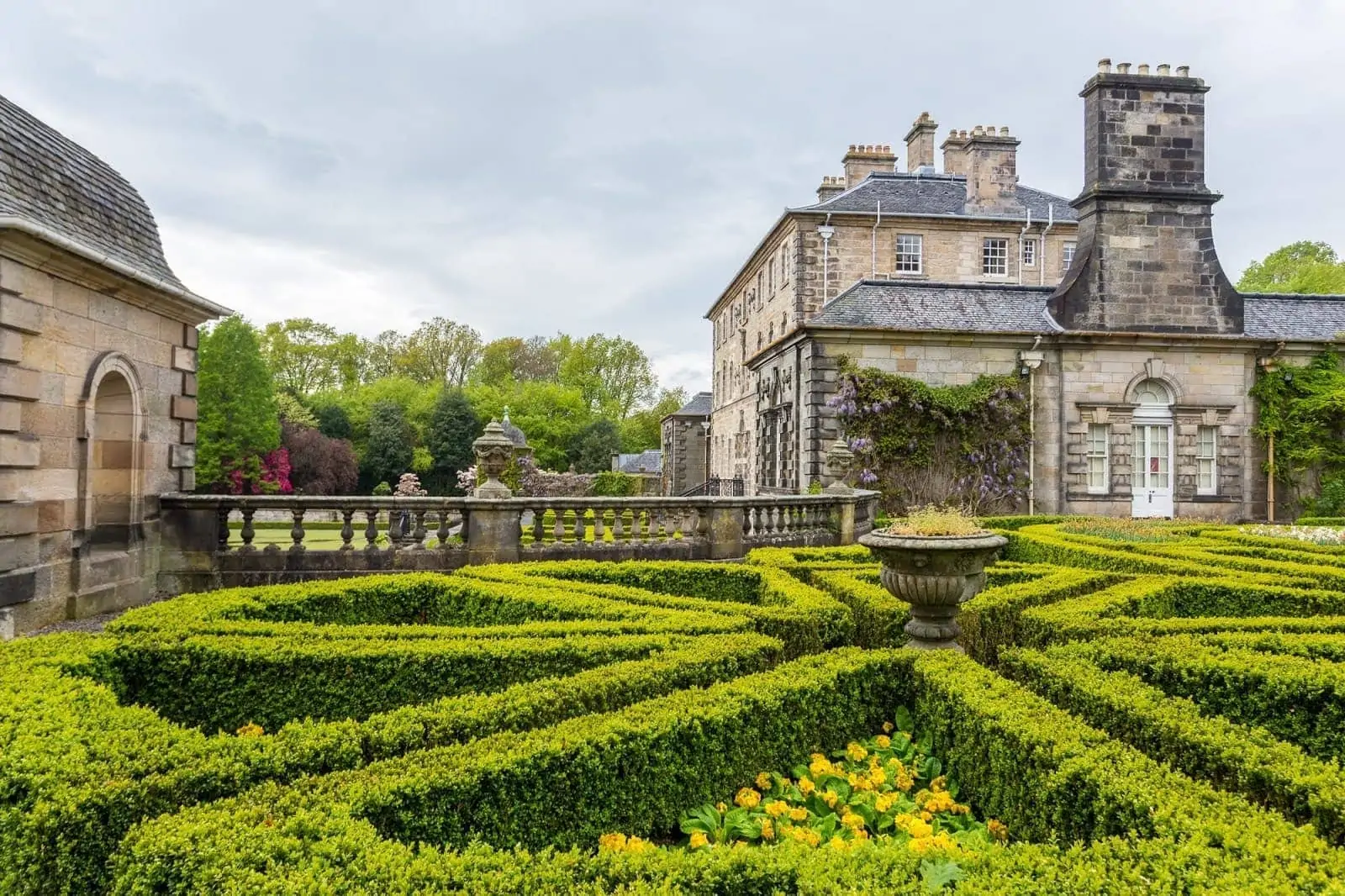
A little to the south west of Glasgow is Pollok Country Park, the largest park in the city. The estate was gifted to the city in 1966 by the Maxwell family, who had owned it for over 700 years, on the provision that it would remain a public park.
As well as the large area of parkland, the park contains the Burrell Collection, an impressive art collection, as well as Pollok House.
Pollok Country Park was used for quite a few scenes in multiple seasons of Outlander, so if you’re an Outlander fan visiting Glasgow, it’s well worth seeking out.
In the first Season of Outlander in Episode 4, Claire is outside with some children on the grounds of Castle Leoch. These scenes were filmed in the park. In Episode 14 of the same season, the gypsy camp that Claire and Murtagh find was also shot in the park.
In Season 2 of the show, the park is used for scenes of French countryside. These are primarily in Episode 6. We see Claire in a carriage on her way to the duel between Jamie and Randall. The bridge she crosses is easily recognisable as a bridge that you can visit in the park. The duel itself was also shot in the park, as were earlier scenes in the episode where Jamie and Fergus are riding.
Finally, Season 4 of the show saw the Outlander crew return to Pollok Country Park again, this time for scenes in the USA. In Episode 3 of Season 4, Roger and Brianna attend a Scottish festival in 1970s North Carolina, which was filmed in the park as well.
As you can see there are many scenes from Outlander which were filmed in Pollok Country Park, although many of them were general scenes in woodland or fields so there is not necessarily a lot to see! Still, it’s a lovely park and it is well worth visiting, as is Pollok House.
Pollok Country Park is free to visit and open year round. It’s around a 20 minute drive from the city centre, or a 25 minute bus ride. Pollok House is a National Trust for Scotland property, which has an entry fee. We have visited and it’s well worth it in our opinion!
Abercainy Estates – River Run
Abercainy is a 1,400 acre private estate near the town of Crieff, which has been the home of the Moray family for over 700 years. It’s primarily used as a wedding and events venue, with the large house a popular location for big events.
Abercainy was the location of the North Carolina “River Run” plantation, which is owned by Jamie’s Aunt Jocasta. This appears in Episode 2 of Season 4, as well as in Episode 6 of Season 5.
The plantation house was built from scratch on set, although only the lower half of the house was built, with the upper part being computer generated. Only the external shots were filmed here whereas all the interior scenes were shot on a set.
Abercainy Estate is a private property so it not usually open to visitors, only those who have booked an event. However they do have open days so it is sometimes possible to visit and do a tour. That said, don’t expect to see much, as the plantation home was a fabrication which doesn’t actually exist. You can see more on their website here.
Devil’s Pulpit – Liar’s Spring
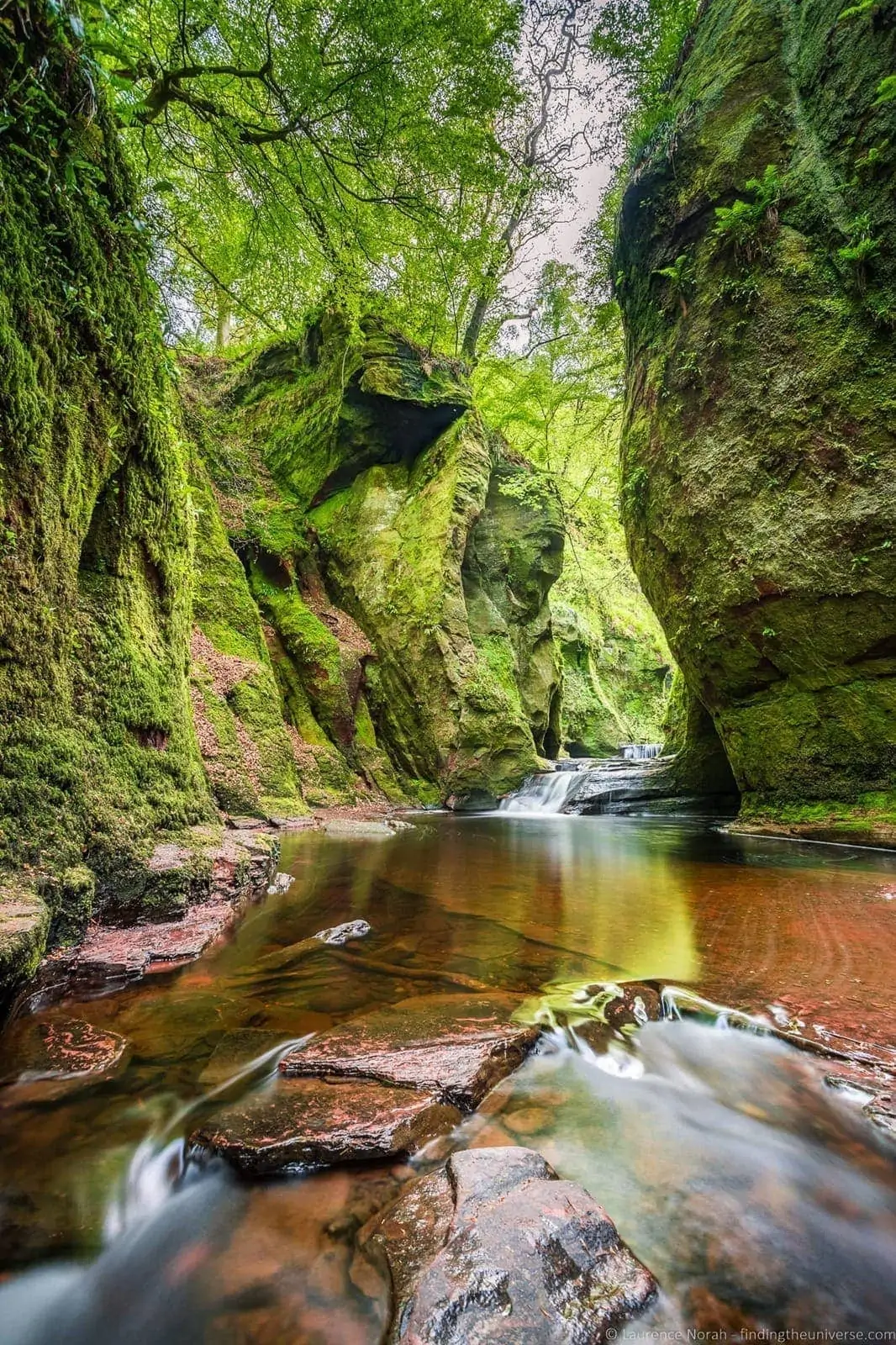
The Devil’s Pulpit, also known as Finnich Glen, is a deep gorge known for its green mossy sides and the red appearance of the water that runs through it (caused by the red sandstone riverbed).
The Devil’s Pulpit appeared in Season 1 of Outlander, as the location for Liar’s Spring. The legend has it that if you drink from the spring, you have to tell the truth, otherwise you die. In Episode 6, Dougal Mackenzie makes Claire drink from the water to ensure she’s not an English spy.
You can of course visit the Devil’s Pulpit, but be prepared for a bit of a challenge. First, it’s a popular location with minimal parking, and public transport in the area is not great. Second, the descent down into the gorge is via a very steep and muddy path, which can be challenging. Finally, the water levels in the gorge can rise dangerously quickly so you need to be fully prepared.
I’d recommend reading my guide to visiting the Devil’s Pulpit, so you know what to expect!
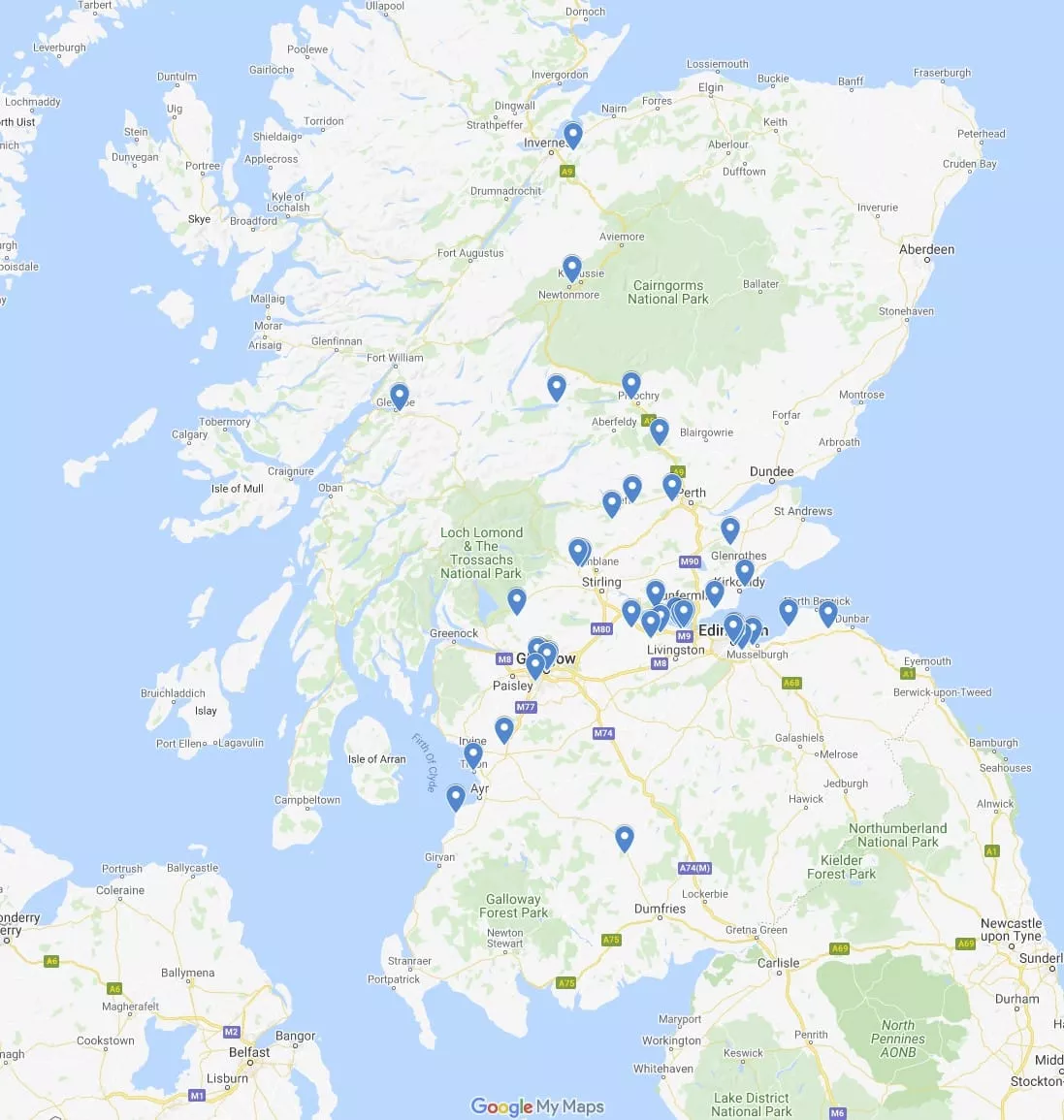
Map of Outlander Filming Locations
There are a lot of Outlander filming locations around Scotland, as you can probably tell from this post! To help you plan out your Outlander adventure, we’ve put together this map of Outlander filming locations. You can also see this on Google here.
Other Locations Related to Outlander
In this guide we’ve primarily focused on actual Outlander filming locations. However, there are a few other locations throughout Scotland that are very strongly tied to the show, that we think you might consider visiting even if they weren’t actually filming locations. Many of these served as inspiration for places in the books and TV show.
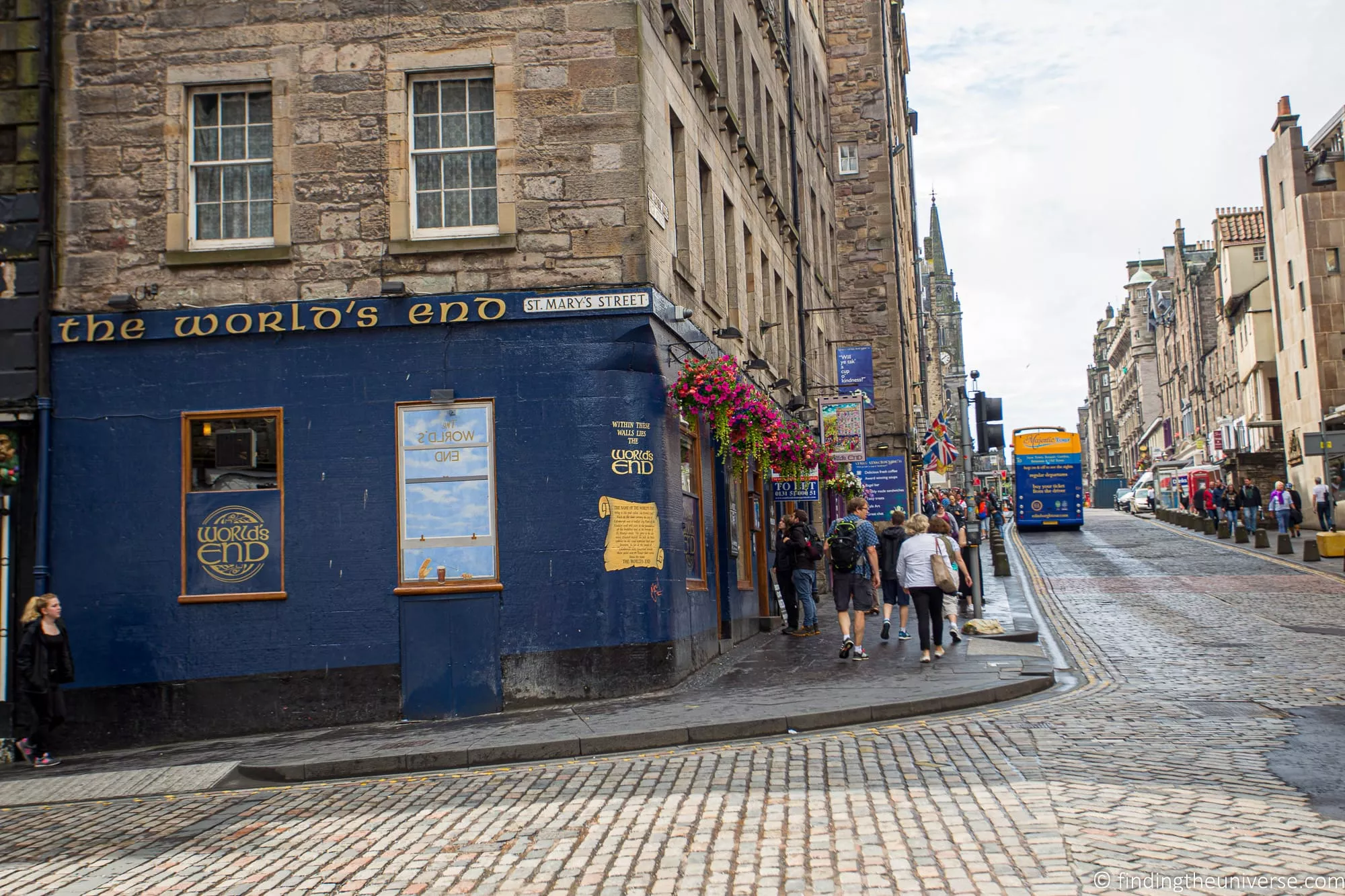
The World’s End Pub, Edinburgh
In Episode 6 of Season 3, Claire and Mr. Willoughby have a conversation in the World’s End pub. This is a real pub on the Royal Mile in Edinburgh.
Whilst the scene was actually filmed on a set, it’s fun to visit this location and have a drink or meal when you’re in Edinburgh. The pub dates from the 16th century, and its name comes from a time when Edinburgh was a walled city. The pubs wall was a part of the city’s ancient wall, with the relatively safe world of Edinburgh ending just past the pub!
Clava Cairns
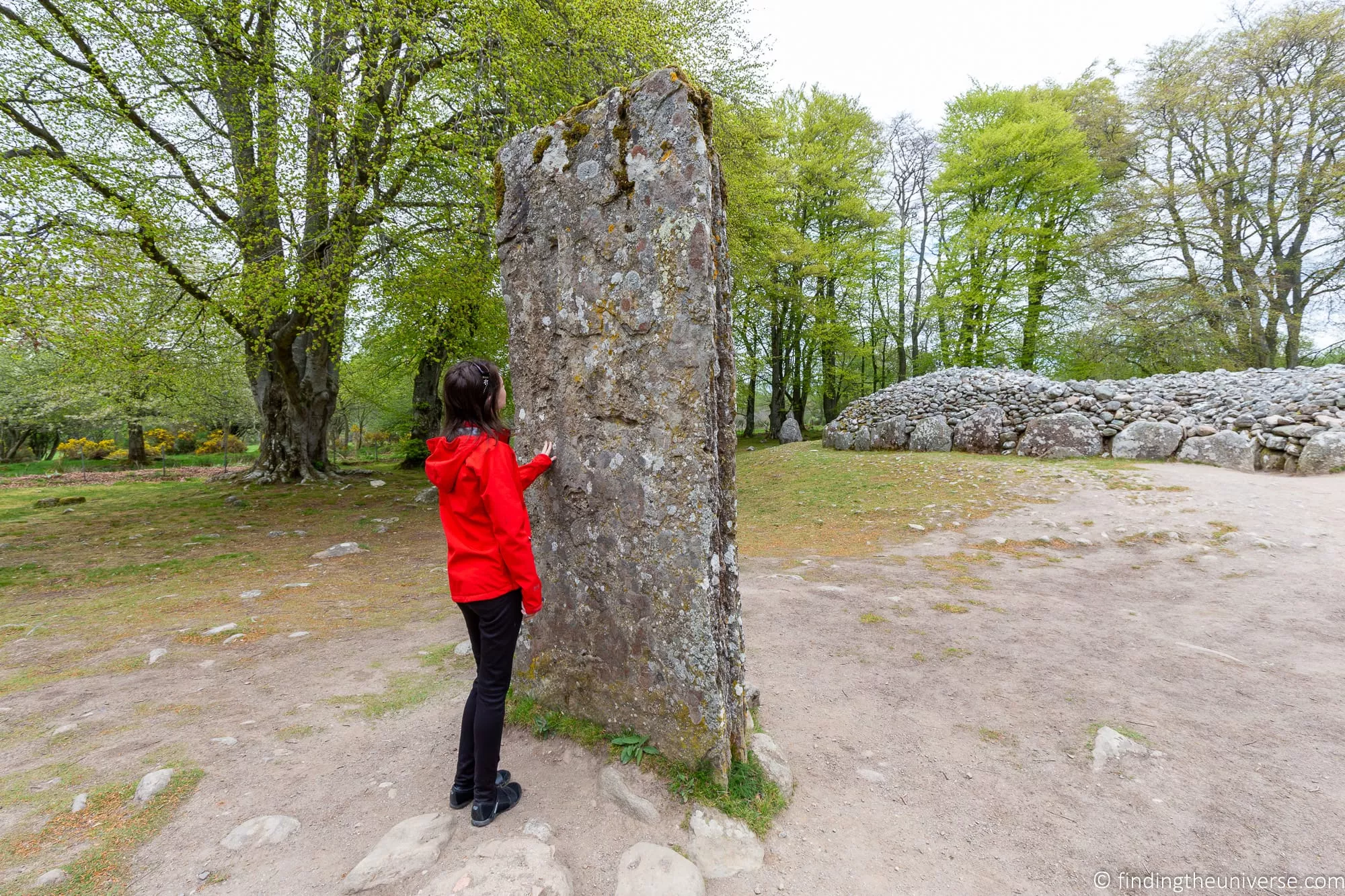
Found just outside of Inverness near the Culloden Battlefield, the Clava Cairns are one of the most popular locations for fans of Outlander looking for the real Creagh Na Dun standing stones.
Part of the reason for their popularity is that one of the stones is split in two, similar to the stones in Outlander. They are also relatively accessible compared to many other stone circles in Scotland.
So, whilst the Clava Cairns were not an actual filming location for Outlander, fans seeking a great photo of a standing stone will definitely enjoy a visit here.
Clava Cairns are a prehistoric site, dating to 4,000 years old. As well as the stones, there are three large cairns – mounds of stones that would have been the burial site for important individuals.
Clava Cairns are free to visit. They are just a few hundred yards from the Culloden Battlefield, so we would recommend visiting as part of your trip there.
Rothiemurchus Estate – Tulloch Ghru
Tulloch Ghru is a popular walking location in the Caingorms National Park. It’s on the Rothiemurchus Estate, just outside the popular town of Aviemore. As a side note, this is a great base if you’re planning on skiing in Scotland!
The Rothiemurchus Estate was used as the location where Claire first meets Jamie having passed through the stones. This takes place in Episode 1 of Season 1, and Tulloch Ghru was the filming location.
Like many other scenes like this in Outlander, this is a tricky one to pin down exactly as it is shot in woodland. However, if you are looking for a lovely walk in beautiful highland countryside, which happens to have featured in Outlander, this is an excellent option. You can find information on some self guided walks on the Rothiemurchus website here.
Rothiemurchus Estate is on the outskirts of Aviemore, and is easy to reach by bus, car or a 30 minute walk from Aviemore.
Callanish Standing Stones
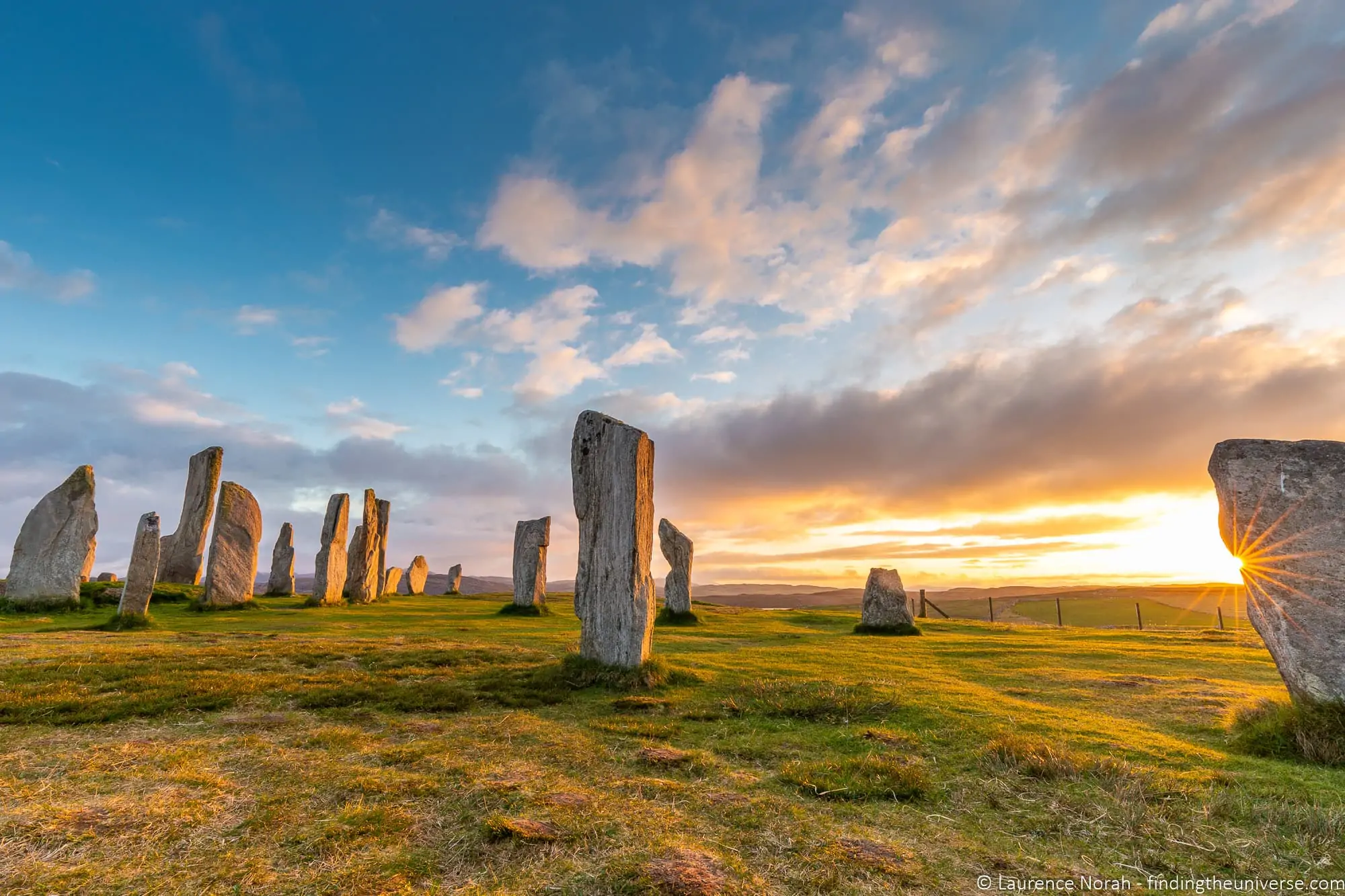
The Callanish standing stones on the Isle of Lewis & Harris are, in our opinion, the stones that most closely resemble the Creagh Na Dun stone circle from Outlander. If you are lucky enough to be visiting Lewis & Harris, then a trip to these stones is a must.
They are on a beautiful location atop a hill, with sweeping views of the surrounding landscape, and are believed to be around 5,000 years old. They are also usually cited as being the inspiration the Outlander set designers used to create the stone circle in the show.
The Callanish standing stones are open year round and are free to visit. There is also a visitor centre on site which has a small museum, which has an entry fee.
Inverness
The city of Inverness is known as the capital of the Highlands. It’s a beautiful city with lots to see and do, and there are also some great day trips from Inverness, including to nearby Loch Ness.
Whilst Inverness wasn’t an Outlander filming location, much of the show and books are set in and around the city, and we think it is well worth visiting on your trip to Scotland.
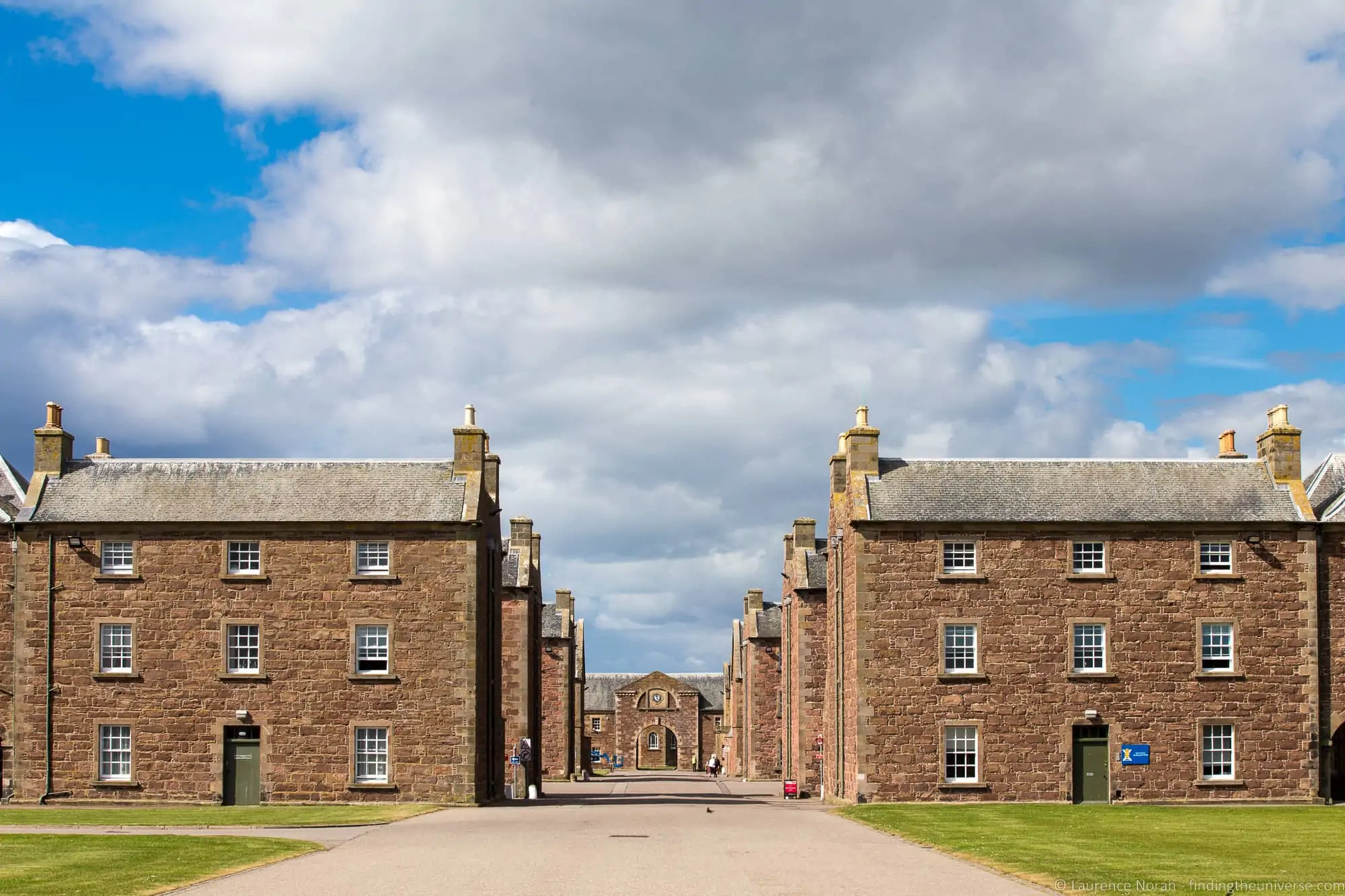
Castle Leod
As mentioned in my section on Doune Castle earlier on in my post, the real world location of the Clan MaKenzie family home is at Castle Leod. This 17th century tower house served as the inspiration for Castle Leoch in the books, however it was not chosen as a filming location as it was deemed to be less accessible than Doune Castle.
Many fans still wish to visit Castle Leod, and it’s a popular inclusion on Outlander tours from Inverness, such as this one. You can also visit it on this four day Outlander tour.
Castle Leod has some open days each year, but it is not always open. It is also possible to arrange a visit with a private tour guide. If you want to visit Castle Leod on your own, we suggest checking the official website here for information on how to do so.
You can reach Castle Leod by car, or you can take a public bus from Inverness to Strathpeffer and then it’s around a mile walk to the castle.
Beauly Priory – Lovat Fraser Grave Site and Church
The beautiful ruins of 13th century Beauly Priory are one of our recommended stops when driving Scotland’s North Coast 500. Not much is known about the priory or the monks who lived here. It operated for just over 400 years before being disestablished in 1634, and falling into ruin.
The priory is surrounded by a graveyard, where a number of members of Clan Mackenzie and Clan Fraser are buried. It wasn’t a filming location, but it featured in the Dragonfly in Amber novel as the location where Claire meets Maisri the Seer.

Outlander: Blood of My Blood Filming Locations
The original Outlander series has finished, but the story didn’t end there. A prequel series, Outlander: Blood of My Blood, premiered on STARZ in August 2025, and a second season is on the way.
Blood of My Blood follows the two sets of parents whose stories shaped the original show. We see Jamie Fraser’s parents, Brian Fraser and Ellen MacKenzie, in 18th century Scotland, and Claire’s parents, Henry and Julia, who meet in England during the First World War. Like the original series, the prequel was filmed largely in Scotland, with production running through the first half of 2024.
If you’re working your way through the locations in this guide, the good news is that several of the prequel’s filming sites are places you can already visit. Here are the main ones.
Balvaird Castle
Balvaird Castle, a 15th century tower house in Perthshire, features heavily in Blood of My Blood as Castle Leathers, the home of Brian Fraser. It’s a Historic Environment Scotland property, and it’s free to visit, with the grounds and the exterior of the tower open to view. Only the exteriors were used for filming. As a managed site its access can vary by season, so it’s worth checking the Historic Environment Scotland website before making a special trip.
Bannockburn House
Bannockburn House, near Stirling, was used for interior scenes in the prequel. It’s a 17th century country house that is now owned and run by a community trust, and it’s open to visitors for tours, with booking handled through the house’s own website. It’s a community-led restoration project, so a visit also helps support the ongoing work on the house.
Park Circus and Kelvingrove Park, Glasgow
Several Blood of My Blood scenes set in early 20th century London were filmed in Glasgow’s Park district. The grand terraces around Park Circus and Park Terrace stood in for London streets, and the steps leading down into Kelvingrove Park were used for the scene where Henry and Julia first meet. Both are easy to see, as the streets and the park are open to the public. Do bear in mind that Park Circus and Park Terrace are residential, so be respectful if you go to take a look. Kelvingrove Park already appears in this guide as an original Outlander location, so prequel fans get two shows in one visit.
Doune Castle
Doune Castle returns in Blood of My Blood, once again standing in for the MacKenzie family seat. If you’ve visited it as Castle Leoch from the original series, you’ll recognise it straight away. You’ll find full visiting details in the Doune Castle section earlier in this guide.
Tours of Outlander Filming Locations in Scotland
In our experience, the two easiest ways to see Outlander filming locations Scotland are to drive yourself, or to take a tour, although you can still see a number of sites via public transit. Driving yourself will let you visit some of the more off the beaten path locations, but will require some careful planning. Sometimes certain attractions may only be open to those on a tour.
A tour is an easy way to let someone else handle all the planning, and they are usually very cost effective as well. We also like that someone else does the driving, and most tours feature knowledgeable guides who can share with you everything you need to know about the locations you’re seeing, and which Outlander scenes specifically were filmed there.
Here are some tours we suggest from different departure points in Scotland, covering both single days out and longer multi-day trips.
- This 1 day tour from Edinburgh includes Culross, Doune Castle, Linlithgow Palace, Blackness Castle and Midhope Castle.
- This 1 day private tour from Edinburgh includes Midhope Castle, Falkland, Culross, Hopetoun House and Doune Castle.
- This 1 day private tour from Glasgow offers multiple departure options, and visits Preston Mill, Linlithgow Palace, Doune Castle, Blackness Castle, Culross and Falkland.
- This 1 day tour from Glasgow includes Culross, Doune Castle, Falkland, Linlithgow Palace, Blackness Castle and Midhope Castle.
- This private 1 day tour from Inverness visits a number of locations related to Outlander, including Castle Leod, Culloden Battlefield and Clava Cairns.
- This 2 day tour from Edinburgh includes Blackness Castle, Doune Castle, Midhope Castle, the Clava Cairns, Culloden Battlefield and the Highland Folk Museum.
- This 4 day tour from Edinburgh visits many Outlander sites, including Culross, Falkland, the Highland Folk Museum, Clava Cairns, Doune Castle, Midhope Castle and Blackness Castle.
Tips for Visiting Scotland for Outlander
To help you plan your Scottish Outlander adventure, we wanted to share some tips we think you will find useful.
Where to Base Yourself in Scotland for Outlander
If you look at our map of Outlander filming locations, you’ll see that they fall into a few natural clusters. Grouping them this way makes planning a trip far more manageable than treating them as 40-odd scattered sites.
The biggest cluster sits just west of Edinburgh. Midhope Castle, Blackness Castle, Hopetoun House, Abercorn Church and Linlithgow Palace are all close together, and Craigmillar Castle, Backhouse Close and Newhailes are within or beside the city itself. Basing yourself in Edinburgh, you can comfortably fill two or three days here.
Just across the Forth lies Fife, home to Culross, Falkland, Aberdour Castle and Dysart Harbour. This works as an easy day out from Edinburgh, or a more relaxed two days if you want to linger.
Glasgow has its own run of city locations, from Glasgow Cathedral to Pollok Country Park, and it’s the natural base for the Ayrshire coast sites at Dunure and Troon, with Drumlanrig Castle further south again. Two days covers it well.
The Highland locations are more spread out. Culloden Battlefield, the Clava Cairns, Castle Leod and Beauly Priory all sit near Inverness, while the Highland Folk Museum and Glen Coe work as stops on the journey north or as part of a wider Highlands trip. If you want to include these, a couple of nights in Inverness is the way to do it.
If you only have a short trip, Edinburgh gives you the best access to the largest number of locations. With a week, splitting your time between Edinburgh, Glasgow and Inverness lets you cover almost everything in this guide.
When to Visit Scotland for Outlander Locations
Many of the Outlander locations are at sites or attractions which are only open seasonally, so you will want to plan your trip based on when the attractions you are most interested in visiting are open.
Many attractions in Scotland outside of the bigger cities are closed in the winter, with many being open from April to October. Our favourite months for travel in Scotland are in May and September. These times are a little less busy than the summer months, but you still have a good chance of nice weather, and the majority of attractions will be open.
Note that a few attractions may only be open a few times a year or may require a booking or advanced reservation to visit. So once you decide which places you most want to visit, be sure to check on the opening dates, times, and if reservations are required.
How Many Days to Visit Outlander Locations in Scotland
You will want a minimum of one full day to visit some of the key Outlander locations. A full day should allow you to visit between 4 and 6 locations, depending on what part of Scotland you are focused on visiting.
If you are planning an Outlander focused trip to Scotland and wanted to visit the majority of locations in this guide, we’d suggest planning a trip that is 5 to 7 days in length. You could do this trip by driving yourself or you could book tours that would take you to most popular attractions
As an example itinerary for a self-driving trip, if you had five days, we’d suggest splitting that time with a couple of days in Edinburgh, a couple of days in Glasgow, and then a day in Inverness. This would let you visit the majority of filming locations around Scotland.
It is also easy to book a guided Outlander tour, or a series of day tours to see the Outlander attractions. For example, if you have 5 days in Scotland, you could arrive in Edinburgh and explore it on your own for the first day, and then take this 4 day tour of the major Outlander sites.
How to Get to the Outlander Locations in Scotland
The two easiest ways to get to the Outlander filming locations in Scotland are to either drive yourself, or to take a tour.
If you drive yourself, this will give you the ultimate flexibility in terms of which locations you visit, how many you visit in a day, and how long you spend at each location. The downside is that you will have to do quite a bit more planning, and factor in the budget for any car rental.
If you are visiting Scotland, you’ll likely want to hire a car. We recommend checking out the prices at Discover Cars to see what options are available. They search all the major providers to help you find the best option for your trip.
You can also take a tour of course to visit Outlander locations, and we recommend a number of tour options above. Both private and group tours are available, and tours run from a day in length up to multiple days in duration.
A tour has many advantages in that someone else will handle all the planning, and all you have to do is show up and enjoy yourself. In addition, the tour guide can tell you all about the locations you are visiting, and provide context, history and entertainment.
Of course, with a tour you can lose some flexibility in terms of your trip, although we think the tours do focus on some of the best Outlander filming locations, so you don’t need to worry about that too much.
We’ve recommended a number of Outlander tours, but there are many more. We suggest looking for Outlander tours on GetYourGuide, Viator and Rabbies as a starting point.
Finally, a number of the Outlander locations in Scotland can be visited by public transport. This will often be the lowest cost option, but will also take the most time. If you do want to visit Outlander locations by public transport, we recommend using the Traveline Scotland website for planning both bus and rail travel. You can book train tickets online in advance here. For local bus tickets, you can usually just buy these on the bus or from a local bus operator.
What to Take on an Outlander Locations Trip
What we take on an Outlander locations trip. The sites run from the Central Belt up into the Highlands, so a full day of driving, walking and, in summer, midges.
| What to bring | Why | Price |
|---|---|---|
| INIU P50 power bank | Signal drops out between the more remote castles and glens, so you lean on downloaded maps and photos all day. Airline-safe. | Check price on Amazon |
| Smidge midge repellent | From May to September the Highland midges are relentless at the more rural locations. Smidge is the repellent that actually works. | Check latest price |
| Rick Steves Scotland guidebook | Covers the whole country if you are basing an Outlander trip around the Highlands and the Central Belt. | Check price on Amazon |
| Reusable water bottle | Refill as you go rather than buying water at every castle car park. | Check latest price |
Outlander Filming Locations FAQ
We get a lot of questions about visiting the Outlander filming locations, so here are answers to some of the most common ones.
Has the Outlander TV series finished?
Yes. The original Outlander series concluded with its eighth season, and the final episode aired in May 2026. The eight seasons together tell the complete story.
The wider Outlander universe is still going, though. A prequel series, Outlander: Blood of My Blood, began on STARZ in August 2025, and it has its own filming locations in Scotland, which we cover above.
Can you visit Lallybroch from Outlander?
You can visit the building used as Lallybroch, but only from the outside. Lallybroch, the Fraser family home, is played by Midhope Castle, a 15th century tower house on the Hopetoun Estate near Edinburgh.
The castle is derelict inside and closed to visitors, so you can only see the exterior, which is the part that appears in the show anyway. There’s a fee for parking, and access is sometimes closed for estate work, so check the Hopetoun Estate website before you travel.
Are the standing stones from Outlander real?
The Craigh na Dun stone circle, where Claire travels back in time, is not real. It was a set built from Styrofoam on private land near Kinloch Rannoch, and nothing remains there today.
If you want to see real standing stones, the Clava Cairns near Inverness and the Callanish Standing Stones on the Isle of Lewis are both well worth visiting. The Callanish stones are believed to have inspired the look of the Craigh na Dun set.
Where was Outlander: Blood of My Blood filmed?
The Outlander prequel, Blood of My Blood, was filmed largely in Scotland. Visitable filming locations include Balvaird Castle in Perthshire, Bannockburn House near Stirling, and the Park Circus area and Kelvingrove Park in Glasgow. Doune Castle, already familiar from the original series, was used again as well.
You’ll find more detail on each of these in the Blood of My Blood section above.
Where is the best base for visiting Outlander filming locations?
Edinburgh and Glasgow both work well as a base, as the majority of the filming locations are within day-trip range of one or the other. Edinburgh is handy for the locations in the Lothians and Fife, while Glasgow is better placed for the western and Ayrshire sites.
If you have more time and want to reach the Highland locations, such as Culloden Battlefield and the Clava Cairns, adding a couple of nights in Inverness makes sense.
How many days do you need to see the Outlander filming locations?
You can see several of the key locations in a single day, especially if you focus on one area such as the sites around Edinburgh. A full day is usually enough for four to six locations.
To visit most of the locations in this guide, we’d suggest planning for five to seven days, splitting your time between Edinburgh, Glasgow and Inverness. You can do this by driving yourself or by booking a series of tours.
Further Reading and Resources
Hopefully this guide to the Outlander filming locations helps you find all your favourite locations from the show on your trip to Scotland, as well as the information you need to get to them!
Before you head on your Outlander adventure, we wanted to share some additional resources that we think will help, both with finding Outlander locations and with visiting Scotland in general.
- This book on Outlander in Scotland features information on many of the filming locations
- This book offers a detailed guide to the making of the first two Outlander Seasons, with lots of photos of the sets and information from the crew and cast on the filming process. The sequel covers Seasons 3 and 4.
- If you want to dive into the world of Scottish cooking, there are two official Outlander Kitchen books you can buy
- We have a guide to all our favourite whisky distilleries in Scotland, which also has lots of information on how whisky is made, the different Scottish whisky regions, and more.
- We have a detailed guide to visiting Glen Coe which has everything you need to plan your trip
- For Edinburgh, check out our 2 day Edinburgh itinerary, our guide to things to do in Edinburgh, and our guide to the best day trips from Edinburgh to get you started. We also have a guide to getting from London to Edinburgh.
- For Glasgow, see our Glasgow and Loch Lomond itinerary, our guide to the best day trips from Glasgow, and our guide to things to do in Glasgow
- For Aberdeen, we have a guide to things to do in Aberdeen, our favourite restaurants in Aberdeen, a suggested 2 day Aberdeen itinerary and a guide to the best day trips from Aberdeen.
- From Aberdeen you can also tackle the North East 250! This is a newer driving route which covers spectacular scenery, many Speyside distilleries, and the wonderful Moray Firth coastline. See our 3 day NE250 itinerary for advice on that one.
- For more road trip inspiration, check out our detailed guide to the North Coast 500 and North Coast 500 Accommodation Guide, as well as my photography highlights on the North Coast 500 for some inspiration for your trip. If you’d like an itinerary for the North Coast 500, check out our detailed 7 Day North Coast 500 camping itinerary.
- We have a guide to Loch Ness as well as some of our other favourite day trips from Inverness for some inspiration. We also have a guide to things to do in Inverness, and some detailed guides to other attractions near Inverness, including a guide to the Black Isle and tips on visiting the Cairngorms
- We’ve got an itinerary for visiting Skye and the Highlands
- If you’re driving in the UK for the first time, check out my tips for driving in the UK for some advice. We also have a guide to how much it costs to travel in the UK.
- For wider UK trip planning, we have suggested one week and two week UK itineraries as a starter, plus lots more UK content to help you plan your trip.
- For other film location inspiration in the UK, see our guide to Harry Potter filming locations in Scotland, our guide to Harry Potter filming locations in the UK, and our guide to the Game of Thrones locations in Northern Ireland
- If you’d like a guidebook for your time visiting Scotland, we recommend the Rick Steves’ Scotland guide
And that’s it for this comprehensive guide to Outlander filming locations! Thanks for reading. As always, we’re open to your feedback and any questions you might have on this or any of our other posts. Pop them in the comments section below, and we’ll get back to you as soon as we can.
Mary Tingley says
Do you know where the cemetery scene was filmed in Season 7, Episode 5 where Brianna left a stone for Jamie? I visited Scotland in 2018 with a hiking group and we visited a very similar one that was part of clan McNab. Our local guide had a key as she was a descendant.
Laurence Norah says
Hi Mary,
That is a great question. I haven’t figured this one out yet, but I will be sure to update the post if I can figure it out.
Laurence
Margitta Vernon says
Enjoyed the blog
One question… did. Outlander team use Bernar Klein‘s residence High Sutherland, in the Borders? Dream sequence???
Laurence Norah says
Hi Margitta,
That is a great question! So comparing the house and the scenes, it does look very similar but there are quite a few differences, specifically the ceilings look quite different between the two, and the windows are also a bit different. Of course, it is possible that these details were changed, but I can’t make a call either way. I can’t find any reference to where it was filmed though, so it might have been a studio set too.
Cheers!
Laurence
Margitta Vernon says
Thanks , the Bernat Klein location is just so similar!
Regards
Gitta
Ryan Heck says
Enjoy your blog. We visited Scotland in 2019 with a well known small group tour company and hit several of the spots you noted here. Lots of good memories. Love Scotland and Outlander!
Laurence Norah says
Hey Ryan, thanks very much! We’re pleased you enjoyed your time in Scotland and have some good memories of your adventures 😀
Lisa Rogers says
Love your writing!! Can’t wait to visit!
Laurence Norah says
Thanks very much Lisa – I hope you enjoy visiting the locations in real life 😀