
An Iceland road trip is high on many travellers wishlists, but the thought of having to drive in Iceland often puts people off actually making this dream a reality.
We’ve toured Iceland by car a number of times and driven thousands of miles in the country. In today’s post, we’re going to share some of the most important things you need to know about driving in Iceland, so you can decide if hiring a car and doing a self-drive road trip is for you.
Table of Contents:
Tips for Driving in Iceland
Below I cover all the key things you need to know about driving in Iceland, updated for 2026. These are exactly the things I would have wanted to know the first time I visited, and they should help you with your Iceland road trip planning.
What are the Speed limits in Iceland?
Iceland has three main speed limits to be aware of, with speeds measured in kilometres per hour. These are:
- 90 km/h on sealed roads away from built up areas
- 80 km/h on gravel or dirt roads
- 50 km/h in towns and cities
Speed limits are of course displayed on signs, and will sometimes be lower than the above, so always keep an eye out for road signs indicating the speed limit.
For those of you used to working in miles and miles per hour, 90km/h is approximately 55mph, 80km/h is approximately 50mph and 50km/h is around 30mph.
What are the License Requirements for Driving in Iceland?
You can drive in Iceland with the driving license from your home country as long as it is printed in Latin characters and features both a license number and a photo of you. This means that most European licenses, as well as licenses from the USA, Australia, New Zealand and many other countries are likely to be accepted.
If your license doesn’t meet these criteria, you will want to get an International Drivers License, also known as an International Driver’s Permit (or IDP) before you travel to Iceland. You’ll need to check with your local government driving agency to find out how to do that.
Also, be aware that many rental car companies will require you to have held your driver’s license for at least a year before they will rent you a car.
Note that many rental companies also have other restrictions, including a minimum age. The minimum age varies depending on the rental agency, but is usually around 20. In addition, most rentals charge a premium for drivers under 25, and there may also be restrictions on the type of car they will hire you.
For this reason, younger visitors to Iceland may consider taking guided tours or public transport instead of driving, and you can see our list of alternatives to driving in Iceland further on in the post.
Which Side of the Road do you Drive on in Iceland?
In Iceland cars drive on the right hand side of the road, as they do in most of Europe and the USA.
What are the different Road Types in Iceland?
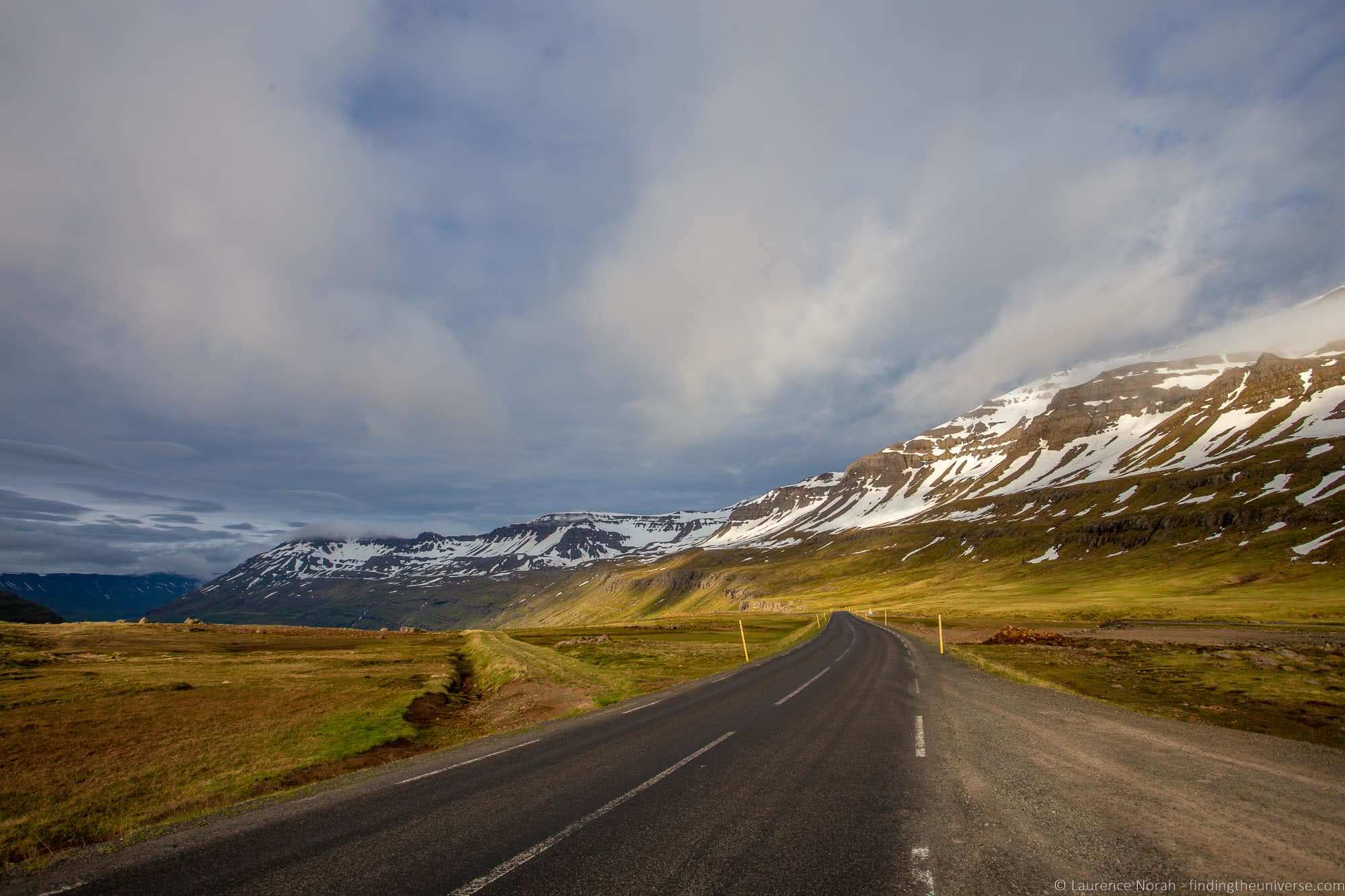
The predominant road surface in Iceland is sealed asphalt, and the majority of sights and attractions in the country can be reached on these paved roads. If you are driving the Iceland Ring Road, you will find that this is nearly all paved for example, with just a small stretch of unpaved gravel in eastern Iceland.
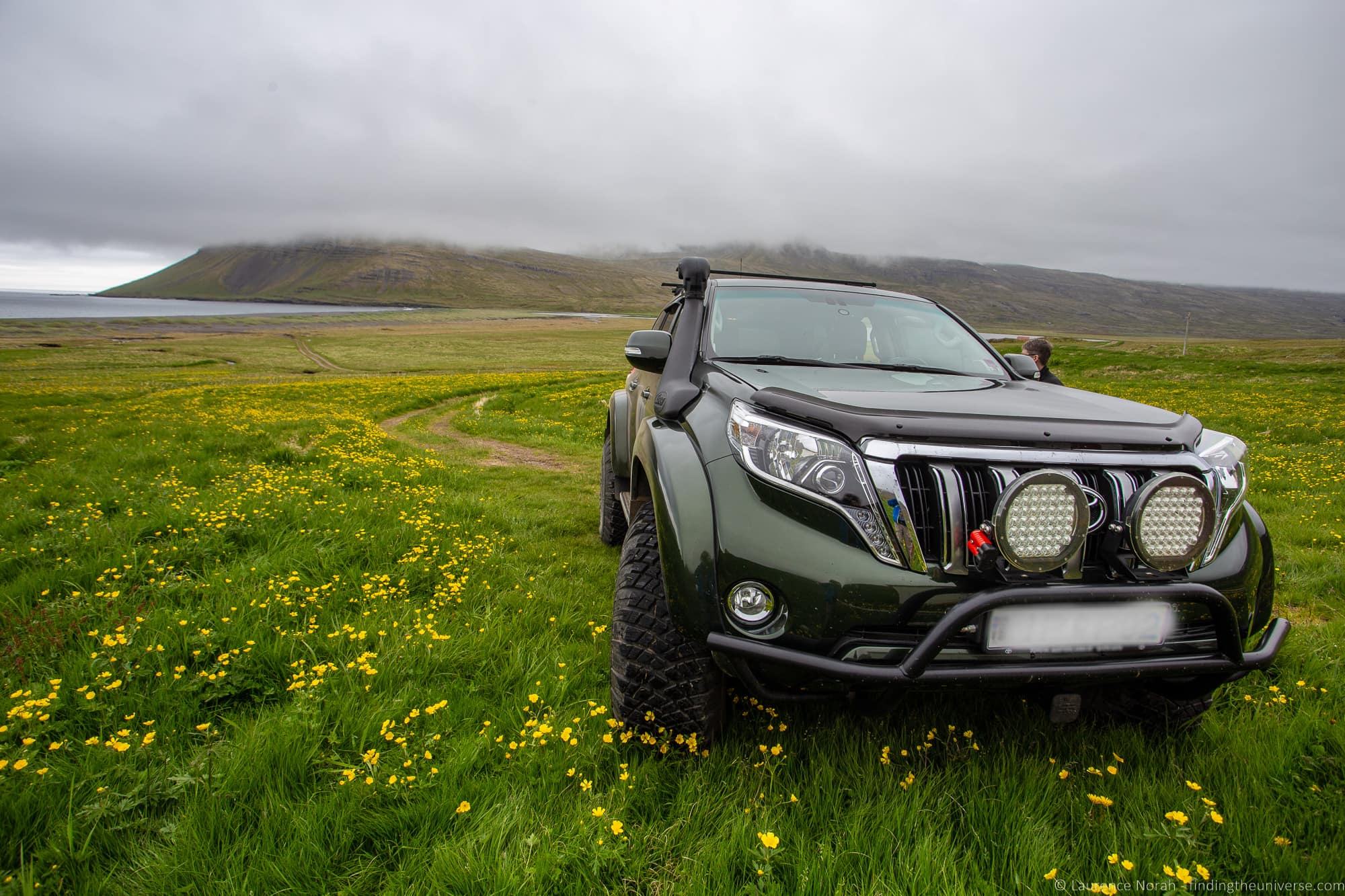
There are however lots of stretches of unsealed road in Iceland, which is usually a gravel surface. These vary greatly in condition – some are perfectly fine to drive with a standard two wheel drive car, whereas others will require a four wheel drive.
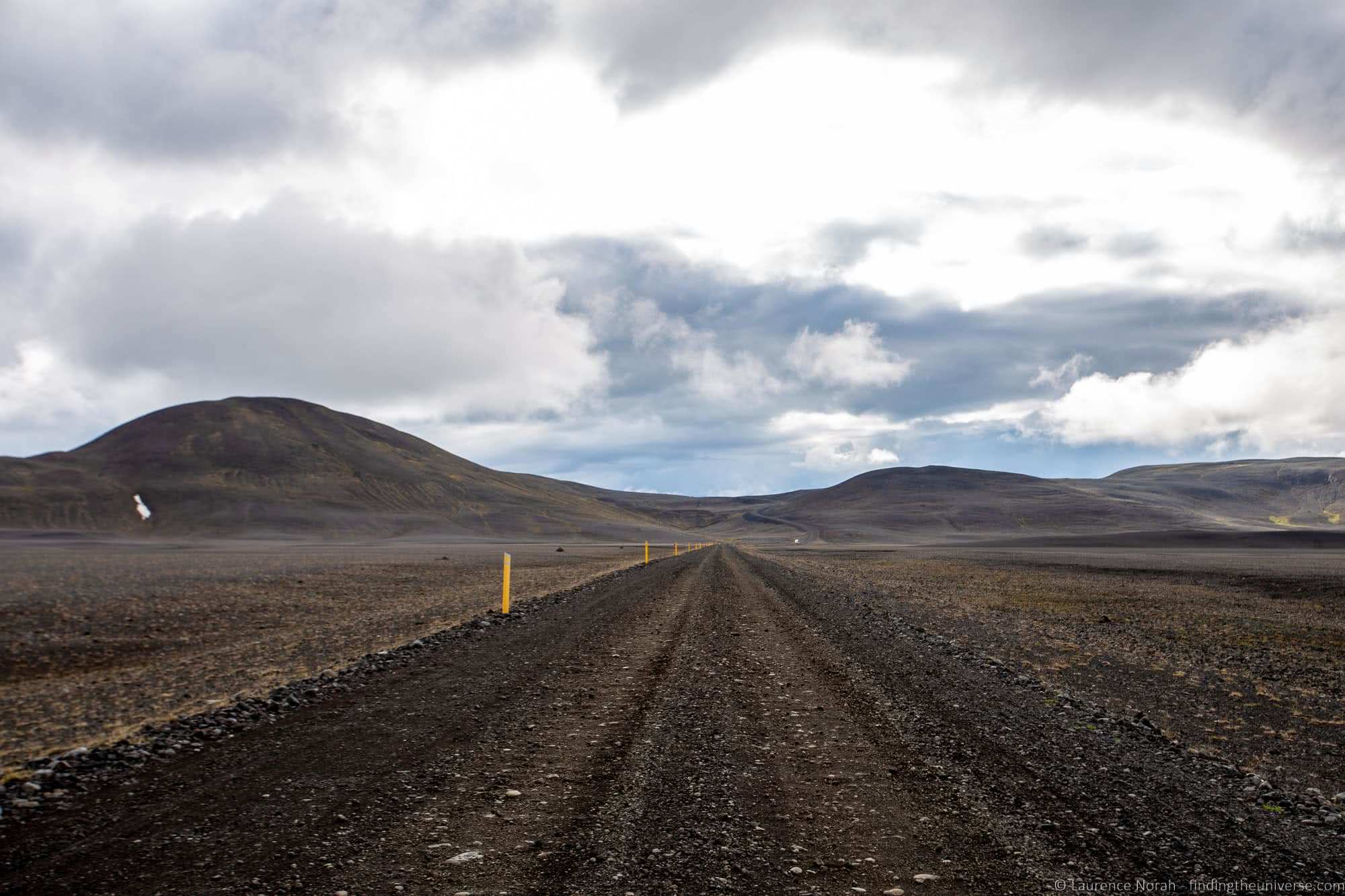
There is also a specific type of road in Iceland known as an “F” road. These are found in the high parts of the country, also known as the Highlands, and these are usually the roughest roads. They are often closed for much of the year due to snow, and when open they require a four wheel drive vehicle.
Note that if a road requires a four wheel drive vehicle, it will usually have very large signs at the start of the road making it clear what kind of vehicle is suitable for these roads. If it specifies a four wheel drive, it will mean a proper high clearance four wheel drive SUV type vehicle like a Jeep, not a normal vehicle with four wheel or all wheel drive.
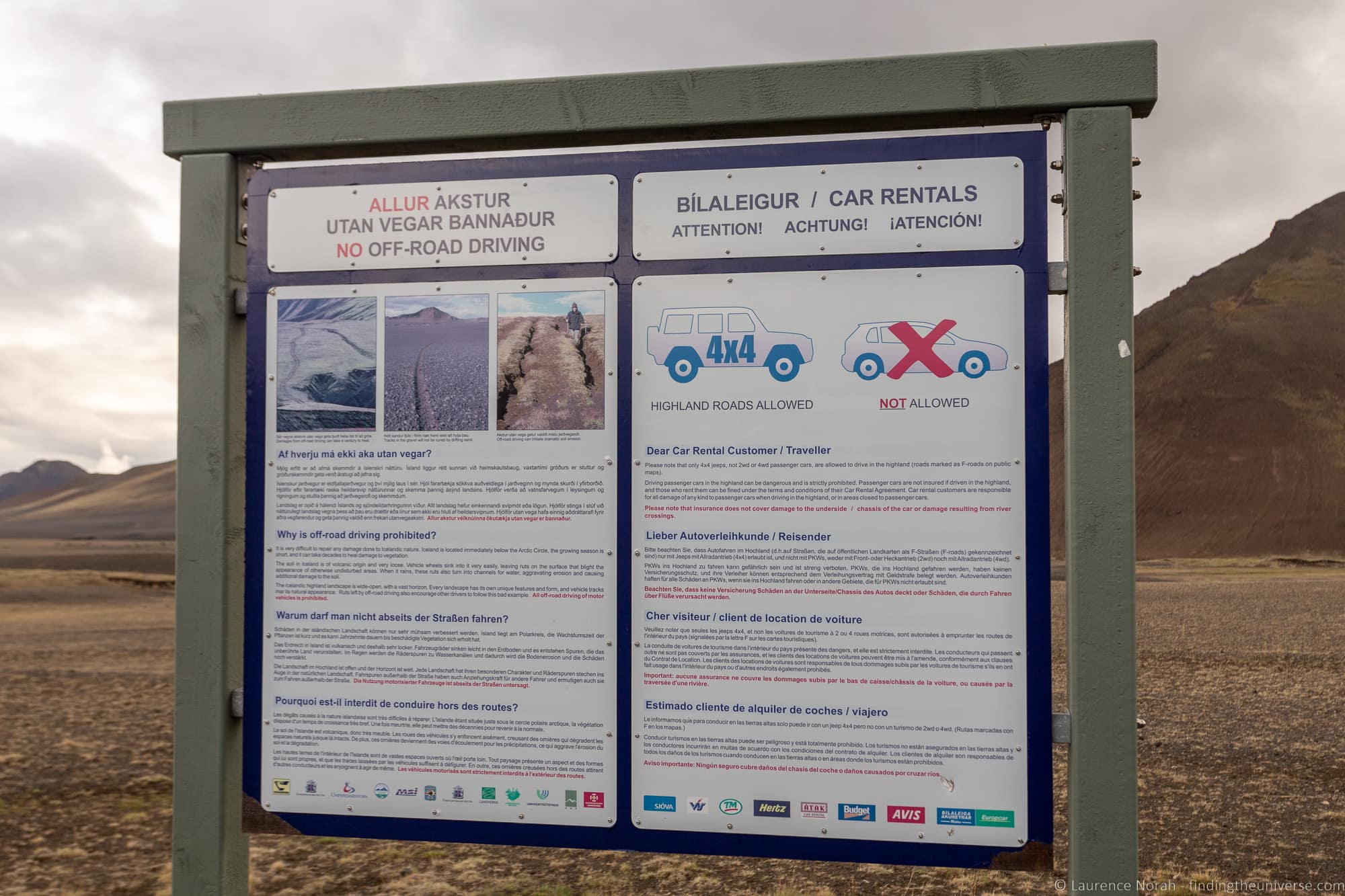
Driving the wrong type of vehicle on a road is highly inadvisable, and you absolutely will not be covered by your rental car insurance if you suffer any damage or get into any vehicle trouble. In addition, if a road is closed (there will be a big “road closed” sign), it is illegal to drive on it, and you will incur massive fees if you get stuck out here in your rental car and require recovery.
Is it Legal to Drive Off-road in Iceland?
It’s illegal to drive off-road in Iceland, and fines for driving off-road are significant. Essentially if there is no marked track or route, you can’t drive there.
The reason for this is that whilst the Icelandic wilderness might look rugged and tough, the reality is that this is a delicate ecosystem, and the damage done by vehicles can be both extensive and lasting.
The landscape also takes hundreds of years to change, so those tire tracks are going to be around for possibly decades to come, leaving an ugly legacy for generations to come. So we’d highly urge you not to be tempted to go off-roading in Iceland, obviously it’s not only illegal, it’s highly irresponsible.
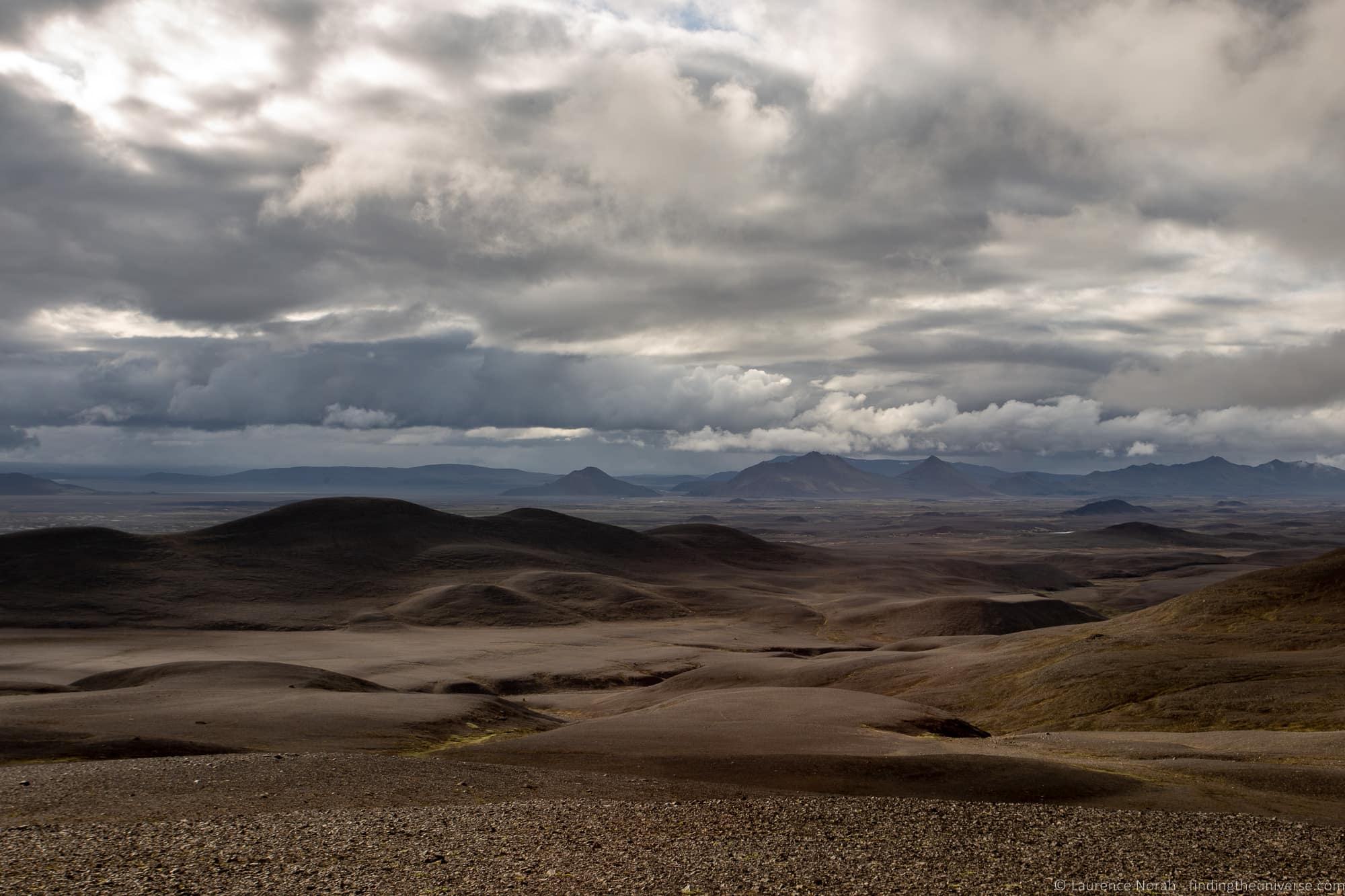
You might be wondering why, with this law, there are so many oversized and off-road capable vehicles in Iceland. The reason is that many of the tracks in Iceland are very rough, and some have difficult river crossings. Snow and ice can also make driving these roads difficult.
So whilst technically these vehicles might not be “off-road” in the true sense of the word, the tracks they will be following will only be passable by rugged and specially adapted off-road vehicles.
How Common Are Single Track Roads in Iceland?
The majority of roads in Iceland, especially those you are likely to drive as a tourist, are dual lanes, i.e., there is one lane for each direction of travel. However, there are some situations where there will only be one lane for both directions of travel, and vehicles have to give way to each other.
You are most likely to encounter single-track roads in Iceland at bridges. Many of the bridges on the Ring Road for example are single track. Usually single-track roads are operated on a first come, first serve basis, meaning that the first person to arrive at the bridge will have right of way. Some longer bridges and tunnels have passing places that you can use to let other vehicles pass.
For advice on how to pass on these roads, and general tips for using single-track roads, see our detailed guide to driving on single track roads.
Is it Safe to Drive in Iceland in Winter?
The answer to this is that it depends. Generally, driving in Iceland in winter is safe; however the weather conditions can make road conditions dangerous, and roads are often closed due to poor conditions and the build-up of snow.
Before you set off each day, check road.is for current road conditions and closures. It’s updated regularly and shows you at a glance which roads are open, restricted, or closed.
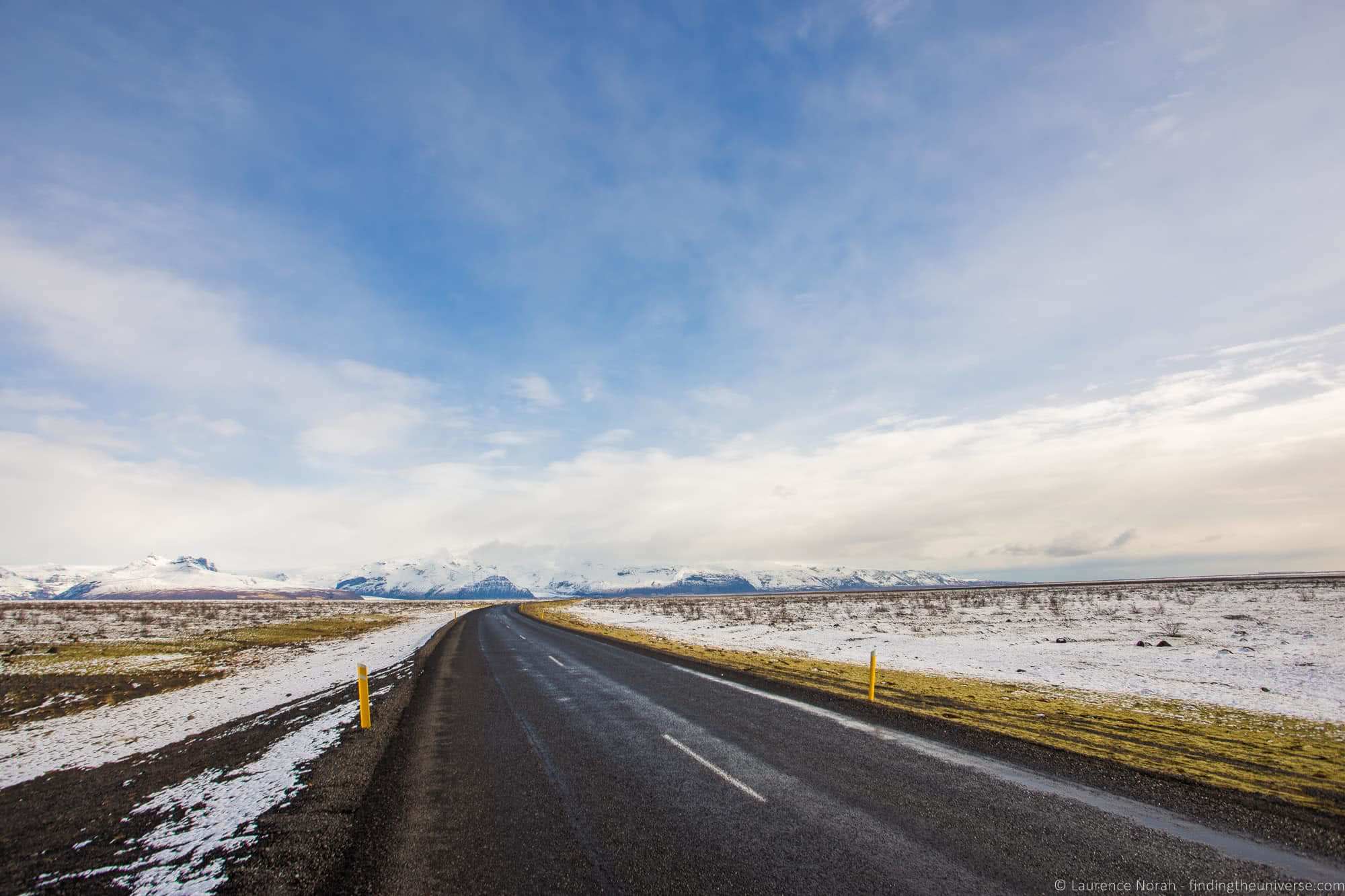
For this reason, we recommend if travelling in Iceland in winter, you focus your trip on a smaller area, such as the highlights around Reykjavik and the south coast, rather than tackling something like the ring road. We have a seven day itinerary for Iceland in winter, as well as a five day Iceland itinerary, which would be good options.
If you hire a car in Iceland in winter, we’d advise requesting studded tires for added safety, and perhaps a four wheel drive for added stability.
For more advice, take a look at our guide to driving in Iceland in winter.
Learn about the Insurance Options when Renting a Car in Iceland
We have rented cars in multiple countries around the world, and without doubt, Iceland is the country with the most bewildering (and expensive!) array of insurance options for car rental.
These insurance options cover a variety of scenarios, many of which are unique to Iceland, and it will be up to you as to which you deem important. Just be aware that repairs to vehicles in Iceland are usually very expensive, so the insurance can be worth taking.
As a starting point, all cars in Iceland have to have third party liability insurance by law. Usually this will be included with the rental, and will be part of the Collision Damage Waiver (CDW) insurance. CDW covers the vehicle for damage done in a standard accident.
You might think that this is all you would need. Unfortunately, this is not the case, as the CDW usually comes with a crazy excess fee, which will often be in the thousands of dollars. So even if the damage is covered by the CDW, you will still be liable to pay the excess.
The next step up is the Super Collision Damage Waiver (SCDW). This covers the same thing as the CDW, but the SCDW usually brings the excess payable down to a reasonable amount. We would highly recommend getting the SCDW as a minimum in Iceland.
Then there are a number of other options you will usually be presented with. These will be things like gravel damage, sand/ash damage, theft protection and so on.
Gravel damage will cover damage done to the car as a result of driving on the gravel roads in Iceland, and usually covers things like chips to the paintwork or windscreen chips. We’d definitely recommend this one.
Sand/ash damage is an insurance that covers you from damage done to the car as a result of high wind blowing sand or ash onto the vehicle – this is particularly common in the south of Iceland. It can also cover you in the case of a volcanic eruption. Whilst this is an uncommon occurrence, if it does happen the fine abrasive ash will quickly destroy a cars paintwork.
Overall, these various options can add up, and it is worth checking if it is included when renting your car.
For comparing car hire prices in Iceland, we’d suggest looking at Northbound, which is an Iceland-specific comparison site, or Discover Cars, which compares prices across a wider range of providers internationally. Whichever you use, just be sure to check what insurance is included, and if you buy additional insurance when you pick up the car, read the small print carefully so you know exactly what’s covered.
In our experience, the agents at the hire car counters in Iceland use sales tactics to push these insurance options, and whilst they certainly can be necessary, the choice is yours as to which you take.
We would also add that whatever insurance you go for, and however comprehensive it is, it will still have some exclusions. For example, as far as we know, no insurance covers damage as a result of river crossings, or damage to the undercarriage of the vehicle. So do be aware of that – even if you rent a four wheel drive vehicle, with full coverage, there will still be types of damage you aren’t covered for. And of course, if you drive off-road or on closed roads, you will absolutely not be covered.
Finally, we just wanted to say that we are not legal experts, and insurance in Iceland is complicated (as with everywhere), with lots of small prints in the contracts. So whilst we have done our best to go through the options as clearly as we can, don’t take our advice as gospel or as legal advice. Always read the terms and conditions of any insurance you purchase to make sure it fully covers what you want, and know what the exclusions are.
How to Buy Gas in Iceland
There is a good selection of gas stations across Iceland, and purchasing gas is usually just a question of finding the nearest gas station, filling up and paying.
In populated areas, most gas stations have you fill up the car, and then go inside to pay at the counter. These gas stations are also home to small cafes and/or fast food chains, and eating at these can be a good way to save money in Iceland – see our guide to budget travel in Iceland for more tips on this.
In more remote parts of Iceland, gas stations are often unmanned, and you will need a credit card to pay for gas.
These gas stations have instructions available in Icelandic and English, as well as a number of other languages, so just follow the on-screen instructions after changing the language to English (usually there’s a British or American flag symbol on the screen somewhere which you press to put the instructions into English).
In our experience, gas prices did not vary greatly, especially within different regions of the country, so there wasn’t a great deal of point shopping around. You can see current gas prices in Iceland here – as with most things in Iceland, it’s relatively expensive.
One thing to be aware of in 2026 is Iceland’s new km-based road tax. Previously, road maintenance was funded through fuel tax, but from January 2026, all vehicles are charged 6.95 ISK per kilometre instead. Rental companies add this to your final bill automatically (some charge per-km, others apply a daily flat rate). On the flip side, fuel prices have dropped as a result, and you can expect to pay roughly 185 to 230 ISK per litre depending on the station and fuel type.
A good tip for saving money on fuel is to check the key fob of your hire car. Some rental companies include an Olis travel card, which gets you a 7 ISK per litre discount on fuel, 10% off at Olis restaurants, discount coffee, and free Wi-Fi at Olis and OB stations. If you have one, don’t forget to use it. You hold it against an electronic reader before you pay, and it works at self-serve stations too.
One other cost to budget for is parking. Most major attractions in Iceland now charge for parking, typically 750 to 1,000 ISK per stop. The Parka app covers the majority of sites (including Skogafoss, Reynisfjara, the plane wreck, Jökulsárlón, and many more), so it’s worth downloading before your trip. A few sites like Thingvellir and Seljalandsfoss use checkit.is or payment machines instead. Gullfoss is one of the few major stops that’s still free to park at.
Can you Drink and Drive in Iceland?
Iceland has very strict drink driving laws. The blood alcohol content limit is 0.02%, which was lowered from 0.05% in 2019. To put that in context, England and Wales are at 0.08%, most of mainland Europe sits between 0.02% and 0.05%, and the USA varies by state between 0.05% and 0.08%. Iceland’s limit is about as close to zero tolerance as you can get.
At 0.02%, even a single small beer or half a glass of wine could put you over the limit, depending on your body weight, what you’ve eaten, and other factors. Realistically, if you’re driving, don’t drink at all.
The fines are steep (100,000 ISK minimum), and penalties can include licence suspension and even jail time. It’s simply not worth it.
General Road Laws to be Aware of in Iceland
There are a few rules that you need to follow when driving in Iceland that you should be aware of, which we will quickly cover:
Headlights: It’s a legal requirement that you have headlights on at all times, day and night. These should be dipped so as not to blind oncoming drivers.
Safety belts: All passengers must wear a seatbelt at all times. Passengers under 140cm in height, lighter than 40kg, or under 12 years of age are not allowed to ride in a front seat if it has an airbag
Cell phone use: Using a cell phone when driving is illegal, unless it is hands free, and carries fines.
Livestock on roads: Sheep roam freely across much of rural Iceland from June to September, and they have an unfortunate habit of darting across the road without warning. Slow down whenever you see sheep near the road, and be aware that where there’s one sheep, there are usually more nearby (often a lamb on the other side of the road that the mother will bolt across to reach). In eastern Iceland, you may also encounter reindeer. If you hit an animal, you’re required by law to report it.
Wind and car doors: Iceland’s wind is no joke, and it can be strong enough to rip a car door right off its hinges if you open it carelessly. Get into the habit of holding your door firmly when you open it, and try to park with the nose of the car pointing into the wind so the doors aren’t being pushed open. Damage to doors and hinges from wind is one of the most common rental car claims in Iceland, and it’s not always covered by basic insurance.
Roundabouts: If you’re not used to roundabouts, Iceland’s can catch you out. The key rule is that the inner lane has right of way. If you’re in the outer lane and want to continue past an exit, signal left to show you’re staying in. Signal right when you’re about to exit. Reykjavik’s roundabouts during morning and evening rush hour (roughly 8-9am and 4-5:30pm) are the busiest, so if you’ve just picked up your rental car, you might want to avoid driving through the city centre at those times.
Useful Apps for Driving in Iceland
A few apps are worth having on your phone before you start driving.
Road.is (or the Vegagerðin app) shows real-time road conditions and closures across the country. Vedur.is is the Icelandic Met Office, and it’s far more reliable for local weather than your phone’s default weather app. The Parka app handles parking payments at most tourist sites. And the 112 Iceland / SafeTravel app lets you send your GPS location to emergency services if you get into trouble, which is reassuring if you’re driving in remote areas.
Do you Need to Drive in Iceland?
You don’t have to drive to explore Iceland, so if after reading all the above the thought of driving in Iceland has you in a cold sweat, fear not.
Here are some alternative options to driving in Iceland that you might find useful.
Do Day Trips From a Base
One of the easiest ways to explore Iceland without hiring a car is to to base yourself in a city and take day trips. For example, we have a whole post dedicated to some of the best day trips from Reykjavik.
Reykjavik makes an excellent base for exploring much of Iceland’s south coast, west coast and the golden circle, and you could easily fill a week by doing activities from the city.
For example of some of the available options, you can take a puffin watching tour, a Northern Lights tour, a tour to the Snæfellsnes Peninsula, a Golden Circle tour and a south coast tour to the glacier lagoon – to name but a few of the options!
It’s also possible to base yourself in other parts of Iceland, for example Akureyri makes an excellent base from which to explore the north half of Iceland.
This also carries the advantage that you can keep yourself in one location, and save yourself from re-packing your suitcase every day as you move around the country. Of course, it’s not going to work if you want to drive Iceland’s Ring Road for example, but it’s a great option for seeing some of Iceland’s highlights without driving.
Take a Group Tour
Another option instead of driving yourself is to take a multi-day tour – either a group tour or a private tour, depending on your budget.
Group tours are an excellent way to see a Iceland with minimal fuss, with someone else worrying about the lodging, driving and itinerary, letting you just relax and get on with the sight-seeing. Group tours are available from as short as two days up to longer than two weeks.
We have a detailed list of some of the best guided tours of Iceland here, which should give you lots of ideas to help you pick the perfect Iceland tour for you.
As an overview though, here’s a two day group tour of south Iceland, here’s a four day south coast, Golden Circle and Snaefellsnes Peninsula tour, and here’s a 8 day complete tour of Iceland.
Use Public Transport
Public buses run between the major towns in Iceland via Straeto, and they’re fine for getting around Reykjavik itself. For sightseeing though, we’d generally recommend against relying on public buses. They don’t stop at the major attractions along the south coast or the Golden Circle, so you’ll miss a lot.
If you’re on a budget and don’t want to hire a car, a combination of day tours from Reykjavik (see above) and public buses between towns is probably the most practical approach. For more tips on keeping costs down, check out our guide to visiting Iceland on a budget.
Further Reading for Visiting Iceland
And that finished our guide to what to know before you drive in Iceland! Now, to help you finish planning your trip, we’ve got a whole series of guides and content on Iceland which should give you lots of information and inspiration.
- For road trip ideas, we have a detailed 1 week Iceland Ring Road itinerary, a 7 day winter Iceland itinerary a 5 day Iceland itinerary, and a 3 day Iceland stopover itinerary
- We have a detailed guide to help you planning a trip to Iceland, which has everything you could need to help you plan an awesome adventure in Iceland, from budget tips to practical information and more. A must read and a good place to start your trip planning!
- We have a complete guide to visiting the Golden Circle, which has a map, suggested itinerary, and more.
- We have a detailed guide to driving in Iceland in winter to help prepare yourself for the specific conditions of Iceland in winter.
- We’ve created a list of some of our favourite photography locations in Iceland from our travels there to give you some ideas of where to aim to get the best photos
- Our guide to finding the Iceland Plane crash, which is a fun photography location (if a bit of a walk to get to!)
- If you’re visiting Iceland in Winter, check out our guide to the best winter activities in Iceland and my tips for cold weather photography
- On a budget? Here’s a guide to visiting Iceland on a budget to help you make the most of your trip
- We have a detailed packing guide to help you decide what to pack for Iceland
- We’ve also got a guide to the best day tours from Reykjavik should you wish to base yourself in the capital rather than self-drive around
- We have a guide to visiting the Blue Lagoon
- For staying connected while driving (you’ll want data for maps and checking road conditions on road.is), see our Airalo eSIM review and our guide to getting online when travelling. An eSIM is the easiest option and you can set it up before you leave home.
- For car rental in Iceland, this website lets you choose between a range of car rental providers in Iceland
- The weather in Iceland can be fickle – the best website for real-time cloud cover is this one from the Icelandic Met Office.
- Whilst Iceland is a safe country to travel in when it comes to things like crime, the country itself is home to extreme conditions and all sorts of seismic activity. So to stay safe as you go, check out the Safetravel Iceland page
- Finally, if you’re not sure what camera gear to take with, take a look at both our guide to picking a travel camera, picking a travel lens, and our personal travel photography gear
And that’s it! If you’ve got any questions or feedback on the above, just let us know in the comments below, and have an awesome trip in Iceland!
Frequently Asked Questions About Driving in Iceland
Do I Need a 4×4 to Drive in Iceland?
For the Ring Road and the main tourist routes (Golden Circle, south coast), a standard two-wheel-drive car is perfectly fine in summer. The Ring Road is almost entirely paved now, with just a short stretch of gravel in the east.
You only need a proper 4×4 (high clearance, not just all-wheel-drive) if you plan to drive the F-roads in the Highlands, which are only open in summer anyway. In winter, a 4×4 gives you extra confidence on icy roads, but it’s not strictly required for the main routes as long as you have studded tyres.
Is It Safe to Drive in Iceland in Winter?
It can be, but conditions are unpredictable. Roads can be closed at short notice due to snow and high winds, visibility drops quickly, and ice is a constant factor. We’d recommend sticking to a smaller area in winter (Reykjavik, the Golden Circle, and the south coast) rather than trying the full Ring Road.
Request studded tyres with your rental, check road.is every morning before you set off, and build plenty of slack into your schedule. For detailed advice, see our guide to driving in Iceland in winter.
What Side of the Road Do They Drive on in Iceland?
Iceland drives on the right-hand side of the road, the same as most of mainland Europe and the USA. If you’re used to driving on the left (UK, Australia, Japan), take extra care at roundabouts, junctions, and when pulling out of car parks. After a day or so it becomes second nature.
How Much Does It Cost to Rent a Car in Iceland?
Car rental prices in Iceland vary a lot depending on the season, vehicle type, and how far in advance you book. As a rough guide, a basic economy car in summer starts around 8,000 to 12,000 ISK per day, while a 4×4 suitable for F-roads will be significantly more.
On top of the base rental, budget for insurance (the SCDW at minimum, plus gravel and sand/ash cover), fuel at 185 to 230 ISK per litre, and the new 2026 km-based road tax of 6.95 ISK per kilometre which rental companies add to your final bill. Parking fees at major attractions typically run 750 to 1,000 ISK per stop. We’d suggest using Northbound or Discover Cars to compare prices.
Can I Drive in Iceland with a US or UK Licence?
Yes. You can drive in Iceland with your home country driving licence as long as it’s printed in Latin characters and has both a photo and a licence number. That covers licences from the UK, USA, most of Europe, Australia, New Zealand, and many other countries.
If your licence doesn’t meet these criteria, you’ll need an International Driving Permit (IDP), which you can get from your home country’s driving authority before you travel. Most rental companies also require you to have held your licence for at least one year.
What Should I Watch Out for When Driving in Iceland?
Beyond the usual road rules, there are a few Iceland-specific hazards to be aware of. Sheep wander freely across rural roads from June to September and will dart in front of your car without warning. Wind can be extreme, especially along the south coast and in mountain passes, and can damage car doors if you’re not careful opening them.
Single-lane bridges are common on the Ring Road (the first car to arrive has right of way). And in winter, roads can go from clear to impassable in minutes, so always check road.is before you set off.
Please note that we are not legal or safety experts, and all the advice we provide above is for informational purposes only, it should not be taken as legal advice or official safety advice. It’s important to read up on the rules of the road for any country you visit, so you can be sure that you are driving safely and legally.
Murray says
Hello,
We arrived in Iceland a week ago but just found your blog today. What great information! We rented a camper, doing the ring road counter-clockwise, but are stuck in Djupivogur because of a major wind storm (admittedly a pretty place to be stuck!)
Thanks for all the great tips and info.
2 travellers from Canada
Laurence Norah says
Hi Murray!
Glad to hear you found my blog and are finding it useful, although I’m sorry to hear about the weather. Still, there are worse places to be stuck as you say! Enjoy the rest of your time in Iceland!
Laurence
Paul Gosling says
Just Brilliant, Thanks for sharing such useful Information. This was truly a great read for me we are off to Iceland a couple of weeks time with the same plan , so useful as we taking my DSLR and doing the whale watching trips etc.
also you tips on many thing have been a great help, almost forgot the travel plugs !!
Keep it up I love you blog
Laurence Norah says
Thanks Paul – have a great trip!
Mark Wood says
Nice blog! Thanks for sharing important Information with us.
Laurence Norah says
My pleasure 🙂
Peter Parker says
Informative article! Thanks for sharing such useful Information. This is truly a great read for me!! Once again, thanks for the quality articles you post on your blog
Laurence Norah says
Thanks Peter 🙂