I lived in Bath for four years, right on the southern edge of the Cotswolds, and I’ve been going back ever since. My brother lives in the region now, so this is an area I know reasonably well.
The short answer to this guide is that all the Cotswold villages are beautiful.
This is actually a problem if you only have two or three days and a rental car. So this guide is designed to help you figure out which ones earn a detour, which are only worth it if your route already goes that way, and which one you can skip without missing anything. That’s a ranking of how far I’d drive for each one, not of how pretty they are. There isn’t a bad village on this list.
So that’s what this is. Fifteen villages, each with a straight verdict, plus the two things that decide whether the day works at all: where you park, and what time you turn up.
If you only have one day, go to Chipping Campden, Stow-on-the-Wold and Lower Slaughter. They sit close together in the northern Cotswolds, they’re all quite different from each other, and you can do all three of them well in a day. If you have two days, add Bibury and Painswick. Three or four villages a day is the right number, and our 2 to 3 day Cotswolds itinerary lays that out stop by stop with the drive times. It will mean you spend more time enjoying what’s on offer and less time trying to find parking. Which is a real problem.
The one I’d personally skip is Shilton. More on that below.
Table of Contents:
Cotswold Villages at a Glance
Verdicts are mine. Prices, hours and parking rules come from the operators and councils themselves, and I’ve said so where I couldn’t confirm something instead of guessing at it.
| Village | Area | Verdict | Why | Parking | Best time to arrive |
|---|---|---|---|---|---|
| Broadway | North | Worth a stop | Broadway Tower on the hill above, and the town holds up too | Cash or card | Before 10am |
| Chipping Campden | North | Worth a detour | The 1627 Market Hall, and the start of the Cotswold Way | Card or app, no cash | Any time |
| Stanton | North | Worth a stop | The Cotswold Way runs through it, and the Mount Inn’s view over the Vale of Evesham | Free | Any time |
| Blockley | North | Worth a stop | Twelve silk mills along the brook, and the Father Brown village | Free but limited | Any time |
| Stow-on-the-Wold | North | Worth a detour | The yew door at St Edward’s, open daily and free | Card or app, no cash | Any time |
| Bourton-on-the-Water | North | Worth a detour | The Windrush and its bridges, plus three paid attractions | Rissington Road, free before 10am | Before 10am |
| Lower Slaughter | North | Worth a detour | The mill stream, and nothing you have to queue for | No bus, walk from Bourton | Any time |
| Upper Slaughter | North | Worth a stop | The quieter half of the pair, a short walk up the valley | Walk from Lower Slaughter | Any time |
| Bibury | Central | Worth a detour | Arlington Row, free, and the reason the coaches come | No council car park, trout farm £10 | Before 10am |
| Burford | Central | Worth a stop | A High Street that runs downhill to the river, church free | Free, every council car park | Any time |
| Shilton | Central | Skip unless passing | A Norman church, a very old traditional river crossing (ford) and a pub, and that’s the list | Not in the district’s car park inventory | Doesn’t matter |
| Painswick | South | Worth a detour | Rococo Garden, and the best village here to spend a night | Stamages Lane, different council rules | Early morning or evening |
| Castle Combe | South | Worth a stop | No ticketed sight at all, which is rather the point | Village car park, fills fast | Before 10am, not a bank holiday |
| Lacock | South | Worth a stop | Cranford, Harry Potter and Pride and Prejudice, all on one street | National Trust, £5 a day | Before 10am |
| Cirencester | Central | Not a village, worth it anyway | The Corinium Museum, and a market town that still works | Card or app, no cash | Any time |
Most of the point of visiting the villages in the Cotswolds is just to see the village with its pretty houses and streets. There won’t necessarily be a lot to “do”, which is fine, but something to be aware of.
And read that verdict column as a route-planning tool rather than a scoreboard. Six villages get “worth a detour” because six is a realistic number to build two days around, not because the rest are second best. Broadway, Lacock and Castle Combe are all lovely and all in here on merit. If your route runs past one, go.
Broadway
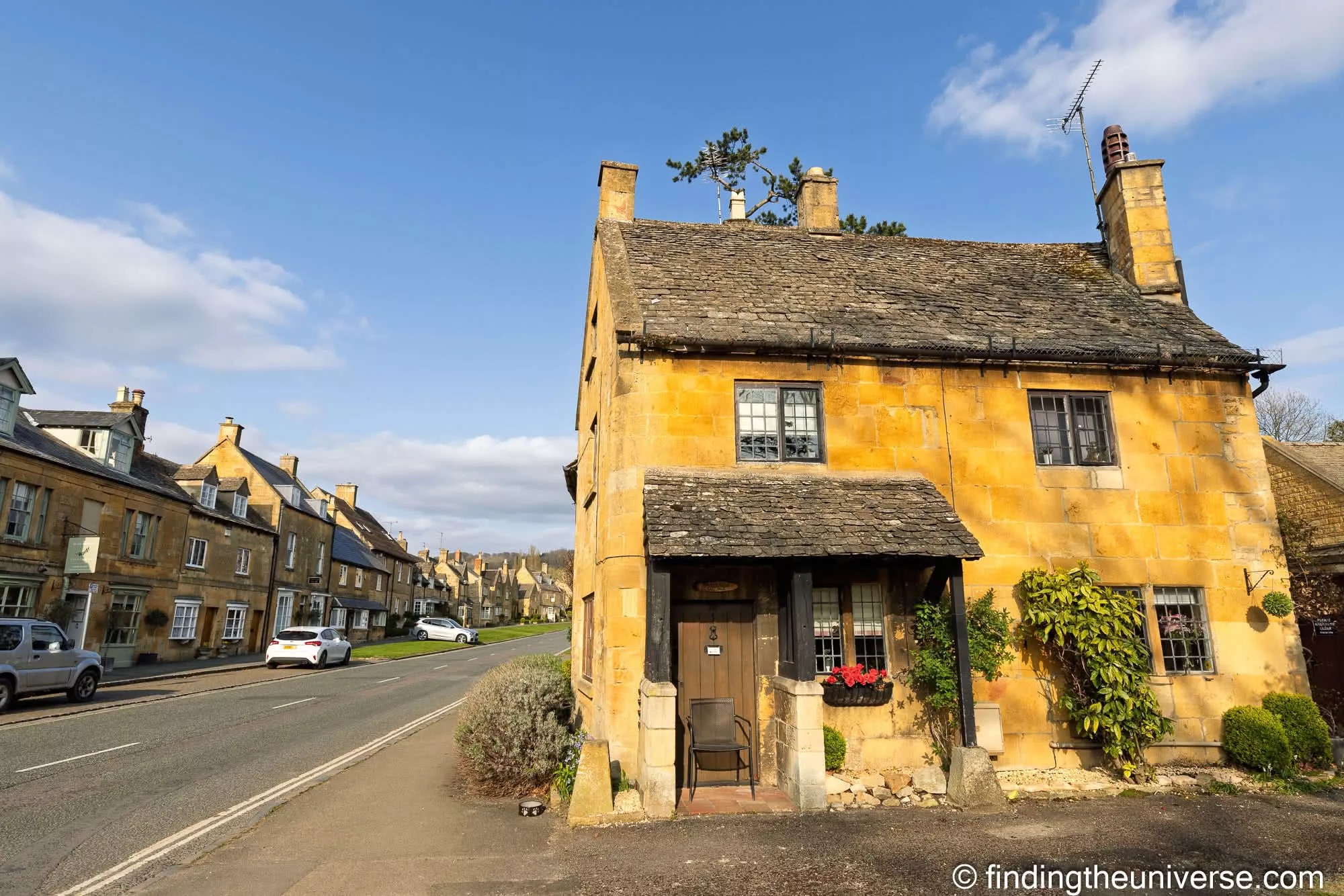
Broadway is worth a stop rather than a detour, and the reason to come at all is standing on the hill above the town.
Broadway Tower is a folly of 1798 to 1799, designed by James Wyatt for the 6th Earl of Coventry as a present for his wife. It’s about 65 feet tall, or 20 metres, and it sits on Broadway Hill at 1,024 feet above sea level, which makes it the second highest point in the Cotswolds.
Those two numbers get run together a lot, so to be clear: 312 metres is the hill, 20 metres is the tower. The Saxon-revival styling confuses people too. It’s a Georgian folly on a big hill, and it’s a terrific one.
The tower is open year-round. The nuclear bunker in the grounds runs on guided tours only, weekends and bank holidays from April to October, and the espresso bar opens at 9.30am if you’ve come up early. Down in the town, the High Street is worth the walk before the day traffic arrives.
Broadway also has a decent spread of places to stay, and it’s a reasonable base if you want to be within twenty minutes of most of the northern villages. Stopping and staying are different questions, and Broadway is better at the second one.
Chipping Campden
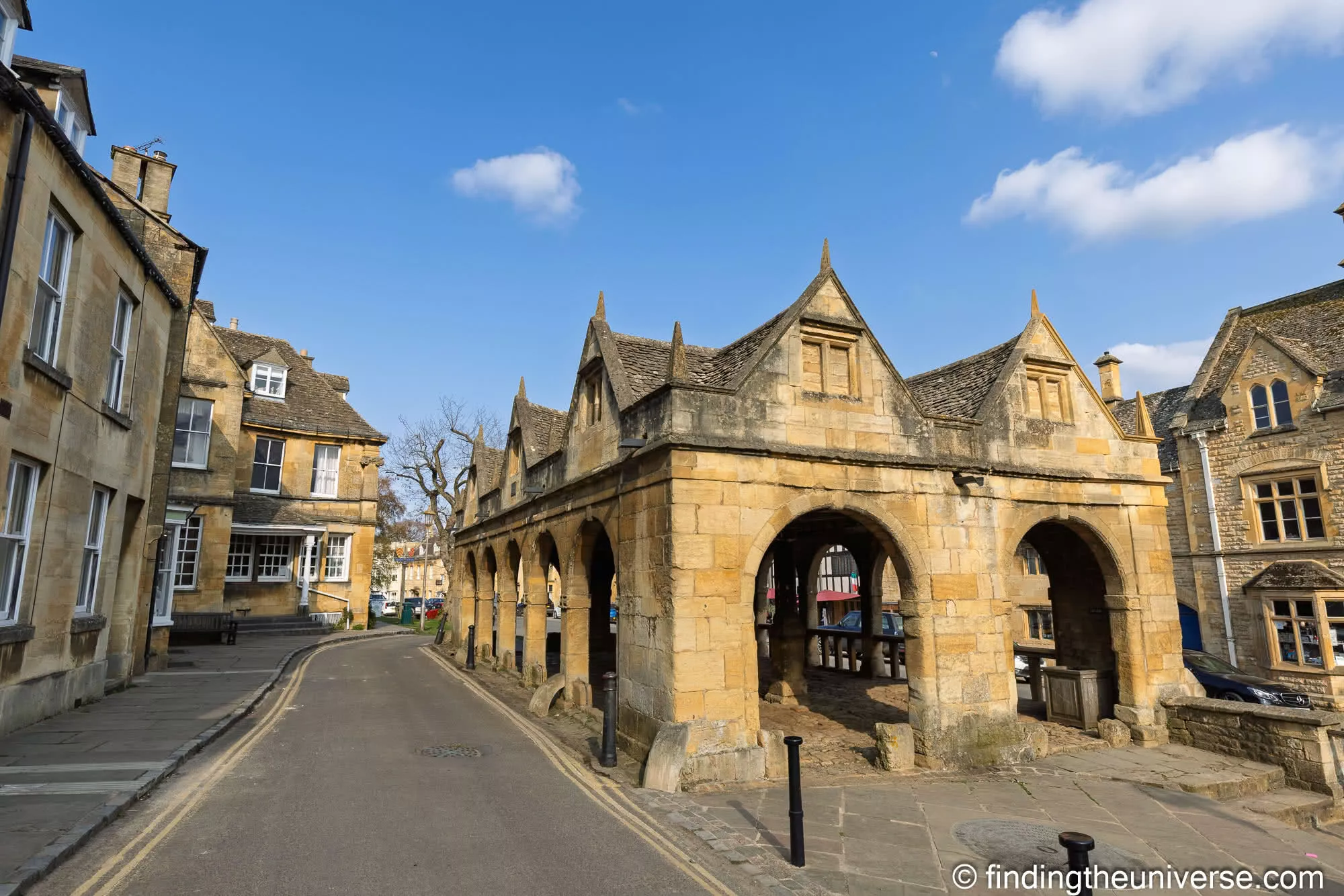
Chipping Campden is the one I’d send a first-time visitor to if they could only pick one, and it’s the northern end of the Cotswold Way.
The Cotswold Way runs 102 miles from here to Bath, which gives the town a nice bit of purpose that some of the smaller villages don’t have. You’ll see walkers setting off with proper packs on.
The Market Hall was built in 1627 for Sir Baptist Hicks, cost £90 at the time, and is now Grade I listed and owned by the National Trust. It’s an open-sided arcade standing in the middle of the High Street, so there’s no gate and no ticket, you just walk through it. In the 1940s it was nearly sold to an American buyer and the town raised the money to keep it.
Go into St James’s church while you’re here and look for the fifteenth-century brass to William Grevel, described on it as the “flower of the wool merchants of all England”. That brass is the whole economic history of these villages in one slab of metal, and I’ll come back to why in a bit.
Parking is Cotswold District, so a contactless card works at the machine. Places to stay in Chipping Campden are on the pricier side for the region, but it’s a lovely town to wake up in.
Stanton
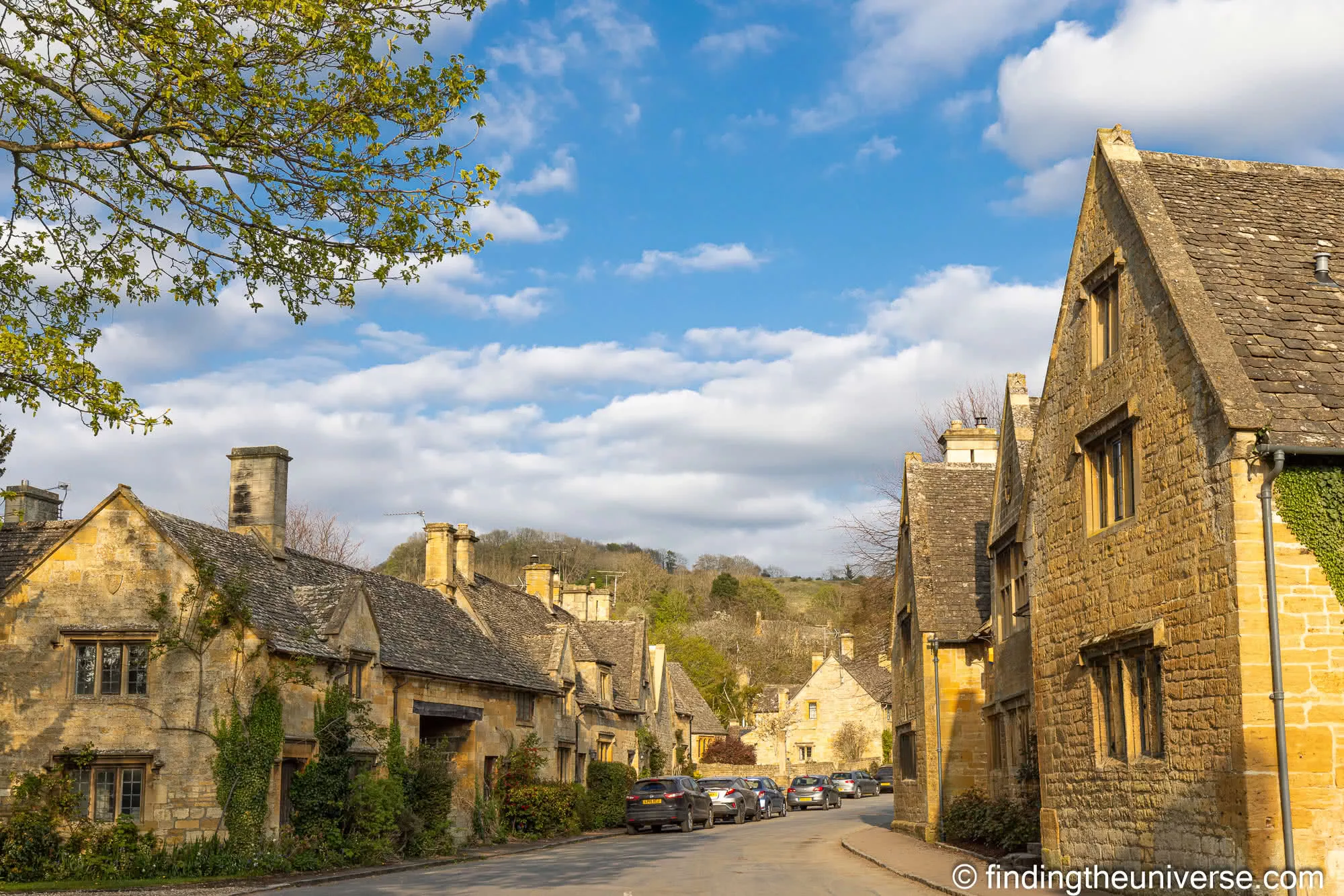
Stanton is worth a stop if your route already passes, and not a detour of its own.
It sits on the lane between Laverton and Snowshill, so it falls naturally into a northern loop that’s already taking in Broadway. There’s nothing to buy a ticket for, which is a large part of why it stays quiet while Broadway fills up a few miles away. Twenty minutes and a walk to the end of the street is about right.
The Cotswold Way comes down off the escarpment straight into the village, which is why you’ll pass walkers here on a weekday morning when nobody else is about. Walk up to the top end and the Mount Inn sits on the rise above the houses, looking out across the Vale of Evesham to the Malverns. That’s the view Stanton is actually for.
Blockley
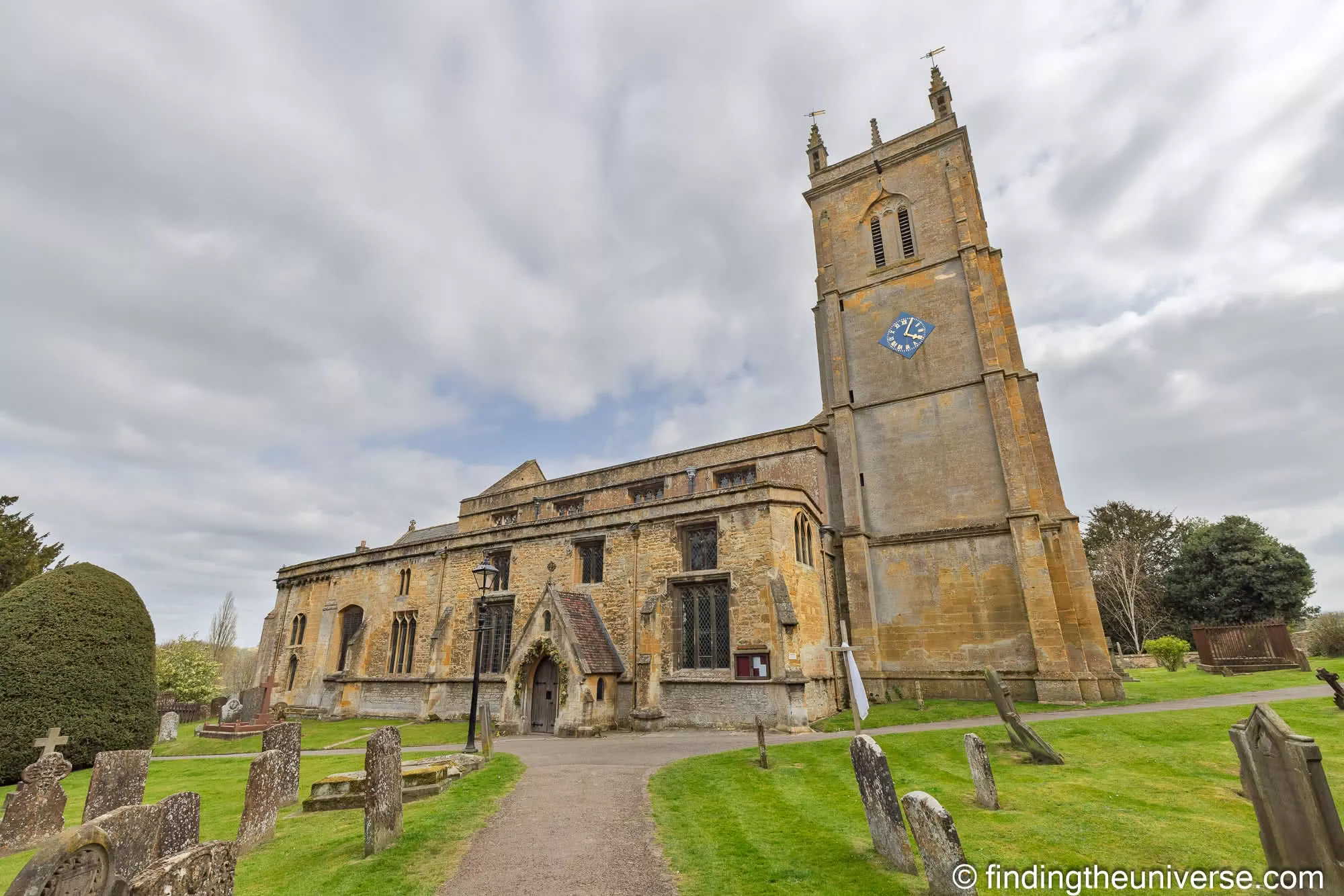
Blockley works as a stop on the way to somewhere else, and I’d only point you at it if you’re heading over towards Batsford anyway.
It’s a real village that happens to be in the Cotswolds rather than a village that exists to be looked at, and some people much prefer that, of course.
And it earned that the hard way. Twelve mills once ran along Blockley Brook, and by the end of the eighteenth century most had been converted to silk throwing, with the throwsters brought down from Coventry to twist the thread. Cotswold District’s own conservation statement calls the chain of mills an unusual example of the industrial revolution in the Cotswolds. The trade went into a long decline after the Napoleonic Wars and most of the mills were out of use by 1900, but the brook, the mill ponds and the leats are still there to walk along.
The BBC has filmed Father Brown in the village since 2012, using the church and the vicarage, which is the other reason people come.
If you’re on a tight two days, though, it isn’t where I’d spend them.
Stow-on-the-Wold
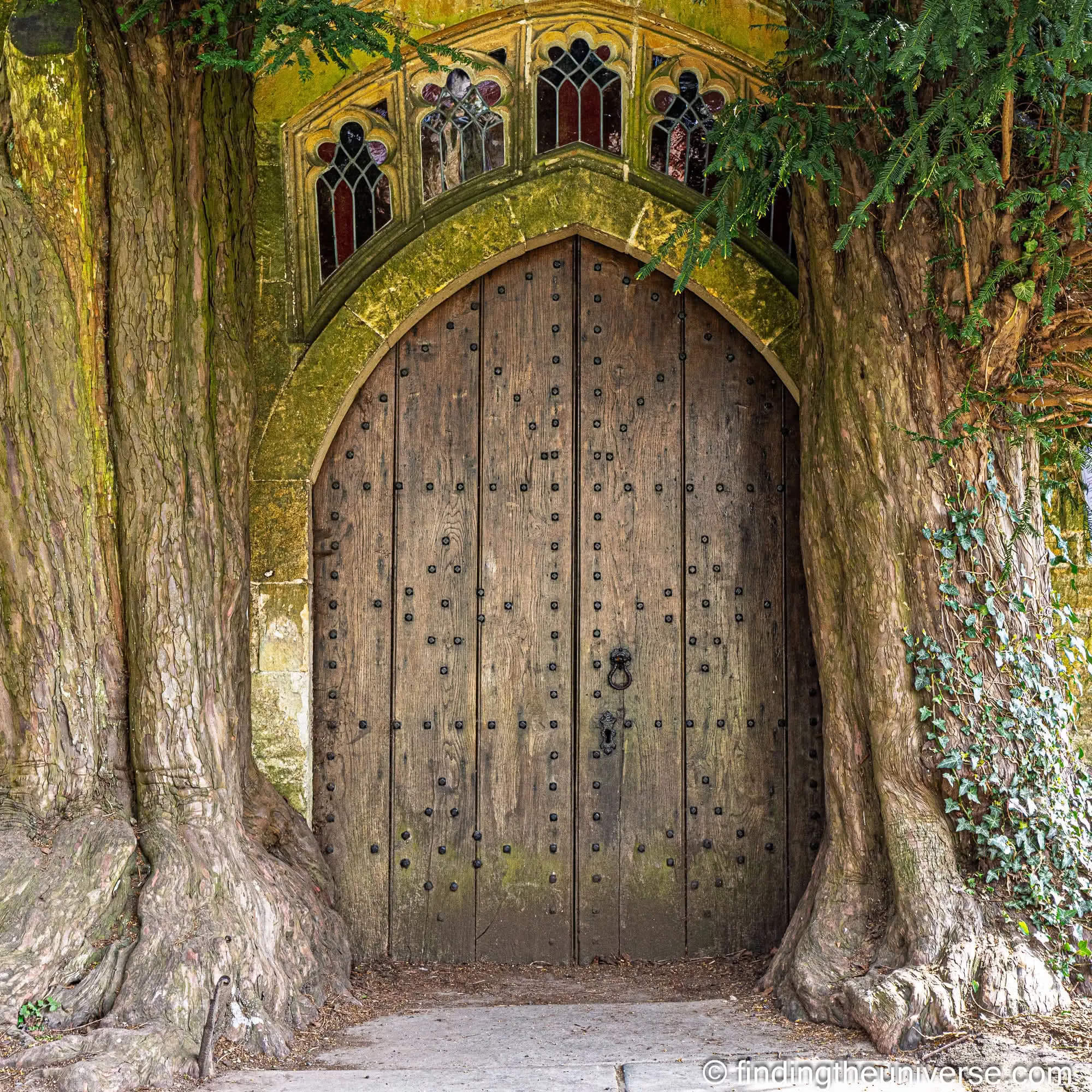
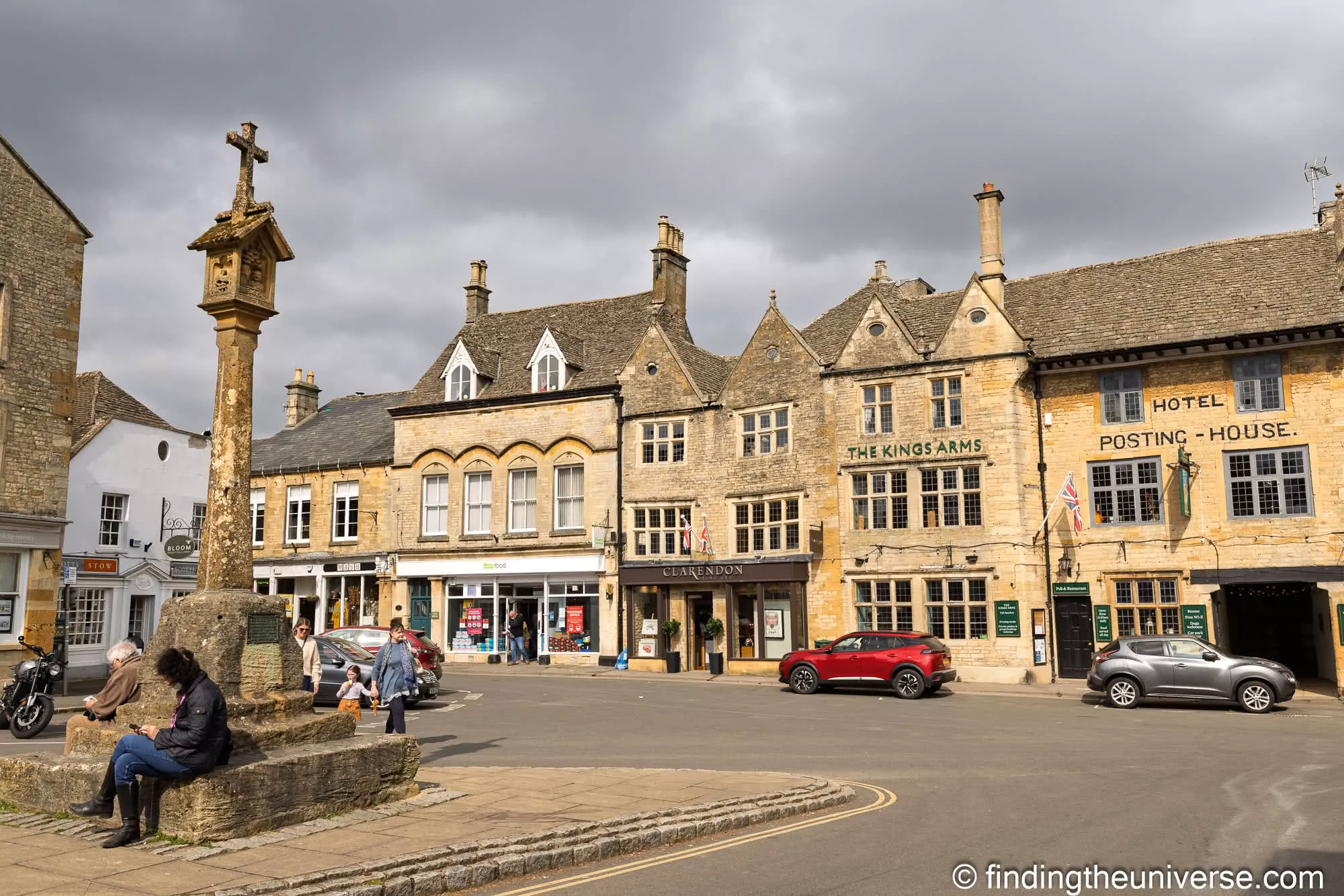
Stow is worth a detour, and you can’t miss the door.
The north door of St Edward’s church is flanked by two ancient yew trees that have grown into the doorway until they read as part of the building. The porch went up around three centuries ago and the yews were planted as saplings at the time to frame it.
The parish’s own description of the church is that it’s “both a tourist destination with its famous North Door and a faithful and prayerful worshipping community”, and that “people come from all over the world to take photographs of it”. That’s a pretty generous way of putting it when you’re the ones sweeping up afterwards.
It’s open every day, 9am to 5pm in summer and 9am to dusk in winter, and there’s no charge to go in. Any figure you see quoted is a requested donation or a charge for a guided tour, not an entry fee.
Now, the Tolkien story. You’ll read everywhere that this door inspired the Doors of Durin in The Lord of the Rings. It’s a lovely idea and nobody can substantiate it. Stow and District Civic Society says plainly that “this is still just a rumour, and nobody has so far authenticated it”, and the parish’s own news page puts it down to the vicar’s hunch.
And there’s one detail that settles it for me. In Tolkien’s text, the Doors of Durin stand between two hollies. Stow’s are yews. The single thing the legend rests on doesn’t match the book.
Go and see the door anyway. It’s remarkable and the story of how it actually got that way, with two saplings planted three hundred years ago by somebody who had no idea, is better than the made-up one. Parking is Cotswold District, card or app. Stow is my pick for a northern base, since it’s the most central of the towns up here.
Bourton-on-the-Water
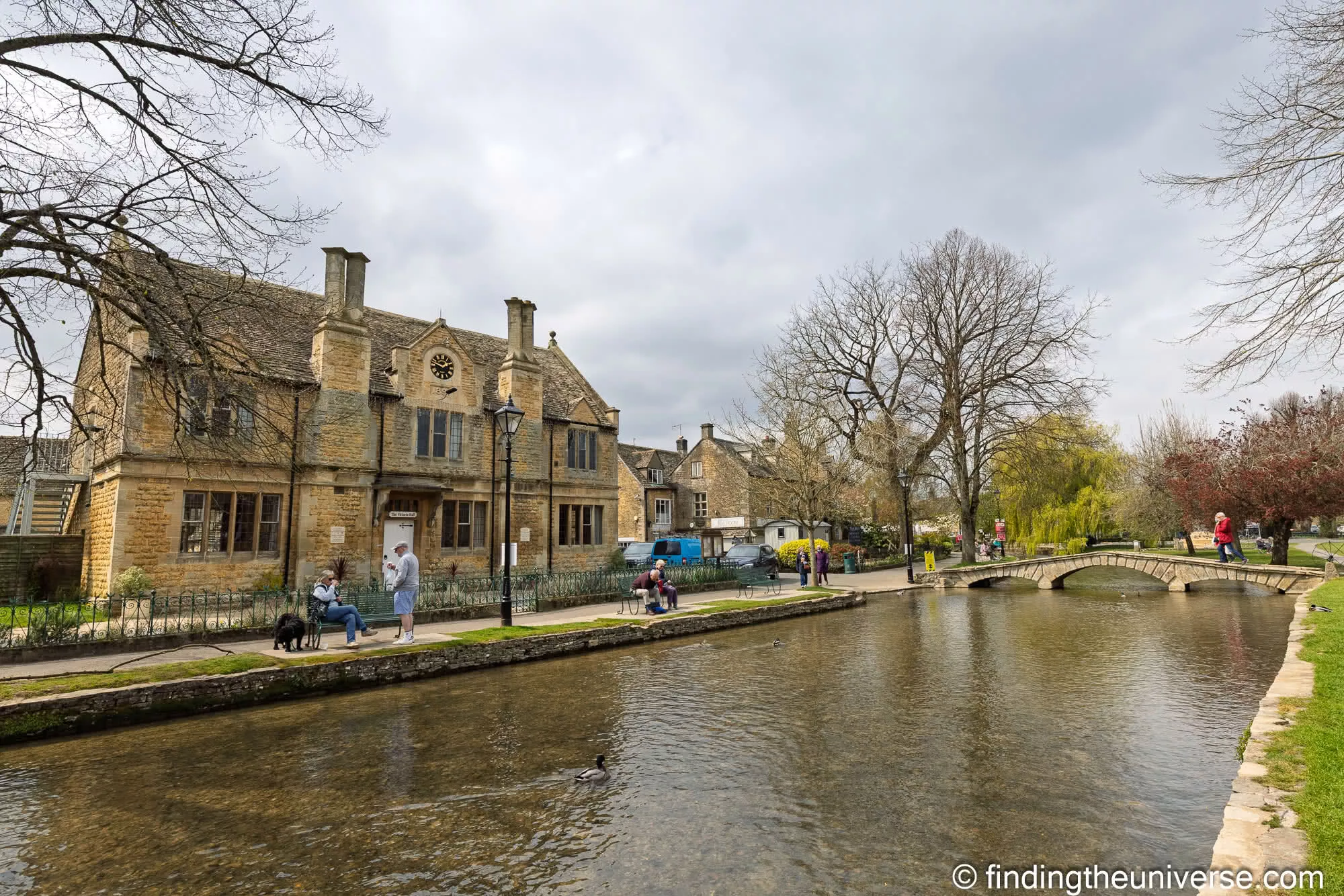
Bourton is worth a detour and it’s the most crowded village in this guide, so the whole trick is timing.
The River Windrush runs straight through the middle under a row of low stone footbridges, and at 8.30am it’s about as lovely as England gets. By midday in summer, the coaches from London have landed and you’re queuing to cross a bridge. I’ll come back to the coaches further down, because Bourton’s situation is more interesting than the headlines suggest.
The practical detail worth having: Bourton’s council car park on Rissington Road now charges from 10am to 8pm, any day including bank holidays, after the district council moved the window in March 2026. The window shifted later at both ends, which nobody reported, and it means parking at Rissington Road is free before 10am. That’s the same hour you want to be there anyway.
Three paid attractions sit within a few minutes of each other, and between them they’ll fill half a day:
- The Model Village is a scale model of Bourton, built in the village it copies. Adults £4.95, open 10am to 5.30pm in summer and 10am to 3.30pm through the winter, closed Christmas Day and Boxing Day. It’s card only, no cash at all, and there’s no pre-booking.
- Birdland is £14.95 at the gate and £13.95 online, open daily 10am to 5pm with last entry at 4pm. Watch the maths on that: booking online saves a pound a head but adds a £1.50 fee per transaction, so on your own it’s cheaper to just turn up, and from two people up the online price edges it!
- The Cotswold Motoring and Toy Museum is £9.95 for adults, open daily 10am to 6pm with last admission at 5.15pm. It’s the one that works in the rain, since the Model Village and Birdland are both largely outdoors. Their page lists no winter closure, but check before a December or January visit.
Lower Slaughter
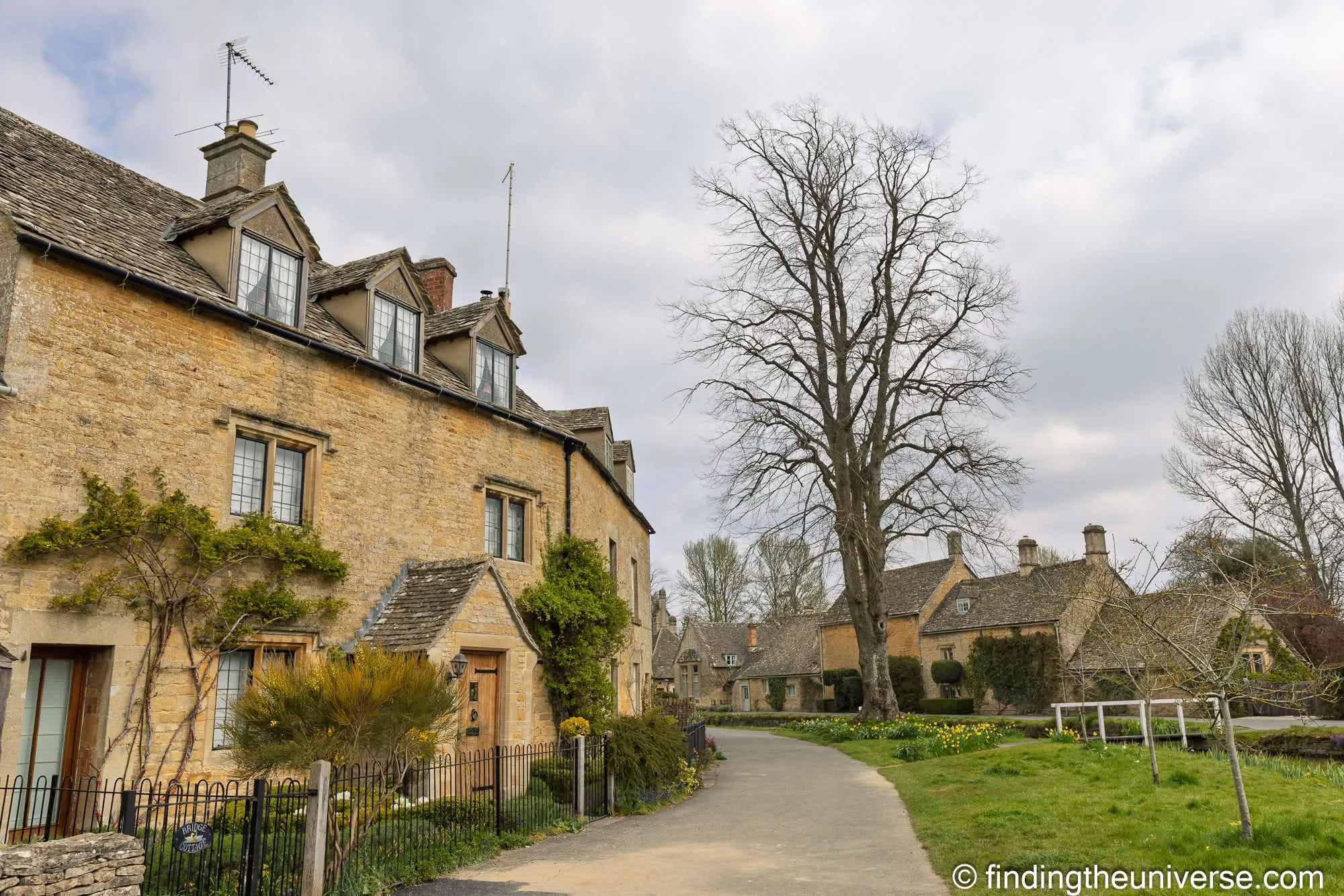
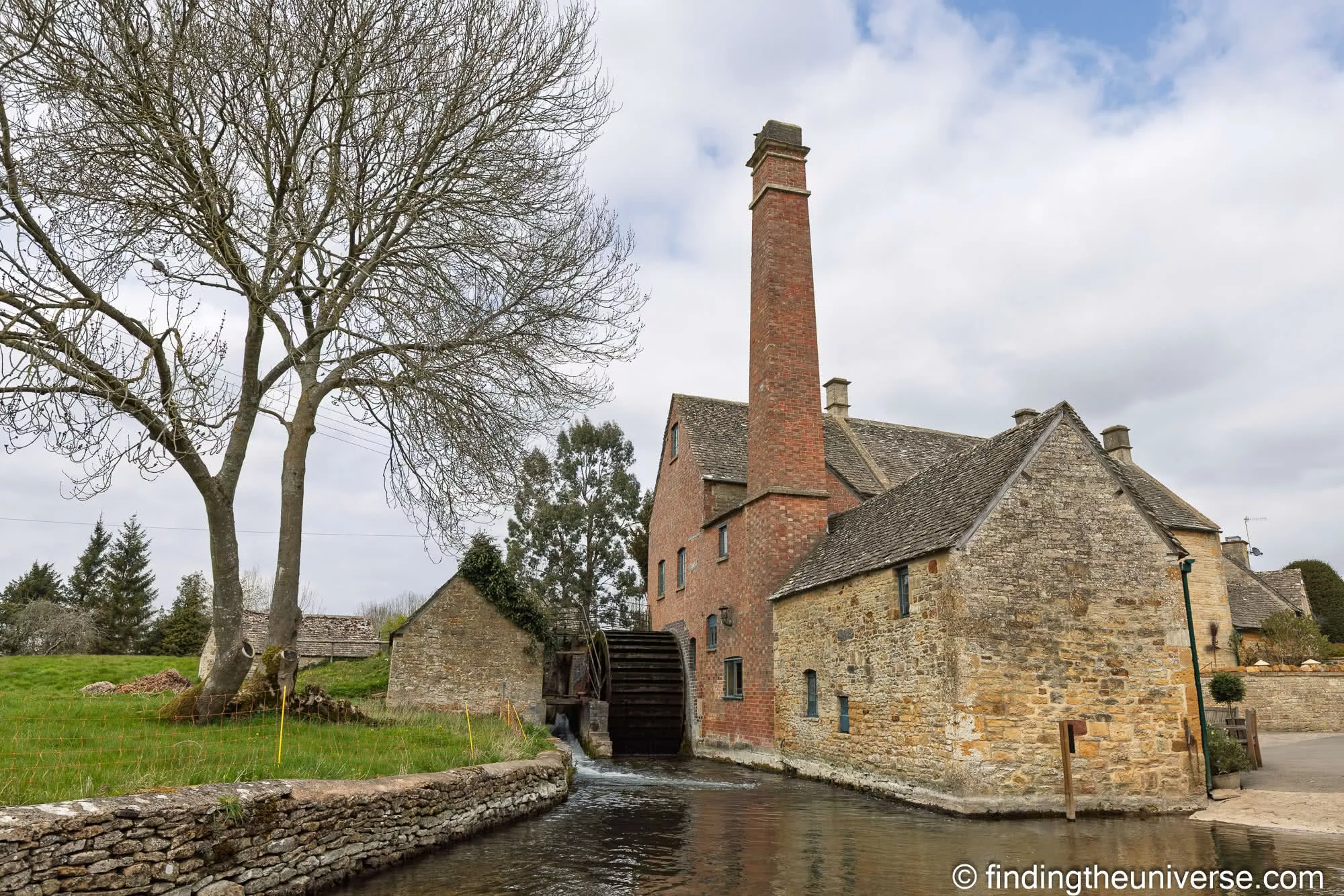
Lower Slaughter is worth a detour and it’s the one I’d choose over Bourton if I had to pick between them.
The village is a millstream with houses along it, and that’s the whole thing. There’s no ticket office, no row of gift shops and nothing to queue for, so the visit is just walking. That sounds like faint praise, and it’s actually why Lower Slaughter holds up better than its more famous neighbour on a busy day.
The best approach is on foot from Bourton, following the Windrush out of the village, which also solves the parking question. There’s an old mill at the far end that photographs beautifully. I’m not going to tell you what it costs to go in or whether it’s open, because its website blocks the tools I use to check, and I won’t repeat someone else’s guess.
Same timing rule as Bourton: early, or late, or not at all in August.
Upper Slaughter
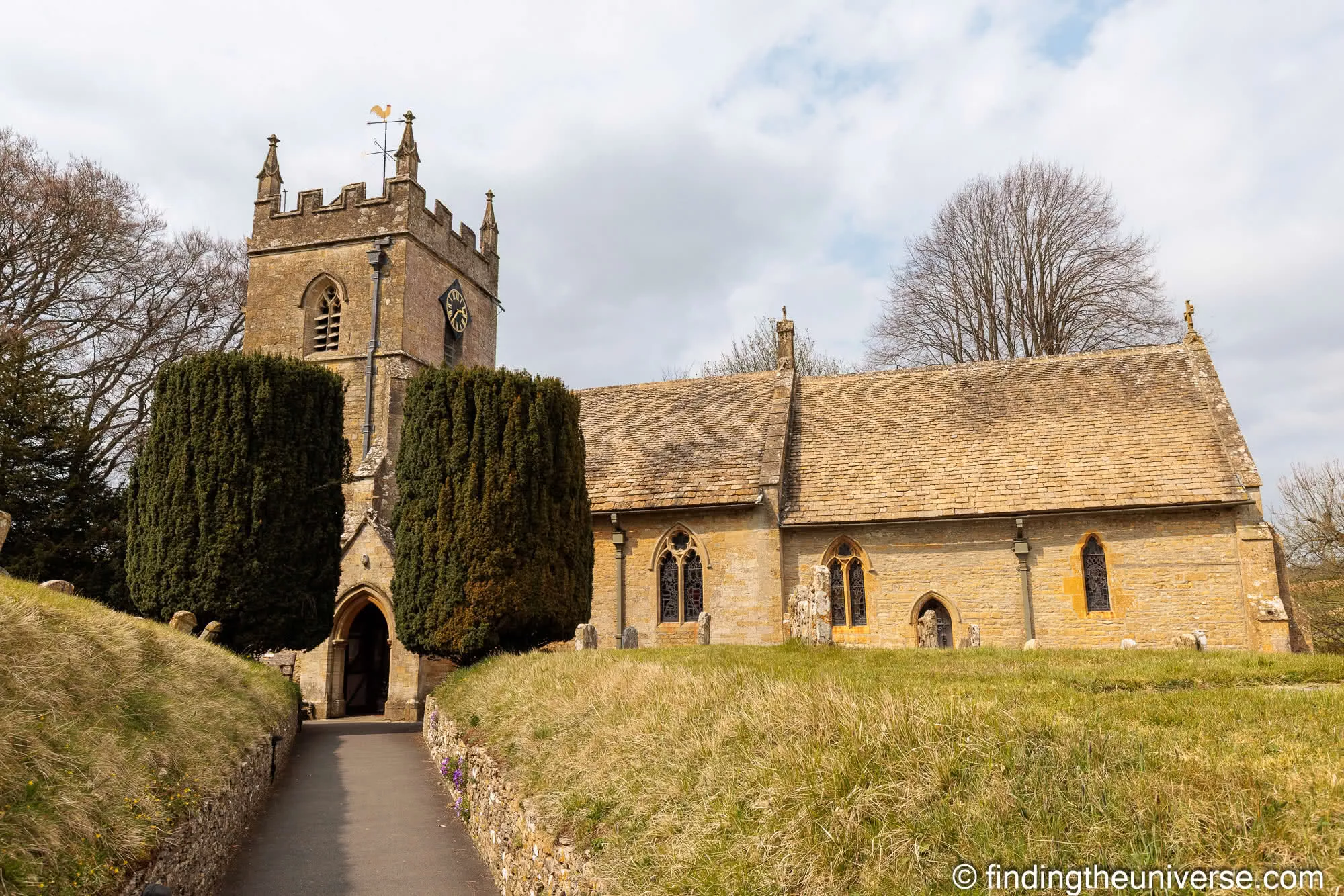
Upper Slaughter is worth a stop, and it’s a short and pretty walk up the valley from Lower Slaughter.
It gets a fraction of its neighbour’s visitors, and doing the two on foot as a single loop is much better than driving between them and hunting for space at each end. If you’ve only got twenty minutes spare then of course spend them in Lower Slaughter, and come back for this one another time.
Bibury
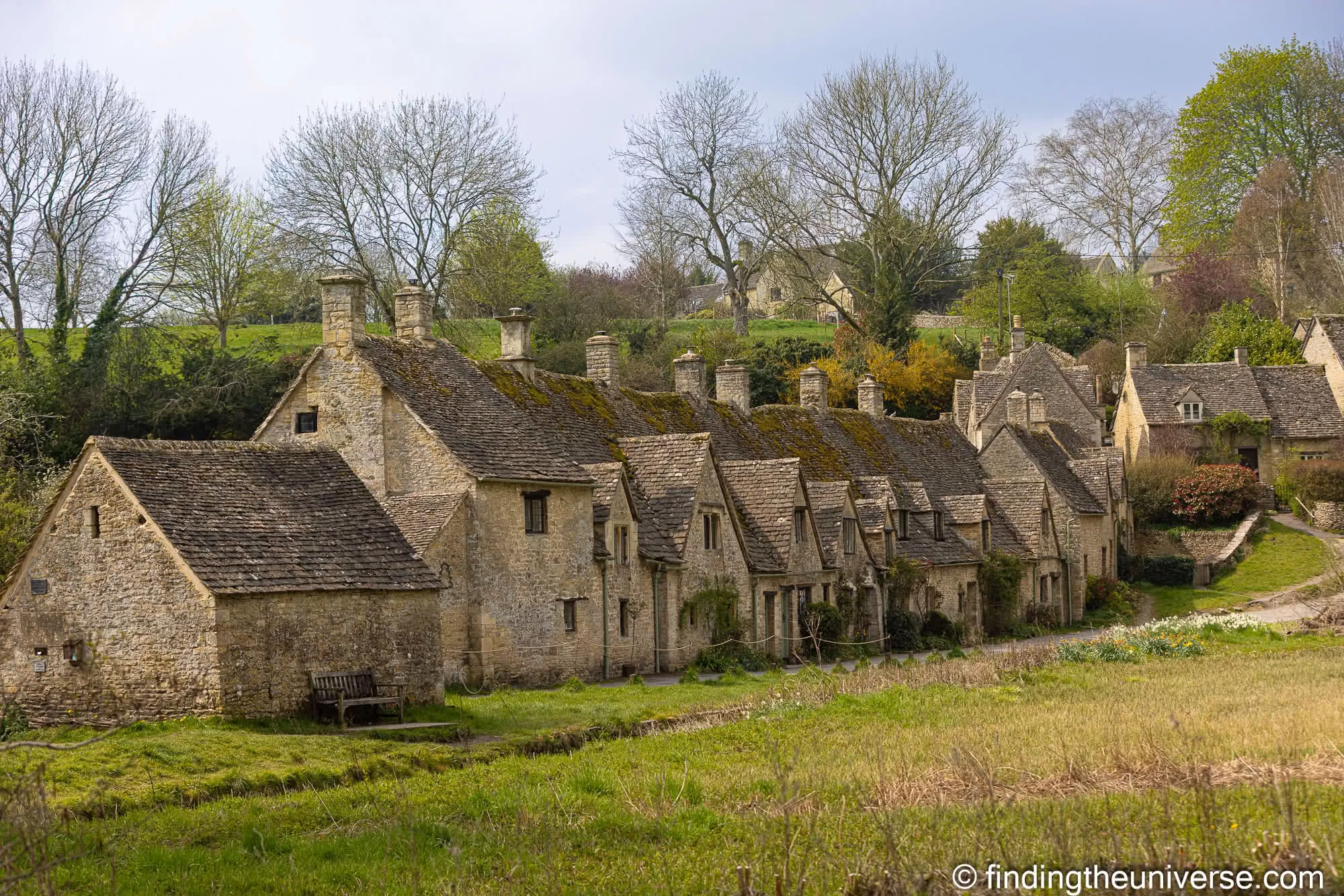
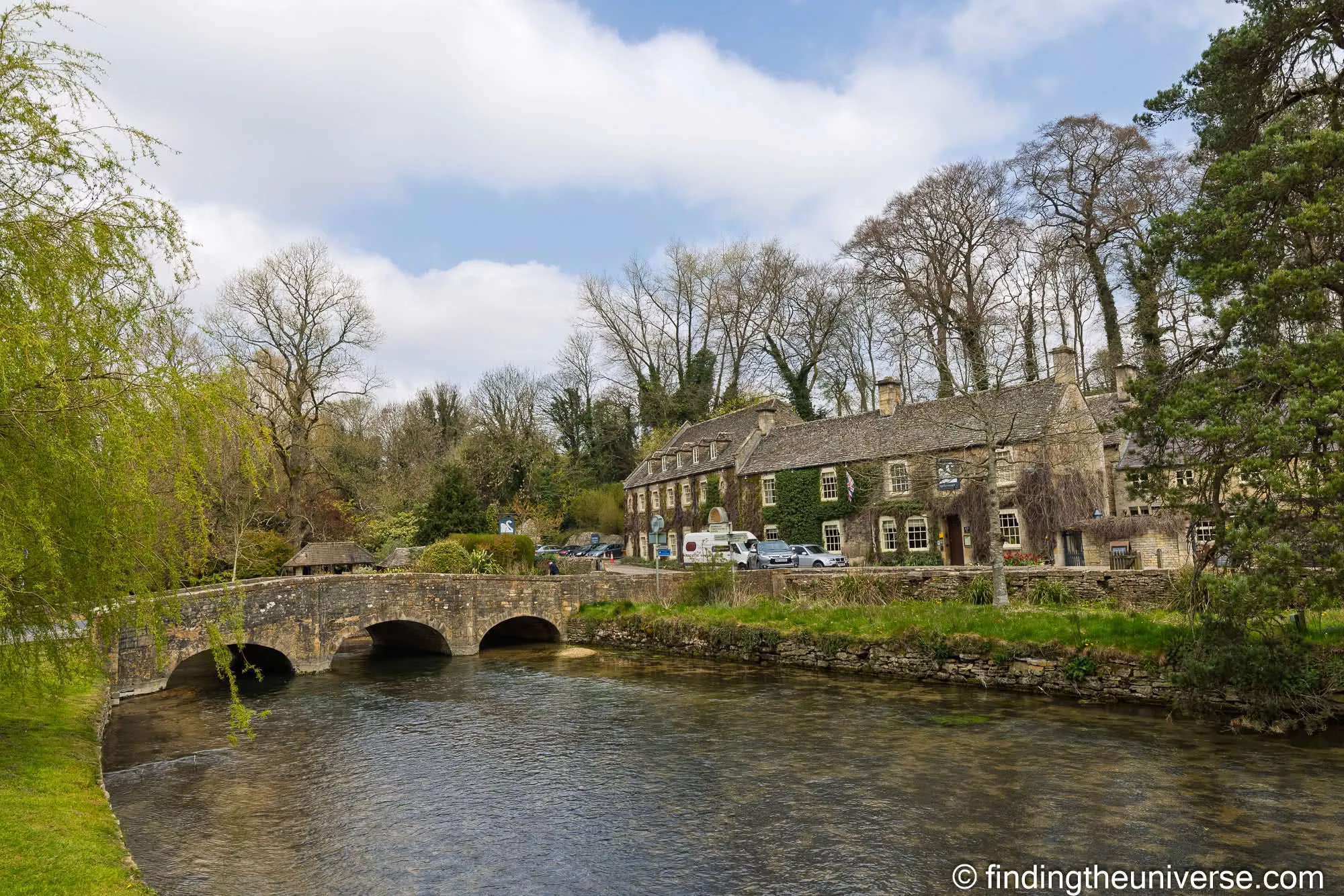
Bibury is worth a detour, and it’s the hardest village in this guide to visit well.
Arlington Row is the terrace of stone cottages you’ve seen on the front of every book about England. It’s owned by the National Trust, it’s free to look at, and you look at it from the outside because people live in it. That last part matters more here than anywhere else on this list.
William Morris did call Bibury “surely the most beautiful village in England”, and the attribution is solid enough to be in the Victoria County History. What isn’t solid is the precise sourcing you’ll see everywhere, usually pinned to a letter of August 1880. The scholarly record dates it only to the late nineteenth century.
There’s a better story underneath it anyway. Tourism here really took off after J. Arthur Gibbs published A Cotswold Village in 1898, and by 1939 Bibury had two tea rooms, a boarding house and a guest house. This village has been dealing with visitors for well over a century.
The scale of it now is worth one number, and the council’s is the one I’d use. Gloucestershire County Council’s own traffic survey counted over 4,500 vehicle movements across Swan Bridge in a single day in July. The resident population is about 600. You’ll see visitor figures of ten or twenty thousand a day quoted, but the council that’s actually managing the problem doesn’t publish one, so I’d treat those with some care.
There is no council car park. The practical answer is Bibury Trout Farm, which charges £10 to park, and which is itself open 9am to 5.30pm with last entry at 4.45pm and £9.50 for adults. Ten pounds to park stings a bit until you’ve circled the village twice looking for a legal space.
Come before 10am, ideally not on a July weekend, and read the coach section below before you plan a coach-based visit.
Burford
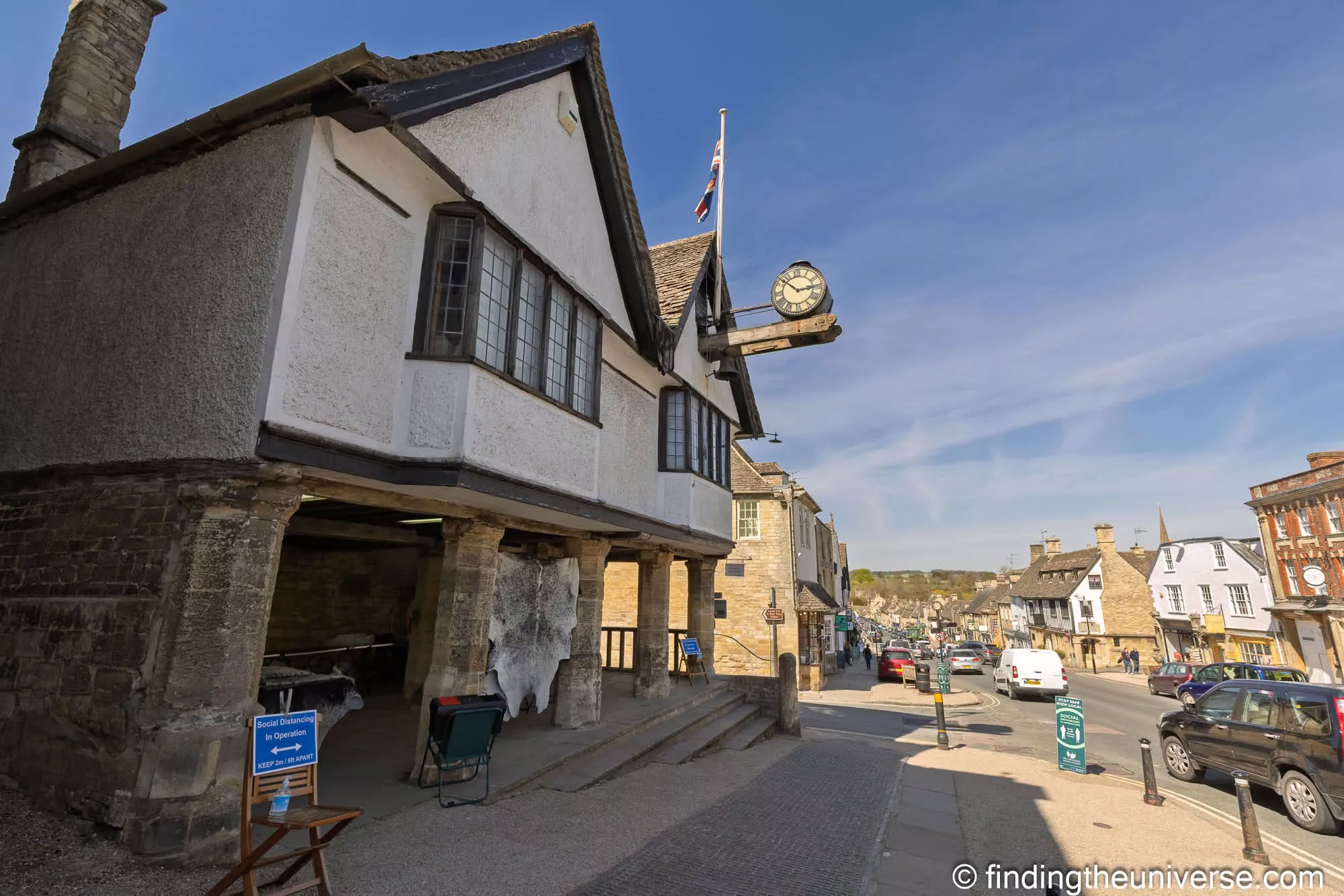
Burford is worth a stop, and it’s the easiest village here to park in by a distance.
Every council car park in West Oxfordshire is free, including Guildenford with its 161 spaces, and the demand gets managed with maximum stay limits instead of charges. After a few days of tapping cards at machines elsewhere, that lands better than it should.
The High Street runs downhill towards the river, and St John the Baptist at the bottom is free to go into. The parish aims to open 10am to 4pm, and adds on its own website that “we regret that this is not always possible”, because the opening relies on volunteers. I’d take the parish at its word rather than the firm 9am to 5pm you’ll find on listing sites.
Shilton
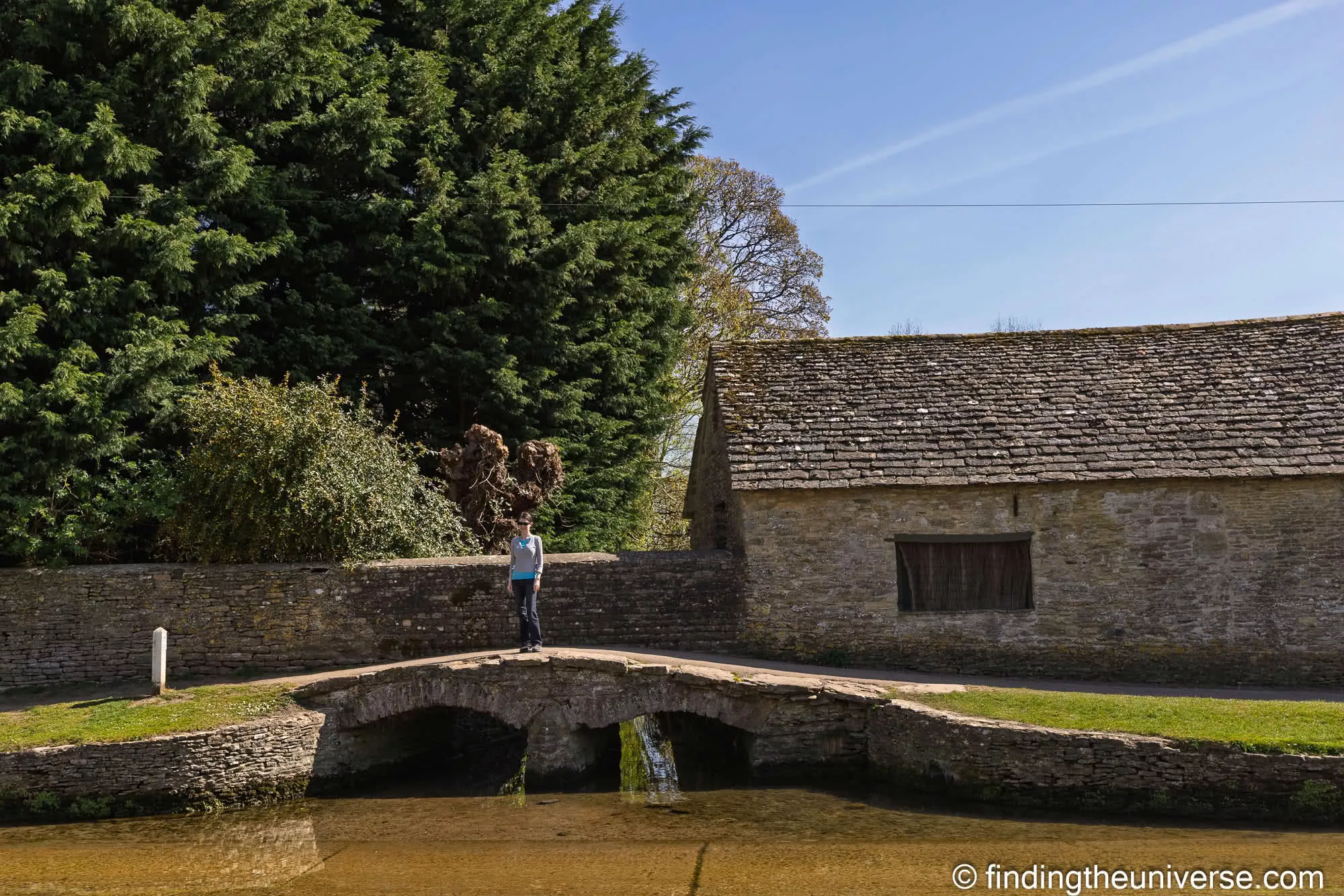
Shilton is the one village on this list I’d tell you to skip unless you’re already driving past it.
This isn’t a criticism of Shilton, which has done nothing wrong by being a small Oxfordshire village of about 626 people. It has a Grade II* Norman church with origins around 1150, a chancel from about 1250 and a fifteenth-century tower, and it has a seventeenth-century pub. That’s the list.
It doesn’t appear anywhere in West Oxfordshire District Council’s car park inventory either, so if you do go, you’re parking on the street in a place that wasn’t built for it.
It’s in here because a shortlist that recommends everything isn’t a shortlist. Shilton is the one I’d drop, and telling you that is more use to you than a sixteenth paragraph of praise would be.
Painswick
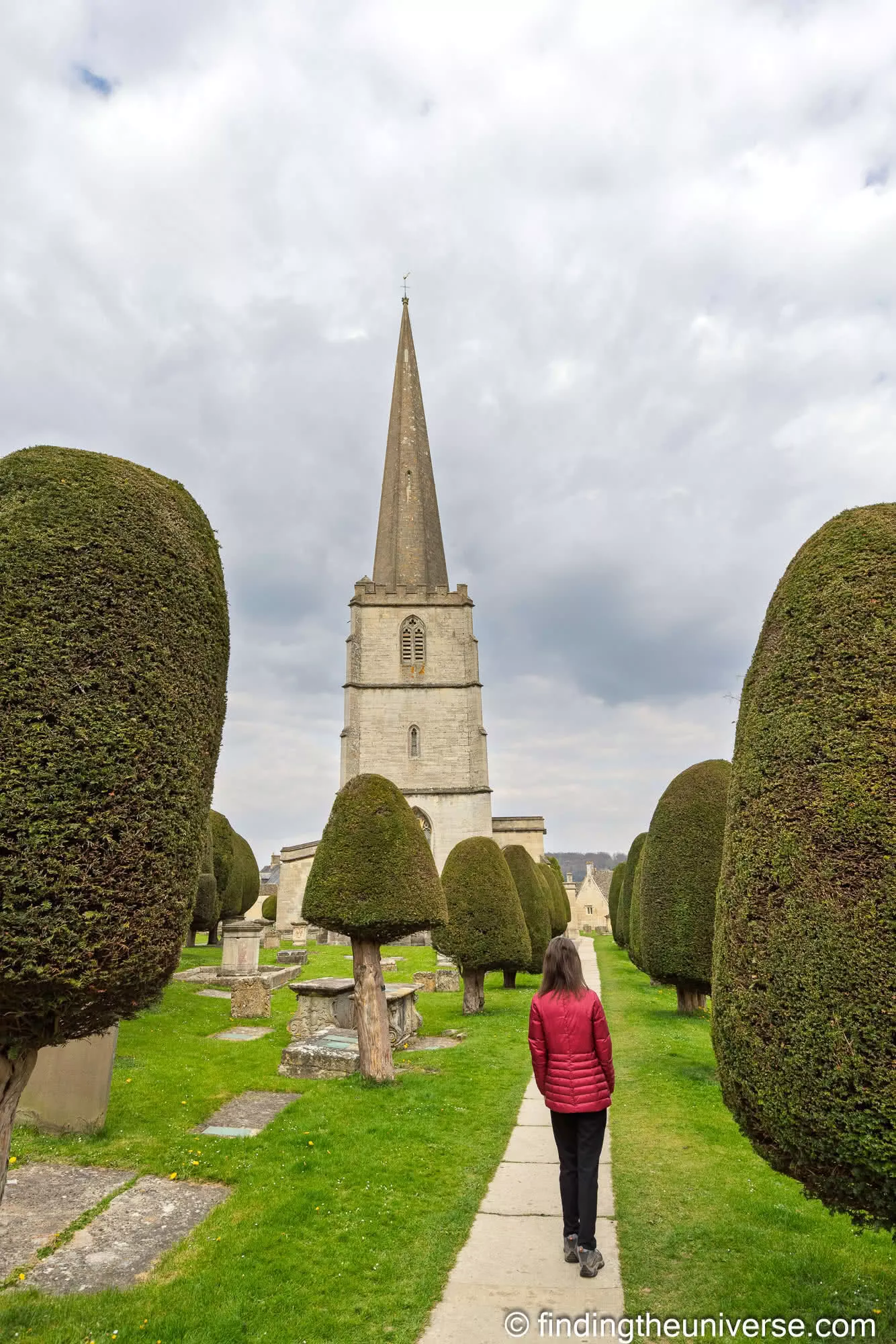
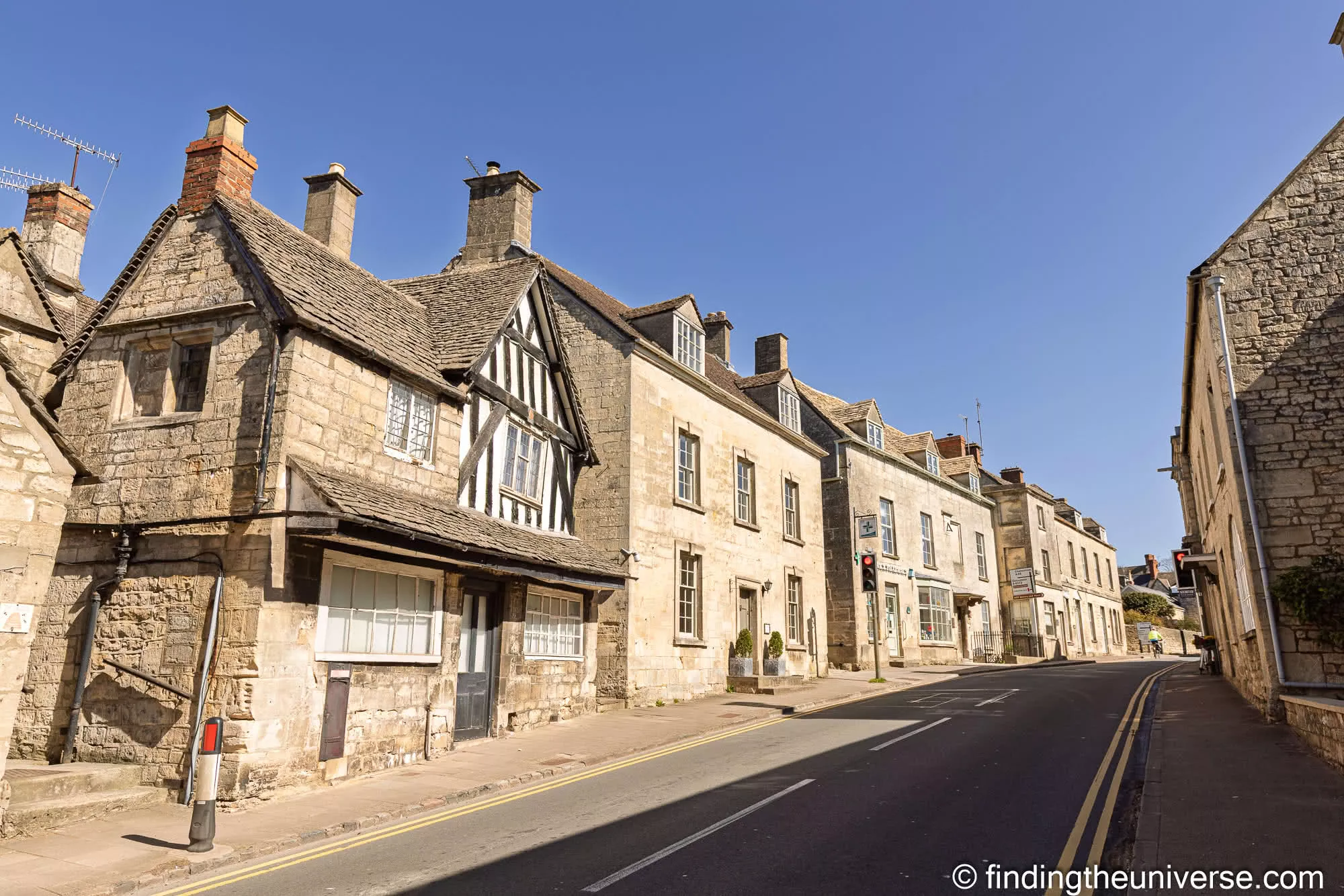
Painswick is worth a detour, and it’s the village I’d tell you to stay the night in.
Jess and I did exactly that, and it changed how I think about the whole region. Day-tripping means you only ever meet these villages between ten in the morning and four in the afternoon, which is pretty much the worst six hours of the day. Painswick at seven in the morning, with the light coming down over the churchyard and nobody else out, is a different place entirely. So is Painswick at eight in the evening.
The churchyard is the famous bit, and Painswick Rococo Garden just outside the village is open 10am to 5pm daily with last entry at 4pm. Adult entry prices change through the year, so check before you go. If you’re coming for the snowdrops in late winter, book ahead, because that’s the one time they need you to.
One parking warning that catches people out. Painswick is in Stroud District, not Cotswold District, so the card-at-the-machine rule I’ll describe below does not necessarily apply here. Stroud’s cashless app is MiPermit rather than PayByPhone, so the account you set up elsewhere in the region won’t work here. The car park is on Stamages Lane, GL6 6UT, with 56 bays and a 23-hour maximum stay, and I couldn’t confirm the tariff. Arrive with a plan B.
Castle Combe
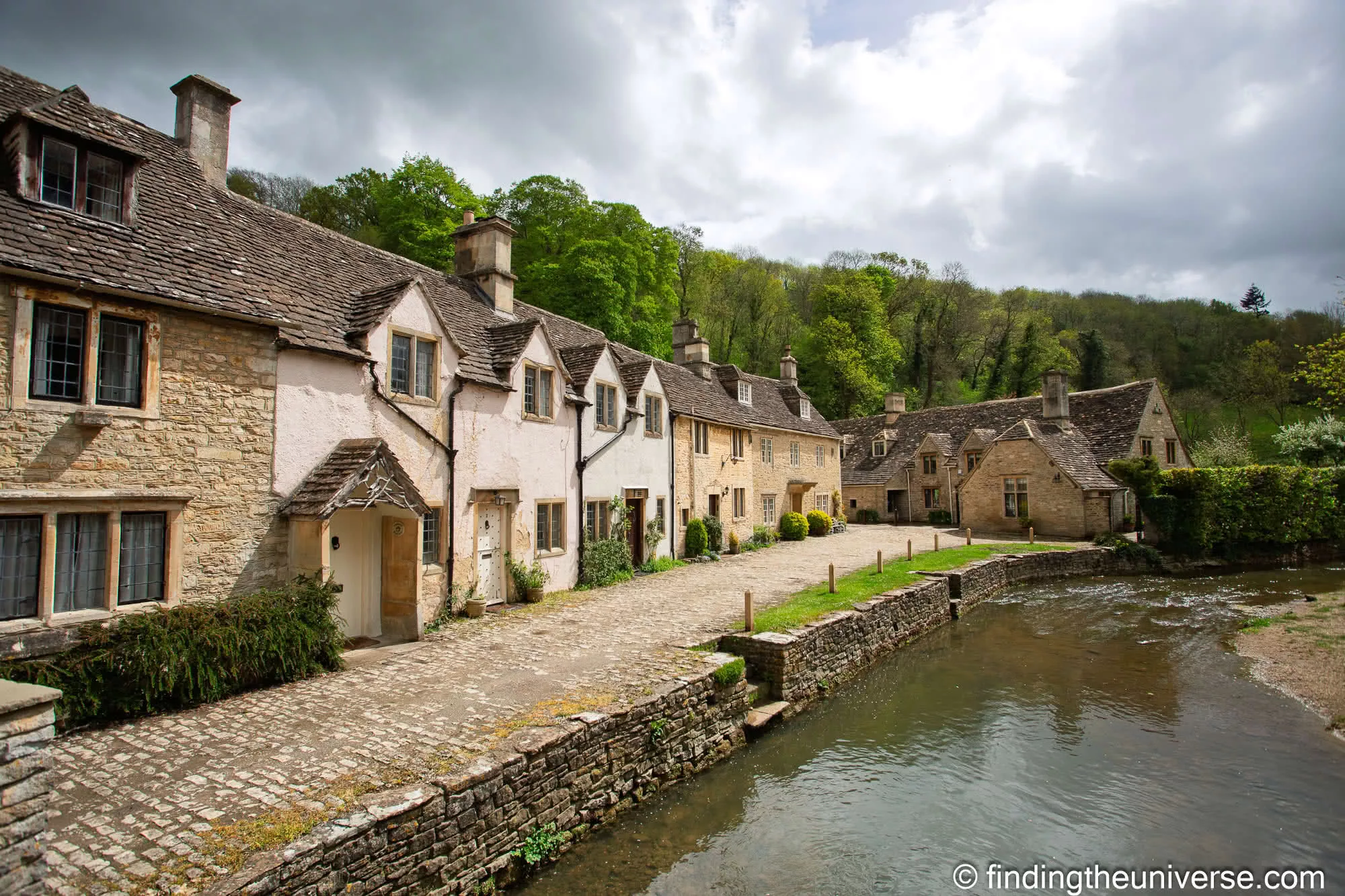
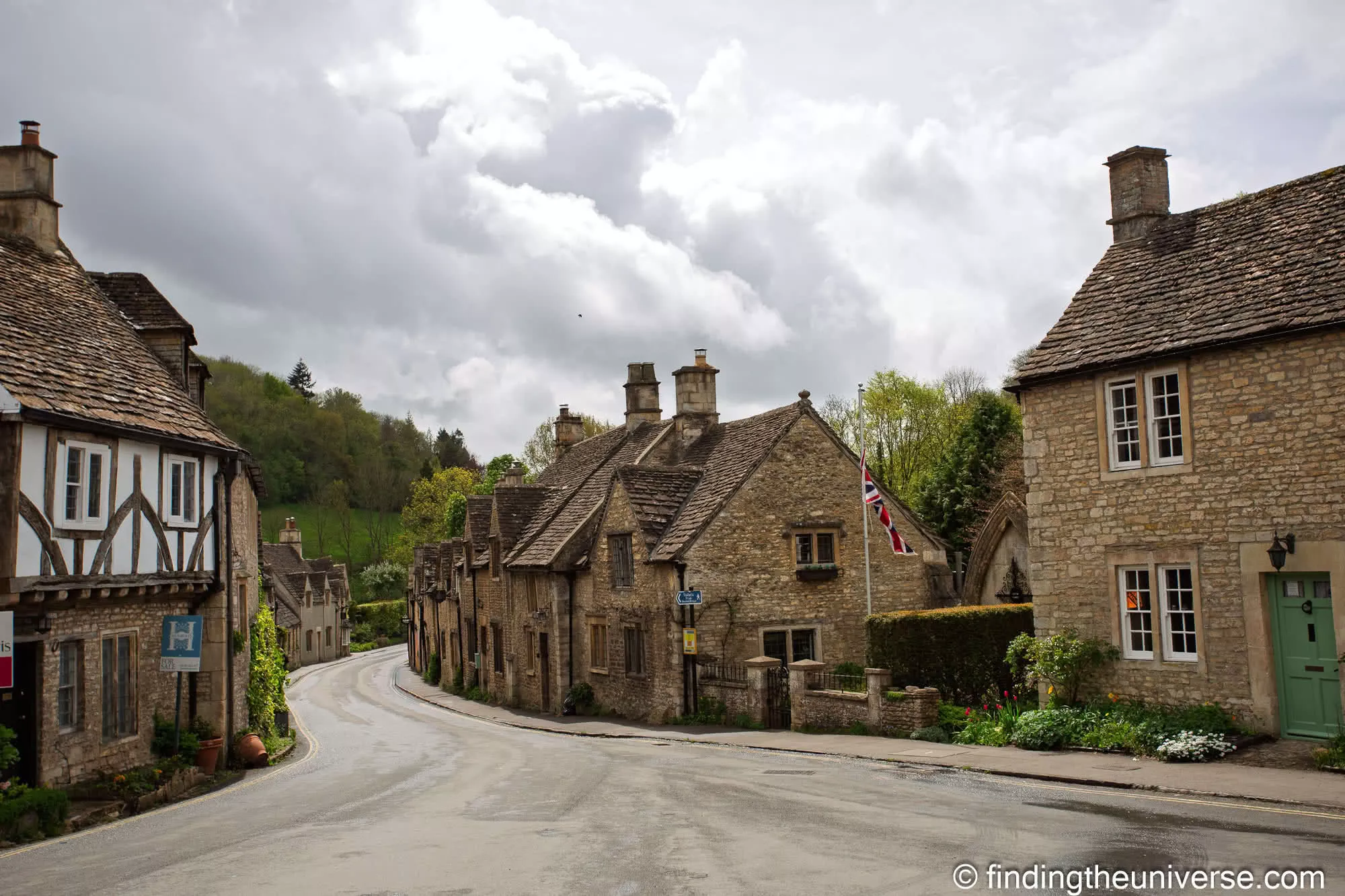
Castle Combe is worth a stop, and it’s the purest example in this guide of a village with nothing to do in it.
I mean that as a recommendation. The village’s own website lists no museum, no house, no garden and no ticketed anything. There’s St Andrew’s church, the market cross, and footpaths out into the valley, including a circular walk of about 6.2 miles. You come, you walk down one street, you look at it, you walk back. Half an hour, and it’s one of the loveliest half hours in the Cotswolds.
One thing to get straight before you search for it. Castle Combe Circuit is a motor racing track outside the village and a completely separate day out, so don’t let a search result confuse the two.
The parking is the real constraint. The village asks you to use the car park and stay off the lanes, describes it as very limited and quick to fill, and says outright that it’s very likely to be full on bank holidays. Coaches aren’t permitted into the village centre and have their own marked spaces in the car park.
Come early on a weekday, or accept that you might be turning round.
Lacock
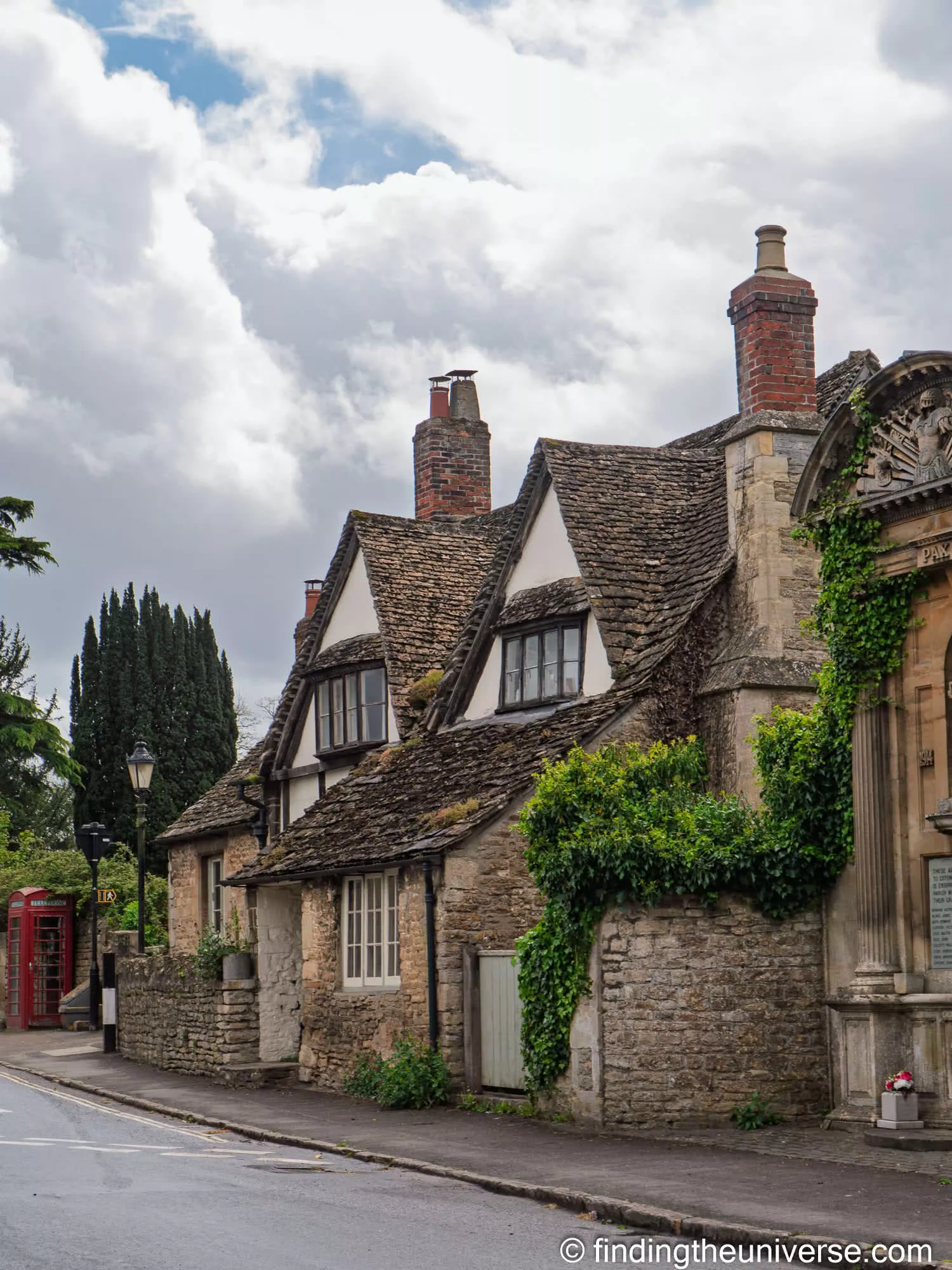
Lacock is worth a stop, paired with Castle Combe, and it’s the one village here where the reason to go is what’s been filmed in it.
Cranford was shot here, which is a favourite of Jess’s and mine, and the village bakery played the bakery while the National Trust shop played the cobblers. The 1995 BBC Pride and Prejudice used Lacock as Meryton, with the Red Lion as the assembly rooms.
The Harry Potter connection is real, but the detail matters. Lacock Abbey stood in for parts of Hogwarts in Philosopher’s Stone and Chamber of Secrets, a village cottage was the exterior of the Potters’ house at Godric’s Hollow, and the village streets played Budleigh Babberton in Half-Blood Prince. The abbey and the village did different jobs in different films, and knowing which is which saves you standing outside the wrong building.
The whole village belongs to the National Trust, which is a large part of why it films so well. Parking is the Trust’s, £5 a day and free to members, open 9am to 5pm or dusk. The abbey and grounds are a separate ticket at £21 for adults.
One technicality. Most sources put Lacock just outside the Cotswolds National Landscape boundary, and I get into why that’s hard to pin down further down the page. I’ve kept it in because you’d be annoyed if I hadn’t, and because it pairs naturally with Castle Combe as a southern half-day.
Cirencester
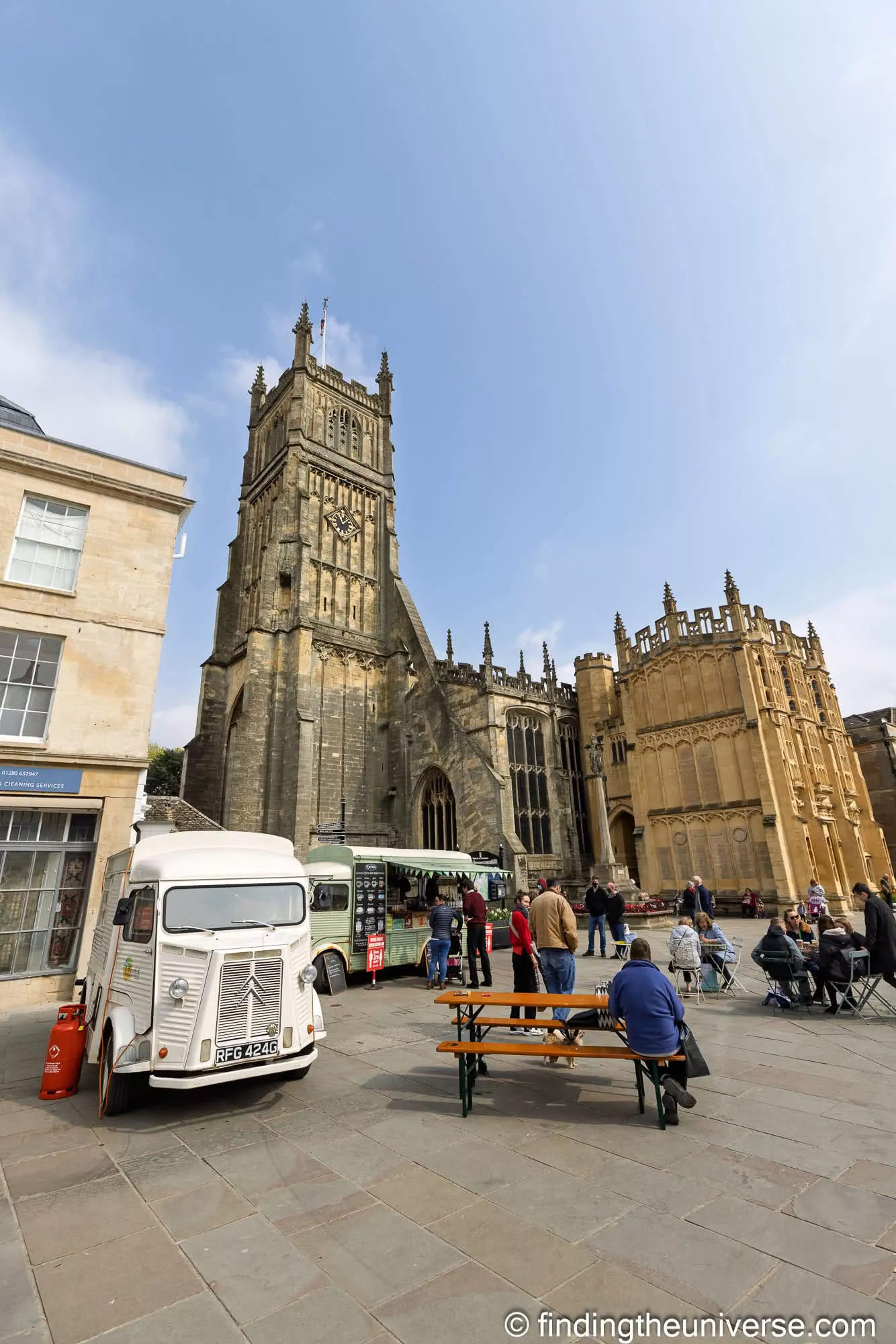
Cirencester isn’t a village, so I haven’t rated it against the ones that are. It’s a working market town, which is exactly what makes it useful.
It’s the largest town actually inside the Cotswolds National Landscape, with a population of around 20,000. That qualifier matters, because Cheltenham, Gloucester, Swindon and Bath are all bigger and all sit outside the boundary. You’ll see Cirencester called the capital of the Cotswolds a lot. The regional tourist board uses the phrase, though it hedges it as “often called”, and the town council doesn’t use it at all, which tells you roughly how official it is.
The Romans built Corinium here, and its second-century walls enclosed the second largest urban area in Roman Britain after London. The Corinium Museum holds the mosaics and it’s £8.70 for adults, open Monday to Saturday 10am to 4pm and Sunday 2pm to 4pm.
Practically, Cirencester is where you come when you need a chemist, a supermarket and a cash machine after three days of villages that have none of them. Parking is Cotswold District, so card or app.
Bampton, the Downton Abbey Village
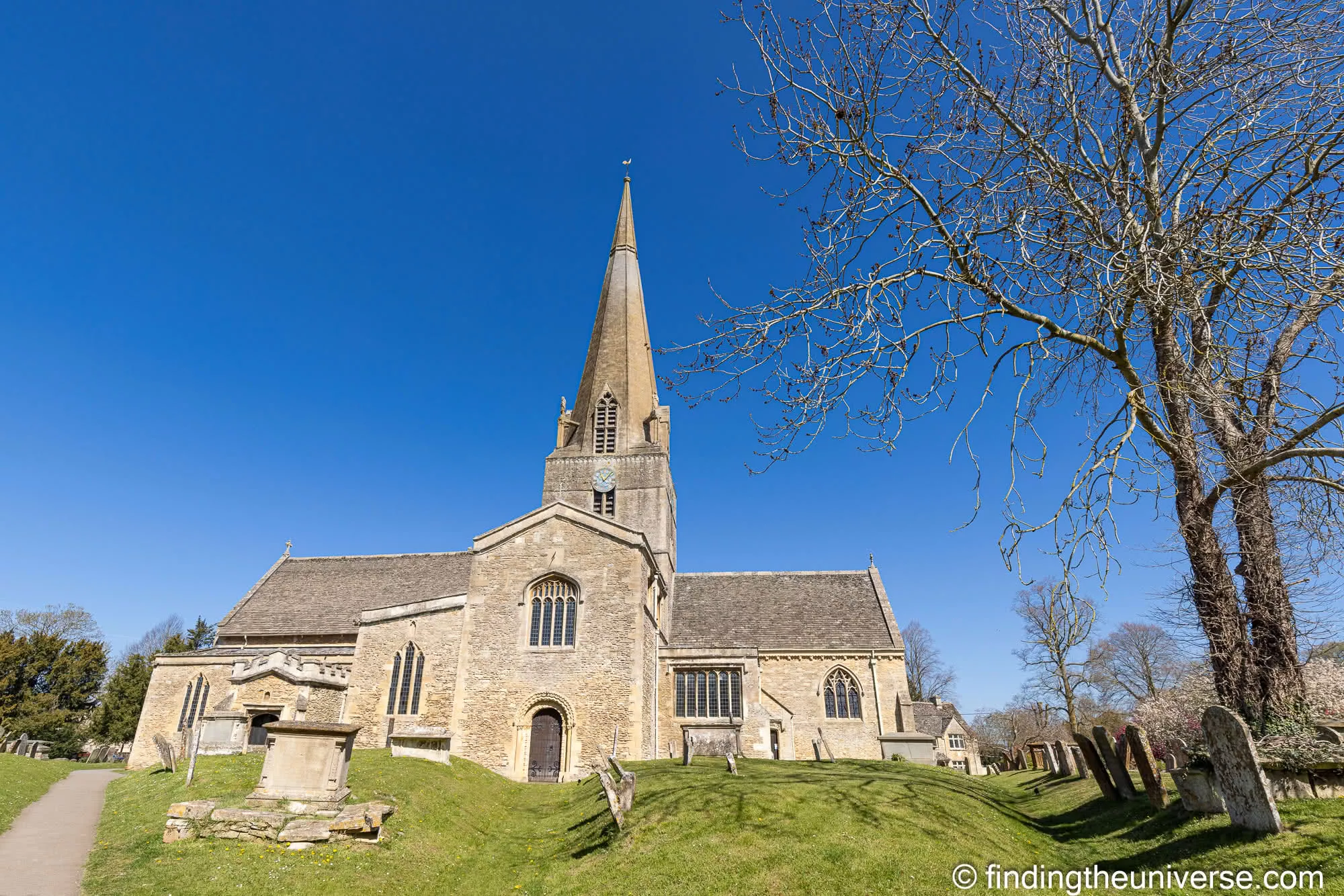
Bampton, over on the Oxfordshire edge, is where the village scenes in Downton Abbey were filmed. I haven’t rated it alongside the others because the reason to go is so specific. Either Downton is why you’re in England or it isn’t. If it is, the diversion is worth it on those grounds alone. Three locations, all viewable from the street:
- St Mary the Virgin church, which hosted the wedding and the christening, and is the only building in Bampton filmed inside as well as out.
- The Old Grammar School, which played Downton Cottage Hospital and now houses the village library and the Bampton Archive.
- Churchgate House, the exterior of Isobel Crawley’s house. It’s a private home on a narrow lane, so look from the lane and don’t go peering through windows.
The Bampton Archive is volunteer-run and doesn’t publish reliable opening hours, so check directly before you make a trip of it. Every set of hours I could find online turned out to belong to the village library, which shares the same building. And if you are doing the full Downton circuit, the house itself is Highclere Castle, which Jess has written up over on Independent Travel Cats.
Paying for Parking in the Cotswolds
Parking is likely going to be your major pain point in the Cotswolds. You’ll quickly discover that you aren’t the only person wanting to visit these villages, and between the coaches, other visitors and the residents, parking spaces go quickly. They are also, for the most part, something you have to pay for at each location.
Your bank card should suffice for most locations, and you don’t need a UK phone number to park. Most of the main villages here sit in Cotswold District, which covers Cirencester, Stow, Moreton-in-Marsh, Bourton, Chipping Campden and Tetbury. The app is PayByPhone, but contactless card payment works at the machines in every one of their car parks, and there’s a phone line on 0330 400 7275 if you’d rather.
What doesn’t work in most locations is cash. The council’s own wording is that “cash is no longer accepted at any of our car parks”, so don’t arrive with a pocket of pound coins expecting to feed a meter.
Four exceptions to memorise. Burford is free, along with every other West Oxfordshire car park. Bibury has no council car park at all and the trout farm charges £10. Lacock is National Trust, £5 and free to members. And Painswick sits in Stroud District, which runs on MiPermit rather than PayByPhone, so your Cotswold District account won’t work there and the card rule above doesn’t automatically hold either.
You’ll still want mobile data for maps and for PayByPhone if a machine is out of order, and if you’re coming from the US an eSIM is far easier than hunting for a SIM card at Heathrow. It’s a convenience rather than a necessity here, which is a nicer position to be in than most destinations.
Driving in the Cotswolds
The Cotswolds roads might be a little different to what you’re used to, and you’ll want to be prepared before you go. Here’s what to expect.
The A roads between the towns, the A429 Fosse Way, the A44, the A40 and the A419, are ordinary two lane roads and completely fine.
The roads that tend to trip visitors up are the connecting lanes between the villages, which is precisely where a village-hopping day sends you. Those are frequently single track, barely wider than a car, with high hedges or dry stone walls right at the road edge and blind bends where you can’t see what’s coming. You use the passing places, and you should expect to reverse into one now and again, particularly for tractors and delivery lorries that physically can’t.
Two more driving notes. Cleeve Hill on the B4632, between Cheltenham and Winchcombe, is an exposed escarpment road that ices up in winter. And satnavs routinely route people down lanes signposted as unsuitable for large vehicles, which is a shrug in a hatchback and a serious afternoon in a motorhome. If you’re not used to driving on the left, our guide to driving in the UK covers the rest of it.
We use Discover Cars for rentals in the UK, as it compares the local firms alongside the big names. If you’d rather not drive these lanes at all, that’s a reasonable call: Rabbie’s runs small-group Cotswolds tours in sixteen-seat minibuses, and there’s a wider spread of Cotswolds tours on GetYourGuide.
Coming by train works too. Moreton-in-Marsh sits on the Cotswold Line, with roughly hourly services from London Paddington, and the Sunday bus connects it to Bourton and Stow, which is what makes that northern cluster workable without a car. If that’s the trip you’re planning, our guide to visiting the Cotswolds without a car works through every village on this list by train and bus, with the Sunday services set out one by one.
Beating the Coaches
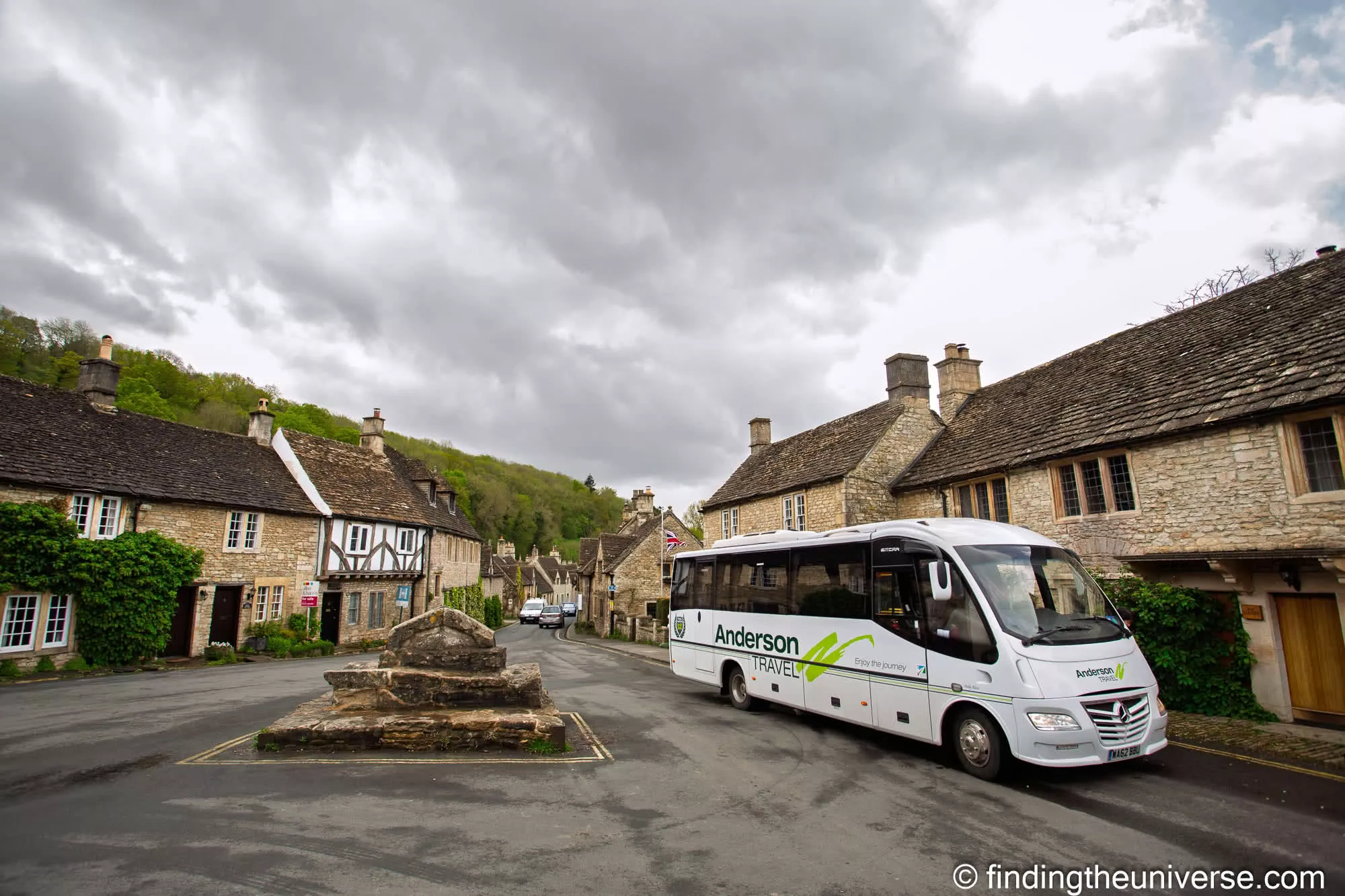
The Cotswolds get busy. What’s useful is knowing exactly when, because that’s the bit you can actually do something about.
The pattern comes from London. Day tours leave the capital in the morning, take two to three hours to get here, and land in the villages in the middle of the day. They’re gone by late afternoon. So the window is before 10am, or after 4pm, and in the villages that matter it decides whether you get a photograph or a scrum.
I know the rhythm from both sides, because Jess and I have done two of those tours ourselves as paying customers. One was a private tour with a morning at Blenheim and an afternoon in the Cotswolds, the other was a Bath, Stonehenge and Cotswolds day.
They’re a perfectly good way to see the region if you’re not driving, and we’ve written up the Stonehenge, Bath and Cotswolds day trip from London separately. But sitting on one teaches you exactly when everyone else arrives.
Three villages have taken this into their own hands, and the details differ more than the headlines suggest.
Bibury has the strictest arrangement. Since May 2025 the old coach parking bays have been closed and replaced with a marked bus stop clearway with room for two vehicles, opposite the trout farm. It’s drop-off and pick-up only with a ten-minute maximum, and coaches then have to leave the village entirely to turn round or wait, with the county council directing them to Cirencester and adding fifteen to twenty minutes to the journey.
The council still describes this as a trial. It consulted in late 2025 on making it permanent, drew 153 responses, and the picture that came back was more mixed than the headlines suggest: managed coach parking outside the centre had solid support, an outright ban didn’t, and only 41% thought traffic flow had actually improved. The stated target for a permanent scheme was early summer 2026. Whatever its formal status on the day you read this, the practical effect has held since 2025: arrive at Bibury by coach and you get a short fixed window on the ground.
Bourton-on-the-Water is a different story, and a more interesting one. Nobody banned coaches from Bourton. Coach parking ended on 31 December 2023 because the owner of a privately owned car park stopped providing it, and the district council’s own statement says it spent two years looking at school land, drop-off bays and converting the Rissington Road car park, and couldn’t make any of it work. Minibuses can still use Station Road.
A later parish council attempt to restrict coach routes was reported halted when the contractors installing it hit buried cables and couldn’t put the legally required sign where it needed to go. So don’t expect an enforced ban. Expect a village with nowhere for a coach to park.
Castle Combe keeps coaches out of the village centre entirely and gives them marked spaces in the car park. That’s the village’s own doing, not the council’s.
The upshot for you: get to Bibury, Bourton and Castle Combe before ten. In Bourton that’s also free parking, since the charging window doesn’t open until 10am. That’s two reasons to set an alarm, which is usually enough to get me out of bed.
Is That Even a Cotswold Village?
Ask ten people to list the Cotswold villages and you’ll get ten different lists, mostly because hardly anyone knows where the boundary actually runs. It’s worth thirty seconds of your time, since it changes which day trips make sense.
The boundary is a real, mapped thing. The Cotswolds National Landscape covers about 787 square miles across six counties: Gloucestershire, which is around three fifths of it, plus Oxfordshire, Warwickshire, Wiltshire, Worcestershire, and Bath and North East Somerset. It was designated in 1966.
It was renamed on 22 November 2023, when every Area of Outstanding Natural Beauty in England and Wales was rebranded as a National Landscape. The legal designation didn’t go anywhere, just the public name, so if you know it as the Cotswolds AONB you’re not out of date so much as using the old label. Its board owns no land, so there’s no entrance and no gate to look for.
Inside the boundary: Bourton, Stow, Bibury, Painswick, Cirencester, Northleach, Tetbury, Winchcombe, Broadway, Chipping Campden, Burford, Chipping Norton, and the two that surprise people, Castle Combe and Malmesbury.
Outside it: Oxford, which sits just to the east, and Bath, whose city centre falls just outside the line even though the countryside immediately around it is inside. That’s the answer to the question I get asked most about the region, and both cities have their own guides here, 2 days in Bath and 2 days in Oxford, because neither deserves to be a footnote in someone else’s article.
Lacock is the awkward one. Everything I can find puts it just outside the boundary, but the designating body publishes its maps as PNG and PDF downloads with no settlement list, so there’s no clean official answer to give you. It stays in this guide anyway, because you’d want it to.
Why the Cotswolds Look the Way They Do
One rock and one industry explain nearly all of it.
The stone is oolitic limestone, laid down in the Jurassic around 170 million years ago, and the warm yellow to amber colour comes from iron oxide in the rock itself. Because it was quarried locally and everywhere, whole villages got built from the same material, which is why they look like a set rather than an accumulation.
The money was wool. Prosperity here peaked roughly between 1250 and 1500, and the merchants put their profits into two things: churches and houses. The churches are the giveaway. They’re Perpendicular Gothic, far larger than the villages around them ever needed, with tall clerestory windows and elaborate stonework, built as statements of wealth as much as of faith.
Go inside one and look at the floor. The monumental brasses show wool merchants with their feet resting on woolsacks and sheep, which leaves no doubt at all about where the money came from. That brass to William Grevel in Chipping Campden, the “flower of the wool merchants of all England”, is the single clearest example in the region, and it’s free to go and stand on.
What I’d Do Differently Next Time
A few things I’ve learned the expensive way, offered so you can skip that part.
Do fewer villages. Three or four in a day, with time to walk to the end of each one, beats six seen from a car park. These places are small and the pleasure is in slowing down, which is quite hard to do when you’re working through a list.
Stay a night in one. It’s the single biggest upgrade available and it costs you one hotel booking, because an overnight buys you the two hours before the day visitors arrive and the two hours after they’ve gone. Painswick is where I’d do it.
Don’t try to combine the south with the north. Castle Combe and Lacock are a separate half-day from the Broadway to Bourton run, and squeezing them into one day means a lot of driving on lanes that really don’t reward hurrying.
Set the alarm, and take a card rather than cash. Being in Bourton at 8.30am instead of 12.30pm gives you two completely different villages for the same money, and the parking machines will not help you with a handful of coins.
And don’t write off the ones marked “worth a stop”. Stanton and Upper Slaughter aren’t lesser villages, they’re smaller ones with less to detain you, and Broadway, Lacock and Castle Combe are down there because I had to draw the line somewhere to keep a shortlist short. Half an hour in each is quite often the nicest half hour of the day.
Cotswold Villages FAQ
Which Cotswold Village Is the Prettiest?
Bibury usually takes the title, and William Morris did call it “surely the most beautiful village in England”.
My own pick is Lower Slaughter, mostly because it’s just as lovely and has no gift shops. If you want the famous view, go to Bibury. If you want the nicest hour, go to Lower Slaughter.
Is Bath in the Cotswolds?
No. Bath’s city centre falls just outside the Cotswolds National Landscape boundary, although the countryside immediately around the city is inside it. Bath is also the southern end of the Cotswold Way, which runs 102 miles up to Chipping Campden.
It makes an excellent base for the southern villages, and it’s a great city in its own right, so treat it as a separate trip rather than a Cotswolds stop.
How Many Cotswold Villages Can You See in a Day?
Three or four, comfortably. More than that and you’re spending the day parking rather than looking.
The northern villages sit within about twenty minutes of each other, so a day taking in Chipping Campden, Stow-on-the-Wold and the Slaughters works well. Castle Combe and Lacock in the south are a separate half-day, not an add-on.
Do You Need a Car to Visit the Cotswolds?
It’s much easier with one, but it isn’t essential everywhere. Lacock has around twenty buses a day, seven days a week, and the Bourton, Stow and Moreton-in-Marsh cluster has a year-round Sunday service every two hours, which makes it the one group that works as a car-free day trip.
Bibury is the hardest place in the region to reach without a car, with no Sunday bus at all. Our UK itinerary by public transport covers the wider rail and bus picture.
How Do You Pay for Parking in the Cotswolds?
Contactless card at the machine works in every Cotswold District car park, and the app is PayByPhone. Cash isn’t accepted at any of them.
Burford and the rest of West Oxfordshire are free, Bibury’s practical option is the trout farm car park at £10, and Painswick is in Stroud District, which uses a different app, MiPermit, and where the card rule doesn’t automatically apply.
What Is the Best Time of Year to Visit the Cotswolds?
Late spring and early autumn, for the same reason as most of England: the weather is reasonable and the coaches are thinner on the ground. May and September are my picks.
Winter is quieter and rather beautiful, with the caveat that some attractions cut their hours, and the snowdrops at Painswick Rococo Garden in late winter are worth planning around if you book ahead. Avoid July and August weekends in Bibury and Bourton unless you’re prepared to be there at 8am.
Further Reading
If the Cotswolds are part of a longer trip, these should help:
- Things to do in Bath, the obvious southern base and a city worth two days on its own.
- Things to do in Stratford-upon-Avon, just over 20 minutes north of Chipping Campden.
- The best stately homes in England, several of which are within reach of the villages here.
- A one week UK road trip itinerary, if the Cotswolds are one leg of something bigger.
- The best day trips from London, for the rest of the country within reach of the capital.
For a paper guidebook, Rick Steves’ England is the one I’d take. It’s opinionated, which is exactly what you want when you’re deciding where not to go. Check for the current edition before you buy, as it gets updated regularly.

And if you’d rather have somebody else do the driving for a day, tours from Bath reach the southern villages easily.
Have I missed a village you loved, or got a verdict wrong? Let me know in the comments. I’d particularly like to hear from anyone who’s cracked parking at Castle Combe.
Leave a Reply