I spent four years living in Bath, just off the southern edge of the Cotswolds, my brother still lives there, and I’ve visited pretty much every corner of the Cotswolds. Here’s the answer most people are looking for: two days in the Cotswolds covers the northern villages, and a third day lets you add Bibury, Cirencester and Painswick in the south without rushing any of it.
The hard part of planning a Cotswolds trip is how long to visit for. Cotswold villages are small places, and you can walk the length of most of them in twenty minutes. What fills your day is everything around them: the driving, the parking, and the gap between when things open and when the coaches arrive.
So this itinerary is built around those numbers: drive times between every stop, a realistic amount of time at each one, and the prices and opening hours for the paid stops, all checked with the operators in July 2026.
One thing this article doesn’t do is rank the villages. We’ve done that separately in our guide to the best Cotswold villages, with a verdict on each. This is the route, in order, with the clock running.
Table of Contents:
How Long Do You Need in the Cotswolds?
Two full days is enough to do the northern Cotswolds well. That’s Broadway, Chipping Campden, Stanton and Blockley on one day, then Bourton-on-the-Water, the Slaughters and Stow-on-the-Wold on the next.
The northern villages sit close together, mostly six to twenty minutes’ drive apart, so you spend your time in the villages rather than between them. It may sound like you could fit more in, but then you’re just going to end up spending most of your time driving, or trying to figure out parking, which is less fun than it sounds.
If you add a third day then you can branch out to the southern half: Burford, Bibury, Cirencester and Painswick. Distances stretch out down here, and trying to fold these into a two day trip means you’d see everything briefly and nothing well. If you only have two days, do the north and save the south for another trip. It’s a better holiday than doing all of it badly.
Could you spend longer? Of course. A week here would be lovely. But two to three days is what most people have, usually as part of a bigger UK road trip, and it’s enough to come away feeling like you did the place justice.
The Time Budget: Drive Times and Time at Each Stop
This table is the itinerary in one place. Arrival times assume a base in the northern Cotswolds (more on that below) and a 9am start each day. The drive figures include finding a parking space and walking into the village centre, which is where the extra minutes actually go.
| Day | Stop | Arrive | Time here | Drive to next stop |
|---|---|---|---|---|
| 1 | Broadway | 9am | 1 hour 30 minutes | Allow 20 minutes |
| 1 | Broadway Tower (optional) | 10.50am | 1 hour | Allow 35 minutes |
| 1 | Stanton | 12.25pm | 45 minutes | Allow 30 minutes |
| 1 | Chipping Campden (lunch) | 1.40pm | 2 hours | Allow 20 minutes |
| 1 | Blockley | 4pm | 45 minutes | Allow 20 minutes to base |
| 2 | Bourton-on-the-Water | 9am | 1 hour 30 minutes | On foot |
| 2 | One Bourton attraction (optional) | 10.30am | 1 hour | Allow 20 minutes |
| 2 | Lower Slaughter | 11.50am | 1 hour | Allow 15 minutes |
| 2 | Upper Slaughter | 1.05pm | 40 minutes | Allow 20 minutes |
| 2 | Stow-on-the-Wold (late lunch) | 2.05pm | 2 hours 30 minutes | Day ends here |
| 3 | Burford | 9am | 1 hour 15 minutes | Allow 15 minutes |
| 3 | Shilton | 10.30am | 20 minutes | Allow 25 minutes |
| 3 | Bibury | 11.15am | 1 hour 30 minutes | Allow 25 minutes |
| 3 | Cirencester (lunch) | 1.10pm | 2 hours | Allow 35 minutes |
| 3 | Painswick | 3.45pm | 2 hours | Day ends here |
Total driving is about two hours on Day 1, under an hour on Day 2, and about an hour and forty minutes on Day 3. That’s what basing yourself in the north buys you: the days are spent in villages, with the car doing short hops between them.
Day 1: Broadway, Chipping Campden and the Northern Edge
Broadway
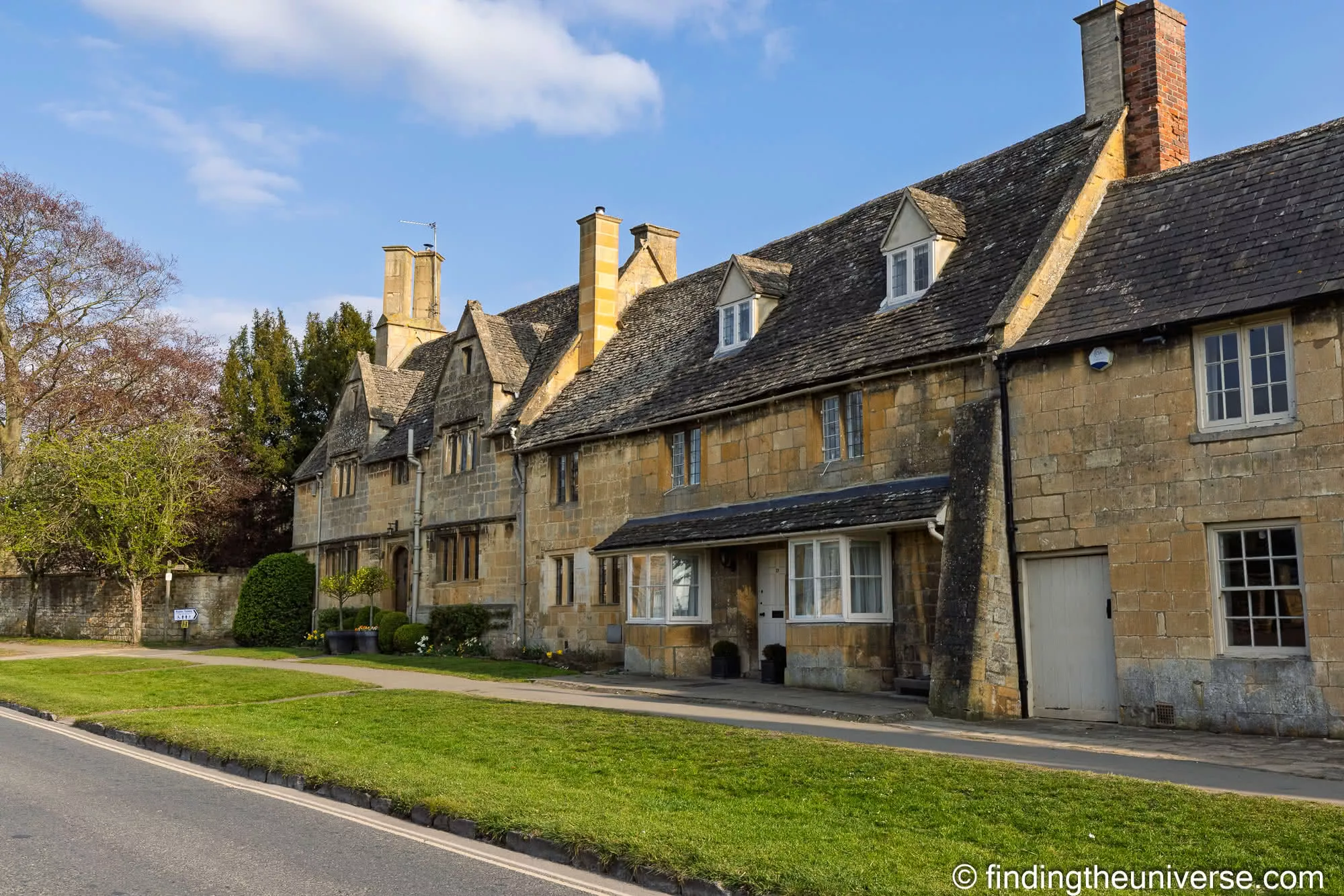
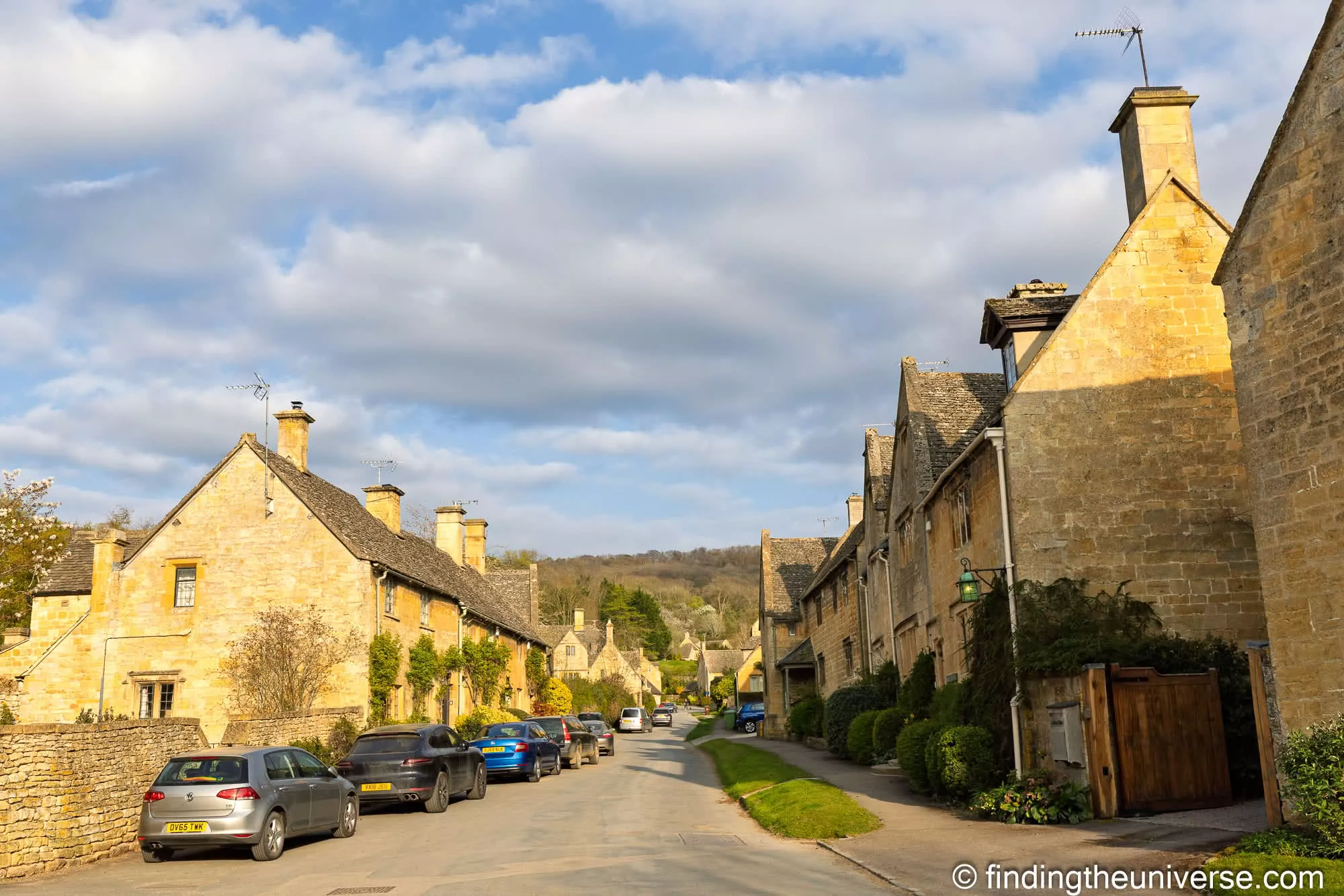
Start in Broadway at 9am, before the day visitors arrive. The High Street is a long, wide curve of golden stone under the escarpment, and at this hour you’ll share it with dog walkers and delivery vans rather than crowds. Ninety minutes covers the High Street, the green and a coffee.
Broadway Tower (Optional)
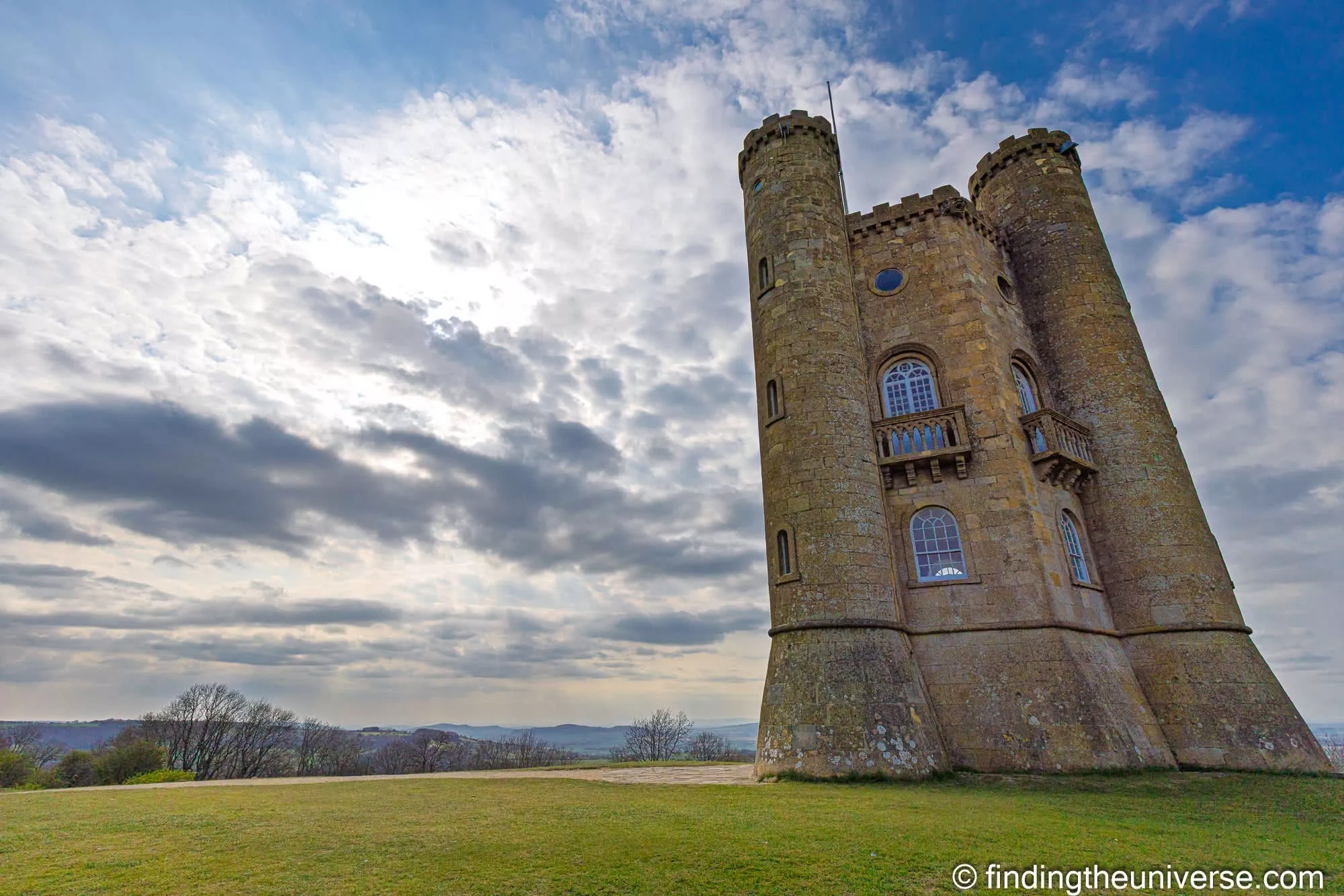
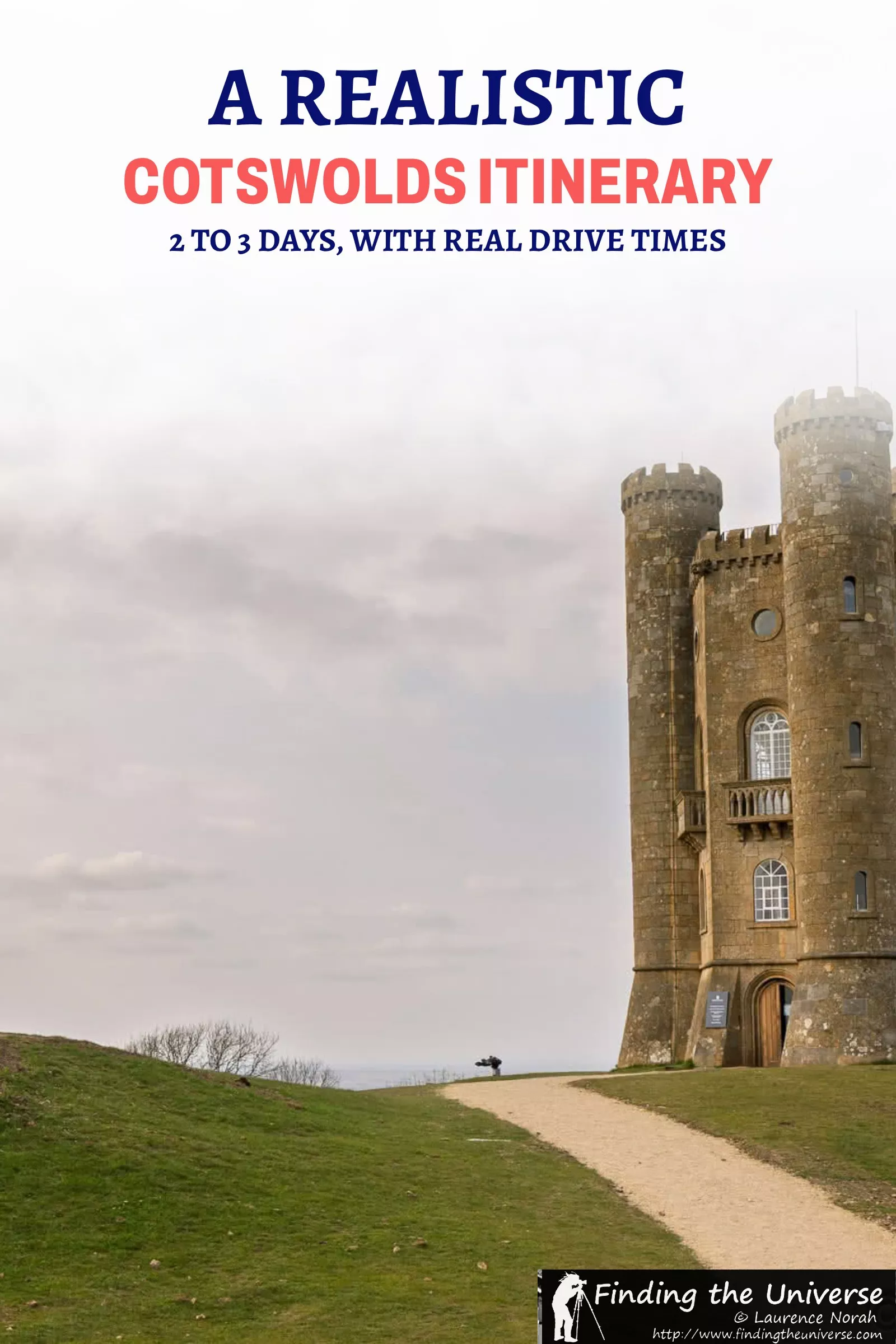
From the village it’s a short drive up onto the escarpment to Broadway Tower, an eighteenth century folly with one of the biggest views in England. On a clear day the vale below just keeps going.
There’s a charge for the tower and its museum, a cheaper grounds-only ticket, and a separately ticketed Cold War nuclear bunker which only runs tours on weekends and bank holidays from April to October, so a weekday visit means no bunker. Check current prices on their site before you go.
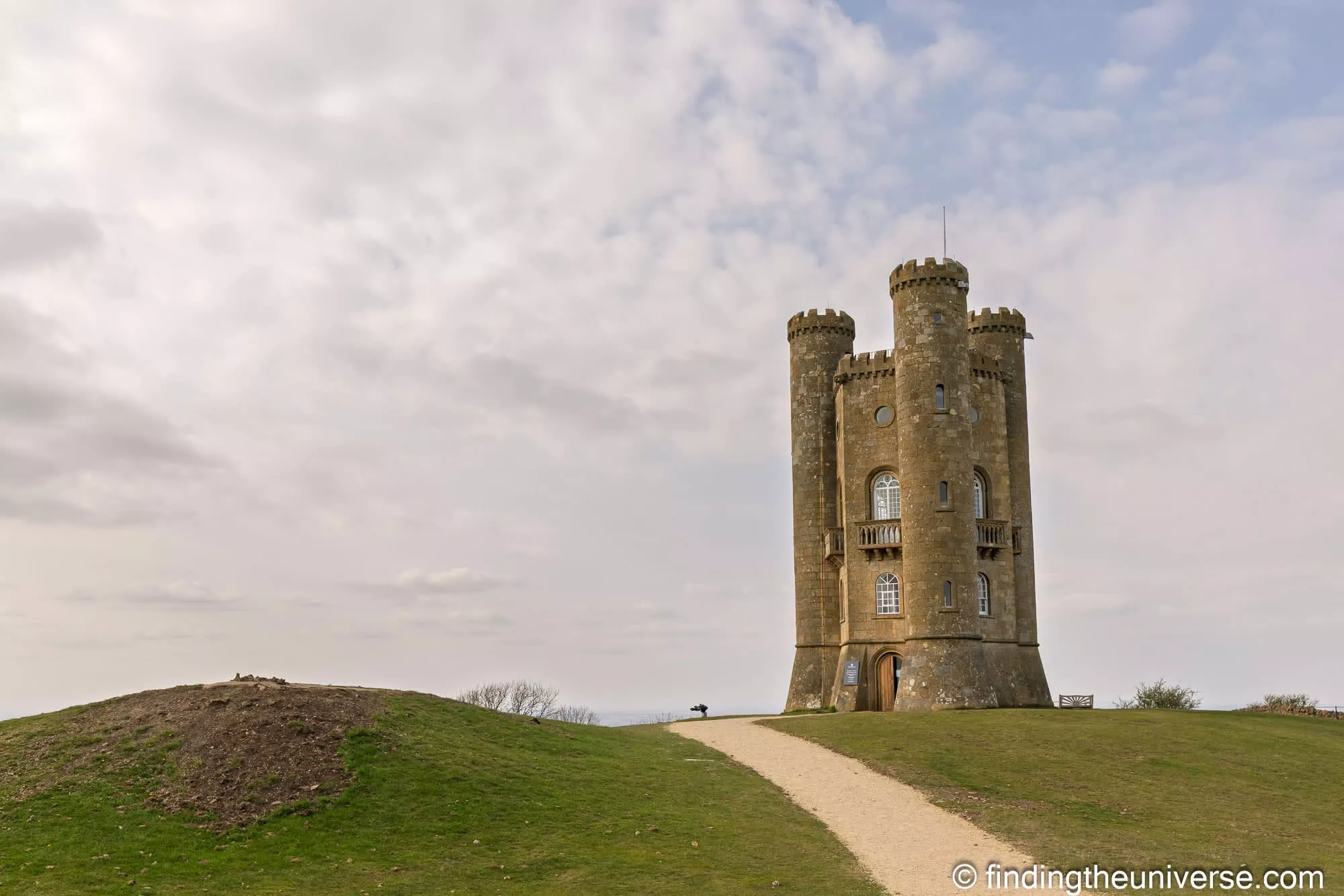
I’ve marked this stop optional because the view is the main attraction, and you get a pretty good version of it for free from the escarpment edge. If the weather is grim (this is England after all), skip it and give the time to Chipping Campden.
Stanton
Stanton is a walk down one immaculate street, and that’s the reason you’re visiting. There are no paid sights and barely any facilities. It looks like a village that has been left alone for three hundred years, and forty-five minutes is plenty to walk it. It’ll be one of the quietest stops of your trip.
Chipping Campden
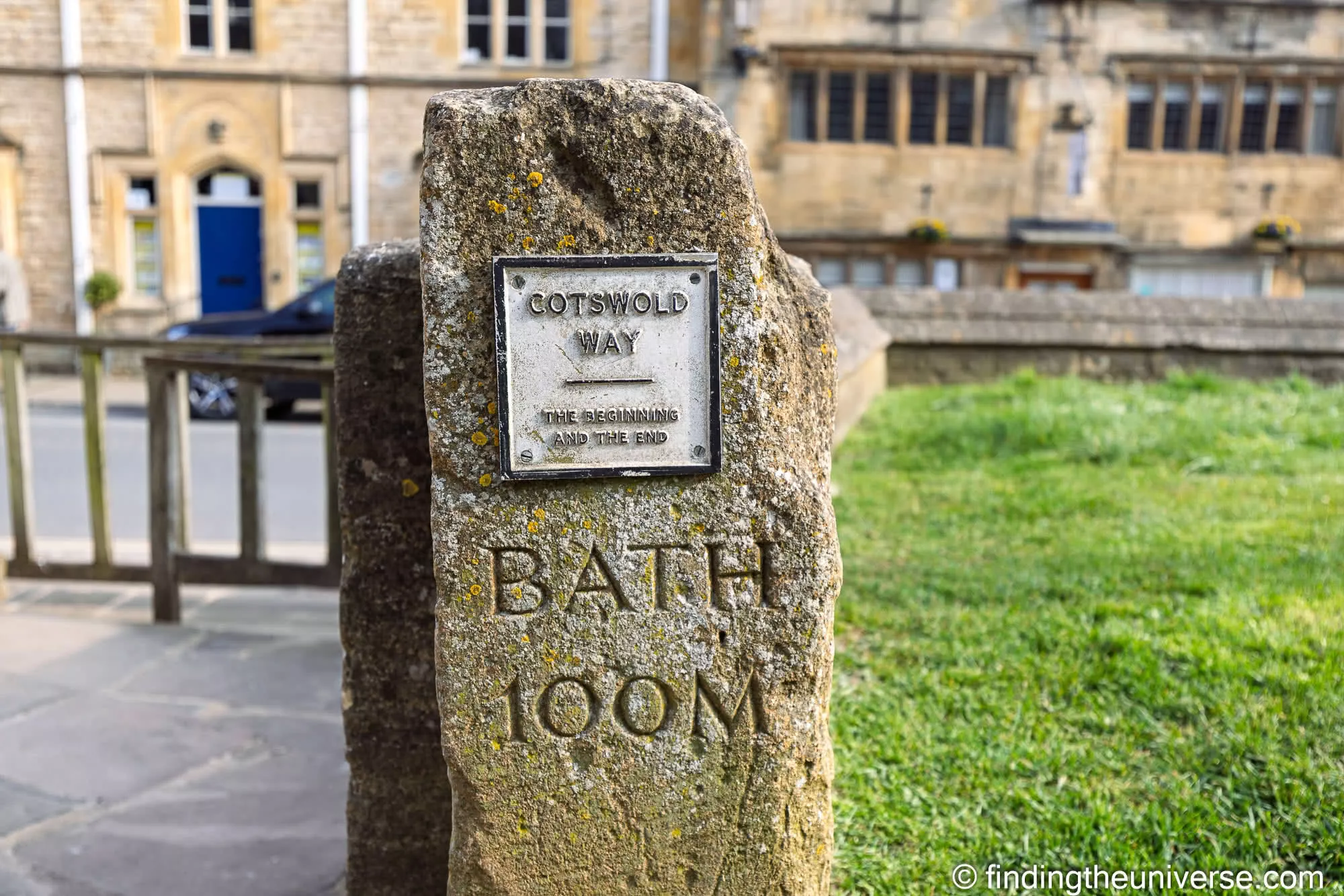
Chipping Campden is the lunch stop, and the most complete town of the day. The seventeenth century Market Hall sits in the middle of the High Street, the wool church at the end of it is one of the finest in the region, and the Cotswold Way starts here: 102 miles along the escarpment to Bath.
Its marker stone is at the top of the High Street, and it’s worth standing next to something with that kind of intent even if you’re only walking as far as lunch.
Give it two hours. It deserves the longest stop of the day. Besides, lunch should never be rushed.
Blockley
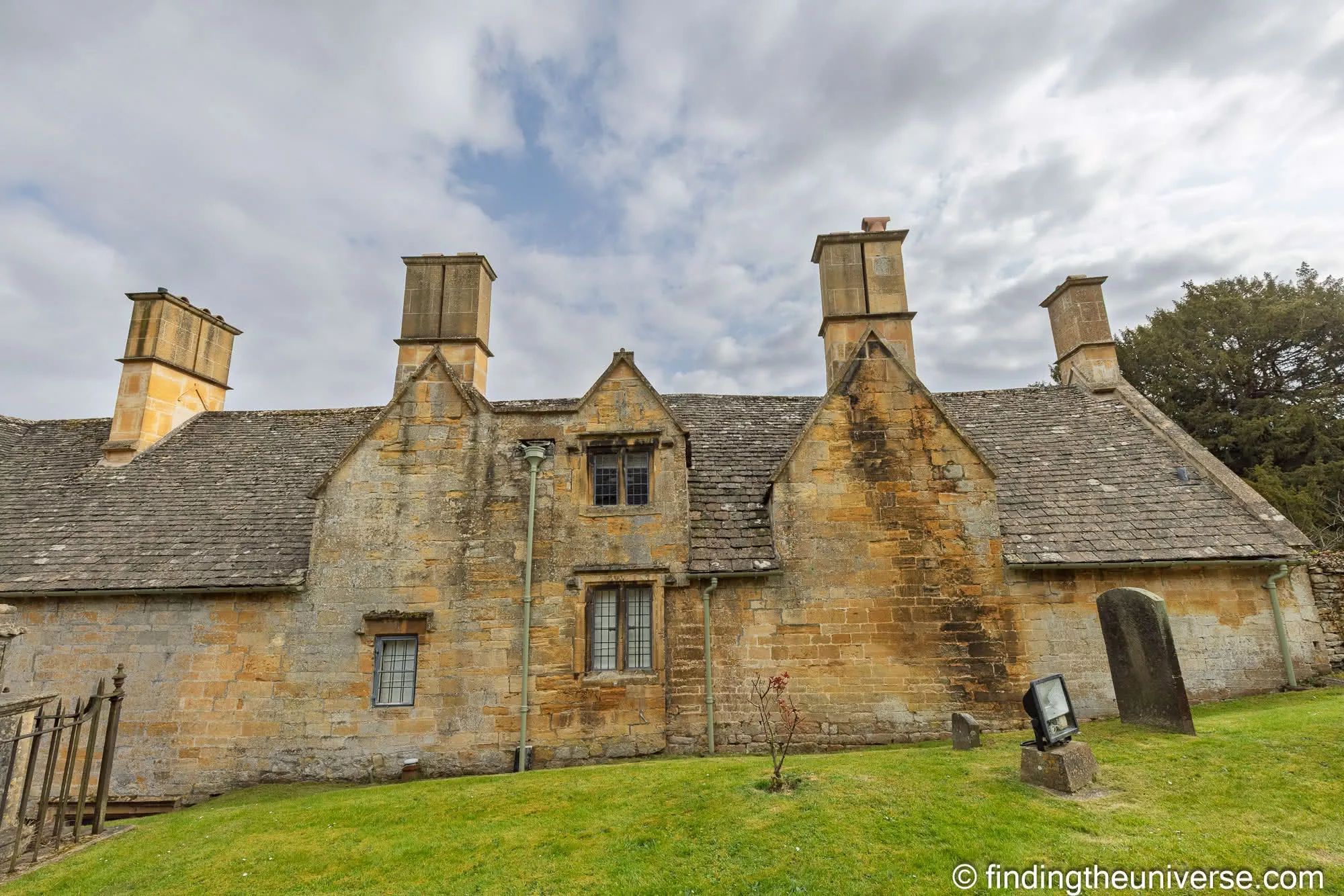
Blockley is the stop nobody else sends you to, which is exactly why I do. It’s a working village on a steep hillside, terraces of stone cottages stacked above a brook, with barely a gift shop in sight. Forty-five minutes on your way to your base finishes the day, and you’ll probably be the only visitor there.
Day 2: Bourton-on-the-Water and the Slaughters
Bourton-on-the-Water at 9am
The 9am start matters more today than on any other day of the trip. Bourton-on-the-Water is one of the most visited villages in the Cotswolds, and the tour coaches come up from London and arrive in the middle of the day, discouraging veritable hordes of tourists.
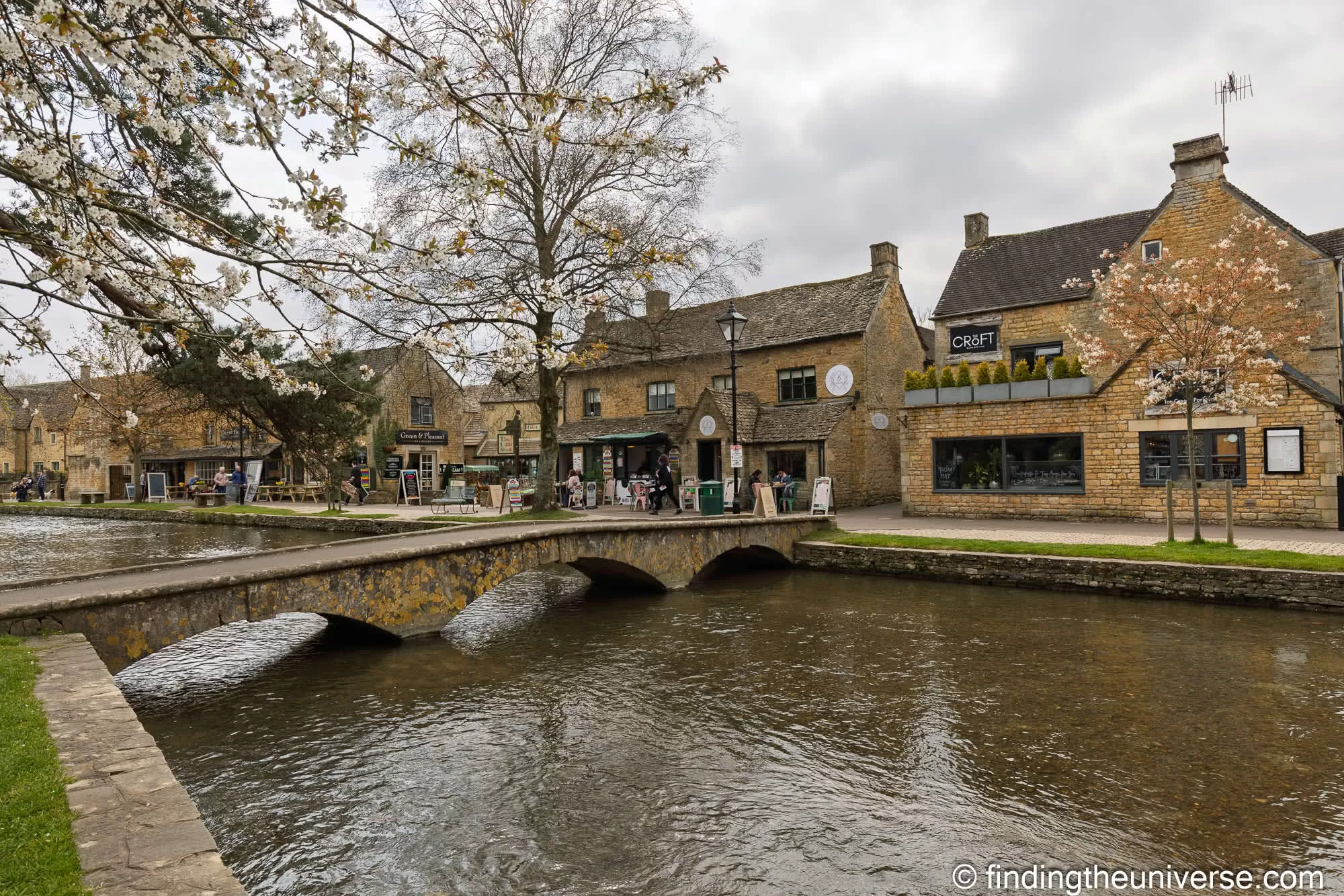
Arrive at 9am and you get the version of Bourton people come for: the River Windrush sliding under its low stone bridges, mist on the water if you’re lucky, and room to stand on the bridges taking photos. Build your morning here and be somewhere quieter by the time the crowds are at full strength. It’s a lovely village, and it’s at its best early.
Pick One of Bourton’s Three Attractions
Bourton has three family attractions within a few minutes’ walk of each other, and I’d pick one instead of trying to stack them. The prices are further apart than you’d expect, so decide before you’re standing at a ticket window with children:
- The Model Village, in the garden of The Old New Inn, is a one-ninth scale replica of Bourton itself, complete with a model of the model. Adults £4.95, ages 3 to 13 £4.00, card only. Open 10am to 5.30pm in summer, but only until 3.30pm in winter, which catches people out.
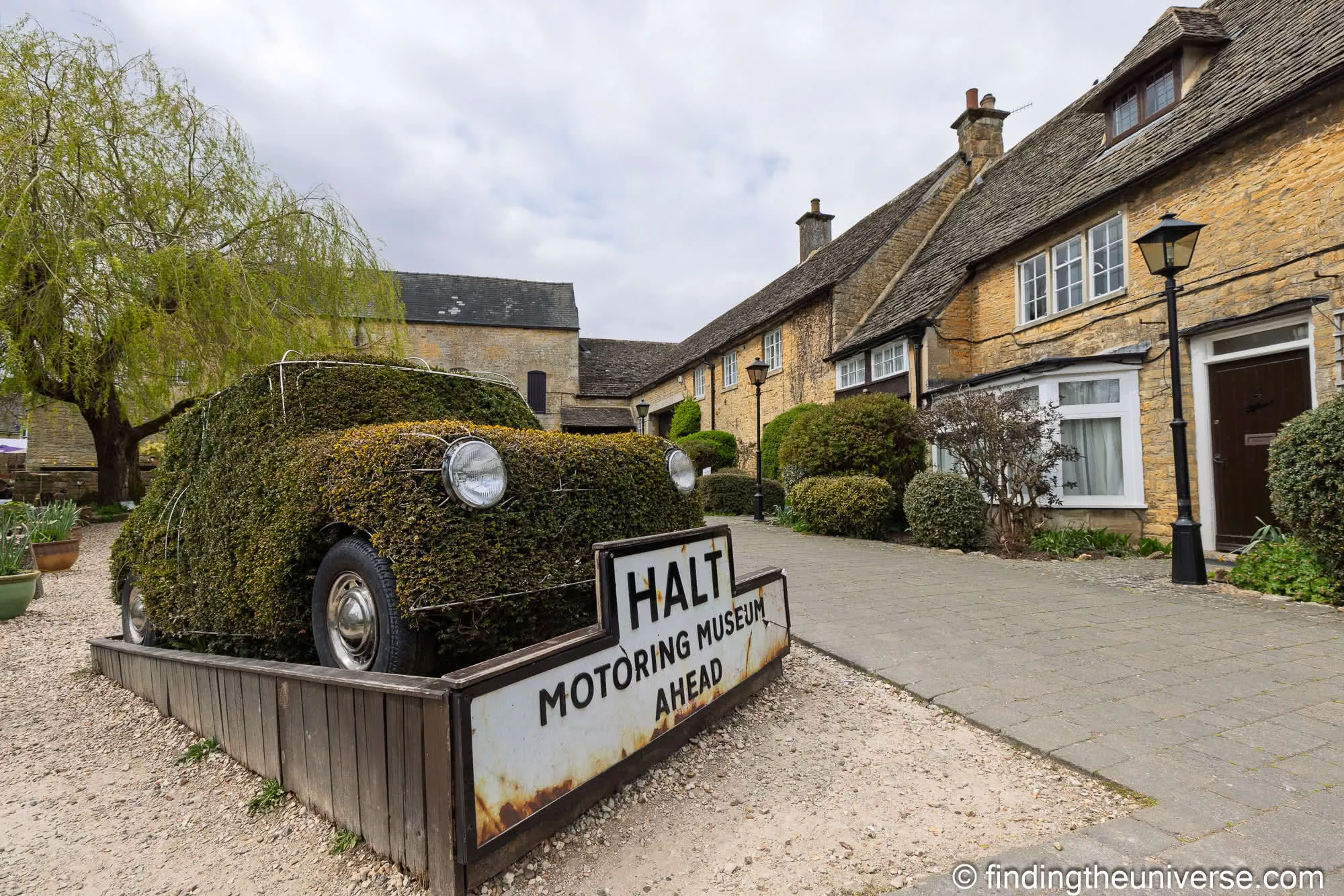
- The Cotswold Motoring Museum is £9.95 for adults, open daily 10am to 6pm with last admission at 5.15pm, and is the pick if anyone in the car likes vintage cars or grew up with Brum, who lives here.
- Birdland is £14.95 on the gate, or £13.95 online with a £1.50 booking fee on top, so booking ahead only saves you anything from two tickets up. Open 10am to 5pm all year with last entry at 4pm. Three times the price of the Model Village, so it wants to be a deliberate choice.
None of them is compulsory, of course. On a fine morning, the village and the river are the attraction.
Lower Slaughter
Lower Slaughter is ten minutes from Bourton and my favourite of the smaller villages on this route. The lane along the River Eye, past the Old Mill with its waterwheel and brick chimney, is about as good as Cotswold scenery gets, and it’s a fraction as busy as Bourton. Give it an hour.
Upper Slaughter
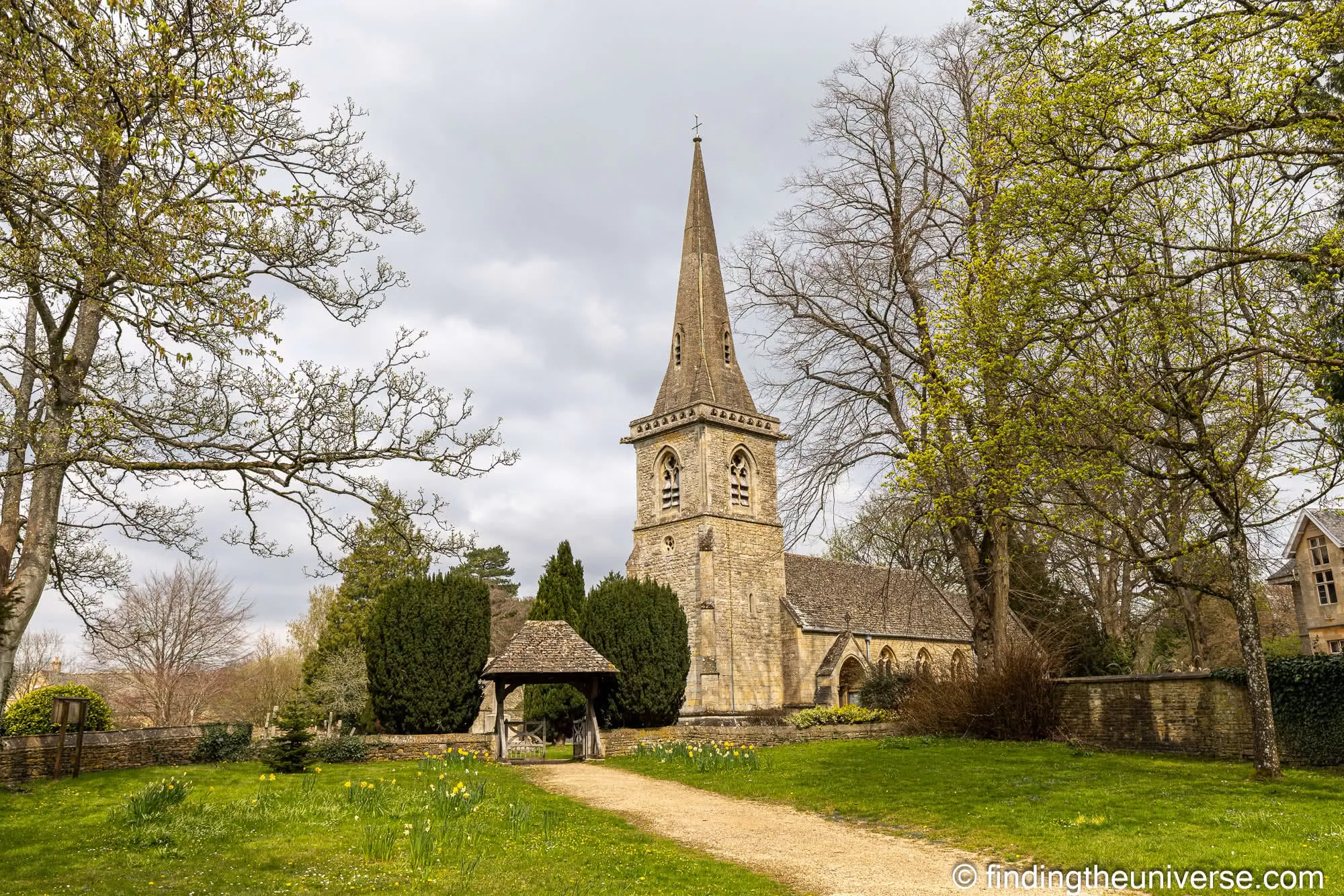
Upper Slaughter is a few minutes further on and the quiet half of the pair. There’s nothing you’re supposed to do here, which after a morning in Bourton is rather the appeal. Forty minutes, a wander, and on.
Stow-on-the-Wold
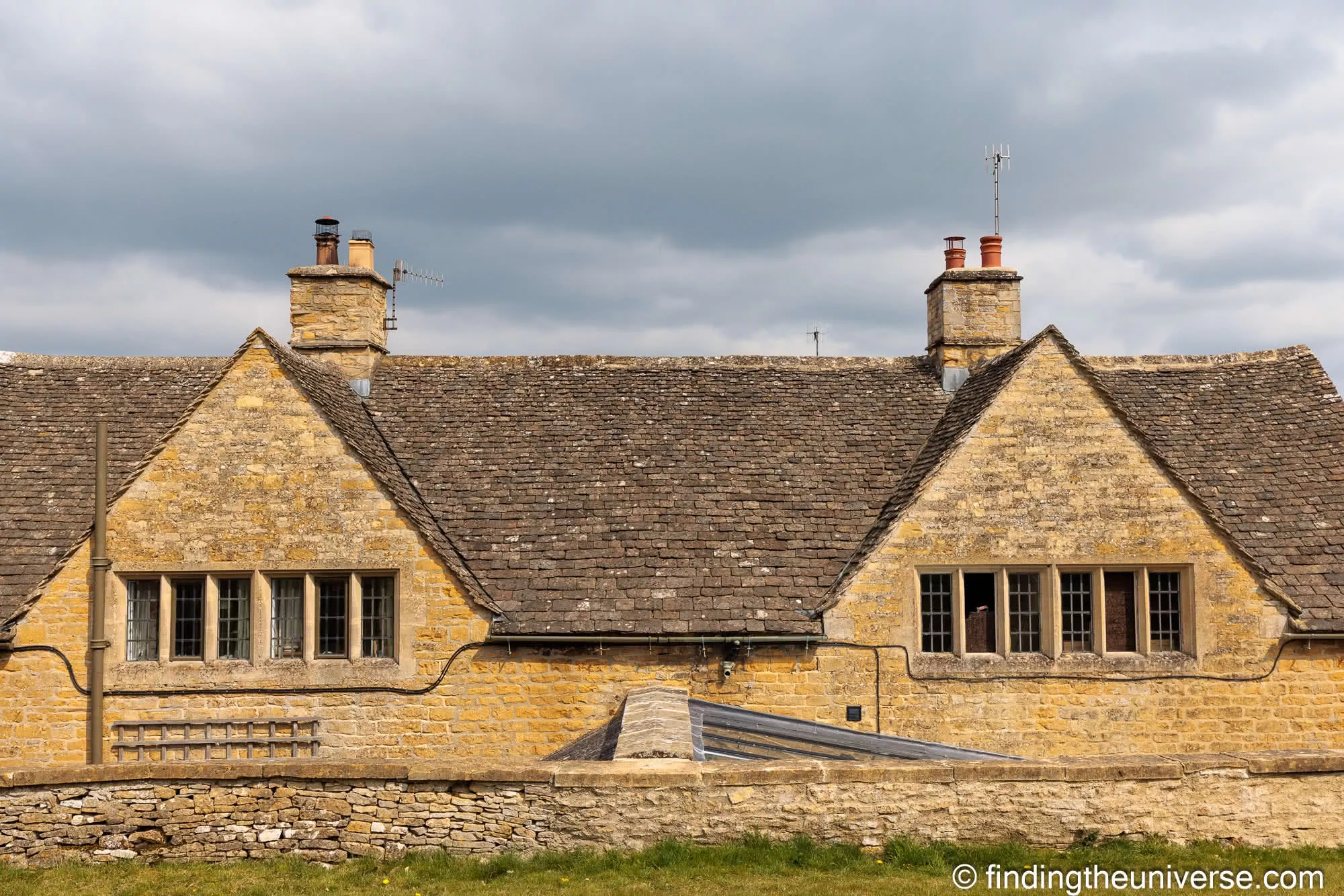
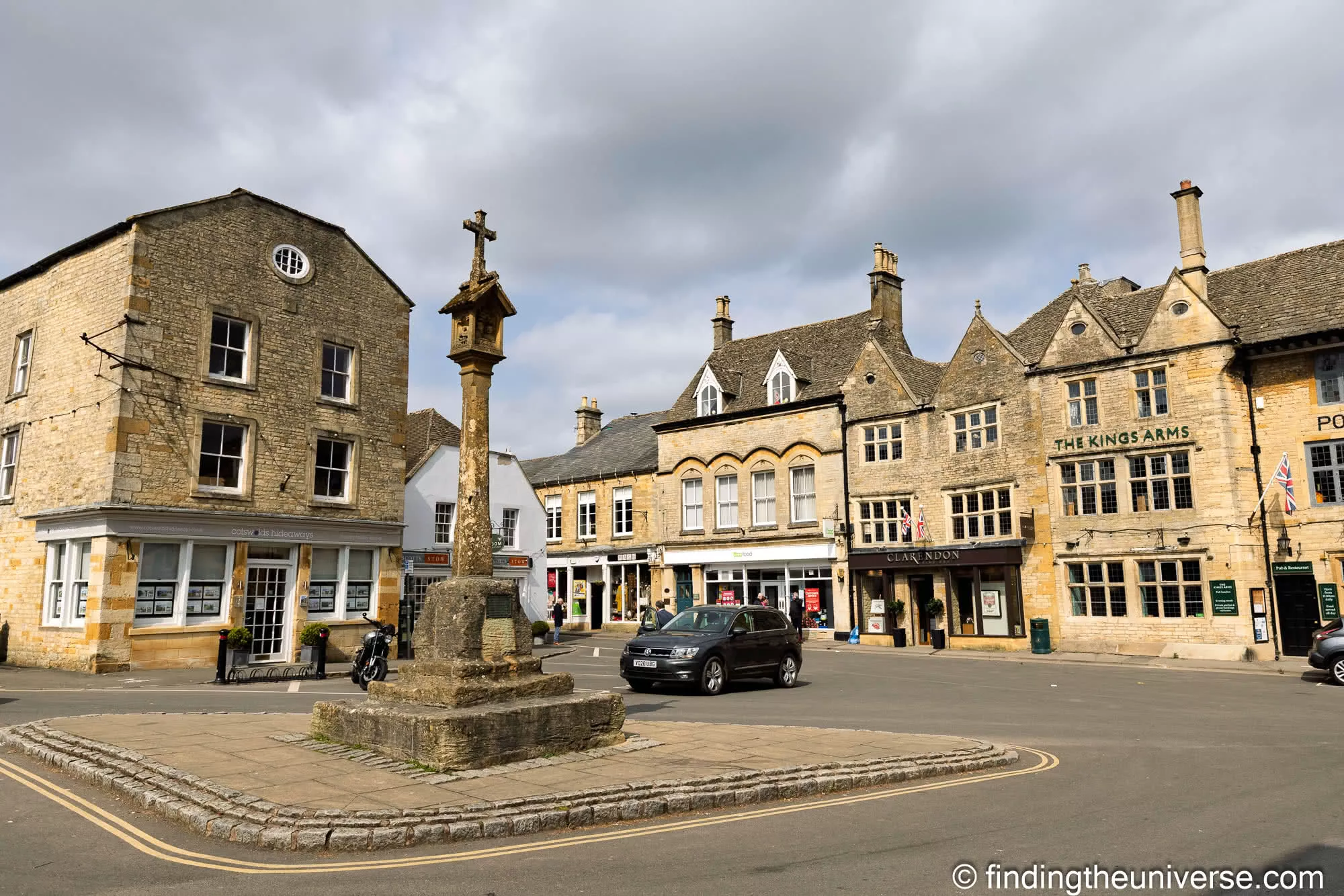
Finish the day in Stow-on-the-Wold, the highest town in the Cotswolds, with a late lunch and the whole afternoon. The market square is ringed with pubs, antiques shops and bookshops, and the north door of St Edward’s church, squeezed between two ancient yew trees, will be familiar from every social feed you’ve ever seen the Cotswolds on.
Stow doesn’t really have Bourton’s coach problem, so the afternoon timing works in your favour here.
Day 3: Burford, Bibury and the Southern Cotswolds
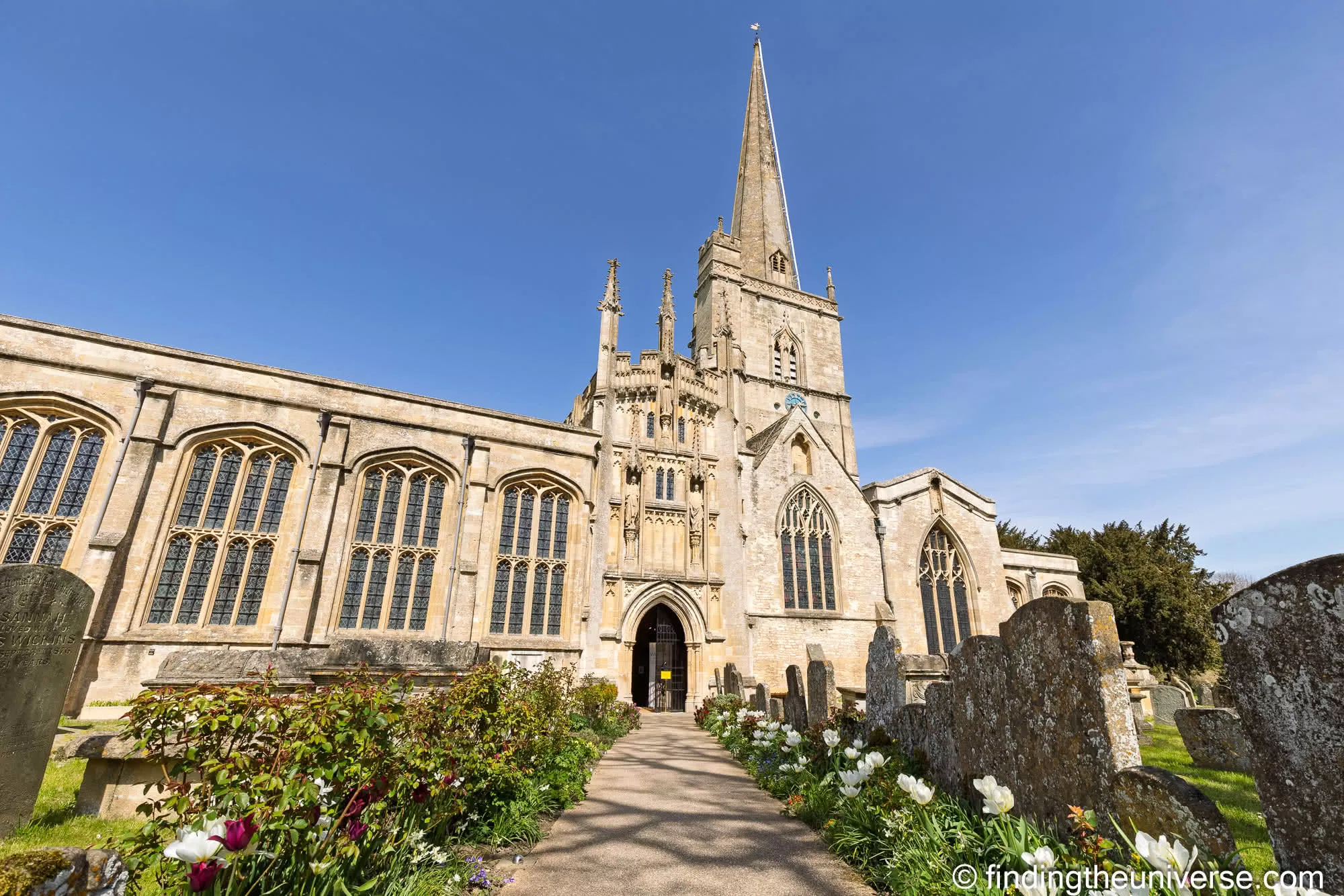
Burford
Start Day 3 in Burford, where the High Street pours downhill to a medieval bridge over the Windrush. It’s a living town rather than a showpiece, with butchers and bakers still trading between the gift shops.
Burford also has the best parking news of the trip: the Guildenford car park is free, as are all West Oxfordshire council car parks. The rules changed in February 2026 though: of its 161 standard spaces, the 97 at the front are limited to four hours, and only the 64 at the rear allow ten. For this itinerary’s 75 minute stop it makes no difference, but if you’re basing yourself here, park at the back.
Shilton
Shilton is four minutes off the Burford road, which is the only reason it’s on the route. A ford, a stone footbridge, a handful of cottages, and twenty minutes of your morning. We wouldn’t cross the county for it, and you don’t have to, because you’re driving past anyway.
Bibury
Bibury is the most photographed spot in the Cotswolds thanks to Arlington Row, a terrace of weavers’ cottages that has appeared on everything from passports to jigsaw puzzles. The row is free to see and takes ten minutes; the reason to stay ninety is the rest of the village, the trout farm and the walk along the Coln.
Two things to know. First, Arlington Row’s cottages are private homes with people living in them, so photograph from the path and keep voices down.
Second, parking is the worst on this route, and even the local tourist board calls Bibury’s parking “the most difficult of all”. There’s no council car park; the practical answer is the trout farm car park at £10, open 9am to 5.30pm with last entry at 4.45pm. That £10 is parking only: going in is another £9.50 an adult, so two of you park and visit for £29.
One more thing, and on this stop it matters as much as the parking. The 11.15am slot on the table works in spring and autumn. In July and August it does not, because this is the village the coaches come for, and by late morning you are photographing Arlington Row over other people’s shoulders. In high summer, start Day 3 here instead at 9am, when the trout farm car park opens, then pick up Burford and Shilton afterwards. Burford is only about fifteen minutes away, so doubling back costs you very little.
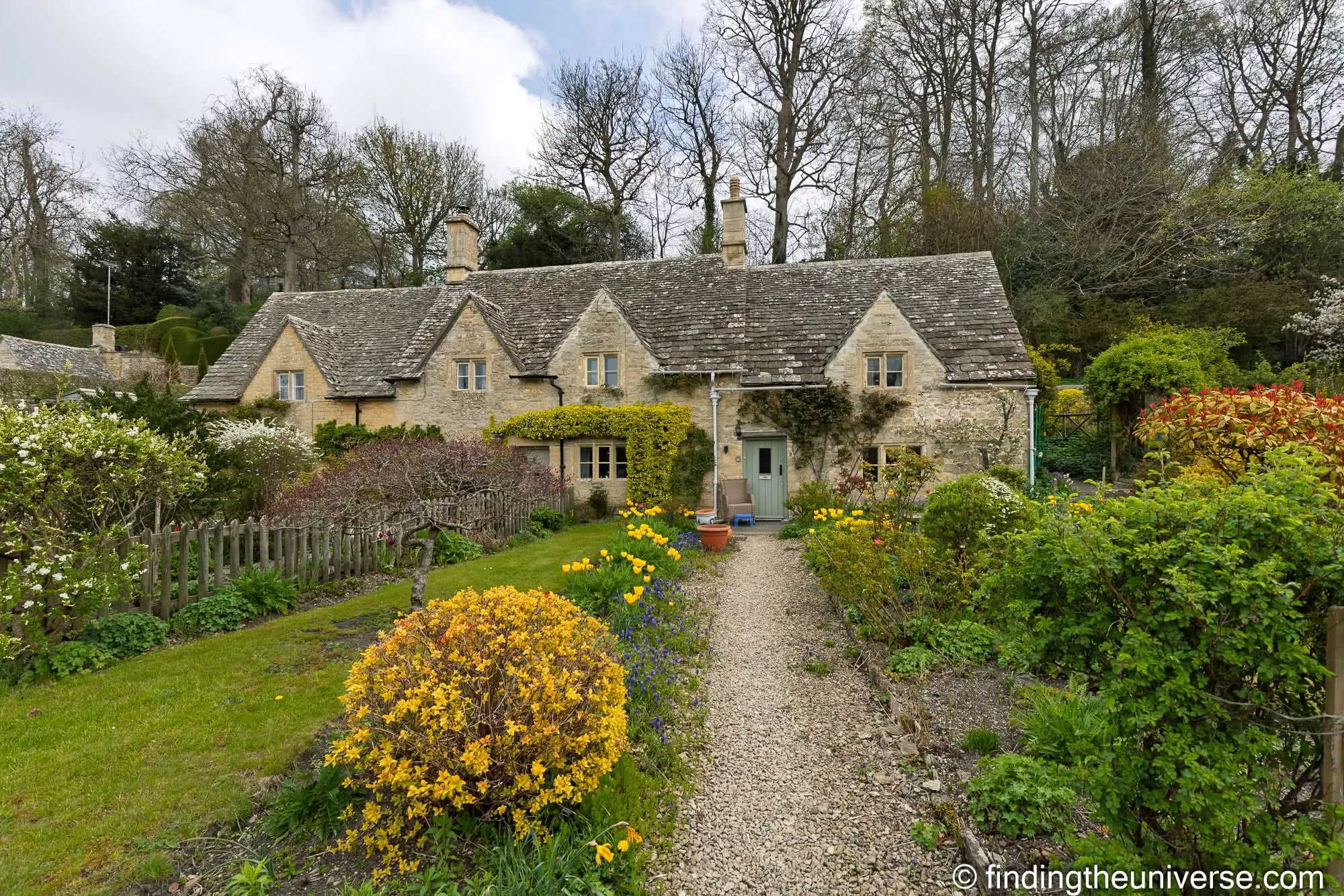
Cirencester
Cirencester is the biggest place on this route, a proper market town and the right spot for a sit-down lunch. The reason to allow two hours is the Corinium Museum, one of the best Roman collections outside London, at £8.70 for adults.
It’s open 10am to 4pm Monday to Saturday, but Sundays are different: 2pm to 4pm only, and the museum’s own advice is to allow at least an hour. If your Day 3 falls on a Sunday, the afternoon slot this itinerary gives Cirencester is the only one that works.
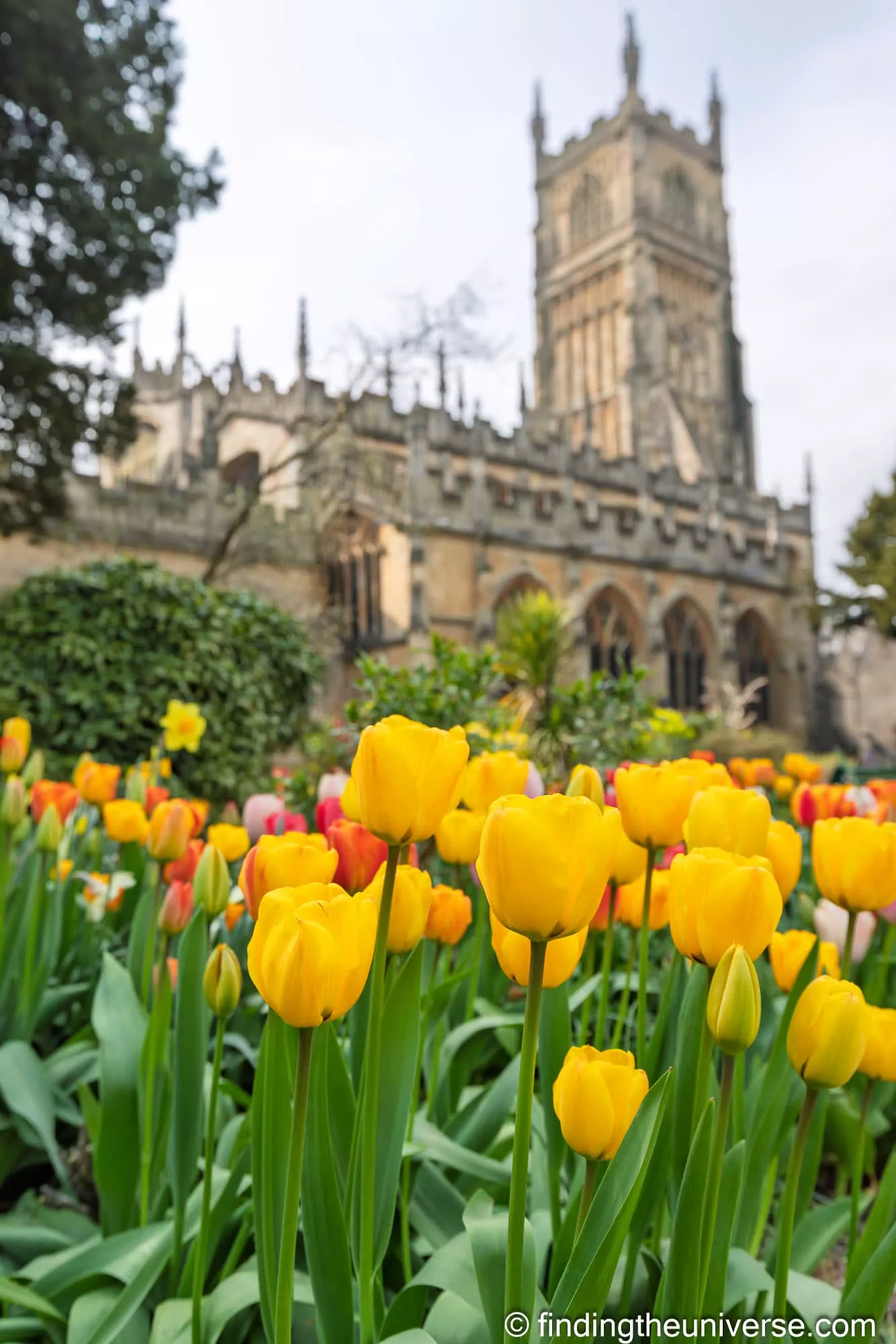
Painswick
End the trip in Painswick, my favourite village in the southern Cotswolds and one we’ve stayed overnight in. The churchyard, with its avenue of clipped yews, is free and open all the time, and the lanes around it are as good as anything in the north with a fraction of the visitors.
If you have the energy for one last paid sight, the Rococo Garden is the UK’s only complete surviving rococo garden, open 10am to 5pm with last entry at 4pm, so the 3.45pm arrival makes it with minutes to spare. Adult entry prices change through the year, so check their site before you go.
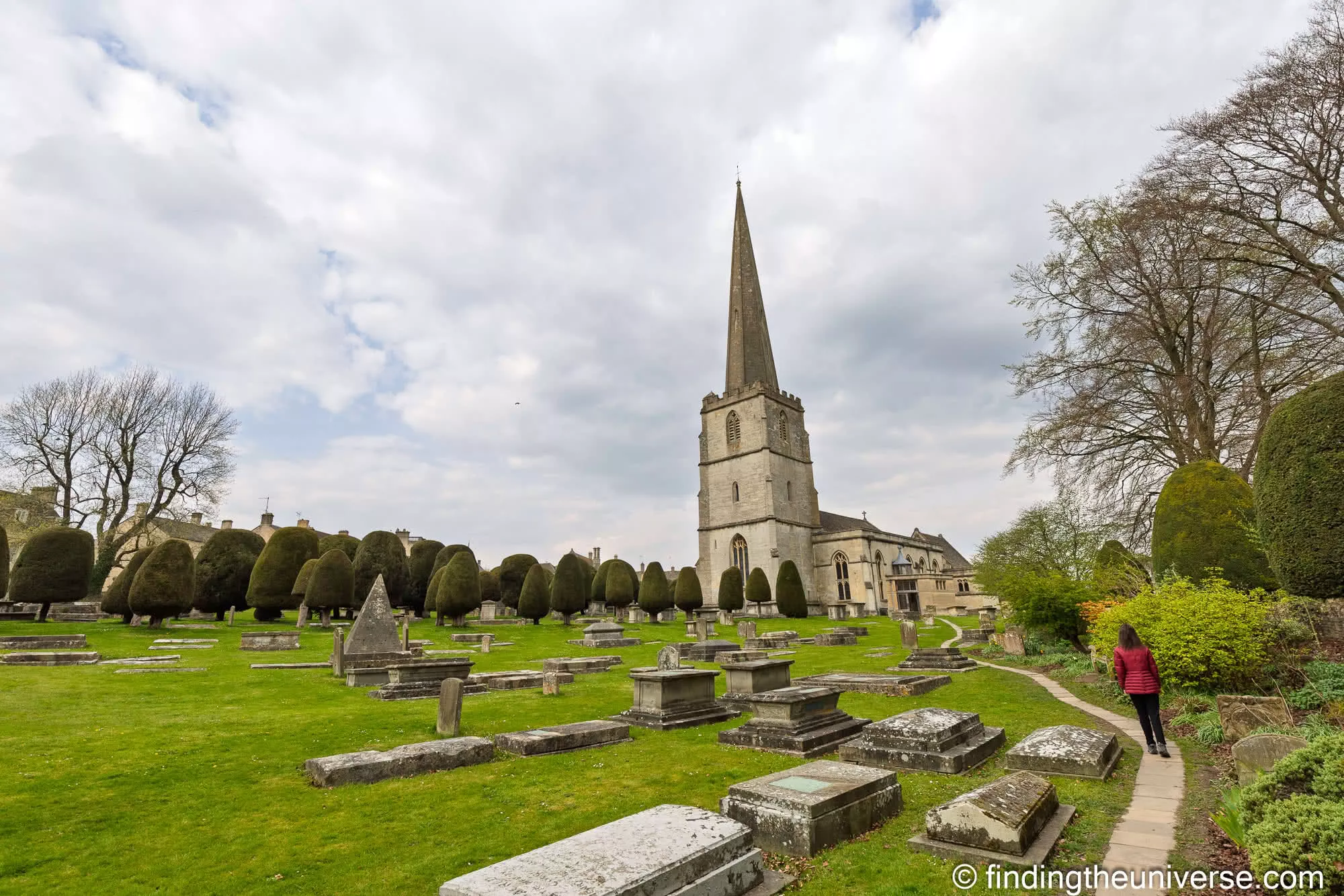
One parking note that matters here: Painswick is in Stroud district, and the PayByPhone account you will have used in Stow and Bourton does not work here. More on that below.
Where to Stay for This Itinerary
Stay in the north for this itinerary. Both full days start there, the region is a bit bigger than it looks on a postcard, and a base further south hands you a long drive before each day begins. Within the north, it comes down to budget and taste:
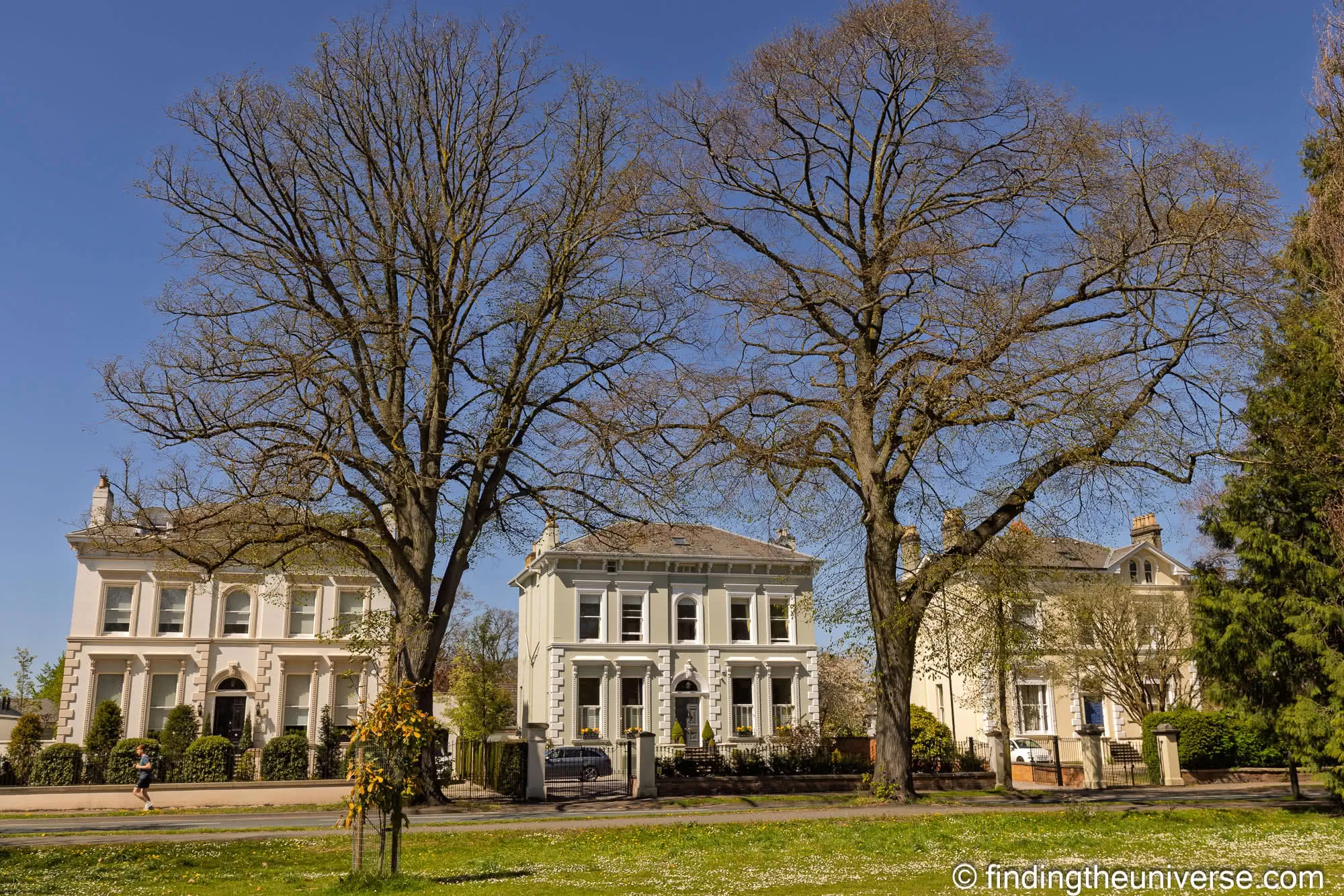
Best all-round: Stow-on-the-Wold or Moreton-in-Marsh. Both sit in the middle of the northern villages, so every stop on Days 1 and 2 is within about twenty minutes. Stow has the pubs and the atmosphere; Moreton has the railway station, with direct trains from London Paddington roughly hourly.
The splurge: Broadway or Chipping Campden. The two prettiest bases on the route, with the coaching inns to match. You’ll pay for the setting, and you’ll wake up on Day 1 already at your first stop.
On a budget: Cheltenham. It’s a Regency town on the western edge rather than a village, which is why the rooms cost less, and it has the biggest choice of accommodation anywhere near the route. Broadway is about half an hour away, so the itinerary still works with an earlier alarm.
If you’re leading with the three day version and the south appeals more, Painswick makes a good base, and I say that having stayed there. Just accept that Days 1 and 2 then start with a longer drive north, about 45 minutes to Broadway, which is why I’d only base south if the southern half is the part you care about most.
What Two Days Won’t Cover
An itinerary is mostly a list of things you’ve decided not to do. Here are those decisions.
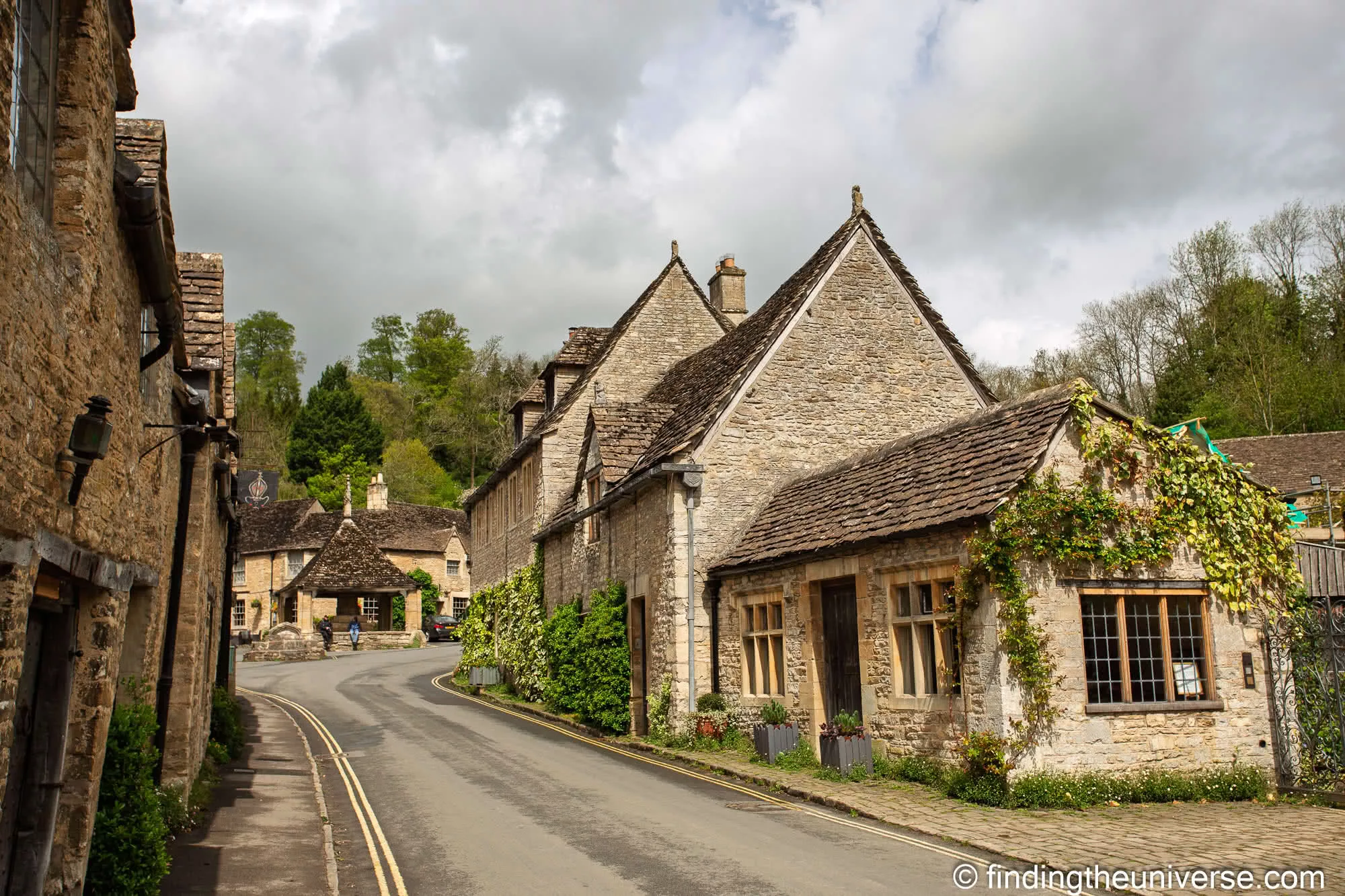
Castle Combe and Lacock are the omission that will raise eyebrows if you’ve read a few Cotswolds itineraries, so here’s the arithmetic. They’re 18 minutes from each other, but 39 to 47 minutes from Cirencester or Painswick, and only about half an hour from Bath. They sit at the region’s far southern tip and route off Bath, and bolting them onto this itinerary costs you around ninety minutes of driving to reach two villages a Bath visitor gets for half an hour.
Both are worth seeing. See them from Bath, where we’ve got both a 2 day Bath itinerary and a Bath day trip guide to build around.
Oxford, Stratford-upon-Avon and Blenheim Palace all sit just beyond the edges of the region, and each wants the better part of a day of its own: Oxford is 35 minutes from Burford, Stratford just over 20 from Chipping Campden, and Blenheim features in our guide to England’s best stately homes. Tack any of them onto the start or end of your trip rather than carving up a Cotswolds day.
Then there’s Bath. People often assume it’s in the Cotswolds; it actually sits just off the southern edge, and it’s very much its own trip.
And if you’re working from London without a car, the trip looks different: see our guide to day trips from London, or the Bath, Stonehenge and Cotswolds day tour we’ve taken ourselves.
Driving and Parking in the Cotswolds
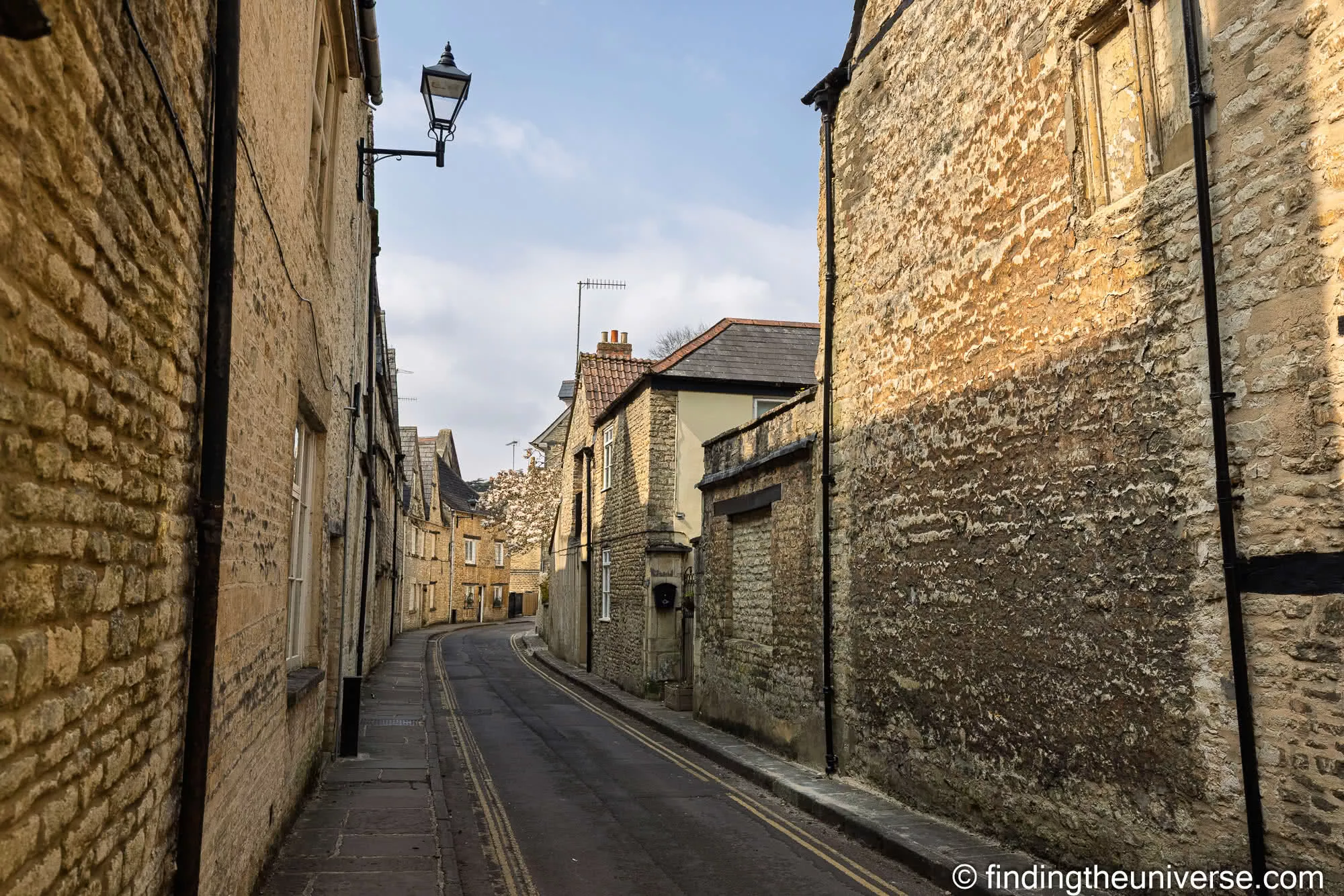
The main roads between the towns, the A429, A44, A40 and A419, are ordinary two-lane roads and easy driving. The connecting lanes between villages are a different matter: single track in places, with high hedges or dry-stone walls right at the road edge, blind bends, and passing places that come with an expectation.
If you meet a tractor, you reverse. The tractor will not be reversing for you. None of it is really difficult at Cotswold speeds, so take it easy, use the passing places, and treat the drive times in this article as what they are: allowances, not challenges.
If you’re visiting from the US, you’ll be on the left in lanes narrower than you’re used to, and rental cars here are manual unless you ask. Book an automatic well ahead (we use Discover Cars to compare rental prices, and our UK driving tips cover the rest).
Parking is paid in most of the villages on this route, and in Cotswold district it has gone cashless. That district covers most of this route including Stow, Bourton, Moreton and Chipping Campden, and the app is PayByPhone, and contactless card payment works at the machines in every council car park. Cash does not: the council no longer accepts it anywhere, though there’s a phone payment line (0330 400 7275) if you have neither app nor card to hand.
There are three exceptions to that district rule. Burford is West Oxfordshire, where council parking is free. Bibury has no council car park at all (the trout farm’s £10 is the answer). And Painswick is Stroud district, which uses a different app entirely, MiPermit, so the PayByPhone account you set up in Stow won’t work there. Day 1 is gentler than the rest. Stanton and Blockley are free, though both are small, and Broadway’s machines take cash as well as card.
Since the apps matter, your phone needs data. If you’re visiting from abroad, an eSIM sorts this cheaply; we use and recommend Airalo.
When to Go, and When Things Close
The Cotswolds work year round, but the itinerary flexes with the season, and a couple of closures really do change the plan.
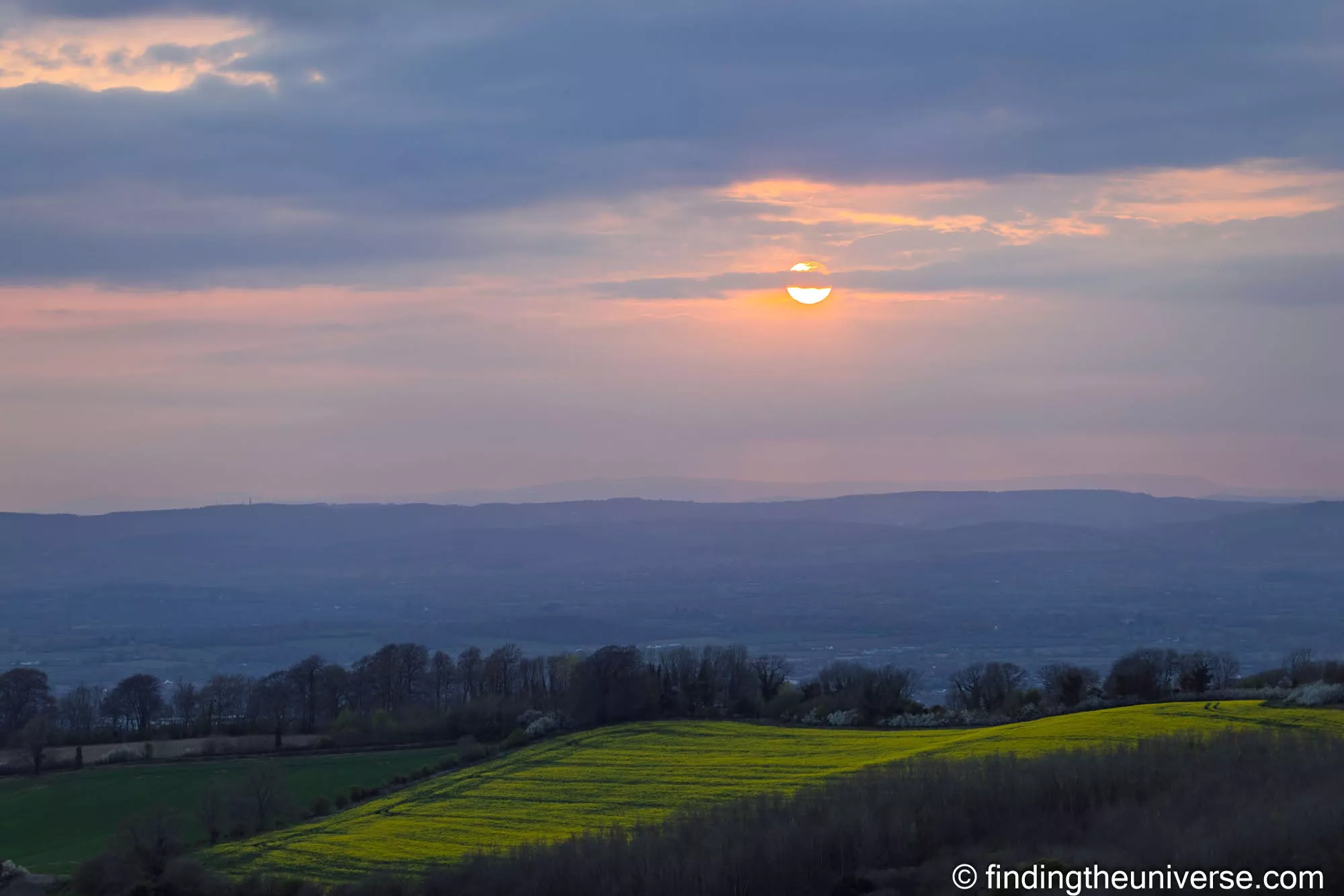
Spring is my pick, and most of the photos in this article are from spring visits: tulips against stone walls, blossom over the Windrush, and villages that haven’t hit peak season yet.
Summer brings the crowds, and the timing advice in this article stops being a nice-to-have. The coaches tend to come from London and land at Bourton and the famous villages in the middle of the day, so the pattern that keeps your trip pleasant is simple, with famous villages first thing and quieter ones after 11am. In July and August that applies to Bibury above all, which is why the high summer version of Day 3 starts there rather than at Burford.
Winter is quieter and can be beautiful, but it squeezes the plan in specific places:
- Day 3 is the tight one. With the Rococo Garden’s last entry at 4pm and the Corinium Museum closing at 4pm, you can’t fit both after a Bibury morning in winter light. Drop one, or split the southern day across two shorter ones.
- In Bourton, the Model Village closes at 3.30pm in winter, a full two hours earlier than in summer, while Birdland holds its 10am to 5pm hours all year. If you’re visiting the attractions in winter, do them in the morning as this itinerary does and you’re fine.
- Broadway Tower’s bunker tours stop entirely from November to March. The tower museum stays open, though it closes at 4pm on weekdays whatever the season.
And one quirk of the calendar rather than the season: if your Cirencester visit falls on a Sunday, the Corinium Museum doesn’t open until 2pm. This itinerary already puts Cirencester in the afternoon, so keep it there.
Where This Plan Can Come Unstuck
A few things I’d flag before you drive off with the table above.
The first is squeezing day three into day two. Those southern villages look close on a map, and they aren’t; the map doesn’t show the lanes. If you have two days, the north is the trip.
Arriving at Bourton at 11am is the other big one. It turns the best stop of Day 2 into the most crowded hour of your holiday, and if your morning runs late, the fix is to swap the day’s order and do the Slaughters first. Bibury has the same problem in high summer, and the same fix, which is to start Day 3 there rather than at Burford.
And then parking. People assume they’ll be able to pay somehow, with a card, a coin, or an app downloaded at the machine. Cotswold district takes no cash at all, and Painswick wants a different app. Sort the parking apps the evening you arrive, over the hotel wifi, rather than in a lane with one bar of signal.
Lastly, check the day of the week against the closures above before you fix the order of your days. A Sunday Day 3 works; a Sunday Day 3 that puts Cirencester in the morning doesn’t.
If You’d Rather Not Drive
This itinerary assumes a car, and a car is the easiest way to do the Cotswolds, but it’s not the only way. Rabbie’s run small-group Cotswolds tours from within the region, there’s a good spread of local tours and experiences on GetYourGuide, and Moreton-in-Marsh’s direct trains from London Paddington make a car-free taster entirely possible, though the Cotswold Line closes for engineering work a few weekends a year, so check before you build a trip around it. Our public transport UK itinerary shows how that style of trip fits together.
Frequently Asked Questions
How Many Days Do You Need in the Cotswolds?
Two full days covers the northern Cotswolds well: Broadway, Chipping Campden, Stanton and Blockley on one day, Bourton-on-the-Water, the Slaughters and Stow-on-the-Wold on the other.
A third day adds the southern half, with Burford, Bibury, Cirencester and Painswick. I’d resist compressing all of that into two days; you’d spend the saved day in the car.
What Is the Best Way to See the Cotswolds?
By car, following a route that groups villages by area. The northern villages sit six to twenty minutes apart, so a day holds three or four proper stops plus a short one like Shilton, without feeling rushed.
The one adjustment that matters more than any route choice is timing: visit the famous villages, especially Bourton-on-the-Water, at 9am before the tour coaches arrive around midday.
Where Should You Stay for a Cotswolds Itinerary?
For a two or three day trip, base in the north: Stow-on-the-Wold or Moreton-in-Marsh put every Day 1 and Day 2 stop within about twenty minutes, Broadway and Chipping Campden are prettier and pricier, and Cheltenham is the budget pick with the widest choice of rooms.
Painswick makes a good base too, but it suits a trip led by the southern villages; it’s about 45 minutes from the Day 1 stops.
Can You Visit the Cotswolds Without a Car?
Yes, with planning. Moreton-in-Marsh has direct trains from London Paddington roughly hourly, and small-group tours run from within the region, which beats trying to string villages together by bus on a short trip. If you’d rather do the whole trip carless, our Cotswolds without a car guide has the village-by-village reachability table and the real Sunday limits.
A car remains the easiest option for this specific itinerary, since several stops have no useful public transport link at all.
Is Bath in the Cotswolds?
No, though it’s an easy mistake to make. Bath sits just off the southern edge of the region (the Cotswold Way footpath actually ends there), and it deserves its own trip rather than a slot in a Cotswolds day.
How Far Are the Cotswolds from London?
The northern villages are a little over two hours’ drive from central London without traffic, or roughly an hourly direct train from Paddington to Moreton-in-Marsh. From Oxford, Burford is about 35 minutes’ drive, which is why the Cotswolds pair so well with an Oxford stop on a longer trip.
Further Reading
If you found this itinerary useful, these guides cover the places around it:
- The Best Cotswold Villages: our village-by-village verdicts, including the ones this route skips
- 2 Days in Bath: the natural next stop, and the right base for Castle Combe and Lacock
- 2 Days in Oxford: 35 minutes from Burford
- A One Week UK Road Trip Itinerary: where a Cotswolds leg fits in a bigger trip
- Unmissable English Cities: for the rest of the trip planning
And if you like a paper guidebook in the glovebox, the Rick Steves England guide covers the Cotswolds well and is the one we’d take.

Got a question about making this itinerary work for your trip, or a Cotswolds village you think we’ve underrated? Pop it in the comments below, we read them all!
Leave a Reply