
I lived in Bath for four years, in Weston, a couple of miles out from the centre, and in all that time I never quite got over walking into the city on a clear morning and seeing the whole honey-coloured place laid out below me. Most people give Bath a day on the way to somewhere else, and there is a good deal more to see and do in Bath than one day allows. That’s a mistake. Two days is plenty: enough to do the Roman Baths and the Georgian set pieces properly, walk the hills the way a local would, soak in the spa at dusk, and still have an evening or two to eat well. This is the weekend I built for friends who came to stay, refined over five years of doing it.
Below you’ll find a realistic two-day route that actually works on foot, plus the things the guidebooks bury: how to get here, where to park, which neighbourhood to sleep in, and how to use Bath as a base for the Cotswolds and Stonehenge if you have a third day. I’ve flagged what to book ahead, what to skip, and the one walk that nearly everyone I brought here named as their favourite thing in the city.
Table of Contents:
Bath in a Weekend: The Quick Version
If you only read one paragraph: spend Day 1 on the Roman and medieval core around the Abbey and the Roman Baths, all of it walkable in a tight loop. Spend Day 2 up the hill in Georgian Bath, the Royal Crescent and the Circus, with the afternoon for the Bath Skyline walk and the evening in the rooftop pool at Thermae Bath Spa. You don’t need a car. You do need to pre-book the Roman Baths and Thermae, and ideally a table at Sally Lunn’s or the Pump Room.
| Question | Short answer |
|---|---|
| How long do you need? | Two full days for the city. Add a third for the Cotswolds or Stonehenge. |
| Getting there | Train from London Paddington to Bath Spa, about 1 hour 20 minutes, roughly every half hour. |
| Car? | No. The centre is compact and walkable. Use Park and Ride if you drive in. |
| Book ahead | Roman Baths, Thermae Bath Spa, No.1 Royal Crescent, dinner on the Saturday. |
| Day 1 | Roman Baths, Bath Abbey, Pulteney Bridge, lunch at Sally Lunn’s or the Pump Room. |
| Day 2 | Royal Crescent and the Circus, the Bath Skyline walk, Thermae spa at dusk. |
| Best time to go | Late spring or early autumn for the light and smaller crowds. |
Getting to Bath and Getting Around
I’m putting this first because it’s the part you most need to sort out, and it’s what the questions I get are actually about. Bath is one of the easiest cities in England to reach without a car, and once you’re here a car is more of a liability than a help.
From London and Beyond
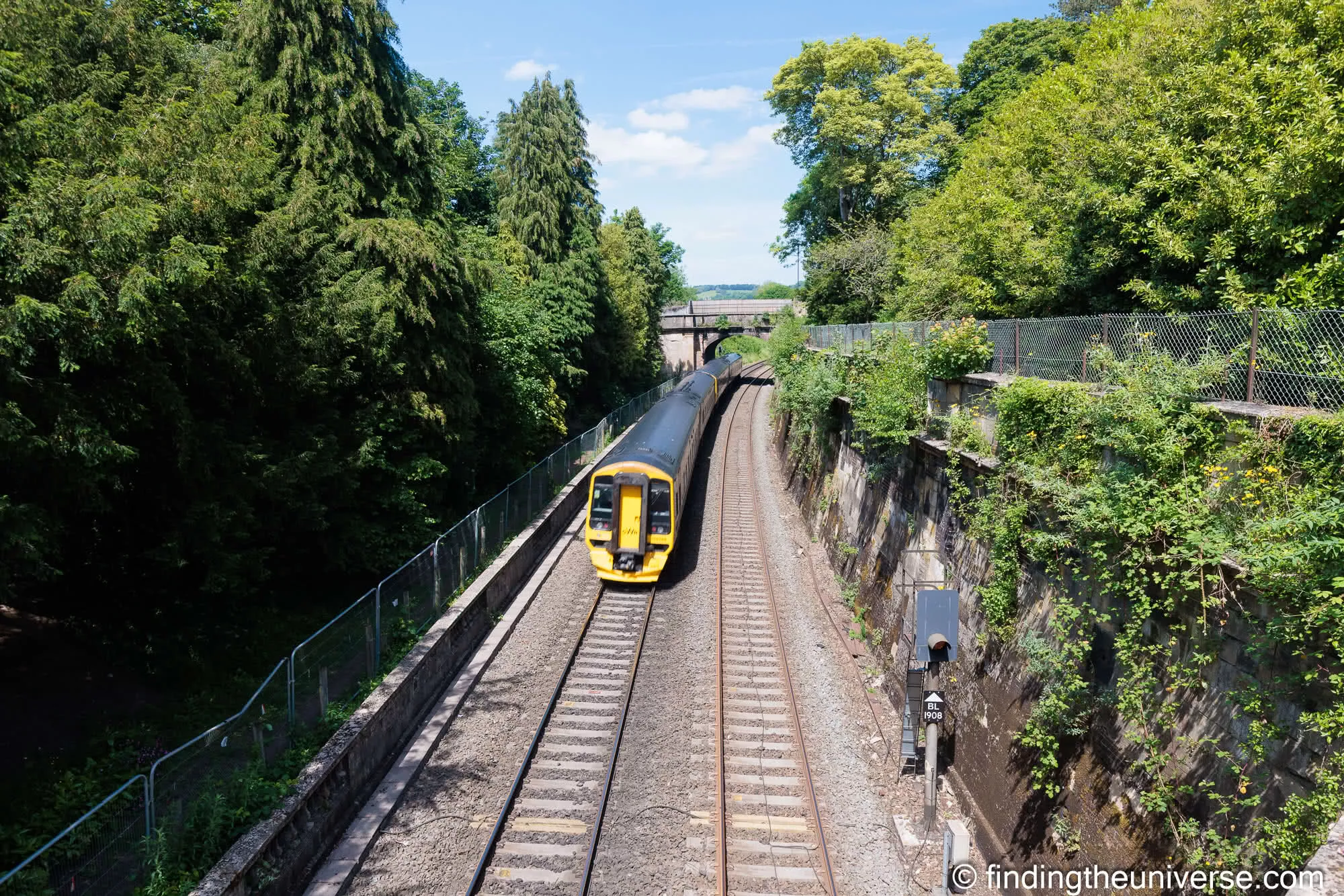
The train is the obvious choice. Direct services run from London Paddington to Bath Spa in about 1 hour 20 minutes, roughly every half hour through the day, calling at Reading, Didcot, Swindon and Chippenham on the way. Book ahead through Trainline or direct with GWR and the advance fares are a fraction of the walk-up price. Bath Spa station sits right at the edge of the centre, so you step off the train and you’re a five-minute walk from the Abbey. There’s no faff, no transfer, no airport.
If you’re flying in, Bristol Airport is the nearest, about an hour away by the Air Decker bus, or a little quicker by taxi. Driving from London takes around two and a half hours for roughly 115 miles, mostly on the M4, and then you hit the part nobody enjoys, which is parking.
Parking and Park and Ride
Here’s what five years taught me: don’t try to park in central Bath. The central car parks are small, expensive and often full, and the streets around the Georgian terraces are residents-only or metered. If you arrive by car, use one of the three Park and Ride sites on the edge of the city. Lansdown covers you from the north and the M4, Newbridge from the west, and Odd Down from the south. Each one is a ten-minute bus ride into the centre, with buses every fifteen minutes or so, and it costs a fraction of a day in a city car park. Park, ride, forget the car until you leave.
Getting Around Once You Are Here
You walk. That’s the whole answer. Bath is small and built for it, and almost everything in this itinerary sits within a fifteen-minute stroll of everything else.
The one thing to know is that Bath is built on hills. The river and the Abbey sit low, and the grand Georgian streets, the Circus and the Royal Crescent, are a steady uphill climb from there. It’s not far, maybe ten minutes, but if mobility is a concern, plan the day so you go up once rather than yo-yoing. Wear shoes you can walk in. The pavements are old and the cobbles near the Abbey will punish heels.
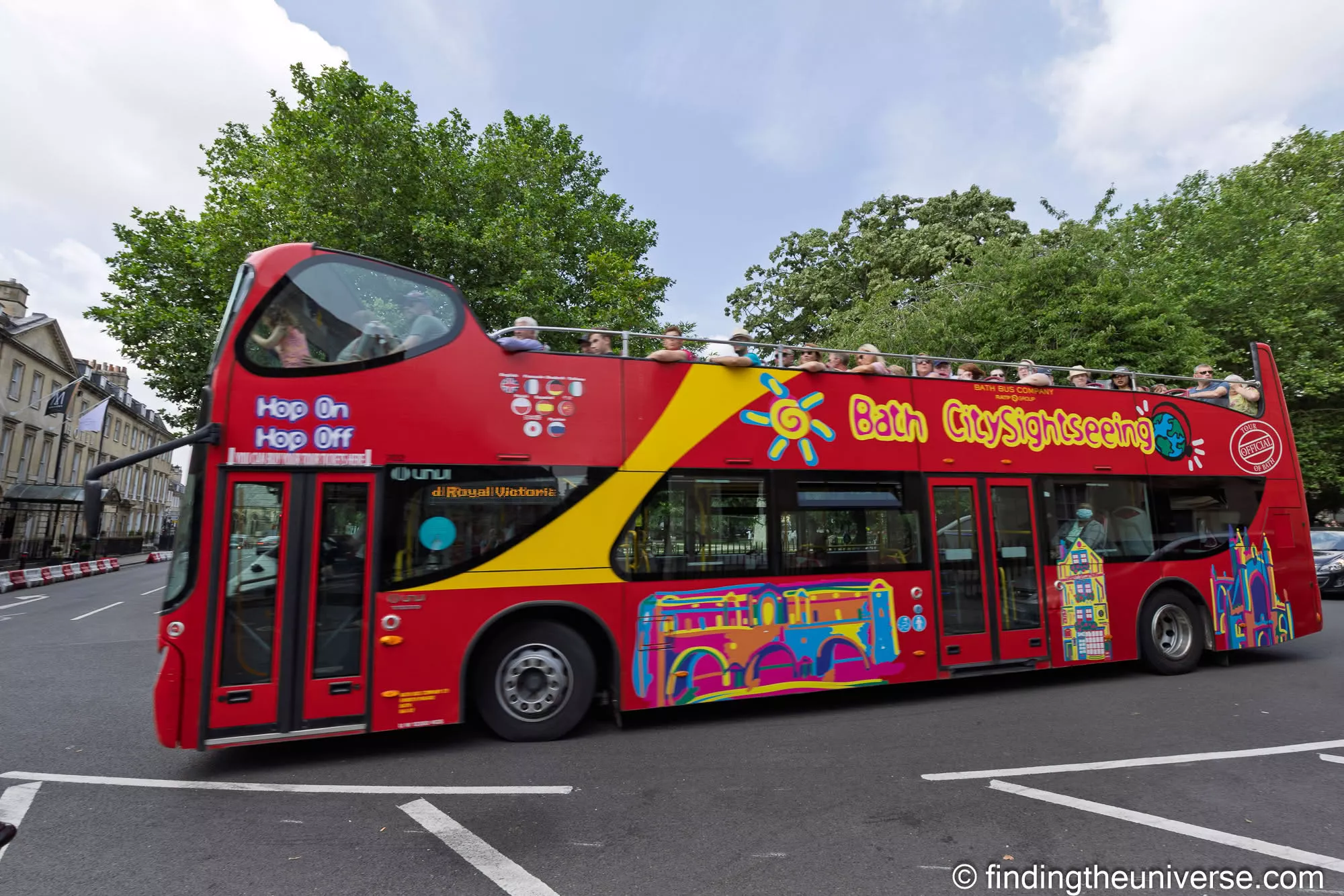
If you really don’t want to walk, there’s a hop on hop off bus but this is really only worth it if you want the audio commentary as you go around. As a means of transport it’s not necessary.
Where to Stay in Bath
Sleep in or near the centre if you possibly can. Bath rewards being able to walk back to your room to drop your bags and head out again, and it means you can have a drink with dinner without thinking about the drive.
The flat, walkable heart of the city runs from the station up through the Abbey and SouthGate to Pulteney Bridge. Push uphill towards the Royal Crescent and Lansdown and the views get better but every trip home becomes a climb. Across Pulteney Bridge, Bathwick is quieter and handsome and still an easy walk in. Here’s how I’d think about it by budget.
| Tier | Where | Why |
|---|---|---|
| Budget | The Z Hotel Bath | Compact, modern rooms right by the Theatre Royal, five minutes from the station. No car park, which suits the car-free plan. |
| Mid-range | Hotel Indigo Bath | A boutique hotel inside a Georgian townhouse on South Parade, a five-minute walk from the Abbey. Good restaurants on site. |
| Luxury | The Royal Crescent Hotel & Spa | Set in the Royal Crescent itself, with a spa and a secret garden behind. The address you came to Bath for. |
Whatever you pick, book early for a weekend. Bath is a year-round short-break city and the central places fill up, especially around the Christmas market in late November and December.
Day 1: The Roman and Medieval City
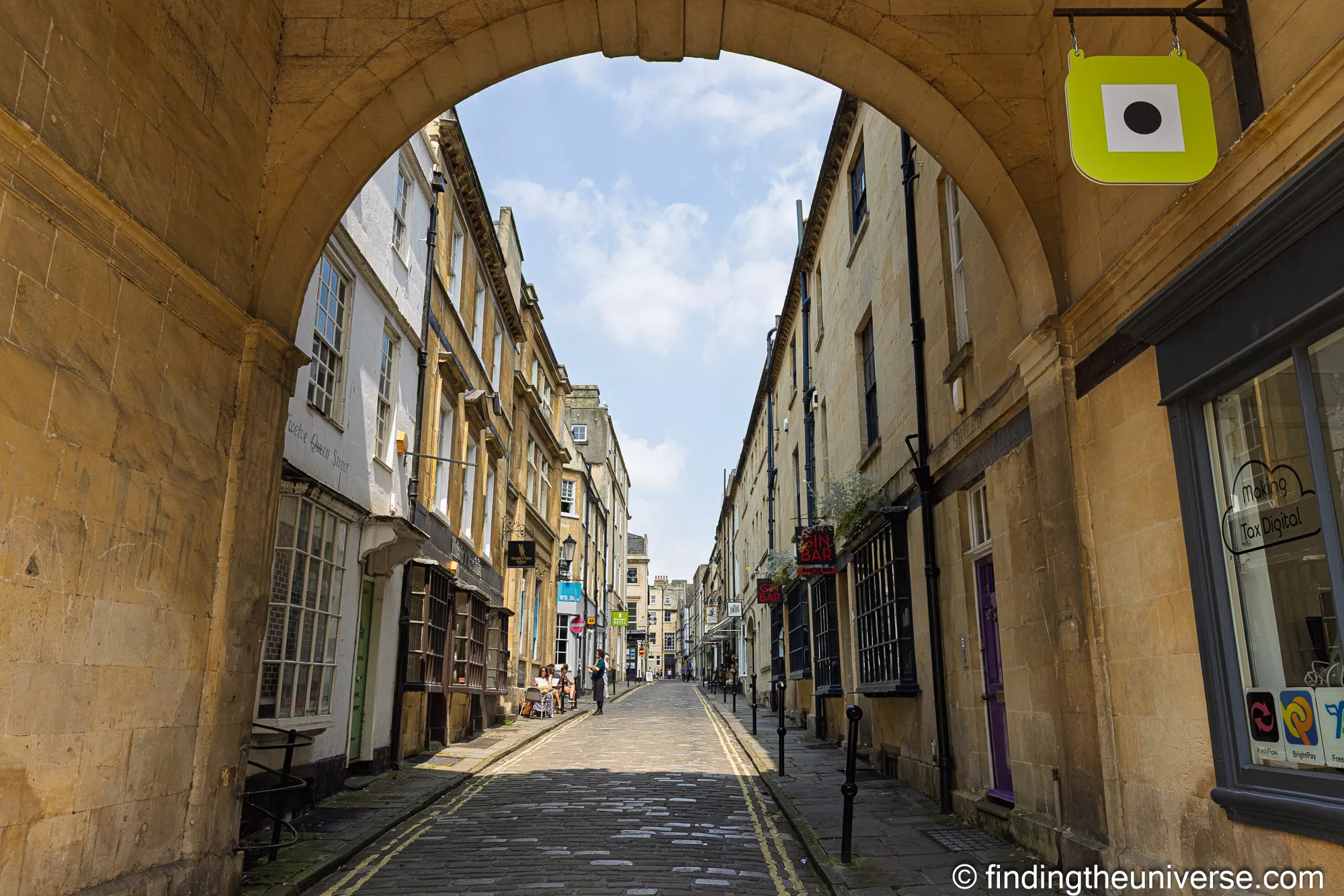
Day 1 stays low, in the oldest part of Bath, and it barely needs a map. Everything is a few minutes apart around the Abbey Churchyard.
Morning: The Roman Baths
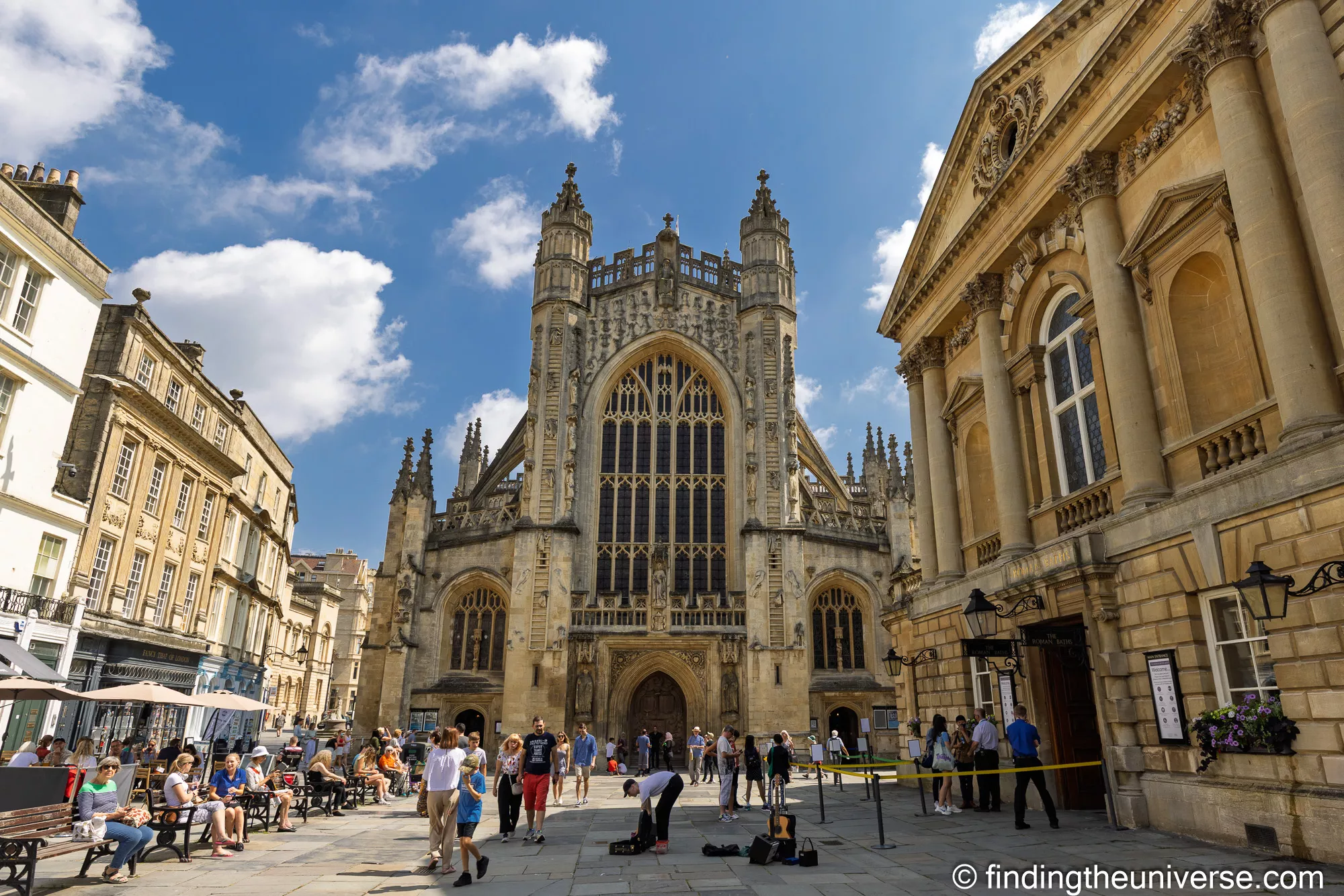
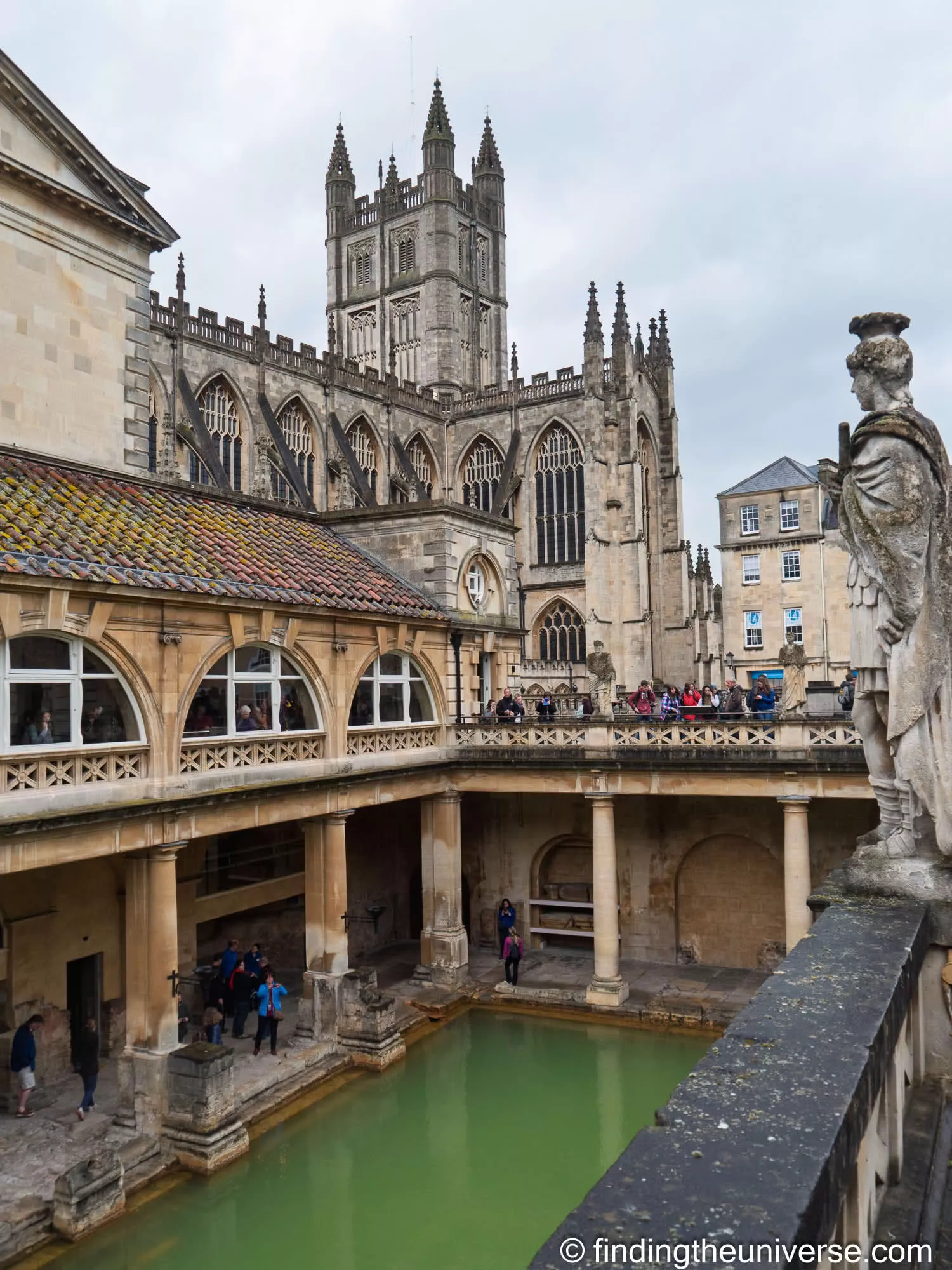
Start at the Roman Baths, and start early. This is the thing everyone comes to Bath for, and for once the headline attraction earns it. You walk around an actual Roman bathing complex, fed by the only naturally hot springs in Britain, with the steam still rising off the Great Bath exactly as it did two thousand years ago. The audio guide is really well done, with a version voiced by Bill Bryson that’s worth choosing. Give it an hour and a half to two hours.
Two practical notes. First, book a timed ticket online in advance and take the first slot of the day if you can. It’s busiest from late morning to mid-afternoon, so 9am gets you a calm visit and noon gets you a shuffle. Last entry is about an hour before closing, and the hours shift with the season, roughly 9am to 6pm in summer and 9:30am to 5pm in winter, so check before you go. Second, ticket prices change with the season and the day of the week, and they’re cheaper midweek and booked ahead, so buy directly from the official site for the current price rather than trusting a number you read somewhere.
Lunch: Sally Lunn’s or the Pump Room
Two Bath institutions sit a couple of minutes’ walk away, and they’re different moods. Sally Lunn’s is one of the oldest houses in Bath and home of the Sally Lunn bun, a large, light, faintly brioche-like roll served sweet or savoury. It’s touristy and it knows it, but the building is wonderful and the bun lives up to the billing. Expect a queue at peak lunch. The alternative, and the grander one, is afternoon tea in the Pump Room next to the Baths, where a pianist plays and you can taste the spa water if you’re brave. Book the Pump Room ahead; you can also move it to Day 2 if the timing suits better.
Afternoon: The Abbey and Pulteney Bridge
Bath Abbey is right there, and it’s free to step inside for a suggested donation of around £7.50. The fan-vaulted ceiling is the reason to go, and the west front, with its stone angels climbing ladders to heaven, is one of those details you’ll only notice if someone tells you to look up. If you have a head for heights, book the Tower Tour, which runs Monday to Saturday for around £18 and takes you up roughly two hundred steps to stand among the bells and out onto the roof for the best free-standing view of the city. It’s timed and popular, so book it when you book the Baths.
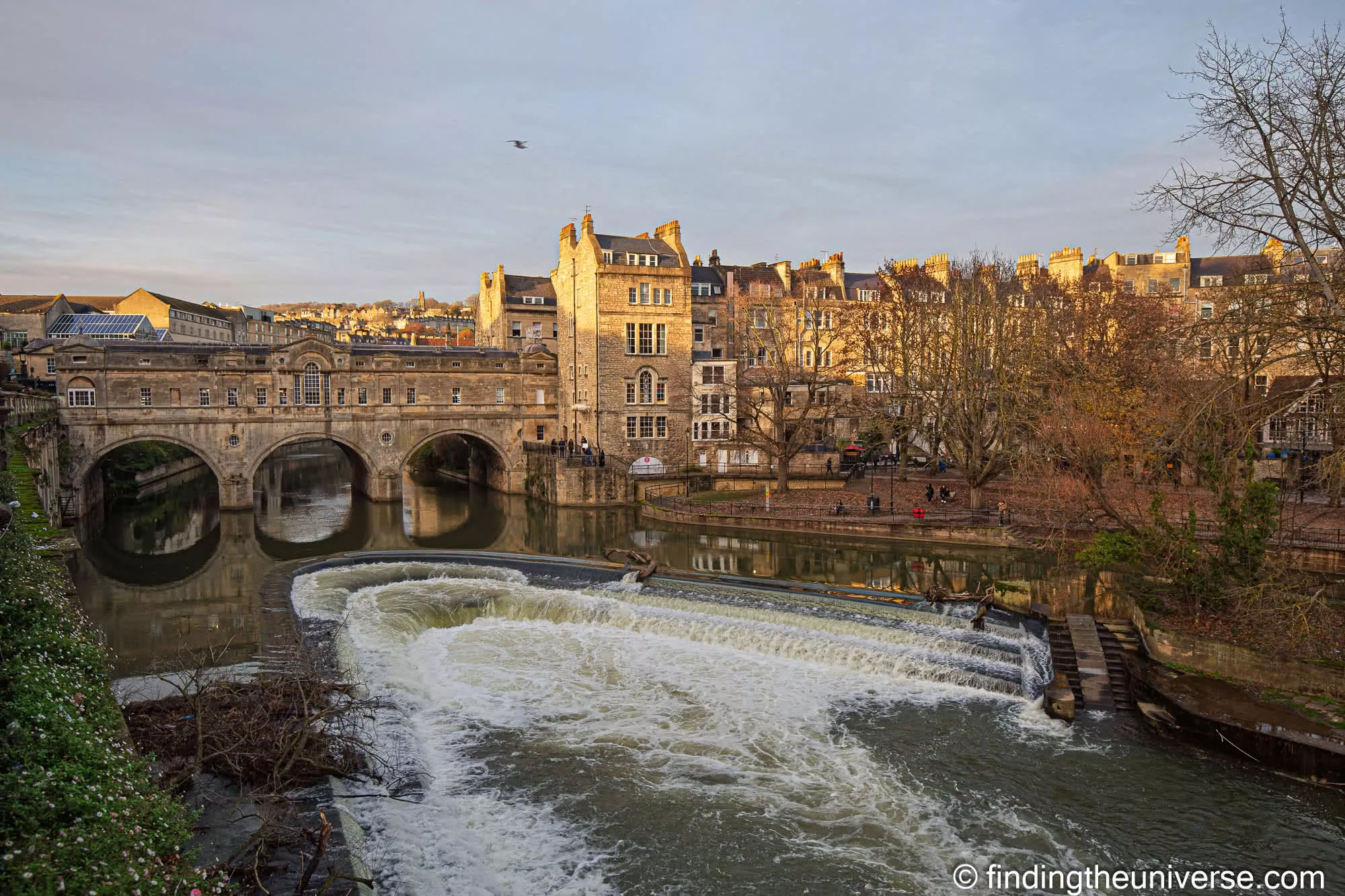
From the Abbey, walk five minutes to Pulteney Bridge, one of only a handful of bridges in the world with shops built across its full span, with the horseshoe weir curving below it. It’s the most photographed spot in Bath for good reason. If the weather is kind and the river is behaving, Pulteney Cruisers run a one-hour return boat trip from beside the weir, seven days a week from spring to autumn. It’s a gentle, pretty way to end the afternoon, though they cancel if the river floods.
Evening
The centre has no shortage of places to eat, and I’ve put my own picks in the eating section below. For a drink, the area around the Theatre Royal and Sawclose has the most going on, and if there’s something on at the Theatre Royal it’s a lovely old auditorium to see it in.
We saw many performances during our time living in Bath, and it’s one of our favourite theatre venues in the UK. You often get the same shows as appear in London’s West End, but at far more reasonable prices.
Day 2: Georgian Bath, the Skyline and the Spa
Day 2 climbs the hill into the Bath that put the city on every postcard, the great Georgian crescents, then sends you out for the walk I rate most, and brings you back down to the spa for the evening. If it’s deep winter and the light is short, do the spa in the morning and the walk in the early afternoon while it’s bright; I will flag where to swap.
Morning: The Royal Crescent and the Circus
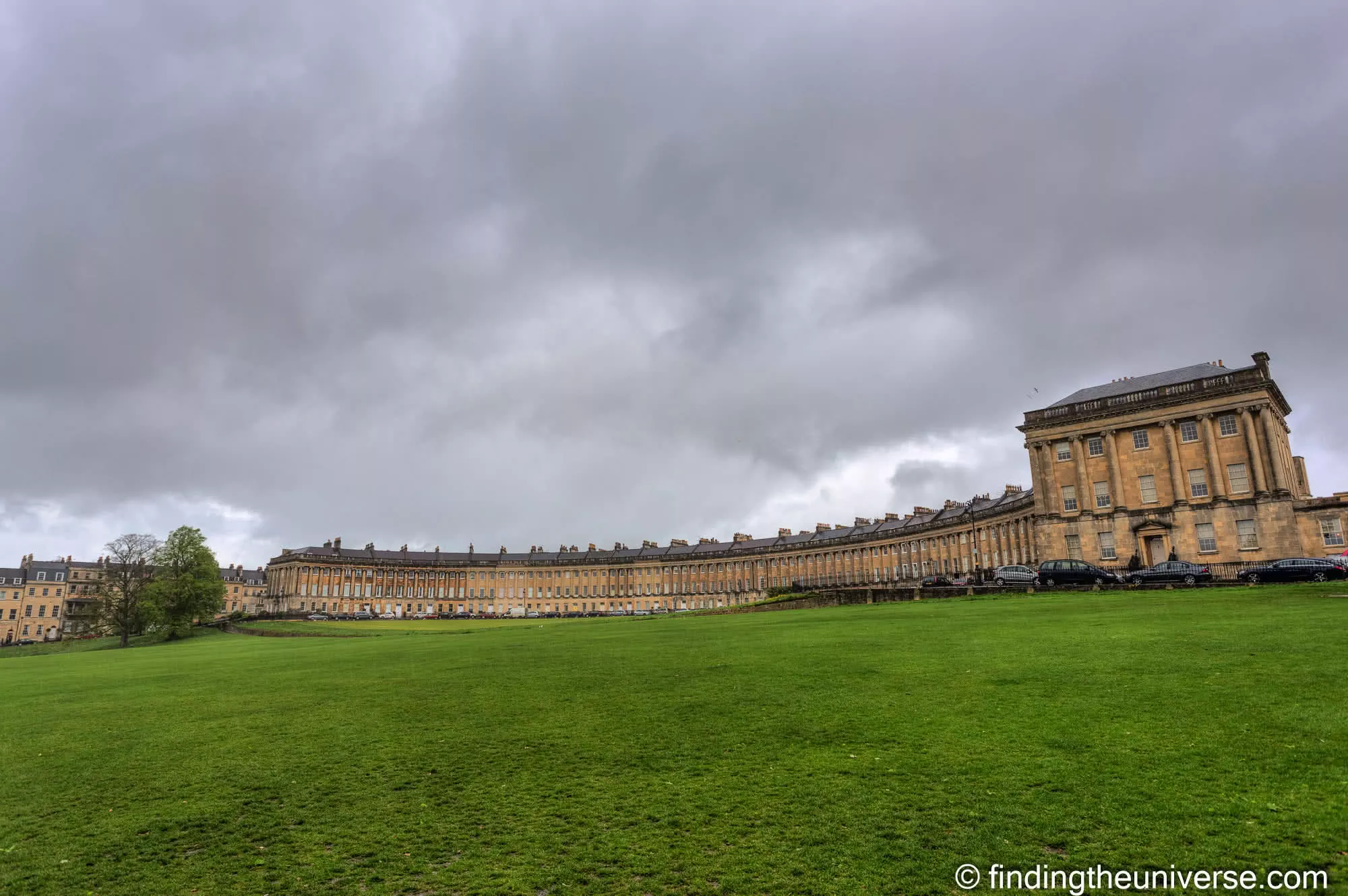
Walk up through the city to the Royal Crescent, a sweeping curve of thirty Georgian terraced houses built between 1767 and 1775, facing a great lawn that drops away towards Royal Victoria Park. Stand at one end and let the whole arc reveal itself. On the way you’ll pass the Circus, a perfect ring of townhouses planted with huge plane trees, designed by the same architect, John Wood. These two pieces of street are the reason Bath is a World Heritage Site, and unusually it’s the entire city that’s inscribed, the whole place rather than a single monument or quarter, recognised in 1987 and again in 2021 as one of the Great Spa Towns of Europe.
To see inside, No.1 Royal Crescent is a townhouse museum at the end of the Crescent, furnished as it would have been in the 1770s, and it’s the best way to understand how these houses actually worked, upstairs and down. It costs £16, opens Tuesday to Sunday with last entry at 4:30pm, and it closes on Mondays, so if your weekend lands Sunday into Monday, do this on the Sunday.
The Jane Austen Centre and a Walk Through Her Bath
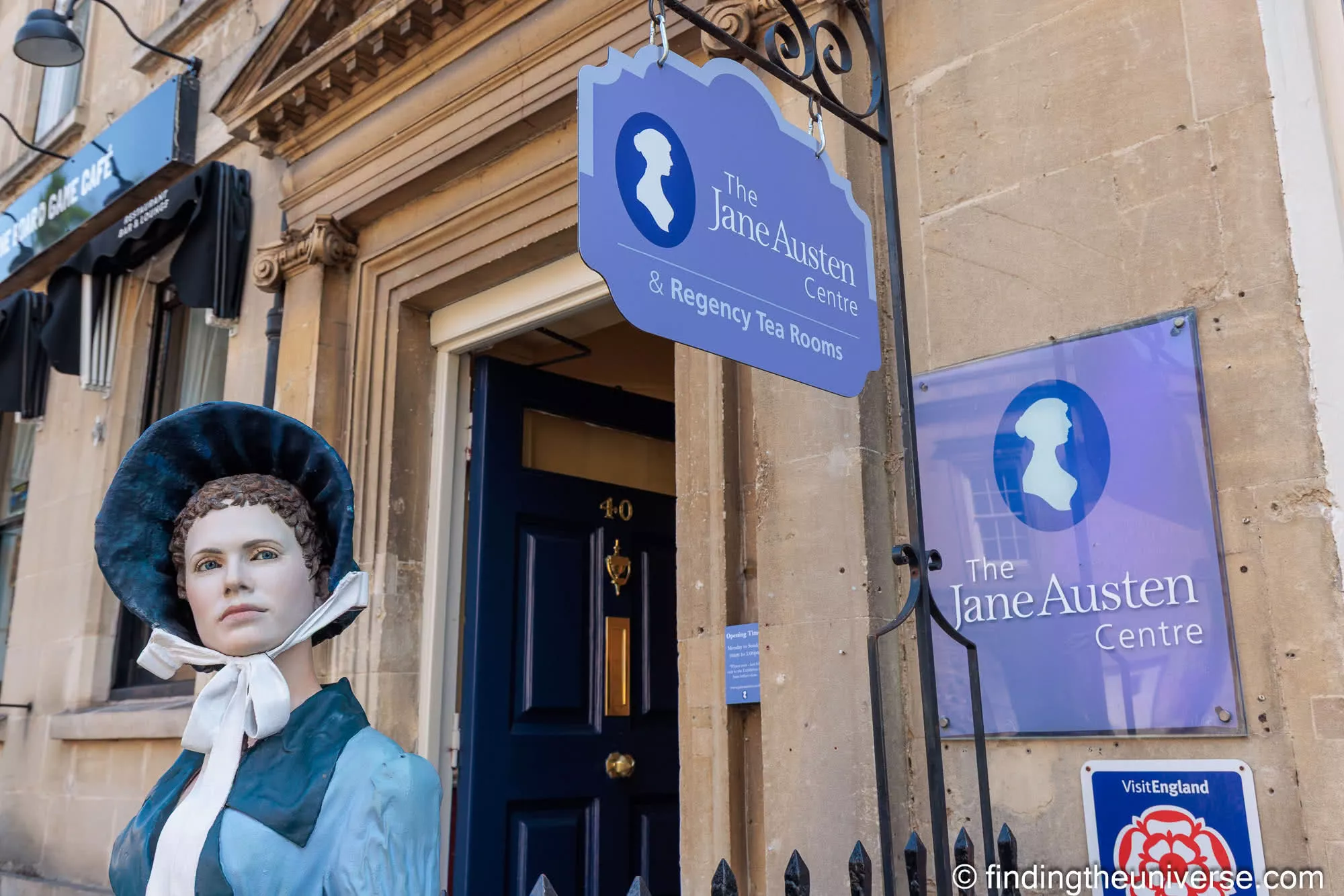
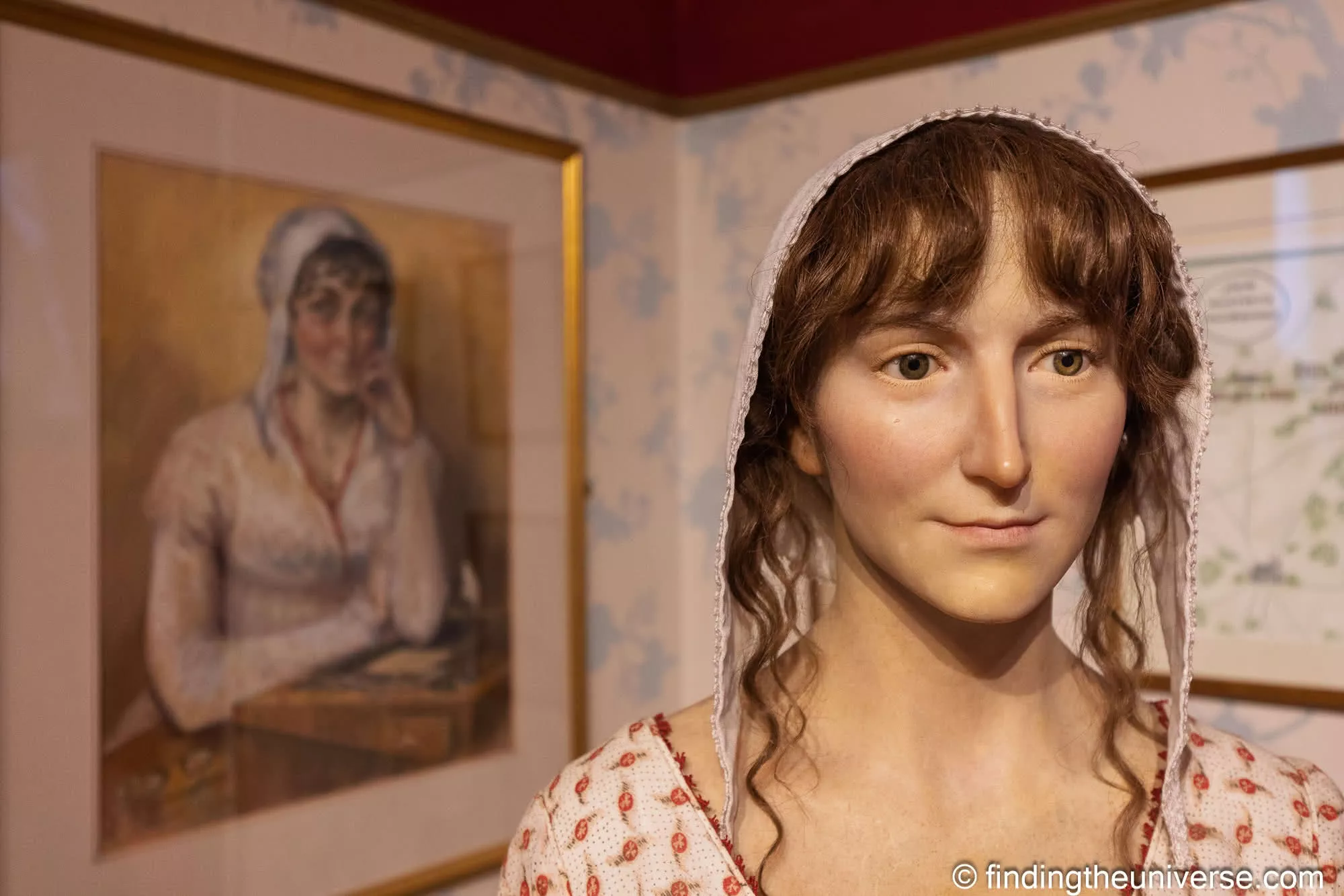
A short walk down from the Crescent, on Gay Street, is the Jane Austen Centre. A lot of people come to Bath specifically for the Austen connection, and if that’s you, give this proper time rather than treating it as a quick photo stop. Austen lived in Bath in the early 1800s and set much of Persuasion and Northanger Abbey here, and the Centre tells that story with costumed guides and a lot of enthusiasm. It’s open daily and costs around £17, and you can book your ticket through GetYourGuide.
We did the full version and enjoyed it more than we expected to. You get the story of Austen’s Bath years, you can dress up in Regency costume for the photo you knew you were going to take, and then you head upstairs to the Regency Tea Room for tea and cake served by staff in period dress, with a ‘Tea with Mr Darcy’ option if you want to lean all the way in.
We finished by walking the Jane Austen trail through the streets and houses she knew, which is the thing that actually connects the novels to the city. If Austen is your reason for coming, budget a good chunk of the morning for all of it.
Lunch and the Choose-Your-Own-Adventure Afternoon
Eat near the Crescent, then make a decision based on weather and energy. There are three good ways to spend the afternoon, and I will tell you which one I’d pick.
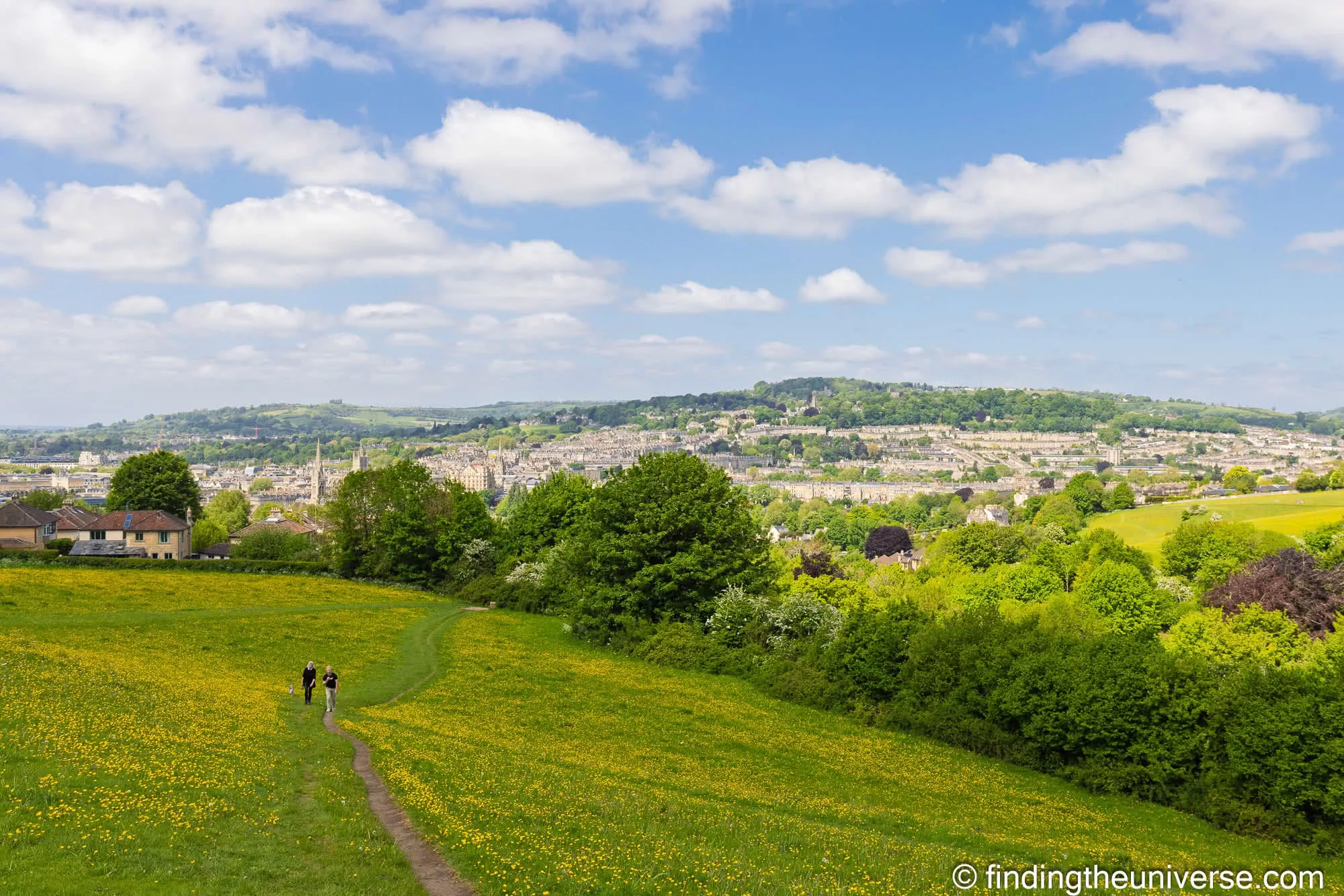
I’d walk the Bath Skyline. This is the part of the day I push hardest, because in four years of bringing visitors up here it was the thing more of them named as their favourite than anything in the city, more than the Baths, more than the Crescent.
The Bath Skyline is a waymarked National Trust trail that loops around the hills on the east side of the city, through meadows and woodland, past an eighteenth-century folly and out to viewpoints where the whole golden city sits below you.
The full circuit is about six miles and takes two to three hours, which is why I’m calling it optional, but you don’t have to do the whole thing. Climb up to Alexandra Park or onto the lower part of the trail for half an hour, take in the view, and come back down. It’s free, it’s the one thing visitors can’t get from a guidebook, and the light in the late afternoon is the best you’ll find anywhere in Bath.
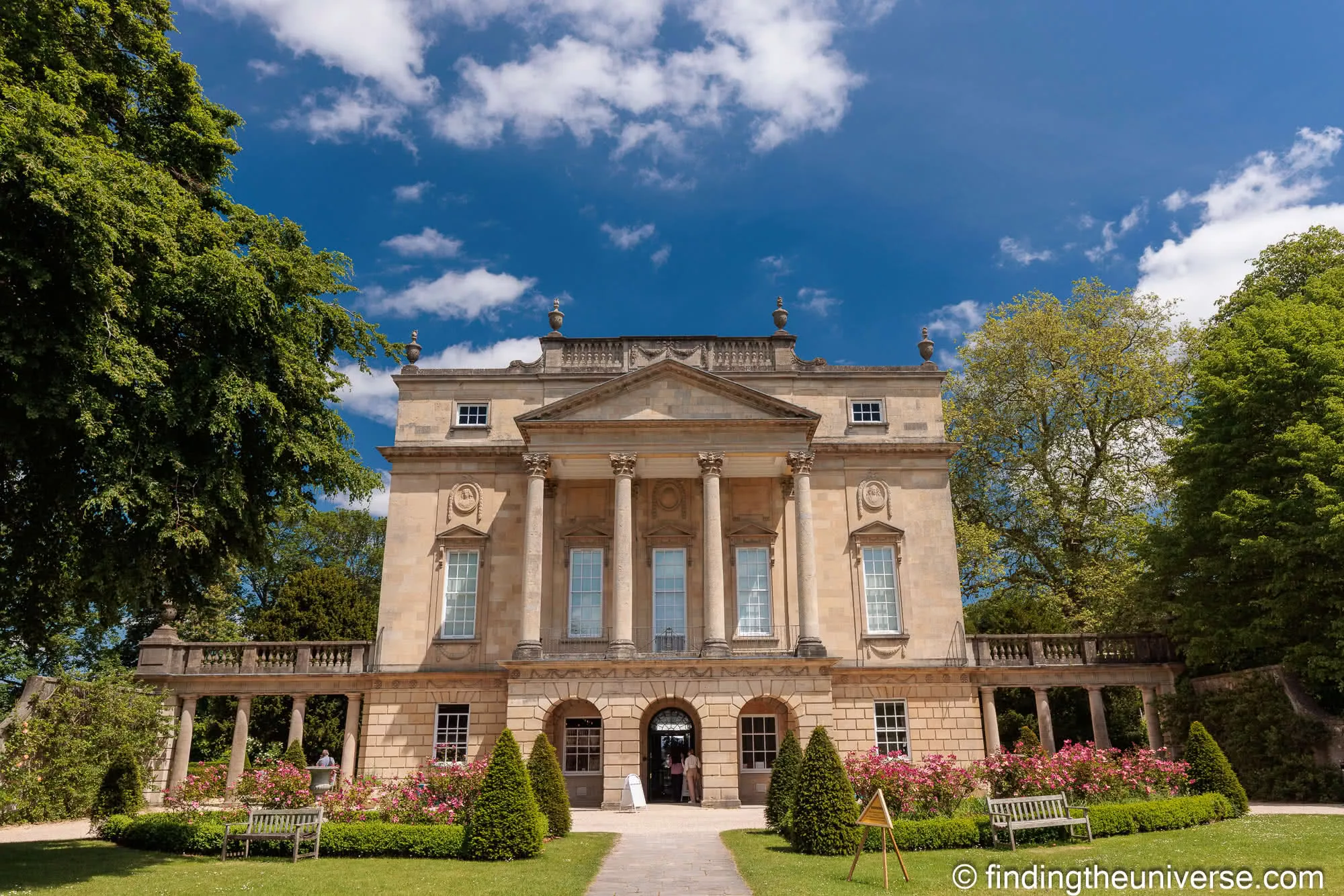
If the weather is poor (this is England after all) or your legs have had enough, two indoor alternatives are close by. The Holburne Museum at the end of Great Pulteney Street is free to enter and a lovely building in its own right, and the Victoria Art Gallery by Pulteney Bridge is small and pretty good. And if you would rather use the afternoon to get out of the city altogether, this is the slot to launch a half-day trip, which I cover below.
One thing I wouldn’t send you to is the old Fashion Museum at the Assembly Rooms; it closed in 2022 and is being rebuilt in the former Milsom Street post office, due to reopen around 2030, so there’s nothing to see there yet.
Evening: Thermae Bath Spa at Dusk
End the day where Bath began, in the hot spring water. Thermae Bath Spa is the modern spa fed by the same thermal springs the Romans used, and its rooftop pool is the standout experience in the city.
A two-hour Thermae Welcome session costs £44 on a weekday and £49 at the weekend, and includes the rooftop pool, the Minerva Bath, the steam rooms and a robe and towel. Go at dusk. Floating in warm mineral water on the roof as the light fades and the Abbey lights come on, steam drifting across the skyline, is the memory most people take home. It opens until 9:30pm, with the pools closing at 9, so a late-afternoon or early-evening entry gives you the golden hour.
Pre-book; it sells out, particularly on Saturdays. If the dusk slot is gone or it’s deep winter, the spa also opens in the morning, so you can flip it with the walk and have the same soak in daylight.
Bath on Screen: Bridgerton and Beyond
If you’ve watched Bridgerton, you’ve already seen a lot of this weekend, because Bath stands in for Regency London across the series and it’s really good fun to spot the locations as you walk.
The exterior of No.1 Royal Crescent is the Featherington family home, so the Crescent you visited on Day 2 morning is doing double duty. The Holburne Museum, the grand building at the end of Great Pulteney Street, is the façade of Lady Danbury’s townhouse, and the Assembly Rooms are where Daphne and Simon first meet at Lady Danbury’s ball in the first series. Queen Charlotte filmed here too, and long before Netflix, Bath’s Georgian streets stood in for the period in adaptations of Jane Austen and beyond.
You can do a self-guided loop of the main spots in under an hour on foot, since they overlap almost entirely with the Day 2 route. If you want the detail and the gossip, a guided Bridgerton or Bath walking tour with a Blue Badge guide is an easy add, and the same listings cover the city’s general walking tours and Roman Baths skip-the-line options. A note for the Assembly Rooms: the building is back with the National Trust and its visitor offer has been changing, so check what’s open before you make a special trip.
Bath’s Big Events: The Christmas Market and the Jane Austen Festival
Two of the biggest things in Bath’s calendar are worth planning around, or at least knowing about so the crowds don’t catch you out.
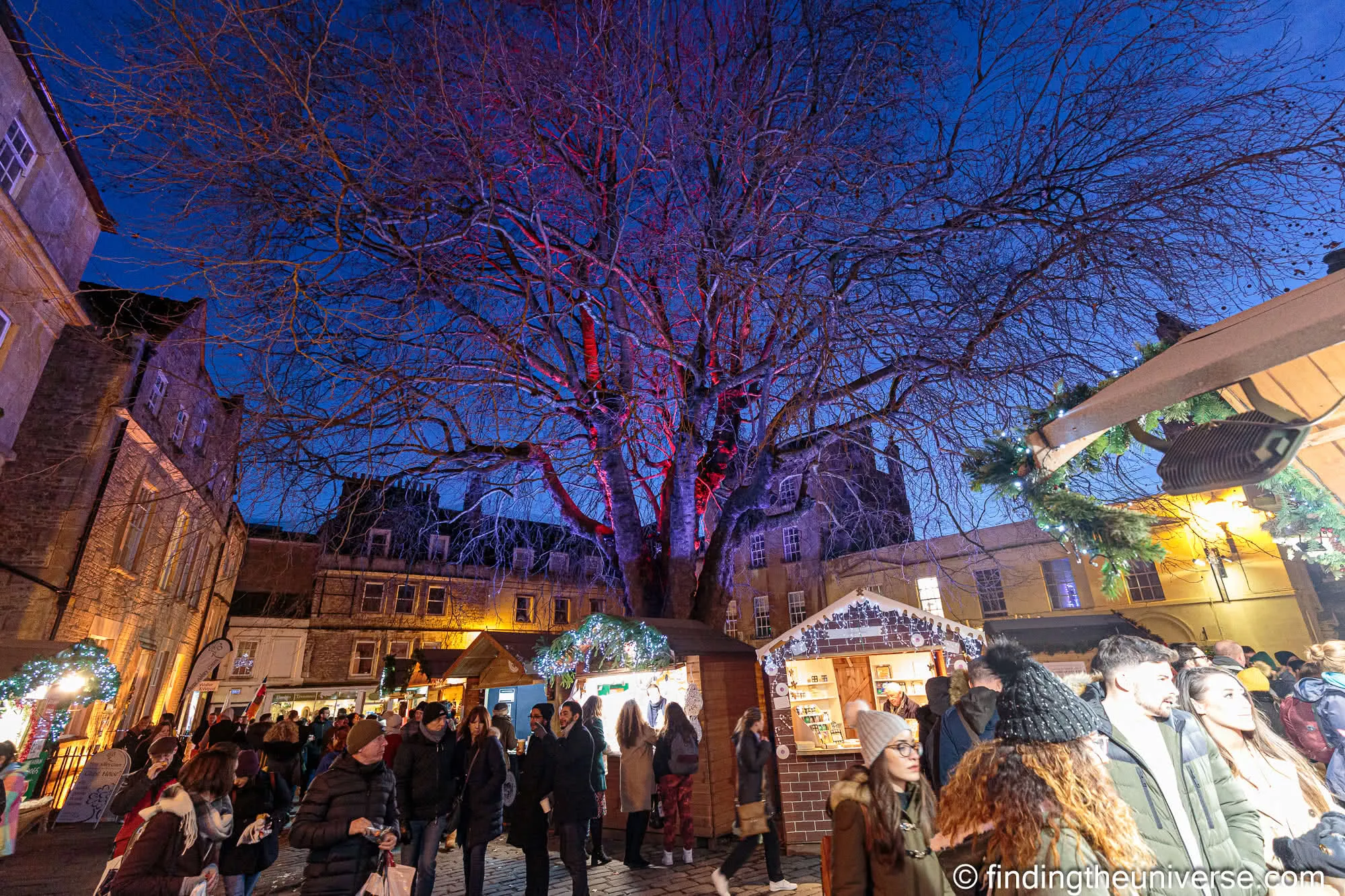
The Bath Christmas Market is one of the biggest and best-loved in the UK. Across the Georgian streets around the Abbey and up Milsom Street, from late November into mid-December, roughly two hundred wooden chalets sell crafts, food and an unreasonable amount of mulled wine, and the setting does half the work; few English cities wear Christmas as well as Bath does. It’s free to wander. It’s also extremely busy, especially at weekends, so book your room early and go on a weekday morning if you can.
The other is the Jane Austen Festival, ten days each September when Bath fills up with talks, balls, walking tours and several thousand people in Regency dress. It opens with the Grand Regency Costumed Promenade, when a couple of thousand costumed Austen fans parade from the Royal Crescent through the centre; it actually holds a Guinness World Record for the largest gathering of people in Regency costume. You don’t have to dress up or buy a wristband to enjoy it, the promenade is free to watch, and stumbling into it is one of the nicer surprises Bath can spring on you in September.
Using Bath as a Base: Day Trips
Two days is right for the city. But Bath sits in the middle of some of the best country in England, and if you have a third day, or you want to swap one of the city afternoons, this is where the weekend gets even better. This is also the demand I saw constantly when I lived here: people use Bath as a base, and the logistics are easy once you know them.
The Cotswolds start just north of the city, and Castle Combe, regularly called the prettiest village in England, is only about 30 to 40 minutes away by car. The trade-off is that the Cotswolds are the one place near Bath where a car actually helps, because public transport between the villages is thin. If you want to drive, picking up a hire car for the day through Discover Cars and heading out to Castle Combe, Lacock and Bradford-on-Avon makes a lovely loop. Prefer not to drive? A guided Cotswolds day tour from Bath does the driving for you.
Bristol is the easy one, about fifteen minutes away by train and a completely different character, a big, creative, irreverent city after genteel Bath. If you have a full day for it, we have a separate guide to a couple of days in Bristol.
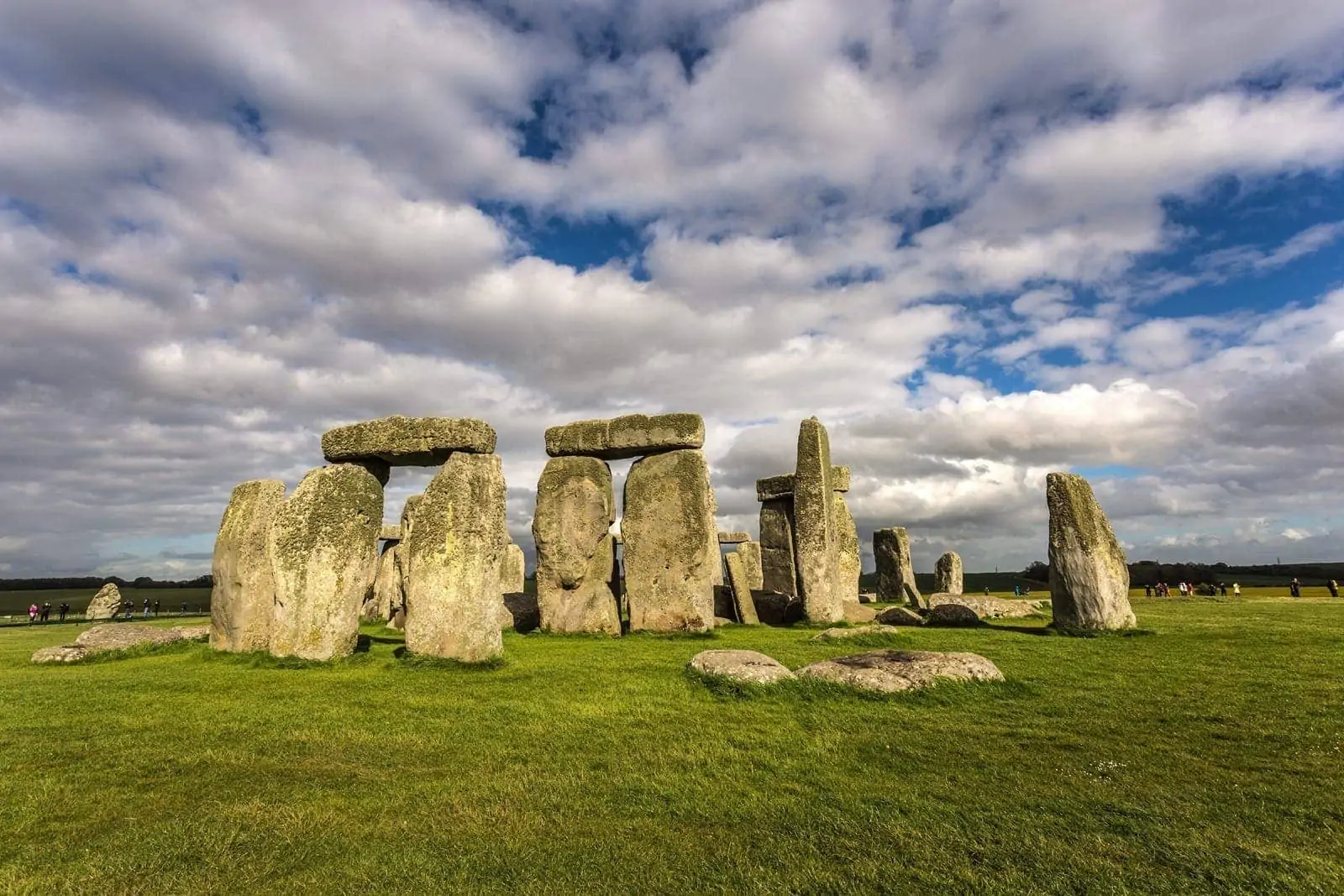
Stonehenge is about an hour south, often combined with the Cotswolds or the village of Avebury on a single loop; for the full version of that classic day out, see our guide to the Stonehenge, Bath and Cotswolds day trip.
Wells, England’s smallest city, built around a medieval cathedral, and Lacock, a near-complete medieval village owned by the National Trust, round out the options. If National Trust places are on your list here, and around Bath there are several, the National Trust Explorer Pass can pay for itself over a few days from around £30.
Bath is one of the best bases in the country for this kind of trip, which is partly why it features in our wider guides to England’s most unmissable cities and a two-week UK itinerary.
Where to Eat in Bath
One of the things Jess and I loved most about living in the UK was how much of the world you can eat in a city this size, and Bath punches above its weight. A few places we kept going back to, alongside the two institutions already in the itinerary.
Noya’s Kitchen was our favourite. It’s a small Vietnamese restaurant run by Noya herself, doing the kind of cooking you remember, fresh and properly spiced, with a five-course Friday supper club that’s worth planning a weekend around. Book it.
For a proper pub lunch, the Marlborough Tavern, up by Royal Victoria Park, was the one we would walk into from home, a smart gastropub doing good Sunday roasts and seasonal plates.
For the classics, Sally Lunn’s for the bun and the history, and afternoon tea at the Pump Room if you want the full Bath set piece, pianist and all.
What We’d Do Differently, and What to Skip
A few things I learned the slow way, so you don’t have to.
Book the big two before you arrive. The Roman Baths and Thermae Bath Spa both sell timed entry, and on a weekend the good slots go. Sorting them before you travel is the single biggest thing you can do to make the weekend run smoothly.
Go early or late at the Roman Baths. The middle of the day is the crush when all the day tours from London arrive together. The first slot or the last couple of hours are calmer, and in high summer the Baths stay open into the evening with torches lit, which is the best time of all.
Don’t under-budget the hills. Bath looks compact on a map, and it is, but it’s also quite steep up towards the Crescent and the Skyline. It’s part of the character of the place, but pace the day so you climb once.
Make time for the walk. If you take one thing from someone who lived here, it’s that the Bath Skyline is the experience visitors remember, and it’s free and uncrowded while queues build at the paid attractions below. Even a short version is worth it.
And what I’d skip: don’t feel you have to pay for every museum. Several of the best things in Bath, the Abbey, the Crescent’s exterior, the Skyline, walking the Georgian streets, cost little or nothing, and the city is at its best when you just walk it.
Frequently Asked Questions
How many days do you need in Bath?
Two full days is ideal. It’s enough to see the Roman Baths, the Abbey, the Royal Crescent and the Georgian city properly, walk the Skyline and soak in the spa, without rushing. If you can add a third day, use Bath as a base for the Cotswolds, Bristol or Stonehenge. If you only have one day, our day trip to Bath from London guide covers the one-day version.
How do you get from London to Bath?
The fastest way is the train from London Paddington to Bath Spa, which takes about 1 hour 20 minutes and runs roughly every half hour. Bath Spa station is a five-minute walk from the centre. Driving takes around two and a half hours, after which you’ll want a Park and Ride rather than the central car parks.
Do you need a car in Bath?
No. The centre is small and walkable, and a car is more hassle than help, with limited and pricey parking. If you drive in, use one of the three Park and Ride sites. A car only really pays off for a day trip out to the Cotswolds, where village-to-village public transport is limited (our Cotswolds itinerary has the drive times between villages).
Is Bath worth visiting for a weekend?
Yes, easily. Bath is compact, walkable and packed with things to do, from a remarkably intact Roman bathing complex to the finest Georgian streets in Britain, plus a natural thermal spa you can actually bathe in. It works as a relaxed city break and as a launch pad for the surrounding countryside.
How much does it cost to visit the Roman Baths?
Roman Baths tickets vary by season and by whether you visit midweek or at the weekend, and they’re cheaper booked in advance, so check the current price on the official site before you go. As an alternative or an addition, a two-hour session at Thermae Bath Spa, where you can actually bathe in the thermal water, is £44 on a weekday and £49 at the weekend.
What is the best time of year to visit Bath?
Late spring and early autumn give you the best mix of light, mild weather and smaller crowds. Summer is busiest and the Roman Baths open late into the evening. Late November and December bring the Christmas market, which is lovely but very busy, so book accommodation well ahead.
Further Reading and Resources
For more on planning a trip around this part of England, see our guides to England’s most unmissable cities, a two-day Bristol itinerary, the Stonehenge, Bath and Cotswolds day trip, a weekend in York if you like this two-day format, and our two-week UK itinerary for fitting Bath into a longer trip. If you like to travel with a book, the Rick Steves England guide has a solid Bath chapter.
Have a question about planning your Bath weekend, or a favourite spot of your own? Leave a comment below; we read and answer every one.
Leave a Reply