
A UK trip without a car isn’t a compromise. The country has one of the densest railway networks anywhere, the cities worth your time sit a short hop apart, and skipping a hire car also means skipping the one part of a UK holiday that most overseas visitors are nervous about, which is driving on the left.
I’m British, and I’ve lived in four of the seven cities on this itinerary: London, Oxford, Bath and Edinburgh. Jess and I have travelled this kind of route by train more times than I can sensibly count. We’re often asked whether our other UK itineraries, which are written for a self-drive trip, can be done by public transport instead. They can, but they were planned around a car. This one is planned around the train and the coach from the first day to the last.
Over ten days the route runs from London up to Glasgow, taking in Oxford, Bath, Liverpool, York and Edinburgh on the way. Every leg is a scheduled train or coach you can book today. Alongside the day-by-day plan, I’ve put real detail into how UK trains work, because knowing how to buy and ride them is what separates a cheap, easy car-free trip from an expensive and stressful one.
Table of Contents:
Can You See the UK in 10 Days by Public Transport?
Yes. Ten days is enough time to see London and Edinburgh, add Glasgow, and string four more cities in between, all by train and coach. The cities on this route sit on fast, frequent rail lines, the longest single journey is around three and a half hours, and none of them needs a car once you arrive.
The route runs London (two days), Oxford (one day), Bath (two days), Liverpool (two days), York (one day), Edinburgh (one day) and Glasgow (one day). The order matters: each city is a sensible rail step from the last, with no doubling back, so you’re always moving forward and the travelling days stay short.
The one real limit is the Scottish Highlands. They’re hard to reach without a car, and this itinerary leaves them for another trip. More on that further down.
How to Get Around the UK by Train and Coach
Two networks will carry you the whole way: the train and the long-distance coach. The train is faster and more comfortable, the coach is cheaper and slower, and most trips use mostly train with the odd coach leg where it makes sense.
The trick to both is the same, which is booking ahead. UK rail fares have a reputation for being baffling and expensive, and they can be, but mostly only if you turn up and buy a ticket on the day. Plan a little and the same journeys become really reasonable.
Booking UK Train Tickets
UK trains have two broad ticket types that matter for a trip like this. Anytime tickets are fully flexible and can be bought right up to departure, and they’re expensive. Advance tickets are tied to one specific train, they can’t be changed freely, and they’re often a fraction of the Anytime price. For a planned itinerary, Advance tickets are what you want.
Advance fares are usually released around twelve weeks before the travel date, sometimes a little more. The cheapest ones are sold in limited numbers and go first, so the single best thing you can do for your rail budget is to book each leg as soon as its date opens up.
We book UK train tickets through Trainline, which we’ve used for years and find the simplest place to buy tickets across the whole network. You can also book directly with each train operator for the same fares, but for a multi-city trip the convenience of one account holding all your tickets is worth a little. Most tickets are now e-tickets you show on your phone, which removes the old faff of collecting paper tickets from a station machine.
Railcards: A Third Off Almost Every Journey
If you qualify for a railcard, buy one before you book a single ticket. A railcard costs £35 for the year in 2026 and takes roughly a third off most rail fares, so on a trip with this much train travel it pays for itself on the first journey or two.
The main options are these. The Two Together Railcard, for two named people who travel together, is the obvious pick for a couple, and is what we normally use.
The 16-25 Railcard, also valid for full-time students over 25, and the 26-30 Railcard cover younger travellers. The Senior Railcard is for anyone aged 60 or over. The Family and Friends Railcard takes a third off adult fares and 60% off children’s fares for up to four adults and four children travelling together, which makes it the one to get for a family trip.
Splitting Tickets to Save Even More
Here’s a quirk of the UK system that can save a surprising amount. It’s often cheaper to buy several tickets covering different parts of one journey than a single ticket for the whole thing, even though you sit on exactly the same train the whole way. This is called split-ticketing, and it’s completely legal under the National Rail Conditions of Travel.
The one rule that catches people out is that the train has to actually stop at the station where your tickets split. As long as it does, you can stay in your seat. Trainline and a few dedicated split-ticket sites will find the splits for you automatically, so it’s worth a quick check on the longer legs.
The BritRail Pass: For Overseas Visitors
If you’d rather not think about individual fares at all, there’s the BritRail Pass. It’s a single pass covering unlimited rail travel for a set number of days, and for this itinerary the 8-day consecutive pass lines up well, carrying you from London all the way to Edinburgh and Glasgow. It comes in first and standard class.
The BritRail Pass is sold only to non-UK residents, and it must be bought before you arrive in the country. Anyone who’s lived in the UK in the last six months isn’t eligible. Whether it works out cheaper than booking Advance fares yourself depends on how organised you are: book every leg early and you may beat the pass on price, but if you value the simplicity and the freedom to change plans on the day, the pass is worth it.
Coaches: The Budget Option
The UK’s long-distance buses are called coaches, and they’re the budget floor for getting between cities. National Express and Megabus run the widest networks. Fares are often well below the train, especially booked ahead, but journeys take a good deal longer, sometimes two or three times as long on the northern legs.
We’d reach for the coach on the shorter hops, London to Oxford for instance, or where it simplifies a journey that would otherwise need a change. For the long legs up to Scotland the time cost is steep, and an Advance rail fare booked early is often not much more expensive. As with trains, the best coach deals go to those who book early for a specific departure.
Luggage and Station Logistics
One practical point makes the whole trip flow better. Every major UK station has a left-luggage office where you can store bags for a few hours or the day. That means a transfer day needn’t be a write-off: you can drop your bags on arrival, see the city, and collect them before your onward train.
UK platforms are also often announced pretty late, especially at the big terminus stations, so give yourself a few minutes at the station rather than planning to sprint for a platform.
A 10-Day UK Itinerary by Public Transport
With the transport sorted, here’s the route day by day. Each city section opens with the journey to reach it, how long that takes, and then what to do once you’re there.
Days 1 and 2: London
No trip to the UK feels complete without time in London, which is why this itinerary opens with two full days in the capital. I lived in London for several years, and even now I find two days only scratches the surface.
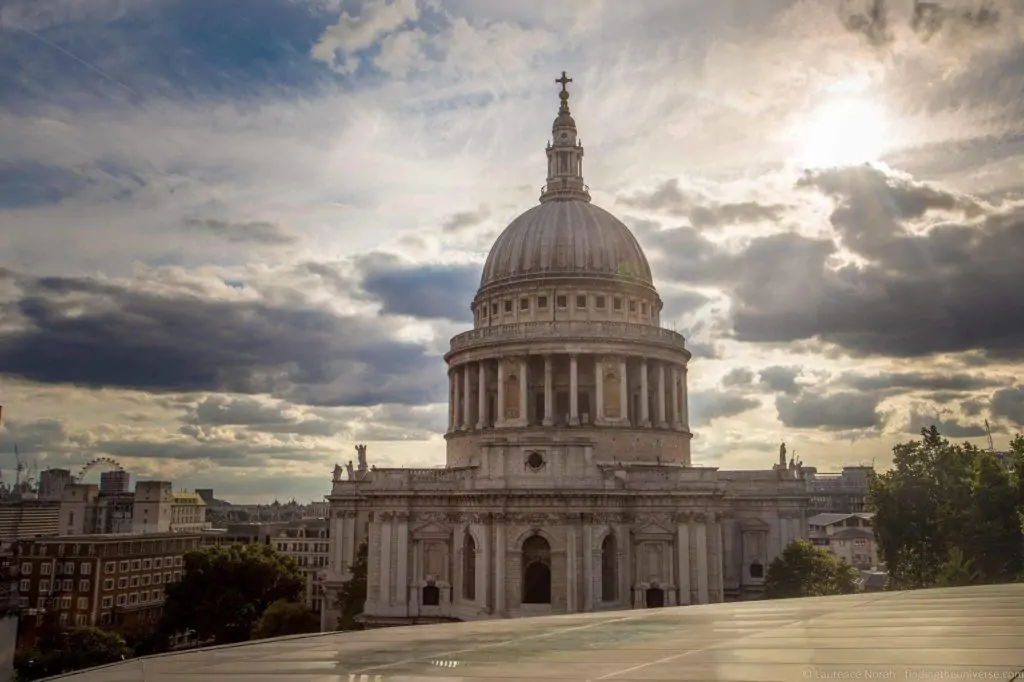
There’s more here than anyone could see in two days, from the changing of the guard at Buckingham Palace and the Tower of London through to afternoon tea and a wander around Harrods. With only two days, pick a small handful of things you really want to see rather than trying to tick off the lot.
If you plan to pack in the big paid attractions, the London Pass usually saves money, bundling entry to a long list of sights into one ticket. Our review of the London Pass works through whether it adds up for the way you like to travel.
Most visitors arrive in London by air, and the city’s airports are all linked to the centre by train or coach. We have a separate guide to getting into central London from the airports that’s worth a read for planning your arrival. For a tighter plan of the city itself, see our two-day London itinerary, and if you can spare more time before the route proper begins, there’s a longer six-day London itinerary as well.
For accommodation, London has something at every budget. Start with the London listings on Booking.com, our usual way of booking when we travel, or the curated apartments on Plum Guide if you’d rather a flat than a hotel.
Day 3: Oxford
London to Oxford is the gentlest leg of the trip. Fast trains from London Paddington reach Oxford in about an hour, and the Oxford Tube coach takes around an hour and a half and runs right through the night, as often as every ten minutes. Either makes for an easy start to the day. An Advance rail single booked ahead is usually well under half the on-the-day fare.

I lived in and around Oxford for years, and it remains one of my favourite small cities in England. For more inspiration, see our guide to the other unmissable English cities. It’s the home of the oldest university in the English-speaking world, and it’s stood in for all sorts of fictional worlds on screen, including several of the Harry Potter filming locations.
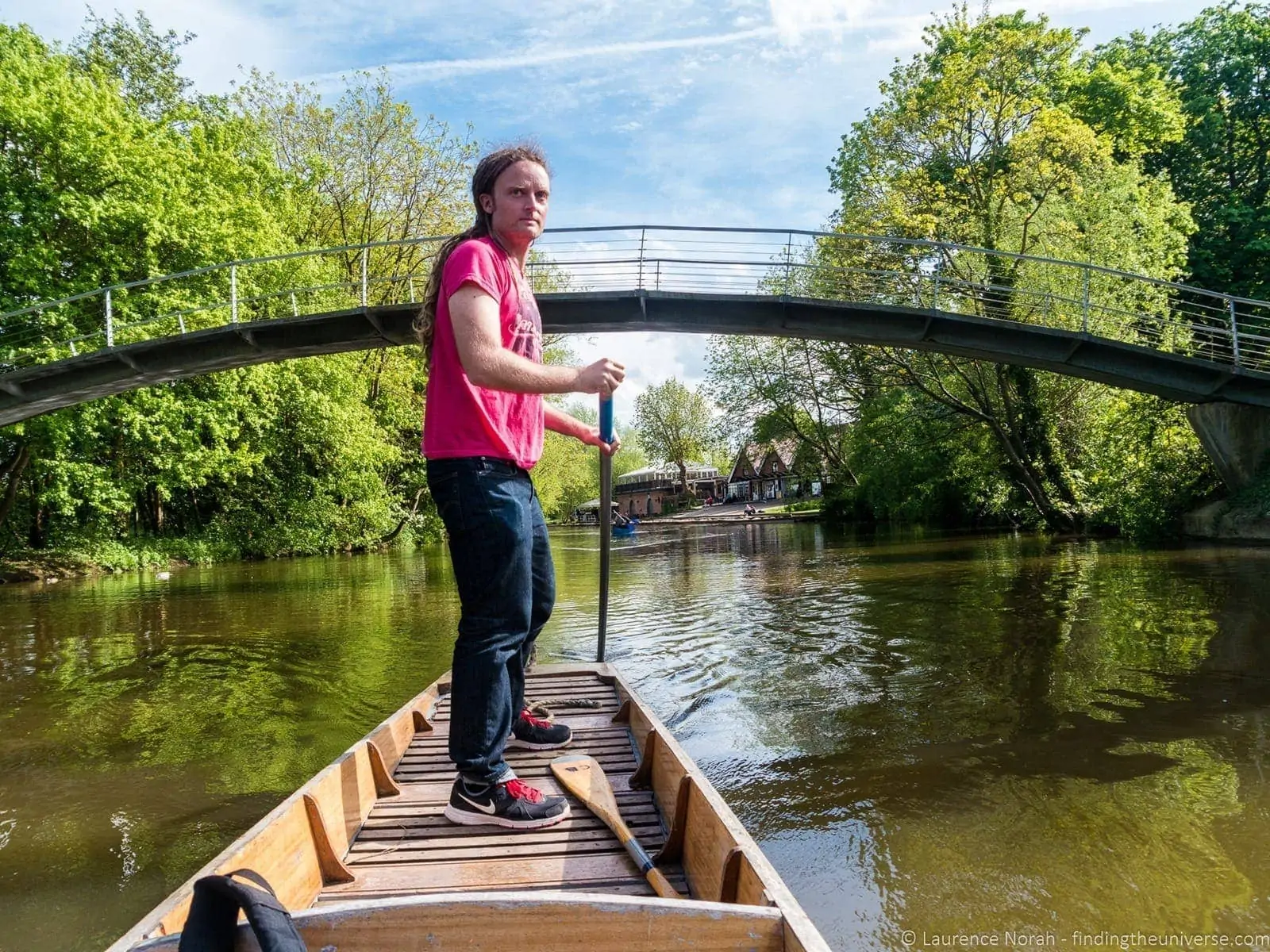
A day is enough for Oxford itself, as the centre is compact and easily walked. A good way to get under the skin of the colleges, many of which limit public access, is a guided walking tour of the city and the university. After that, drop into one of the old pubs, such as the Turf Tavern, tucked down an alley off the main streets, and perhaps try your hand at punting on the river. For a view over the whole skyline, climb the tower of the University Church of St Mary the Virgin, right beside the Radcliffe Camera.
For more ideas, see our guide to spending a day in Oxford. Jess loved the city so much she also wrote up her own thoughts on an Oxford day trip. For accommodation, see the options for Oxford on Booking.com.
Days 4 and 5: Bath
Oxford to Bath is the first leg with a change, usually at Didcot Parkway, and it takes anywhere from about an hour and a quarter to two hours depending on how well your connection lines up. It’s a cross-country route rather than a fast main line, so check the timetable and aim for a good connection rather than the first train you see.
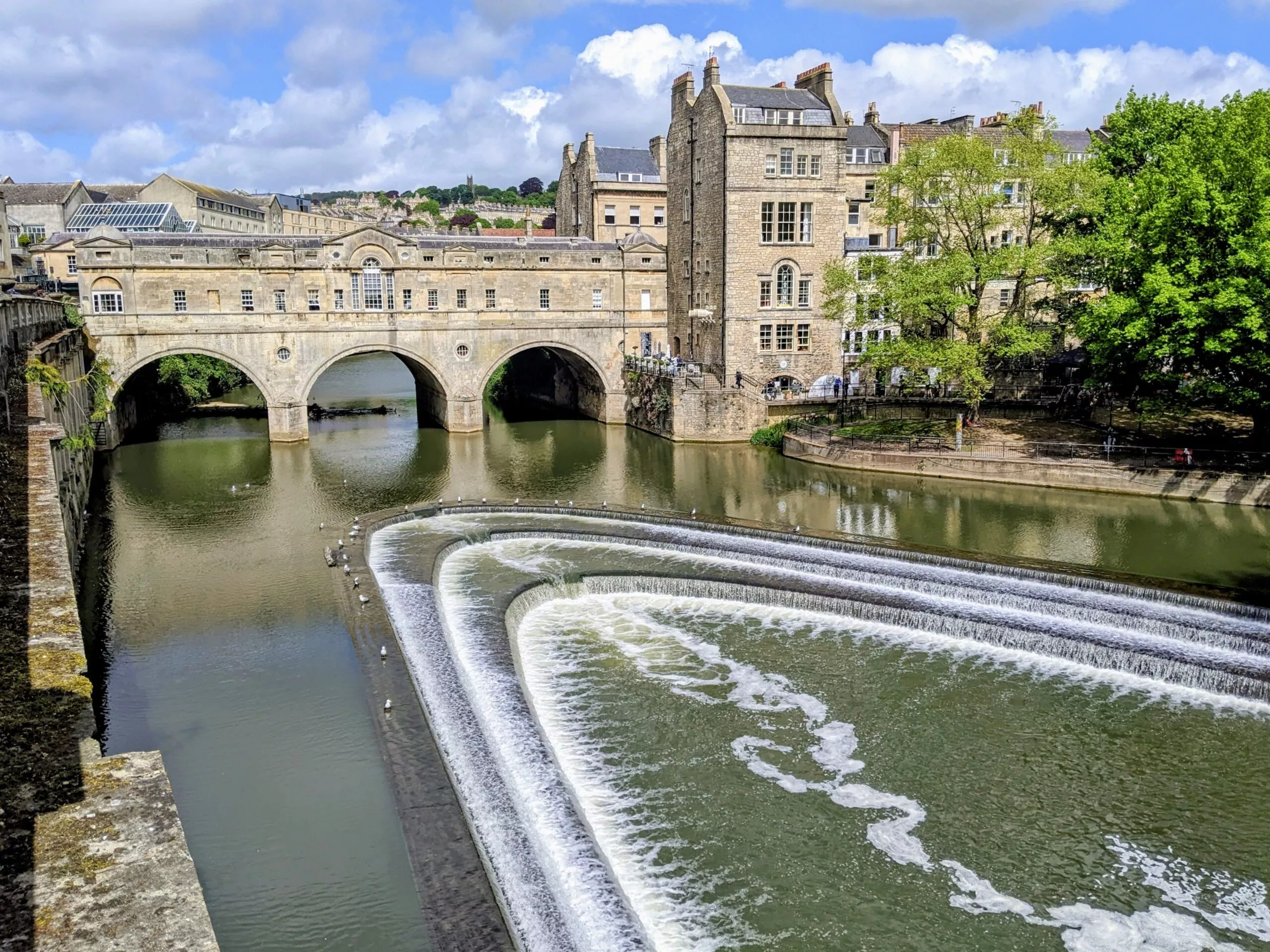
Bath is where I lived for four years, so this is home turf. If you want more detail than this itinerary has room for, I’ve covered the best of Bath separately. It’s a small, walkable, honey-coloured Georgian city built around its Roman past, and two days here is time well spent. The set-piece architecture, the Royal Crescent and the Circus, two of the grandest Georgian terraces in Britain, is free to admire simply by walking up to it. Bath Abbey anchors the centre, and Pulteney Bridge crosses the River Avon with a row of little shops built along its full span.
The obvious place to start is the Roman Baths, the remarkably complete remains of the bathing complex the Romans built around the city’s natural hot spring. Tickets are date-variable and it pays to book online in advance. Expect to pay somewhere from £23.50 up to around £33 for an adult, depending on the day and the season.
A second day in Bath gives you time for a half-day trip to Stonehenge, around an hour away and easily reached by organised tour or local bus. We cover Stonehenge, along with more of Bath itself, in our guide to a Stonehenge, Bath and Cotswolds day trip. For where to stay, take a look at the accommodation options in Bath.
Days 6 and 7: Liverpool
Bath to Liverpool is the longest single journey on this itinerary, around three to three and a half hours with one change, typically at Bristol Temple Meads or Birmingham New Street. Start it early so the afternoon in Liverpool isn’t lost to travelling. Chester also makes an easy side trip from here, around 40 minutes on the Merseyrail line, if you fancy swapping in some Roman walls and Tudor streets; here’s how to spend a day in Chester. This is also the leg where the coach is worth a serious look: it’s slower again, but it can run more directly, which some travellers prefer to a cross-country change with luggage.
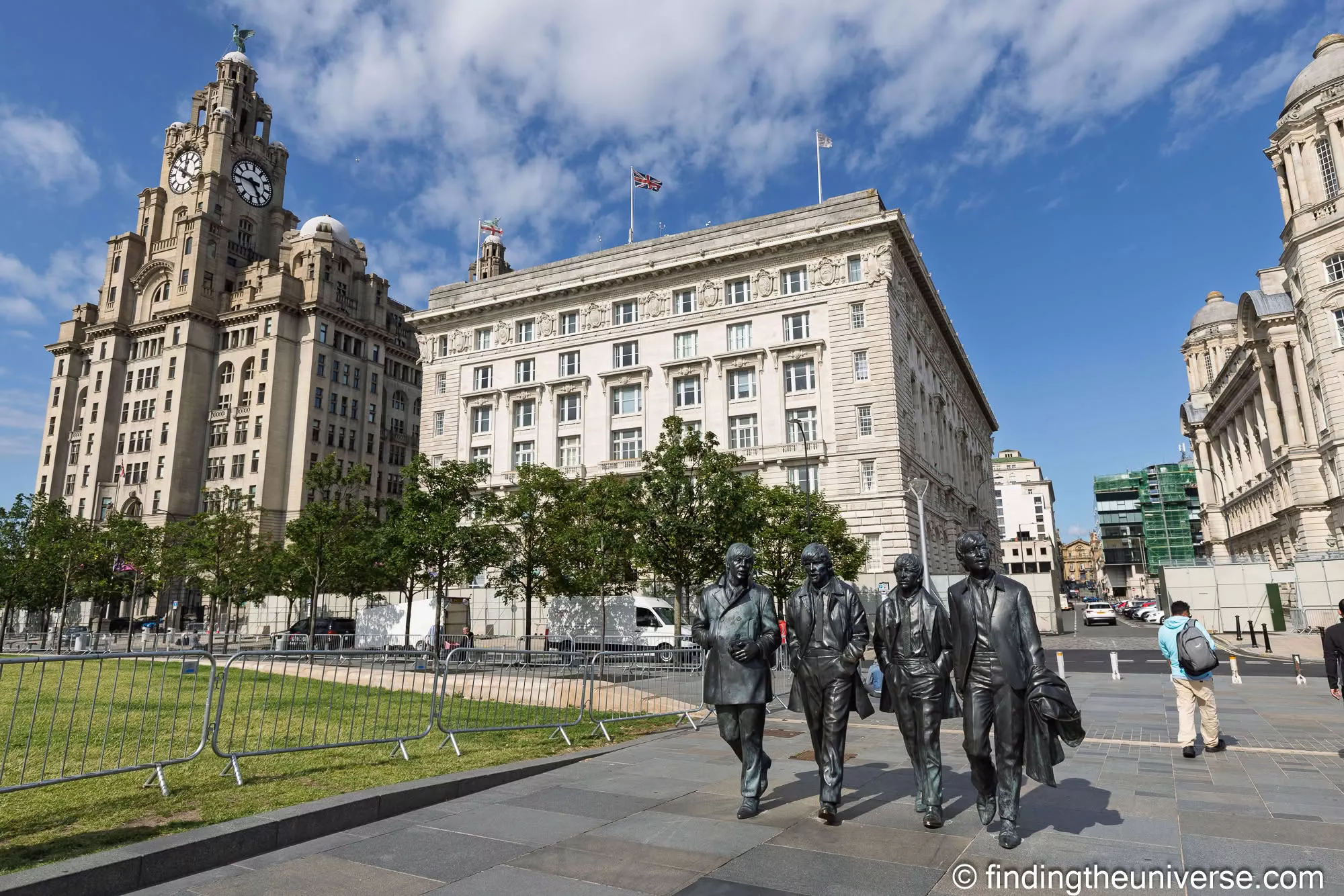
Liverpool is the home of the Beatles, and Beatles fans will want the Beatles Story on the waterfront, the largest permanent exhibition devoted to the band. Adult entry is £20 and includes an audio guide.
The Royal Albert Dock itself anchors a visit. The Victorian dock complex has been reborn as a waterfront of museums, bars, shops and restaurants. The dock’s museums are mid-transformation, though. The Merseyside Maritime Museum and the International Slavery Museum are both closed for a major redevelopment and aren’t expected to reopen until around 2028, and Tate Liverpool has moved to a temporary home nearby at RIBA North on Mann Island while its building is redeveloped. The dock and its waterfront are open as usual, but plan around those closures rather than being caught out by them.
Football fans can take a stadium tour of Anfield, home of Liverpool FC, which takes in the club museum. Two days gives you the Beatles, the dock and the waterfront with room left for the football, a cathedral or two, or simply more time by the Mersey. For accommodation, see the listings for Liverpool on Booking.com.
Day 8: York
Liverpool to York runs east across the Pennines, passing Manchester and Leeds, and takes about two and a quarter hours on a good connection, usually changing at Manchester. If you can spare an extra day, Manchester is an easy place to break that journey, and our one day in Manchester guide lays out a route you can walk without needing transport. Buses also run this route but take a good deal longer.
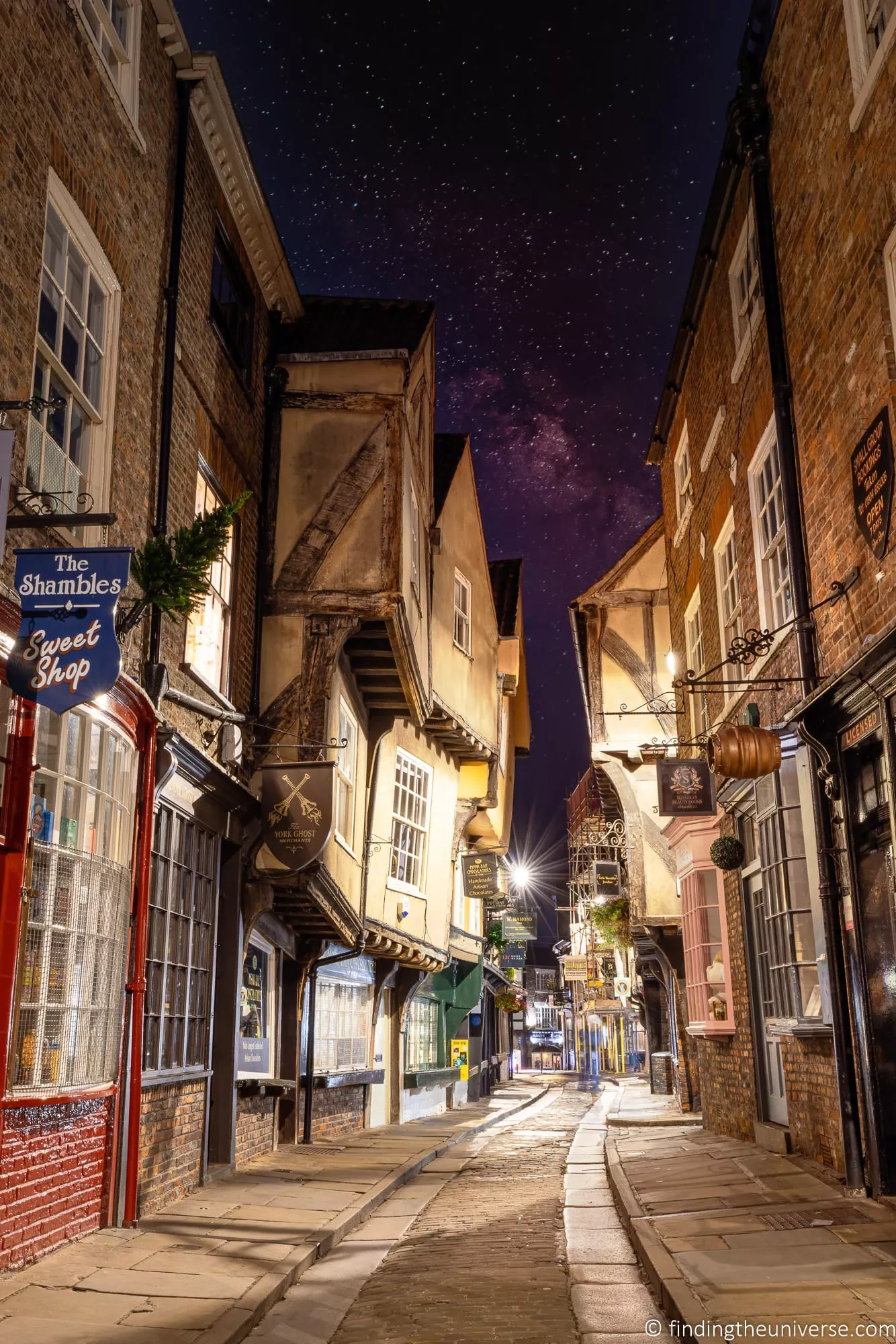
The walled city of York was founded by the Romans nearly two thousand years ago, and it’s seen its fair share of history since. For a time it was ruled by the Vikings, who knew it as Jorvik. Today the medieval city is the draw. A walk through the Shambles, a narrow medieval street where the timber-framed upper floors lean in until they almost touch, is the classic York moment.
York also has more miles of intact city wall than any other city in England, and you can walk long stretches of it, taking in the gatehouses, known locally as bars. The highlight, though, is York Minster, the city’s vast Gothic cathedral. Standard adult entry is £20 and includes the Undercroft museum; for £26 you can add the climb up the Central Tower, 275 steps to one of the finest views in the north of England. It’s a working church, so check the calendar in case a service closes part of it during your visit.
A single day suits York well, as the historic core is small and walkable. For more, see our guide to spending two days in York. For accommodation, check the York listings on Booking.com.
Day 9: Edinburgh
York to Edinburgh is the easiest of the long legs, a direct train up the East Coast Main Line in around two and a half hours, much of it running right along the coast. It’s a lovely journey in its own right, so take a window seat.

Edinburgh is the other city on this route I’ve called home, four years of it, and arriving into Waverley station still feels a bit like coming back. It’s a strikingly beautiful place, a medieval Old Town of cobbled closes climbing to a castle on an extinct volcano, with an elegant Georgian New Town laid out below.
Edinburgh Castle is the obvious starting point. Adult tickets are £23.50 booked online and £26 on the day, and in peak season booking ahead is close to essential. From the castle, the Royal Mile runs downhill through the heart of the Old Town to the Palace of Holyroodhouse, with the Scotch Whisky Experience and plenty of distractions along the way.
If you want to see several of the royal sights, the Royal Edinburgh Ticket bundles Edinburgh Castle, the Palace of Holyroodhouse and the Royal Yacht Britannia with 48 hours of hop-on hop-off bus travel, for £81 as an adult. Our review of the Royal Edinburgh Ticket runs the numbers on whether it saves you money.
A single day is a tight introduction to a city that rewards far longer, which is worth bearing in mind when you reach the pacing notes below. For more ideas, see our suggestions for two days in Edinburgh and our guide to Edinburgh’s hidden gems. For accommodation, see the Edinburgh listings on Booking.com.
Day 10: Glasgow
Edinburgh to Glasgow is the shortest hop on the itinerary, about 50 minutes on the frequent ScotRail service between Edinburgh Waverley and Glasgow Queen Street. Trains run several times an hour, so there’s really no need to plan your day around a timetable.

Glasgow is Scotland’s largest city, and it has a different character to Edinburgh, bolder and less buttoned-up, with a music scene and an art and architecture story that runs through everything. The Kelvingrove Art Gallery and Museum is the city’s grandest museum and, like most of Glasgow’s civic museums, free to enter. The Riverside Museum, Glasgow’s transport museum on the Clyde, is also free, and Glasgow Cathedral is the only medieval cathedral on the Scottish mainland to survive the Reformation of 1560 virtually intact. Glasgow also has a strong street art scene, with a mural trail through the city centre. The West End, around the university, is the place to wander, eat and watch the city go about its day.
Glasgow also works the other way round. If you’re flying home from Edinburgh, you can do Glasgow as a day trip from your Edinburgh base instead of moving hotels, 50 minutes each way and no need to repack. Either way, for longer in the city see our 2-day Glasgow itinerary and our guide to day trips from Glasgow. For accommodation, see the options in Glasgow.
When the trip is done, getting home is easy. Both Edinburgh and Glasgow have their own airports with domestic and international flights, and Edinburgh airport is just eight miles from the centre, reached by tram or by the AirLink bus. If you’re heading back to London, fast trains run from both Edinburgh and Glasgow in around four and a half hours. There’s also the overnight Caledonian Sleeper, which runs to London Euston from both cities every night except Saturday. We’ve written up our own experience of taking the Caledonian Sleeper, and you can find more options in our guide to getting between Edinburgh and London.
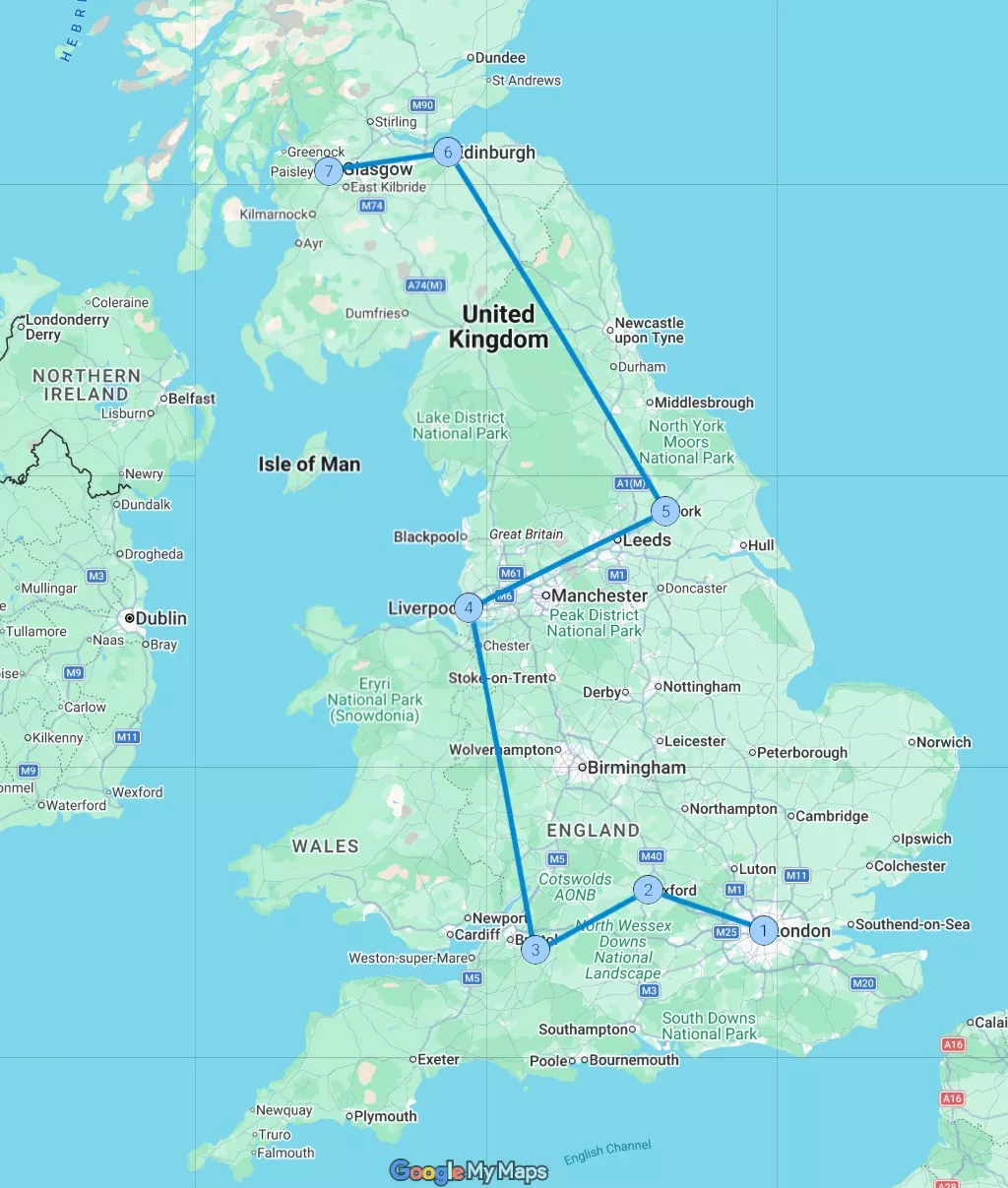
Map of the Route
Here’s the full ten-day route on a map, running from London up to Glasgow.
Your 10-Day UK Itinerary at a Glance
Here’s the whole itinerary in one place, with the journey between each stop:
- Days 1 and 2, London. The start of the trip.
- Day 3, Oxford. From London: about 1 hour by train, or 1 hour 30 by coach.
- Days 4 and 5, Bath. From Oxford: about 1 hour 15 to 2 hours by train, with one change at Didcot.
- Days 6 and 7, Liverpool. From Bath: about 3 to 3 hours 30 by train, with one change.
- Day 8, York. From Liverpool: about 2 hours 15 by train, via Manchester.
- Day 9, Edinburgh. From York: about 2 hours 30 by direct train.
- Day 10, Glasgow. From Edinburgh: about 50 minutes by train.
Want to take this itinerary with you? You can print or save a copy of this guide here.
Adjusting the Pace
Ten days is a real constraint, and the place this itinerary feels tightest is the end. Day 9 gives Edinburgh a single afternoon and evening, and Day 10 hands the finale to Glasgow. Both cities can comfortably carry far more time than that.
If the Scotland end feels rushed, you have a few easy ways to loosen it. Compress Oxford into a day trip from London rather than an overnight stop, which frees a whole day. Drop one of the two Liverpool nights. Either change buys a second night in Edinburgh. You can also treat Glasgow as a day trip from an Edinburgh base, as above, and keep all your Scottish nights in one city.
We’re often asked whether this itinerary works for families with children. Jess and I don’t have kids, so this is second-hand rather than first-hand, but the advice from family-travel friends is consistent and it matches the flex advice above: slow the pace and cut a city or two. Focusing on London, Oxford, York and Edinburgh, with two or three days in the larger cities, makes for a calmer trip with younger travellers along.
What About the Scottish Highlands?
The most common question we get about this route is why it stops at Glasgow rather than pushing on into the Highlands. The answer is that the Highlands and public transport don’t pair well.
There are exceptions. The West Highland Line from Glasgow to Fort William and Mallaig is one of the great railway journeys anywhere in the world, and towns such as Fort William, Oban and Inverness are all reachable by train. But the Highlands proper, the glens, the lochs, the small villages and the single-track-road country, are built around the car. Buses exist, but they run infrequently, and a few days spent trying to see the region car-free can become a few days mostly spent waiting at bus stops.
If the Highlands are the part of Scotland you most want to see, our suggestion is to give them a trip of their own. Hire a car just for that section, or take a small-group tour that handles the driving for you, rather than trying to fold the region into a public transport itinerary where it won’t get the time it deserves.
What We’ve Learned Planning UK Trips by Public Transport
After a lot of UK trips by train, a few habits have become second nature, and they’re most of the difference between a smooth trip and a stressful one.
Book the moment fares open. Advance tickets are released about twelve weeks ahead and the cheapest sell first, so a date in the diary to book each leg is the best money-saving move there is. Buy a railcard before anything else if you qualify, because every ticket after that is a third cheaper.
Plan the route around the connections rather than the map alone. The shortest line between two cities on a map is sometimes a slow, awkward journey with a poor change, while a slightly longer route on a fast main line is quicker and far more pleasant. The order of cities in this itinerary was chosen on exactly that basis.
Use your transfer days rather than losing them. Left luggage at the big stations means an arrival morning can still be a sightseeing morning. And pack for rain whatever the month: the UK can serve up a wet day in July as easily as in November. Good waterproof footwear is worth getting right, and we cover what we actually travel in across our guides to the best travel shoes for men and women.
Other Options for Touring the UK
If, having read all of the above, you’re feeling a bit overwhelmed at the idea of planning the whole trip yourself, there are a couple of alternatives worth considering.
The first is a group tour. This takes you to a range of sights with someone else handling all the logistics, leaving you to simply enjoy the trip. We’ve used and can recommend Rabbie’s, a small-group tour operator with experienced guides. As one example, they run an eight-day tour from London to Edinburgh. The route isn’t quite the same as this one, but you’ll still see plenty.
You can also arrange a private tour, which is a more expensive option but lets you put together something completely tailored to you. Rabbie’s offer a private tour service for this. Another option we’re happy to recommend is a professional driver-guide. This website lists the certified blue badge guides offering tours across the UK, and we’ve always had a good time with the guides we’ve used.
Where to Stay in the UK
The UK has accommodation to suit every budget, from cosy bed and breakfasts through to grand hotels and everything in between. For the short city stays in this itinerary, hotels and apartments tend to be the most convenient choice.
- Our go-to for finding the best deals is Booking.com. They usually have the widest choice, including apartments, they price-match if you find a better deal, and the reviews help you make a sensible decision.
- If you prefer an apartment or a more hosted stay, we recommend Plum Guide, who curate their listings and have given us the most consistent quality of the apartment platforms we’ve tried.
- If you can’t find the right place on either, Vrbo is a good next stop, and we’ve rounded up more choices in our guide to the best holiday cottage and apartment rental sites in the UK.
When to Visit the UK
The UK is worth visiting at any time of year, but for the best weather and the longest daylight we’d suggest the warmer months, from May to September. Long daylight matters more than you might think on a trip with this much travel, as it keeps a transfer day from eating into your sightseeing.
May and September are our own favourite months. The weather is usually pretty reasonable and the tourist crowds are far gentler than in high summer. The weeks leading up to Christmas can also be a lovely time to visit, with the streets and shops lit up and festive markets in the cities, although the days are short. For a sense of that, see our guide to visiting Edinburgh at Christmas. Whenever you come, pack a light waterproof layer, because British weather doesn’t read the calendar.
What to Pack for This UK Trip
What we pack for a UK trip by train and coach. City to city with one bag and no car boot to hide things in, so packing light and staying charged matters more than usual.
| Kit | Why we bring it | Price |
|---|---|---|
| Rick Steves Great Britain guidebook | One combined guide covering England and Scotland, which suits a London to Edinburgh route better than separate country books. | Check price on Amazon |
| Epicka universal travel adapter | The UK uses its own three-pin plug, so overseas visitors need an adapter. This GaN one also fast-charges a phone and laptop from its USB ports. | Check price on Amazon |
| INIU P50 power bank | Long days of train travel, maps and photos with nowhere to plug in until the evening. This power bank is airline-safe for the flight over too. | Check price on Amazon |
| Amazon Basics packing cubes | Living out of one bag on and off trains is far easier when it is sorted into cubes. These keep a carry-on tidy through quick station changes. | Check price on Amazon |
For more ideas on what to bring, see our London and UK packing list.
10-Day UK Itinerary FAQ
Can You Travel Around the UK Without a Car?
Yes. The UK has an extensive rail and coach network, and the major cities are linked by frequent, fast services. This entire ten-day itinerary, from London to Glasgow by way of Oxford, Bath, Liverpool, York and Edinburgh, is built to be done without a car. For a rural stretch that usually gets written off as car-only, our Cotswolds without a car guide does the same job for the villages.
The one part of the country where a car helps is the Scottish Highlands, where public transport is sparse. For cities and the routes between them, the train is usually quicker and less stressful than driving anyway.
Is It Cheaper to Travel the UK by Train or Coach?
Coach travel is almost always cheaper than the train, sometimes by a wide margin. National Express and Megabus run budget fares between all the cities on this route.
The trade-off is time. Coaches can take two to three times as long as the equivalent train on the longer legs. Trains become much more competitive on price if you book Advance fares early and travel with a railcard. For most travellers, a mix of mostly train with the occasional coach leg works best.
What Is the Best Railcard for a UK Trip?
The best one varies with who’s travelling. A railcard costs £35 for the year and takes roughly a third off most rail fares, so on a trip with this much train travel it pays for itself quickly.
Couples travelling together want the Two Together Railcard. Travellers aged 16 to 30 are covered by the 16-25 and 26-30 Railcards. Anyone aged 60 or over can buy the Senior Railcard. Families should look at the Family and Friends Railcard, which also takes 60% off children’s fares.
Should I Buy a BritRail Pass?
The BritRail Pass can be worth it, but only for overseas visitors. It’s sold exclusively to non-UK residents and must be bought before you arrive in the UK.
For this itinerary, the 8-day consecutive pass covers the whole route. Whether it beats booking individual Advance tickets depends on you: book every leg early and separate tickets may cost less, but the pass removes all the fare admin and lets you change plans freely. If simplicity matters more than the lowest possible fare, it’s a good buy.
How Far in Advance Should I Book UK Train Tickets?
As early as you can. Advance tickets, the cheapest fares, are usually released around twelve weeks before the travel date.
The cheapest Advance fares are sold in limited numbers and go first, so booking each leg the moment its date opens up makes a real difference to your total rail spend. If you can’t plan that far ahead, you’ll still save by booking a few days out rather than buying on the day, which is nearly always the most expensive option.
Can You Reach the Scottish Highlands by Public Transport?
Partly. Some Highland towns, including Fort William, Oban and Inverness, are reachable by train, and the West Highland Line is one of the most scenic rail journeys in Britain.
The Highlands proper, though, the glens, the lochs and the small villages, are difficult to explore without a car, as bus services are infrequent. If the Highlands are a priority, we’d suggest a separate trip with a hire car or a small-group tour, rather than trying to fold them into a public transport itinerary like this one.
How Many Days Do You Need in Each City?
This itinerary allows two days each for London, Bath and Liverpool, and a day each for Oxford, York, Edinburgh and Glasgow. London and Edinburgh could both absorb far more time.
Oxford and York are compact, and a single day suits them well. Bath and Liverpool reward a second day. If your trip is shorter, the easiest cities to trim are Oxford, which works as a day out from London, and Glasgow, which works as a day trip from Edinburgh.
Is This UK Itinerary Suitable for Families?
It can be, with some adjustment. The pace as written is pretty brisk, with several travel days, which can be tiring for younger children.
The simplest fix is to slow down and cut a city or two. Focusing on London, Oxford, York and Edinburgh, with two or three days in the larger cities, makes for a calmer family trip. Jess and I don’t have children ourselves, so this reflects what family-travel friends consistently tell us rather than first-hand experience.
Which UK City Is Best for Day Trips?
London is the best base for day trips. It has the most frequent rail connections of anywhere in the country, and many well-known places, including Oxford, Bath, Cambridge and Windsor, are within easy reach for the day.
On this itinerary, Edinburgh also makes a good base in Scotland. Glasgow is only 50 minutes away by train, and several other Scottish towns are reachable for a day out.
When Is the Best Time to Visit the UK?
May to September brings the best weather and the longest daylight, which matters on a trip with this much travel. May and September are our own favourites, with reasonable weather and thinner crowds than high summer.
The weeks before Christmas are also lovely, with festive lights and markets in the cities, though daylight is short. Whenever you come, pack for the possibility of rain.
Further Reading for Your 10-Day UK Trip
We have plenty more resources to help you plan a UK trip, both our own guides based on our travels and a few third-party recommendations we’re happy to make:
- If you’d rather drive, see our one-week UK itinerary and our two-week UK itinerary, both of which are self-drive trips.
- For budgeting, see our guide to how much it costs to travel in the UK.
- For the cities on this route, we have detailed guides to bookmark, including a one-day London itinerary, a three-day London itinerary, the top Harry Potter sites in London, Edinburgh off the beaten path and 21 highlights in Edinburgh.
- Getting online in a new country can be daunting, so see our guide to staying connected when you travel.
- If you’d like to take better photos on your trip, take a look at my online travel photography course, which will teach you what you need to know whatever camera you use.
- For a guidebook to take with you, we rate the Rick Steves Great Britain guide, which covers England, Scotland and Wales in one book and suits a multi-country trip like this one well. There’s also a good Lonely Planet for Great Britain, and Amazon carries a wide range of UK travel guides if you want to compare.
And that completes our ten-day UK itinerary by public transport. We hope you found it useful for planning your own trip. If you did, please share it with anyone else who might be planning a UK adventure, and if you have any questions, pop them in the comments below and we’ll do our best to help.
Sanjay Gupta says
Hey, i am an indian , living in the USA on a work visa and got 6 Month UK tourist visa…
ques 1) is october a good month to visit?
2) can I travel to Ireland (Dublin) on this UK visa?
Laurence Norah says
Hi Sanjay!
1 – October can be a nice month but you will want to be prepared for cooler weather and the possibility of rain. Later October will be cooler than early October. It won’t be freezing or anything, but expect 45 – 55F temperatures.
2 – I believe you can, according to the UK government website here, Indian nationals can travel to Ireland and the UK on a 6 month UK visitor visa. Whilst the Republic of Ireland (where Dublin is) is a seperate country to the UK, the situation can be a bit confusing as Northern Ireland is part of the UK, and there aren’t actually any border controls between Northern Ireland and the Republic of Ireland (both of which are on the island of Ireland!).
Anyway, hopefully this answers your questions. Have a great time in the UK and Ireland and let me know if you have any more questions 🙂
Laurence
Sanjay Gupta says
thanks for Quick reply Laurence and let me tell you which you heard many time- you have covered it beautifully…. thanks for sharing with us
Dana Marie Lykes says
Hi there! I loved reading your itinerary and can’t wait to follow it next year on our first trip to the UK!😁 (we live in Seattle, Washington US). We are very excited to get around mostly by rail. Do you have any general ideas on extending our time by a few more days to explore the highlands as well? Thanks in advance for any guidance, and for all that you do – so helpful!
Dana and Sid
Laurence Norah says
Hi Dana!
Thanks very much! So, the highlands are a little more tricky to get around by rail. You can definitely get to parts of the highlands, such as the Cairngorms National Park by train as there’s a rail station in Aviemore. However, much of north west Scotland is going to be challenging by rail (or even other forms of public transport, like bus).
If you want to explore the highlands but would really prefer not to drive then we’d probably recommend taking a tour with Rabbies. They’re a Scotland based company who do both day trips and multi-day trips. We’ve done a number of their tours and they are small group, small vehicles and excellent guides. I’d probably suggest their five day highland tour (you can see our review of that here). However they also have shorter tours if you are more time constrained.
The other option of course would be to rent a car and self-drive. But I’m not sure if that’s an option you were considering or not. Happy to provide some suggestions if so!
Have an amazing trip and do let me know if you have any more questions I’m more than happy to help 🙂
Laurence
Vittorio says
Hi Laurence,
Thank you very much for putting this itinerary together, it’s been really helpful and I’m actually thinking about following it quite closely.
To give you a little bit of context: I’m from Argentina and I’m 23. I’m traveling in end of September, and I’m gonna spend a couple of days in London, then go to Dublin and back to London due to certain events I’ll be attending. After that, I have two spare weeks.
I’m a little bit unsure about Bristol as a destination. I’m not exactly a museum-kind-of-guy so I’m actually afraid it might not be a destination for me?
In addition to that, I think I have exactly 13 days after I leave London. Do you think there’s any other place I should definitely add to my list? Bath? Cardiff?
Any advice you might have or any tweaks to this itinerary that you can think of will be greatly appreciated.
Once again, thank you for your work, you make planning so very much easier.
Best,
Vittorio
Laurence Norah says
Hi Vittorio,
Great to hear from you and it sounds like you have a fun time ahead 🙂 So Bristol definitely has a lot more to offer than museums, it’s one of the best places in the UK for street art, it has a vibrant student and arts culture and there is definitely plenty to see and do as you would expect from a medium sized city. It is hard to know if it is right for you specifically as I’m not sure what your interests are. Many city destinations are going to offer a range of attractions. Somewhere like Bath for example is known for its pretty Georgian architecture, and there is lovely walking in the area around. Oxford and Cambridge have lovely colleges you can explore. However all three of these are smaller than Bristol. Manchester, Liverpool and Birmingham are larger cities with a bigger feel and more choice of things like dining etc. However, it really depends a lot on what you want to see and do. So if you could give me an idea of what you would love to do then I can perhaps offer some more specific advice 🙂
Best
Laurence
Vittorio says
Hi Laurence!
Thank you for such detailed answer, and sorry for the delay in getting back to you.
I hope I will have a good time in the UK, I’m super excited!
You asked me what I would love to do… I love sports, so finding cities with a sports culture and history is always amazing. When I travel, I really like walkable cities where you can wander around and get lost in the streets and find little places to have coffee or a couple of drinks, or maybe just snap a picture of a beautiful alley. I’m also really fond of street art and architecture. I love meeting new people, so if the community is friendly is always a plus. Music is one of my great passions as well, so if there are places where one can go and check out local bands with a beer in hand, that’s amazing. Shopping is not a must, to be honest.
Apart from that, I like nature so coastal cities or parks within big cities are usually places where I like to take a break from the hassle of the city.
I’m still young and discovering what I like to do when I travel, but that’s mostly what I like to do when I’m abroad. Get up early, have a good breakfast and walk until dawn 🙂
Thank you for your help. I really appreciate it.
Cheers!
Vittorio
Laurence Norah says
Hey Vittorio,
My pleasure, and there’s no rush! So in terms of sports obviously London has a rich history with multiple football teams, the Olympic Park and locations like Wimbledon. Manchester and Liverpool are also well known worldwide for their football teams. Most of these locations you can either go see a game (depending on schedules) or take a tour of the stadium. So definitely consider that.
If you like street art Bristol is probably one of the best cities in the UK for street art. It’s where Banksy started his career, and many of his originals can still be seen. Bristol also hosts a massive street art festival every year, and the street art around the city is really good. You can see my guide to street art in Bristol for more.
For live music, London is good for that for sure, just because the city is so big that there are so many venues. Check out the Camden area in particular. Liverpool is also good for this, it was the home of the Beatles after all! For parks, London also has excellent parks, but smaller cities like Bath and Oxford are surrounded by nature so it is easy to get out. Bath in particular has some lovely countryside around it and the six mile Bath Skyline walk is a lovely countryside walk you can do from the city centre on foot.
I would definitely include Edinburgh and York as well. York makes for a nice day of exploring, it’s small but the medieval streets are lovely. The same can be said for the old town of Edinburgh.
So I would probably say that this itinerary should overall work for you, every location has something a little bit different to offer. You could tweak it a bit in terms of how long you spend in each location, but overall I think it should be a good match!
Enjoy!
Laurence
Shemna says
Hello!
Thank you for this itinerary! My sister and I are planning to travel in 2 weeks time for 10 days. We were thinking of covering London extensively and york. We have already been to Edinburgh before so not doing Scotland this time. We’re more interested to spend time visiting quainter villages. So we were thinking of having London as a base and doing day trips from there to Cotswolds, bath, the Stonehenge – what other place wud you recommend? And would you suggest any other place to make base rather than London?
Thanks in advance!
Shemna
Laurence Norah says
Hi Shemna,
It’s my pleasure! I would say you have a good plan. London is probably the best base as you can either take a train to the locations you describe, or book a day trip. I’d suggest maybe adding Stratford Upon Avon, Oxford and or Cambridge to your list, they are all worth visiting and easy to do as a day trip from London. Bath makes a good base for the Cotswolds, but I’m not sure if there are many tours from Bath specifically. Let me know if I can be of any more help!
Laurence
Susan says
This is precisely what I am looking for, for my upcoming 2-week ‘milestone birthday’ tour of Great Britain. I don’t want to drive, rather wanted a train journey with stops and day tours. Thank you for providing such detailed information! You’ve saved me a great deal of planning time! Susan
Laurence Norah says
Our pleasure Susan! If you have any questions as you plan, feel free to get in touch 🙂 We also have a travel facebook group with lots of folk keen to help out, which you can see here: https://www.facebook.com/groups/travelloversandphotography/
Have a lovely trip!
Laurence
Tracy Lewis says
Hello, Just happened upon your website; can’t wait to share it. We are 4 seniors (2 married couples) planning a trip to Scotland, Ireland and Wales in mid to late Apr. 2020. We do not want to rent a car. I have a teacher friend in Welshpool Wales that I want to see. Please tell us the best way to visit these 3 places – train, ferry, plane? Which would you do first? We are leaving from NC in the USA. Thanks so much. I do have a concern that if we’re not with a tour group we’ll only be able to see the cities and not much of the countryside. I appreciate any help you can give. Thanks again!!
Tracy Lewis says
This is Tracy Lewis again. I think I forgot to mention that we can only be gone 16 days.
Laurence Norah says
Hi Tracy,
Thanks for your messages! So train is going to be the best way to get around England, Scotland and Wales. You can definitely get the train to Welshpool as I have done it myself many times as my grandparents used to live in that direction, you can get the train from Birmingham, which in turn you can reach easily from most of the rest of the UK.
In terms of seeing the countryside, certainly, you will be a little restricted without a car but all hope is not lost. If you combine the train with local buses you should be able to see quite a lot without needing a car. Of course, a tour is another good option, but obviously you have to go where the tour goes rather than at your own leisure. One option in this scenario is to base yourself in some of the cities and then take day trips out into the country. This can be a great way to get your countryside fix and see some of the sights that might be harder to see otherwise. In Scotland for example, there are a range of day trips from Edinburgh we’ve written about.
Between the UK and Ireland you can either fly or take a ferry. Without a car, I’d say flying from either Glasgow / Edinburgh to Belfast or Dublin would be easiest. From these two cities you can also take a number of day trips, or even 2 day tours. I think that would be what I would do – base myself in the city and then take the tours in the day, either day trips or two days tours.
I hope this helps a bit, let me know if I can offer any further advice and assistance 🙂
Have a great trip, and Happy New Year!
Laurence
Devo says
Hi there. This site is a great find. I will be travelling to the UK in May/June spending a week in London visiting family and sites, then possibly following your itinerary afterwards. Just wondering if taking an 8 day rail pass to all the locations you mention, after my week in London, whether I could manage a return trip from Edinburgh to London on that same pass? Also, do you recommend one direction over the other? That is, based on time of year, would starting in Edinburgh, or London be best? Thanks in advance….
Laurence Norah says
Hi Devo,
Thanks very much! So the rail pass will work for travel as long as you are within the 8 days of the passes validity. In terms of direction – I don’t think it matters too much! I would probably start in London as it’s the UK capital, but really it doesn’t make difference. The only difference would be around flights and where you want to fly to / from, and if this makes a difference to price. Don’t forget to check flight prices from Glasgow – it’s not far from Edinburgh and often has some good prices.
Have a great trip!
Laurence
Karen Street says
Hello,
First of all thank you for this information. I appreciate it. My husband and I are planning to travel december 2020 for our 10 year anniversary. (I know it’s a little bit early but planning ahead is good for us.?)This is our first UK trip and planning for 10 days. Public transport or car? We are debating with that and we have experienced left side of the road driving because we just got back from Ireland. With public transport less stress right?
Please advise for December season.
Thanks again.
Laurence Norah says
Hi Karen!
Our pleasure. So if you are used to driving on the “wrong” side of the road, you should be fine driving if you choose to. However, if you are happy sticking largely to the cities, as outlined in this itinerary, then public transport would be my preferred option. It’s usually quicker (especially the train), can be more affordable if you book in advance, and most UK cities are not really car friendly so you have to park the car and pay for parking. So yes, I’d go for public transport 🙂
Have a great trip and let me know if I can help any more!
Laurence
PS – it’s never too soon to plan!
karen street says
Hello Laurence,
Thank you for the reply. Can you give me an advice during Christmas time where to stay? Planning leaving LA on 12/16/2020 to 12/28/2020.
Help! Thanks 🙂
Laurence Norah says
Hi Karen,
It’s really up to you in terms of your budget and requirements. For that time of year I’d recommend booking in advance, and I link to the website for booking.com on each city section so you can search 🙂 I have recommendations for some of the cities specifically in some of our other posts, including our London, Edinburgh, Oxford and Bristol content, which should also give you some more specific ideas!
Kathy Jones says
Hi Laurence…..2 queries!!….we leave London ( staying in E Putney ) on train bound for Truro, with our luggage. Which station most practical to use please? Paddington the closest?
Hiring a car at Truro ( probably Enterprise…hoping they’re as good as their website!) driving around U.K. for 10 days and returning car to Edinburgh before catching train to London again. Some have advised to drop hire car off at airport as Edinburgh city driving is a nightmare?!…but I see Enterprise have a depot in Waverley, which makes more sense to me as we are staying in Great King St in the centre. Would we manage the city streets?! Really grateful again for your help.
Laurence Norah says
Hey Kathy!
So I’m not sure you have a choice of train stations, unless I’m misunderstanding the question. The train you are booked on will have a specific departure station, so that’s the one you’ll have to go to 🙂 It’s it departs from Paddington, that’s an easy tube ride from East Putney, direct on the district line.
It’s hard for me to comment exactly on driving in Edinburgh. Personally I drive in Edinburgh all the time and have no problems, but I know friends of mine visiting from the US did not enjoy it (although this was exacerbated a great deal by them accidentally hiring a manual car that they weren’t used to!). Given that you are already used to driving on the left hand side of the road in a manual car, I don’t think you’ll have any problems. Bear in mind that many people coming to drive in the UK are used to driving automatics on the other side of the road, which can make the whole process a lot more nerve wracking. So I think you should be fine. Just make sure you have Google Maps with Edinburgh downloaded so you can get navigation instructions 🙂
Hope this helps! Have a great trip – let me know if I can help any more!
Laurence
Linda says
What do you do with your luggage while you’re sightseeing? Thanks.
Laurence Norah says
Hi Linda,
We usually leave it with the hotel we are staying at. If that’s not an option, we try and find a secure storage locker. However, that’s not normally an issue, most hotels are happy to hold onto it 🙂
Best
Laurence
Panji says
Hi,
Thank you for sharing such a detailed information! I’m really interested to plan my trip in december based on your guides. However, I will also be travelling with a baby, do you think this guide will be doable while travelling with a baby around 9 months old?
What do you think I should adjust given the situation?
Cheers
Laurence Norah says
Hi Panji,
Thanks for your comment. I have to preface my response by saying that I don’t have children, so I don’t have any first hand experience. I know from speaking with other families who travel though, that it does tend to add a fair bit of overhead to the trip. I think with a 9 month old this may be reduced as they can sleep a lot, so you can take them to more places perhaps than a toddler who will need more consideration. But I would still suggest perhaps cutting the trip down a little bit and maybe skipping a couple of destinations. You can see a suggested reduction in the trip itinerary in this comment here:
https://www.findingtheuniverse.com/10-day-uk-itinerary-public-transport-train-bus/#comment-8660
Hope this helps!
Laurence
Alana Gaymon says
This is a great itinerary! We may need some modifications, but I love the idea of seeing the U.K. by rail. Thanks so much!
Laurence Norah says
Our pleasure! Thanks for stopping by and letting us know!
Puspita says
Hi! This is going to be our first trip to UK and we found your itinerary here is so helpful..very detail and interesting! However, is this itinerary doable with family with young children? I am concerned with the luggages too!
Lastly,.. Is it possible (& sensible to go to Edinburg straight from Gatwick airport and then following your itinerary backward all the way down to London ? Thanks a lot for your reply!
Laurence Norah says
Hi Puspita,
Delighted to have been able to help. So first, I have to say that Jess and I don’t have kids, so we don’t have first hand experience of travelling with children. That said, speaking to friends with children and other family travel bloggers, you certainly have to adjust your trip pace somewhat to suit their needs, which will vary individually of course. So I would probably advise slowing the pace a little bit, and in this case of this itinerary, perhaps skipping one or two towns so you can travel a bit slower.
Obviously what you choose to leave out is up to you, but you might perhaps focus on Edinburgh, York, Oxford and London as an example, with 2 – 3 days in Edinburgh / London, and 1-2 days in York / Oxford.
You can definitely go straight from Gatwick to Edinburgh. The easiest way is going to be to fly, although of course that is the mode of transport with the most restrictive luggage allowances. Other types of transport such as trains and coaches are less restrictive.
I hope this helps – have a great trip!
Laurence
DAle says
Hi guys, thanks for the fantastic info! My wife and I will be visiting Birtain from Canada for 10 days next month and will be virtually mirroring your itinerary. How do you suggest packing for a trip using public transportation? Suitcases or backpacks? And how do you deal with trinkets purchased along the way?
Laurence Norah says
Hi Dale!
Our pleasure 🙂 We usually travel with rolling luggage, specifically something like the Osprey Sojourn 60L. The UK is an easy place for rolling luggage, but luggage with slightly larger wheels will be easier to manage we think. We find backpacks are better in countries where there is less paving, but in the UK you can roll your bags pretty much everywhere, so it’s a lot easier. On trains there is nearly always a luggage area either at the end of the carriage or in the middle, whilst buses will have a dedicated luggage area under the passenger area. We’d advise having a smaller bags for your valuables (camera / passport etc), which you can keep with you.
For trinkets… we have two options. We usually try and leave enough space in our bags so they fit in as they go. Alternatively, for larger items it can just be easier to mail these back to yourself, but just be aware of any tax implications or import fees. But we generally try to avoid picking up anything too bulky (hence our extensive collection of fridge magnets)
I hope this helps – have a wonderful trip and do please check back in to let us know how it was!
Laurence
Richard says
Hello,
Thanks for the wonderful information. As a suggested show to see this summer at the Fringe, stop by the Bedlam Theatre to see Theatre Movement Bazaar’s “Grail Project”. Our son is performing in this play about the King Arther days. This will be his third time at the Fringe as a performer.
Your 2 week agenda of London -Edinburgh – Ireland – London is great. We can expand the time along the way to make it work for our 4 weeks. Big question though is it possible to make it work and see all the sites you mention by way of train or bus, or will we need to rent a car? I was hoping not to have to rent a car.
Laurence Norah says
Hi Richard! Thanks for the recommendation! We’ll do our best to look him up, we’re in Edinburgh the for festival this year 🙂
For the 10 day itinerary here, you can definitely do it by public transport.
For the 14 day itinerary, it is possible for most of it, but the more remote castles, stately homes and national parks would be more of a challenge. No problem though, there are loads of tour companies that run short 1 day or half day tours to many of the attractions listed, so you could take small group tours to some of the attractions and thus circumvent the need to either hire a car, or figure out the (sometimes, rather challenging!) rural public transport system!