
I’ve visited Cambridge several times over the years, and it’s one of my favourite day trips from London. If you like compact English cities you can see properly in a single day, a day out in Chester is another I’d happily recommend. Under an hour by train from King’s Cross, it’s compact enough to see the highlights in a single day, but packed with enough history, architecture and surprisingly good food that you could easily fill a weekend.
Cambridge is best known for its university, which was founded in 1209 and is the second oldest in the English-speaking world (after Oxford, which I know well from living in the area for several years). But beyond the colleges, there are world-class museums, a brilliant pub scene, and of course punting on the River Cam.
In this guide, I’ll share my recommended walking itinerary for a day in Cambridge, covering the must-see colleges, where to eat, and the best way to experience punting. After that, I’ve included a detailed section on Cambridge’s many other attractions, including its eight university museums, for those of you with more time.
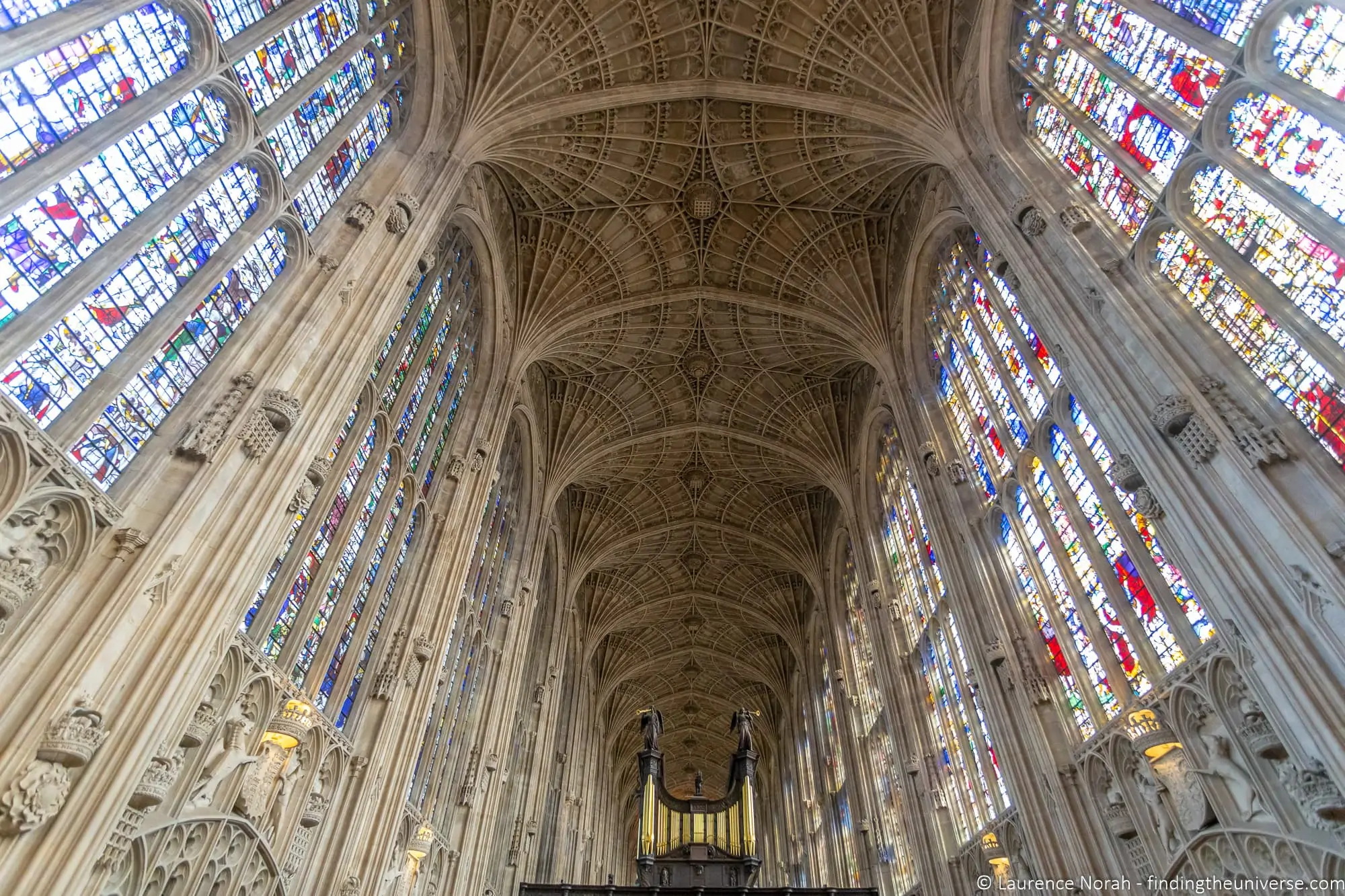
Table of Contents:
Quick Itinerary Summary
If you’re short on time, here’s the route at a glance. Each stop is covered in detail below.
10:15am Coffee and Chelsea buns at Fitzbillies (Trumpington Street)
10:45am Fitzwilliam Museum (free, 2 min walk south)
11:15am Pembroke College (free, 5 min walk north)
11:30am Corpus Clock and King’s Parade (2 min walk)
11:45am King’s College Chapel (pre-book tickets, £15-£17.50)
12:30pm Pub lunch at The Eagle (3 min walk east)
1:30pm Trinity College (£5 guided tour) and Wren Library (free, closes 2pm)
2:30pm St. John’s College and Bridge of Sighs (£12, next door)
3:30pm Punting on the River Cam (45-50 min guided tour)
4:30pm Great St. Mary’s tower (123 steps, small fee) and Market Square
My Cambridge Day Trip Itinerary
This itinerary assumes you’re arriving by train from London. The fastest trains from King’s Cross take around 50 minutes, and if you catch one that gets you in around 10am, you’ll have a full day to work with. I’d recommend booking your train tickets in advance for the best prices.
From Cambridge station, it’s about a 25-minute walk into the city centre (around 1.2 miles). You could take a bus or taxi, but the walk is pleasant enough and gives you a sense of the city as you go.
Here’s how I’d spend the day.
Morning Coffee and Fitzbillies (~10:15am)
Once you’re in the centre, head to Fitzbillies on Trumpington Street. This is a Cambridge institution, famous for its Chelsea buns, which have been baked here since 1920. It gets pretty busy, so arrive mid-morning, before the lunch rush. Have a coffee and a pastry, and you’re set for the morning.
If Fitzbillies has a queue (which happens on weekends), the Old Bicycle Shop on Regent Street is another good option, with a more modern brunch menu.
The Fitzwilliam Museum (~10:45am)
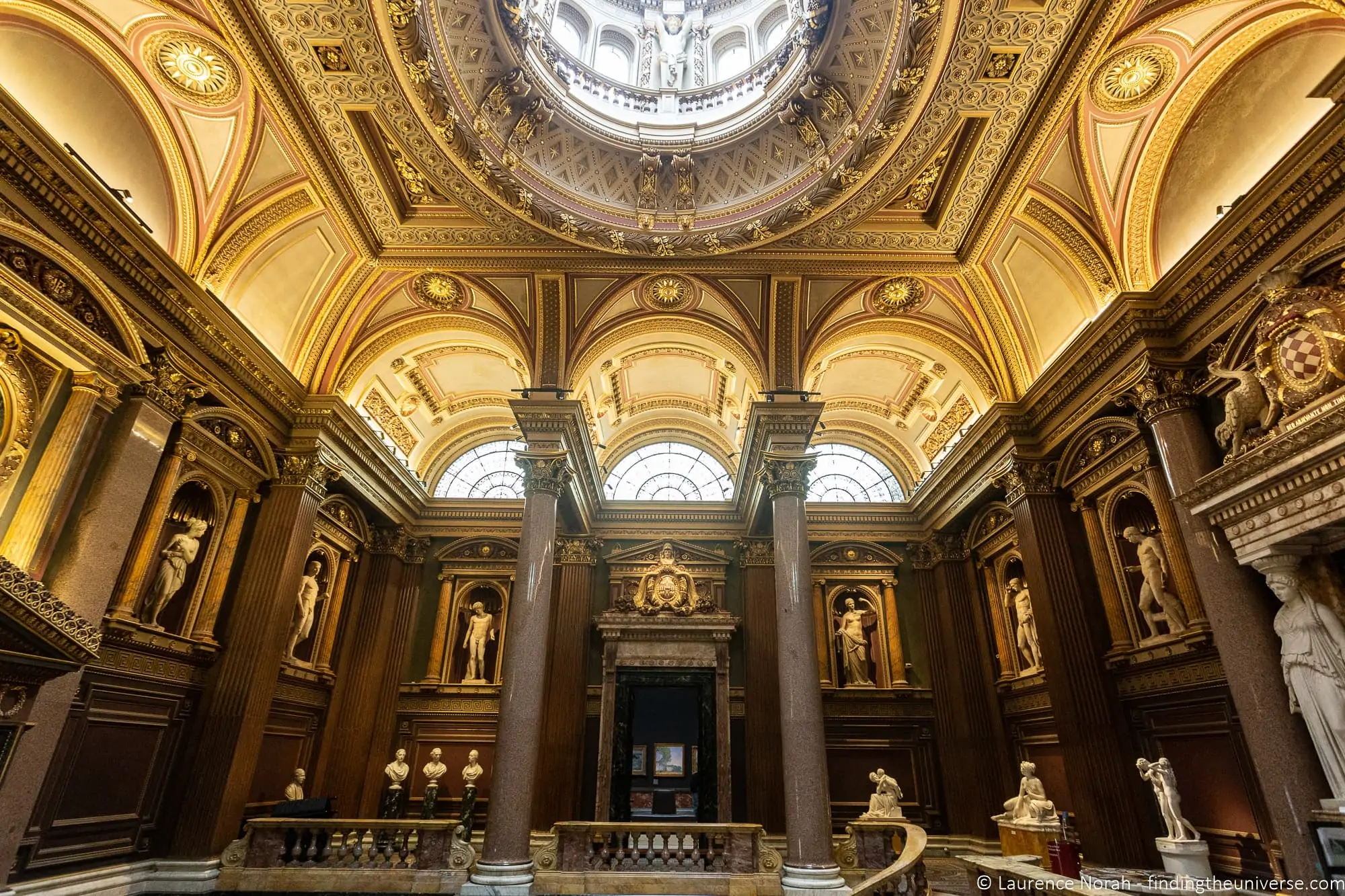
From Fitzbillies, it’s a two-minute walk south to the Fitzwilliam Museum. You could spend half a day here, but even 30 minutes is enough to see the entrance hall (which is worth visiting for the architecture alone) and a few of the highlights. The collection covers everything from Egyptian antiquities to paintings by Turner, and entry is free.
The museum is open 10am to 5pm, Tuesday to Saturday, and midday to 5pm on Sundays. It’s closed on Mondays, which is worth knowing if you’re planning your trip.
Pembroke College (~11:15am)
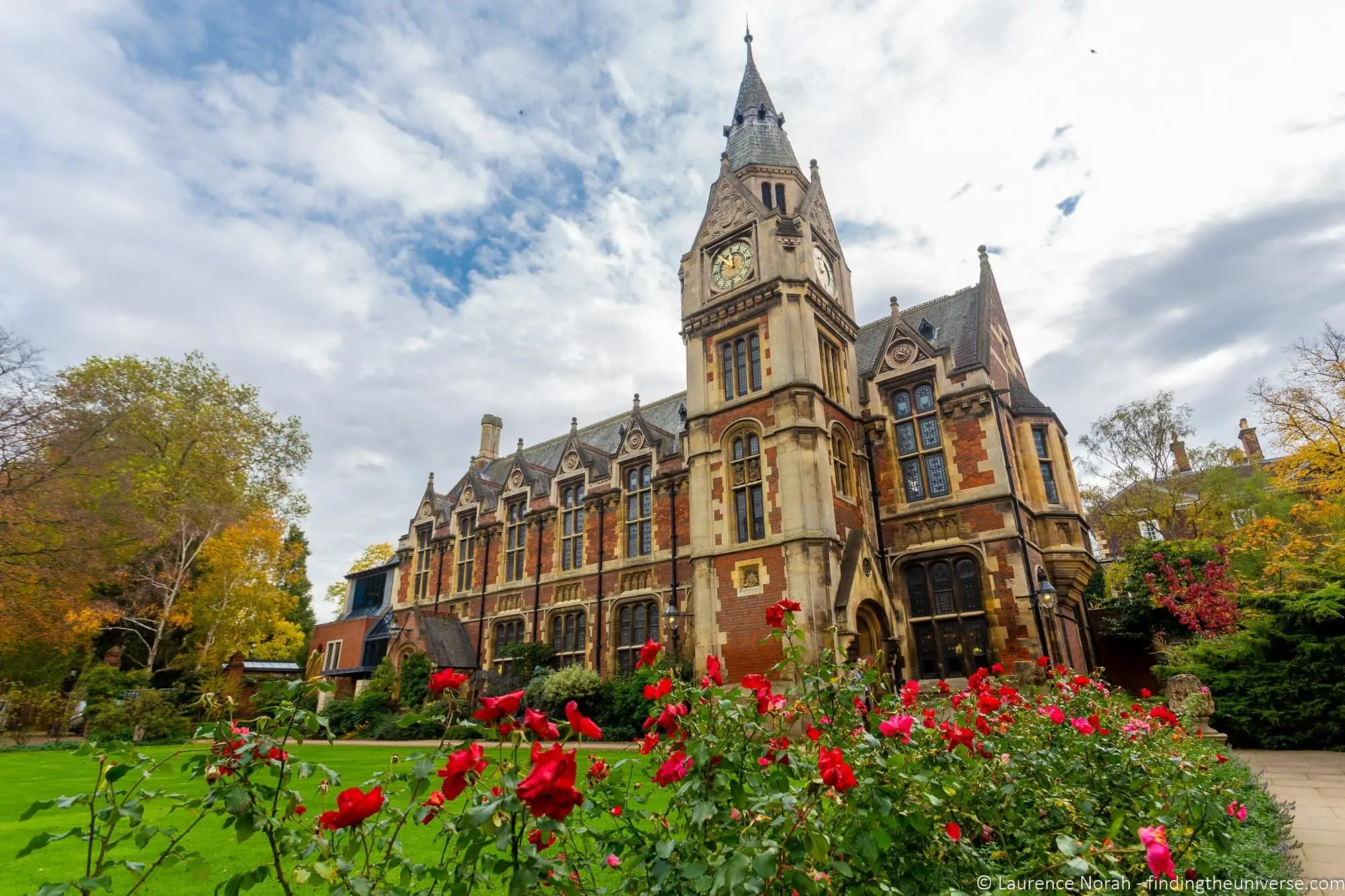
Walk back north along Trumpington Street for about five minutes and you’ll reach Pembroke College on your left. Founded in 1347, it’s one of the oldest colleges, and it’s free to visit. The gardens are lovely, and the chapel is worth a look. It’s a quieter, less crowded alternative to the bigger-name colleges, which makes it a nice way to ease into the Cambridge college experience.
Corpus Clock and King’s Parade (~11:30am)
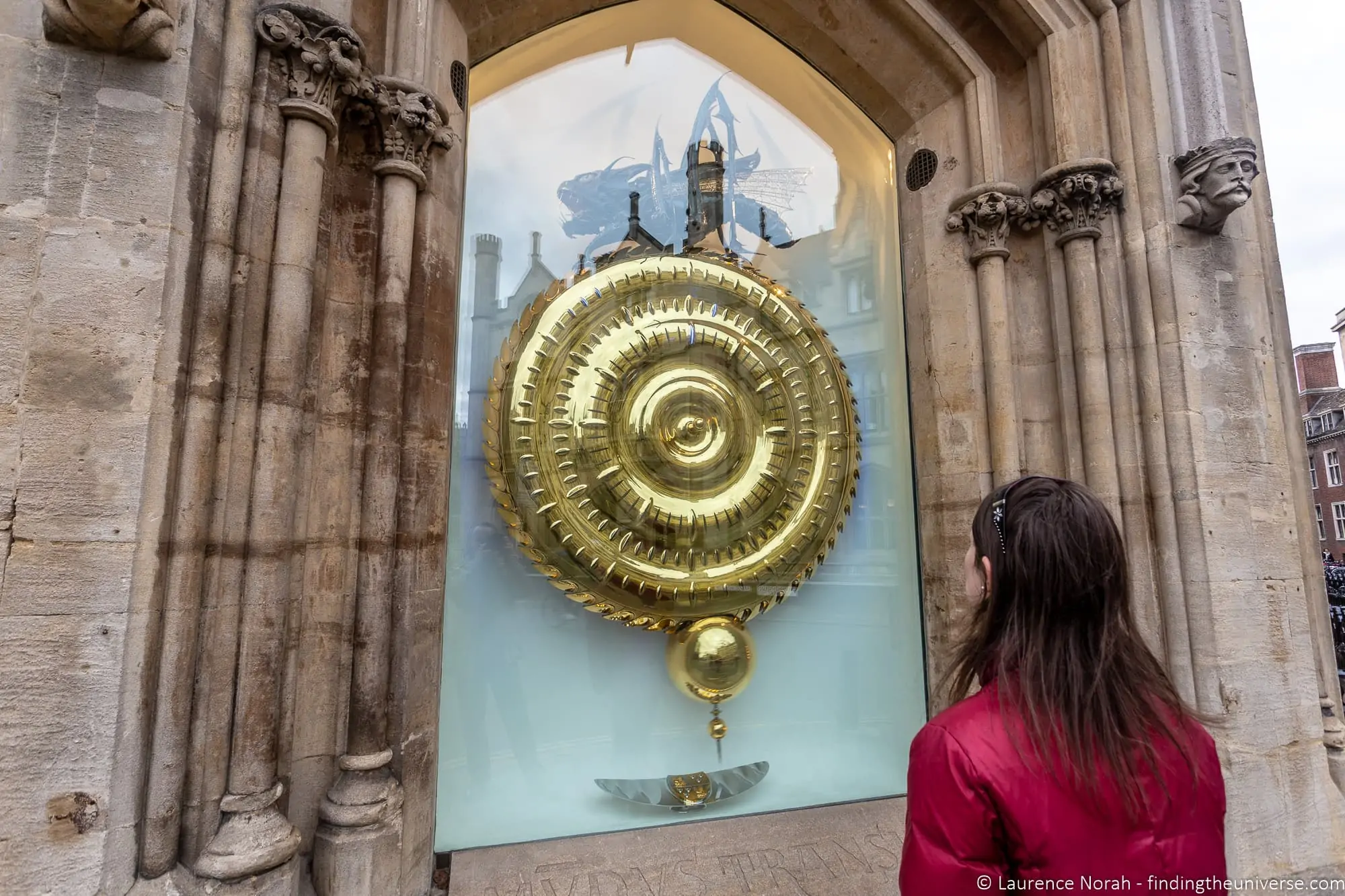
Continue north for a couple of minutes and you’ll pass the Corpus Clock on the corner of Bene’t Street and Trumpington Street. This gold-plated, 1.5-metre-wide timepiece cost over a million pounds to create and involved more than 200 people in its construction. The huge grasshopper on top, known as the Chronophage (“time eater” in Greek), appears to eat the seconds as they tick by. It’s only truly accurate once every five minutes, and figuring out the time from the LED display is part of the fun.
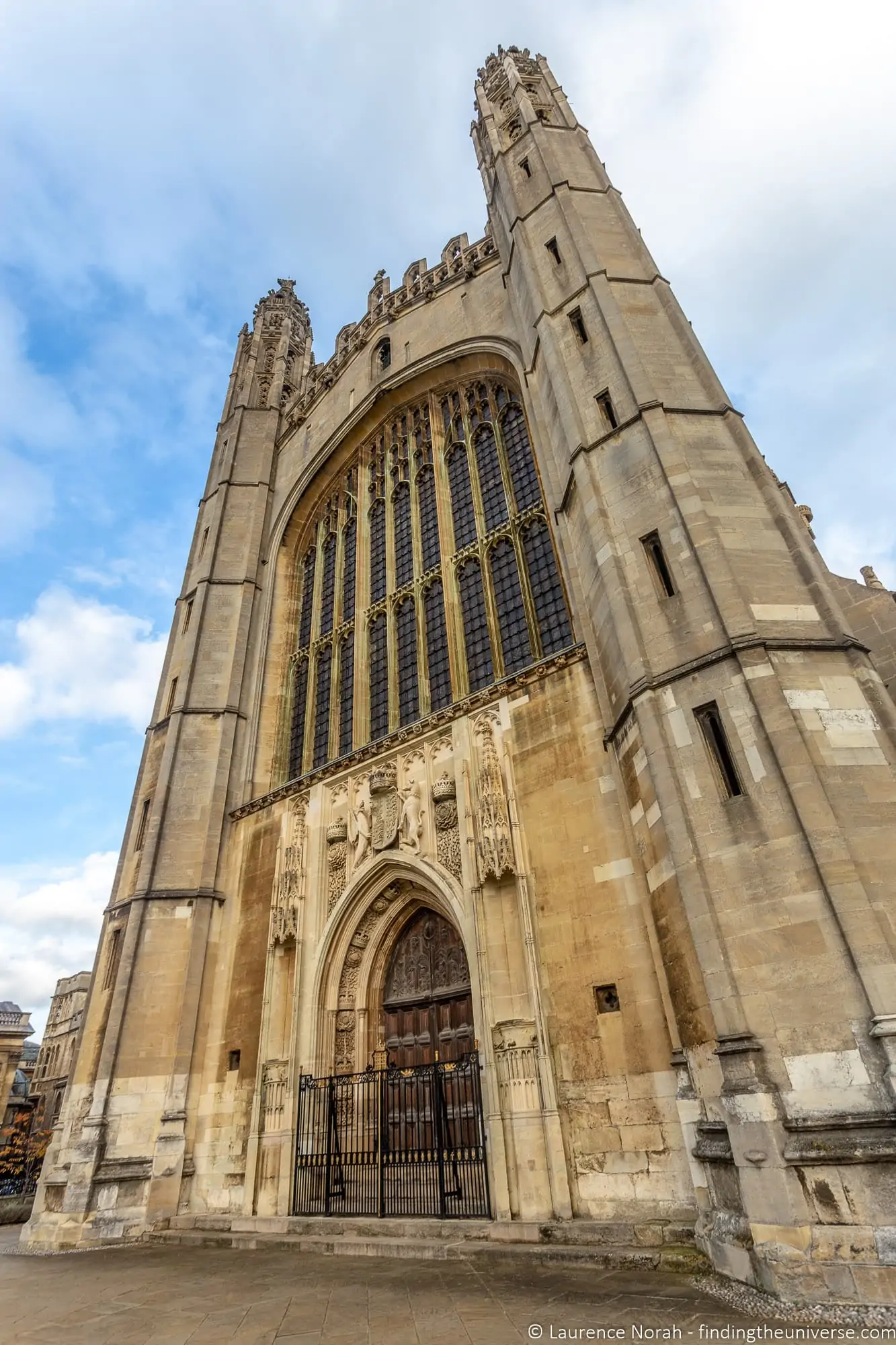
From here, continue onto King’s Parade, which is the heart of historic Cambridge. The view of King’s College Chapel from this street is one of those moments where you just have to stop and look.
King’s College Chapel (~11:45am)
If there’s one building that defines Cambridge, it’s King’s College Chapel. Built in the 15th century in the Perpendicular Gothic style, it has the largest fan vault in the world, spectacular stained-glass windows, and a rood screen that Henry VIII funded as part of his wedding celebrations for Anne Boleyn.
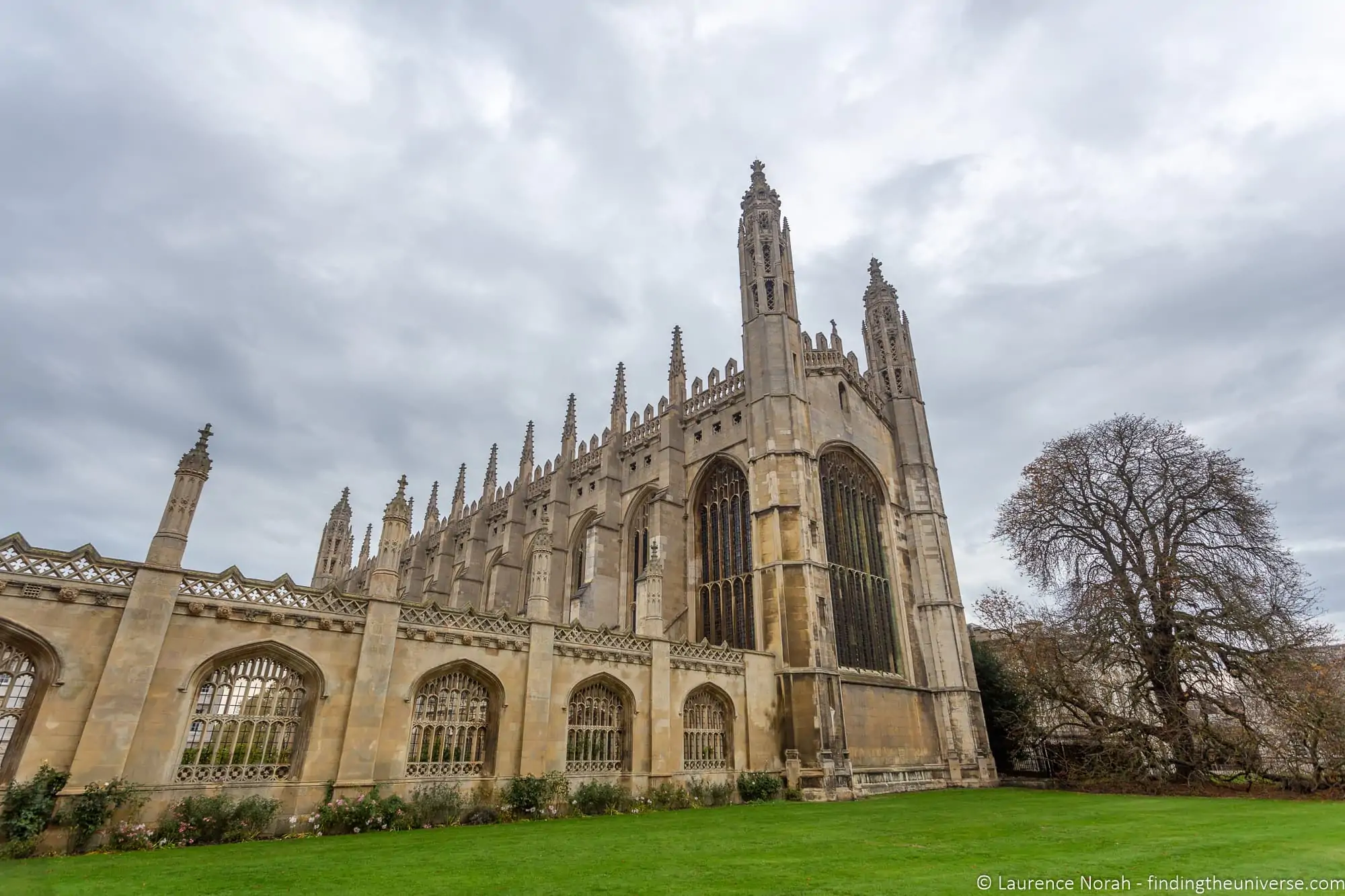
The chapel is still in active use as a place of worship, and it’s home to the King’s College Choir. If you’ve watched the BBC’s Christmas Eve broadcast, the solo performance of Once in Royal David’s City is sung live from this chapel.
Tickets for daytime visits can be purchased online in advance, and I’d recommend doing so, especially in summer. Prices start around £15 for adults with advance booking and go up to around £17.50 on the day. Your ticket also gives you access to the college grounds.
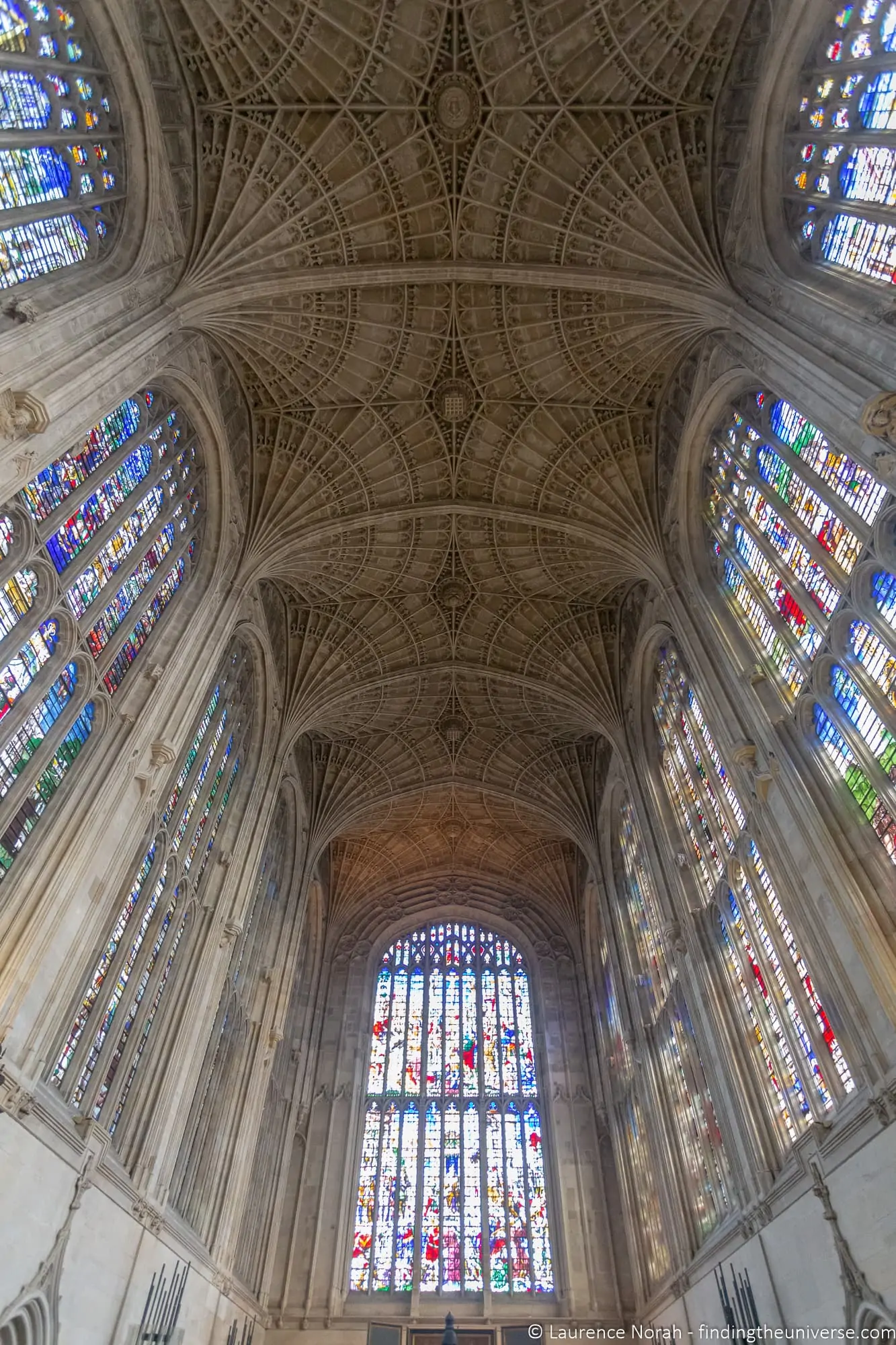
Evensong tip: If you can time your visit for late afternoon instead, attending Evensong at the chapel is free and is one of the most memorable experiences in Cambridge. The acoustics are extraordinary. Evensong is typically held at 5:30pm on most days during term time. Check the chapel website for the schedule. Just be aware that these are active church services and visitors need to be mindful that things like photography and video recording are strictly prohibited. More on visiting during a service here.
You can also see King’s College Chapel as part of a walking tour led by a Cambridge graduate.
Pub Lunch at The Eagle (~12:30pm)
Head east from King’s Parade along Bene’t Street for a couple of minutes to reach the Eagle pub. This is where Watson and Crick announced that they’d discovered the structure of DNA, which is reason enough to visit. But it’s also arguably the oldest pub in Cambridge, having opened in 1667, and it serves a solid pub lunch.
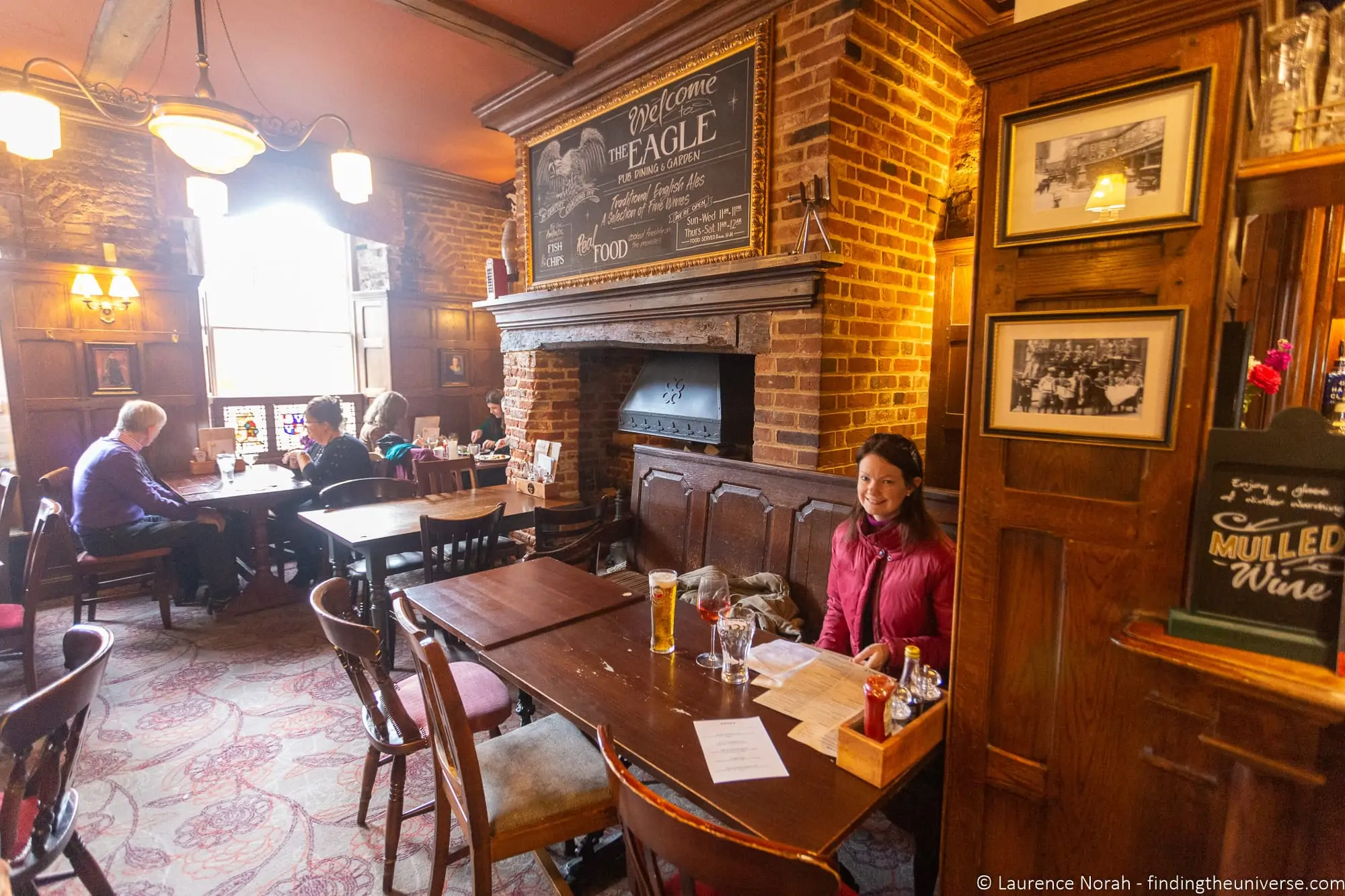
We had an excellent lunch and a pint of ale here, and I’d recommend it. Go for classic pub fare: steak and ale pie, fish and chips, or sausage and mash. Upstairs, there’s a room known as the RAF Room, where the graffiti of World War II airmen covers the ceiling.
If The Eagle is packed (it gets busy, especially at weekends), The Anchor on Silver Street is a good alternative with tables overlooking the river. For something sweet after lunch, Jack’s Gelato on Bene’t Street is widely considered some of the best ice cream in Cambridge.
Trinity College and the Wren Library (~1:30pm)
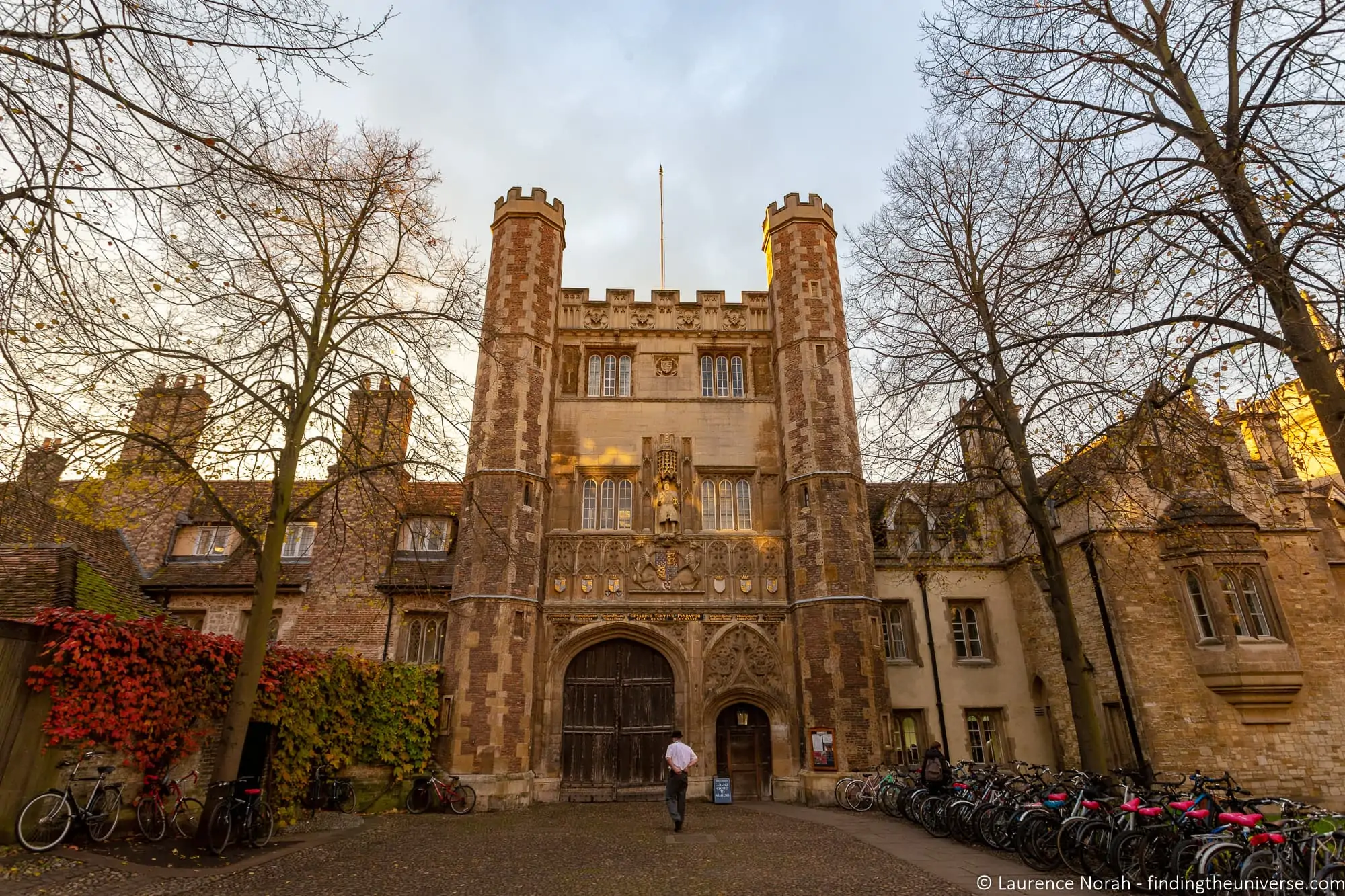
Trinity College is the largest and wealthiest college in Cambridge. Founded by Henry VIII in 1546, its alumni include Isaac Newton, Lord Byron, Bertrand Russell, and 34 Nobel Prize winners to date.
The college offers guided tours led by porters at £5 per person (children under 12 free). These cover the Great Court, the Clock Tower, and the Chapel. In front of the college, just outside Newton’s old rooms, there’s an apple tree. It’s often said this is the tree that inspired his theory of gravity, but the actual tree is at Woolsthorpe Manor in Lincolnshire. This one is a descendant.
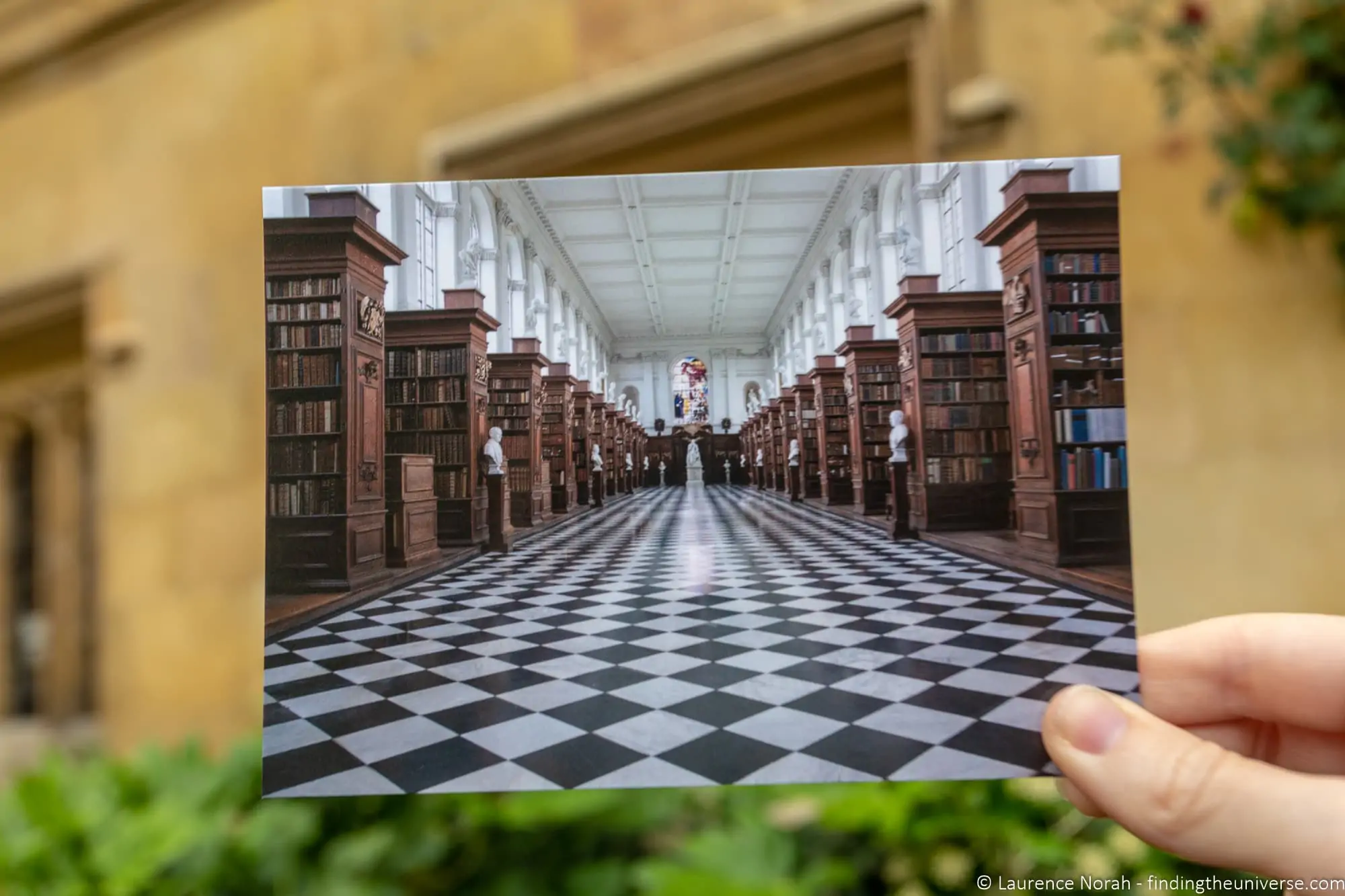
The real highlight at Trinity is the Wren Library, designed by Sir Christopher Wren (who also designed St. Paul’s Cathedral in London). The library is a single long room with huge windows that flood it with natural light. At the end of each bookshelf are limewood carvings by Grinling Gibbons.
The display cases hold some extraordinary items: Isaac Newton’s first edition of Principia Mathematica with his handwritten notes for the second edition, A.A. Milne’s manuscripts for Winnie the Pooh, and an 8th-century copy of the Epistles of St. Paul, among others.
The Wren Library is free to visit but has limited opening hours: Monday to Friday, 12pm to 2pm, plus some Saturday mornings in term time (10:30am to 12:30pm). Access is via Garret Hostel Lane, not through the main college entrance. Photography is not permitted inside. There’s a small gift shop that’s cash only.
The timing works well here: if you finish lunch around 1:30pm, you can catch the tail end of the library’s opening window before it closes at 2pm, then take the Trinity guided tour afterwards.
St. John’s College and the Bridge of Sighs (~2:30pm)
From Trinity, it’s a short walk north to St. John’s College, which is right next door. Founded in 1511, its alumni include William Wordsworth, Douglas Adams (author of The Hitchhiker’s Guide to the Galaxy, which happens to be my favourite book), and Paul Dirac.
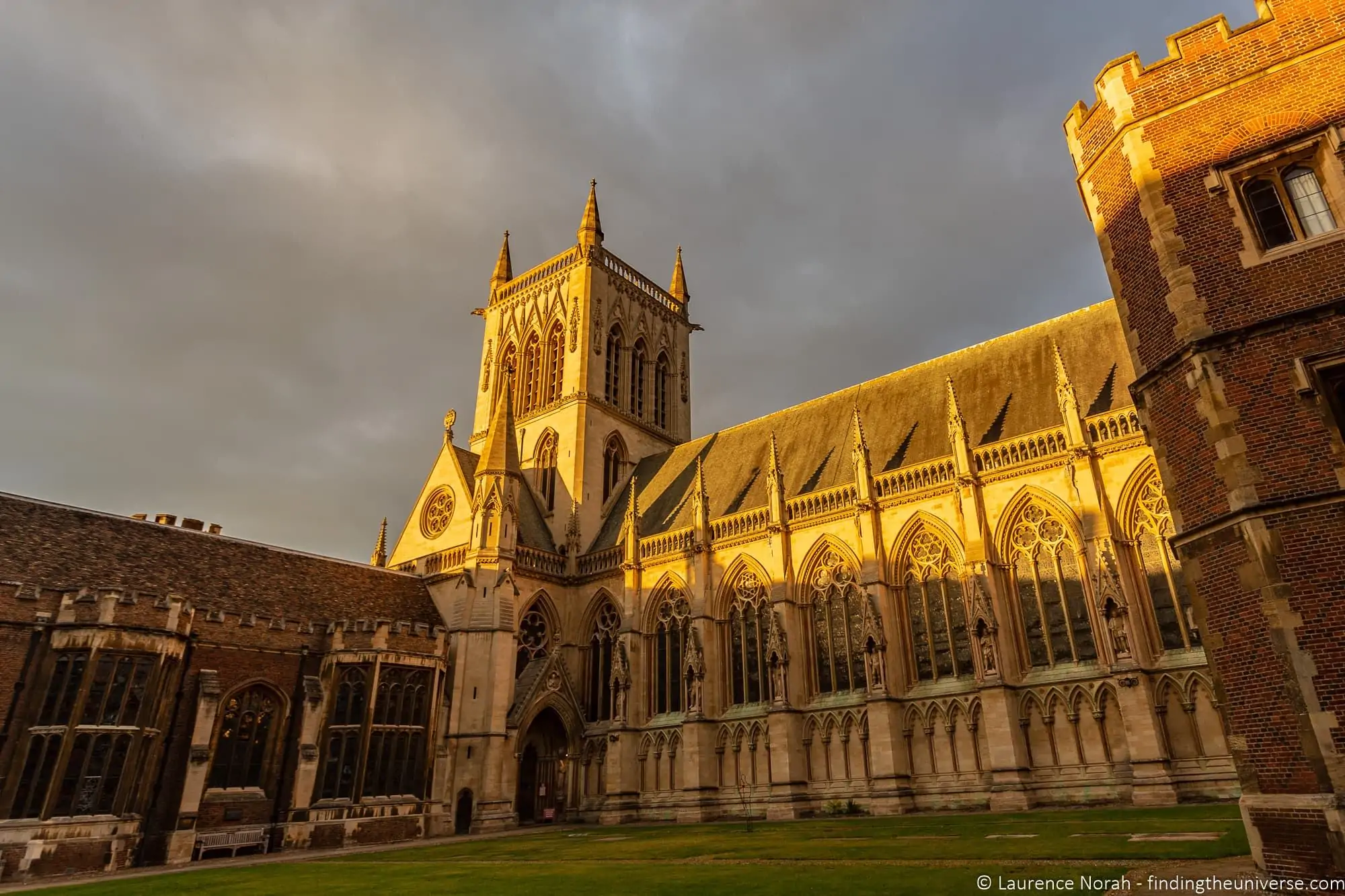
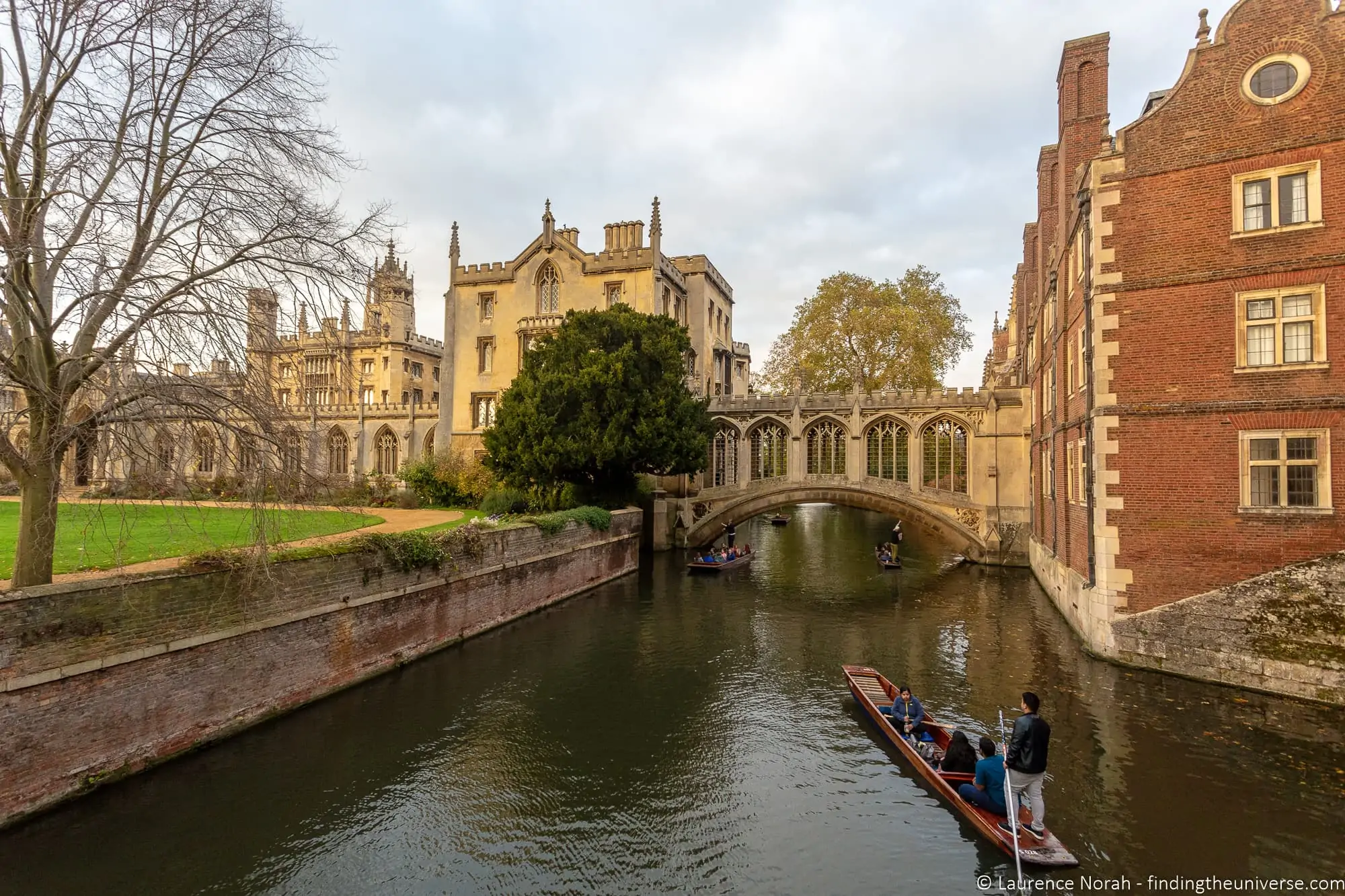
The college is well set up for visitors, with a signed self-guided walking route. The main draw is the Bridge of Sighs, an enclosed bridge over the River Cam from 1831 that Queen Victoria reportedly called her favourite sight in Cambridge. The chapel and gardens are also worth your time.
Admission is £12 for adults and £6 for concessions. The grounds are open year-round (except 25 Dec to 2 Jan), from 10am to 5:30pm in summer and 10am to 3:30pm in winter. See the official website for current details.
Punting on the River Cam (~3:30pm)
By mid-afternoon, your feet will be grateful for the chance to sit down, and punting is the perfect way to see Cambridge from a completely different angle. The punt tours run along the college backs, passing behind King’s, Trinity, and St. John’s, and under the Bridge of Sighs and the Mathematical Bridge.
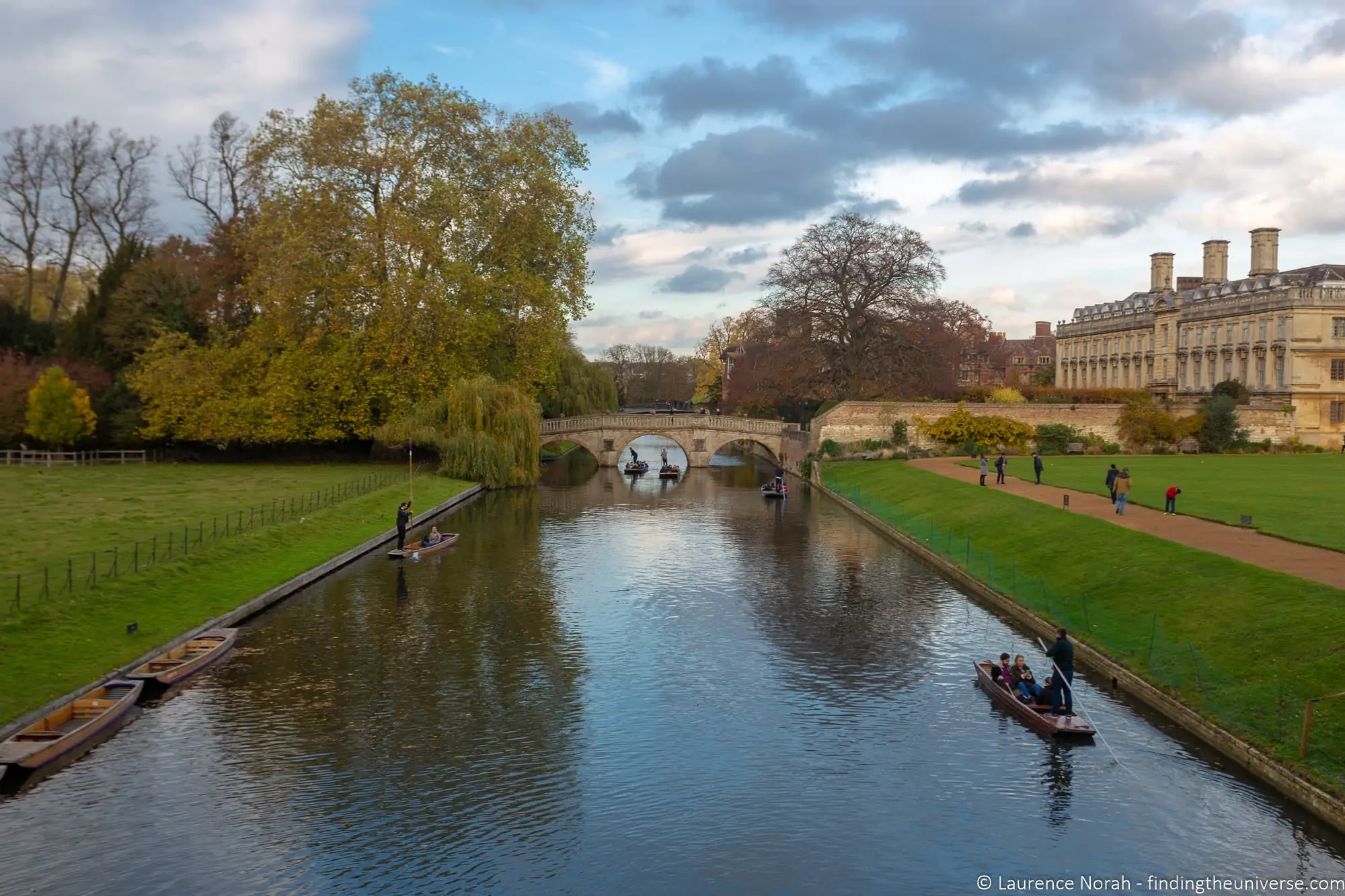
I’ve tried punting myself, and it’s a lot harder than it looks. My attempts were slow, indirect, and involved a lot more spinning in circles than I’d like to admit. I didn’t fall in, at least, but I’d generally recommend letting someone more experienced handle the pole while you sit back and enjoy the commentary. A guided punt tour of about 45 to 50 minutes is the way to go.
There are several operators, but I’d recommend this shared punt tour with the Traditional Punting Company, which covers the college backs with a knowledgeable guide. If you’d like to combine punting with a walking tour, this alumni-led combo tour includes both, with the option to add King’s College Chapel entry.
Great St. Mary’s Tower and Market Square (~4:30pm)
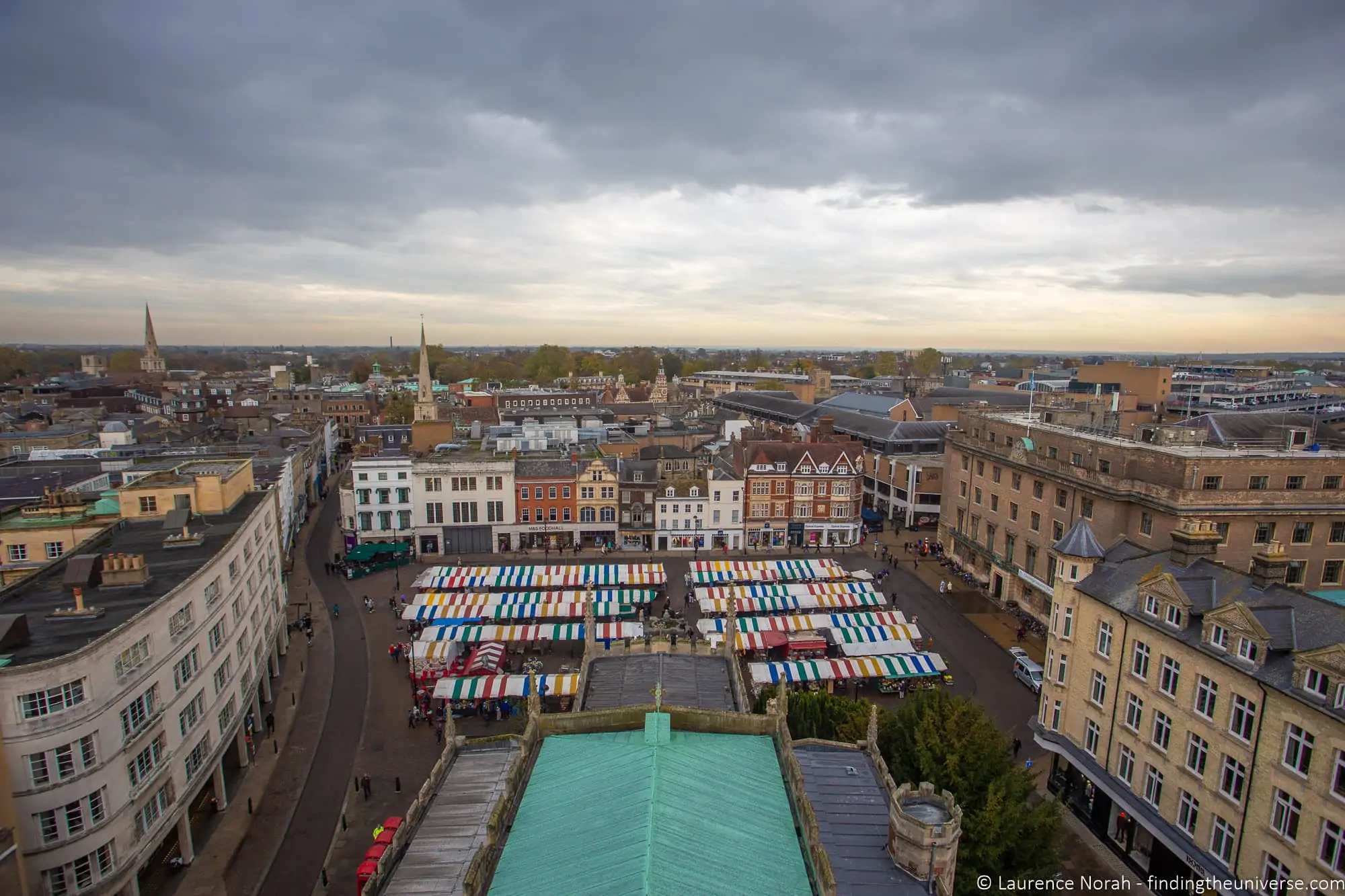
If you still have energy (and daylight), two more stops make a nice end to the day. Great St. Mary’s Church is directly opposite King’s College, and for a small fee you can climb the 123 steps to the top of the tower for panoramic views over the colleges and the city.
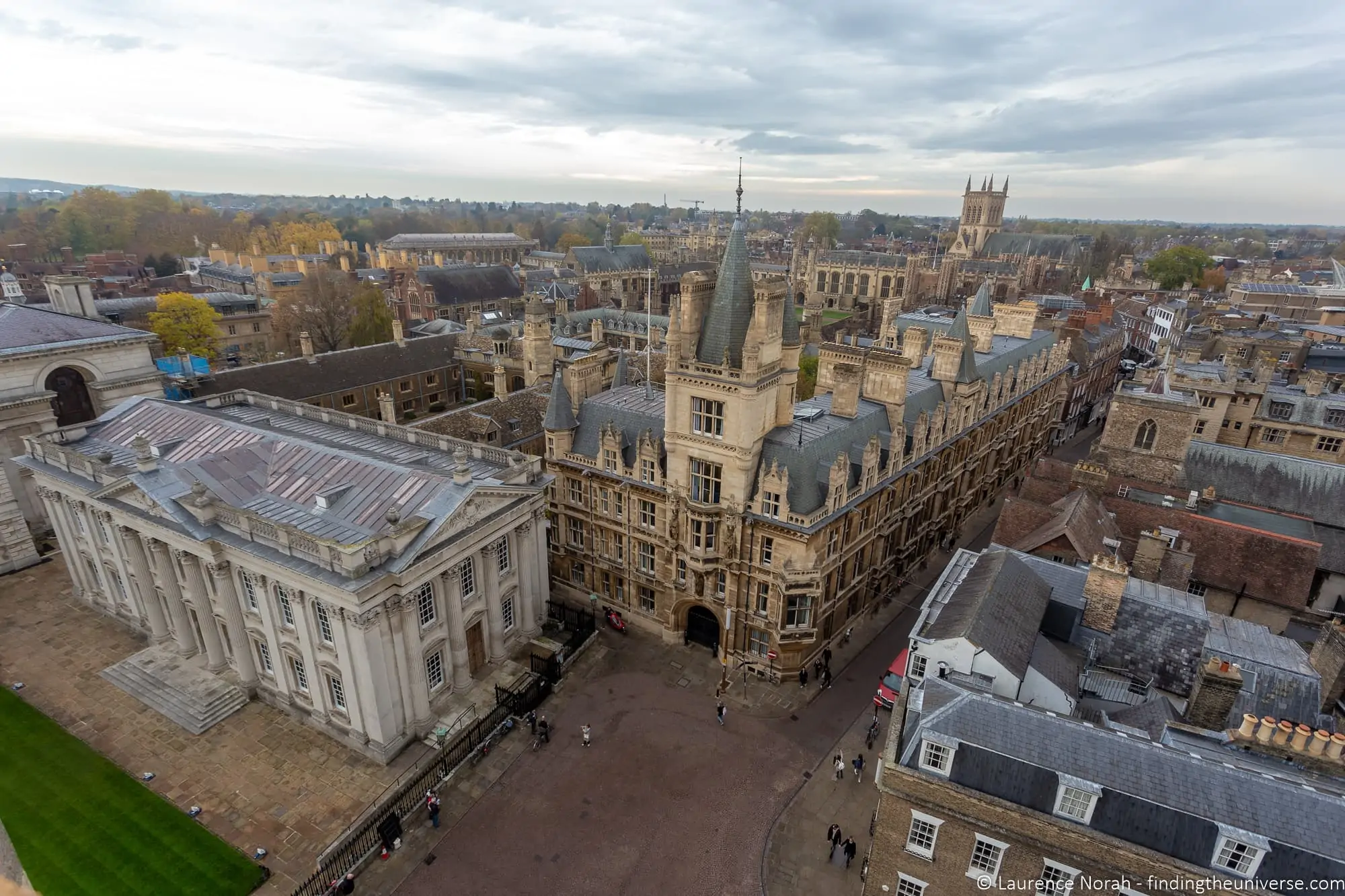
The church itself dates from the 15th century, and all university undergraduates must live within three miles of it. It’s open Monday to Saturday 10am to 5:30pm (4:30pm in winter), and Sundays 12:15pm to 5pm (4pm in winter).
Right next to the church is Cambridge Market. There’s been a market here since the Middle Ages, and today you’ll find stalls selling everything from food to books to vintage clothing. It runs Monday to Saturday, 10am to 4pm. On Sundays, it shifts to arts, crafts, and organic produce.
More Things to Do in Cambridge
The itinerary above covers the highlights for a day trip, but Cambridge has far more to offer. Here’s what to see if you have more time, or if you want to swap something into the itinerary above.
More Colleges to Visit
There are 31 colleges in Cambridge, and visiting a few of them is one of the great pleasures of the city. Beyond King’s, Trinity, and St. John’s, here are a few more I’d recommend.
Do note that all colleges are places of work and study. Always check at the porter’s lodge whether visitors are welcome, respect any restrictions, and keep noise to a minimum. Some colleges close during exam periods (broadly April to June).
You can explore many colleges on your own, or take a walking tour led by a Cambridge graduate, where you’ll hear about student life as well as the history. A private version is also available.
Christ’s College
Originally founded as God’s House in 1437, Christ’s College was where Charles Darwin and John Milton studied. The highlights are the original 15th-century buildings of the First Court, the Fellow’s Garden, and the Old Library, which houses over 50,000 rare printed books including first editions by Milton and Darwin.
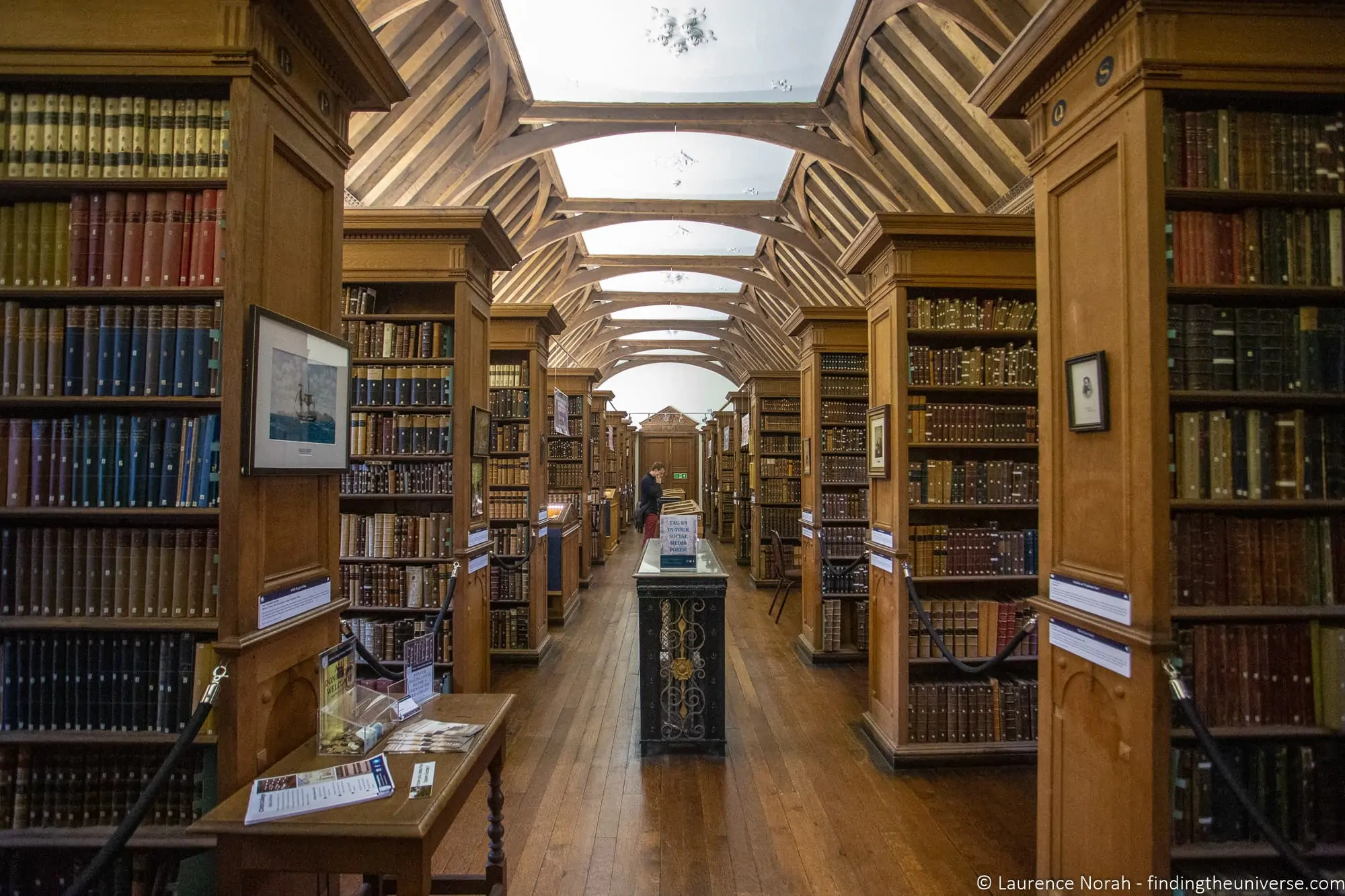
The college is free to visit, open daily 9am to 4pm year-round. See more about visiting here. The Old Library has limited public access; check the college website for current details.
Queens’ College and the Mathematical Bridge
The Mathematical Bridge is one of Cambridge’s most photographed landmarks. Built in 1749, this Grade II listed wooden footbridge looks curved but is built entirely from straight timbers. The clever engineering is why the nickname stuck.
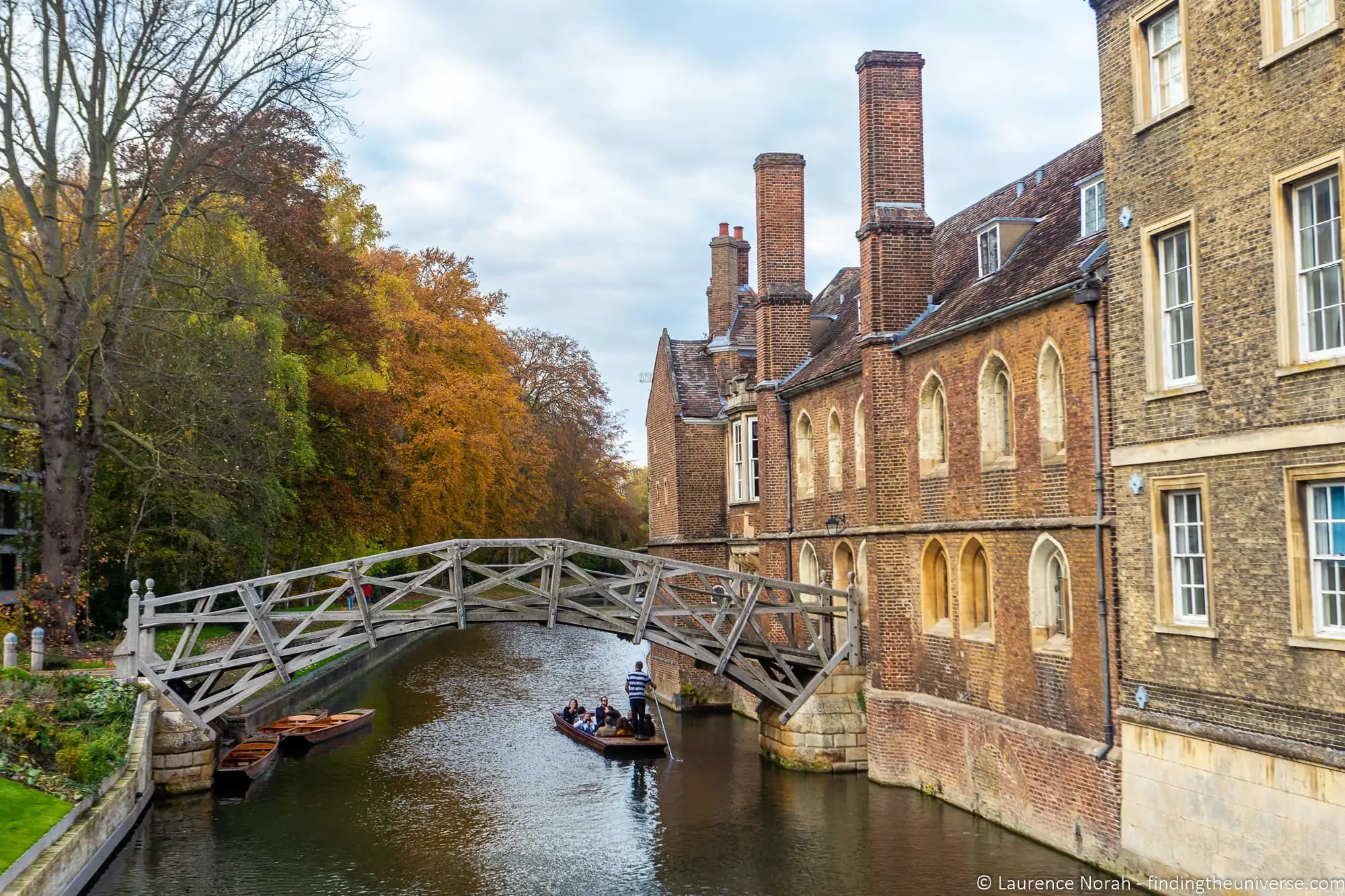
To see the bridge up close, you’ll need to visit Queens’ College, which costs £5 at time of writing. You can see opening hours and visitor information here. You’ll also get a good view of the bridge from a punting tour, or a more distant view from the Silver Street road bridge.
Other Colleges Worth Visiting
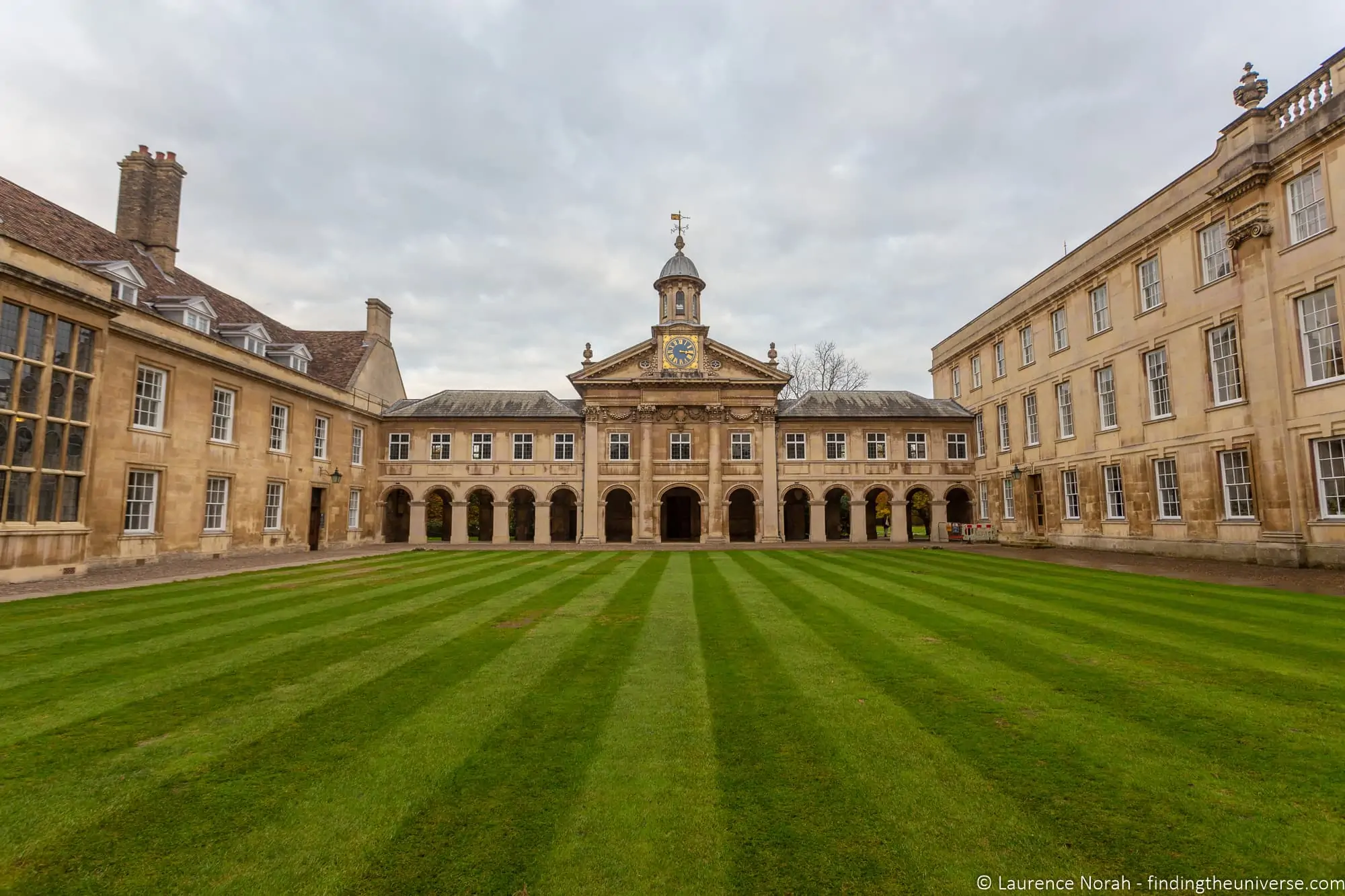
If you’re visiting Cambridge outside exam season, there are dozens of quieter colleges open to visitors for free. Emmanuel College, Downing College, and Peterhouse (the oldest college, founded in 1284) are all worth a wander, and you’ll often have their courtyards almost to yourself.
During the summer break, you can actually stay in some of the colleges. Christ’s College offers accommodation outside term time, which is a memorable way to experience Cambridge.
If you’re visiting for educational or research purposes, some colleges also offer access to their archives. Churchill College, for example, holds a significant collection of documents from the Churchill era (1874-1965).
Cambridge’s University Museums
Cambridge has eight university museums, all free to visit, and this is one of the things that sets it apart from other day trip destinations. You could easily spend a full day visiting just the museums. Here are the highlights.
Scott Polar Research Institute (Polar Museum)
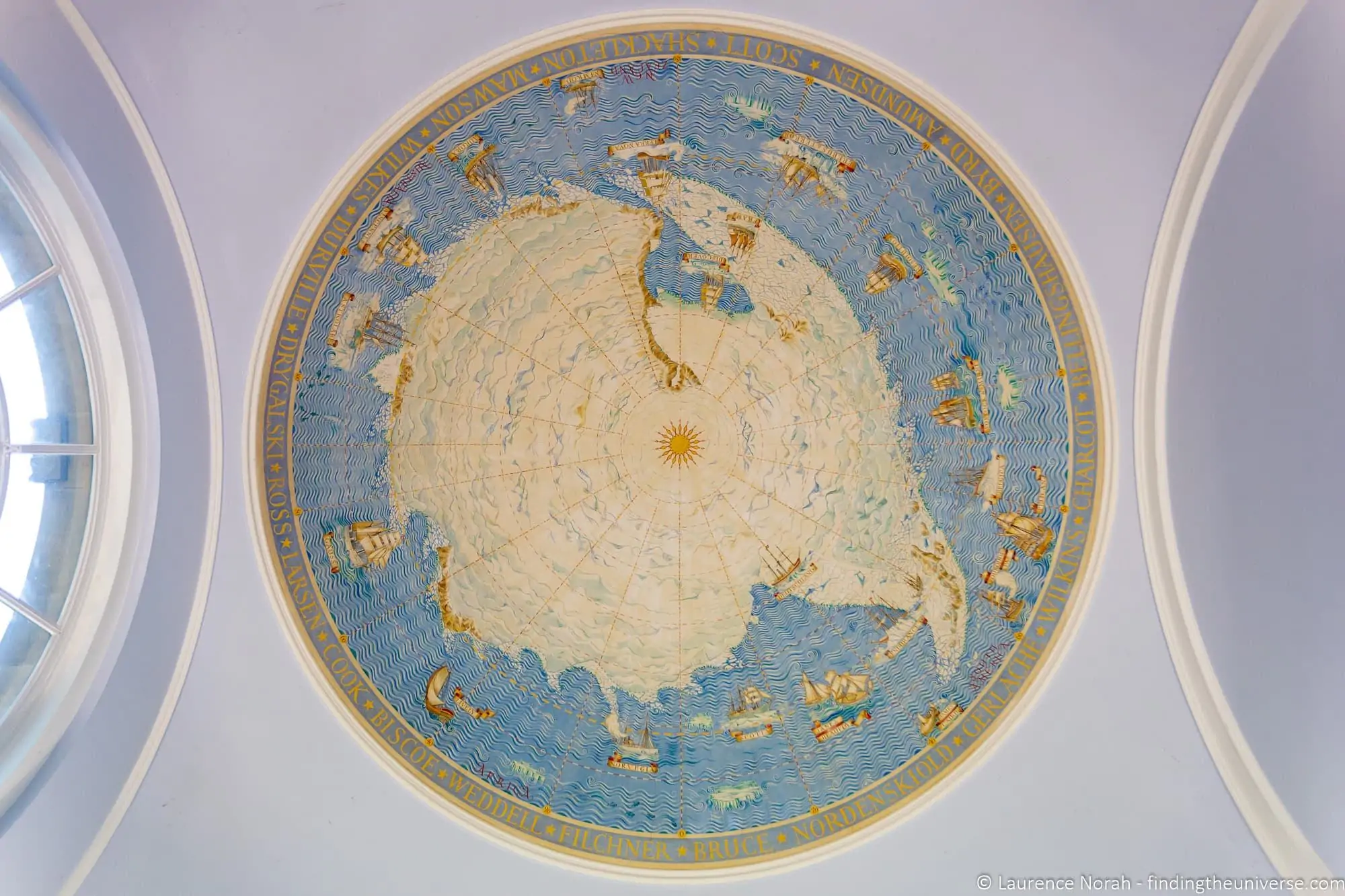
The Polar Museum is dedicated to the Arctic and Antarctic regions, and it’s named for Captain Robert Scott, who died on an expedition to the South Pole in 1912. The collection includes the last letters written by Scott, along with artefacts covering polar expeditions, geology, and wildlife. It’s small but absorbing. Open Tuesday to Saturday, 10am to 4pm. Free.
Sedgwick Museum of Earth Sciences
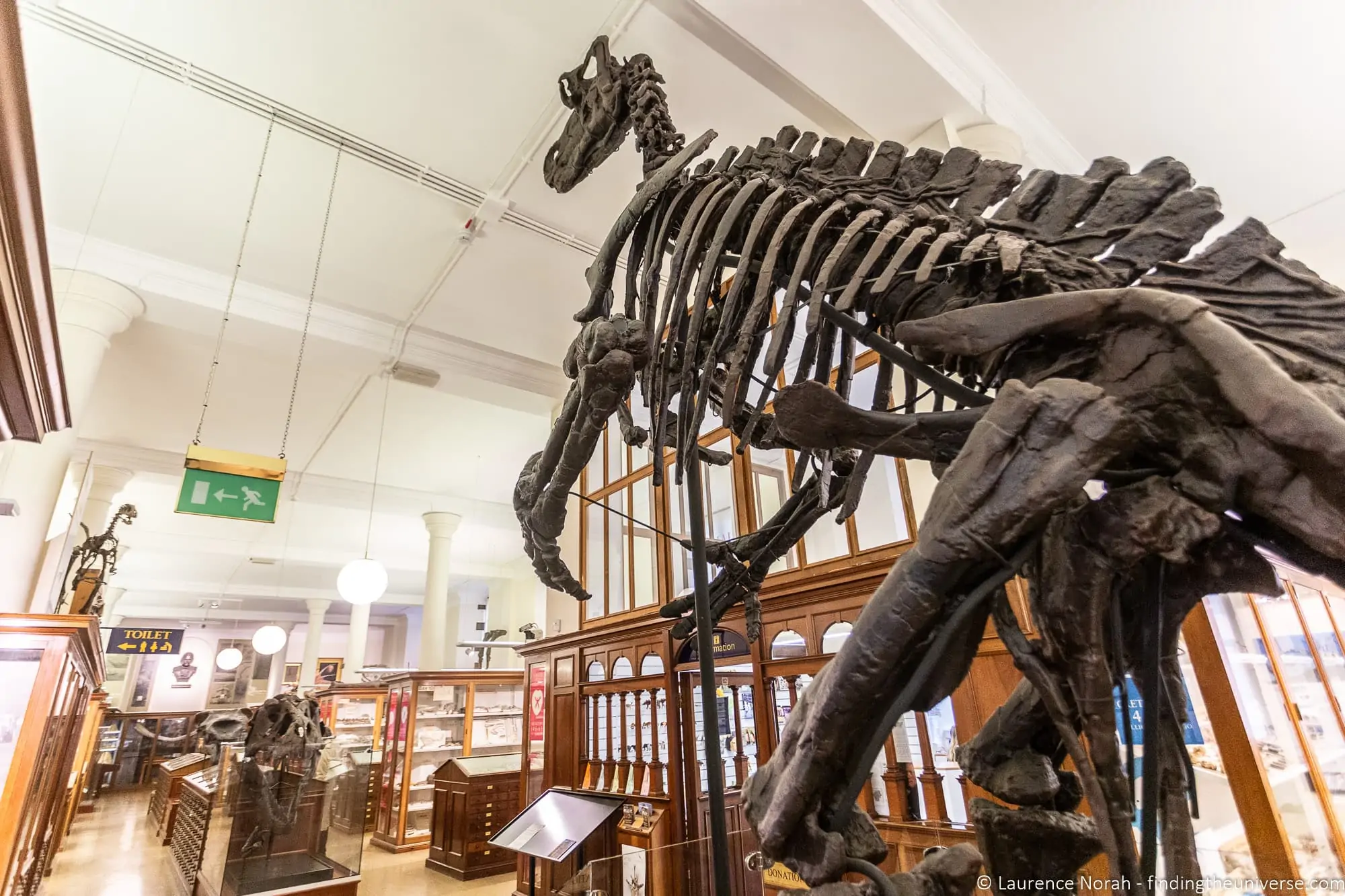
The Sedgwick Museum is the oldest of the university museums, established in 1728. Its collection of over 2 million specimens covers 4.5 billion years of Earth’s history, including fossils, minerals, and rocks. Open Monday to Friday 10am to 1pm and 2pm to 5pm, Saturday 10am to 4pm. Closed Sundays. Free.
Museum of Archaeology and Anthropology
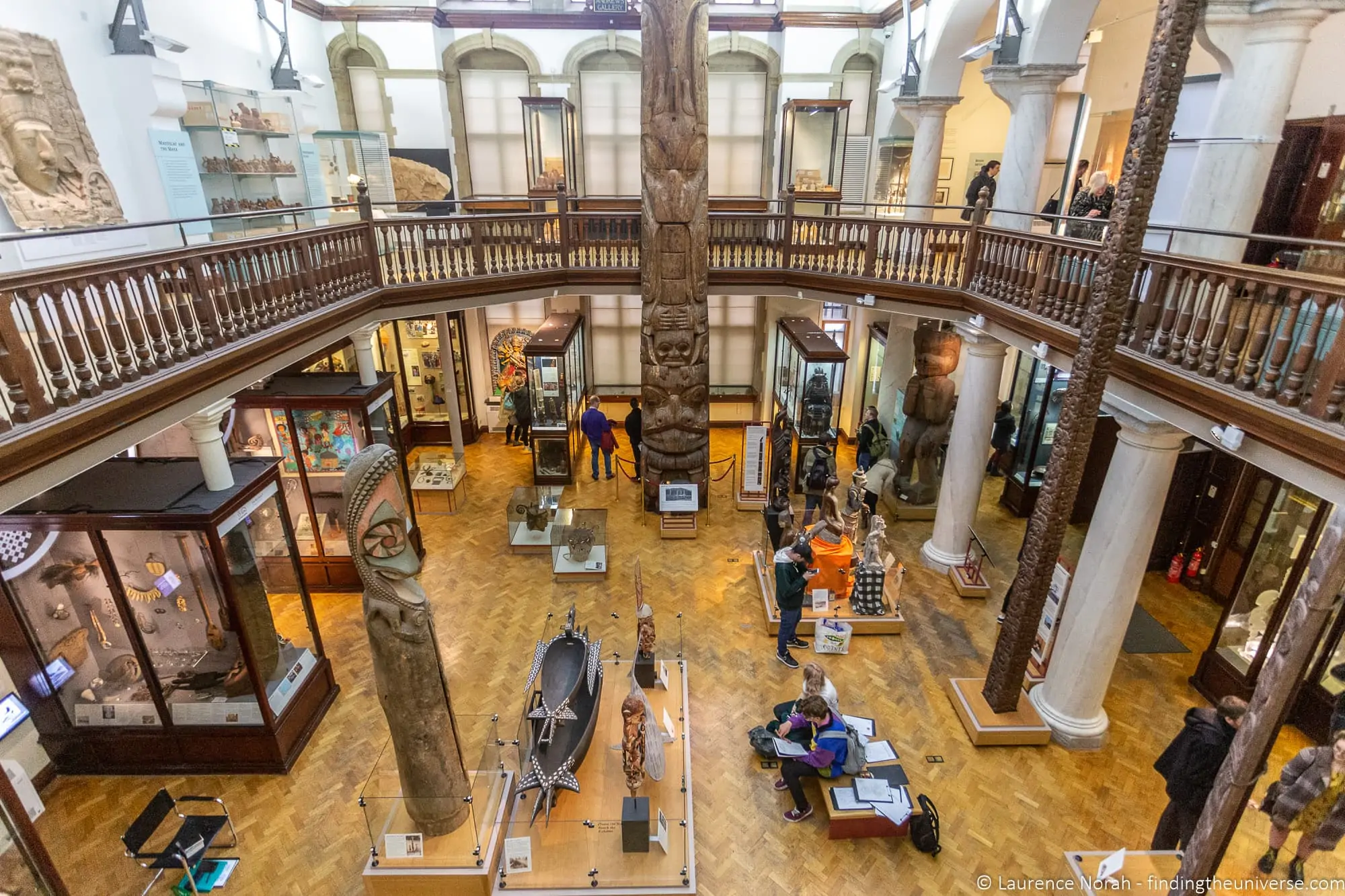
Dating from 1884, the Museum of Archaeology and Anthropology spans a couple of million years of human history with around a million artefacts. Highlights include a Haida Totem Pole and Roman and Anglo-Saxon items from Cambridgeshire. Open Tuesday to Saturday 10:30am to 4:30pm, Sunday noon to 4:30pm. Free.
Museum of Zoology
Part of the University’s Department of Zoology, the Museum of Zoology has a 22-metre fin whale skeleton in the entrance and specimens spanning the entire animal kingdom, including items discovered by Charles Darwin and Alfred Wallace. It’s particularly good for families. Open Monday to Saturday 10am to 4:30pm, Sunday noon to 4:30pm. Free.

Whipple Museum of the History of Science
The Whipple Museum has a collection of scientific instruments, models, and prints relating to the history of science. Highlights include a copy of Isaac Newton’s Principia Mathematica, Charles Babbage’s Difference Engine No 1, and some of Charles Darwin’s microscopes. Open Monday to Friday 12:30pm to 4:30pm, plus the third Saturday of each month 10am to 4pm. Free.

Kettle’s Yard
For 20th-century and contemporary art, Kettle’s Yard is set in the former home of Jim and Helen Ede, four cottages merged into one property. The art collection is displayed informally, much as it was when the Edes lived here. Entry is free, but a timed ticket system manages visitor numbers. Book online in advance if you want to be sure of getting in. Open Tuesday to Sunday, 11am to 5pm.
Centre for Computing History
Charles Babbage, who designed the first computer, studied at Cambridge, so it’s fitting that the city is home to the Centre for Computing History. The collection has over 24,000 items including vintage computers, game consoles, and mobile phones, with lots of interactive exhibits. It reminded us of the Computer History Museum in California. Open Wednesday to Sunday, 10am to 5pm. Small admission fee.
Museum of Cambridge
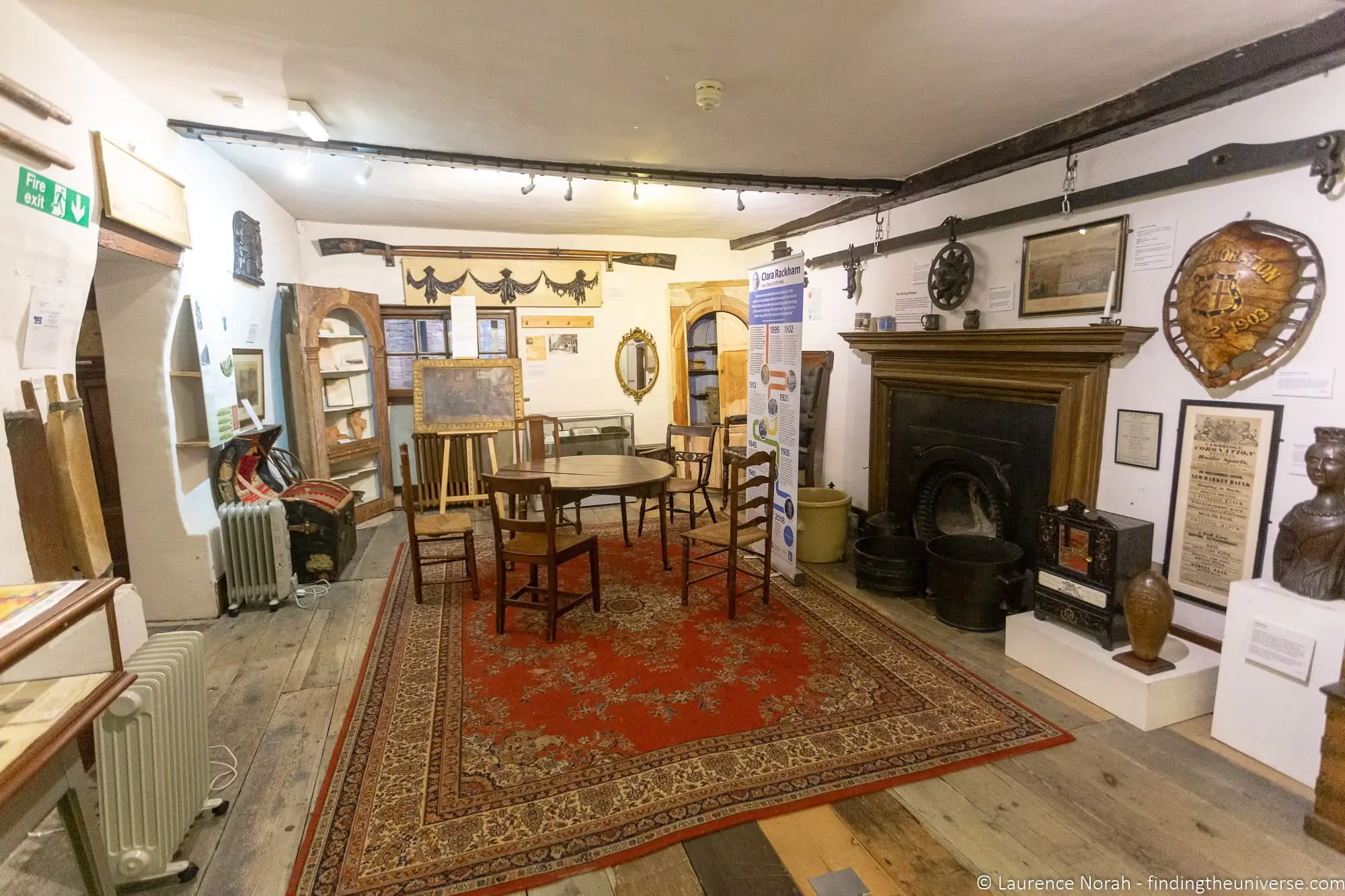
At the northern end of the city, the Museum of Cambridge covers the history of the city and county over the last 300 years. It’s set in a 17th-century coaching inn, which gives it a lovely atmosphere. Open all week, although Monday visits are by guided tour only. Small admission fee.
Other Highlights
The Round Church
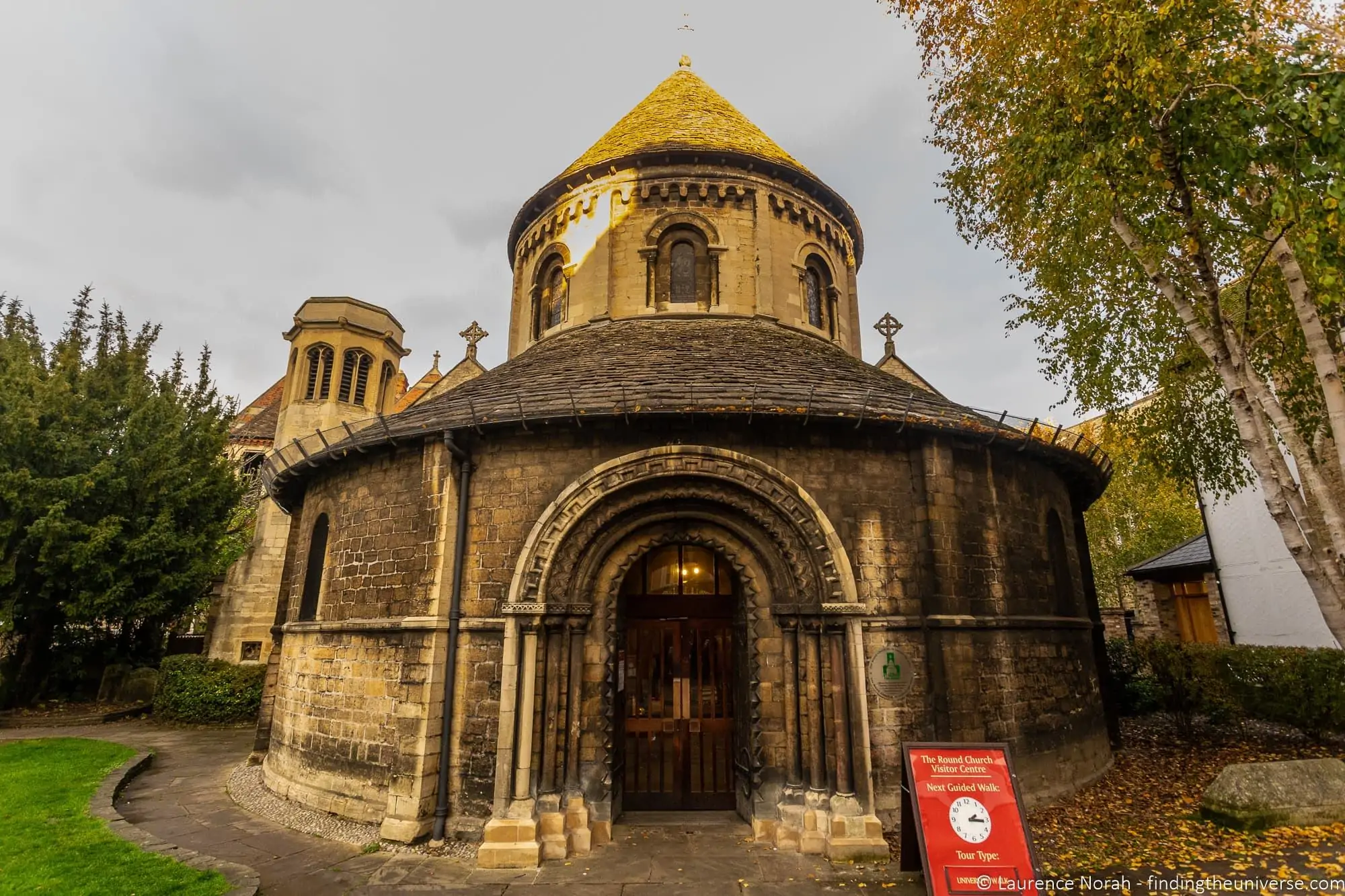
The Church of the Holy Sepulchre, known as the Round Church, is a 12th-century stone church and one of only four medieval round churches still in use in England. It has an exhibition on the history of Christianity’s influence on education and science, plus a film about Cambridge’s history. Open daily except Sunday, 11am to 4:30pm. Small admission fee.
Castle Mound
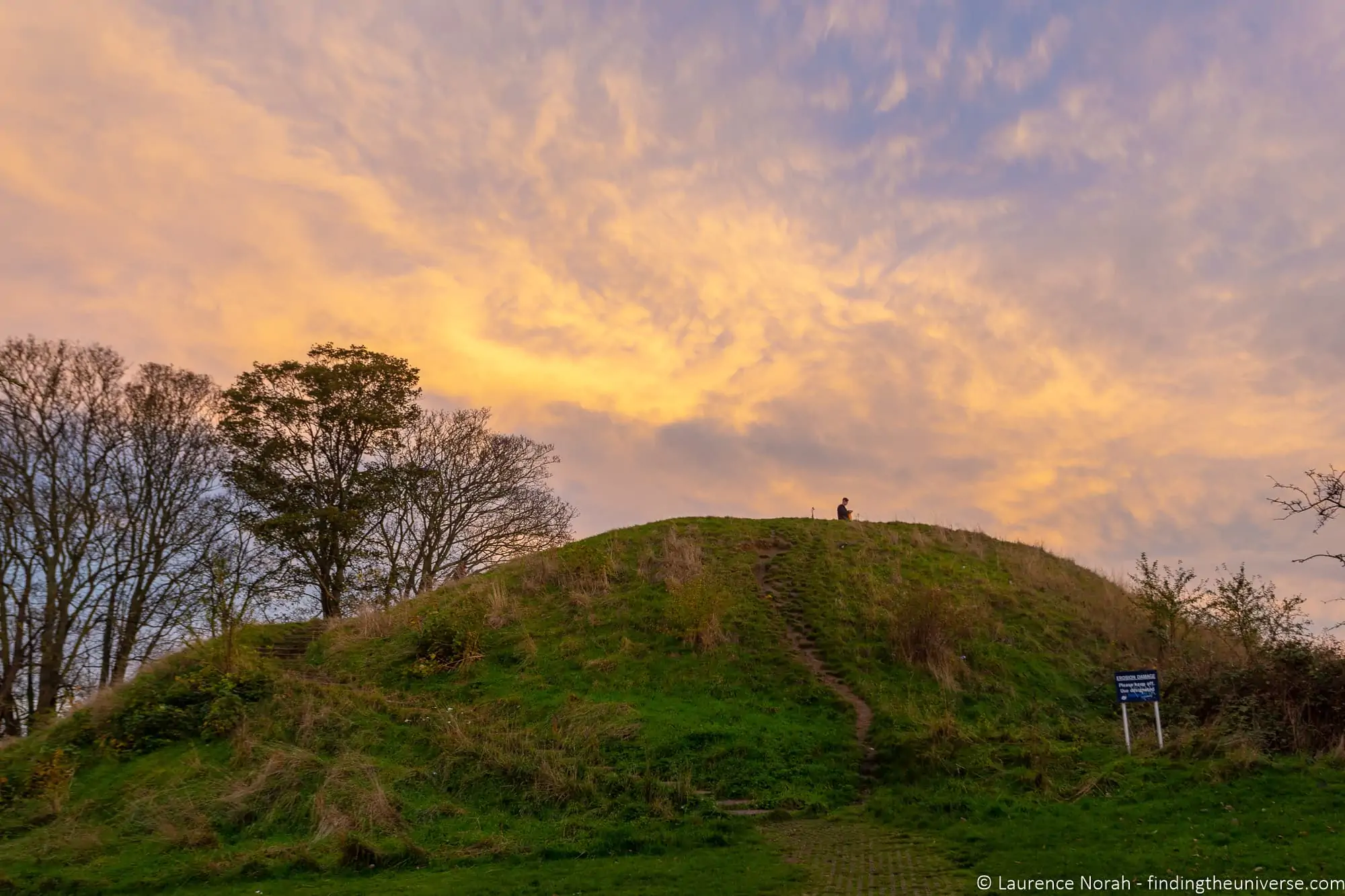
All that remains of Cambridge’s 11th-century Norman castle is this grassy mound, but it’s worth the short climb for the views across the city. It’s a popular spot for watching the sunset. Free and accessible year-round.
Cambridge Botanic Garden
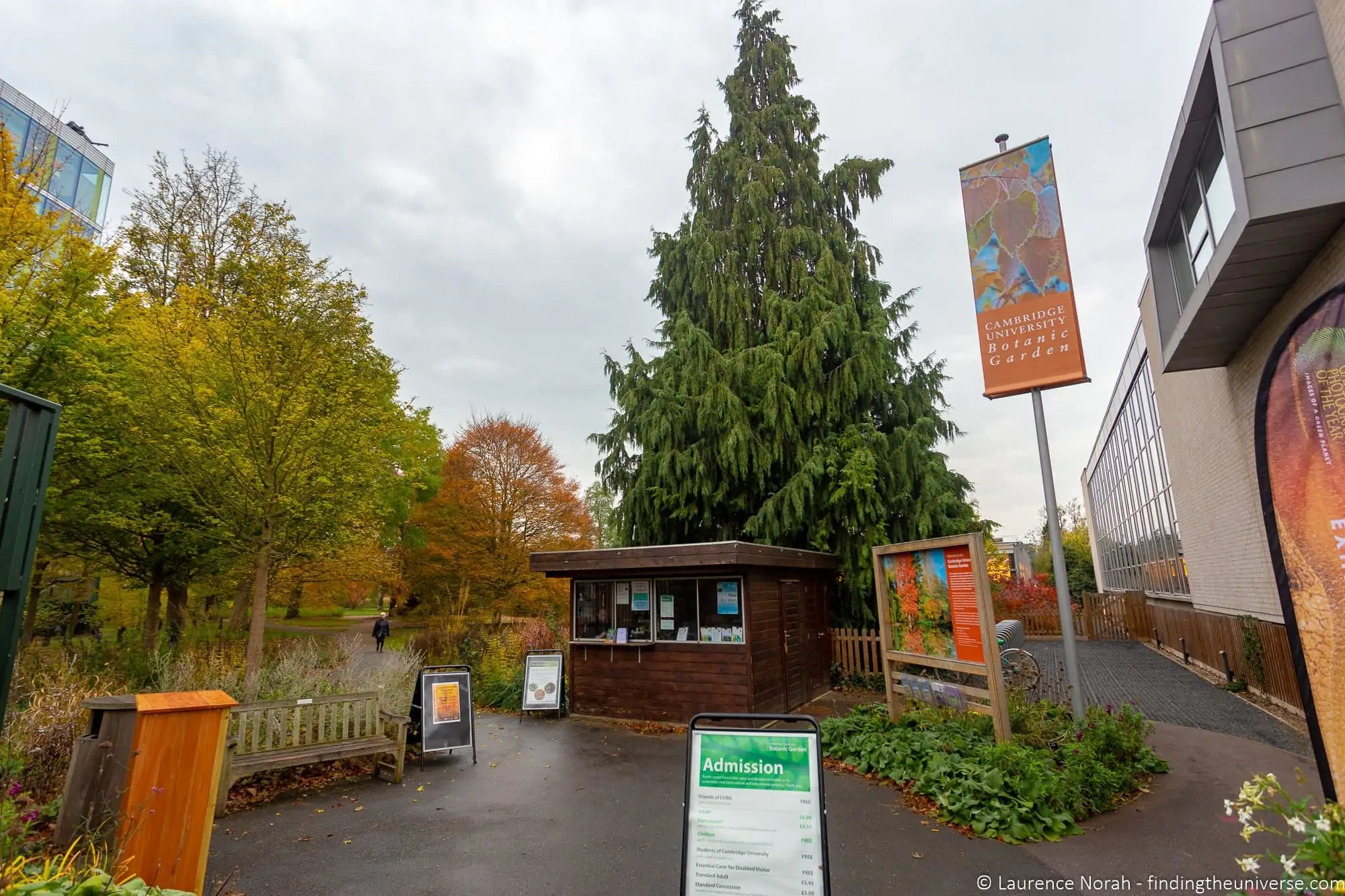
Covering 40 acres south of the city centre, the Cambridge University Botanic Garden has been open to the public since 1846. There are large glasshouses with over 3,000 species, self-guided trails, and a good cafe. Open year-round from 10am, with closing times varying by season. Entry is around £6 for adults. See the official website for current prices.
Cambridge American Cemetery
About three miles west of the city centre, the Cambridge American Cemetery honours the American servicemen who died in World War II. The visitor centre tells the story of the air war over Europe, and it’s a moving place to visit. You’ll need transport to get here (bus or taxi), so it’s best suited for a longer visit rather than a quick day trip. It was recommended to us by a reader, and we plan to visit on our next trip to Cambridge.
Cambridge Science Centre
If you’re visiting with children, the Cambridge Science Centre is a hands-on interactive learning centre aimed at ages 5 to 11. Note that it moved to the Trinity Centre on Cambridge Science Park (Milton Road) in 2024, so it’s no longer walkable from the city centre. It’s open for families at weekends and during school holidays, and you’ll need to book sessions in advance.
Walking Tours of Cambridge
If you’d prefer a guided introduction to the city, there are several good walking tour options.
- A Cambridge University walking tour with a graduate. Led by someone who actually studied here, so you’ll hear about student life as well as the history. Also available as a private tour.
- A combined walking tour and punting experience. This combines both activities into a half-day experience with Cambridge alumni, with the option to add King’s College Chapel entry.
If you’d prefer to see the city by bus, the hop-on-hop-off bus gives you 24-hour riding privileges with an audioguide, and stops at most of the highlights.

Tours to Cambridge from London
Cambridge is an easy independent day trip from London by train, but if you’d prefer an organised tour that handles the transport, here are some options.
- A small group day trip from London that visits Cambridge and the medieval town of Thaxted. Includes transport, a guided tour, and free time to explore.
- A full day tour to Oxford and Cambridge from London, if you want to see both university cities in one day. It’s a long day, but it gives you a taste of each.
- A five-day tour through the heart of England and Wales with Rabbie’s, which includes time in Cambridge along with York, Stratford-upon-Avon, the Peak District, and Snowdonia.

When to Visit Cambridge
Cambridge works year-round, with a good mix of indoor and outdoor attractions. Summer (July and August) is busiest, but has the advantage of colleges being fully open outside term time. The trade-off is that Evensong at King’s College Chapel won’t be on outside term.
The main thing to watch is exam season. Most exams run April to June, and many colleges restrict or close visitor access during this period. If there’s a particular college you want to visit, check their website before you go.
Also check museum opening days. Several of Cambridge’s museums are closed on Mondays, so plan around that if you can.
How to Get to Cambridge
From London, the train is by far the best option. Trains run multiple times an hour from King’s Cross, and the fastest services take around 50 minutes. Some services stop at intermediate stations and take closer to 80 minutes.
I’d recommend booking your ticket in advance for the best prices.

You can also take the bus, but it’s around 2 hours from London, so I’d take the train where possible. Bus times and prices can be checked here.
The nearest airport is London Stansted, from where you can take the train or bus to Cambridge.
How to Get Around Cambridge
Cambridge is compact and easy to get around on foot. From the train station to the city centre is about a 25-minute walk. There are also buses, taxis, and Uber.
If you’ll be using the bus a few times, a Stagecoach dayrider ticket costs £6.50 for the central zone, with unlimited rides for the day. Tickets can be purchased on the bus with cash or contactless.
How Long to Visit Cambridge For?
A full day is enough to cover the highlights I’ve outlined in the itinerary above. But as you can see from the “More Things to Do” section, you could easily fill two or three days, especially if you want to spend time in the museums or visit more colleges. Cambridge is a popular and convenient day trip from London, but staying overnight gives you a more relaxed pace.

Where to Stay in Cambridge
If you do want to stay overnight, here are some well-reviewed options across a range of budgets.
- YHA Cambridge. Between the train station and the city centre. Accommodation ranges from dorm beds to private en-suite rooms.
- A & B Guesthouse. A well-reviewed B&B with tea and coffee making facilities. Between the city centre and the train station.
- The Waterman. A traditional Cambridge pub just north of the city centre with well-rated en-suite rooms. On-site dining and breakfast available.
- Christ’s College. Stay in an actual Cambridge college. Only available outside term time.
- The Gonville Hotel. A 4-star hotel just south of the city centre with free bike hire and on-site dining.
- University Arms Hotel. Part of the Autograph Collection. A 4-star hotel in the city centre with an excellent location and all the facilities you’d expect.
You can browse all Cambridge accommodation on Booking.com here.
Frequently Asked Questions
Is Cambridge worth a day trip from London?
It is, and it’s one of the easiest day trips you can do from London. The train from King’s Cross takes under an hour, and the city is compact enough that you can see the major colleges, go punting, have a pub lunch, and still make it back to London for dinner.
That said, if you can stay overnight, you’ll be able to visit some of the museums and explore at a more relaxed pace. Cambridge has far more to see than you’d expect for a city this size.
How do I get from London to Cambridge?
The fastest option is the train from London King’s Cross to Cambridge, which takes around 50 minutes on direct services. Trains run multiple times an hour throughout the day. You can also take a bus (around 2 hours) or drive (1 to 1.5 hours depending on traffic), but the train is the most convenient option.
Book in advance for the best fares. Off-peak returns are usually good value.
Can you visit Cambridge University colleges?
Yes, many colleges are open to visitors, though opening hours, fees, and access vary by college. King’s College Chapel charges £15 to £17.50, St. John’s is £12, Trinity runs guided tours at £5, and Queens’ is £5. Pembroke and Christ’s College are free.
Some colleges close during exam periods (roughly April to June), and others have limited visiting hours. Always check the college website before you go, or ask at the porter’s lodge.
What is the best time to visit Cambridge?
Cambridge works well year-round. Summer has the longest days and warmest weather, but it’s also the busiest. Spring and early autumn offer a nice balance of good weather and fewer crowds. If you want to attend Evensong at King’s College Chapel (which is free and one of the best things to do in Cambridge), visit during university term time.
Avoid visiting colleges during exam season (April to June) unless you check accessibility in advance.
Is punting in Cambridge worth it?
Yes. It’s the only way to see the college backs from the river, and the views of King’s College Chapel, the Bridge of Sighs, and the Mathematical Bridge from the water are worth it on their own. A guided tour takes about 45 minutes and your punter will share stories and history along the way. I’d recommend a guided tour over self-hire unless you’re already experienced.
Further Reading
Here are some more guides to help you plan your trip to Cambridge and the wider UK.
- If you’re based in London, check out our 1 day London itinerary, 2 day London itinerary, 3 day London itinerary, and 6 day London itinerary
- We have a guide to visiting Oxford from London, and a guide to taking a day trip to Stonehenge from London
- See our guide to how much it costs to travel in the UK
- If you’re renting a car, here are some tips for driving in the UK, plus our one week and two week UK road trip itineraries
- We also have guides to things to do in Bristol, things to do in Edinburgh, things to do in Portsmouth, and things to do in Glasgow
- For a guidebook, the Rick Steves England guide is a solid choice
And that’s it for our guide to visiting Cambridge! If you have any questions, pop them in the comments below and we’ll get back to you.
Kwok Fung Au Yeung says
Wren Library is close to public
Laurence Norah says
Thanks for letting me know! We always recommend checking opening hours and times before visiting any attraction as they can close for various reasons. I hope you still enjoyed your time in Cambridge 🙂
Linda Watt says
The beautiful Cambridge American Cemetery, with its visitor center that tells the story of the air war that was critical to the Allied victory in WWII, is so worth a visit!
Very helpful article on Cambridge, by the way!
Laurence Norah says
Thank you very much, and thank you also for that tip Linda! We haven’t made it to the Cambridge American Cemetery but it sounds very interesting – we’ll definitely check it out on our next visit to Cambridge 🙂