Portsmouth squeezes more naval history into a small stretch of waterfront than anywhere else in Britain, and we spent a couple of days working out how to actually fit it all into a visit. I’ve worked as a travel photographer for over fifteen years and shot every photo in this guide myself on the trip, so the aim here is to help you decide what’s worth your time rather than just hand you another list of everything that exists.
Portsmouth sits on the south coast, around 75 miles south west of London, and most of what you’ll want to see splits into two clusters along the water. The Historic Dockyard, with its warships and museums, is up at the north end by the harbour. The Southsea seafront, with the Spinnaker Tower, the D-Day Story and a Tudor castle, runs along the south. They are about two miles apart, and that gap is the thing to plan around.
So the three questions worth answering before you go are simple: is one day enough or do you need two, which Historic Dockyard ticket is actually worth buying, and can you do it as a day trip from London. We’ll answer all three up front, then go through the attractions grouped by area with a suggested route for however long you have.
If you only remember three things before you go:
- One full day covers either the Historic Dockyard or a sweep of the Southsea seafront, but not both in one go. Two days does the city comfortably.
- The Dockyard’s All Attractions ticket (£51, and valid a whole year) is only £15 more than a single-attraction day ticket (£36), so almost anyone seeing more than one ship should buy it.
- Portsmouth works really well as a day trip from London. Direct trains from Waterloo run from about 1 hour 30 minutes, though most services are nearer 2 hours.
Table of Contents:
Portsmouth at a glance
Here’s the quick version of what’s on offer, how long each thing takes, and what ticket you need. Prices are adult rates as of mid 2026, and we’ve gone through the detail on each attraction further down.
| Attraction | Best for | Time needed | Ticket |
|---|---|---|---|
| Historic Dockyard (Victory, Warrior, Mary Rose, NMRN) | Naval history, the main event | Half to full day | All Attractions £51 / 1 Attraction £36 |
| Spinnaker Tower | Views over the harbour | About 1 hour | £19.50, or £14.50 booked online |
| The D-Day Story | Second world war history | 1 to 1.5 hours | £18.25, or £16.60 online |
| Southsea Castle | A free Tudor fort by the sea | About 1 hour | Free (April to October) |
| Old Portsmouth and the seafront | A walk with harbour views | 1 to 2 hours | Free |
| Blue Reef Aquarium | Families with younger kids | About 1.5 hours | Around £13 |
| Clarence Pier | Fairground fun | As long as you like | Free entry, pay per ride |
| Hovercraft to the Isle of Wight | A fun day extension | Half to full day | From £31 |
How long do you need in Portsmouth?
This is the question that trips most people up, so here’s the short version. The two clusters are about two miles apart, and the Historic Dockyard alone is a full day in itself. That means a single day is always a trade-off, and only two days lets you see the city without rushing.
If you only have one day, you’ve got two sensible routes.
Route A, the Dockyard day. Spend the whole day inside the Historic Dockyard. Start with the Mary Rose and HMS Victory in the morning, grab lunch at Boathouse 4 or one of the cafes on site, then spend the afternoon on HMS Warrior, the National Museum galleries, a harbour tour, and Action Stations if you’ve got kids in tow. You’ll see the maritime heart of the city in full and skip Southsea entirely. This is the route we’d pick for a first visit.
Route B, the highlights day. Do the Mary Rose and HMS Victory in the morning only, then walk or hop a bus down to Southsea for the Spinnaker Tower and the D-Day Story in the afternoon. You get a taste of both clusters, but the Dockyard feels rushed, and if you’re only seeing two ships the All Attractions ticket stops paying for itself (more on that next).
With two days, it’s easy. Give Day 1 to the full Dockyard, and Day 2 to Southsea: the Spinnaker Tower and Gunwharf Quays in the morning, then the D-Day Story, Southsea Castle and a wander round Old Portsmouth in the afternoon. If you stretch to a third day, that’s when the Gosport submarine museums (reached on the harbour waterbus) or the hovercraft over to the Isle of Wight come into play.
One thing daylight is not a problem here, even in winter, because nearly everything is indoors. What does catch people out is closing time. Most attractions shut around 5pm to 5:30pm, so an early start matters far more than a long evening.
Which Historic Dockyard ticket is worth it?
The Historic Dockyard ticket choice is important. There are two main adult tickets you need to consider.
The All Attractions ticket is £51, and it’s valid for a full year rather than a single day. It covers HMS Victory, HMS Warrior, HMS M33, the Mary Rose Museum, the National Museum of the Royal Navy and Action Stations, plus a harbour tour. It also includes the harbour waterbus across to Gosport, where you can visit the Royal Navy Submarine Museum and the Explosion Museum of Naval Firepower.
The 1 Attraction day ticket is £36, and it gets you into one attraction of your choice on one day.
The maths that makes the decision easy is the £15 gap. The All Attractions ticket covers four ships, two on-site museums, two more across the water, and Action Stations, all for £15 more than a single attraction. Unless you really only want to see one ship and nothing else, the All Attractions ticket wins by a mile. We can’t think of many situations where the single ticket makes sense beyond a quick HMS Victory stop on a tight schedule.
One important change since our first visit: you can no longer buy a standalone HMS Victory or Mary Rose ticket the way you used to. Entry to both is now through a Dockyard ticket, so the old “just see the Victory” plan really does mean the £36 single ticket or the £51 all-in.
| If you are | Best ticket | Why |
|---|---|---|
| Seeing one ship on a tight day trip | 1 Attraction (£36) | Cheapest if you only want HMS Victory or the Mary Rose and nothing else |
| Giving the Dockyard a full day | All Attractions (£51) | £15 more buys four ships, the museums, and the Gosport pair by waterbus |
| Local, or visiting more than once | All Attractions (£51) | It’s an annual pass, so a second visit makes it pay for itself |
| A family with kids | All Attractions (£51) | Best value across a full day, and it covers Action Stations, which kids love |
It’s cheaper booked online in advance, and in summer it’s worth doing so to skip the ticket queues. You can book the Dockyard ticket online here.
Portsmouth Historic Dockyard
The Portsmouth Historic Dockyard is the reason most people come, and it’s where you’ll spend the bulk of your time. It’s a working part of the Portsmouth Naval Base that’s open to the public, and it packs in enough to fill a whole day on its own. The big three, which we think are the highlights, are HMS Victory, HMS Warrior and the Mary Rose. Here’s what to expect from each, along with everything else on site.
HMS Victory
The most famous ship in Portsmouth, and probably the most famous in Britain, HMS Victory was launched in 1765 and served as Lord Nelson’s flagship at the Battle of Trafalgar in 1805. That battle, fought against the combined French and Spanish fleets during the Napoleonic Wars, was a decisive British victory, and it’s where Nelson was fatally wounded. The ship is laid out as she would have been in 1805, and you can still see the spot where Nelson died, marked with a small plaque.
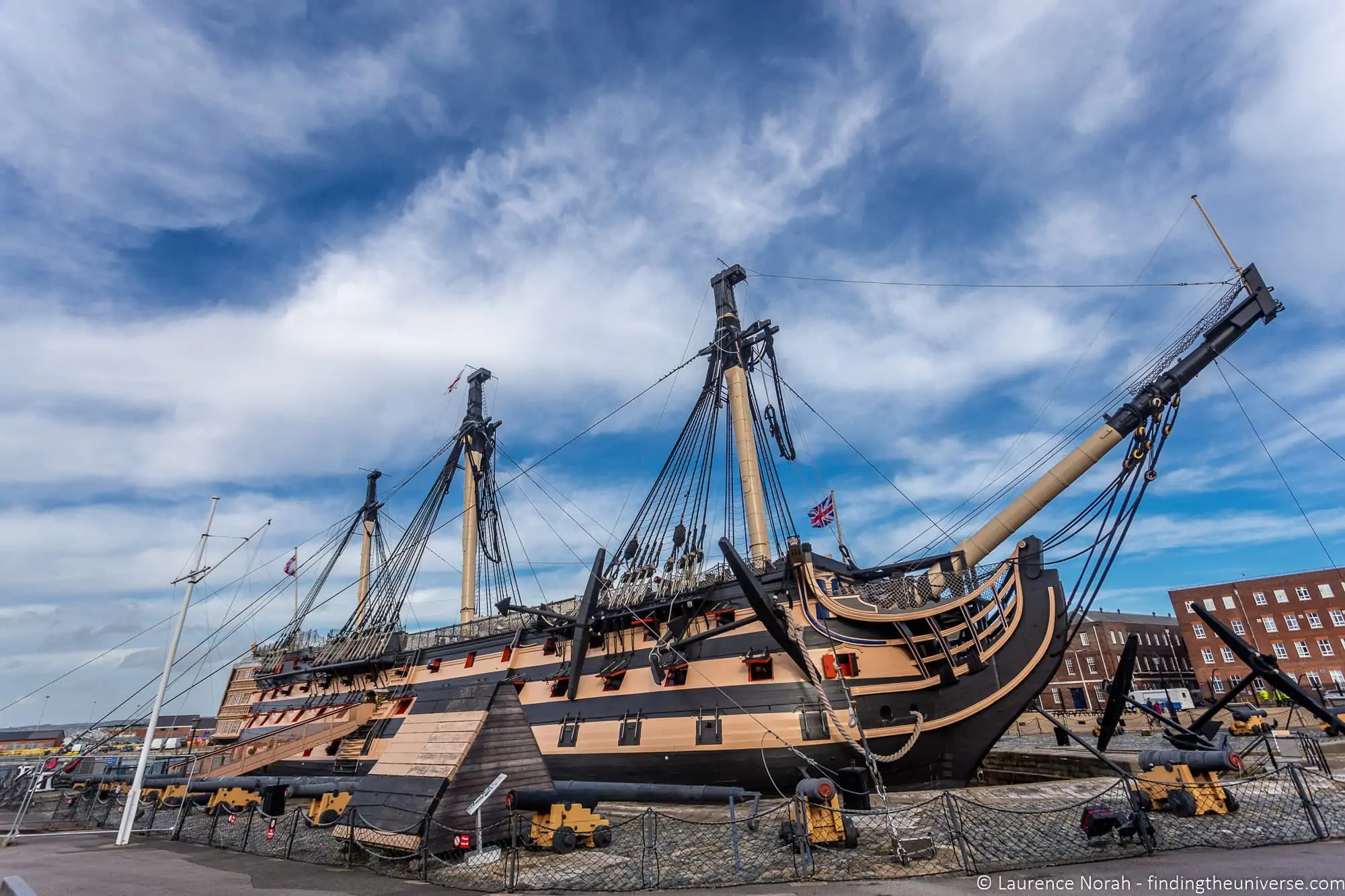
She’s also still technically in commission as the flagship of the First Sea Lord, which makes her the oldest commissioned warship in the world, and more than 350,000 people visit her each year.
Now for the important part, because it changes what you’ll see. HMS Victory is in the middle of a major conservation project called Victory Live: The Big Repair, a roughly £42 million programme running for about a decade from 2022. The good news is that the ship stays open throughout, and you can still board her and explore the decks. The trade-off is that the hull is wrapped in scaffolding and weatherproofing, so you won’t get the classic full-glory view of the ship from the outside.
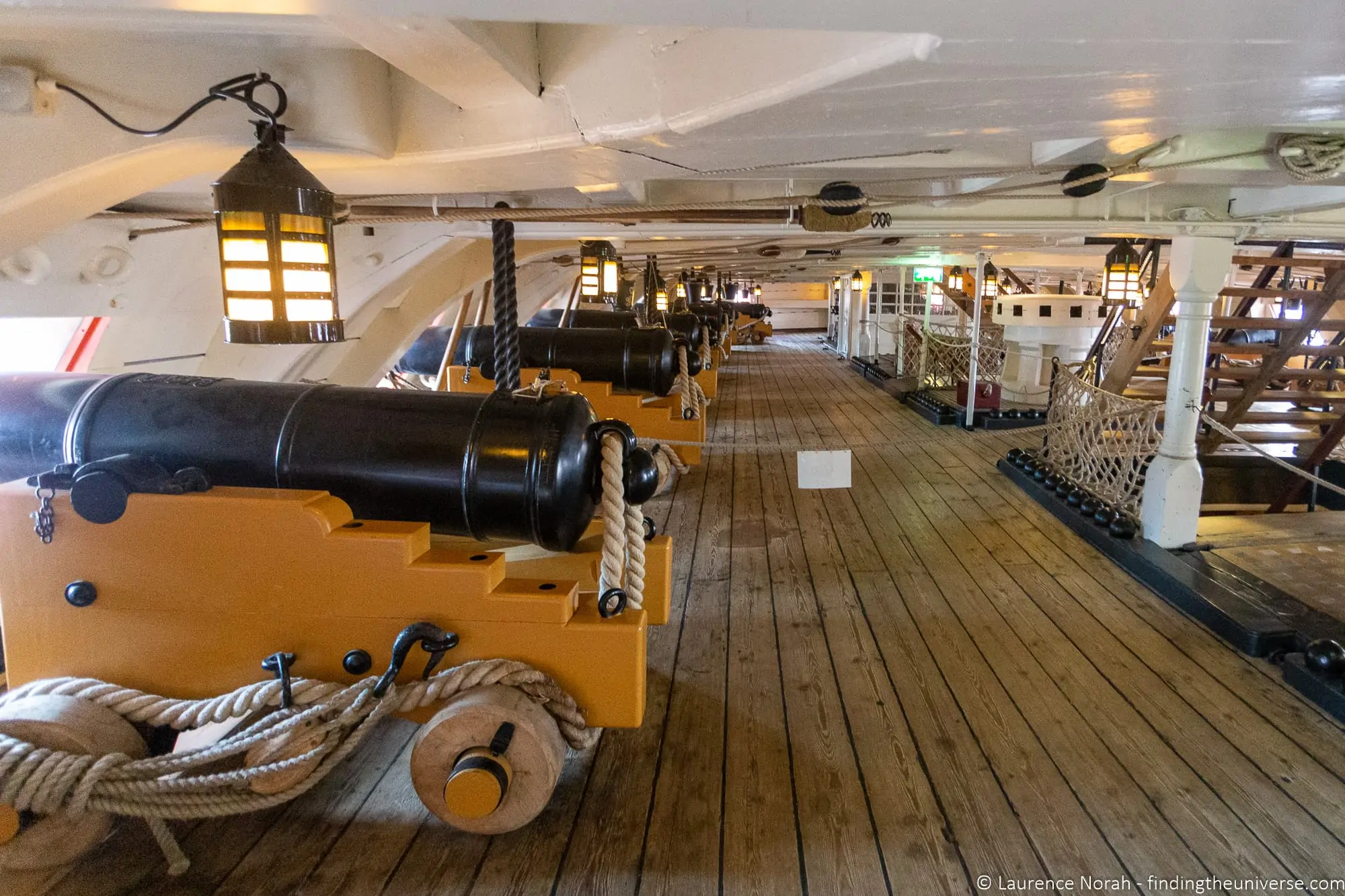
We’d actually frame this as a reason to go now rather than a reason to wait. The viewing platforms built around the ship let you watch shipwrights at work on a 250-year-old warship, which is something you simply won’t be able to do once the work finishes. There’s more on the way in 2026, too: lift access to Victory for the first time, along with two new stern viewing platforms, both due to open over the summer. If you want to see the ship rather than the conservation, you may prefer to come back in a few years, but for a once in a generation look at how she’s kept alive, this is a great time to visit.
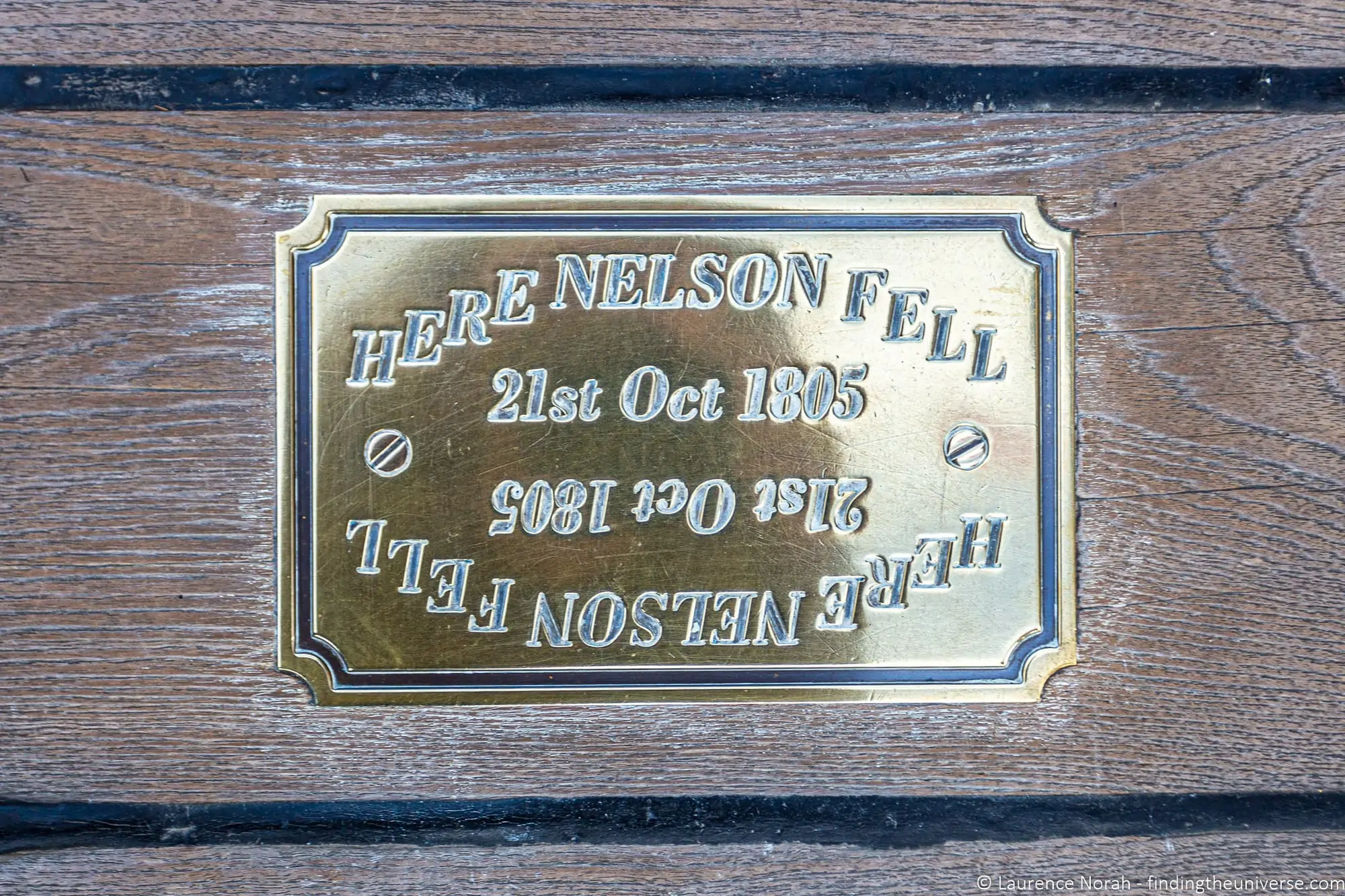
HMS Victory is open year round except 24 to 26 December, and entry is via a Dockyard ticket. You can book that online in advance here.
HMS Warrior
Walk from HMS Victory to HMS Warrior and you cover a century of shipbuilding in a few hundred metres, which is exactly why we’d see them together. Launched in 1860, HMS Warrior was the first of the iron-hulled, armoured warships. Where Victory was a wooden ship driven by sail, Warrior was a steam-powered iron ship, with sails kept on as a backup.
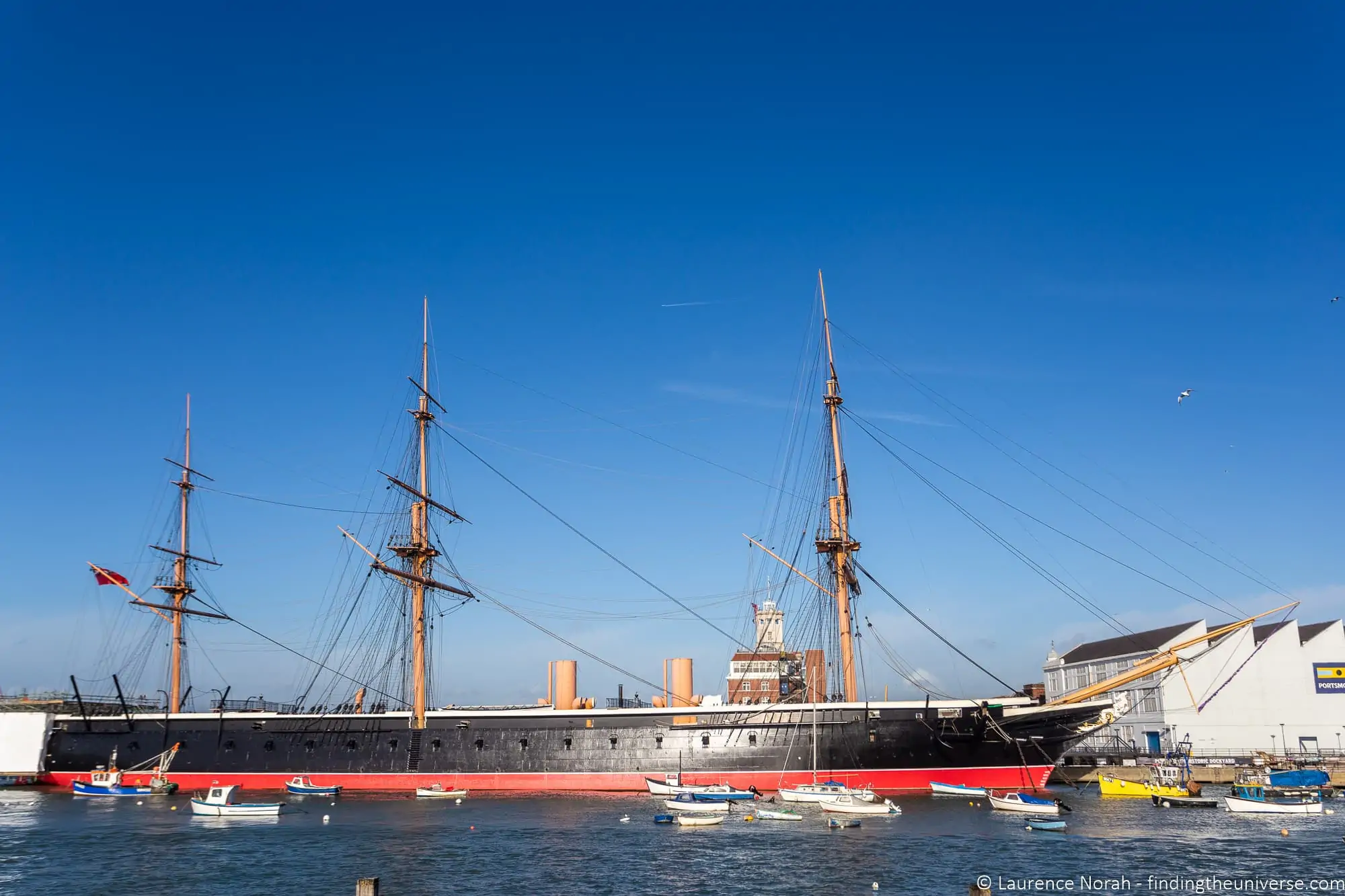
She was over twice the size of Victory yet carried fewer men, and she was so far ahead of her time that she made every other warship afloat instantly outdated. The irony is that shipbuilding then moved so fast that Warrior herself was obsolete within twenty years, and she never fired a shot in anger.
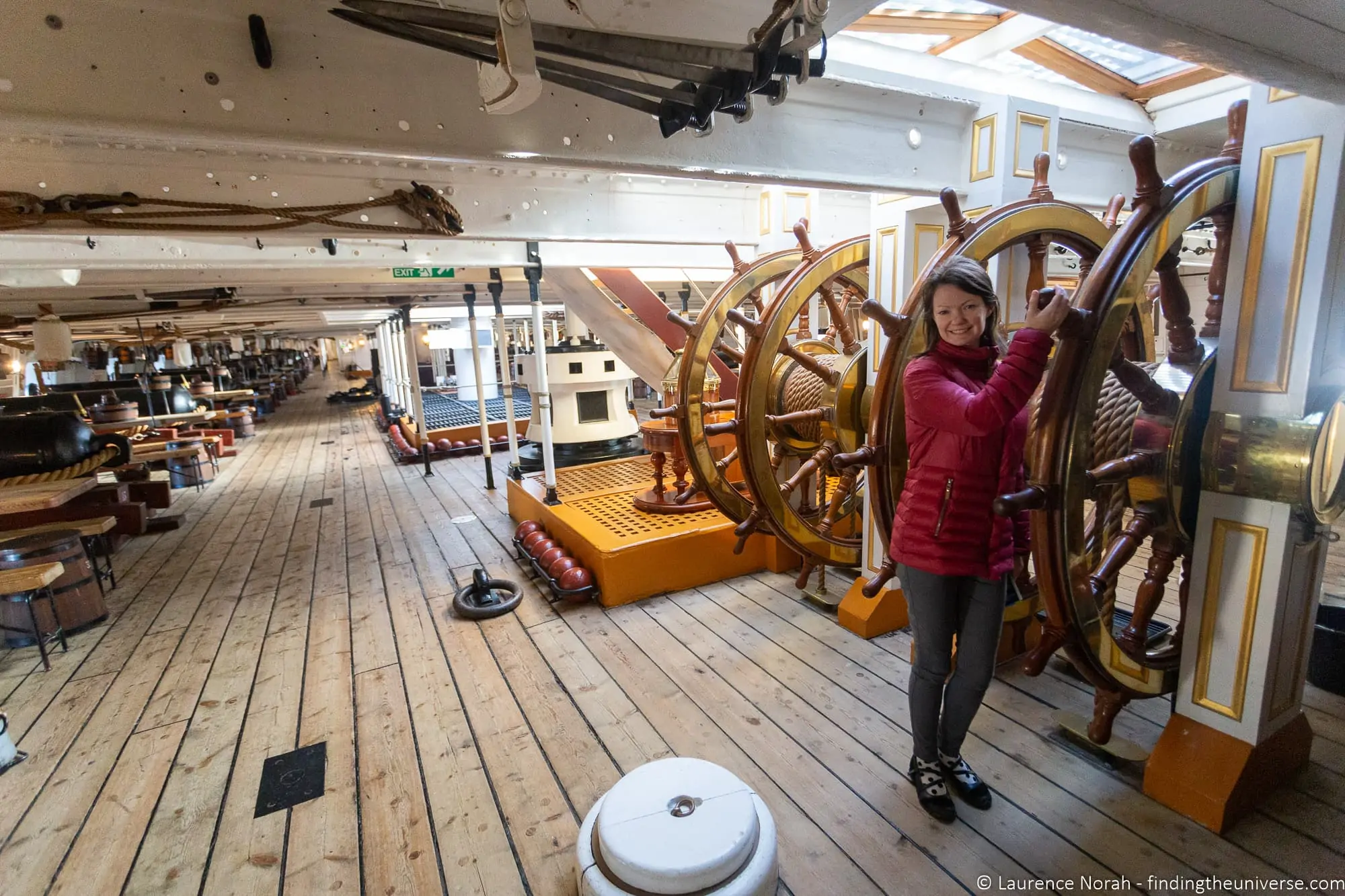
After years of unglamorous duties she was restored and reopened as a museum ship in 1987, and she’s been welcoming visitors ever since. She’s open most of the year, and you can check the latest opening times on the Historic Dockyard website here. As with everything in the Dockyard, she’s covered by the All Attractions ticket.
Mary Rose Museum
The Mary Rose was the pride of Henry VIII’s navy when she was launched in 1511, and one of the largest warships in the fleet. She sank in the Solent in 1545 while engaging a French invasion fleet, with the loss of nearly four hundred lives. The most likely explanation is that she heeled over in a gust with her lower gunports open, flooded, and went down fast, possibly made worse by being overloaded.
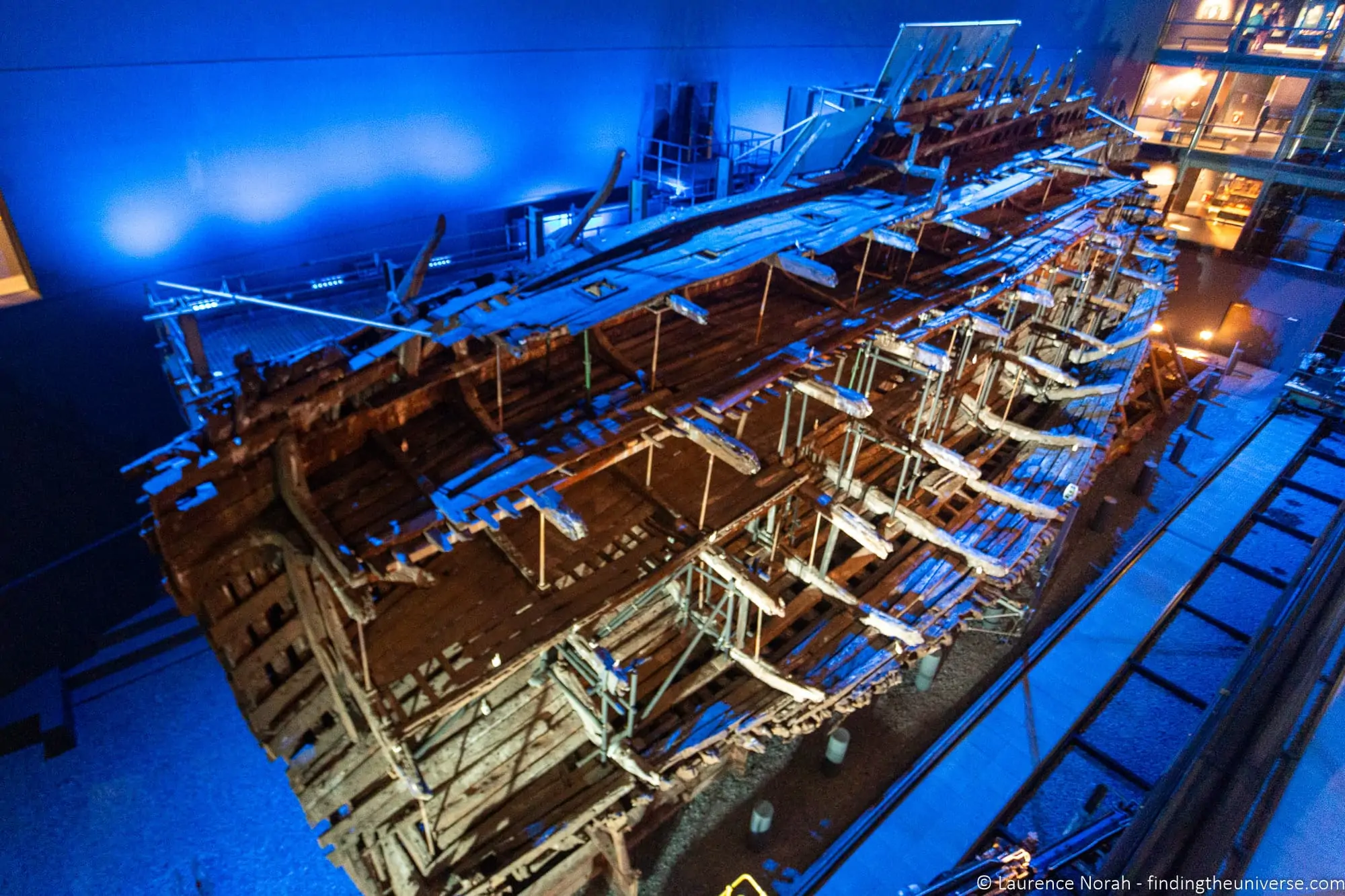
She lay on the seabed for over four centuries until she was raised in 1982, in one of the most ambitious marine archaeology projects ever attempted. We remember watching footage of the lift as a kid, so seeing the hull in person is a real thrill.
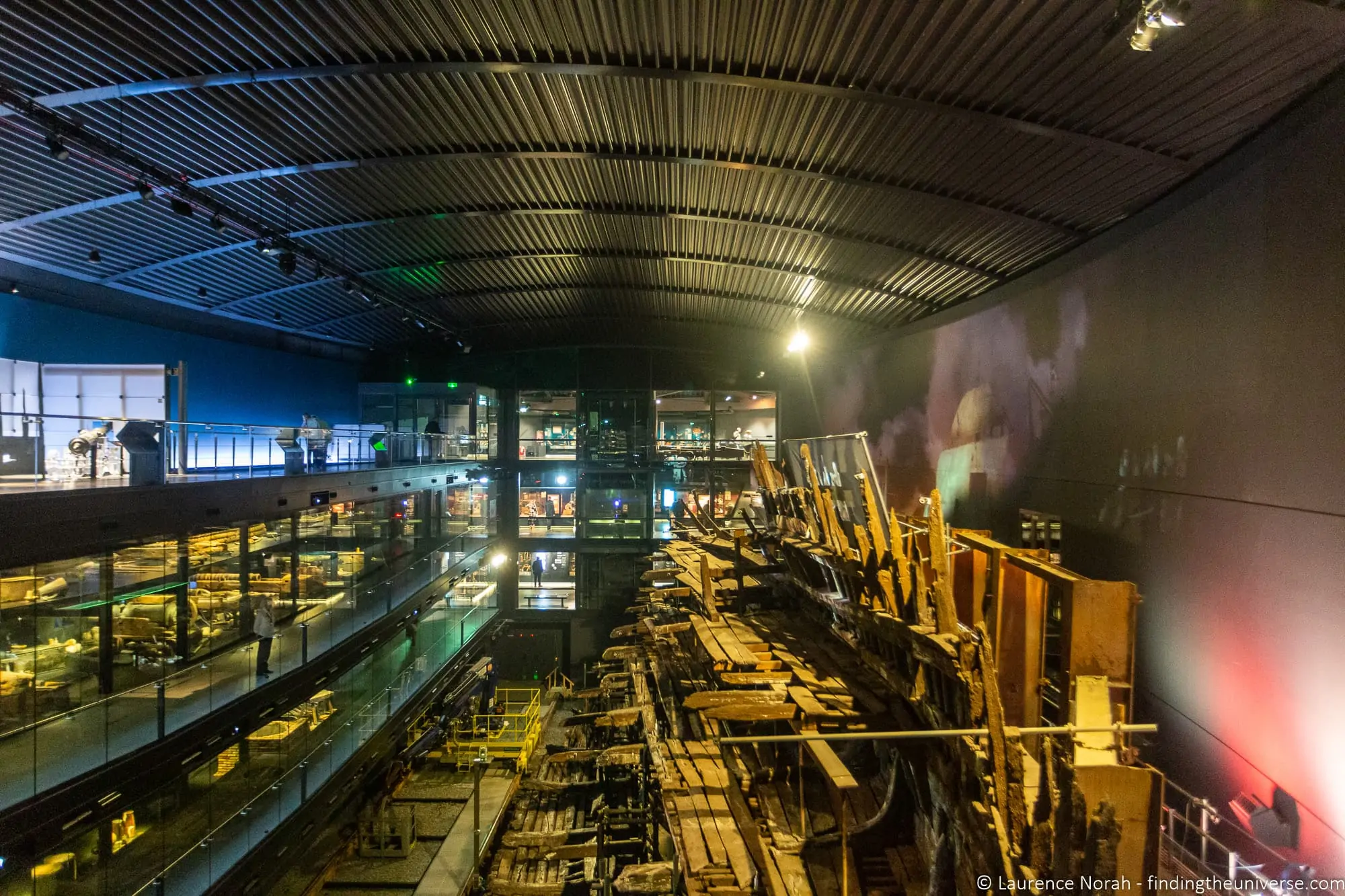
A purpose-built museum opened over the dry dock in 2013, and it’s superb. Rather than being separated from the ship by a wall of glass, you view the conserved hull across open galleries, surrounded by thousands of objects recovered from the wreck, from longbows to a ship’s dog. It tells you how the ship was built, how she sank, and how she was brought back up.

The Mary Rose sits inside the Historic Dockyard, and entry is through a Dockyard ticket (it’s no longer sold as a standalone). It’s open most days, and you can check opening times on the official website here.
National Museum of the Royal Navy
Spread across three historic buildings overlooking HMS Victory, the National Museum of the Royal Navy is the place to come if you want the full story of Britain’s oldest armed service. The Royal Navy’s history runs back to the early 16th century and the reign of Henry VIII, and as an island nation a strong navy has always sat at the centre of British defence.
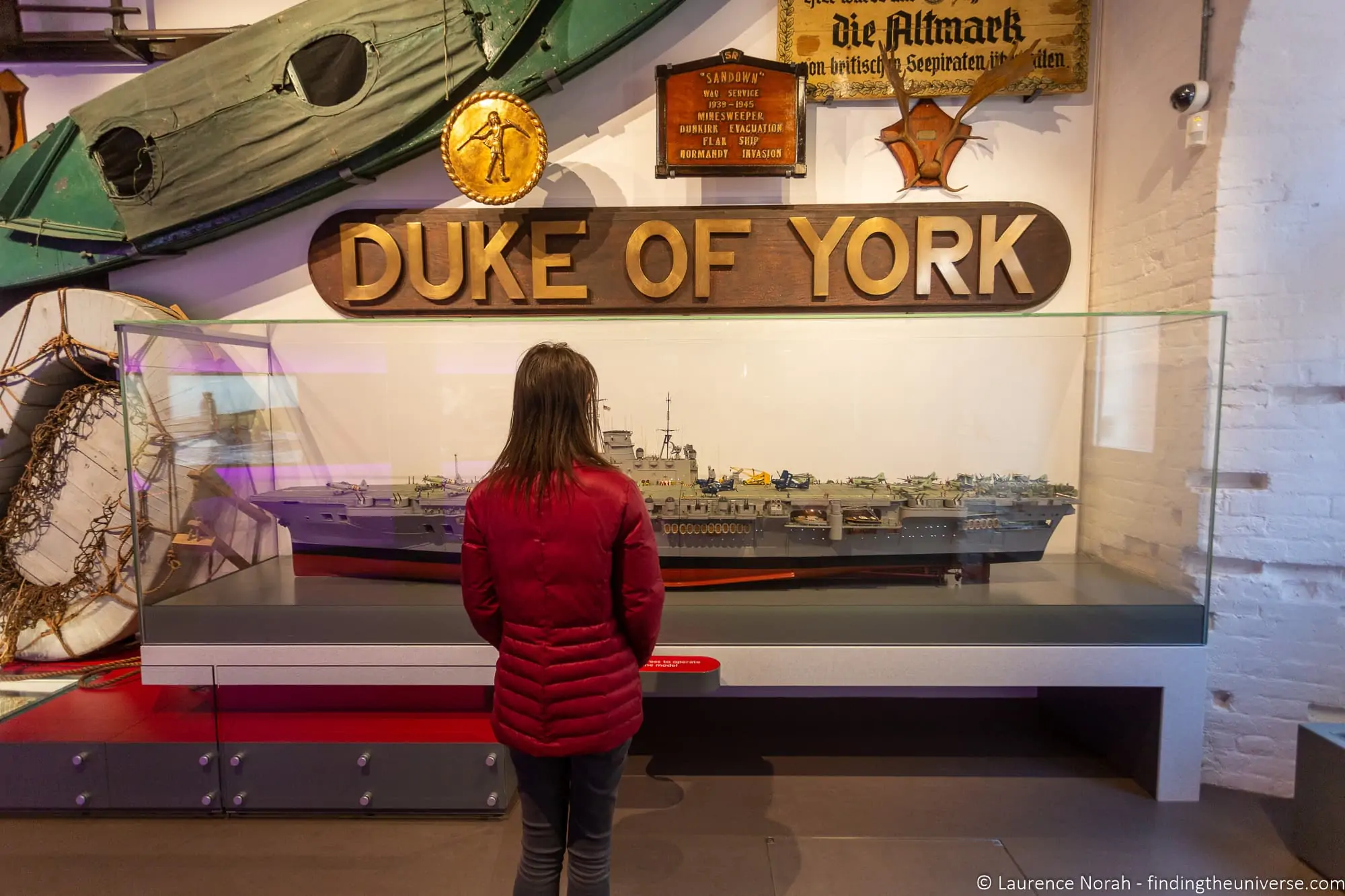
The galleries run from the age of sail right through to the present-day fleet, and one highlight is the original topsail flown by HMS Victory at Trafalgar. If ships and naval history are why you came to Portsmouth, give yourself a good hour here.
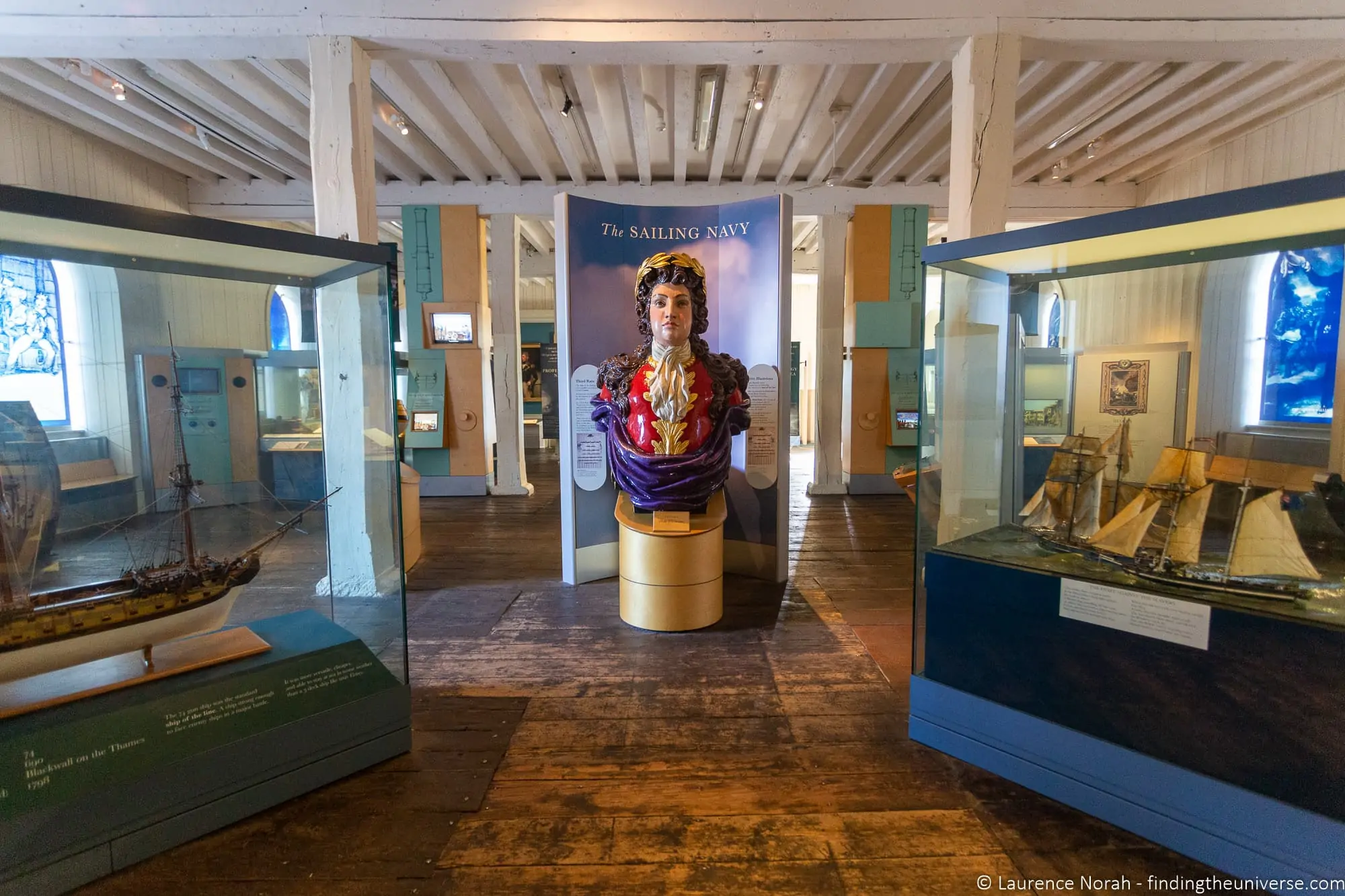
It’s open most days of the year, you can see hours on the museum website here, and it’s included in your Dockyard ticket.
More at the Dockyard
The big three aren’t the whole story. Your ticket also covers a clutch of smaller attractions that are well worth your time:
- HMS M33, a small first world war monitor built for coastal bombardment, and one of very few surviving ships from the Gallipoli campaign.
- Action Stations, a big indoor activity centre with simulators, a high ropes course and a climbing wall. I was rather pleased with my own effort on the climbing wall, and kids in particular will have a great time here.
- Harbour tours, which take you out into the harbour past the active fleet. We both really enjoyed ours, and it’s a good way to see the working naval base from the water.
- Boathouse 4, a wartime boatbuilding yard still used to teach the craft today, and the Dockyard Apprentice, which tells two centuries of shipbuilding through the eyes of the workers.
- Across the harbour at Gosport, reached on the included waterbus, the Royal Navy Submarine Museum and the Explosion Museum of Naval Firepower.
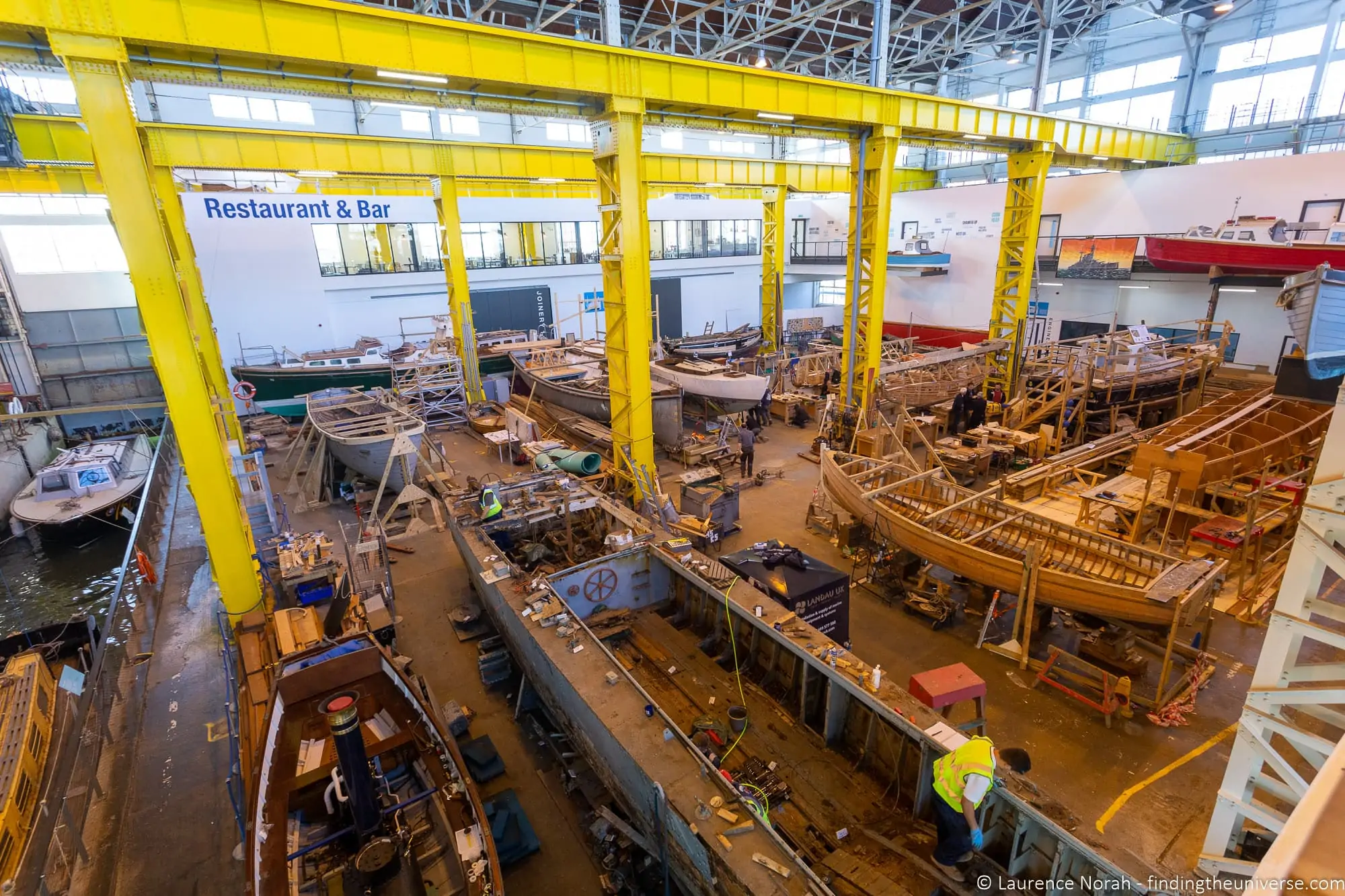
Opening times vary by season, and some attractions and the waterbus only run part of the year, so it’s worth checking ahead if there’s something specific you want to see. There are cafes, a restaurant and picnic areas on site, four gift shops, and paid parking if you drive (details are on the official website here).

Southsea and the seafront
The second cluster runs along the Southsea seafront, about two miles south of the Dockyard. This is where you’ll find the best views, a Tudor castle, the city’s D-Day museum and a long promenade walk. It’s an easy bus ride or a pleasant walk from the harbour, and it’s the natural second half of a two-day visit.
Spinnaker Tower
For the best view in the city, head up the Spinnaker Tower at Gunwharf Quays. At 170 metres it’s one of the tallest viewing structures outside London, with three viewing decks, the lowest at 100 metres up. The big draw is the Sky Walk, a glass floor you can stand on if your nerve holds.
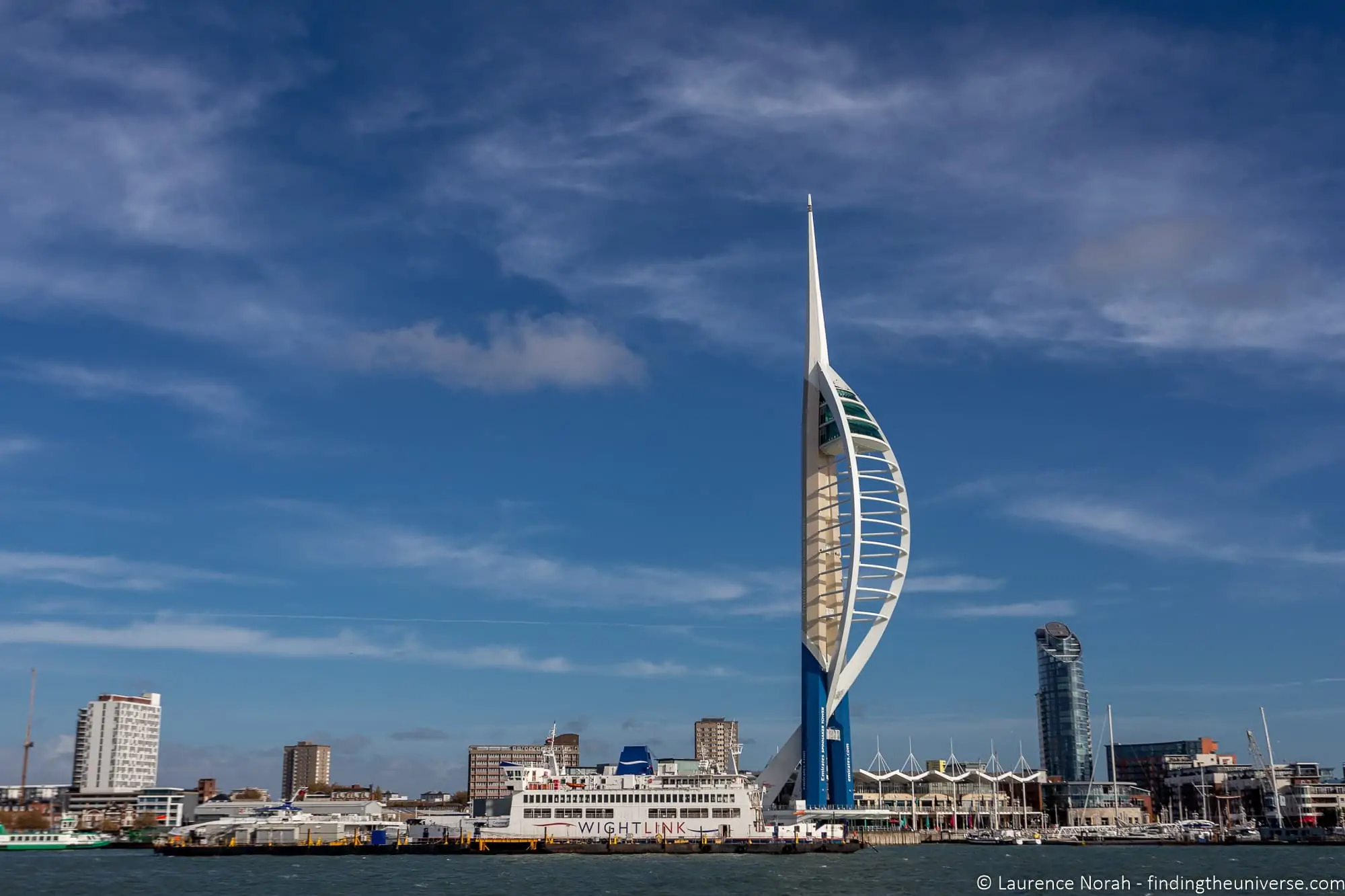
We loved going up, and the views really are expansive. On a clear day, like the one we had, you can see for 23 miles, all the way out to the Isle of Wight. There’s even a viewing guarantee: if you can’t see all three Solent forts, you can come back within three months for free, which we thought was a nice touch.

An adult ticket is £19.50, or £14.50 if you book online in advance, and it lets you go up as many times as you like in a day. There are cafes at ground level and on the middle deck. You can check times and book on the official website here.
The D-Day Story
Portsmouth was one of the main launch points for the D-Day landings of 6 June 1944, the largest seaborne invasion in history, so it’s fitting that it’s home to the D-Day Story, billed as the UK’s only museum dedicated to D-Day and the Battle of Normandy. The city was the headquarters and main departure point for the assault on Sword Beach, the easternmost of the five landing beaches.
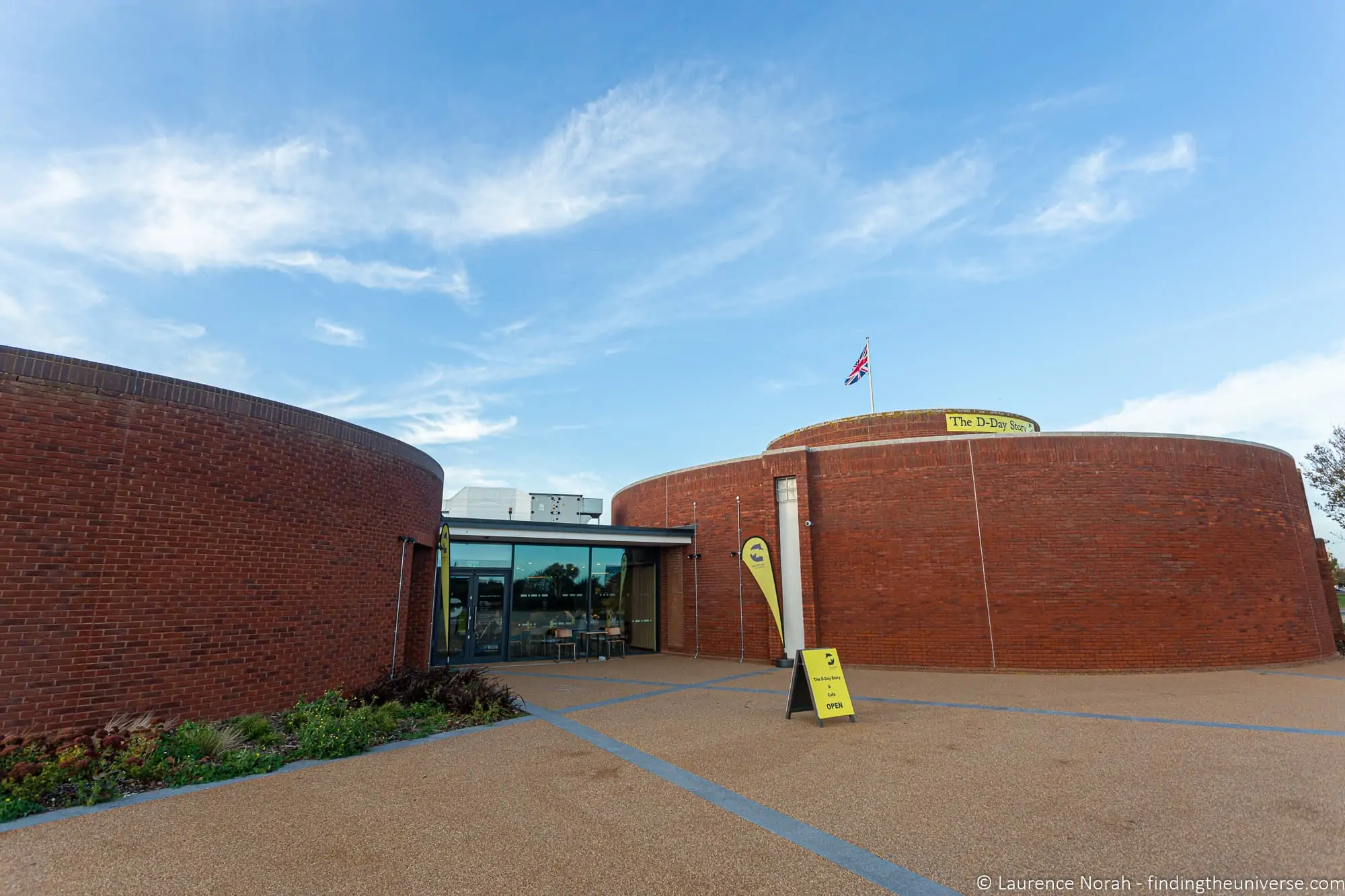
The museum tells the story through the people who were there, with a huge collection of objects and personal accounts. The centrepiece is an original landing craft, one of very few left, and there’s a good cafe and bookshop too. If you’ve visited, or plan to visit, the D-Day landing beaches in Normandy, this is the other half of the story, told from the side the troops set out from.

It’s open daily from 10:00 to 17:30 (until 17:00 from October to March), closed 24 to 26 December. An adult ticket is £18.25 on the door, or £16.60 booked online, and you can upgrade to an annual pass at the museum for a few pounds more. You can book tickets online in advance here.
Southsea Castle
A short walk along the front, Southsea Castle is one of the city’s best free things to do. Henry VIII had it built in 1544 to defend the harbour, and it’s said that he watched the Mary Rose sink from these very walls during the French attack of 1545.
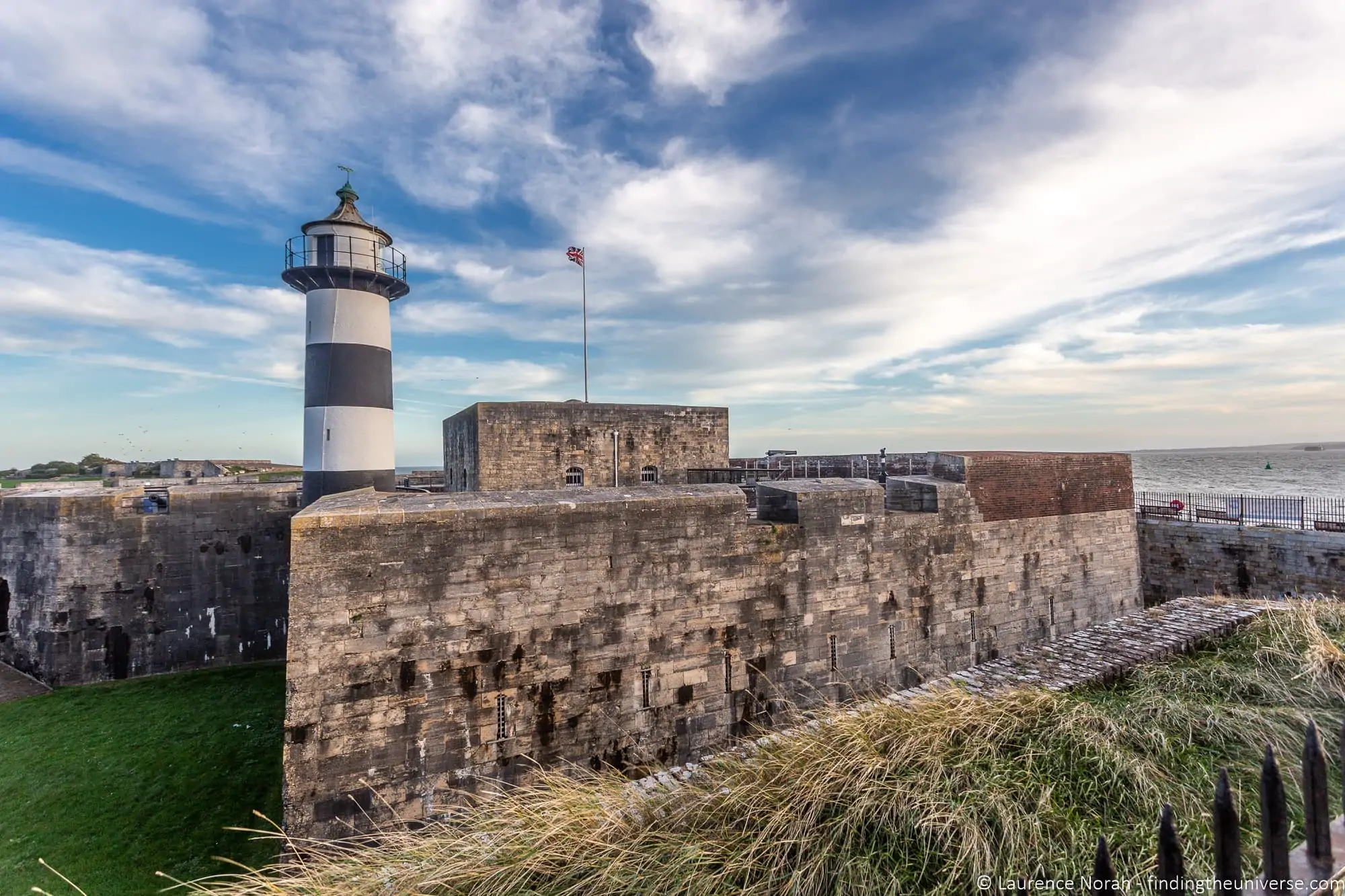
The castle stayed in military use right through to the 1960s, four hundred years of service, before the city restored it and reopened it as a museum. You can walk the ramparts for views out over the Solent, and there’s a cafe, a gift shop and even a small microbrewery on site.
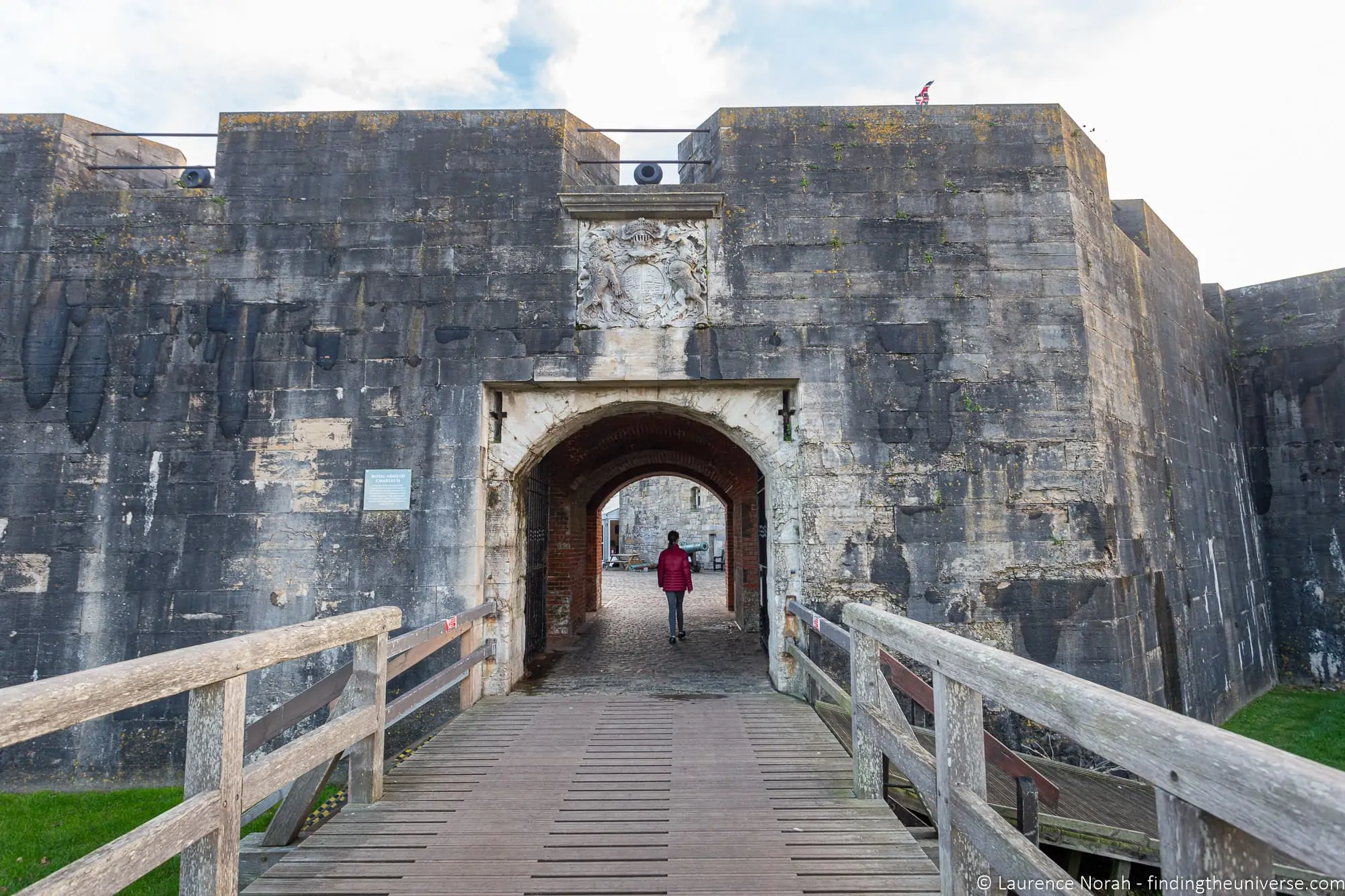
It’s free to visit, with donations welcome, and open every day except Mondays from April to October. It’s closed for general visiting over the winter, so it’s one to plan around the season.
Old Portsmouth and the harbour mouth
Some of the most atmospheric corners of the city sit around Old Portsmouth, at the harbour mouth, and they’re free to wander. We’d happily spend an hour or two here on foot.
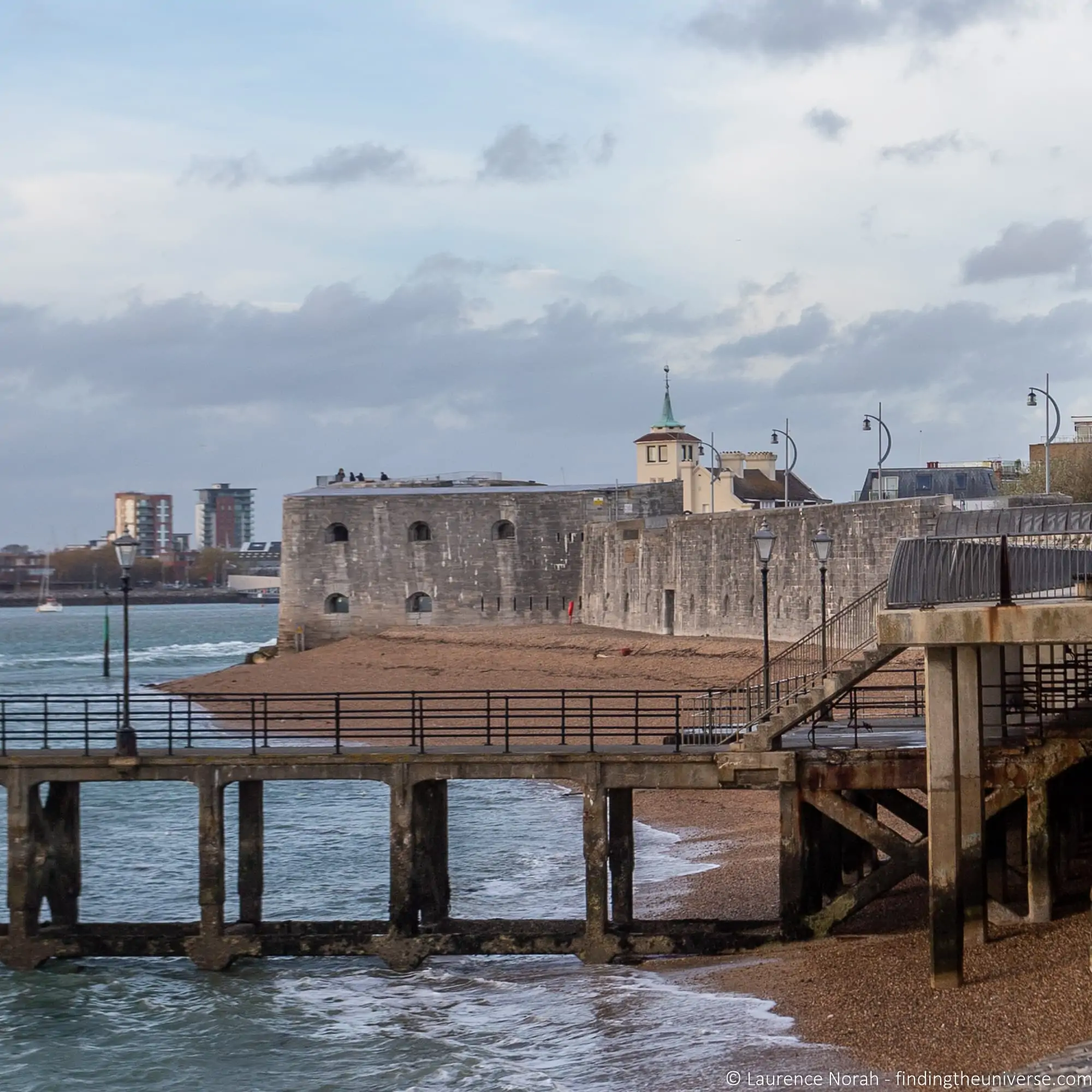
The Round Tower dates from the early 15th century and was the first of Portsmouth’s permanent fortifications, built to defend the harbour after repeated French raids during the Hundred Years’ War. The roof is permanently open and gives you a commanding view of the harbour entrance and the ships coming and going. Tucked into the old defensive arches nearby are the Hotwalls Studios, now home to working artists and a good spot to pick up something handmade.
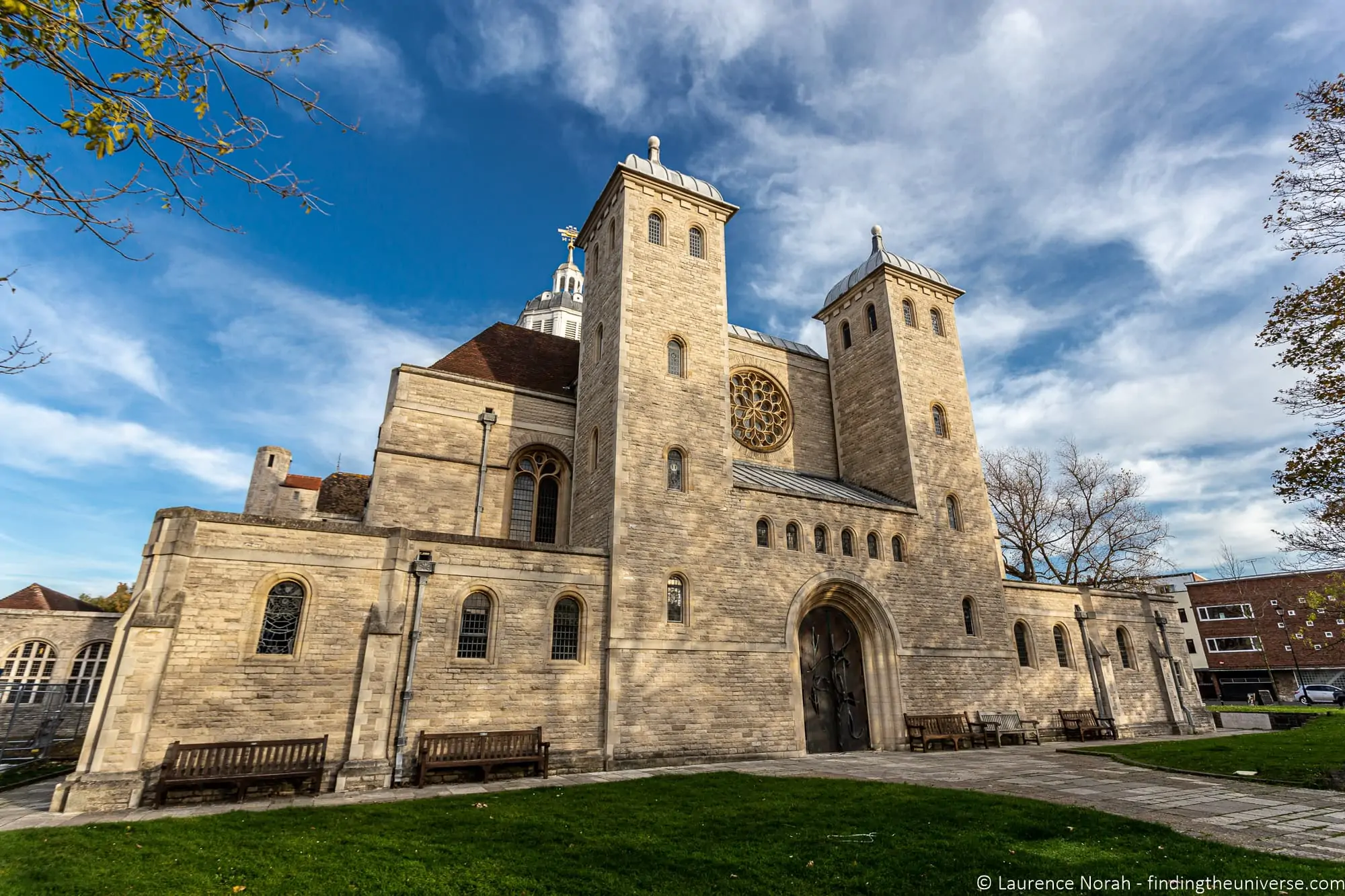
A short walk along the walkway brings you to the Bonds of Friendship sculpture, which marks the spot where the First Fleet of 11 ships set out for Australia in 1787 to found the first European settlement there. There’s a statue of Nelson close by too. Nearby, Portsmouth Cathedral (formally St Thomas of Canterbury) traces parts of its fabric back to 1188, making it one of the oldest buildings in the city, and it’s free to step inside.
Over in the city centre, the grand Guildhall of 1890 presides over Guildhall Square, with a statue of Queen Victoria out front. It’s mainly an events venue now, but the square is a pleasant place to pass through. The Portsmouth Museum, which covers the city’s history and has a display on local author Sir Arthur Conan Doyle, is free and nearby, though it’s worth checking ahead before an autumn visit, as it closes for a major redevelopment from September into late October.

For families: Blue Reef Aquarium and Clarence Pier
If you’re visiting with younger children, two stops on the seafront will keep them happy. The Blue Reef Aquarium has over 40 displays, including a big ocean tank with an underwater walkthrough tunnel, plus sharks, seahorses and an outdoor wet-play zone for hot days. An adult ticket is around £13, and it’s open daily except Christmas Day. It’s about a 30 minute walk along Clarence Esplanade from the pier, a nice stroll in itself, though there’s a local bus if you’d rather not. Worth noting that the seafront here has been through sea-defence works under the Southsea Coastal Scheme, due to finish in summer 2026, so you may still meet the odd diversion.

Right by the seafront, Clarence Pier is one of the largest amusement parks on the south coast, with roller coasters, a Ferris wheel and plenty of arcades. Despite the name it runs along the shore rather than out to sea. Entry is free and you pay per ride. The arcades and mini-golf open daily, while the fairground rides mainly run at weekends and through the summer holidays, so check the opening times here if the rides are the point of your visit.

Charles Dickens’ Birthplace Museum
Charles Dickens was born in Portsmouth in 1812, while his father was working as a clerk for the Royal Navy, and the modest terraced house where he was born is now a small museum. It’s laid out as it would have been at the time of his birth and holds a number of his possessions, including the couch on which he later died in Kent.
It’s run by Portsmouth Museums and has limited seasonal opening, generally April to September on selected days (often Thursdays and Sundays), with a small entry fee. It’s not an any-day drop-in, so check the day before you go on the official website here. For Dickens fans it’s a lovely, low-key pilgrimage.
Portsmouth vs Plymouth or Southampton for naval history
If you’re choosing one south-coast city for a naval or maritime trip and can’t do all three, here’s how Portsmouth stacks up against its two rivals. We’ve spent time in each, and the short version is that they’re after quite different things.
Portsmouth is the one to pick for warships and the Royal Navy. Nowhere else in the country lets you walk the decks of Victory, Warrior and the Mary Rose in a single day, alongside a national naval museum. Plymouth leans more towards maritime exploration and the sea itself, with the Hoe, the Mayflower Steps and the excellent Box museum, while its naval dockyard at Devonport is a working base rather than a turn-up-and-tour attraction. Southampton is the place for ocean liners and the Titanic, whose final voyage began there, told well at the SeaCity Museum.
| City | Best for | Star attraction | Our verdict |
|---|---|---|---|
| Portsmouth | Royal Navy ships and museums in one place | Historic Dockyard | The clear pick for historic warships and naval history |
| Plymouth | Maritime exploration, the sea and the Hoe | The Box, Mayflower Steps | Better for Drake, the Mayflower and coastal scenery |
| Southampton | Ocean liners and the Titanic story | SeaCity Museum | Pick this for Titanic and merchant maritime history |
So if your idea of a great day out is standing on the deck of a historic warship, Portsmouth wins, and it isn’t close. Choose Plymouth or Southampton if their particular stories are the ones that pull you.
Visiting the Isle of Wight from Portsmouth
This last one is a bit of a cheat, but it’s a fun one. Portsmouth is home to the only passenger hovercraft service in the UK, which skims you across to Ryde on the Isle of Wight in under ten minutes. It’s both the fastest and, we’d argue, the most fun way to reach the island.
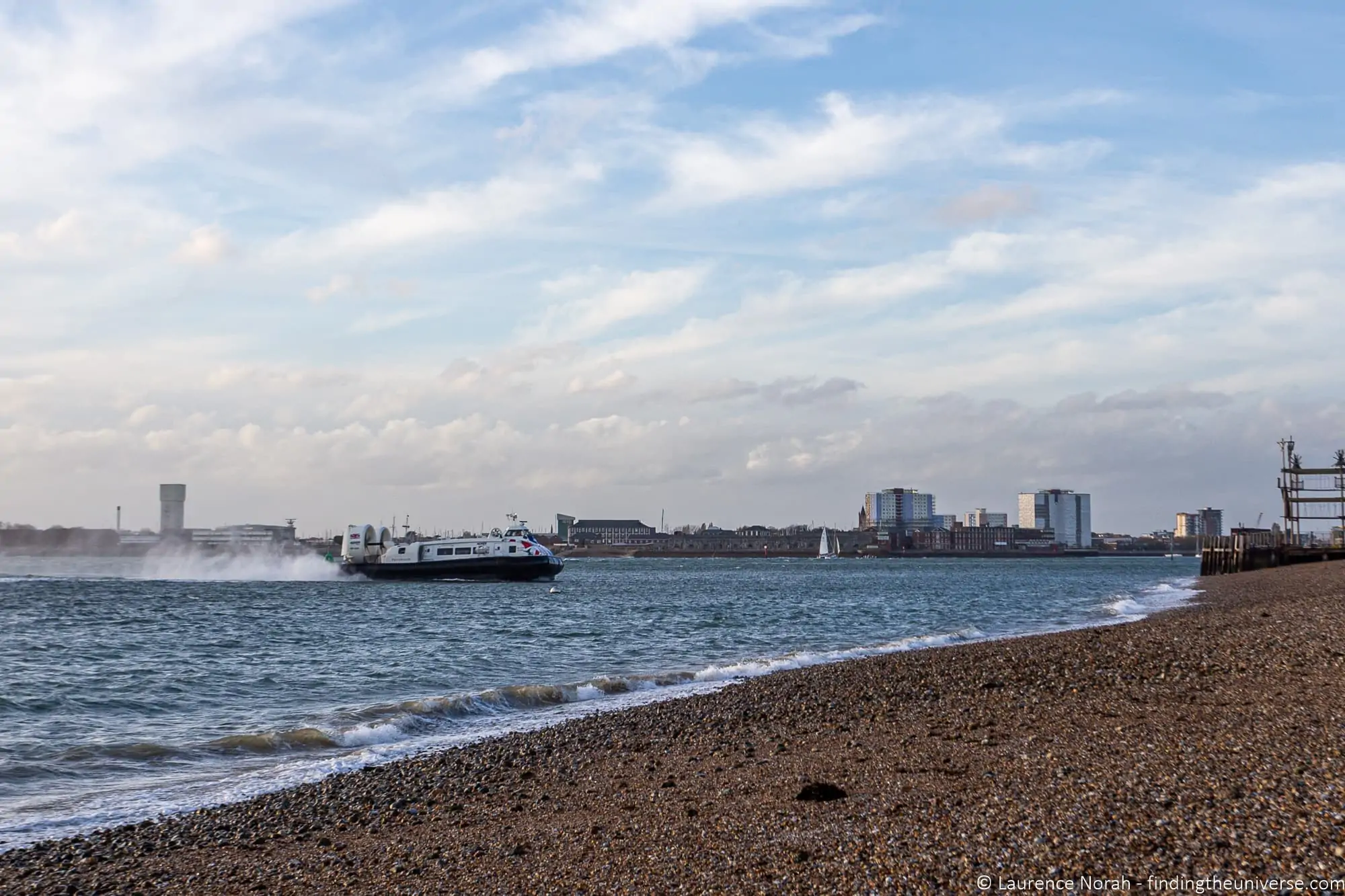
We’d only really suggest crossing if you’ve got more than a day in the area, as there’s loads to do once you’re there: see our guide to visiting the Isle of Wight and our guide to the Queen Victoria Trail on the Isle of Wight for ideas. On the island, the Needles Breezer and Downs Breezer open-top hop-on-hop-off buses are a great way to get around. You can book the hovercraft here, with fares from around £31.
Even if you don’t fancy the crossing, take a few minutes to watch the hovercraft arrive or leave from its terminal near Clarence Pier. It’s a properly odd sight, and not one you’ll forget in a hurry.
Getting to Portsmouth
Portsmouth sits on the south coast around 75 miles south west of London, with Brighton along the coast to the east and Southampton just to the west. It’s well connected, so getting here is easy.
By train, the direct service from London Waterloo to Portsmouth Harbour runs from about 1 hour 30 minutes on the fastest trains, though most are nearer 2 hours. There are two main stations, and which one you want depends on your plans. Portsmouth Harbour is right by the Dockyard and Gunwharf Quays, so it’s the one for the naval sights. Portsmouth and Southsea is closer to the city centre. Long-distance buses run from across the UK to the interchange at The Hard, next to Portsmouth Harbour station, and the nearest airport is Southampton, about 20 miles away.
Portsmouth is one of the easiest seaside day trips from London. Brighton makes an equally easy one if you’re weighing up the options. If you’d rather not plan the logistics yourself, there’s a full-day private tour from London that takes in the Historic Dockyard, including HMS Victory, HMS Warrior, the Mary Rose, a harbour tour and lunch. To sort your own train or coach tickets, we use the Trainline, which covers both across the UK.
Getting around Portsmouth
We found Portsmouth easy to get around on foot, with most of the Dockyard and Gunwharf sights close together. The main thing to plan for is the roughly two-mile gap between the Dockyard area and the Southsea seafront, which is a pleasant enough walk but a fair one with kids or limited time.
There’s a good local bus network, run by Stagecoach and First Bus, and taxis and ride-hailing apps like Uber operate across the city. If you’re heading to the Submarine Museum and Explosion at Gosport, the harbour waterbus from the Dockyard is the easy way across the water.
Where to stay in Portsmouth
If you’re staying over to do the city across two days, there’s plenty of choice. Here are a few we’d consider, roughly in order of distance from the Historic Dockyard:
- The Ship Leopard Boutique Hotel is just a 3 minute walk from the Historic Dockyard. It’s a central 4-star boutique hotel with en-suite rooms, an on-site cafe, and breakfast included.
- The Royal Maritime Club, around five minutes from the Dockyard, is a well-reviewed 3-star with a restaurant, a swimming pool, en-suite rooms and breakfast included.
- Ibis Portsmouth is a budget option near the university and central station, about 10 minutes from the harbour, with basic en-suite rooms and breakfast available.
- Ye Spotted Dog, between Portsmouth Museum and the cathedral, is a characterful 3-star in a building dating back to the 16th century, with en-suite rooms and breakfast included.
- The Holiday Inn Express Portsmouth Gunwharf Quays is centrally placed on Gunwharf, about 10 minutes from the Dockyard, with en-suite rooms and a continental breakfast.
- The Clarence Boutique Hotel is an adults-only 4-star down near Southsea Castle and the D-Day Story, around 30 minutes from the centre, with en-suite rooms, a cooked breakfast and a gastro pub on site.
For more options, you can see the full Portsmouth listings on Booking.com here.
What we’d do differently
A few things we’ve learned from our own visits that might save you some hassle:
- Give the Dockyard a full day, and buy the All Attractions ticket. We tried to half-do it and pair it with Southsea, and ended up rushing the bit we’d come for. If the ships are your priority, commit a whole day to them.
- Book the big tickets online before you arrive. In summer the Dockyard queues build up, and the online price is lower anyway, so there’s no reason not to.
- Set your expectations on HMS Victory. She’s wrapped in scaffolding for the Big Repair, so if seeing her in full is the dream, you might wait a few years. If watching a 250-year-old warship being kept alive sounds good, go now. We’d happily go now.
- Start early if you want both clusters in a day. The seafront stays walkable into the evening, but the Dockyard attractions close mid-afternoon to early evening, so do those first.
- With young kids, weave in Action Stations and maybe the aquarium. Several historic ships back to back is a lot for younger children, and breaking it up keeps everyone happy.
Portsmouth FAQ
Is one day enough for Portsmouth?
One day is enough to see one side of the city well, but not both. The Historic Dockyard alone is a full day, so a single day means choosing between the Dockyard or a sweep of the Southsea seafront.
If you want to see the ships and the seafront both, give it two days.
Which Historic Dockyard ticket is best value?
The All Attractions ticket at £51 is the best value for almost everyone. It covers four ships, the on-site museums and Action Stations, plus the Gosport museums by waterbus, and it’s valid for a whole year.
The £36 single-attraction day ticket only makes sense if you want to see one ship and nothing else. Since the All Attractions ticket is only £15 more, most people should buy it.
Can you visit Portsmouth as a day trip from London?
Yes, easily. Direct trains from London Waterloo to Portsmouth Harbour take from about 1 hour 30 minutes, though most run nearer 2 hours.
A realistic day trip means picking the Dockyard or a couple of seafront highlights, rather than trying to see everything. Arrive mid-morning and you’ll have a good six or seven hours on the ground.
Is HMS Victory open during the restoration?
Yes. HMS Victory stays open throughout the Big Repair conservation project, and you can still board her and explore the decks.
The trade-off is that the hull is wrapped in scaffolding, so you won’t get the classic exterior view. In return, you can watch shipwrights at work from viewing platforms, which won’t be possible once the project finishes.
What is Portsmouth famous for?
Portsmouth is famous as the home of the Royal Navy. It’s where you’ll find HMS Victory, Nelson’s flagship from the Battle of Trafalgar, along with HMS Warrior, the Mary Rose and the National Museum of the Royal Navy, all at the Historic Dockyard.
It’s also known as the birthplace of Charles Dickens and as a major departure point for the D-Day landings.
Do you need to book Portsmouth attractions in advance?
You don’t have to, but it’s worth it for the Historic Dockyard in summer, both to skip the queues and because online prices are lower.
For the smaller attractions and the seafront, you can usually just turn up.
Is Portsmouth worth visiting?
If you have any interest in ships, naval history or the sea, Portsmouth is well worth a visit, and there’s nowhere else in Britain quite like its Historic Dockyard. Even without that interest, the seafront, the views from the Spinnaker Tower and the walk around Old Portsmouth make for a good day by the coast.
It’s at its best as a full day trip from London or a relaxed two-day break.
Further reading
We hope this guide has given you plenty of ideas for your time in Portsmouth. To help plan the rest of your UK trip, here are some of our other guides you might find useful:
- If you’re basing yourself in London, see our 1 day London itinerary, 2 day London itinerary, 3 day London itinerary and 6 day London itinerary.
- We’ve written about other day trips from London, including visiting Oxford from London, a day trip to Stonehenge and things to do in Cambridge.
- To budget your trip, see our guide to how much it costs to travel in the UK.
- If you’re renting a car, we have tips for driving in the UK, plus detailed one week and two week UK road trip itineraries.
- We have guides to plenty of other UK cities too, including things to do in Bristol, things to do in Edinburgh and things to do in Glasgow.
- For a guidebook to take with you, we like the Rick Steves England guide.
And that’s our guide to Portsmouth. If you’ve got a question about visiting, pop it in the comments below and we’ll get back to you as soon as we can.
zet says
very nice blog
Laurence Norah says
Thanks very much, have a great time in Portsmouth!
Laurence