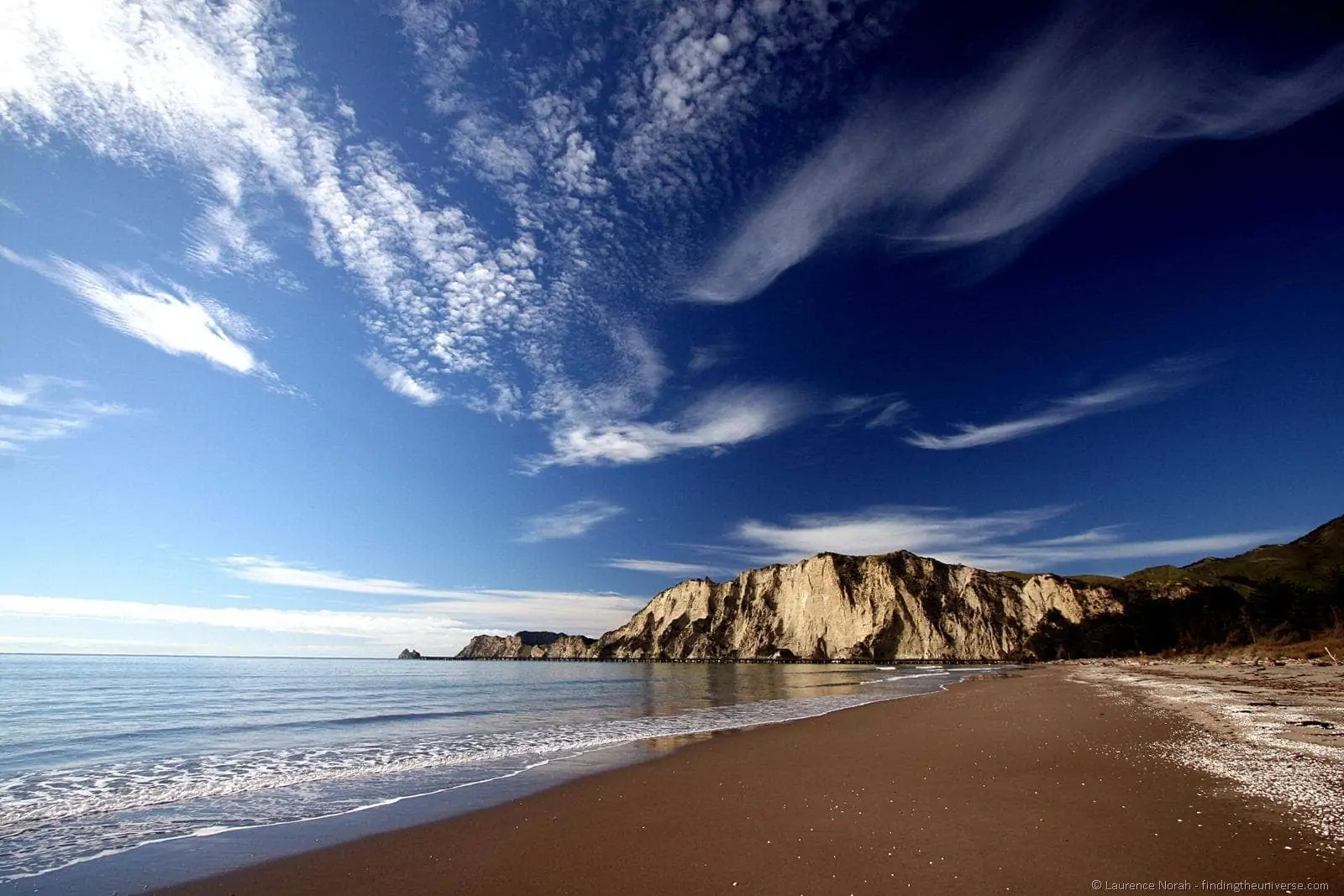
I spent a very happy year living, working and road tripping around New Zealand, including five months parked up in Tongariro National Park. So when people ask me to put together a one-month New Zealand itinerary, I have some opinions.
This is the one-month road trip I’d plan today, with the benefit of hindsight. It covers both islands, gives the North Island the time it actually deserves (a mistake I made in the original version of this post, where I rather underweighted it), and tells you which attractions you need to book weeks ahead so you don’t turn up to a sold-out Hobbiton tour or a fully-booked Milford cruise.
A month sounds generous, and it is. But New Zealand is bigger and more varied than people expect (you can drive for an entire day and still be looking at the same mountain range from a different angle), so it pays to plan. Below is the at-a-glance version, then the pre-trip planning, then the day-by-day route. There’s a FAQ section at the bottom covering the questions I’m asked most.
Table of Contents:
One Month in New Zealand: At-a-Glance Itinerary
If you only read the rest of the post for the bits you care about, here’s the route in summary:
- Days 1 – 2: Auckland
- Days 3 – 5: Bay of Islands and the Far North
- Days 6 – 7: Coromandel Peninsula
- Day 8: Hobbiton and Waitomo
- Days 9 – 10: Rotorua
- Days 11 – 12: Tongariro National Park
- Day 13: Wellington
- Day 14: Interislander ferry to Picton, drive to Nelson
- Days 15 – 16: Abel Tasman and Golden Bay
- Day 17: Down the West Coast (Pancake Rocks, Hokitika)
- Days 18 – 19: Fox and Franz Josef Glaciers, Lake Matheson
- Day 20: Haast Pass to Wanaka
- Days 21 – 23: Queenstown
- Days 24 – 25: Te Anau and Milford Sound
- Days 26 – 27: Mount Cook
- Day 28: Lake Tekapo
- Days 29 – 30: Christchurch and Akaroa
That’s twelve days on the North Island, one day for the ferry crossing, and seventeen days on the South Island. The split is deliberate. The South Island is the more famous half scenically, but the North Island has Tongariro, Hobbiton, Maori cultural depth and the Bay of Islands, and a one-month trip that gives the North Island only a week (as my original itinerary did) skips too much.
If your priorities are different, see the alternative routes section further down. There’s a contrarian East Cape detour, plus a slimmer North Island option for travellers who really do want to lean South Island.
Pre-Trip Planning for New Zealand
The Best Time to Visit New Zealand
New Zealand has four seasons, and they’re flipped from the Northern Hemisphere. Summer is December to February. Winter is June to August.
The short answer is late October to mid-December, or March. The weather is settled enough to do the South Island walks and Milford day, the days are long, and you’ll miss the local school-holiday crush. January is the worst month I’d suggest, not because the weather is bad (it’s the warmest), but because every Kiwi is also on holiday, accommodation prices spike, and Milford Sound is at peak crowding.
Winter (July to September) is fine if you’re going for the snow. The South Island ski fields around Queenstown and Wanaka are the draw, and Milford Sound in winter is a different kind of beautiful (more snow on the mile-high cliffs, fewer cruise boats). The trade is that some alpine roads become harder work, the Tongariro Crossing is mountaineering rather than a day walk, and the Great Walks are largely off-limits without proper kit. The itinerary below assumes a warmer-month trip.
Car or Campervan?
You need your own transport. New Zealand has buses (Kiwi Experience, InterCity), a limited rail service, and domestic flights, but none of them give you the freedom of stopping at the random lookout that turns out to be the best photo of your trip.
The choice is car or campervan. People assume campervans are the cheaper option for a long trip. They’re often not.
Rent a car if: you want to stay in proper beds, you’re travelling as a couple or alone, you want flexibility on where you eat (Kiwi cafés are excellent and cheaper than self-catering for two), and you’re happy mixing hostels, motels and the occasional splurge. A car is cheaper to hire than a campervan, more fuel-efficient, easier to park in cities, and lets you stay in places where vans aren’t welcome (which is most central Queenstown and Wanaka). For a month, this is what I’d do. We use Discover Cars for finding a rental, which compares all the major hire firms across New Zealand.
Rent a campervan if: you’re travelling as a family or in a group of three or more (where the per-person cost evens out), you want to stay in remote spots that don’t have accommodation, or you’re travelling with kids who’d rather be in the same bed every night. New Zealand’s Department of Conservation (DOC) campsites are some of the best in the world and you can self-park overnight in many freedom-camping spots, which works out cheaper than the equivalent run of motels. Motorhome Republic compares the major providers.
If you’re staying in New Zealand longer, like we did, then it can become more economical to buy a vehicle and sell it at the end of your trip. But for a month, renting is the way to go.
One thing the brochures don’t mention: small campervans are smaller than they look. If you’re tall, or two people who’d rather not sleep nose-to-nose for a month, size up. The two-berth conversions on small van chassis are a false economy.
How Much Does a Month in New Zealand Cost?
New Zealand is not a budget destination. I’d budget NZD 150 – 250 per person per day all in for a comfortable trip in a hire car staying in a mix of motels and hostels, with most meals out and a handful of paid attractions. That works out to roughly NZD 4,500 – 7,500 per person for the month, plus flights and the hire vehicle.
The big-ticket bookings (cruises, Hobbiton, Milford day) are NZD 100 – 300 each per person and add up faster than you’d think. A month-long trip will see you doing six to eight of them.
You can travel for less by sticking to hostel dorms, cooking your own meals, and skipping the helicopter flights and glacier hikes. NZD 100 per person per day is doable but tight. You can also travel for considerably more (lodge accommodation alone runs NZD 600+ a night), and Queenstown will swallow a budget without trying.
Booking Ahead: What You Need to Reserve
Most of New Zealand can be booked as you go. Some things absolutely cannot. This is the most useful list in this article (and the one most one-month-NZ guides leave out).
- Hobbiton Movie Set Tour, 4 – 6 weeks ahead in summer (sooner if you want a specific time slot, and the evening Banquet Tour sells out earliest).
- Milford Sound day cruise, 1 – 2 weeks ahead for the early-morning sailings (best for fewer boats and reflective water). Walk-up is sometimes possible for the midday cruises but you’re betting on the weather.
- Tongariro Alpine Crossing shuttles, 1 – 2 weeks ahead. The crossing itself is free to walk, but it’s a one-way 19.4km route, so you need transport to one end. Shuttles fill up.
- Great Walks huts (Routeburn, Milford, Kepler, Heaphy, Abel Tasman Coast Track) open for the following October – April season in early May. The Milford Track sells out within hours of the booking window opening. If you want to do a Great Walk, build the rest of your trip around when you got the hut. Otherwise, day-walk sections are still worth doing.
- Interislander ferry (Wellington to Picton), 4 – 6 weeks ahead in summer if you have a vehicle. Foot-passenger tickets are easier but the vehicle slots fill up.
- Hire car, and especially campervan, 2 – 3 months ahead for a December – February trip. November and March are easier.
- Queenstown accommodation, 2 – 4 weeks ahead in summer. Anywhere central goes fast.
The rest (Bay of Islands cruises, Waitomo Caves, Maori cultural evenings in Rotorua, Wanaka and Mount Cook accommodation, Akaroa) can usually be booked a few days out, even in summer. Hostels in less-touristy spots can be walked up to.
Accommodation in New Zealand
There’s no shortage of accommodation in New Zealand, from B&Bs and backpacker hostels to motels (which are everywhere and a Kiwi staple) to high-end lodges. There are also DOC campsites, regional council campsites, and dedicated holiday parks for vans and tents.
Rough nightly prices for two people in summer: hostel dorm bed NZD 35 – 50 each, basic motel NZD 150 – 220, B&B NZD 200 – 350, mid-range hotel NZD 250 – 450. Holiday parks for campervans NZD 50 – 80 a night with hookups. DOC campsites NZD 8 – 25 per person. Queenstown is more.
I’d say seek out the smaller, more characterful places (the family-run B&Bs, the hostels with personality, the holiday parks where the owners can tell you which gravel road is worth driving). Most of my best memories of accommodation in NZ are from places that don’t show up on the first page of any booking site.
Safety in New Zealand
New Zealand is safe (assuming the volcanoes don’t go off while you’re there, which is a non-zero risk if you spend any real time near Tongariro or White Island). The genuine traveller-affecting issue is car break-ins at remote trailheads. Take valuables with you, leave nothing visible, and don’t park overnight at well-known viewpoints with anything in the boot. The Kepler Track car park and the Hooker Valley track car park have both had break-in waves in recent years.
Rivers and beaches deserve more respect than they get. Many West Coast beaches have rip currents that look gentle from shore, and Kiwi rivers in flood are not negotiable. If a track sign says don’t cross, don’t cross.
Days 1 – 2: Auckland
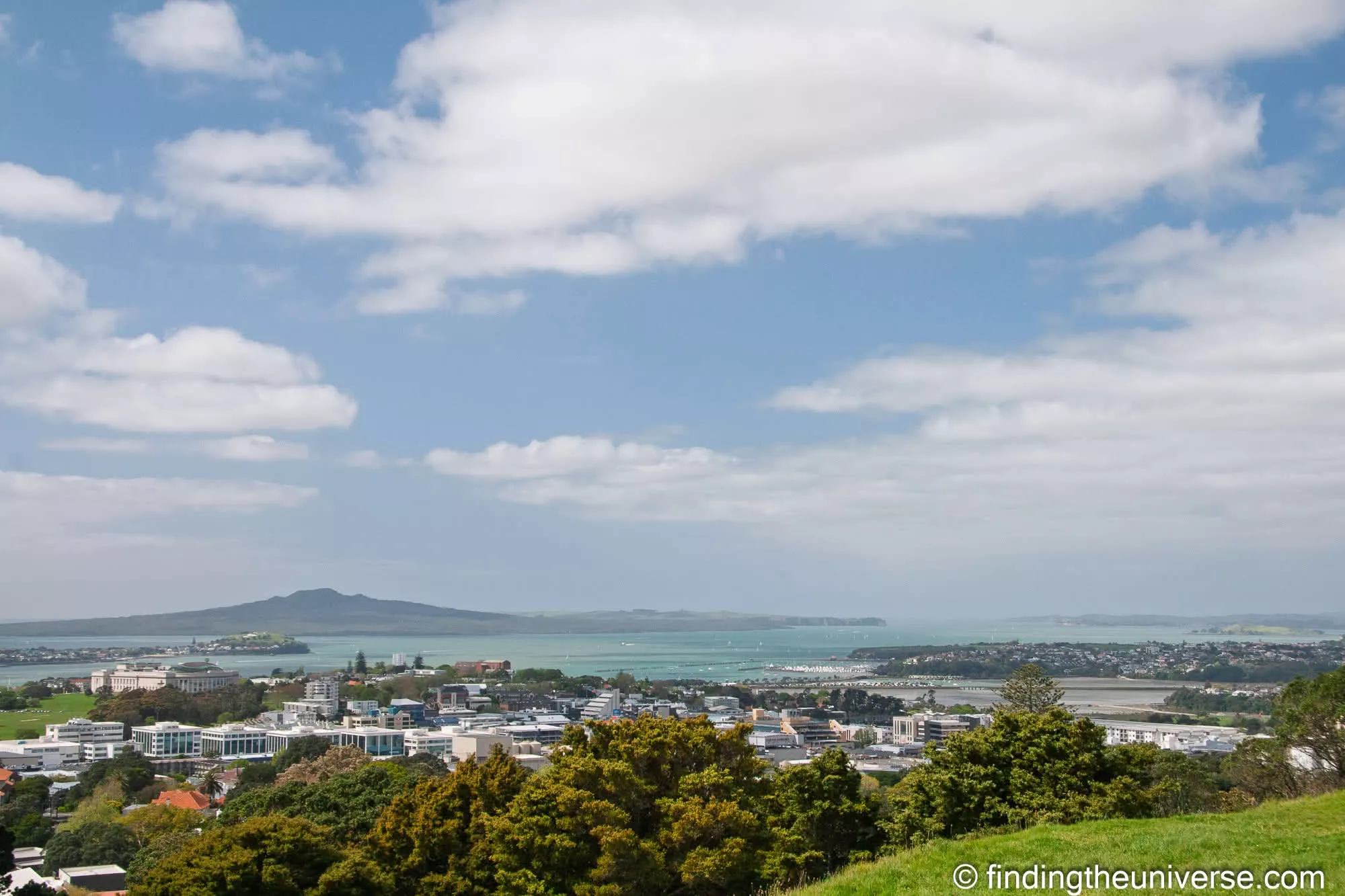
You’ll arrive into Auckland (Tāmaki Makaurau) jet-lagged. The temptation is to push straight out of the city. I’d resist it for at least a day. Long-haul into New Zealand is brutal, and Auckland is a perfectly nice city to recover in before you start driving.
Auckland sits on top of around fifty volcanoes, which is more than slightly alarming when you find out. You can walk or drive up several of them for views back over the city and harbour. Mount Eden and One Tree Hill are the obvious ones. The Sky Tower will give you the same view from above without the hike.
A half-day on Waiheke Island (a short ferry from the central waterfront) is a strong option for day two if you’ve recovered enough to function. It’s the local wine-and-beach escape and a good way to ease into the slower pace of the rest of the trip.
Eat at one of the harbourside places at Britomart, walk Queen Street if you must, and get some sleep. You’re driving north tomorrow.
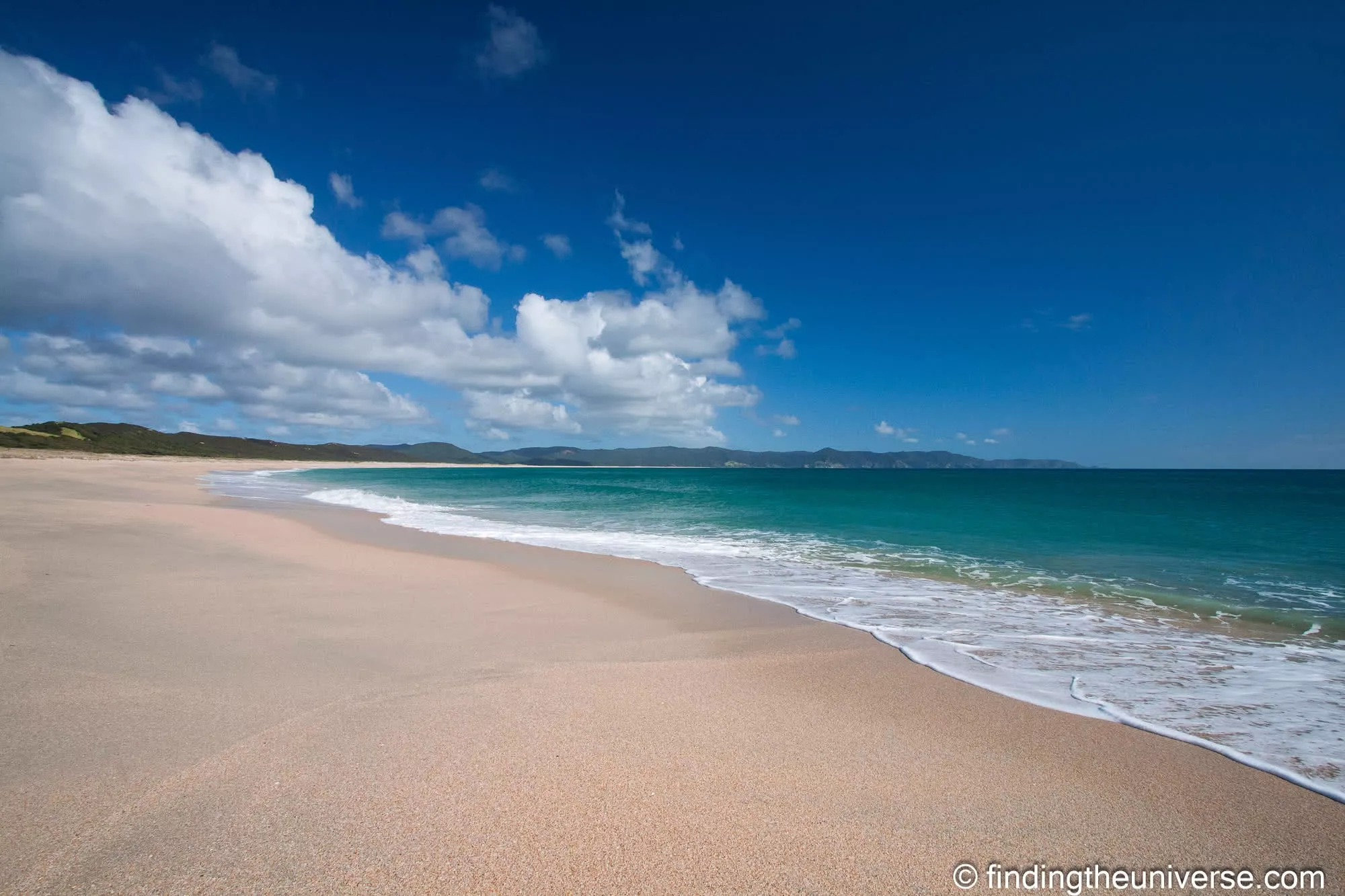
Days 3 – 5: Bay of Islands and the Far North
From Auckland, head north on State Highway 1. The drive to Paihia, the main base for the Bay of Islands, is around 230km and takes about three and a half hours direct. I’d break it up with a stop at the Kauri Museum at Matakohe (better than it sounds, especially if you’re going up to see the giant kauri trees later) or a swim at Mangawhai Heads.
The Bay of Islands is, well, a bay full of islands (144 of them, give or take). The point of being here is to get on the water. The Hole in the Rock cruise is the headline trip: a half-day boat to Cape Brett, with a chance to spot bottlenose dolphins and (weather permitting) sail the boat through a hole in a rock that the Maori call Motukōkako.
You can book the Hole in the Rock cruise from Paihia via GetYourGuide.
Allow a full day for the cruise. On day five, drive up to Cape Reinga, the tip of the North Island, where the Tasman Sea meets the Pacific Ocean and the two currents collide visibly. It’s about two and a half hours each way from Paihia and there’s not much else along the road, but the lighthouse and the meeting of the seas is one of those bits of New Zealand that lodges in your memory. Stop at Te Paki sand dunes on the way back (you can hire a boogie board and slide down them, which is more fun than I’d expected at age twenty-five and is presumably also fun for adults).
If you’re keen to see giant kauri, the Waipoua Forest with Tāne Mahuta (the largest kauri tree alive, estimated at between 1,250 and 2,500 years old and just over 50 metres tall) is a reasonable detour on the way back south, though it adds half a day.
Days 6 – 7: Coromandel Peninsula
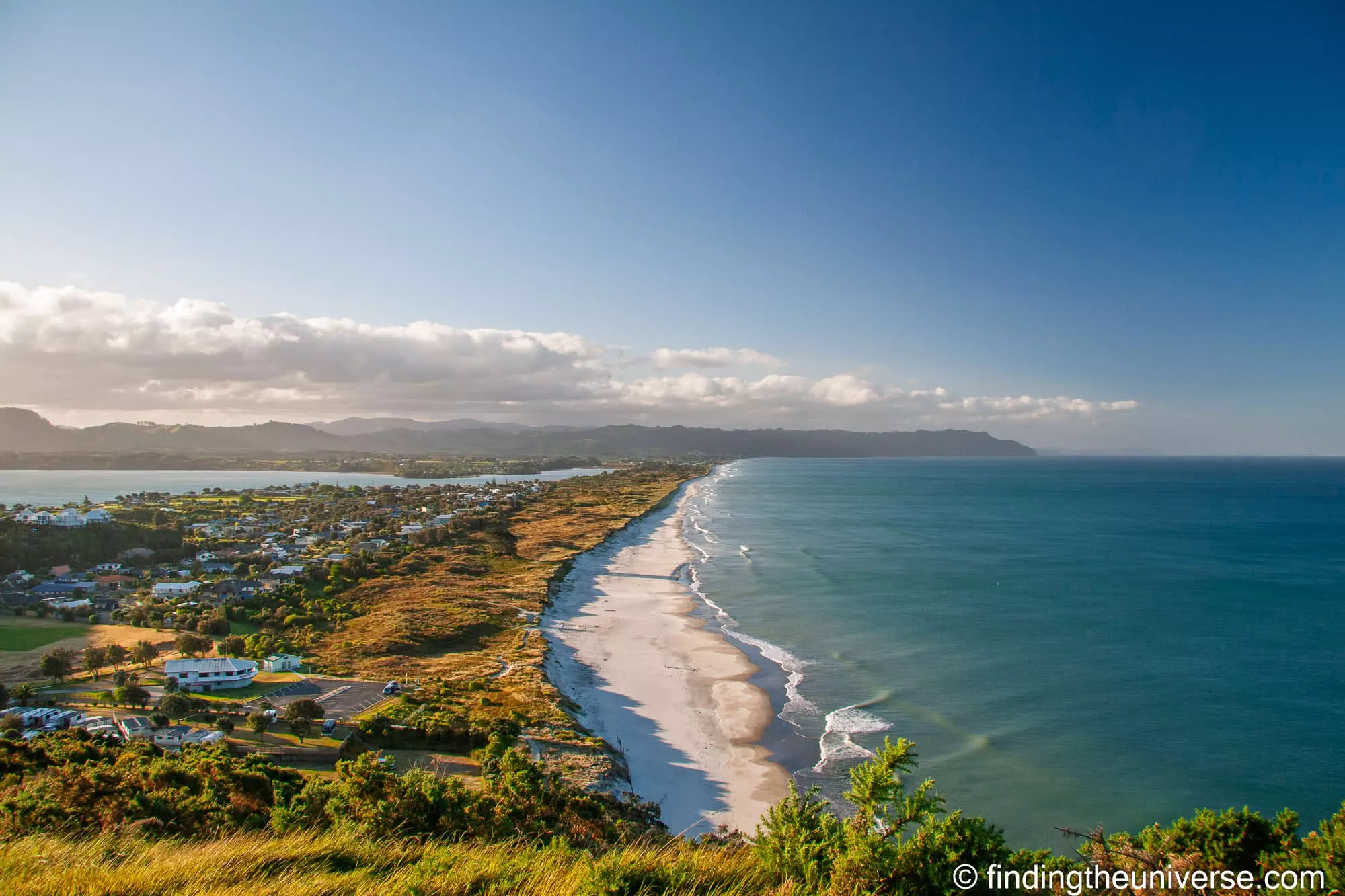
Drive south from the Bay of Islands back through Auckland and out east onto the Coromandel Peninsula, around 4 – 5 hours total. You’re heading for Hahei or Whitianga as a base.
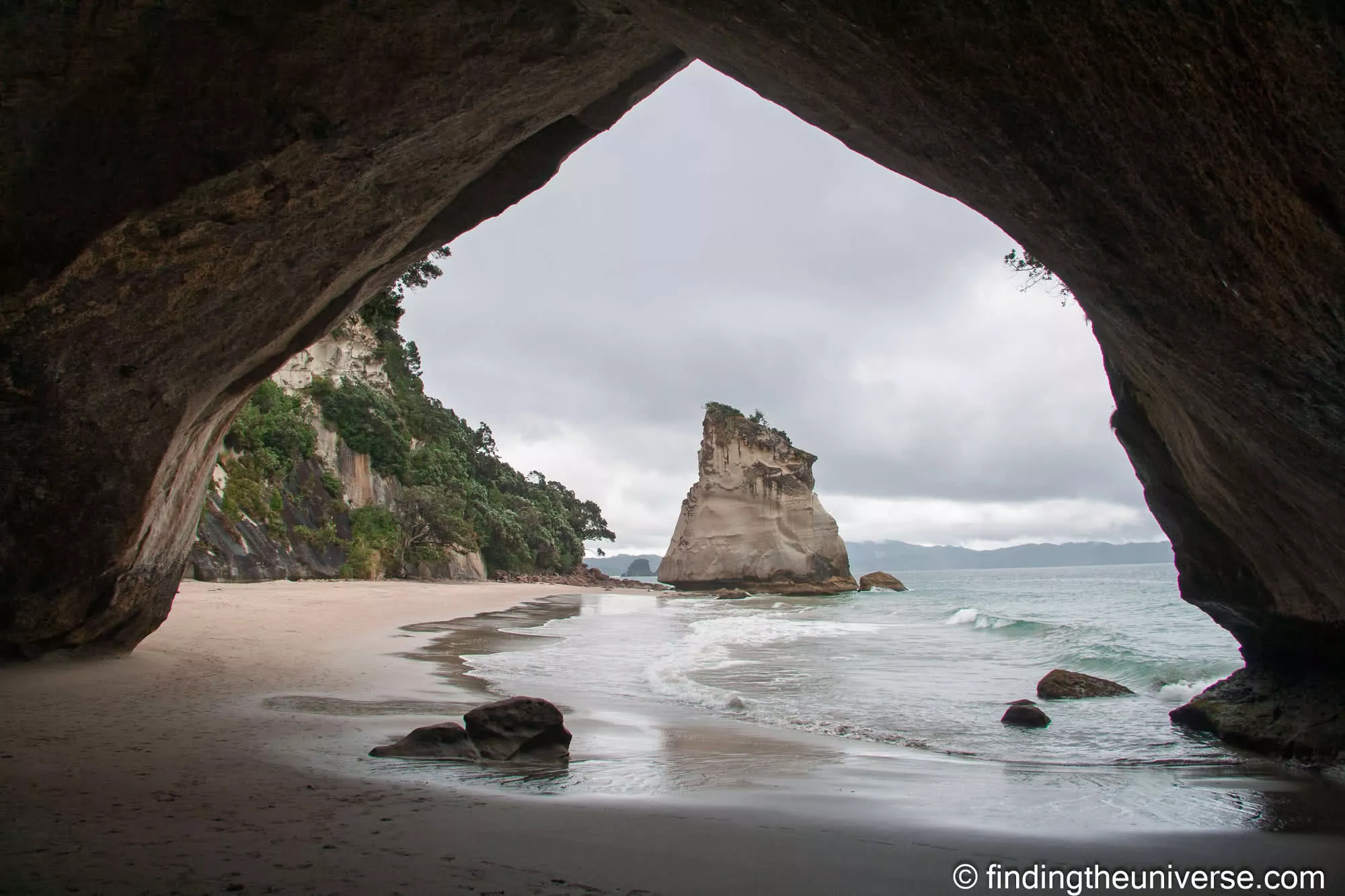
The Coromandel is famously two beaches: Cathedral Cove (a pohutukawa-fringed cove with a natural rock arch you’ve probably seen on Instagram) and Hot Water Beach (where you dig a hole in the sand at low tide and a hot spring fills it). Both are worth doing. Cathedral Cove’s walking track was closed for a couple of years after a 2023 storm and has now reopened, though DOC has been known to reclose it at short notice after heavy rain (boat and water-taxi options are still useful as a backup). Hot Water Beach is timed to two hours either side of low tide, so plan around that.
Beyond the headline two, the Coromandel is also ideal for slow days. The drive over the 309 Road (mostly gravel, takes longer than the map suggests) is a nice scenic alternative if you fancy it. Hahei beach itself is excellent for a swim. There are decent cafés in Whitianga, and a good fish-and-chip shop in Coromandel Town.
Day 8: Hobbiton and Waitomo
This is a long day if you do both, but the geography lines up: Hobbiton is near Matamata, Waitomo Caves are about an hour south, and you can be in Rotorua by evening. Distance from the Coromandel to Matamata is around 2 hours; Matamata to Waitomo Caves another 1.5 hours; Waitomo to Rotorua a further 1.5 hours. Doable.
If you only have time for one, do Hobbiton.
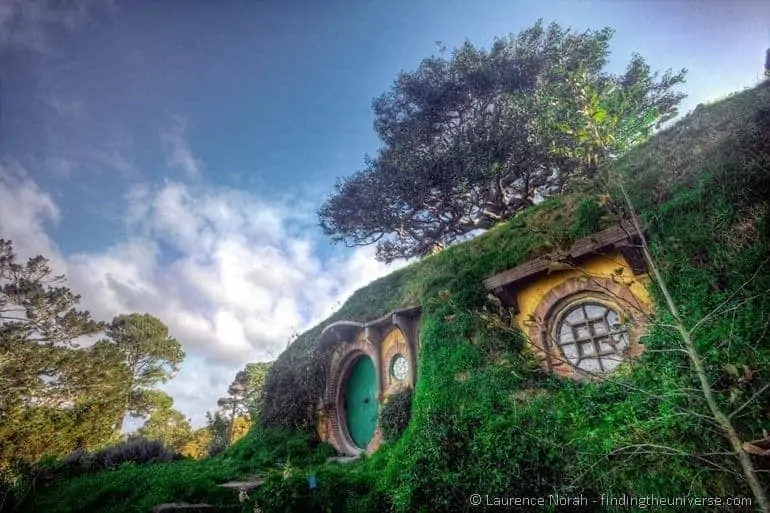
Hobbiton Movie Set Tour: the Lord of the Rings filming location, preserved as the Shire from the Peter Jackson films, with around 44 hobbit holes set into the green hills of a working sheep farm. You walk the tour with a guide and finish with a drink at the Green Dragon. It’s polished and a bit theme-park-ish, but the landscape is real and the location is, in fact, where they shot it. I went expecting to be cynical and wasn’t. Book ahead (4 – 6 weeks in summer). The evening Banquet Tour is the upgrade if you can manage it.
You can book the Hobbiton Movie Set Tour via GetYourGuide (both the Matamata-direct option and the full-day-from-Auckland transfer are listed there).
Waitomo Glow Worm Caves: three connected caves about an hour south of Matamata, with a boat ride through a chamber where the ceiling is covered in glowworms (which are, technically, the larvae of a fungus gnat, but the marketing department wisely went with “glow worm”). Cynics call it overrated. I think the boat through the glowworm chamber is one of the more peaceful five minutes you can have in New Zealand. The Black Water Rafting tour (caving with inner tubes through underground rivers) is the upgrade for anyone in reasonable physical shape.
You can book the Waitomo Glowworm Caves boat tour via GetYourGuide.
Push on to Rotorua to sleep. You’ll smell it before you see it.
Days 9 – 10: Rotorua
Rotorua is famously sulphurous (the smell does fade after a few hours, and you stop noticing it entirely after a day). It’s also the heart of Maori cultural tourism in New Zealand and the most accessible place to see active geothermal features.
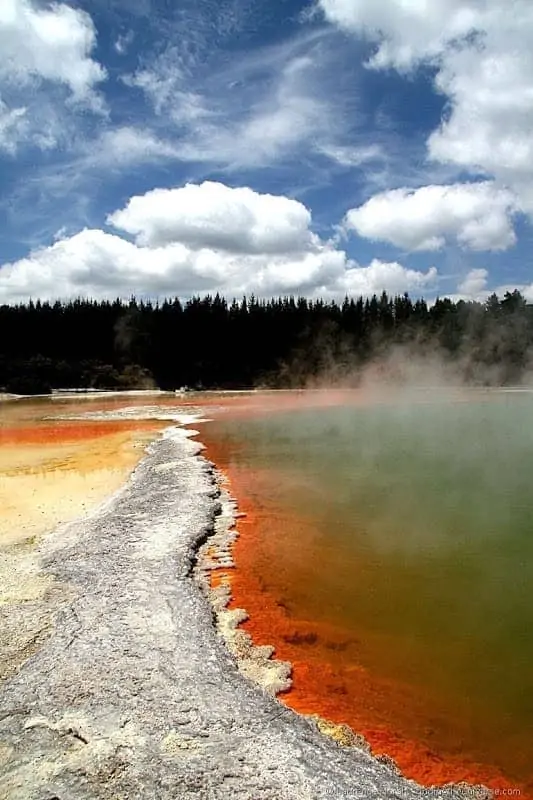
Wai-o-Tapu Thermal Wonderland: 30km south of Rotorua town. Get there for the morning Lady Knox geyser show (10:15am, induced rather than natural, but still impressive), then walk the trails. The Champagne Pool (pictured above) is the headline attraction and one of the most photographed bits of New Zealand for good reason. The whole park takes 2 – 3 hours.
You can buy Wai-o-Tapu entry tickets in advance via GetYourGuide.
Maori cultural evening: several operators run dinner-and-performance evenings combining a hāngī (food cooked in an earth oven) with a kapa haka performance. I’ve done both Tamaki Maori Village and Mitai Maori Village and slightly preferred Tamaki, though both are good. Book a few days ahead.
You can book the Tamaki Maori Village evening experience via GetYourGuide (now branded Te Pā Tū, same operator).
Other Rotorua draws: the Polynesian Spa (worth it after a long drive, and locals genuinely use it), the Redwoods Treewalk (a suspended walkway through California redwoods at night with light installations, more atmospheric than it sounds), and Te Puia (a geothermal park with a Maori arts and crafts institute attached, an alternative to Wai-o-Tapu if you want the Maori cultural side included).
If you fly fish or just like trout, the Rotorua and Taupo lakes have some of the best rainbow trout fishing in the world. Local guides are the way to do it.
Days 11 – 12: Tongariro National Park
Drive south from Rotorua around 2 hours to the Tongariro region. National Park Village or Whakapapa are the obvious bases. I lived up here for five months, including climbing Ngauruhoe (which doubled as Mount Doom in the films), so I’m slightly biased about how much I’d recommend giving it.
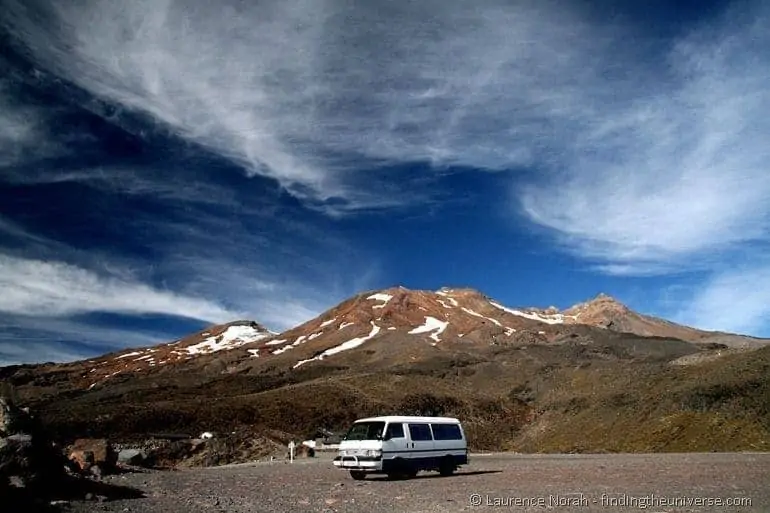
The Tongariro Alpine Crossing is the day-walk. 19.4km, point to point, 6 – 8 hours, takes you across active volcanic terrain past the Emerald Lakes (mineral-coloured pools that look photoshopped) and right under Ngauruhoe. It’s New Zealand’s most famous day walk for good reason. Conditions matter: a meaningful share of summer days come up as not-recommended (high wind being the usual culprit), and the weather can turn quickly. Check forecasts the night before, start at first light, and book your shuttle ahead.
You can book a Tongariro Alpine Crossing shuttle via GetYourGuide (multiple operators list there with different start points).
If conditions are wrong, or the crossing’s beyond your fitness, the alternatives are the Taranaki Falls walk (a 2-hour loop near Whakapapa with a waterfall payoff), or driving up to the Whakapapa ski field road for views of Ruapehu without much effort.
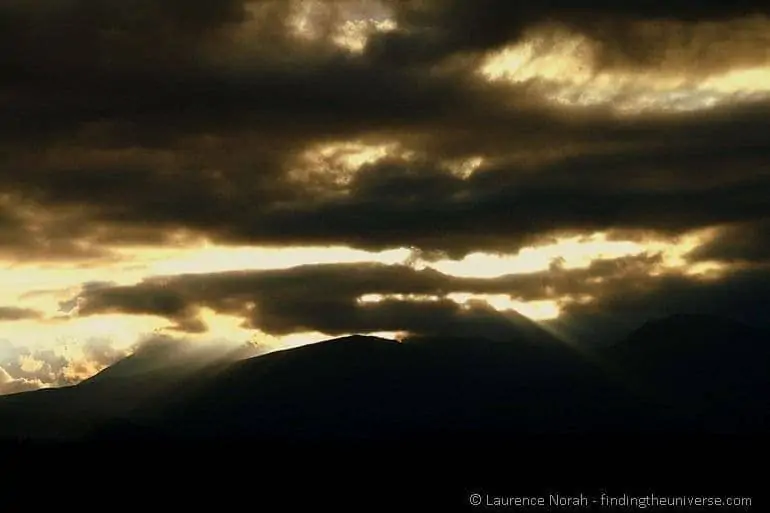
Allow a rest day after the crossing. You’ll need it. The Park’s also a reasonable base for stargazing (it’s a designated Dark Sky area) and for the Whanganui River journey if you’ve got a few extra days to spare on a multi-day canoe trip.
Day 13: Wellington
Drive south from Tongariro to Wellington, around 4 – 5 hours via Taupo and Lake Taupo’s eastern shore. If you’ve not stopped in Taupo yet, the lake is roughly the size of Singapore and Huka Falls is a quick detour worth doing.
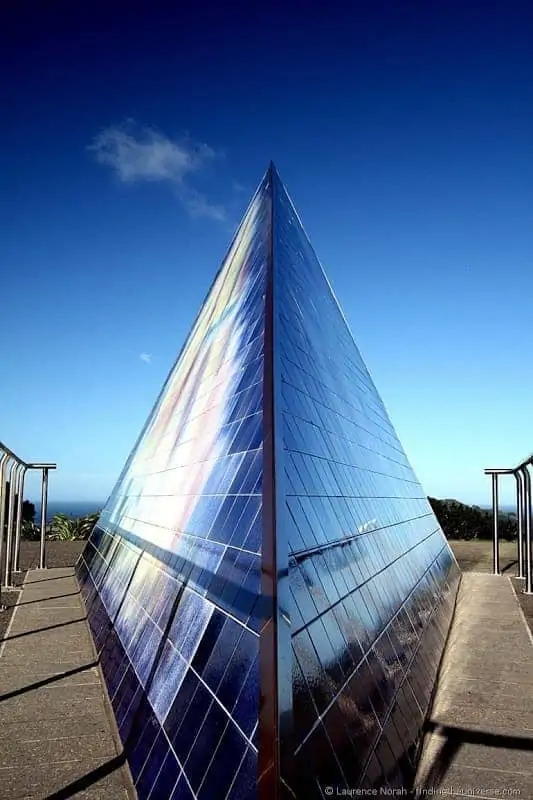
Wellington is New Zealand’s capital and one of the more interesting cities in the country. It’s also small, so a day works.
The walk (or drive) up Mount Victoria gives panoramic views over the city and harbour. Te Papa, the national museum, is the best museum in the country and free, with strong Maori, natural history and contemporary art collections (allow 2 – 3 hours minimum). Cuba Street is the nightlife and café strip. Zealandia, a fenced urban wildlife sanctuary, is excellent if you have an extra half day and want to see kiwi or tuatara.
If you’re a Lord of the Rings fan, Weta Workshop tours run from Miramar near the airport. They’re touristy but good. Wellington’s also where Peter Jackson is from, so it’s the natural home of NZ film tourism.
Book the ferry for tomorrow morning. Wellington wind can delay sailings.
Day 14: Wellington to Picton (Interislander Ferry) and Marlborough
The Interislander ferry takes about 3.5 hours from Wellington to Picton through the Marlborough Sounds. The Sounds half of the crossing (the last hour) is the bit you want to be on deck for. It’s one of the prettier ferry rides in the world and a properly pleasant way to enter the South Island.
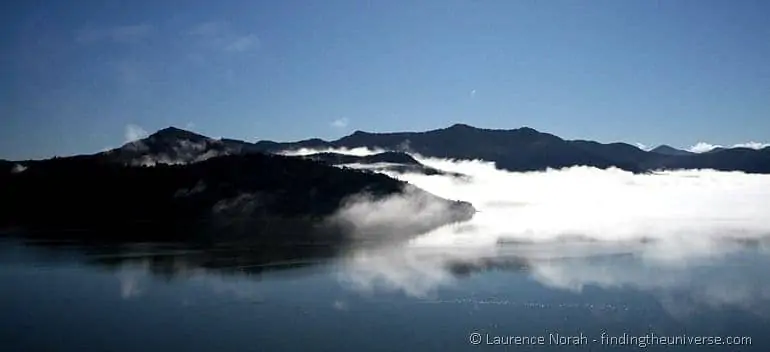
Once in Picton, you’ve got two options. Drive west to Nelson (around 2 hours) to base for Abel Tasman. Or stop in Marlborough wine country for the afternoon (Renwick has dozens of cellar doors, several with on-site lunches, and you can do a wine tour by bicycle in about half a day).
I’d do Marlborough as a half-day stop, then push to Nelson for the night. You’ll want to be at Abel Tasman early.
Days 15 – 16: Abel Tasman and Golden Bay
Abel Tasman is New Zealand’s smallest national park and the one most people leave wishing they’d given more time. Golden sand beaches, turquoise water, native bush, and the Abel Tasman Coast Track running the length of it.
The best way to see the park in two days is to combine a kayak day with a walking day. Several operators run guided sea-kayak day trips out of Marahau or Kaiteriteri, with a water-taxi pickup at the far end. Or you can take a water taxi up the coast and walk a section of the track back (the Anchorage to Bark Bay leg is a strong half-day, around 4 hours of mostly easy walking with several beach swim stops).
If you’ve got the second day spare, drive over Takaka Hill into Golden Bay. Farewell Spit is a 26km sandspit that’s home to gannets, godwits and the occasional whale stranding. You can’t drive the spit yourself (it’s protected), but operators run beach-bus tours up to the lighthouse and back. The drive over Takaka Hill is also a good one, with a few worthwhile detours (Te Waikoropupū Springs are some of the clearest freshwater springs in the world).
Nelson itself is also a good city for a coffee fix. New Zealanders take coffee seriously, and Nelson has more roasters per capita than feels reasonable for a town its size.
Day 17: Down the West Coast
Drive south from Nelson over the Lewis or Buller Pass, then south on State Highway 6 down the West Coast. Around 5 hours of driving total to Hokitika or Franz Josef. The drive itself is one of the better ones in the country.
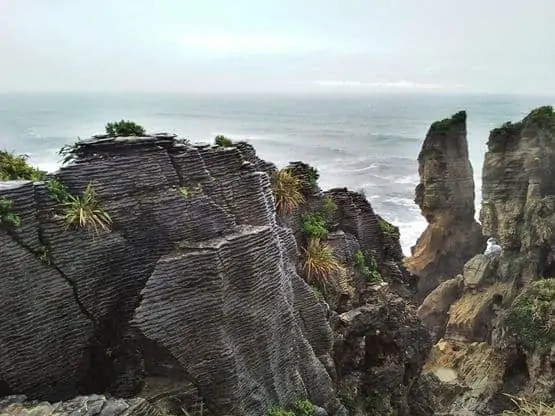
Pancake Rocks at Punakaiki: a 30-minute walk through stratified limestone formations that look exactly like stacks of pancakes (the geology is more interesting than that suggests, but pancakes is the right word for the result). Time it for high tide if you can; the blowholes are the payoff.
Hokitika: a small West Coast town that punches above its weight. Pounamu (greenstone) carving is the local craft, and there are several authentic studios where you can watch carvers work. Hokitika Gorge, 40 minutes inland, has the milky-blue glacial water people fly across the world to see, with a swing bridge for the photo.
Sleep in Franz Josef village.
Days 18 – 19: Fox and Franz Josef Glaciers
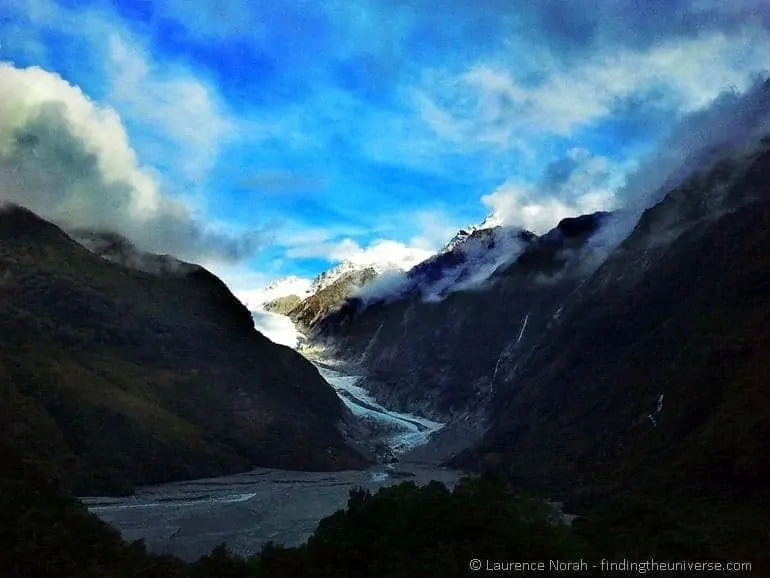
The Fox and Franz Josef Glaciers are two of the most accessible glaciers in the world, in the sense that you can drive to within 30 minutes’ walk of their terminal faces. They’re also retreating at a pretty alarming rate, so the access keeps getting longer.
The terminal-face walks are short, free, and worth doing. They’re not the way to actually get on the ice. For that you need a heli-hike (a helicopter drop-off onto the upper glacier with a guided ice walk), which is currently the only way to walk on ice. They cost NZD 500 – 700 per person and are weather-dependent (around half of summer days run, by my unscientific count). Book ahead, give yourself two windows, and accept that “weather cancellation” is a real possibility.
If the heli-hikes don’t appeal or don’t fly, there are scenic flights from both villages over the Southern Alps and Mount Cook for around NZD 350 – 450, which are weather-dependent but spectacular when they go.
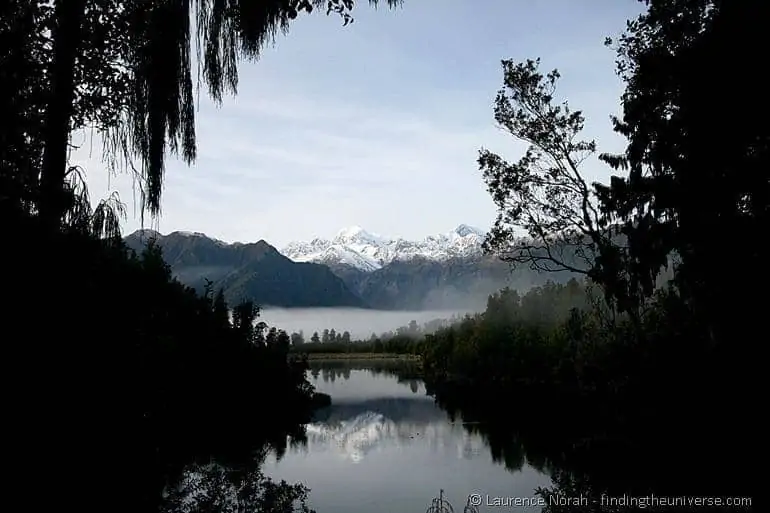
Lake Matheson (the “mirror lake,” 15 minutes from Fox Glacier village) is the postcard photo of New Zealand. Walk the loop track at sunrise, ideally with no wind. The reflection of Mount Cook and Mount Tasman in the dark tannin-stained water is the kind of thing photographs don’t quite capture.
Day 20: Haast Pass to Wanaka
Drive south from Fox over the Haast Pass, the southernmost crossing of the Southern Alps. Around 4 hours total to Wanaka. The pass itself is one of the more dramatic alpine drives in the country, with several short waterfall walks worth stopping for (Roaring Billy, Thunder Creek, the Blue Pools).
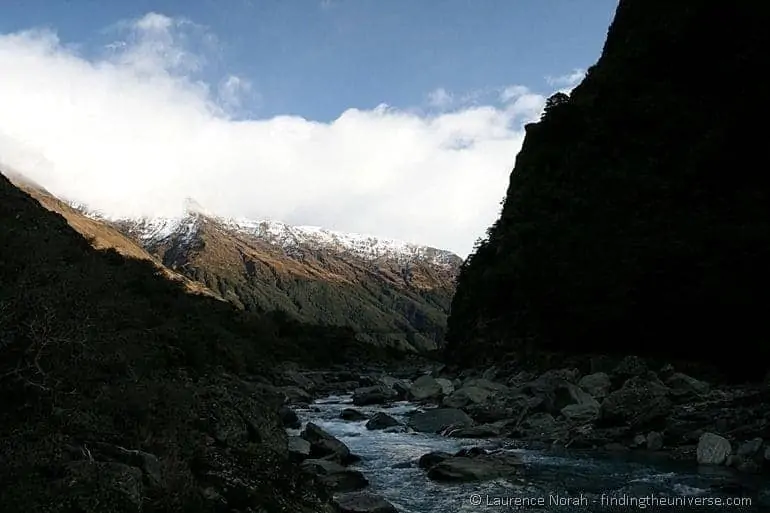
You’ll come out at Wanaka, on the edge of Mount Aspiring National Park. Wanaka’s the quieter sibling of Queenstown, with the same mountain-and-lake setup but a fraction of the crowds and (in my opinion) a more pleasant town. The “Wanaka Tree” (an isolated willow growing out of the lake) is the obvious photo spot. Roy’s Peak, if you’ve got the legs, is the day hike with the postcard view (a steep 11km return, 5 – 6 hours).
Sleep in Wanaka, then drive over the Crown Range to Queenstown the next morning. The Crown Range is the highest sealed road in New Zealand, with a string of viewpoints over Wanaka and the Cardrona Valley.
Days 21 – 23: Queenstown
Queenstown is the adventure capital of New Zealand, in the sense that if you can imagine your body being made to do something at speed (probably while being charged for the privilege), the Kiwis have invented a way to do it here.
That’s reductive. Queenstown is also a properly photogenic lakeside town with excellent food and wine, two ski fields in winter, and several of the South Island’s best half-day trips on its doorstep.
Things worth your time:
- The Skyline gondola for the easy view over the lake to The Remarkables. Walk down via the trail if you don’t fancy paying for the gondola twice.
- A jet boat trip on the Shotover River. Touristy and fun, around 30 minutes of being launched at canyon walls. The Shotover Jet is the original.
- Arrowtown, a 20-minute drive away, is a preserved gold-mining village from the 1860s, particularly photogenic in autumn when the trees turn.
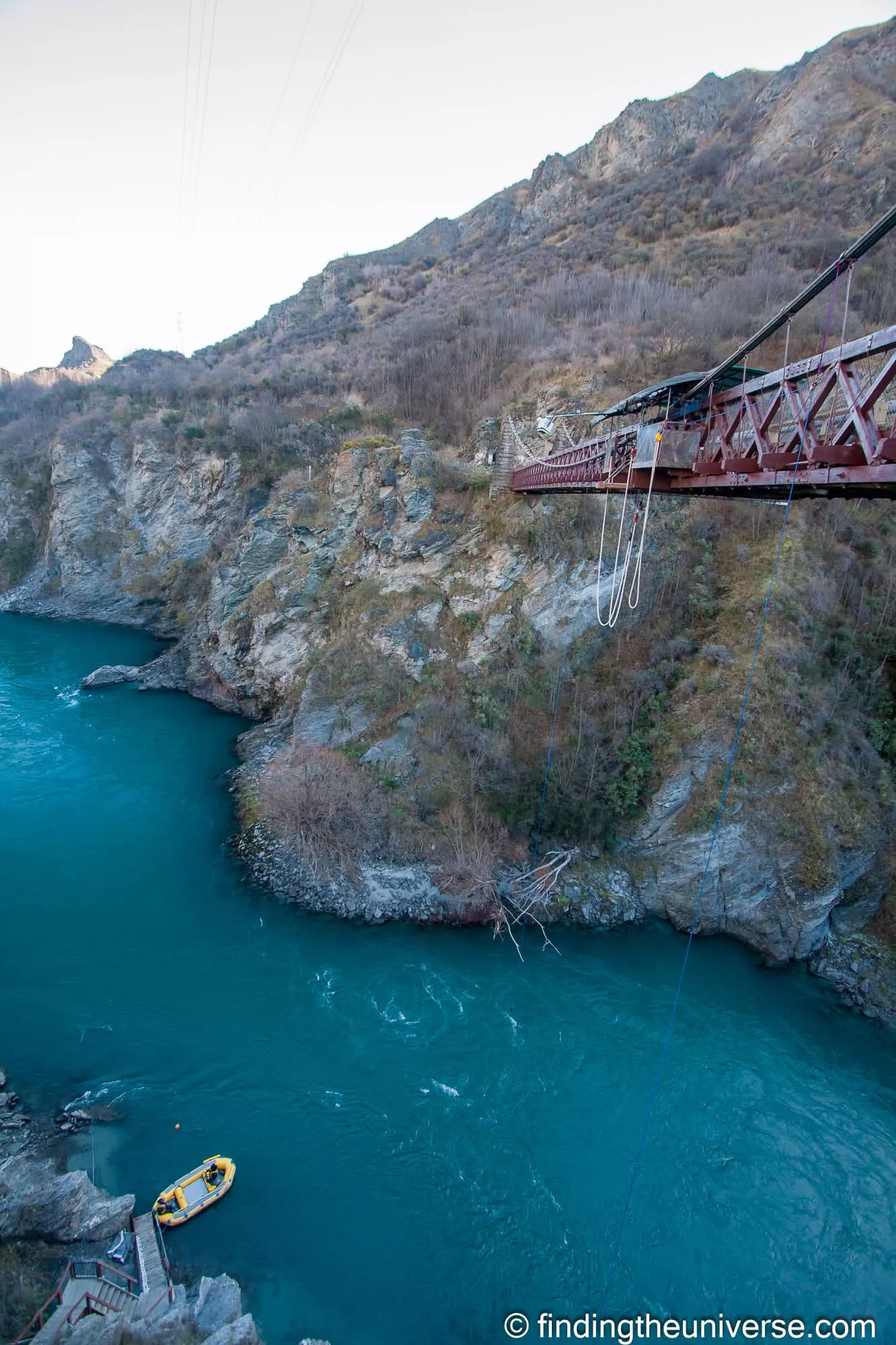
- Bungy jumping at the Kawarau Bridge, the original commercial bungy site (43m, 1988). Whether to actually jump is between you and your insurance.
- Skippers Canyon and Glenorchy. Skippers Canyon is a serious gravel road, doable in a 4WD or by tour. Glenorchy at the head of Lake Wakatipu is a two-hour return drive on a sealed road and a worthwhile half-day in itself, particularly if you’re a Lord of the Rings fan (much of Lothlórien and Isengard was filmed in the area).
- The Routeburn Track day walks. The full Routeburn is a multi-day Great Walk, but the Routeburn Falls section (4 – 5 hours return from the Glenorchy end) gives you the alpine scenery without the hut booking.
Eat a Fergburger at least once. Yes, the queue is long. Yes, it’s still worth it.
Days 24 – 25: Te Anau and Milford Sound
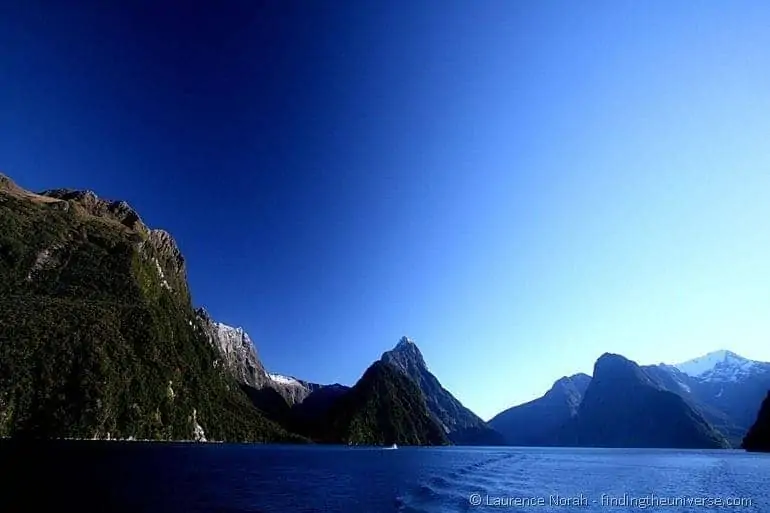
If you ask a Kiwi what their visitors should do, Milford Sound is on the list. There’s a national list of “100 things every Kiwi should do before they die” and Milford is number one. It earns the position.
The drive in from Queenstown via Te Anau is around 4 hours each way, and you don’t want to do it as a single day from Queenstown if you can avoid it (the early-morning return through the Eglinton Valley is one of the better drives in the country, but only if you’re awake enough to enjoy it). Sleep in Te Anau, drive into Milford for an early sailing, and back to Te Anau or onwards.
The Milford day cruise is the headline experience. Pick the earliest sailing you can (8am – 9am sailings have fewer boats, calmer water, better reflections, and on a sunny day the early light is excellent). Cruises run roughly NZD 149 – 200 per person depending on operator and time of year.
You can book the Milford Sound nature cruise via GetYourGuide.
Mitre Peak rises 1,692 metres straight out of the water and is one of the more photogenic mountains in the world. The cliffs are streaked with permanent waterfalls (Stirling and Lady Bowen are the named two; on a wet day you’ll lose count of the others). Seals haul out on the rocks. Bottlenose dolphins occasionally come by.
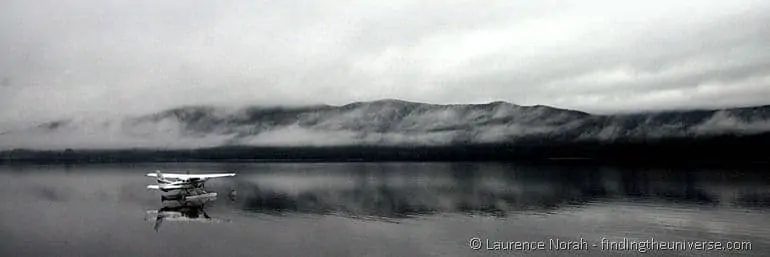
Wet weather doesn’t ruin Milford. It almost improves it (more waterfalls, more atmosphere). Don’t reschedule because of forecast rain.
If you have an extra day, Doubtful Sound is the bigger, less-visited cousin. Day or overnight trips from Manapouri. Worth doing if you’ve got the budget.
Days 26 – 27: Mount Cook (Aoraki)
Drive from Te Anau or Queenstown to Mount Cook, around 4 – 5 hours via the eastern shore of Lake Wakatipu and the Lindis Pass. The road into Mount Cook village (the Tasman Valley road) is a 50km dead-end with views of New Zealand’s tallest mountain (3,724m, named Aoraki in Maori).
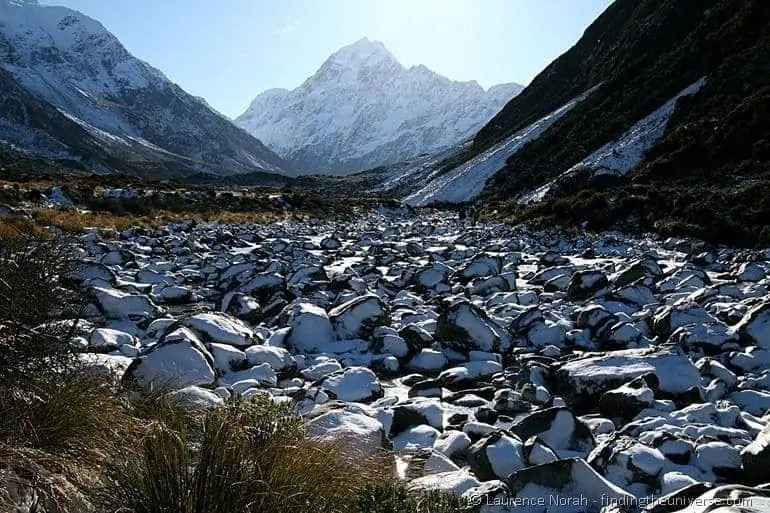
Mount Cook is the mountain Hillary trained on before Everest. It’s also the centrepiece of one of New Zealand’s most accessible alpine national parks: short walks lead straight from the village into proper alpine country in a way that’s almost unfair on hikers from countries with longer approaches.
Walks worth your time:
- The Hooker Valley Track, 10km return, 3 – 4 hours, three swing bridges, ending at a glacial lake with icebergs and Mount Cook directly ahead. The single best easy walk in New Zealand and the obvious choice if you only have one walk in you. Note: at the time of writing (mid-2026), the third swing bridge is being rebuilt and the track ends short of the lake at the Mount Sefton viewpoint. The full track is expected to reopen later in 2026, so check the DOC link above for current status.
- The Tasman Glacier Lake walk, 40 minutes return, ending at the terminal lake of New Zealand’s longest glacier with floating ice. There’s also a boat tour onto the lake (from NZD 210), which is the way to actually get among the icebergs.
- Mueller Hut, a serious 8-hour return day walk with steep zigzags up to a hut at 1,800m. The view from the hut over Mount Sefton’s hanging glaciers is one of the best in the country, and the route’s well above the bushline so the views start early. Fitness required.
The other thing Mount Cook is famous for is dark sky. The Mackenzie Basin is a designated International Dark Sky Reserve, and a clear night here is one of the more memorable nights you’ll have anywhere. The Hermitage hotel in Mount Cook village runs astronomy sessions with telescopes if you want them guided.
Day 28: Lake Tekapo
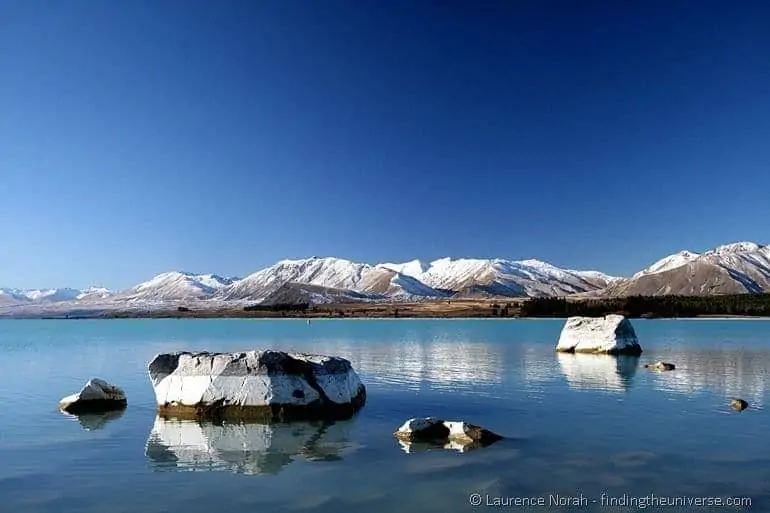
Drive from Mount Cook around an hour to Lake Tekapo. The colour of the lake (a turquoise that doesn’t look real) comes from glacial rock flour suspended in the water. The Church of the Good Shepherd on the lakeshore is one of the most photographed buildings in New Zealand.
Tekapo is also part of the Mackenzie Dark Sky Reserve. The Mt John Observatory above the town runs night-sky tours that are excellent if you’ve not done one elsewhere yet. Tekapo Springs (hot pools by the lake) is a relaxing way to see in the evening, particularly on a cold clear night.
If your timing is right (late November to mid-December), Tekapo’s lupin display is one of the more startling things in the country: thousands of pink, purple and white lupins along the lakeshore. They’re an invasive species and the Department of Conservation is unhappy about them, but they make for excellent photos.
Days 29 – 30: Christchurch and Akaroa
Drive from Tekapo to Christchurch, around 3 hours.
Christchurch was hit by the February 2011 earthquake (and then by aftershocks for the better part of a year). The recovery is now well advanced, with the central city largely rebuilt and a thriving food, art and street-art scene having grown up around the rebuild. The Christchurch Cathedral reconstruction continues. The Re:Start container mall has gone, replaced by permanent buildings, but the spirit of “rebuild as something new” is still visible. The Quake City exhibition at the Canterbury Museum is the place to understand what happened, and what’s been done since.
Other Christchurch worth doing: the Botanic Gardens (one of the best in the southern hemisphere), the punting on the Avon, and a tram ride round the central loop if you’re feeling lazy. The Cardboard Cathedral (a Shigeru Ban-designed transitional cathedral) is also worth a look.
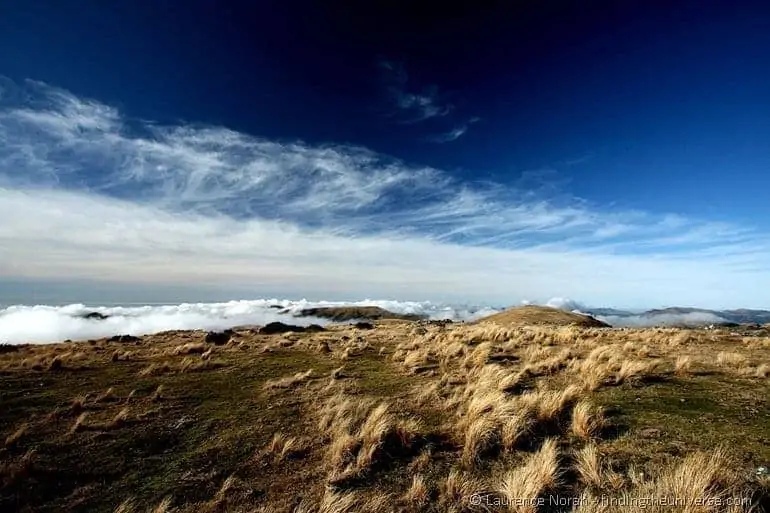
For the final day, drive out to Akaroa on the Banks Peninsula. It’s about 90 minutes from Christchurch and is the closest thing New Zealand has to a French village (the original 1840 settlement was French, and the street names and the tricolour are still here, if a little kitsch). It’s a pleasant place to slow down and reflect on the trip. There are dolphin-watching tours on the harbour where you can swim with rare Hector’s dolphins, the harbour cruises are good even without dolphins, and the cheese factory at Barrys Bay on the way in does excellent local cheeses.
Then drive back to Christchurch, drop the car, and fly out. Or if you’ve planned the loop, drive back to Auckland in two days via the inland route. Pat yourself on the back. You did it.
Alternative Routes
The East Cape Detour (Off the Beaten Track)
If you’ve been to New Zealand before, or you genuinely don’t mind missing Hobbiton and Tongariro, my original itinerary went a different way. From Rotorua, head east to the East Cape, one of the least-visited parts of the country.
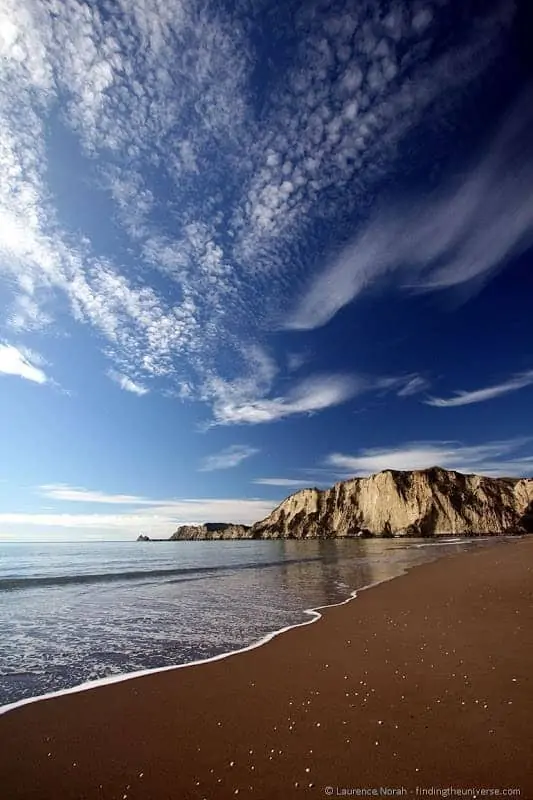
The East Cape is deserted driftwood beaches, switchback roads through Maori-heritage country, the East Cape lighthouse (the first place in the world to see the sunrise on a non-leap-year), and the picturesque Raukokore Church. State Highway 35 from Opotiki around to Gisborne takes 2 – 3 days at a leisurely pace.
From Gisborne, drop down via Napier (rebuilt in art-deco style after the 1931 earthquake, full of cellar doors in the Hawke’s Bay wine region) and through the Wairarapa coastal region to Wellington.
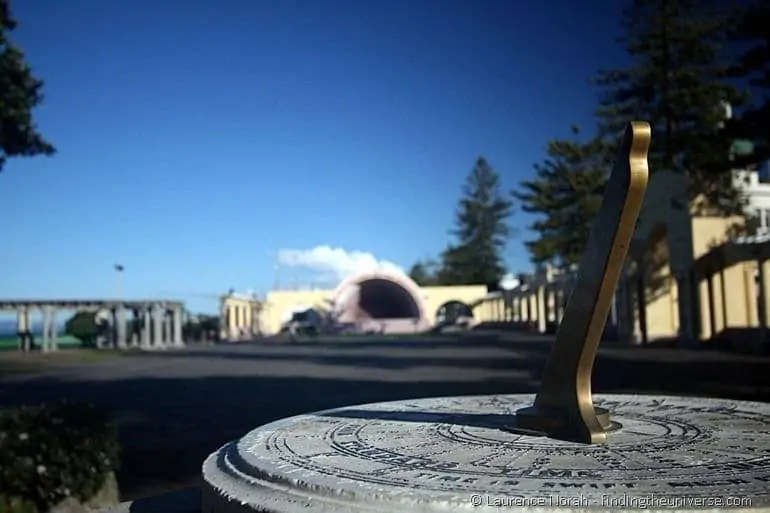
Trade-off: you’d lose the Bay of Islands, Coromandel, Hobbiton and Tongariro. Worth it for repeat visitors who already have those in the bank. Not worth it for first-timers.
The Karamea Detour (West Coast Far North)
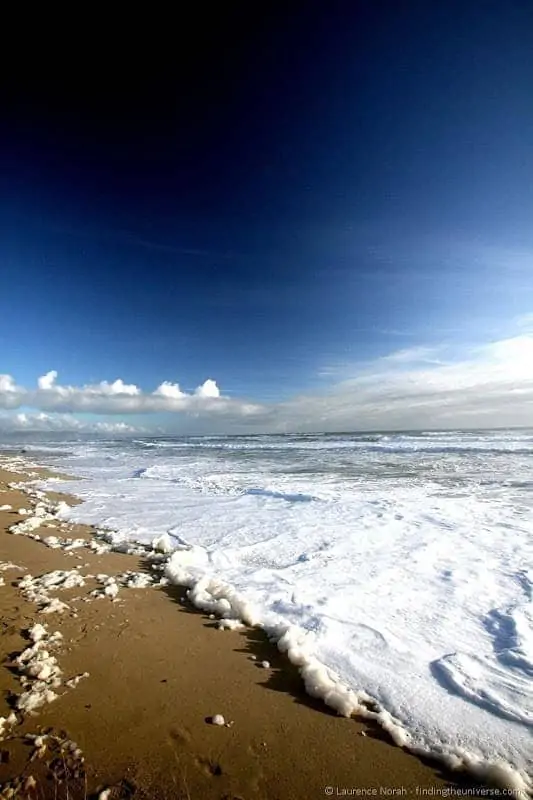
If you’re leaning South Island and want a quirky detour, Karamea at the far northern end of the West Coast is one of the more atmospheric corners of New Zealand. The road in from Westport is a one-way dead end, the Oparara Basin (an hour’s drive north of town) has Australasia’s largest free-standing limestone arch, and the local whitebait season runs September to November. It adds 2 – 3 days to the South Island leg, taken from Abel Tasman or Queenstown depending on your priorities.
One Month in New Zealand: The Map
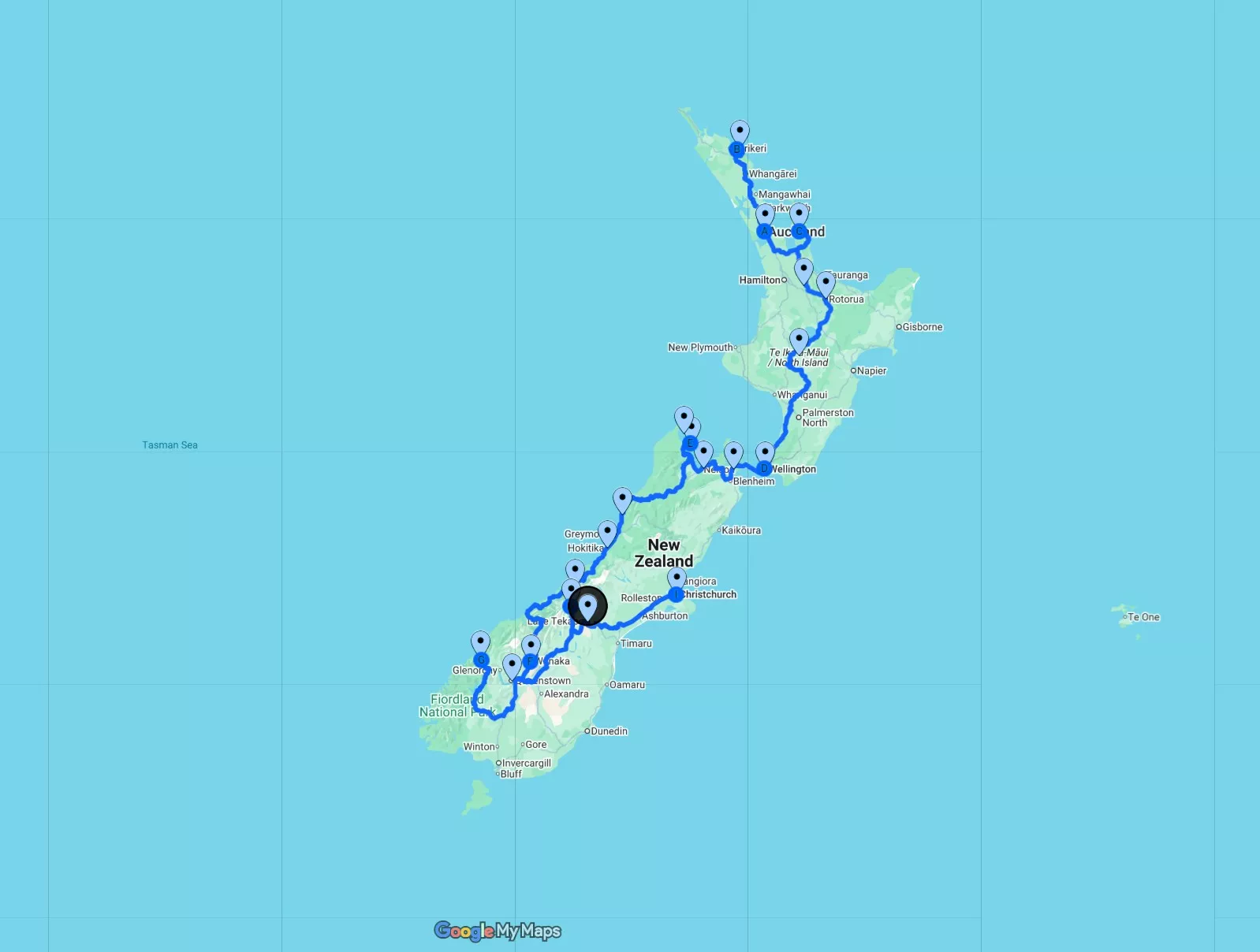
Here’s the route mapped out. You can also see it on Google Maps directly.
One Month in New Zealand: FAQ
Is one month enough time to see New Zealand?
For both islands, yes. A month is enough to see the headline attractions of both islands at a sensible pace, with a couple of rest days built in.
It’s not enough to see all of New Zealand. The country is bigger and more varied than the map suggests, and you’ll leave with a list of things you didn’t get to (Stewart Island, the Catlins, the Kauri Coast in detail, the Whanganui River, Taranaki, parts of Northland). That’s fine. Most people are coming back.
What’s the best month to visit New Zealand for a road trip?
Late October to mid-December is my pick. The weather has settled enough for the South Island walks and Milford day cruises, days are long, and you’ll miss the worst of the local school-holiday crowds. March is the second pick for similar reasons (settled weather, fewer crowds).
I’d avoid January if you can. It’s the warmest month but every Kiwi is also on holiday, prices are at their highest, and Milford Sound is at peak crowding. February is borderline (still busy but starting to ease).
How much does a month in New Zealand cost for two people?
Budget around NZD 9,000 – 15,000 for two people for the month, all in (excluding flights and the hire vehicle), for a comfortable trip in motels and B&Bs with most meals out and several paid attractions. Add the hire car (NZD 1,500 – 3,500 for the month depending on season and vehicle) and your flights.
You can travel for less by choosing hostels over motels, cooking, and skipping the heli-hikes. NZD 6,000 – 8,000 for two for the month is doable but tight. Lodge accommodation, fine dining and helicopter trips can take the bill north of NZD 25,000 without much effort.
Should I rent a car or a campervan?
For two adults, I’d rent a car and stay in motels and B&Bs. It works out cheaper than a campervan once you account for the daily van rental, holiday-park fees, fuel (vans are thirsty), and the fact that Kiwi café food is excellent and reasonably priced.
For families, groups of three or more, or travellers who want to spend nights in remote DOC campsites, a campervan can work out cheaper and gives you flexibility. But size up from the smallest van; the two-berth conversions on small chassis are uncomfortable for a month.
How far in advance should I book accommodation, car hire and tours?
Hire vehicles: 2 – 3 months ahead for a December – February trip, 4 – 6 weeks for shoulder season. Hobbiton tours, Interislander vehicle slots, and Great Walks huts: as soon as bookings open (Great Walks open in early May for the following October – April season). Milford day cruises and Tongariro Crossing shuttles: 1 – 2 weeks ahead in summer. Most accommodation: 1 – 2 weeks ahead in summer for the popular spots (Queenstown, Wanaka, Mount Cook), a few days for everywhere else.
The exception is January. In January, treat everything as bookable months in advance.
Can I just turn up to hostels and figure it out as I go?
In shoulder season, yes, mostly. November and March hostel beds are usually walk-up-able outside Queenstown. In January and December, no, you’ll struggle and pay through the nose.
If you want flexibility, the compromise is booking 3 – 4 days ahead at a time rather than the whole month. That gives you reaction room for weather and good places that turn out to deserve another night, without leaving you stranded in a sold-out town.
I’m travelling solo, can I hire a private driver or guide for the month?
Yes, but it’s not cheap. Several operators run 3 – 4 week guided private tours of New Zealand (Kensington Tours, Haka Private Tours, and New Zealand Private Tours are the names that come up most). For four weeks with a private driver-guide and decent accommodation, you’re looking at NZD 25,000+ all in.
The middle-ground option is a small-group guided tour (Haka Tours, Stray, and others run 21 – 30 day trips), which keeps the driving and logistics off your hands but at a fraction of the private cost.
If you’d rather drive yourself but worry about doing the trip alone, Kiwi Experience and InterCity hop-on-hop-off bus passes are popular with solo travellers and a good way to meet people while still doing your own thing.
Further Reading
For more on New Zealand, my New Zealand guide section covers the destinations in this itinerary in more depth, including dedicated guides to Milford Sound, Abel Tasman, the glaciers, Mount Cook, and Akaroa. There’s also a write-up of the North Island highlights and the best day hikes in the country, plus practical pieces on buying a vehicle and finding work for longer stays.
For guidebooks, the current editions of the Lonely Planet New Zealand and the Rough Guide to New Zealand are both good (the DK New Zealand guide is more visual if that’s your style).
And if you’ve got feedback on this monster of a post, do share it in the comments below.
Kendra says
Thank you for this info! I travelled solo for 46 days in South Island Nov/Dec 2024. Averaged $102 USD/day, went on 5 tours, used Intercity bus and stayed in mostly private rooms with some 3-4 bed dorms. The Intercity Flexipass was inexpensive and worked well but did not go everywhere I had wanted to go. Private rooms in hostels were often a problem due to noisy guests staying up very late in adjoining dorm rooms. I found group tours very expensive, overrated, and unfortunately other tourists were ridiculously loud which impacted my experiences negatively. I did not need to book anything far ahead. Restaurants were often expensive and I tried to dine at food trucks. I enjoyed the Oamaru Blue Penguin Colony Tour which you did not list, penguins actually walked by me only 2 feet away. Plan to go back to North Island next fall.
Laurence Norah says
Hi Kendra, thanks for writing this all up. The $102/day average is a useful benchmark for solo travellers, and your Flexipass take matches what we’ve heard elsewhere: solid for the main routes, frustrating for anything off the spine. Food trucks are a smart call too. Restaurant prices have climbed a fair bit since our last visit.
On the hostel-noise problem: that’s a fair point, and one we should probably address in the article. Private rooms next to dorms can be a coin-flip depending on the guests, and there’s no real way to vet that from a booking site. Sorry the group tours fell flat too. That’s an expensive way to find out they’re not for you.
We’ll look at adding the Oamaru Blue Penguin Colony Tour on the next refresh. Two feet away is unusually close!
Have a great trip back to the North Island this autumn. It’s a different beast from the South, with more Māori cultural sites, more geothermal activity, and more humidity.
Safe travels!
Laurence
Kendra says
-I also cooked my own meals often when I had a shared kitchen. I found good soup and deli items in the grocery stores, probably the best selection I have found in any country.
-The penguins weren’t expected to go by so close to where I was sitting, but that’s what some did!
-Penguin eve tour was $27, $89 for wildlife spotting 2 hour kayak tour in Kaikoura (but only saw jellyfish and fur seals from huge distance), $88 halfday dolphin cruise in Picton (but did not see dolphins), $81 for gloworm tour in Te Anau, and $161 for Milford Sound from Te Anau.
Laurence Norah says
Awesome, thank you very much! Cooking meals for yourself is a great way to save money when traveling, even better when there are good ingredients on hand. Sorry to hear the wildlife didn’t co-operate with your tours 🙁
Susan kingston says
Hi Laurence
Would you happen to know if you can book a tour guide / driver for 4 weeks if I came alone
Thanks
Sue
Laurence Norah says
Hi Susan,
You can certainly take a group guided tour, you can compare a load of options at different price points, durations and types of tour on TourRadar here.
However I couldn’t see a fully private option that wasn’t self-guided. I’m sure it’s possible, but just be aware hiring a driver / vehicle for four weeks is likely going to be fairly costly. If budget is a factor, you might want to see if you can find someone to travel with who would be happy to drive for the duration of your trip. There are various message boards and groups I’m sure where you could find someone to travel with.
I hope this is of some help! Have an amazing time in New Zealand 🙂
Laurence
Susan says
Thanks for your quick reply 😁
I’ll check Tourradar out !
I’m retired now so no real restrictions on time/ budget 😁
My uncle lives in Gisborne and this will be my first trip to NZ so very excited to go .
Any further ideas please share with me .
I found your blog very helpful
Thanks
Sue
Laurence Norah says
Hi Susan,
That sounds awesome 🙂 Well, I did some more digging and one option that popped up was Kensington Tours, who offer a private 24 day tour: https://www.kensingtontours.com/tours/australia-and-pacific/new-zealand/new-zealand-ultimate-road-trip
Other options include New Zealand Private Tours and Haka Private Tours. So there are definitely some options out there!
Cheers!
Laurence
Sarah Welch says
Hi your Google map link isn’t working for me – would there be another way to share that route?
Laurence Norah says
Hi Sarah,
The link is working for me, can you try this one: https://www.google.com/maps/d/viewer?mid=1DY_DXcpIrGXhWaT6tFjtLxUlWVUAfJw8&usp=sharing
Let me know if not and I’ll see what else I can come up with!
Laurence
Veronika says
What a great article! We’re currently dreaming of going to New Zealand again – we’ve been
there before and we love, love love it! Here’s to a year with loads of travel plans and new experiences!
Laurence Norah says
Thanks very much Veronika – I hope you get back to New Zealand again soon!
Samuel Birch says
I would love to travel in New Zealand as I believe that it is the most incredible place in the world to spend quality time with family or friends.
Great Blog!!
Keep sharing.
Laurence Norah says
Thanks very much Samuel – I hope you do get to visit New Zealand 😀
Deborah Brown says
Hi guys,
This is a fabulous, very helpful and informative blog, all of your comments and recommendations are really useful and the photos are fantastic.
It will be quite a while before I can take such an amazing trip and I wanted to get an idea of what there was and the best approach to plan it (and then start saving hard!!) so thank you very much as this will definitely help me design my journey through what I feel is an amazing land.
Best wishes to you both.
Kind regards
Deborah
Laurence Norah says
Hi Deborah!
Our pleasure, we’re delighted you found it useful. Good luck with the adventure!
Laurence
Andrea O'Rafferty says
Hi guys
My friend and I followed your advice and guide to do the NC500 in September. It was invaluable. Scotland is so beautiful.
We are off to New Zealand next January and I’m so pleased I’ve seen your blog.
My question is we have an extra week to spare. Have you any suggestions as to how to spend it ?
Thanks Andrea ps we are in our 60’s
Laurence Norah says
Hi Andrea!
Thanks for your comment, we’re delighted you were able to use our content to plan your trip!
So for New Zealand, if I had an extra week I would give that extra time to the north island. Many people rush to the south island, which certainly is very beautiful, but there’s lots to see on the north island too. So I’d suggest heading to the north of the island, then around the east cape. You could also cross the island and head to the Taranaki region, and the famous glow worm caves. Wellington is a nice city to spend a bit more time in as well.
I hope this helps a bit. I’m sure you’ll have no trouble finding more to do than I have listed here though!
Laurence
Irene says
Thank you so much! The post is super useful.
Laurence Norah says
My pleasure Irene 😀 Have a wonderful trip!
Jessie says
Love this!!!
I’m visiting in a few weeks! Will probably arrive around the 17th or 18th of November.
If I plan to stay in hostels and an occasional splurge in a nicer place… do you think i need to plan in advance? I’m doing that in Australia now with Air BNBs, and while I like having plans, I kinda like the idea in New Zealand of figuring it out as I go. Very different than Australia!
Laurence Norah says
Hey Jessie 🙂
That should be ok, just be aware that you are coming into the summer in New Zealand so it will be a bit busier than average. But see how you go on the first few nights, which should give you an idea of the feasibility of your plan over the remainder of your trip 🙂
have a great time!
Laurence
Lori says
Thank you
This is a wonderful article with great information. A fabulous reference as too where to get started.
Laurence Norah says
Our pleasure Lori – have a wonderful time in New Zealand 🙂
Julie says
Can someone give me an expected budget for 2 people for this itinerary or very similar?
Paul Marshall says
Loving this guide. Heading back to New Zealand for my 3rd time in Feb and always keen to hear from others on their experience. So many places to visit.
Laurence Norah says
Thanks Paul – it is a wonderful country for sure. Have a wonderful trip!
Dimitri Pagot says
Exactly what I needed for planning the adventure of my life ! 🙂 Thanks a lot for the tips and all the itineraries, this is so helpful ! Thank you again ! Departure : August 2018 ! 🙂
Laurence says
Awesome! Have an amazing trip 😀
harvard_staff says
this is EXACTLY what I needed to begin planning our “trip of a lifetime” to New Zealand in a year….thanks so much!
Laurence says
Perfect! My pleasure 😀 Have an amazing trip!
Bethaney says
As a Kiwi, I think this looks like a great itinerary. I’m pleased to see you include so much of the West Coast of the South Island in your itinerary. 🙂
Gabrielle Cormier says
Great article and tips 🙂 I’m going to NZ in November and I’m wondering how long in advance I should book my car rental and campsites (I’m bringing my tent)?
Laurence says
Hi Pedro – if you click on any of the images you get a slideshow. I also share a lot of photos from all my trips on the sites facebook page: http://facebook.com/findingtheuniverse 🙂
Laurence says
Hi Davey. I can’t argue with that, I actually lived up on in the Tongariro National Park for five months and loved it, as climbed Ngauruhoe as well! It’s certainly something folks should consider as part of this trip, although likely at the expense of seeing something else. There’s just so much awesome in New Zealand! 🙂