If you’re planning on driving Scotland’s North Coast 500 and you enjoy whisky, you’re in luck. There are eleven whisky distilleries along the route that you can visit, most of them offering tours and tastings. Three of these are brand new or recently reopened, so even if you’ve driven the NC500 before, the whisky scene has changed significantly.
I’ve driven the North Coast 500 many times over the years, and as someone whose favourite drink is whisky (Laphroaig 10 Year Old, if you’re wondering), I’ve made it a point to visit every distillery along the route. Glenmorangie was actually the first single malt Scotch whisky I ever tried, and it was what converted me from someone who didn’t really like whisky into someone who now owns far too many bottles of the stuff. So the NC500 distilleries hold a special place for me.
In this guide, I’ll walk you through all eleven whisky distilleries on the NC500 in the order you’d encounter them driving anti-clockwise from Inverness. For each one, I’ll share what to expect from the tour, what I thought of the whisky, and whether it’s worth a stop on your trip. I’ve also included practical advice on planning your distillery visits, including booking tips and how to handle tastings when you’re driving.
We’ve also put together a number of other guides to help you plan your NC500 trip, including a 5 day NC500 itinerary, a 7 day NC500 camping itinerary, a guide to B&Bs on the NC500, and a guide to the best photography locations on the NC500. For accommodation and planning, see Jess’s NC500 hotels guide and NC500 planning guide.
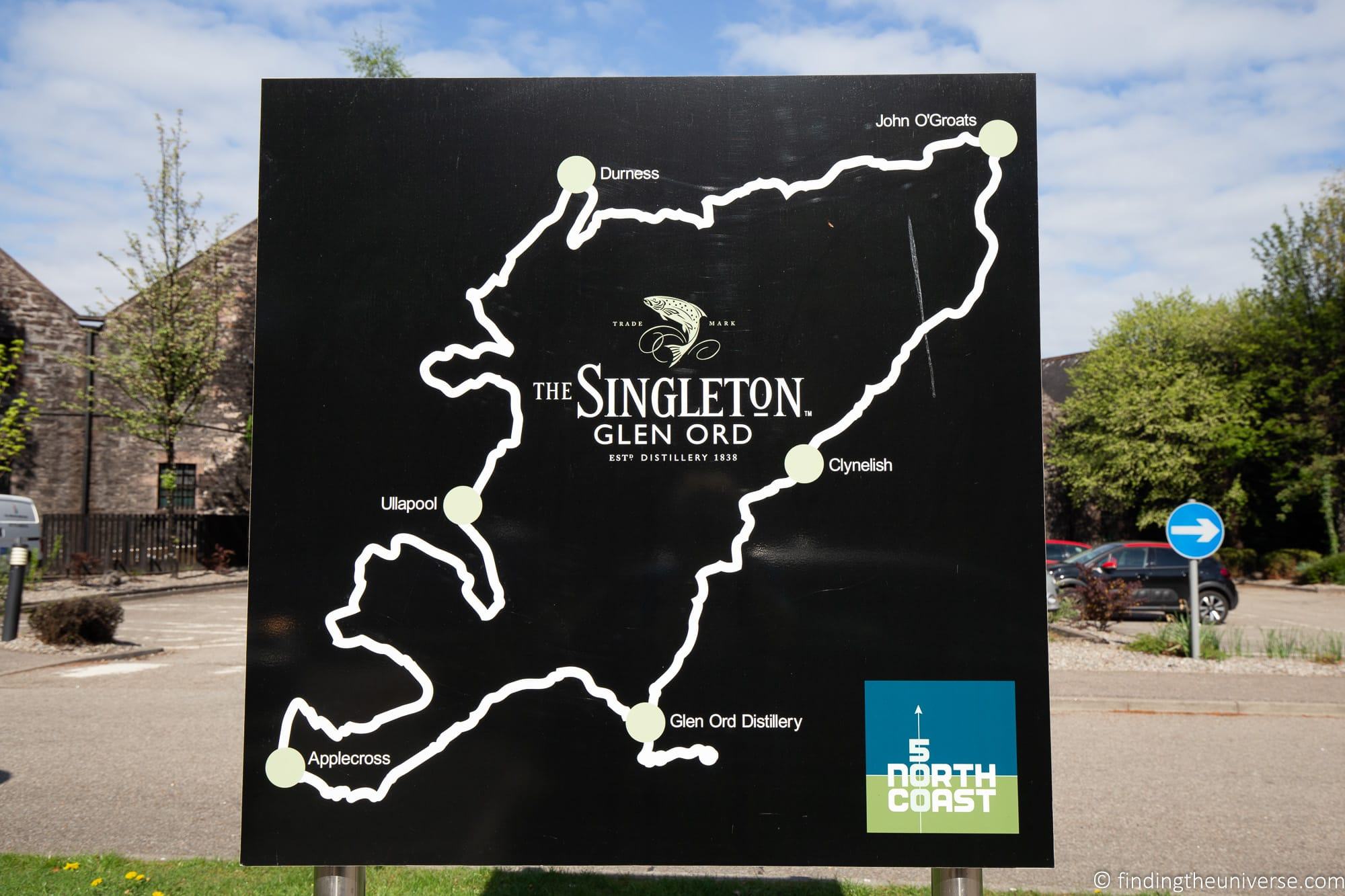
Table of Contents:
A Quick Note on Scotch Whisky
All the distilleries on the NC500 are in the Highland whisky region, one of Scotland’s five whisky-producing regions. Highland single malts tend to be fruity, sweet, spicy and malty, and most don’t use peat, so you won’t get the strong smoky flavours that you’d find on Islay.
For a drink to be called Scotch whisky, it must be made from water and malted barley, distilled in a pot still at a Scottish distillery, and matured in an oak cask in Scotland for at least three years. And just to clear up a common question: in Scotland, it’s whisky without an “e”. Whiskey with an “e” is Irish or American.
If you’d like to learn more about how whisky is made, the different regions, and the full range of Scottish distilleries you can visit, see my detailed guide to whisky distilleries in Scotland. For a beginner-friendly introduction before hitting the distilleries, the Scotch Whisky Experience in Edinburgh is excellent.
Whisky Distilleries on the North Coast 500
Here are all eleven whisky distilleries you can visit on the North Coast 500. I’ve listed them in the order you’d encounter them driving anti-clockwise from Inverness, which is how most people drive the route. All are in the Highland whisky region.
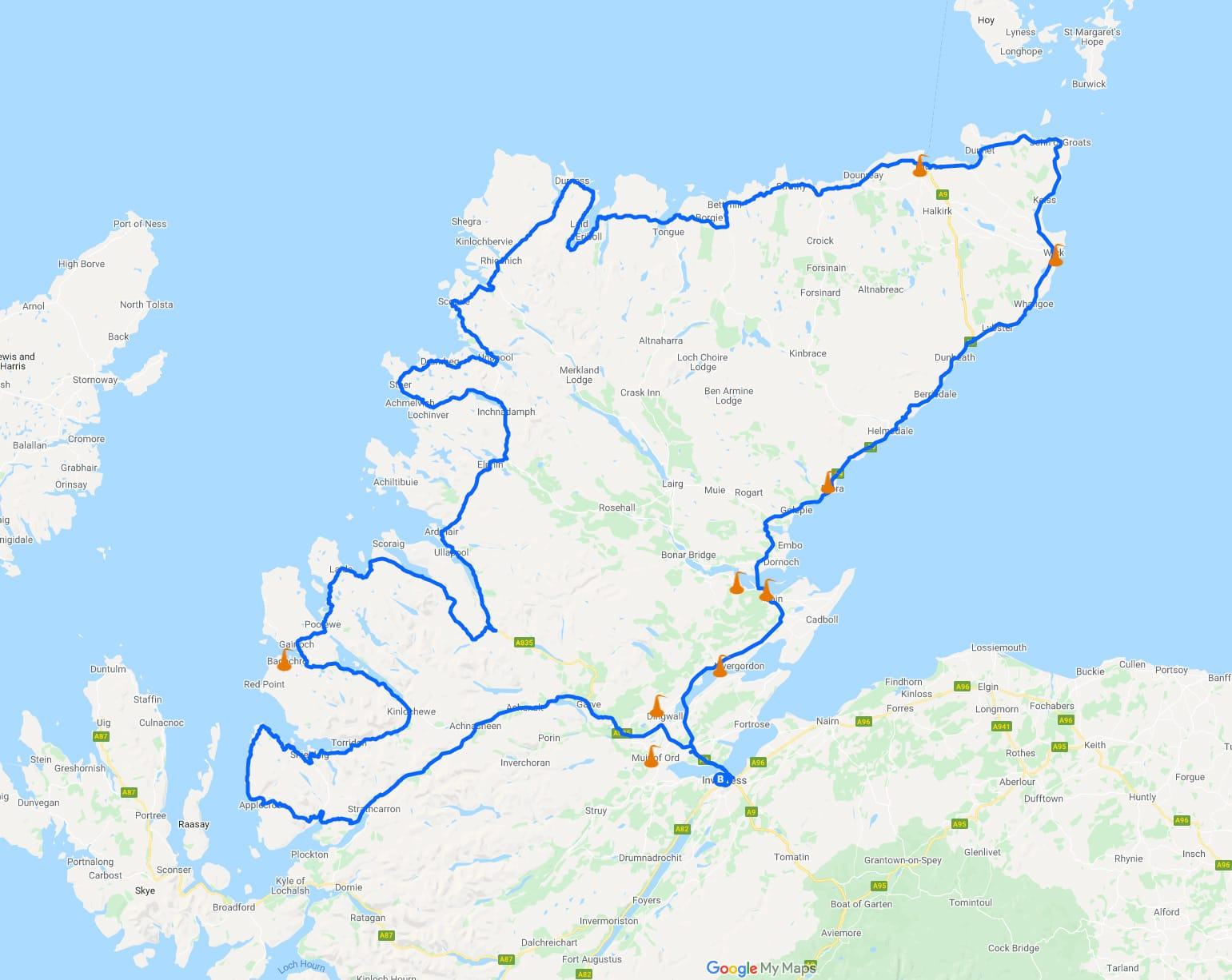
A note before we start: most of the distilleries are concentrated along the east coast of the route, between Inverness and Thurso. The west coast has historically had fewer distilleries due to its remoteness, though that’s starting to change.
1. Glen Ord Distillery
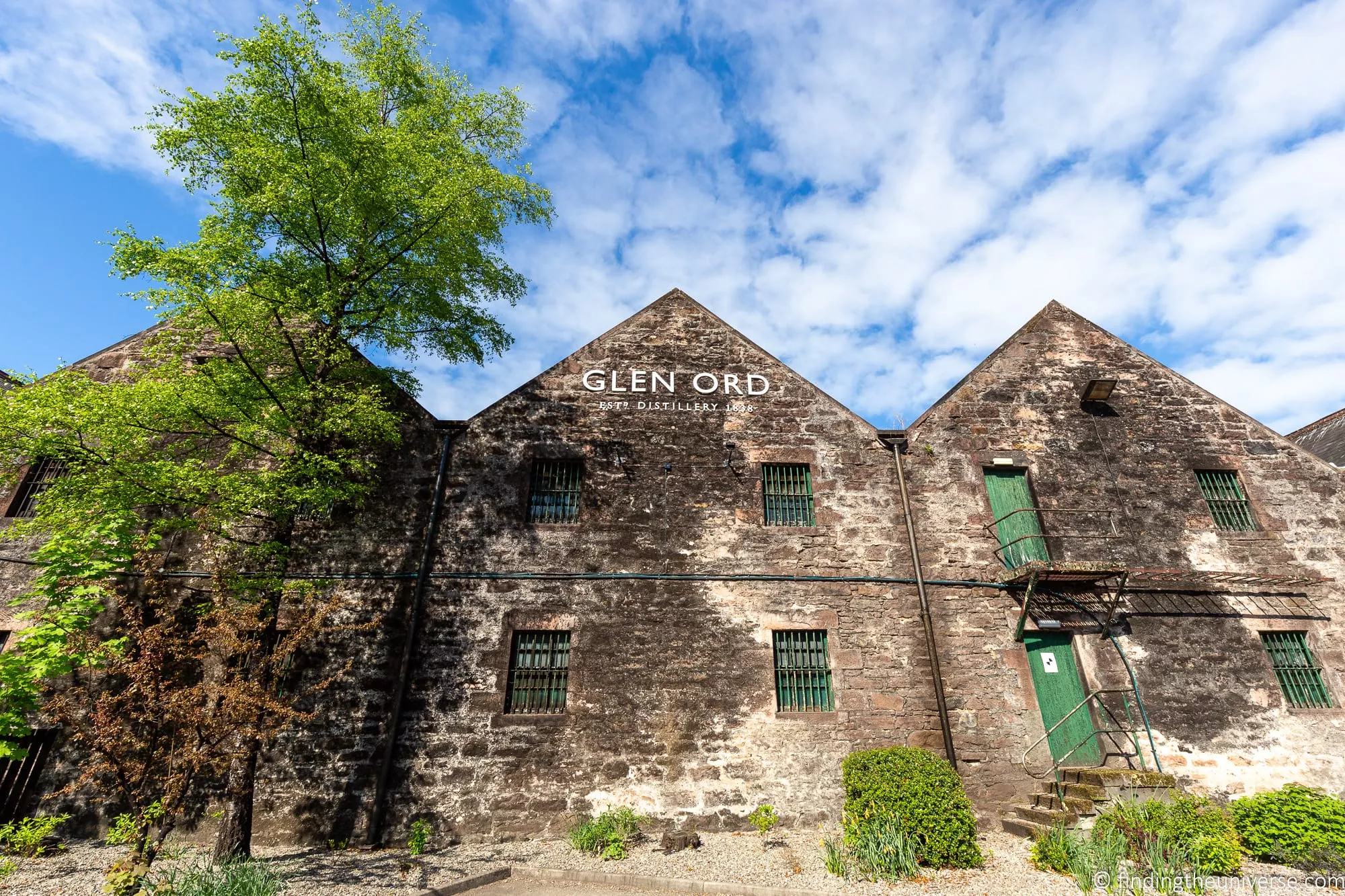
The Singleton of Glen Ord Distillery is the closest distillery to Inverness and the only operating distillery on the Black Isle. Founded in 1838, it still uses barley from the Black Isle and water from nearby Loch nam Bonnach and Loch nan Eun.
We’ve actually done the Glen Ord tour multiple times, and it’s one we keep going back to. The setting is lovely, and the guides do a great job of explaining the history and the connection between the location and the whisky. It doesn’t feel like a corporate production line, even though it’s owned by Diageo.
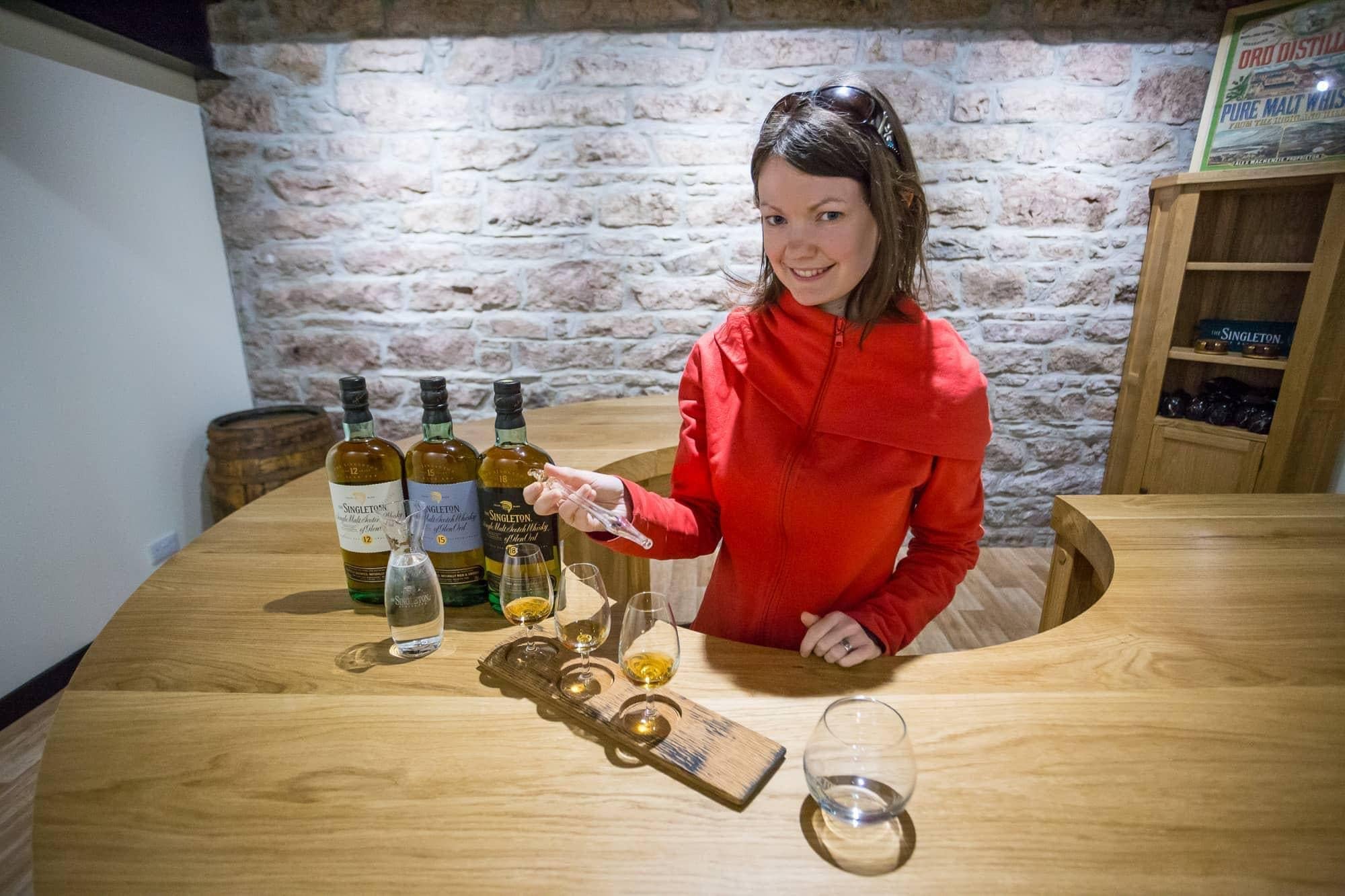
Glen Ord produces three main single malt whiskies (12, 15, and 18 year old) under the Singleton label, primarily for export to Southeast Asia. You won’t see them much in UK shops. A large proportion of the 11.5 million litres they produce each year goes into Johnnie Walker blends. The whisky itself is malty with a faint hint of peat on the nose, and a rich, fruity taste.
Glen Ord is open year round for tours and tastings. You can book on their website.
2. GlenWyvis Distillery
Found in Dingwall, about half an hour from Inverness, GlenWyvis is one of the more unusual distilleries you’ll encounter on the NC500. Founded in 2015, it’s the first community-owned distillery in Scotland, funded by over 3,000 individual investors. It’s also powered entirely by renewable energy.
GlenWyvis is a much smaller operation than the big names further along the route, and they produce both whisky and gin. Their whisky is still relatively young as a brand, but it’s worth stopping in if you’re interested in the story behind a distillery as much as the whisky itself. Guided tours are available.
3. Dalmore Distillery
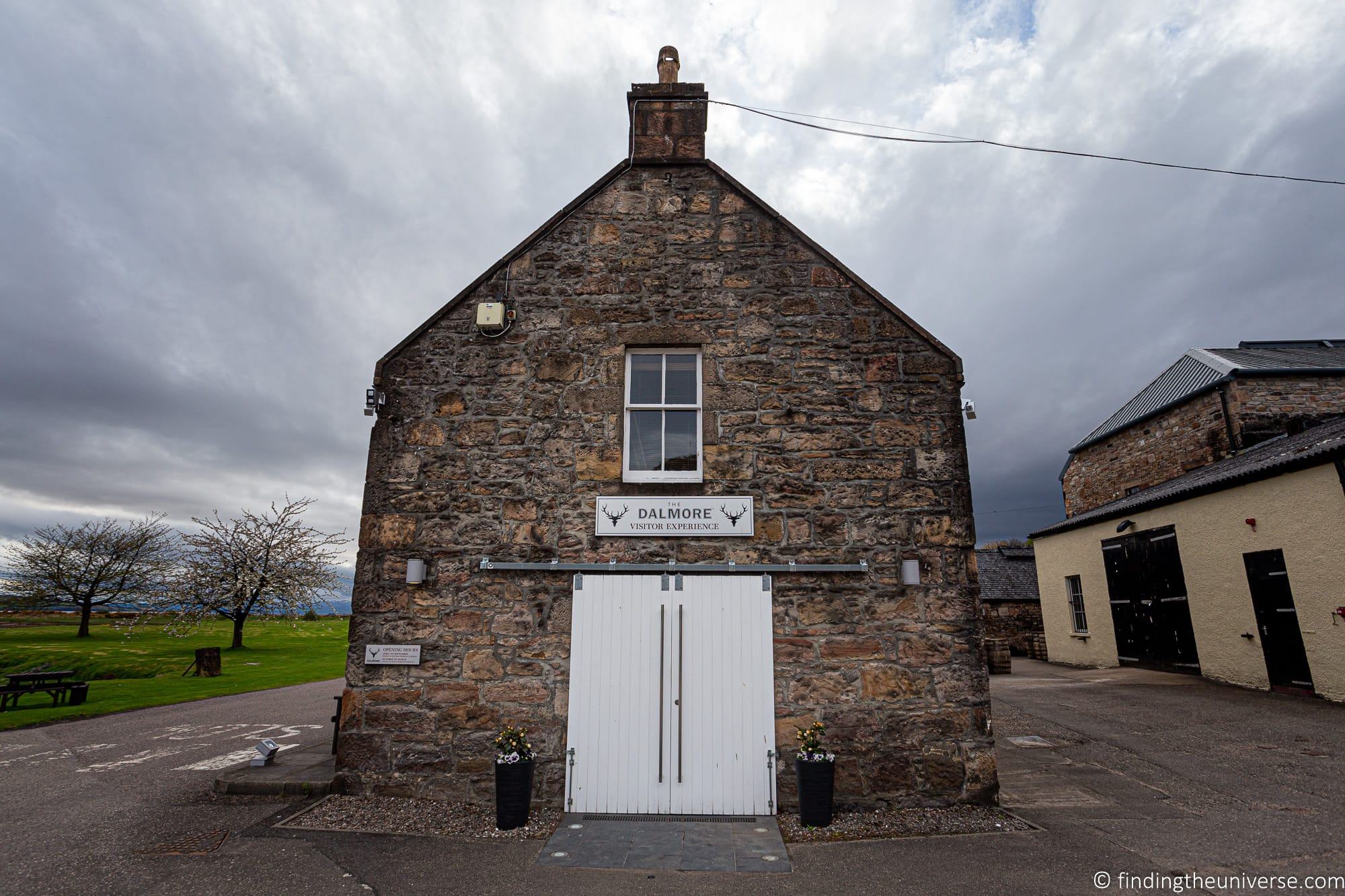
Just a few miles further along the NC500 from Dingwall is The Dalmore. Founded in 1838, the brand is instantly recognisable by its 12-pointed Royal Stag logo, which comes from the Clan Mackenzie coat of arms. The clan was granted the right to use this emblem in 1263 after the clan chief saved King Alexander III from a charging stag. Clan Mackenzie owned the distillery until 1960 when it was sold to Whyte & Mackay.
Dalmore produces four main single malts (12, 15, 18, and 25 year old) along with limited editions. The flavour profile is rich, fruity, and a little chocolatey.
Important update for 2026: Dalmore has been closed to visitors while they’ve been building a completely new visitor experience. It’s set to reopen on 27 April 2026 with what they’re calling a fully reimagined brand home. Every visit will be private and bespoke, with guests liaising with a concierge before arrival. Expect curated tastings from the Principal Collection and Distillery Select editions. Bookings open to the public from 30 March via their website. This could be one of the most interesting distillery visits on the NC500 once it opens.
4. Glenmorangie Distillery
Glenmorangie is probably the most well-known distillery on the NC500. It’s consistently one of the best-selling single malt whisky brands in the world, and it’s an easy stop as either a day trip from Inverness or as part of your North Coast 500 road trip.
Glenmorangie has a special place in my whisky journey. It was the first single malt I ever tried, and it was what got me into whisky in the first place. Before that, I didn’t think I liked whisky at all. So I have a lot of time for Glenmorangie.
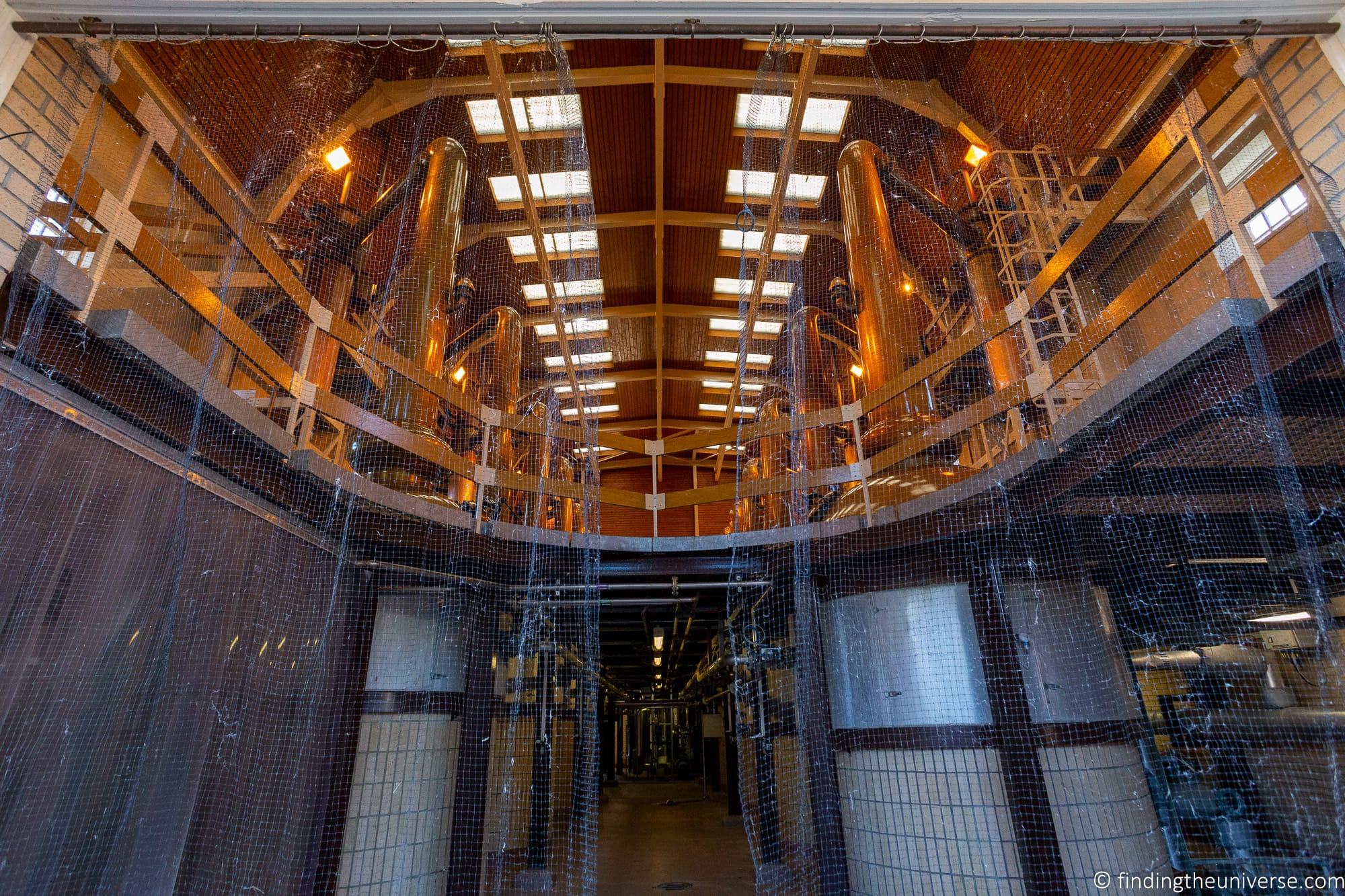
Despite being a popular distillery that sees a lot of visitors, the tour still feels very personal. The guides are excellent, the visitor centre is well done, and the distillery itself is interesting. They have the tallest stills in Scotland, which contribute to the light, elegant character of the whisky. Expect citrus and vanilla in the Original 10 year old, with more complexity in the older expressions.
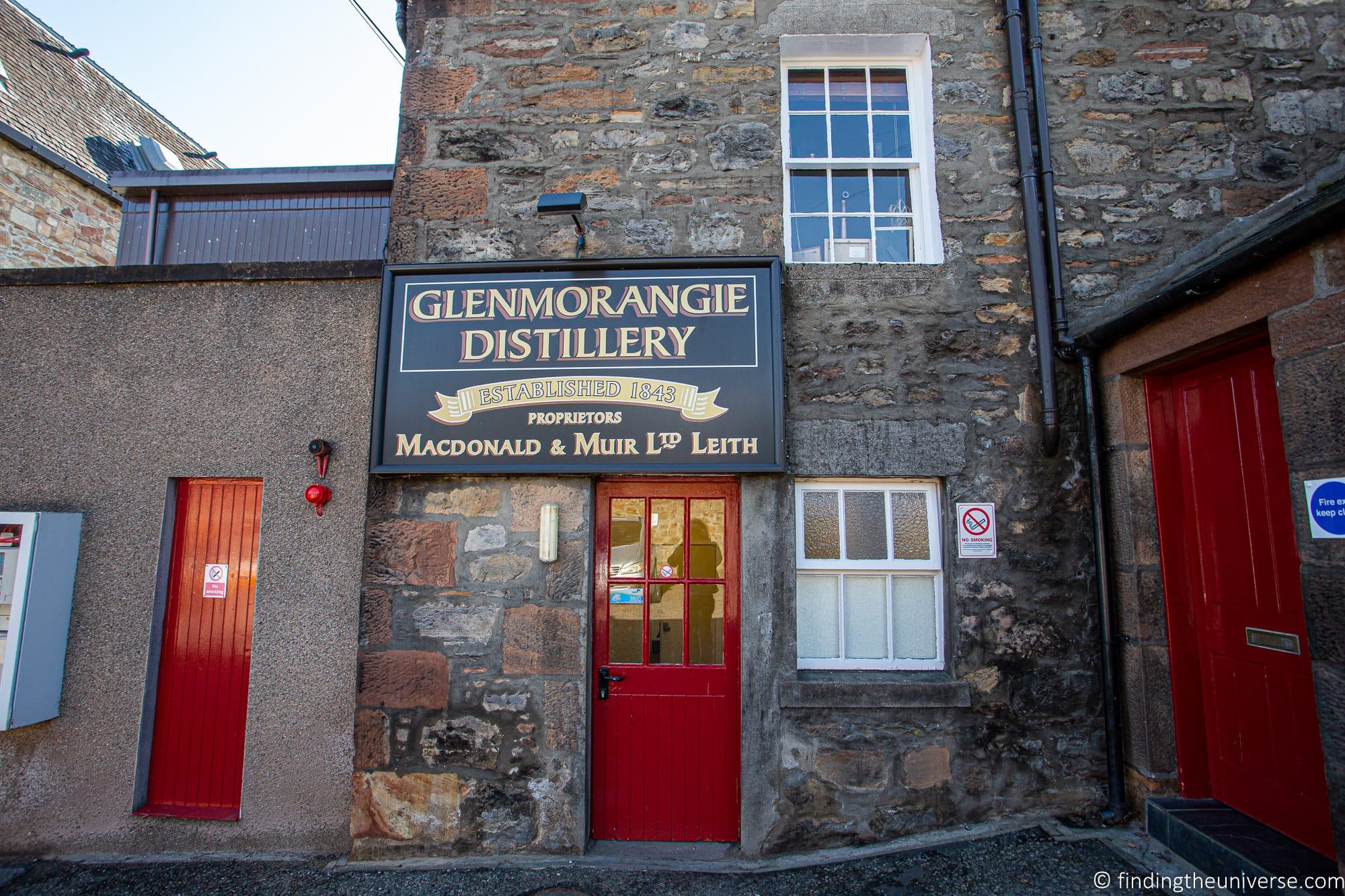
Founded in 1843 (with records of alcohol production on the site dating back to 1703), Glenmorangie produces six million litres of single malt each year. Their main range includes a 10, 12, 18, and 25 year old, plus various special editions. Tours and tastings run regularly. Book on their website.
5. Balblair Distillery
Founded in 1790, Balblair is the oldest distillery on the North Coast 500. It’s on the Dornoch Firth, just a few miles inland from Glenmorangie.
The distillery as it operates today was built in 1895 and uses water from nearby Ault Dearg burn. It’s owned by Inver House Distilleries, who also operate the Pulteney distillery further along the NC500. Balblair produces a range of single malts from 12 year old through to 25 year old, with flavours including spice, citrus, and floral notes.
Balblair is open for tours and tastings. You can book your visit here.
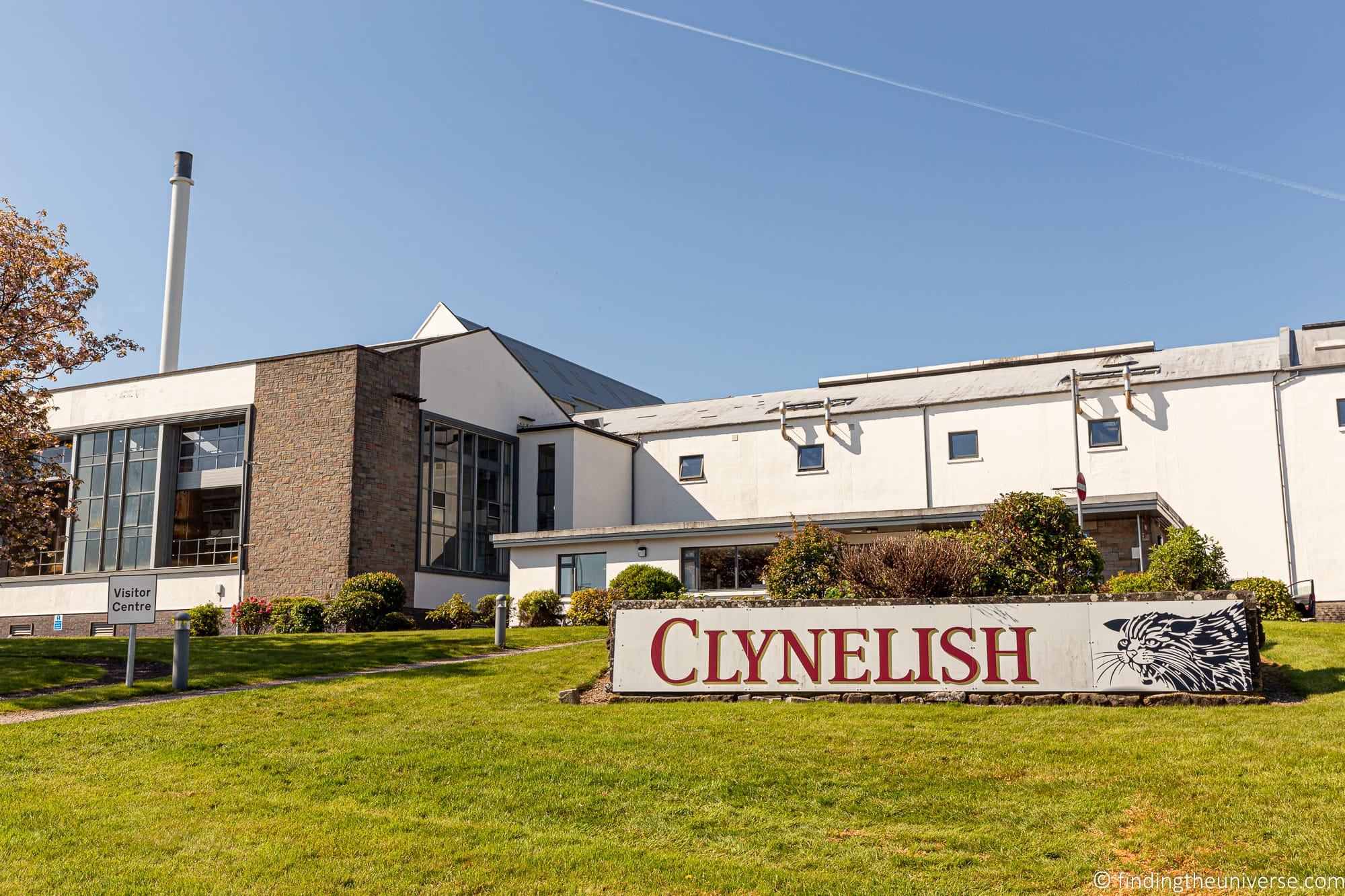
6. Clynelish Distillery and Brora Distillery
Found about an hour’s drive north of Inverness near the town of Brora, Clynelish Distillery has one of the most interesting histories of any distillery on the NC500.
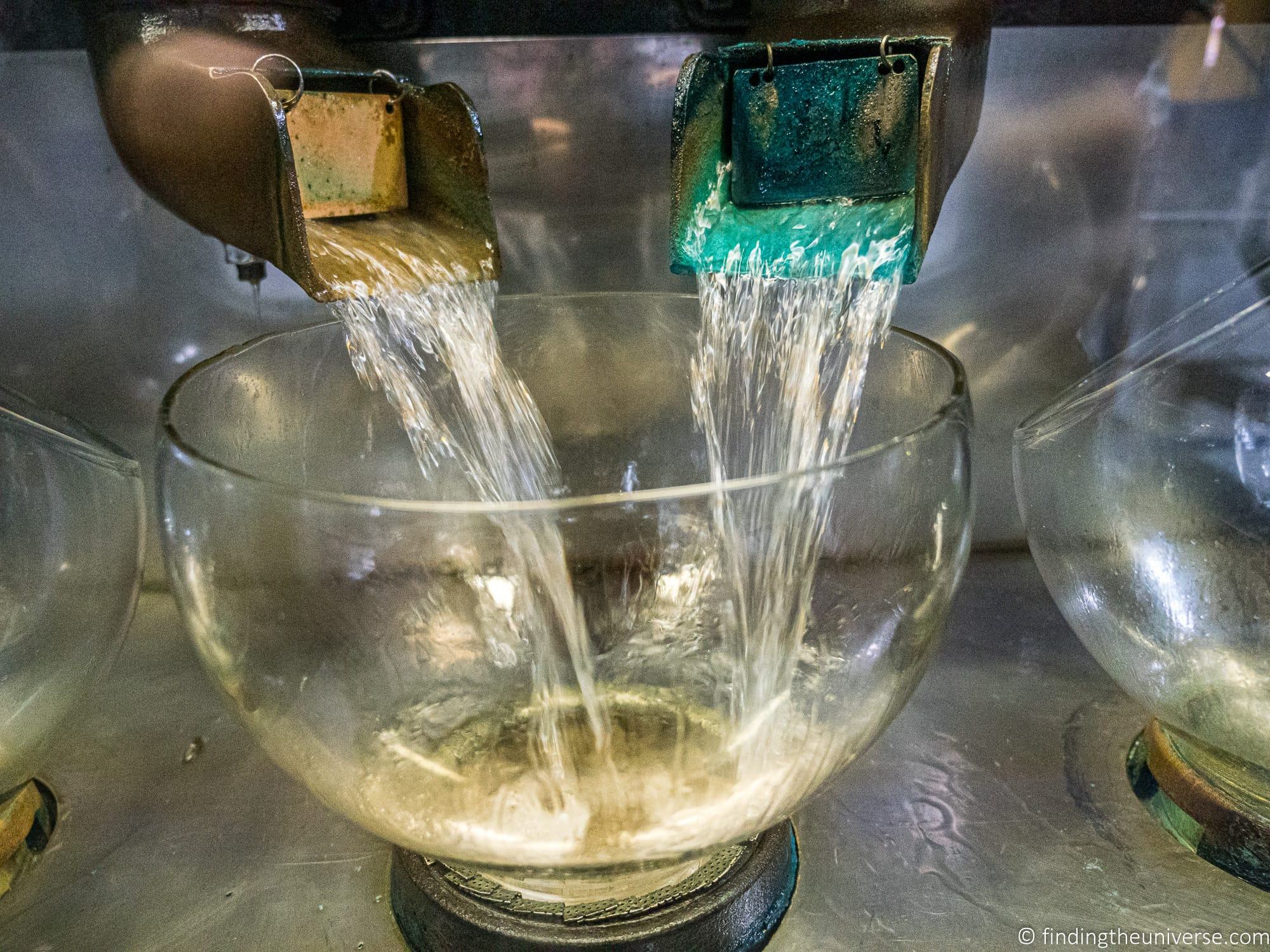
A distillery called Clynelish was originally established on this site in 1819. In 1967, a new distillery was built next door to handle increased demand, and took the Clynelish name. The original distillery continued operating and was renamed Brora. It produced whisky until 1983, when it ceased production. Today, Brora whisky is some of the rarest and most expensive Scotch whisky in the world.
The modern Clynelish is owned by Diageo and produces a Highland single malt that’s a key component of Johnnie Walker blends. In fact, 95% of Clynelish production goes into blends. It’s one of the “Four Corners” distilleries of Johnnie Walker, and the visitor centre reflects this with a wide range of Diageo whiskies available to taste, including Talisker, Lagavulin, Oban, and Dalwhinnie. If you want to sample whiskies from different Scottish regions in one stop, this is a good place to do it.
Brora reopened in May 2021 after a major renovation by Diageo, and is now producing whisky again. Tours are available by appointment only and start at £225 per person, so this is very much a premium experience. If you’re a serious whisky enthusiast, Brora is one of the most significant distillery reopenings in recent memory. It’s also carbon neutral. You can find out more and book on the Clynelish website.
7. Old Pulteney Distillery
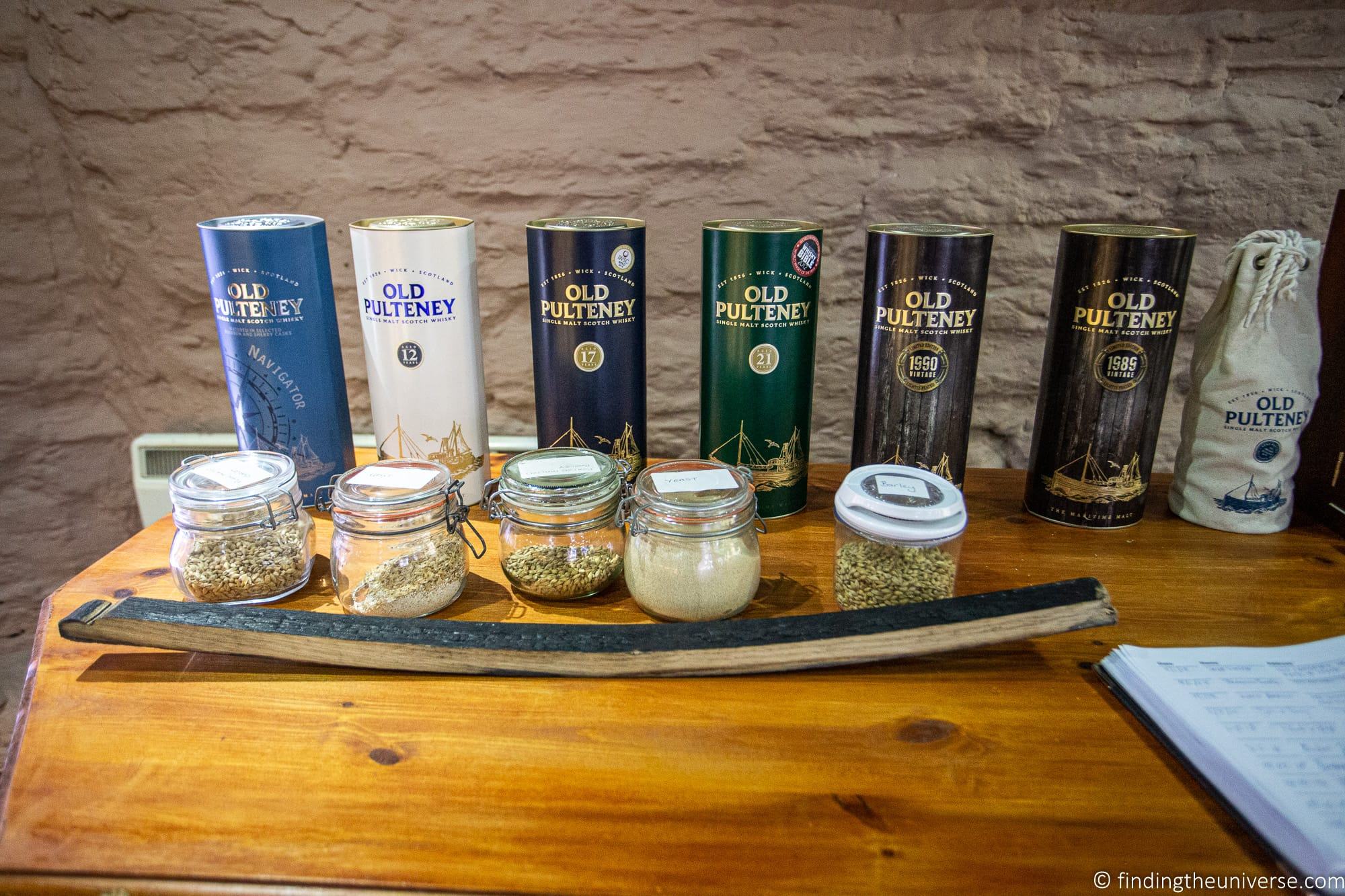
If you’re overnighting in Wick on your North Coast 500 trip, the Old Pulteney Distillery is well worth a visit. Founded in 1826 during Wick’s heyday as the herring capital of Europe, Old Pulteney is sometimes called “the Maritime Malt” because of the salty, coastal character that the sea air imparts to the maturing whisky.
They produce a range of single malts from 12 year old through to 25 year old, plus special editions. Their Huddart expression has peat smoke flavours, which is less common for a Highland distillery and worth trying if you normally prefer Islay whiskies.
Old Pulteney is open for tours and tastings. See their website for opening hours and prices.
8. Wolfburn Distillery
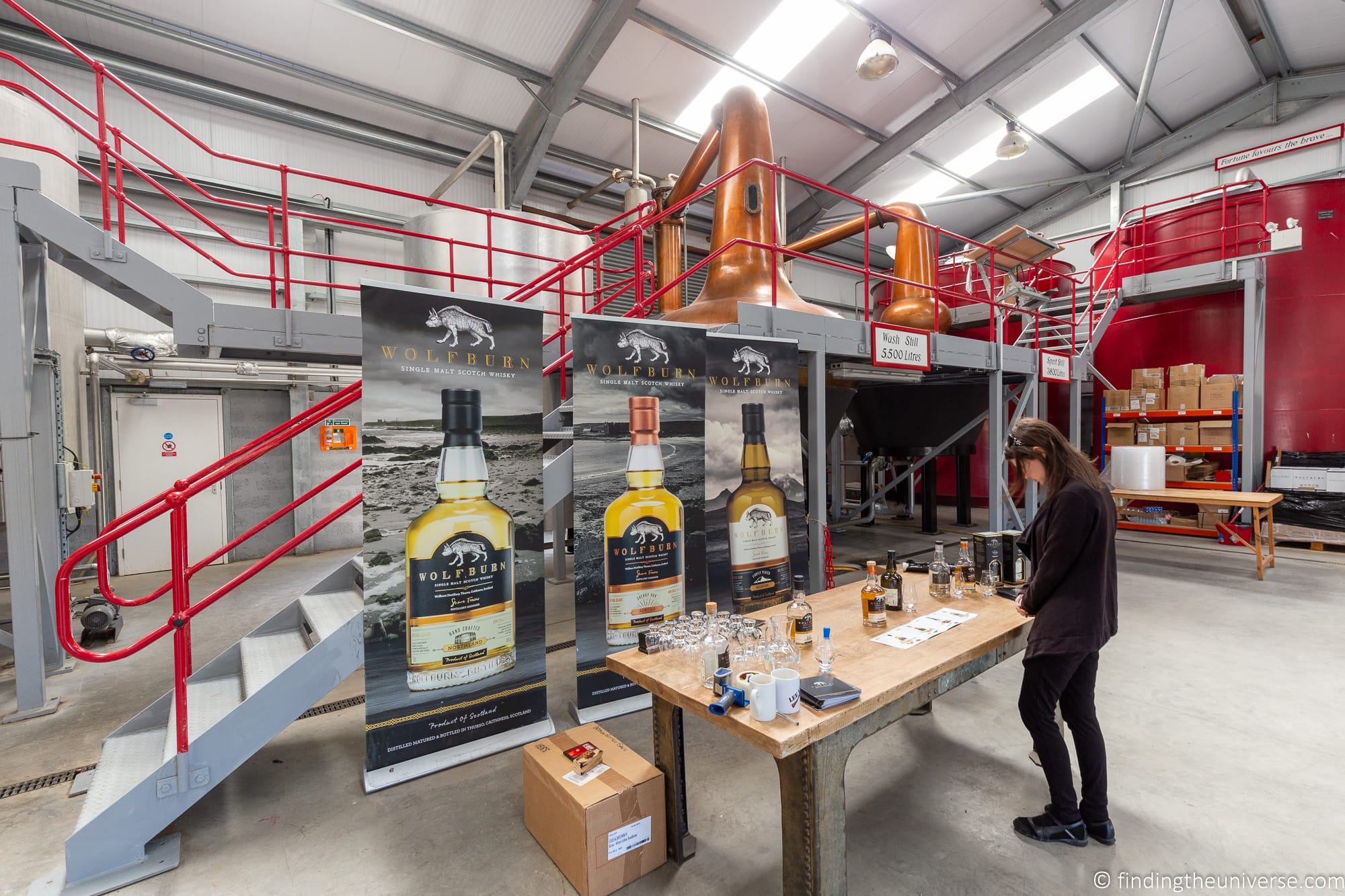
Found in the town of Thurso, Wolfburn is the most northerly distillery on mainland Scotland. The original Wolfburn was founded in 1822 but closed in 1877. The new distillery, built from scratch on the same site, opened in 2013.
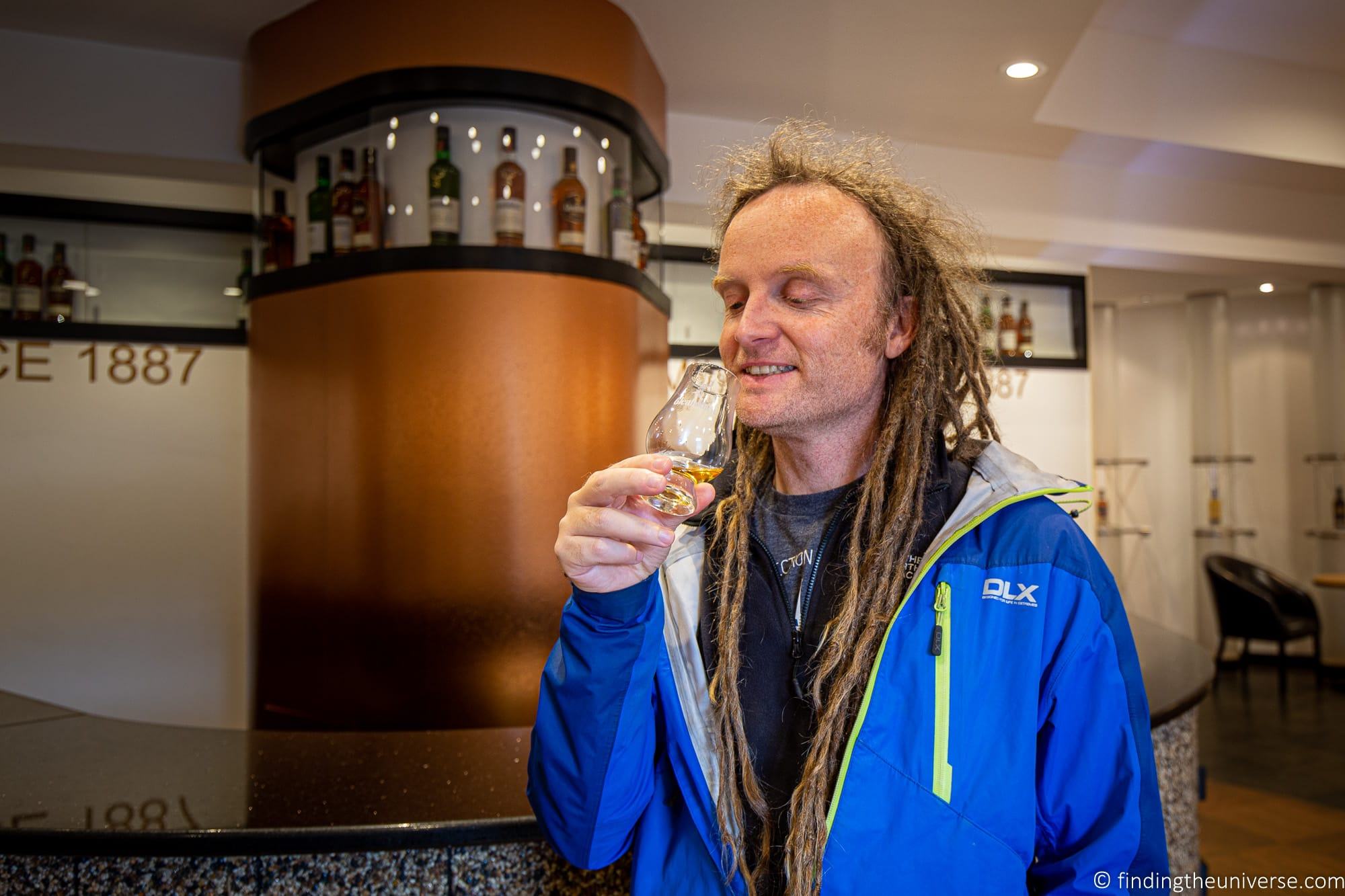
I bought a bottle of their Morven expression on my last visit and really enjoyed it. It has a gentle hint of peat that doesn’t overpower the other flavours, making it a good middle ground if you’re curious about peated whisky but don’t want to jump straight to Islay levels of smoke. As a newer distillery, their whiskies are younger than the big names, but they’re well made and full of character.
Wolfburn doesn’t have a formal visitor centre, but don’t let that put you off. The tours here are hands-on and personal in a way that the larger distilleries can’t quite match. You’ll get close to the actual production process and leave with a real sense of how a small distillery operates.
9. Stannergill Distillery
Stannergill Distillery is the newest distillery on the North Coast 500, and one that most guides haven’t caught up with yet. It’s located in the restored Castletown Mill between Thurso and John O’Groats, and was opened in November 2025 by the same team behind Dunnet Bay Distillers (makers of Rock Rose Gin and Holy Grass Vodka).
Distillery tours and tastings start at Easter 2026. Even before the tours begin, you can visit the Grain Store Restaurant on site, which is already open. Given the track record of the Dunnet Bay team with Rock Rose Gin, this is one to watch. Having a proper whisky distillery in this stretch of the far north coast fills a gap that’s been missing for years.
10. Dunnet Bay Distillery
While not a whisky distillery (yet), Dunnet Bay Distillery is worth mentioning because it’s right on the NC500 route and produces some of Scotland’s best small-batch spirits. Their Rock Rose Gin is excellent, and they’ve expanded into vodka and rum as well since we first visited.
The tour is a short but fun experience. Even if gin isn’t usually your thing, the craft and care that goes into the production here is clear from start to finish. We especially loved the bottle designs.
The Dunnet Bay team are also behind the new Stannergill whisky distillery above, so there’s clearly a long-term whisky ambition here.
11. Badachro Distillery
If you look at the map of NC500 distilleries, you’ll notice they’re almost all on the east coast. This is because the older distilleries were built near rail lines for distribution. The wild, remote north-west coast simply didn’t have the infrastructure.
Badachro Distillery is changing that. This small, family-run operation near Gairloch launched in 2017 producing gin, and has since expanded into vodka and rum. In late 2025, they began distilling their own whisky on site, making them the only operating whisky distillery on Scotland’s north-west coast north of Ardnamurchan.
Their whisky won’t be ready for at least three years (that’s the legal minimum for Scotch), but you can visit to see the production process and try their other spirits. They’re sourcing malted barley from the Black Isle and using a mix of ex-bourbon and ex-sherry casks. The setting is beautiful, and there’s a self-catered timber cabin on site if you want to stay. Tours can be booked on their website.
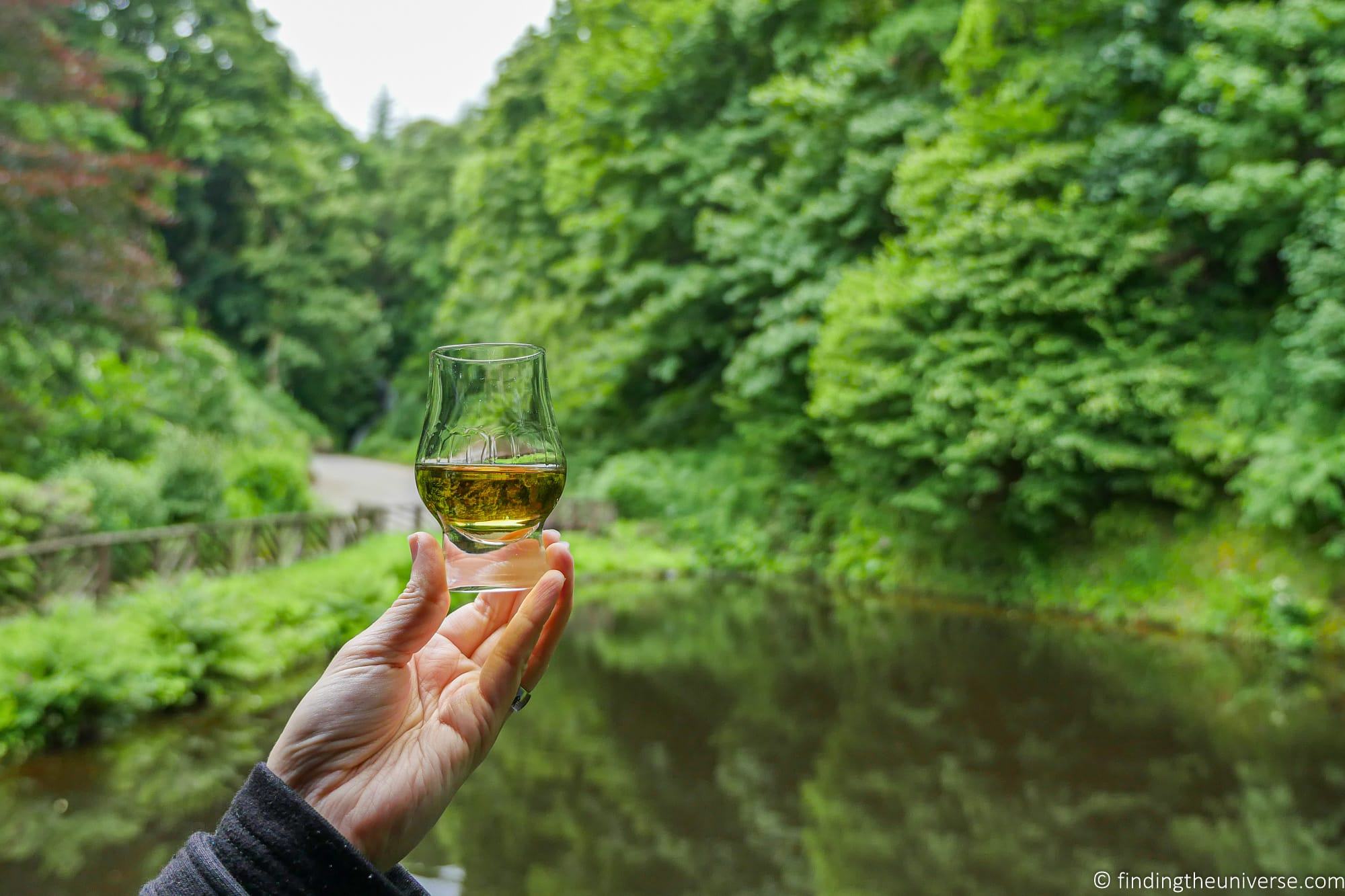
Planning Your NC500 Whisky Route
If you’re trying to fit distillery visits into your NC500 trip, here’s some practical advice based on multiple trips around the route.
If You Only Have Time for Two or Three
My recommendations would be Glenmorangie (the best all-round visitor experience on the route), Glen Ord (excellent tour with great history), and Wolfburn (the most personal, hands-on experience). If the new Dalmore visitor experience lives up to its promises, that could move up the list quickly.
Driving Times Between Distilleries
The east coast distilleries are relatively close together. Glen Ord to Glenmorangie is about 40 minutes. Glenmorangie to Balblair is only a few miles. Balblair to Clynelish is about 40 minutes. Clynelish to Pulteney in Wick is around an hour. Pulteney to Wolfburn in Thurso is another 30 minutes. You could realistically visit three or four in a day if you planned it, though that’s a lot of whisky information to absorb.
The Driver’s Dram
Scotland’s drink-driving limit is very strict, lower than the rest of the UK, and even a small tasting could put you over it. Every distillery on the NC500 is aware of this, and almost all of them will seal your tasting samples in takeaway cups so you can enjoy them later at your accommodation. Just let your guide know you’re driving at the start of the tour. It’s completely normal and nobody will bat an eyelid. Personally I enjoy finishing my day by enjoying my whisky samples!
Book Ahead
Several distilleries require advance booking for tours, and some run limited tours per day. During peak season (May through September), popular distilleries like Glenmorangie and Dalmore can fill up. Smaller operations like Wolfburn have limited group sizes. Always check the distillery website and book before you turn up. Some distilleries also close for part of the year for maintenance, so check seasonal opening times.
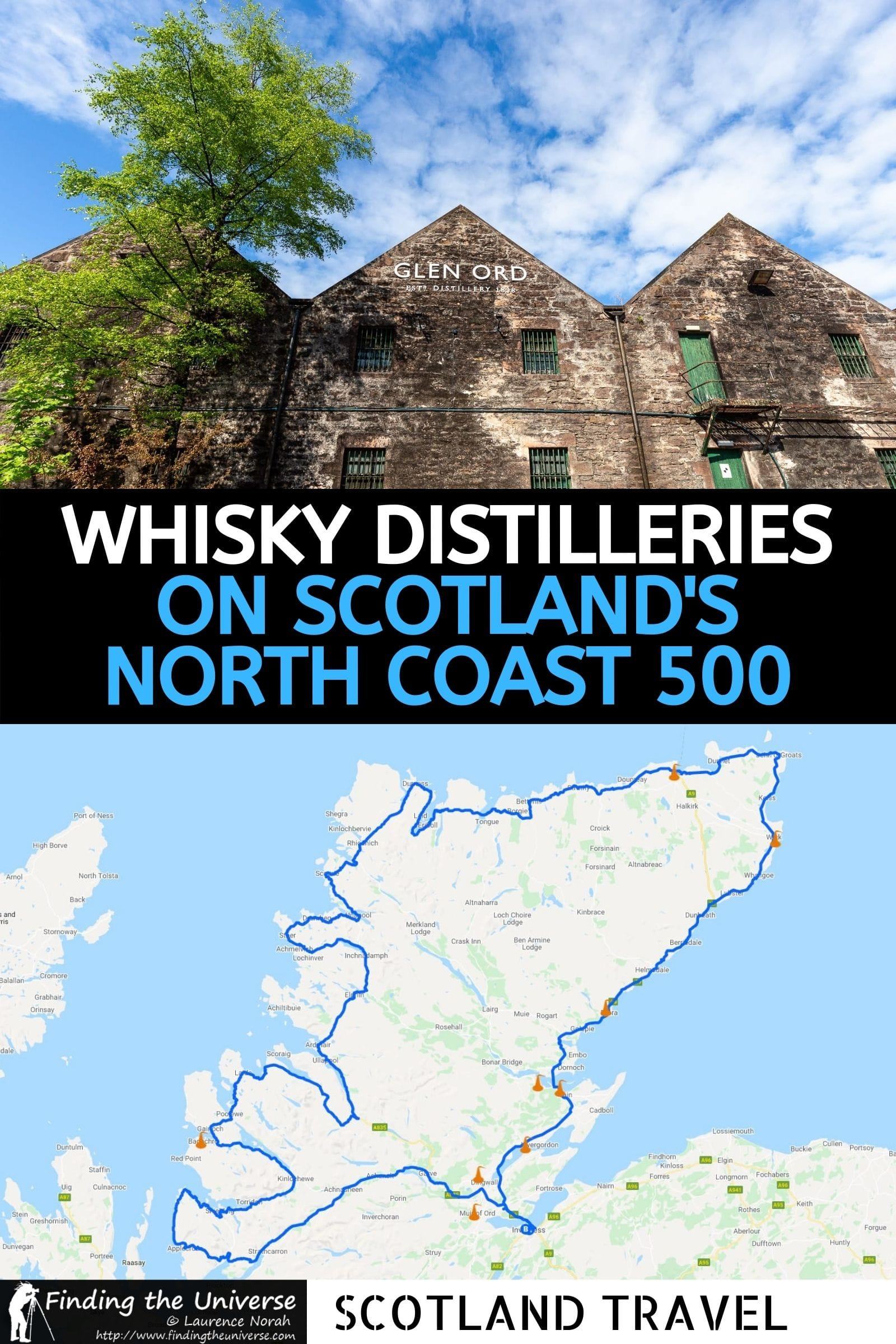
Map of Whisky Distilleries on the North Coast 500
Here’s a map of all the whisky distilleries on the North Coast 500, along with the NC500 route. You can also see this map on Google Maps.
Whisky Bars on the North Coast 500
If you’d rather sample a wide range of whiskies in one sitting rather than visiting individual distilleries, two places on the NC500 stand out.
The Dornoch Castle Hotel whisky bar has hundreds of malts and has won awards for its collection. It’s a must if you’re staying in the area, and the staff really know their stuff. You can also stay the night, which means you don’t have to worry about driving afterwards.
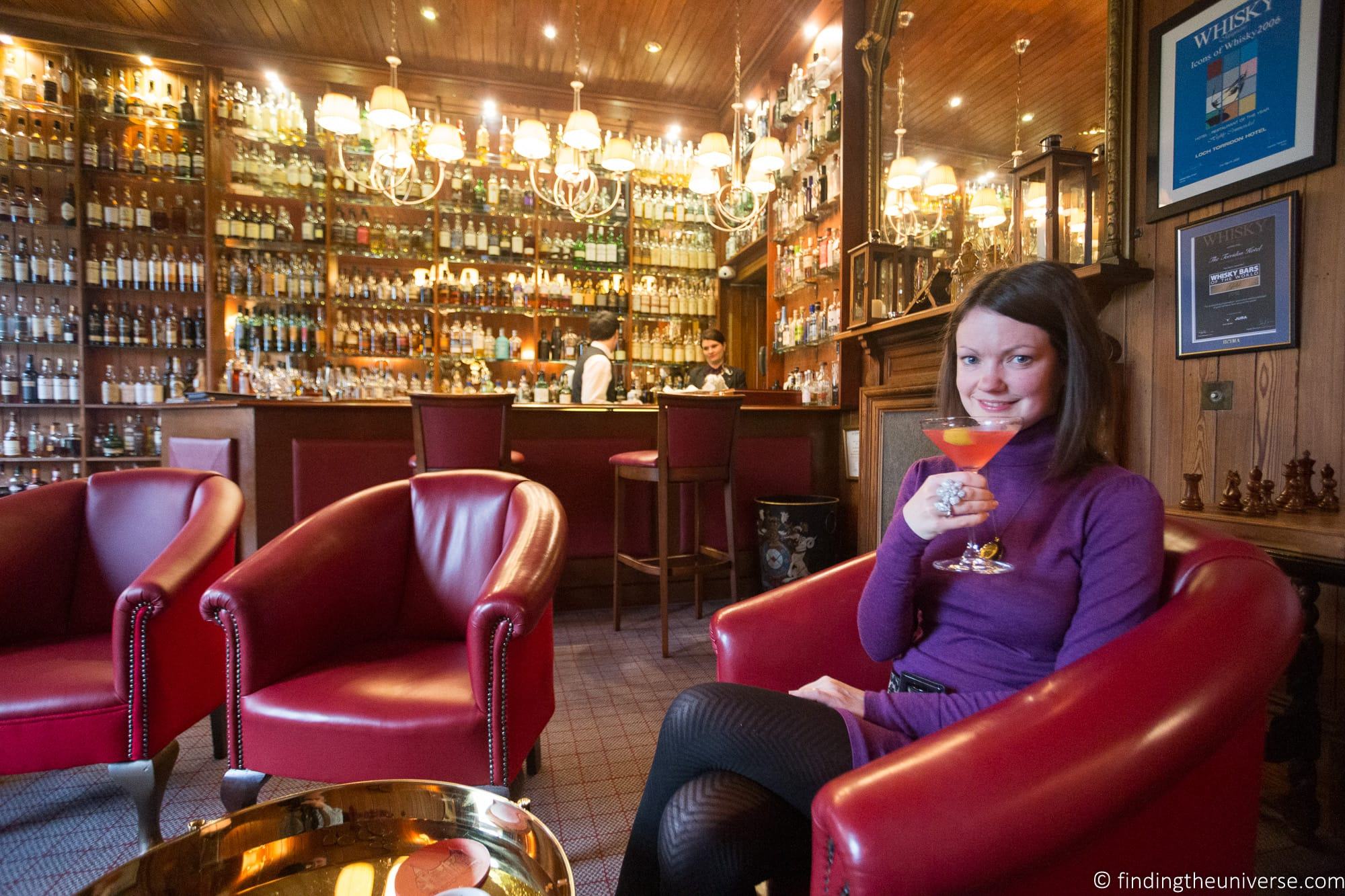
The other standout is The Torridon’s whisky bar, which has over 300 malts. It’s one of our favourite hotels on the NC500, and there’s something special about choosing from that collection with the Torridon mountains outside the window. I always manage to find something I haven’t tried before.
Where to Buy Whisky
My strong recommendation is to buy whisky at the distillery itself. Every distillery on the NC500 has a shop, and many sell bottles that aren’t available anywhere else. There’s also something about buying a bottle from the place where it was made that makes it taste better when you open it at home. It’s a proper memento of your trip.
If you want to stock up before your trip or order something you missed, The Whisky Shop has an extensive online selection, and Amazon carries a wide range as well.
Getting to the North Coast 500
The NC500 starts and ends in Inverness. If you’re hiring a car for the trip, we recommend Discover Cars, which searches multiple providers to find you the best deal.
Frequently Asked Questions
How many whisky distilleries are on the North Coast 500?
There are currently eleven whisky distilleries on or very near the NC500 route. Ten of these are on the east coast between Inverness and Thurso, and one (Badachro) is on the west coast near Gairloch.
The newest addition is Stannergill Distillery near Castletown, which opened in November 2025. Brora distillery, next to Clynelish, reopened in 2021 after being closed since 1983. So the NC500 whisky landscape has changed quite a bit in recent years.
Which NC500 distillery should I visit if I only have time for one?
If you’re new to whisky, Glenmorangie. The visitor experience is polished, the guides are engaging, and their 10 year old Original is one of the most accessible single malts you can try. It was what got me into whisky in the first place.
If you already know your way around a single malt and want something more hands-on, Wolfburn in Thurso. It’s small, personal, and you’ll get much closer to the actual production than at the bigger operations.
Can I do whisky tastings if I’m driving the NC500?
Yes, but you obviously can’t drink and drive. Scotland’s drink-driving limit is lower than the rest of the UK, and even a single tasting measure could put you over it. The good news is that almost every distillery on the NC500 will provide sealed takeaway cups for drivers so you can enjoy your samples later at your accommodation. Just mention you’re driving at the start of the tour.
Do I need to book distillery tours in advance?
For most distilleries, yes. Glenmorangie, Dalmore, Clynelish, and Old Pulteney all have limited tour slots that fill up during peak season (May through September). Wolfburn has small group sizes. Brora is appointment-only. Even for distilleries that accept walk-ins, booking ahead guarantees you a spot and lets you pick a time that fits your itinerary.
Are the NC500 distilleries open year round?
Most of the larger distilleries (Glenmorangie, Clynelish, Glen Ord, Old Pulteney) are open year round, though some reduce their tour schedules in winter. Smaller distilleries may close for part of the year. Stannergill’s tours begin at Easter 2026. Always check the distillery website before visiting, especially outside the May to September peak season.
What type of whisky is produced on the NC500?
All the distilleries on the NC500 are in the Highland whisky region, which is known for fruity, sweet, spicy, and malty single malts. Most don’t use peat, so if you associate Scotch whisky with smoky flavours, you might be pleasantly surprised by the softer, more approachable Highland style. The exceptions are Wolfburn’s Morven (lightly peated) and Old Pulteney’s Huddart (peat smoke), which offer a taste of smokiness without the full Islay intensity.
Further Reading
If you’re planning an NC500 trip, you’ll find these guides useful:
- Our complete guide to whisky distilleries in Scotland, which covers all regions, how whisky is made, and distillery tours across the country
- Our 5 day NC500 itinerary and 7 day NC500 camping itinerary
- Jess’s detailed guide to where to stay on the NC500 and our guide to B&Bs on the NC500
- Our guide to all the campsites and glampsites on the NC500
- My photography location guide for the NC500
- Our guide to driving on single track roads and our guide to driving in the UK
- For route planning, the Collins NC500 Pocket Map is handy. We also recommend the Rough Guide to the NC500 and Rick Steves Scotland
- From Aberdeen, you can also tackle the North East 250, which passes through the Speyside whisky region with dozens more distilleries
- For Edinburgh, see our 2 day Edinburgh itinerary and things to do in Edinburgh
- The official NC500 website for maps and route planning
And that sums up our guide to whisky distilleries on the North Coast 500! Have you visited any of these distilleries, or have questions about planning your whisky stops on the NC500? Let us know in the comments below.
Troot says
I appreciate all the ideas, photos, and general guidance about the NC500. Planning this for August this year and already super excited. I have been all over the world, but this trip to Scotland seems like it will be my best ever.
Laurence Norah says
Our pleasure Troot – I hope you have a wonderful trip!
Mike Ullmer says
Thanks for the Whisky guide to the North Coast 500. We are hoping to do it next year and will certainly be making a few refreshment stops !
Laurence Norah says
Our pleasure Mike – I hope you have a great trip and enjoy these stops! We have many more posts on the NC500 on our sites which hopefully you have also found 🙂 Just let us know if you have any questions when you start planning 🙂