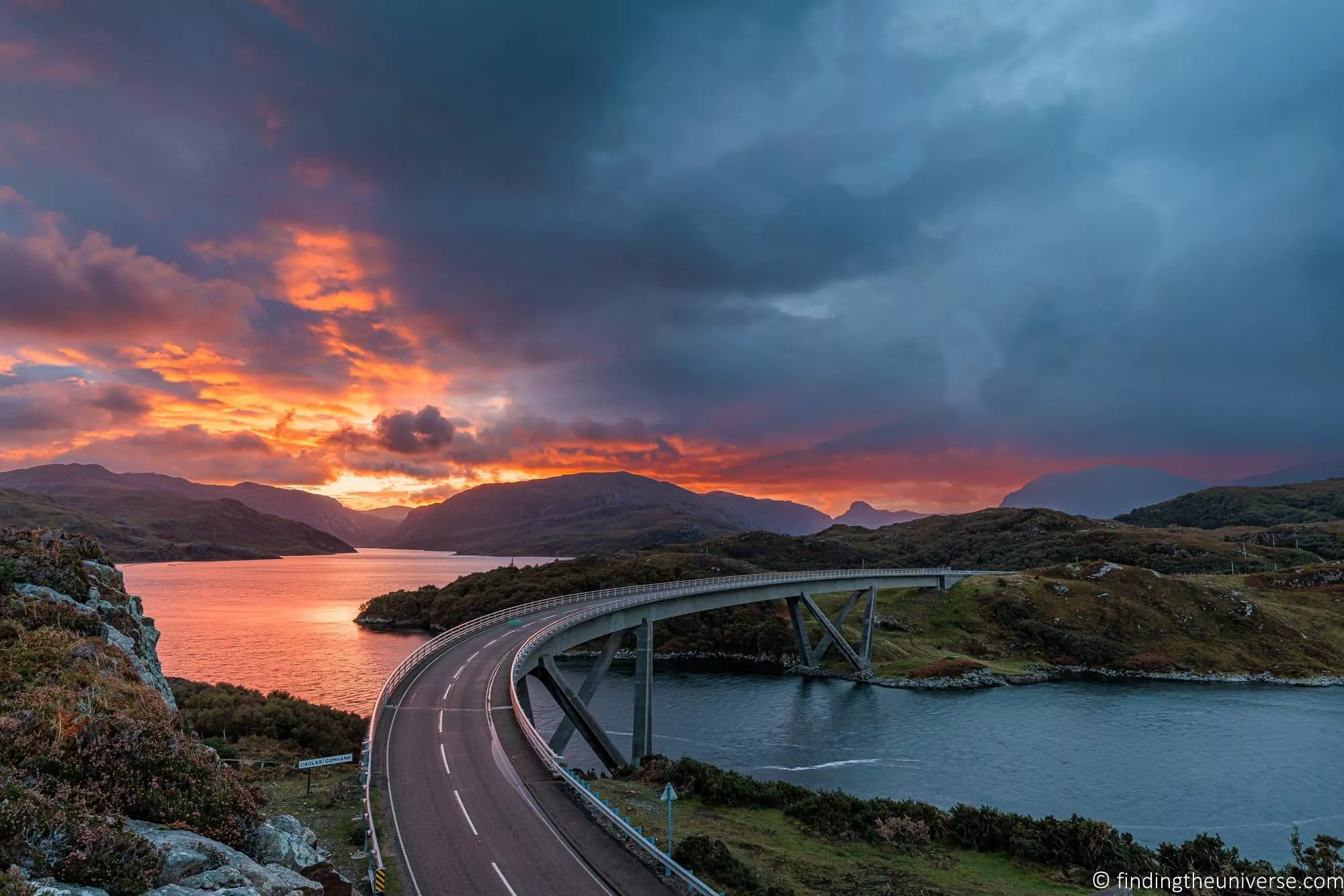
We’ve driven Scotland’s North Coast 500 more times than I can easily count, in everything from blazing June sunshine to horizontal February sleet. Having lived in Scotland for years, the far north is the part we keep going back to, and camping is still my favourite way to do the route. If you’re camping the route, it’s worth pairing this with what to pack for a Scotland trip so the weather doesn’t catch you out. You wake up next to a beach or a sea loch, you’re out in the scenery rather than driving past it, and on a good week it’s a lot cheaper than hotels.
The hard part is choice. There are dozens of campsites strung along the 516 mile loop, from honest little fields with a tap and a toilet block to full holiday parks with hot tubs and on-site bistros. Most guides just list every single one in route order and leave you to wade through. This one does the opposite. I’ve gone through every campsite I could find on the NC500 and pulled out the ones actually worth your time, weighed up on location, facilities, price and reputation, then sorted them by what you’re travelling in and who you’re travelling with.
If you want the full day-by-day plan for the trip itself, that lives in our 7 day North Coast 500 camping itinerary. This guide is the companion to it: where to actually book each night.
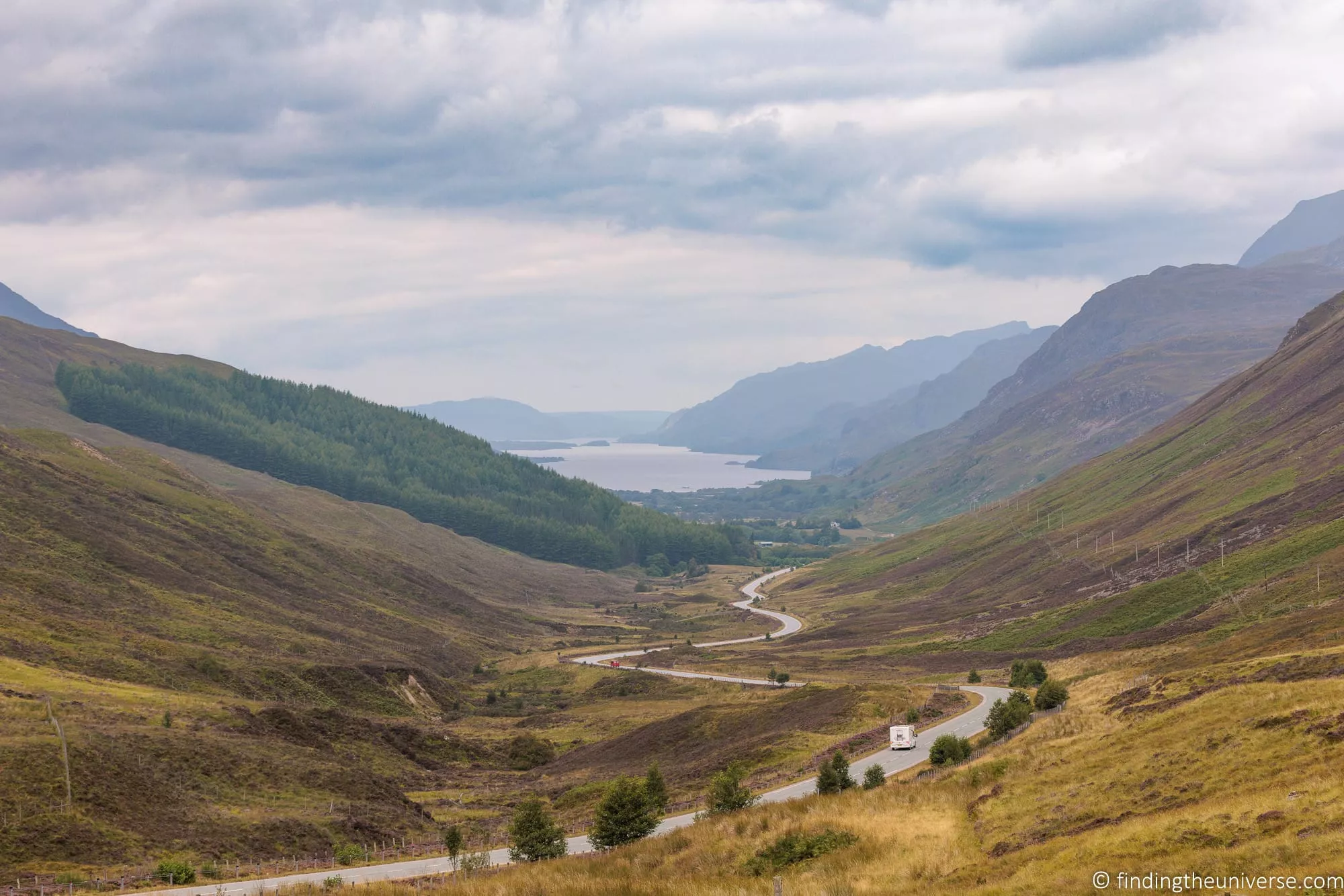
Table of Contents:
Our Top NC500 Campsite Picks
Short on time? For most people the best all-round NC500 campsite is Sango Sands Oasis in Durness, a year-round site on the cliffs above one of the finest beaches on the route, with a bar and shop right next door. Beyond that, your pick is really about what you’re sleeping in and who’s travelling with you, so here’s our shortlist by type.
| Looking for | Our pick |
|---|---|
| Best overall | Sango Sands Oasis, Durness |
| Best for tents | Clachtoll Beach Campsite |
| Best for motorhomes and caravans | Ardtower Caravan Park, near Inverness |
| Best for families | Sands Caravan and Camping, near Gairloch |
| Best beachfront | Dunnet Bay Club Site, Dunnet |
| Best on a budget | Torridon Campsite (free, tents only) |
| Best glamping | Black Isle Pods, near Inverness |
NC500 Campsite Comparison Table
Here are the 18 campsites we’d shortlist, in the order you’d reach them driving the route anti-clockwise from Inverness (up the east coast first). Prices are hard to pin down because most sites change them year to year and charge differently for tents, hookups and extra people, so I’ve used rough bands instead: £ is under £20 a night, ££ is £20 to £30, and £££ is £30 or more for a pitch for two with a vehicle. In practice almost everything on this list sits in the middle band: nothing here came in under £20 a night, Dunnet Bay is the one site above £30, and the cheapest night on the route is Torridon, which is free and takes tents only. Always check the site’s own page for current rates and to book.
| Campsite | Where | Best for | Suits | Dogs | Open | Price |
|---|---|---|---|---|---|---|
| Bunchrew Caravan Park | Bunchrew, near Inverness | Firthside first night near Inverness | Tents and vans | Yes | Seasonal | ££ |
| Ardtower Caravan Park | Near Inverness | Year-round base, big motorhomes | Tents and vans | Yes | Year-round | ££ |
| Dornoch Caravan and Camping Park | Dornoch | Families, beach and town | Tents and vans | Yes | Seasonal | ££ |
| Wick River Campsite | Wick | Community-run Caithness base | Tents and vans | Yes | Seasonal | ££ |
| John O’Groats Caravan and Camping | John O’Groats | The famous corner, on the beach | Tents and vans | Yes | Seasonal | ££ |
| Dunnet Bay Club Site | Dunnet | Best beachfront, club facilities | Tents and vans | Yes | Mar to Nov | £££ |
| North Coast Touring Park | Melvich | On-site bistro, pods too | Tents and vans | Yes | Seasonal | ££ |
| Craigdhu, Bettyhill | Bettyhill | North-coast beaches, new washblock | Tents and vans | Yes | Seasonal | ££ |
| Sango Sands Oasis | Durness | Best overall, clifftop above the beach | Tents and vans | Yes | Year-round* | ££ |
| Clachtoll Beach Campsite | Clachtoll | Best for tents, beach and sauna | Tents and vans | Yes | Seasonal | ££ |
| Shore Caravan Site | Achmelvich | Family beachfront (no dogs) | Tents and vans | No | Seasonal | ££ |
| Ardmair Point | Near Ullapool | Waterfront, sheltered tent area | Tents and vans | Yes | Seasonal | ££ |
| Broomfield Holiday Park | Ullapool | In-town lochfront, no booking | Tents and vans | Yes | Seasonal | ££ |
| Port A Bhaigh | Altandhu | Year-round, bar opposite, Summer Isles views | Tents and vans | Yes | Year-round | ££ |
| Sands Caravan and Camping | Near Gairloch | Best for families, big full-facility site | Tents and vans | Yes | Seasonal | ££ |
| Shieldaig Camping and Cabins | Shieldaig | Wester Ross village base, cabins too | Tents and vans | Yes | Seasonal | ££ |
| Applecross Campsite | Applecross | Bealach na Bà, beachside, café | Tents and vans | Yes | Seasonal | ££ |
| Torridon Campsite | Torridon | Best budget, free in a dramatic glen | Tents only | Not stated | Year-round | Free |
*Sango Sands stays open year-round but runs reduced facilities in winter.
The Best Campsites on the North Coast 500
Below are fuller notes on each of the shortlisted sites, grouped by section of the route so you can match them to wherever you’re planning to stop. If you want help deciding how many nights to spend and where, our 7 day camping itinerary breaks the whole loop into manageable days.
Inverness and the East Coast
Inverness is where almost everyone starts and finishes, so it pays to know the campsites here even if you only use them for a first or last night.
Bunchrew Caravan Park, near Inverness. A big grassy park on the shores of the Beauly Firth, about 20 minutes west of the city, where a car and tent for one is £24 and each extra person is £5, so £29 for a couple, which makes it an easy first night out of Inverness. It takes tents, caravans and motorhomes, has a shop and a catering van, and even runs an EV charging point. Seasonal, and dogs are welcome.
Ardtower Caravan Park, near Inverness. My pick if you’re in a larger motorhome or want somewhere open all year. It’s ten minutes east of Inverness, mostly hardstanding with fully serviced pitches available, and it’s set up to handle big units that some smaller sites can’t take. There’s a grassy tent area too. Dogs welcome.
Dornoch Caravan and Camping Park, Dornoch. A repeat Tripadvisor Travellers’ Choice winner, and an easy one to recommend for families. It sits right in the lovely town of Dornoch with its cathedral, championship golf links and a long sandy beach, so there’s plenty within walking distance when the driving’s done. Around 120 grass pitches, electric hookup, a playground and an EV charger. Seasonal, dogs welcome.
Wick River Campsite, Wick. A large, popular site on the banks of the River Wick, taken over by the Wick Development Trust in 2022 and now run as a not-for-profit community enterprise, with the profits going back into regenerating Wick town centre. It’s since won a couple of social enterprise and community business awards, which is a nice thing to be supporting with your pitch fee. Handy for the Caithness side of the loop. Dogs welcome.
The North Coast: John o’Groats to Durness
This is the top edge of the country, with huge skies, white-sand bays and the true most-northerly point of mainland Britain.
John O’Groats Caravan and Camping Site, John O’Groats. Right on the beach at the famous signpost, with about 90 pitches for everything from tents to motorhomes and electric hookup available. The location does the heavy lifting here, with Orkney across the water and Duncansby Stacks a short walk away. Seasonal, dogs welcome.
Dunnet Bay Club Site, Dunnet. Our pick for the best beachfront on the route. This Caravan and Motorhome Club site sits right behind the enormous sweep of Dunnet Sands, with all 56 pitches on 16 amp electric and the club’s reliably high facilities standard. Just up the road is Dunnet Head, which is the most northerly point of mainland Britain (not John o’Groats, despite the assumption). It’s open roughly late March to early November and welcomes dogs.
North Coast Touring Park, Melvich. A tidy newer park with the rare bonus of a licensed bistro and café on site, plus a small shop, which counts for a lot on this stretch where services are thin. Hardstanding for vans, grass for tents, and camping pods if you fancy a night off the airbed. Seasonal, dogs welcome.
Craigdhu, Bettyhill, Bettyhill. Grassy pitches with cracking views, a short stroll from the pub and within easy reach of the beaches at Farr and Torrisdale. A newish amenity block has seven private unisex shower-and-toilet rooms plus an outdoor cold shower for sandy feet and dogs. Seasonal, and dogs are welcome on a lead.
The North-West: Durness to Lochinver
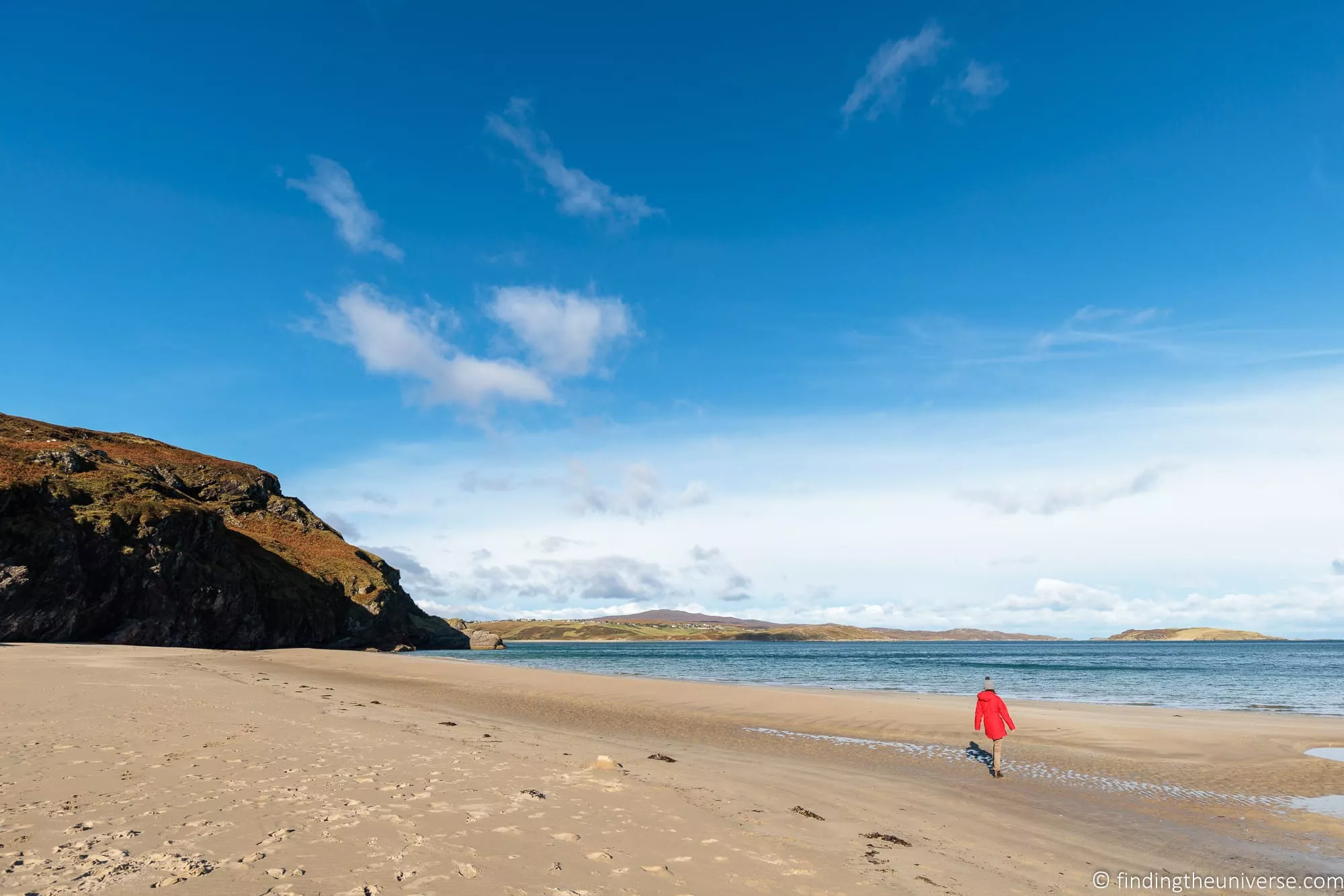
For my money this is really the most spectacular camping on the whole loop, all empty beaches, single-track roads and mountains that look like they were dropped in from somewhere else.
Sango Sands Oasis, Durness. Our best-overall pick. It sits high on the cliffs above the award-winning Sango Bay beaches in the village of Durness, with a bar and restaurant next door and shops nearby, and it stays open all year (with reduced facilities in winter). Roughly 82 pitches, a mix of marked hardstanding with electric and unmarked first-come grass. Book ahead if you want a powered pitch. Dogs welcome.
Clachtoll Beach Campsite, Clachtoll. If you’re in a tent, book this one early. It’s a Travellers’ Choice site right beside a gorgeous white-sand beach five miles from Lochinver, with 38 grassy pitches, a shop, and a new wood-fired sauna for 2026. It sells out well in advance for summer, so don’t leave it to the last minute. Seasonal, dogs welcome.
Shore Caravan Site, Achmelvich. Another beauty right by the turquoise water at Achmelvich, very family friendly, with a shop and a chip shop on site. The one catch is no pets allowed, so this is the exception to the route’s generally dog-friendly rule. Books up a long way ahead. Seasonal.
Wester Ross: Ullapool to Applecross
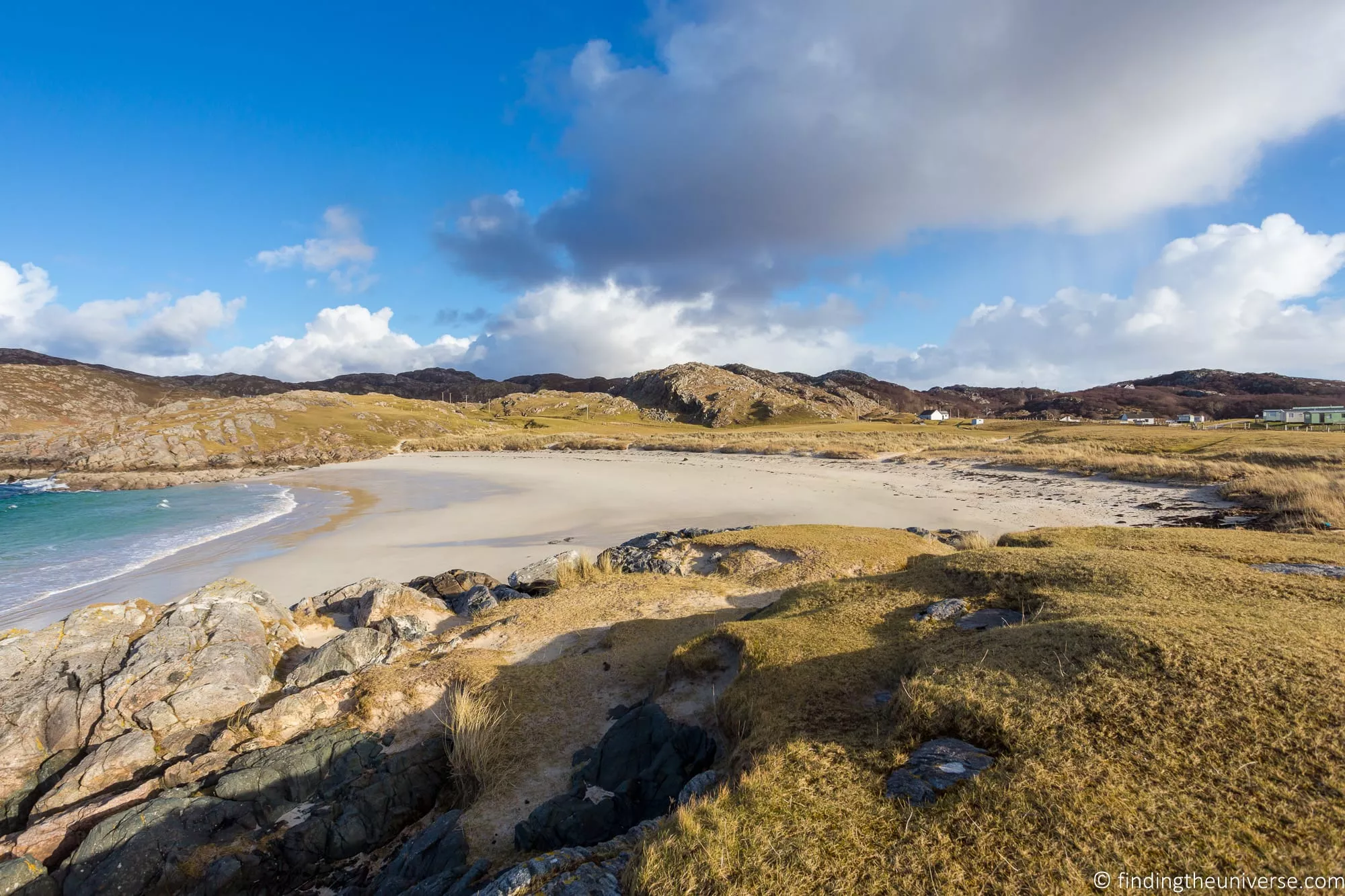
The long western run back towards Inverness packs in some of the best of the route, and the campsites here tend to be busy, so plan ahead.
Ardmair Point, near Ullapool. A waterfront site on a pebble bay a few minutes north of Ullapool, with electric pitches for vans and a separate sheltered grass area for tents, plus a shop and coffee shop. The setting, ringed by mountains and sea, is the draw. Seasonal, dogs welcome.
Broomfield Holiday Park, Ullapool. Right in Ullapool on the edge of Loch Broom, so you can walk to the pubs, chippies and the ferry. It’s a large grassy site that doesn’t take bookings, so arrive early in peak season, especially if you want electric. Seasonal, dogs welcome.
Port A Bhaigh, Altandhu. A worthwhile detour onto the Coigach peninsula, with views out to the Summer Isles and a good pub directly opposite. It’s open year-round with hookups for vans and plenty of tent space. Dogs welcome.
Sands Caravan and Camping, near Gairloch. Our families pick. This is a big, well-equipped site spread along its own beach west of Gairloch, with 120 electric hookups, a games room, play area, a shop and a café and restaurant. There’s enough space and enough to do that kids are happily occupied. Seasonal, dogs welcome.
Shieldaig Camping and Cabins, Shieldaig. A small, friendly site in the pretty waterside village of Shieldaig, with hardstanding hookup pitches, a tent area, and a few cabins if you want a roof. A good base for the Torridon mountains. Seasonal, dogs welcome.
Applecross Campsite, Applecross. The reward at the bottom of the famous Bealach na Bà pass, a large popular site near the beach with a well-loved café on site. Book ahead for a hookup or hardstanding pitch in summer. Seasonal, dogs welcome.
Torridon Campsite, Torridon. Our budget pick, because it’s free, although donations are very much appreciated and help keep it going. It’s a simple tents-only site surrounded by the Torridon mountains, some of the most dramatic in Scotland, open year-round, and it can get boggy in the wet. There’s nowhere better placed for a hill day. The council’s page doesn’t say either way on dogs.
NC500 Glamping Pods and Sites
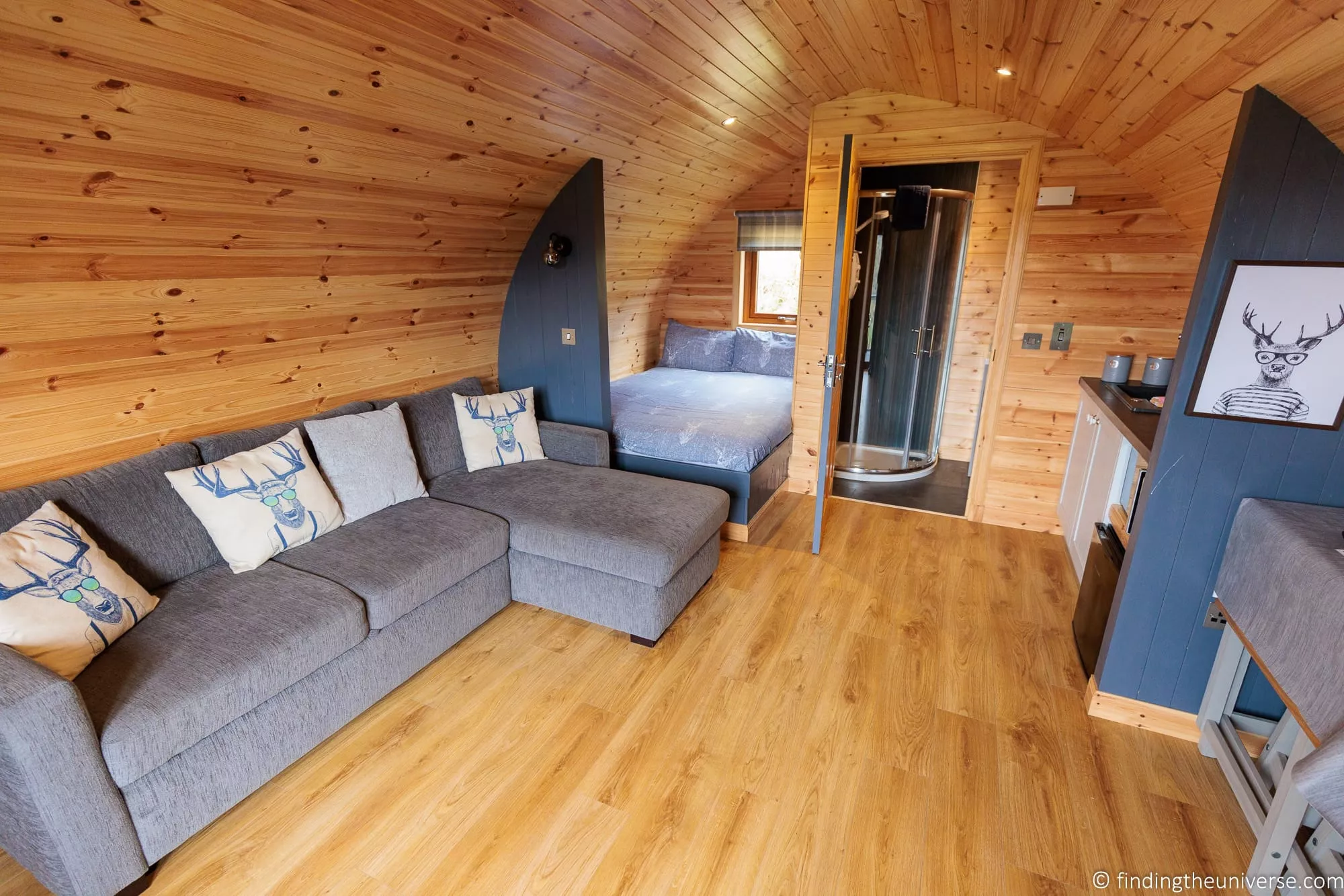
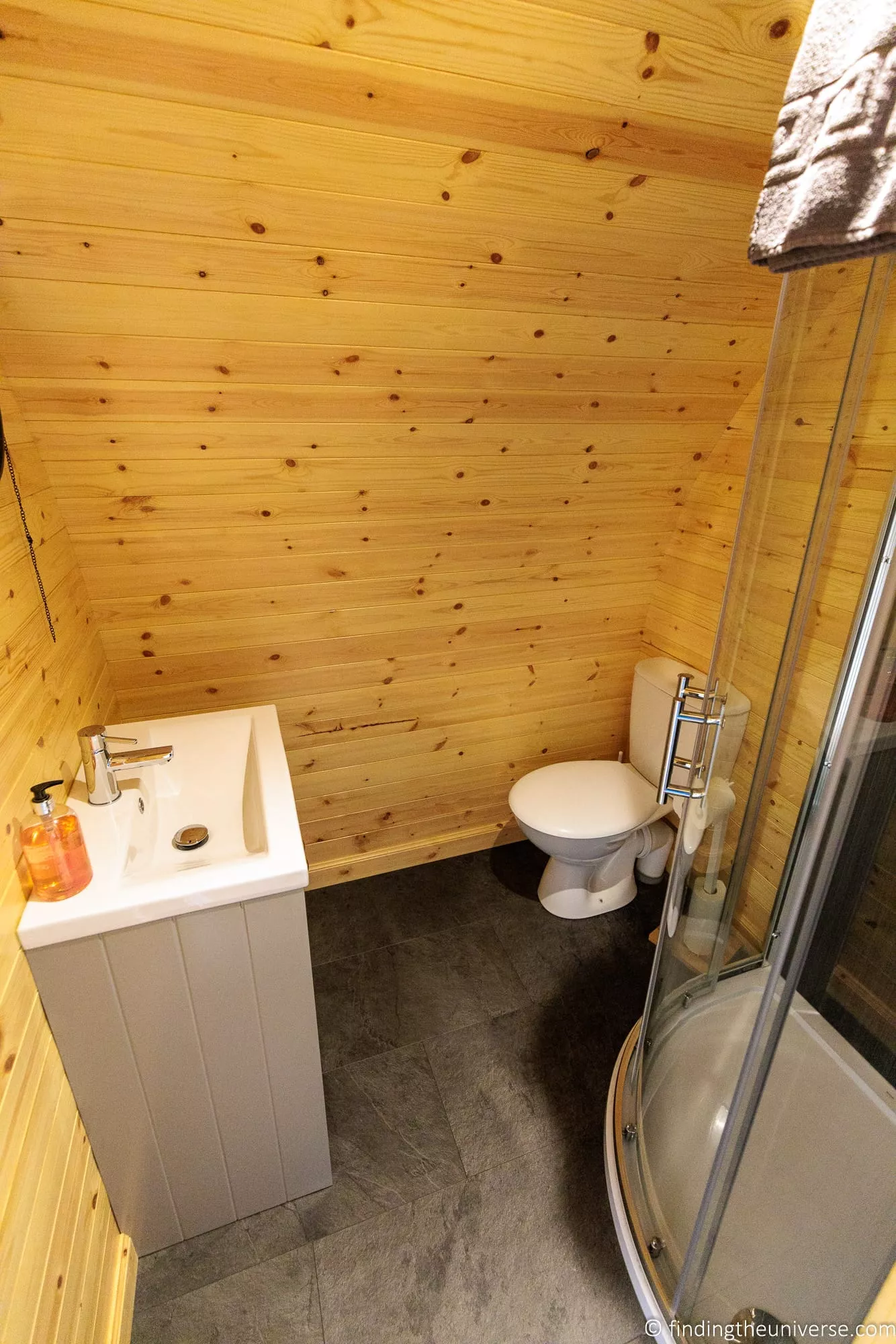
Not everyone wants to pitch a tent or drive a van, and the NC500 has a fast-growing crop of glamping options, from no-frills insulated pods through to luxury cabins with hot tubs. Most include a bed and kitchenette, but the spec varies enormously, so always check exactly what’s provided before you book. To give you a sense of what a typical mid-range pod looks like inside, here are the pods at the Ben Loyal Hotel in Tongue, which we’ve photographed on the route.
Here are six we’d single out, spread across the route and across budgets.
Black Isle Pods, near Inverness. Our best-glamping pick, and an easy first or last night just ten minutes from Inverness on the Black Isle. Three insulated pods, each with its own hot tub, en-suite shower, double bed, sofa bed and kitchenette. Dogs on request for a fee.
North Coast 500 Pods, Brora. Premium pods on the east coast loaded with the tech, including voice-controlled lighting, Bluetooth speakers, smart TVs and underfloor heating, plus a proper kitchenette and en-suite. A comfortable splurge. Dogs welcome.
Ben Loyal Hotel Pods, Tongue. The pods pictured above, attached to the Ben Loyal Hotel in Tongue, so you’ve got a restaurant and bar on your doorstep and lovely views toward Castle Varrich. Each is self-contained with a king bed, bathroom and small kitchenette. No pets.
The Crofter’s Snug, East Mey. Two pods and a shepherd’s hut near the Castle of Mey on the north coast, all with en-suite, kitchenette, WiFi and a fire-pit. One is dog friendly. A good northern base that’s a step up from the campsites without going full luxury.
The Highland Bothies, near Ullapool. Pods on a working croft a few minutes from Ullapool, with underfloor heating, a double plus sofa bed, a kitchenette, and a hot tub shared between two pods. Handy for the western half of the loop. Dogs in one pod for a fee.
Caithness Camping Pods, near Watten. At the other end of the scale, these are refreshingly honest about being a warm, dry alternative to a tent rather than glamping. You bring your own bedding, there’s a composting toilet and a cooking area but no electricity or WiFi. Cheap, simple and a good shout for a budget night under cover. Pets allowed.
What We’ve Learned Camping the NC500
The route’s had a lot more traffic in recent years, and a few things consistently catch people out. Here’s what we’d pass on after driving and camping it across all sorts of seasons.
Book ahead in July and August, the earlier the better. The best sites, Clachtoll, Sango Sands, Applecross and Shore among them, can fill weeks or even months in advance for peak summer. Out of season you’ve got far more freedom, but in high summer a “we’ll just find somewhere” plan is how you end up driving an extra hour at 9pm looking for a pitch. If a site doesn’t take bookings (Broomfield is the obvious one), arrive early in the afternoon.
Go smaller than you think on the vehicle. Big motorhomes can be quite hard work on the single-track roads, especially on the west coast between Durness and Gairloch, and the largest units don’t fit some of the more interesting side roads or smaller sites. If you’re hiring, we’d rent the smallest van you can comfortably live in. Brush up on the etiquette with our guide to driving on single track roads before you go.
Plan your service stops. Chemical and grey-water disposal points are sparse on the remote stretches, so empty tanks when you can rather than when you’re desperate, and carry green toilet chemicals because some of the smaller sites only accept those. Not every “site” has toilets and showers either. A few of the park-ups and stopovers are exactly that, a place to park with water and little else, so check the facilities before you count on them.
Midges are a west-coast thing, mostly. They build up through June and peak in July and August on the damp, sheltered west coast. The east coast, around Caithness and Dornoch, gets off much more lightly. Pack repellent whenever you go in summer, camp somewhere with a bit of breeze, and you’ll be fine.
The weather does what it likes. Even in July you can, of course, get all four seasons in a day up here, so bring layers and proper waterproofs whatever the forecast says. And ownership and management change (Wick River is community-run now, for instance), so a quick look at recent reviews before you book is never wasted.
Planning Your NC500 Camping Trip
A few practicalities to sort before you set off. For how to actually structure the days, pair this with our 7 day camping itinerary and, for a different length, our 5 day North Coast 500 itinerary.
Renting a Campervan or Motorhome
You’ve got plenty of options for hiring in Scotland. The widest choice is in Edinburgh, but for the NC500 it usually makes more sense to pick up in Inverness, which is the easiest city on the route to reach by train or plane, and only three hours from Edinburgh if you want to combine the two.
If you’re hiring a motorhome, it’s worth comparing across providers with a service like Motorhome Republic. For something more rugged, the four-wheel-drive camper trucks from Wild Camper Trucks are worth a look. If you’d rather rent locally in Inverness, options include Highland Campervans, Loch Ness Motorhomes and Rover Rentals.
If you’re not camping out of a van but want to rent a car and bring a tent, you can compare car hire prices through Discover Cars. Whatever you hire, check what’s included (unlimited mileage, extra drivers and so on). Most companies require you to be at least 21 and to have held a licence for a year, with a surcharge sometimes applying to under-25s. You can drive a motorhome on a standard licence.
Can You Wild Camp on the NC500?
Wild camping is legal in Scotland under the access rights set out in the Scottish Outdoor Access Code, but it’s worth being clear on what that actually covers. The right is for lightweight, leave-no-trace camping away from roads and buildings, on foot, the sort of thing hikers and backpackers do. It does not mean you can park a campervan or motorhome anywhere you like overnight. That’s a vehicle, not wild camping, and it’s increasingly restricted in popular spots.
You can read the detail in the Scottish Outdoor Access Code and in VisitScotland’s wild camping guidance. But the trip is a lot less stressful with your nights booked, especially in summer. Using the campsites takes the hunt out of the evening and puts money into the small communities the route runs through, which matters in an area this fragile.
How Much Does It Cost to Camp on the NC500?
As a rough guide for 2026, a couple in a tent will typically pay £20 to £30 a night. Pitches without electric for a motorhome or caravan are usually similar, while pitches with electric hookup tend to run £20 to £35. Fully serviced hardstanding pitches with water, waste and electric can be £30 to £40 at the busier sites. You can save a bit by skipping electric now and then, particularly in a self-contained van.
Glamping spans a wider range. Basic bring-your-own-bedding pods start around £40 a night, mid-range en-suite pods with a kitchenette are usually £70 to £100, and luxury pods with hot tubs and full kitchens can be £100 to £150 or more. Prices climb in July and August, and some sites offer cheaper midweek or off-peak rates. For a fuller breakdown of trip costs, see our guide to how much it costs to travel in the UK.
Travelling Responsibly
The far north is beautiful and fragile, with much less infrastructure than the rest of the country, and the route’s popularity puts real pressure on it. A few simple things make a difference. Empty chemical toilets only at proper dump points, never anywhere else, as the contents are toxic to the local environment. Take your litter with you if there’s no bin. Have fires or gas BBQs only where it’s safe and put them right out. And give way properly on the single-track roads, using the passing places to let faster traffic by.
What to Pack
On top of your usual camping or glamping kit, a few NC500-specific things are worth having along:
- Midge repellent (we use Smidge). Essential from late May through to the end of September.
- Layers and proper waterproofs, whatever the forecast.
- Reusable water bottles, plus toilet paper and hand sanitiser (smaller toilet blocks sometimes run short).
- Duct tape, forever useful, and green toilet chemicals if you’re in a van.
- A road map of Scotland and a Collins NC500 Pocket Map, the official printed route map. There’s also an NC500 app for digital navigation if you’d rather go paperless.
- Offline maps on your phone, as mobile signal is patchy in the north and west.
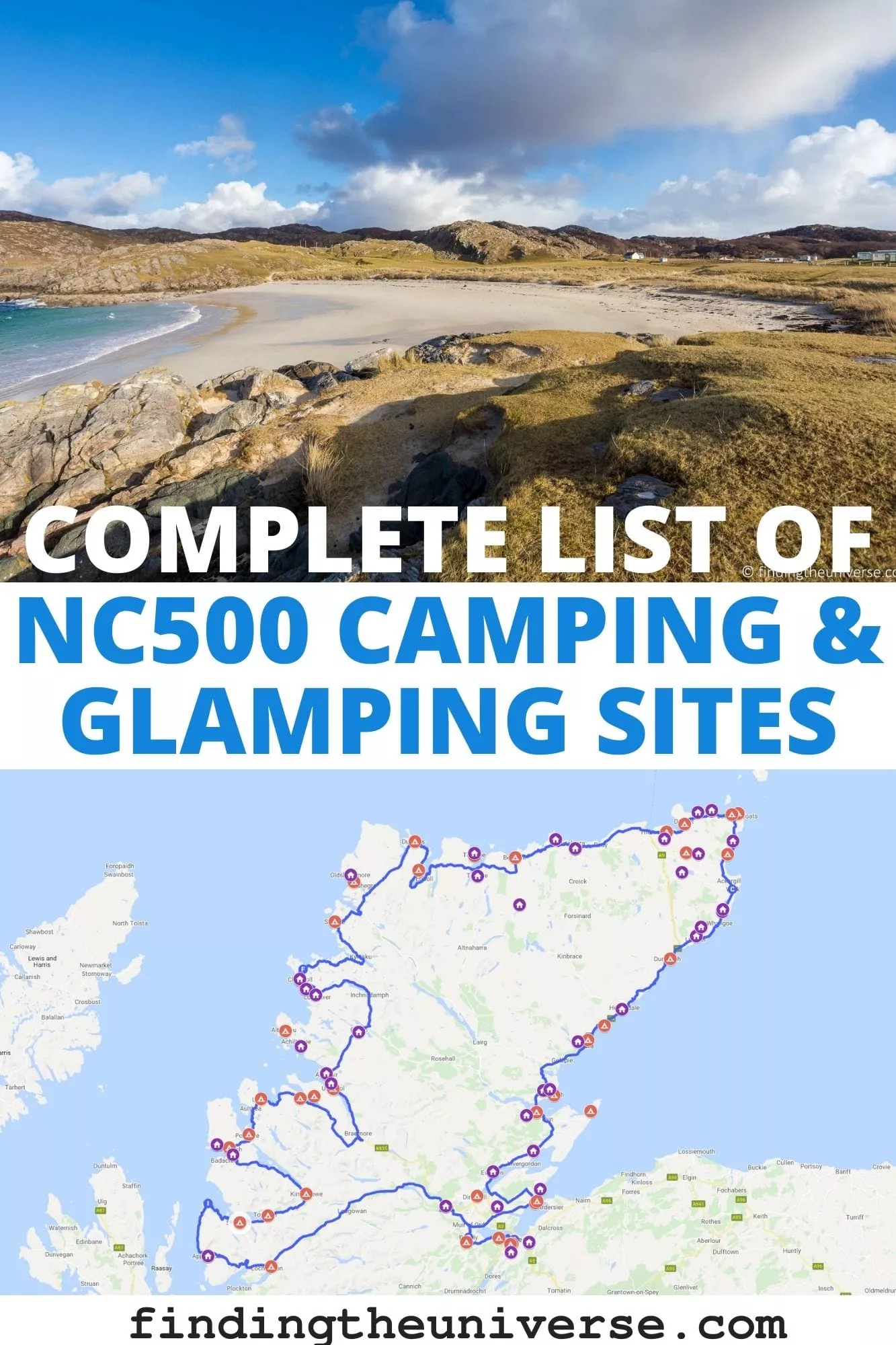
North Coast 500 Campsite Map
Here’s a map of all the campsites and glamping sites in this guide, so you can see how they fall along the route. You can also open it on Google Maps here.
Further Reading for Your North Coast 500 Trip
We’ve driven the NC500 many times and keep adding to our coverage of the route. These guides should help you plan the rest of the trip:
- Our 7 day North Coast 500 camping itinerary, the day-by-day companion to this campsite guide, and our 5 day itinerary for a shorter trip.
- Jess’s guide to planning a North Coast 500 trip and her where to stay on the NC500, plus our own pick of the best B&Bs on the North Coast 500 if you fancy a night indoors.
- My favourite photography spots on the North Coast 500, with tips for shooting the route.
- Our guide to the whisky distilleries on the North Coast 500.
- Things to do in Inverness, where the route starts and ends, and what to do on the Black Isle just over the bridge.
- New to driving here? See our tips for driving in the UK, and for more inspiration, the world’s best road trips.
- The official North Coast 500 website for maps and route planning, and a guidebook such as the Rough Guide to the North Coast 500 or Rick Steves Scotland.
Frequently Asked Questions about NC500 Campsites
How many campsites are there on the NC500?
There are roughly 40 to 50 campsites and caravan parks along the North Coast 500, plus a growing number of glamping sites offering pods, yurts, shepherd’s huts and other furnished accommodation.
The number keeps rising, with new glamping options in particular appearing each year. We’ve curated the best of them in this guide rather than listing every single one, but it’s always worth checking for new openings in the area you’re heading to.
Can you do the NC500 in a motorhome?
Yes, and it’s one of the most popular ways to do the trip, with thousands of people driving it in a motorhome or campervan every year. Most campsites on the route have pitches suitable for motorhomes, and many offer electric hookup and chemical disposal.
The thing to watch is the single-track roads, particularly on the west coast between Durness and Gairloch. In a larger motorhome you’ll need to take extra care, and some side roads won’t be suitable, so we’d generally recommend the smallest vehicle that works for you.
What is the best time to camp on the NC500?
The main season runs May through to September, with July and August the busiest. Most seasonal campsites open around Easter and close in late September or October.
If you prefer quieter sites and don’t mind cooler weather, May, June and September are excellent. Just be ready for midges from late May to September, especially on the west coast, and pack repellent whenever you go.
Is wild camping allowed on the NC500?
Wild camping is legal in Scotland under the Scottish Outdoor Access Code, but it’s defined as lightweight camping away from roads and buildings, on foot rather than in a vehicle. So it’s aimed at hikers and backpackers with tents, not campervans or motorhomes parked in laybys.
If you do wild camp, leave no trace, keep away from buildings and roads, and never block access. Overnight parking in a campervan is a grey area that varies by location, so we’d recommend booking official campsites where you can.
Do I need to book NC500 campsites in advance?
For travel between July and September, yes, we’d strongly recommend it, especially for electric hookup or hardstanding pitches. Popular sites like Clachtoll Beach, Sango Sands and Applecross can fill weeks or months ahead for peak dates.
Outside peak season you’ve got more flexibility, though it’s still wise to book if you have a specific site in mind. Not all sites take reservations, so have a backup for each night, and book glamping pods ahead whatever the time of year.
Are NC500 campsites dog friendly?
The majority of campsites on the NC500 welcome dogs, usually on the condition they’re kept on a lead. A small number don’t allow dogs (Shore Caravan Site at Achmelvich is one), and we note this in the listings above.
For glamping it’s more mixed, with around half of sites allowing pets, sometimes for a cleaning fee. Always check before booking if you’re travelling with a dog.
Scott McKenzie says
We’re off doing it soon… in may to hopefully avoid midges! We rented a motorhome so fingers crossed!!!!
Laurence Norah says
Have an awesome time! May is my favourite month to drive the route, usually not too busy, normally no midges (fingers crossed for you), lots of daylight hours, and the weather is generally reasonable. Although it’s the UK, so the weather is the weather 😉 Enjoy!
Gloria Cann says
Hi Laurence & Jessica,
What a remarkable resource on North Coast 500 campsites and glamping you have here!!! So my family and I (my husband and 10 y.o. son) are planning a trip in either late August or early September. We are hoping to go for about a week and do glamping around the route. I am wondering what we would need to bring with us as I know that some things are provided unlike regular camping. We are planning to take train to Inverness from Edinburgh and then rent a regular car so no camping for us this time, but not sure what type of things we might need as we have never been glamping before (also from Canada so first time in Scotland ). And also how far in advance would you recommend booking for glamping? Thanks so much for your help.
Never thought we’d be so excited to sleep in shipping containers, yurts, pods, and trailers, but we are all looking forward to this adventure!!!!
Gloria
Laurence Norah says
Hi Gloria,
We’re glad to hear you found our guide useful! So for glamping it can really vary. I would say that the majority of glamping sites provide most things you would expect, including bedding, towels and toiletries (assuming there’s a bathroom). Of course you would need to check when booking each location but that is my experience. If there’s a cooking area they’ll also normally provide things like pots, pans and utensils, but you would likely need to bring your own things to cook and likely things like oil and seasoning (some might also provide these). So glamping is normally a lot more equipped than camping.
In terms of booking, I would definitely advise booking as far in advance as possible. The NC500 is really popular, and locations with limited availability like glamping locations can definitely book up. So once you know your dates I’d recommend booking. You’ll just want to be sure everywhere you plan to stay has availability (or free cancellation) for your whole trip so you have somewhere to stay every night.
I hope this helps – have a wonderful trip and do let me know if you have any more questions!
Best
Laurence
Trevor Y says
Hey Laurence & Jessica – this is a wicked good resource on camping along the North Coast 500 – so helpful and everything I need to know for planning my campervan trip around here this summer!!!! Can’t wait to put it to good use.
much thanks and appreciation
Laurence Norah says
Hey Trevor – it’s our pleasure, thanks so much for taking the time to let us know you found it helpful 🙂 Have an amazing time on the NC500, do let us know how it goes!