
Scotland is home to over 140 whisky distilleries, and a good number of them welcome visitors for tours and tastings. Touring in changeable weather is easier with the right kit, so see our Scotland packing list. I had the pleasure of living in Scotland for four years, which gave me plenty of time to combine two of my favourite pastimes: landscape photography and drinking whisky.
Over the past decade, I’ve visited dozens of Scottish whisky distilleries, from world-famous names like Glenfiddich and Laphroaig to smaller operations like the distillery on the Isle of Raasay, where Jess and I basically had a private tour.
My personal favourite whisky is Laphroaig 10 year old, a heavily peated Islay single malt that tastes of smoke, sea salt, and a campfire on a wet beach. It’s not for everyone (some people have compared it to drinking a peat bog), but I love it. If you’re newer to whisky, don’t worry. This guide covers distilleries across every flavour profile, from light and floral Lowland whiskies to the big smoky Islay malts.
One thing I should mention: Jess doesn’t actually like whisky. At all. Every distillery guide we meet takes this as a personal challenge to find the one whisky that will change her mind. So far, the closest she’s come is Glayva, which is a liqueur with a whisky base. But she still enjoys the distillery tours, because the people who work at these places are so passionate about what they do. It’s often a family trade that goes back generations, and that enthusiasm is infectious regardless of whether you like the end product.
Visiting a whisky distillery is something I’d recommend for any trip to Scotland. Even if you’re not a whisky drinker, the history, the process, and the beautiful locations make it worthwhile. In this guide, I’ll share the distilleries I think are worth visiting, organised by where you’re likely to be in Scotland, plus practical advice on how to visit them.
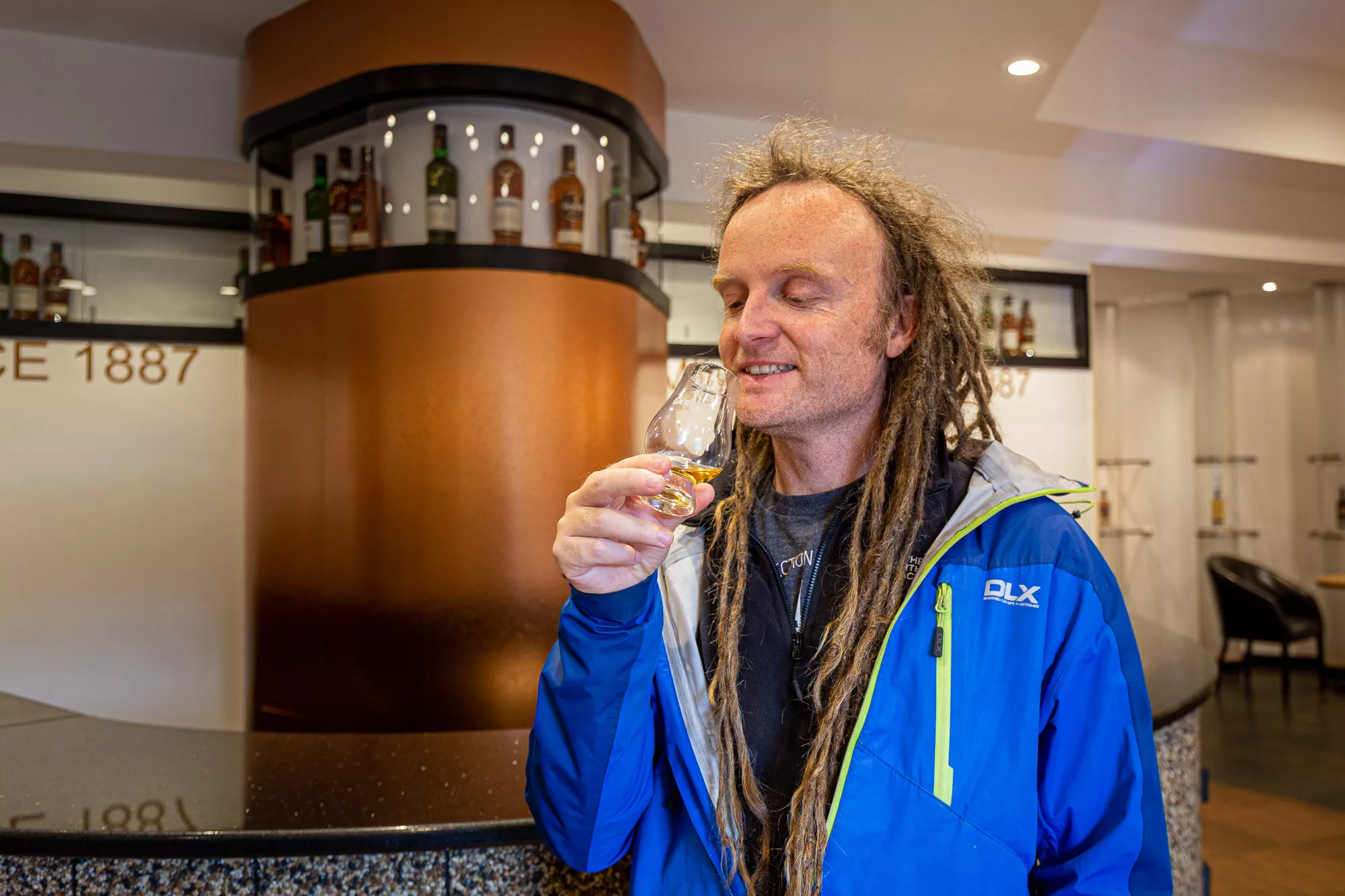
Table of Contents:
Which Distillery Should You Visit?
With over 140 distilleries to choose from, the biggest challenge is narrowing down which ones to visit. Here’s my honest advice based on years of visiting them.
If this is your first distillery tour and you want a solid introduction to whisky, the Scotch Whisky Experience in Edinburgh is a great starting point. It covers all five whisky regions and lets you taste the differences side by side, so you’ll know what you like before committing to a full distillery visit.
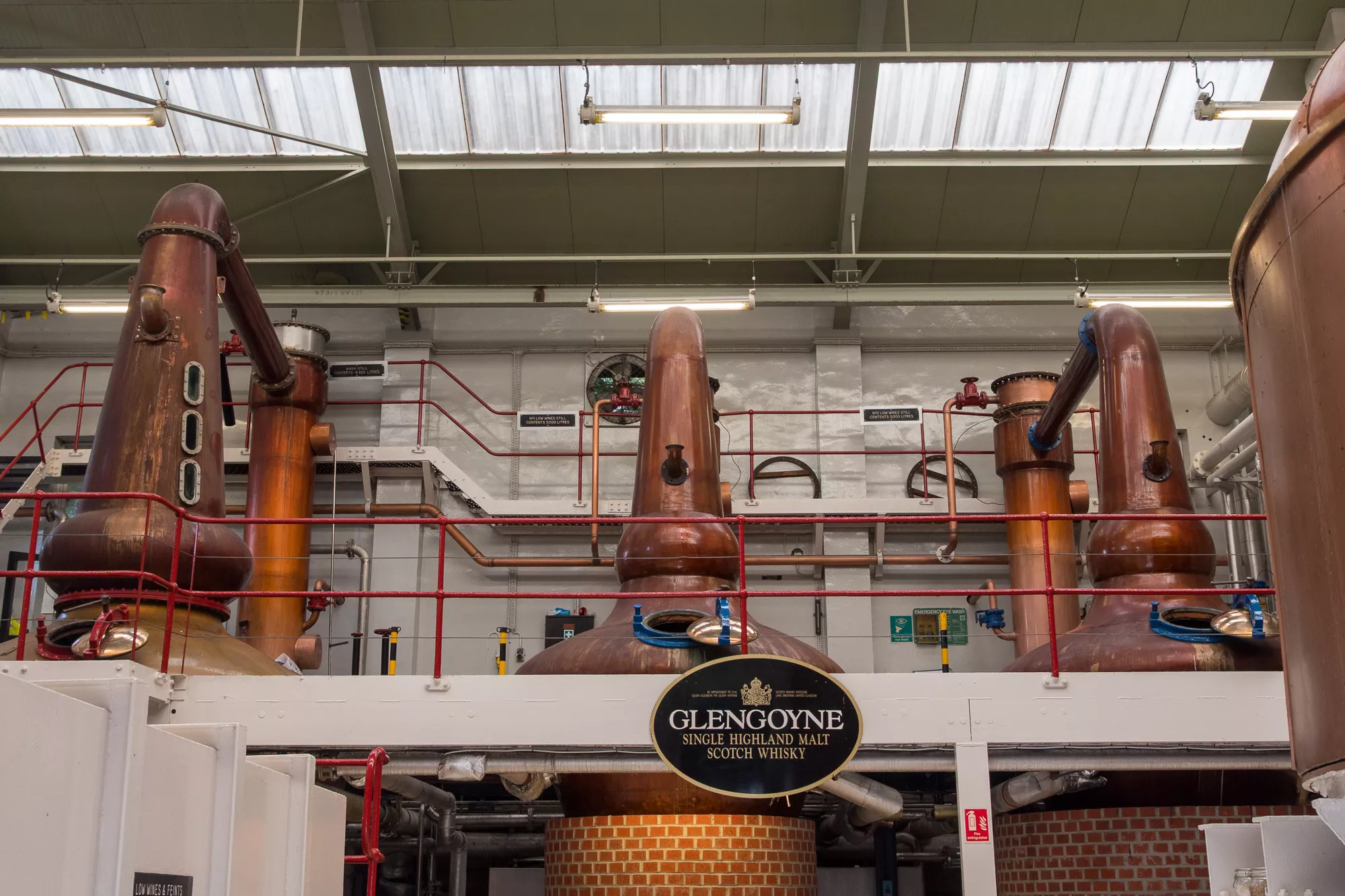
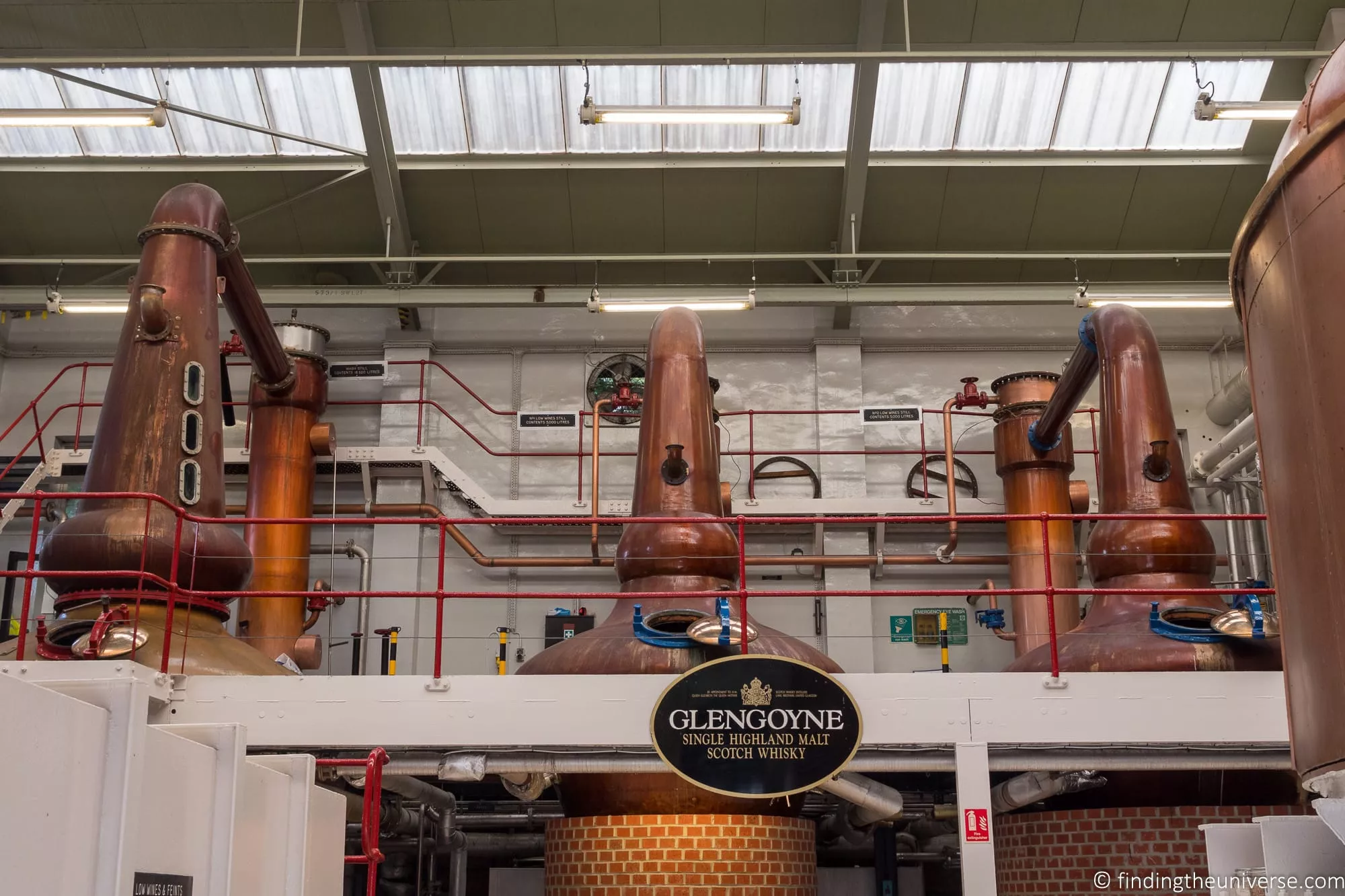
If you already know you love whisky and want to see a proper working distillery, Glenfiddich in Speyside and Glengoyne near Glasgow both run excellent tours. The Glenfiddich tour is particularly well done, and their tall, elegant stills are some of the most photogenic in Scotland.
If you love smoky, peated whisky, head to Islay. Laphroaig, Lagavulin, and Ardbeg are all within two miles of each other on the south coast and each offers a different take on peated whisky. The Laphroaig tour was a personal highlight for me. I could hold the malted grain in my hands, watch the peat being shovelled into the furnace, and smell the smoke drifting across the traditional malting floor. It was a really tactile experience that brings the whole process to life in a way that signs and diagrams simply don’t.
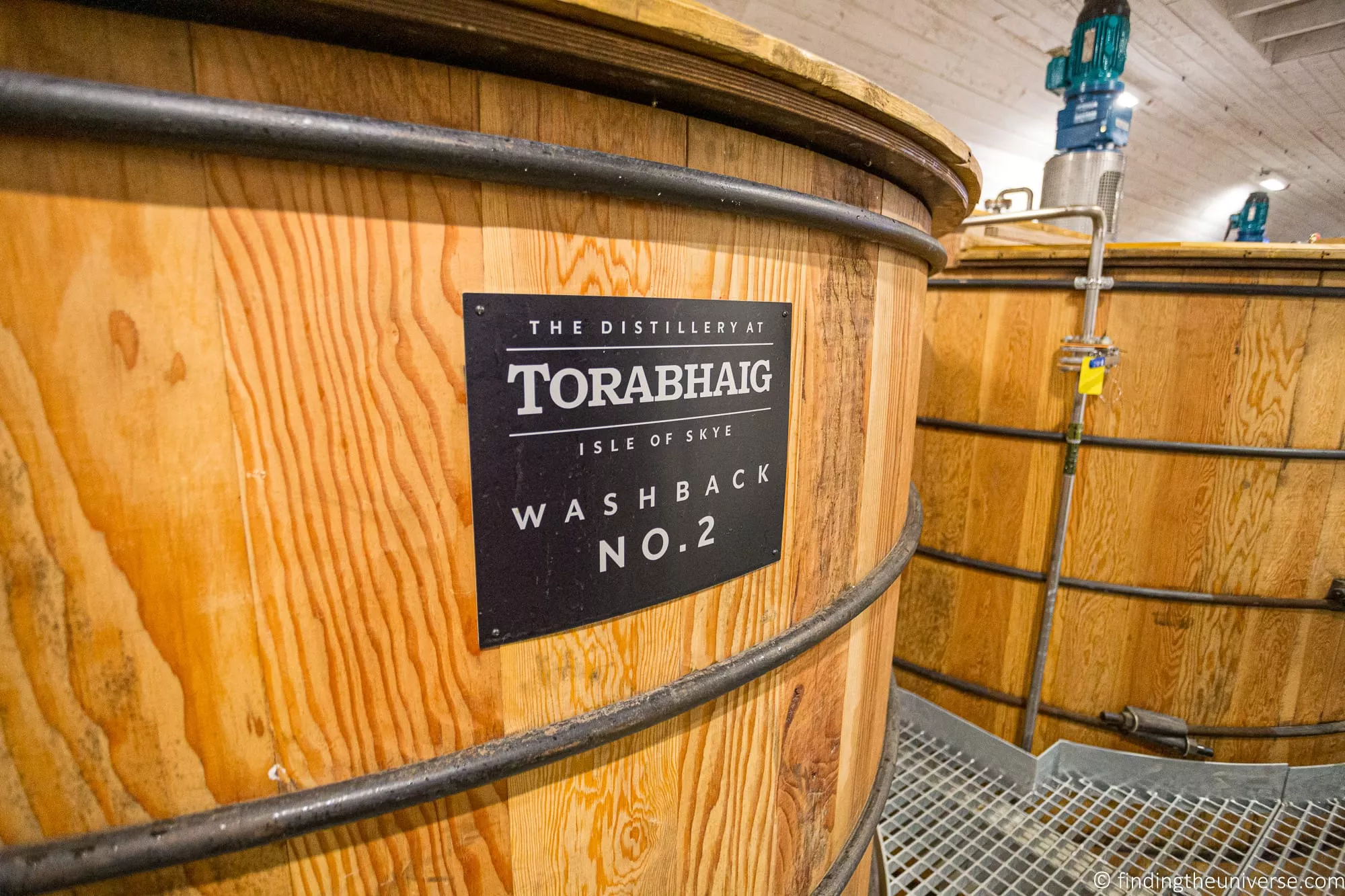
If you’re looking for something quieter and more personal, the smaller distilleries often give you the best experience. When we visited Jura, we basically had a private tour with just the two of us. Wolfburn in Thurso doesn’t have a formal visitor centre, but the hands-on tour is all the better for it. Torabhaig on Skye is another good option if you want to avoid the crowds at Talisker.
If you want great architecture alongside whisky, the Macallan’s visitor centre in Speyside (opened in 2019) is worth the trip for the building alone. The newly reopened Rosebank Distillery in Falkirk has also won architectural awards for its restoration.
If you don’t want to dedicate a full day to whisky, many of the general sightseeing tours around Scotland include a distillery stop as part of a broader itinerary. We’ve taken several Rabbie’s tours that include a distillery visit alongside castles, lochs, and other sightseeing. It’s a good way to dip your toe in without committing to a full whisky-focused day.
And honestly, we’ve never had a bad distillery tour. The people who work at these places love what they do, and that comes through in every visit.
A Quick Overview of Scottish Whisky
Scottish whisky (always spelt without an “e” in Scotland) is made from water and malted barley. For a whisky to be called Scotch, it has to be distilled in Scotland, matured in oak casks in Scotland for at least three years, and bottled at a minimum of 40% ABV. The Gaelic word for whisky is uisge beatha, meaning “water of life”.
The two main types you’ll encounter are single malt (made at a single distillery from malted barley) and blended (a mix of whiskies from different distilleries). Single malts get the attention, but blended whisky accounts for over 90% of all Scotch sold. Popular blends include Johnnie Walker, Chivas Regal, and Famous Grouse.
The process of making whisky involves five stages: malting (germinating barley to create sugars), mashing (extracting those sugars with hot water), fermentation (adding yeast to create alcohol), distillation (heating the liquid in copper pot stills to concentrate the alcohol), and maturation (ageing in oak casks for at least three years). If you want the full detail, the Scotch Whisky Association has an excellent overview, and any distillery tour will walk you through the whole process in person.
Scotland’s Five Whisky Regions
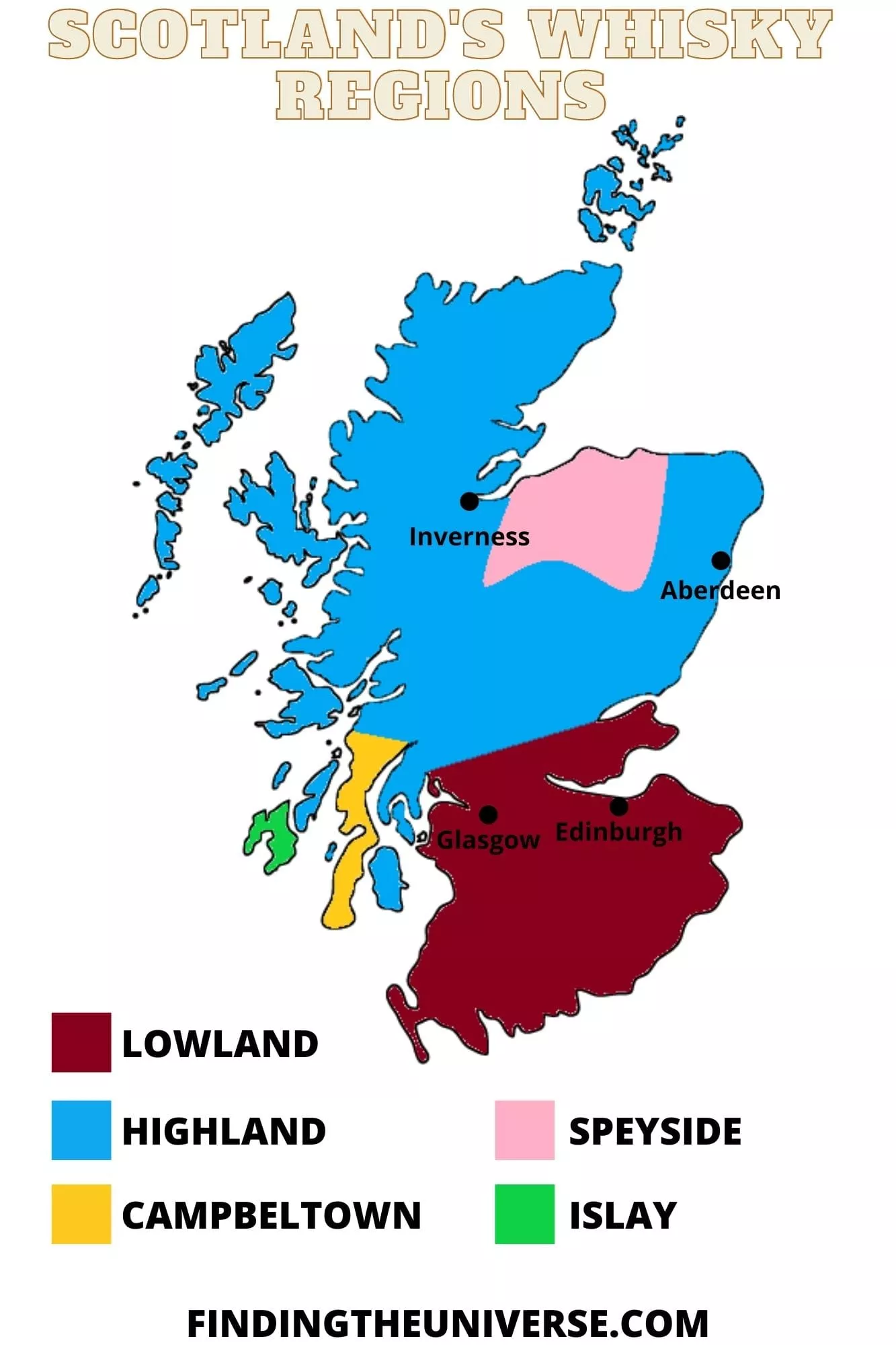
Scotland has five official whisky-producing regions, each with its own character. Here’s a quick guide to help you decide which region’s whisky might suit you.
The Lowlands (Edinburgh, Glasgow, southern Scotland) produce light, floral, and sweet whiskies. If you’re new to whisky, this is a good place to start. Key distilleries include Auchentoshan, Glenkinchie, and the recently reopened Rosebank.
Speyside (northeast Scotland, between Aberdeen and Inverness) is home to more than 50 distilleries, nearly half of all Scotland’s production. Speyside whiskies tend to be lighter and sweeter, with notes of fruit, caramel, and vanilla. Big names here include Glenfiddich, The Macallan, and The Glenlivet.
The Highlands (the entire northern half of Scotland, plus the islands except Islay) is the largest and most diverse region. Highland whiskies range widely, from fruity and sweet to smoky and robust. Distilleries include Glenmorangie, Oban, Dalwhinnie, and Talisker on Skye.
Campbeltown (on the Kintyre Peninsula) was once home to over 30 distilleries and was called the whisky capital of Scotland. Only three survive: Springbank, Glengyle, and Glen Scotia. Campbeltown whisky has a distinctive mix of fruity, peaty, and smoky notes.
Islay (a small island off the west coast) is famous for heavily peated, smoky whiskies. My favourite region. There are nine distilleries here, including Laphroaig, Lagavulin, Ardbeg, and Bowmore. The sea air, peat bogs, and coastal location all contribute to the distinctive Islay flavour. It’s divisive, but if you like smoky flavours, there’s nothing else quite like it.
How to Visit Whisky Distilleries in Scotland
Before I get into specific distilleries, some practical advice on visiting them.
Driving
Most distilleries are in rural locations, so driving is often the most practical option. If you’re hiring a car, we use and recommend Discover Cars, who search multiple providers so you can compare prices.
The downside of driving is that you can’t do the tastings (Scottish drink-driving laws are strict). The good news is that almost every distillery will let drivers take their tasting samples away in small bottles to enjoy later. So it’s still worthwhile.
Public Transport
Some distilleries are reachable by train. Blair Athol is near Pitlochry station (under 2 hours from Edinburgh), Dalwhinnie has its own station, Auchentoshan is near Kilpatrick station (30 minutes from Glasgow), and Glen Ord is near Muir of Ord station (20 minutes from Inverness). For timetables and tickets, we recommend the Trainline for trains and Traveline Scotland for buses.
That said, for most distilleries, you’ll have a better time on a guided tour.
Guided Tours
This is our preferred option. Someone else handles the transport, you get a knowledgeable guide, and you can actually drink the whisky when it’s served to you. We’ve taken several guided tours to distilleries, including this excellent day trip from Edinburgh which visits Glengoyne and Deanston distilleries along with Loch Lomond.
Our favourite small group tour operator in Scotland is Rabbie’s, who run a wide range of tours including whisky-specific tours. We also find that many of their general Highland and island tours include a distillery stop, which is a good option if you want whisky as part of a broader day out rather than the sole focus.
I’ll include specific tour recommendations in each section below.
Whisky Distillery Tours and Tastings
Here are some suggested tours to consider. I’ve organised these by departure city and trip length, starting with day trips and then multi-day options.
Day Tours from Edinburgh
- Discover Malt Whisky Day Tour (Rabbie’s) visits Glengoyne Distillery, Loch Lomond, and Deanston Distillery. This is the tour we took, and we’d recommend it as a great introduction. You visit two working distilleries with tastings at both.
- Monarchs, Mountains and Malt Tour visits Glengoyne Distillery, Loch Lomond, and Stirling Castle.
- Highland Lochs, Glens and Whisky Tour (Rabbie’s) visits Aberfeldy Distillery along with Dunkeld, Pitlochry, and Loch Tay.
- Scottish Highlands and Whisky Tour visits Dewar’s Aberfeldy Distillery along with the Kelpies, the Hermitage, and Dunkeld.
Day Tours from Inverness
- Spirit of Speyside Whisky Tour (Rabbie’s) visits Speyside distilleries including Benromach and Glenfiddich.
- Cairngorms and Whisky Tour (Rabbie’s) visits Tomatin Distillery along with Loch Morlich and the Cairngorms National Park.
- Loch Ness, Outlander and Whisky Tour visits Glen Ord Distillery on the Black Isle along with Loch Ness, Urquhart Castle, Culloden Battlefield, and Clava Cairns.
Day Tours from Glasgow
- Clydeside Distillery Tour and Tasting is an easy in-city option with great views over the River Clyde.
- Glengoyne Distillery Tour with Whisky and Chocolate is a 90-minute experience at one of our favourite distilleries, just 40 minutes from Glasgow.
- Stirling Castle, Loch Lomond and Whisky Tour combines Glengoyne Distillery with Stirling Castle and a walk in the Highlands.
Multi-Day Whisky Tours
If you want a more thorough immersion into Scottish whisky, a multi-day tour lets you cover more distilleries and see more of the country.
- Speyside Whisky Trail 3-Day Tour (Rabbie’s, from Edinburgh) covers the heart of Speyside whisky country along with other Highland sights.
- Islay and the Whisky Coast 4-Day Tour (Rabbie’s, from Edinburgh) takes in the Islay distilleries along with Oban, Loch Lomond, and parts of the Highlands.
- Speyside Whisky Trail 3-Day Tour (from Edinburgh) includes distillery visits, Dalwhinnie, and the Cairngorms National Park.
- Islay and the Whisky Coast 4-Day Tour covers most of Islay’s distilleries.
- West Coast Explorer 8-Day Tour (Rabbie’s, from Edinburgh) covers Skye, Mull, Iona, and the whisky of Islay.
One thing to note with all tours: schedules can change due to distillery operations or seasonal factors. If you’re booking a tour because you want to visit a specific distillery, it’s worth confirming that distillery is on the itinerary before you book.
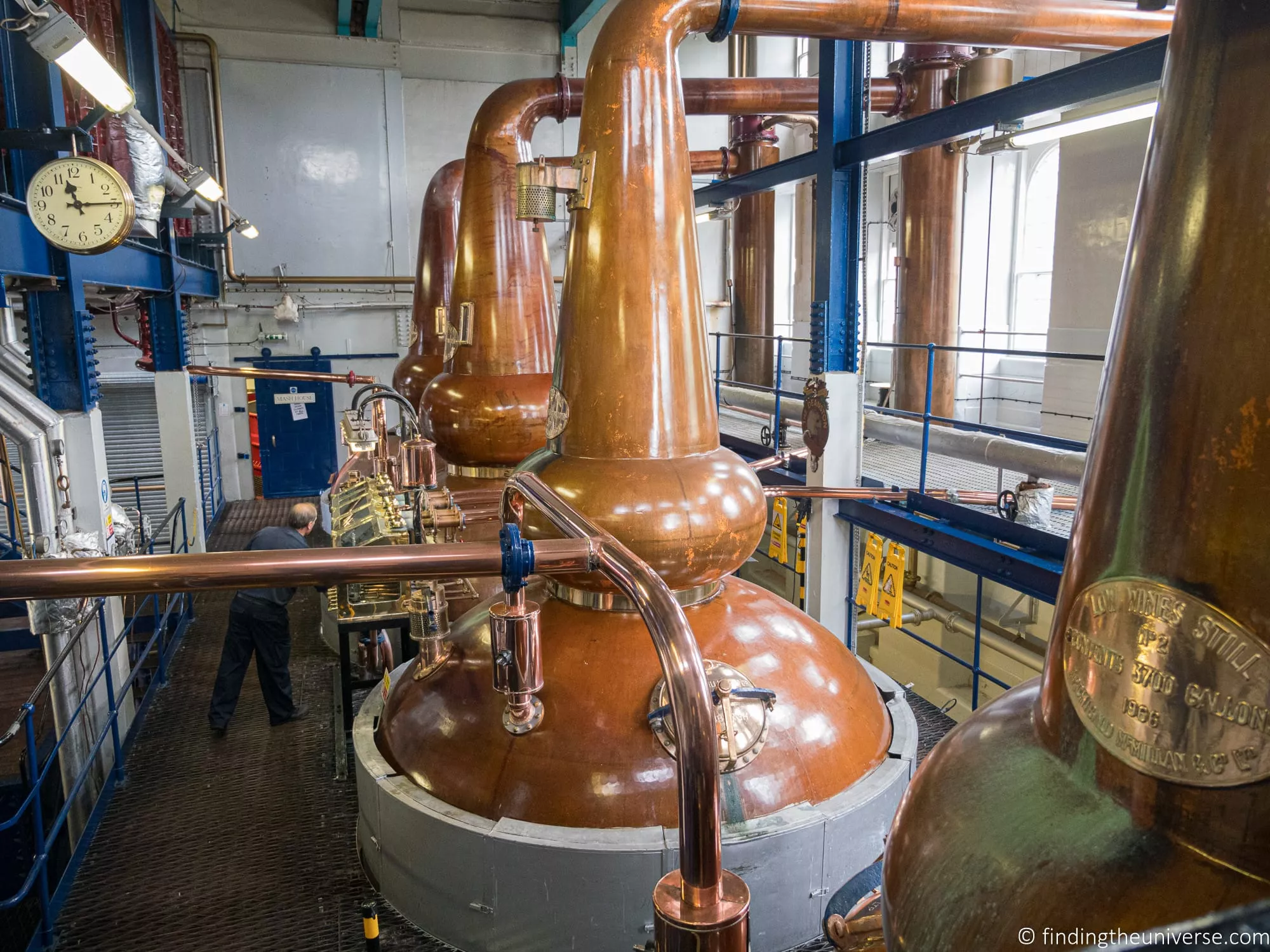
Whisky Distilleries You Can Visit in Scotland
Here are the distilleries I’d recommend visiting, organised by where you’re likely to be based in Scotland. For each one I’ve visited, I’ve included my personal take on the experience.
Edinburgh and the Lowlands
Edinburgh itself doesn’t have many whisky distilleries, but it has two excellent whisky experiences in the city centre, plus several distilleries within easy day trip distance.
In the city, the Scotch Whisky Experience is a great first stop on any whisky tour of Scotland. It isn’t tied to a particular brand, and the interactive visit covers all the regions and flavour profiles. There’s an excellent tasting session and the world’s largest collection of Scotch whisky. We’ve visited and really enjoyed it.
The Johnnie Walker Princes Street venue (opened 2021) is more focused on the Johnnie Walker brand, but it’s a slick, modern experience with plenty of whisky to try. If you’re a fan of blended Scotch, this one is worth a visit. I actually really enjoyed doing this tour and it gave me a new founded appreciation for Johnnie Walker as well.
The Holyrood Distillery is Edinburgh’s only working distillery, opened in 2019 in a converted railway goods shed, about 10 minutes’ walk from the city centre. Their whisky is still relatively young, but you can tour the distillery and learn about the process.
I’d personally also flag Edinburgh Airport as a whisky experience in itself. The selection of whiskies available for tasting (yes, even at 6am) is excellent, and we always try something new before a flight. And yes, the staff always take it as a personal challenge to find the single malt Jess will finally enjoy. No dice so far.
For day trips from Edinburgh, here are the distilleries I’d recommend:
Glengoyne Distillery is around 90 minutes west of Edinburgh and sits right on the boundary between the Highlands and Lowlands. They produce an unpeated Highland single malt using traditional methods, distilled more slowly than any other distillery in Scotland. We visited on a Rabbie’s tour and it was a highlight, the same operator we used for our five-day Highlands and Skye tour. The setting is beautiful and the tour is pretty well run. You can visit on this tour or this tour from Edinburgh.
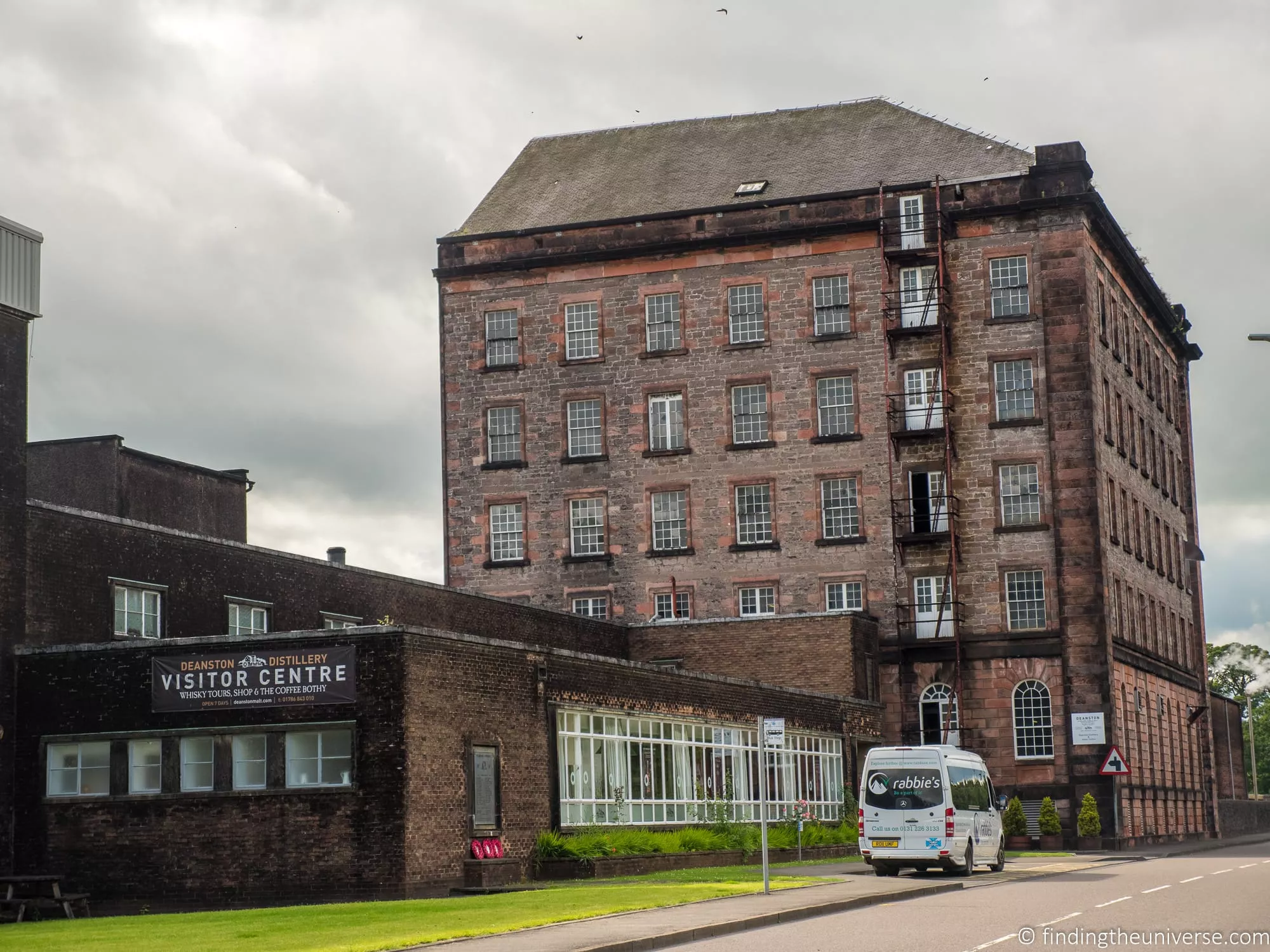
Deanston Distillery is about an hour northwest of Edinburgh in the town of Doune, in a converted cotton mill on the banks of the River Teith. We also visited this on the same Rabbie’s tour and enjoyed it. The contrast with Glengoyne is interesting: different building, different approach, different flavours from the same Highland region. You can visit it on this tour from Edinburgh.
Aberfeldy Distillery is under two hours north of Edinburgh and was recently named “Highly Commended” for Visitor Attraction of the Year at the 2026 Icons of Whisky Awards. Founded in 1896, it produces a range of Highland single malts and has an excellent interactive heritage centre. You can visit on this tour from Edinburgh.
The Glenturret Distillery is about 90 minutes northwest of Edinburgh and is one of the oldest distilleries in Scotland (founded 1775). Surrounded by beautiful landscapes, it produces a range of Highland single malts. You’ll need your own transport or a private tour to visit.
Glenkinchie Distillery is only 35 minutes southeast of Edinburgh and is the closest Lowland distillery to the city. It also makes a natural pairing with a day out at the Scottish Seabird Centre and North Berwick’s puffin-watching boat trips, a short drive further along the East Lothian coast. It’s also branded as the home of Johnnie Walker, so fans of that blended Scotch will definitely want to visit. You can go on this tour from Edinburgh which also visits Rosslyn Chapel and the Scottish Borders.
Rosebank Distillery in Falkirk reopened to visitors in June 2024 after 30 years of closure and was named Whisky Tourism Destination of the Year 2025 at the Scottish Whisky Awards. Known as the “King of the Lowlands”, Rosebank produces a distinctive triple-distilled Lowland whisky. The restoration is impressive, combining original features with contemporary design. Tours start from £25. Falkirk is around 30 minutes from Edinburgh by car or train.
For more inspiration for your visit to the city, see our guide to things to do in Edinburgh and our 2-day Edinburgh itinerary, as well as our favourite day trips from Edinburgh.
Glasgow
Glasgow was once home to over 100 whisky distilleries. Today only two operate within the city, but both are open for visitors, and several more are within easy reach.
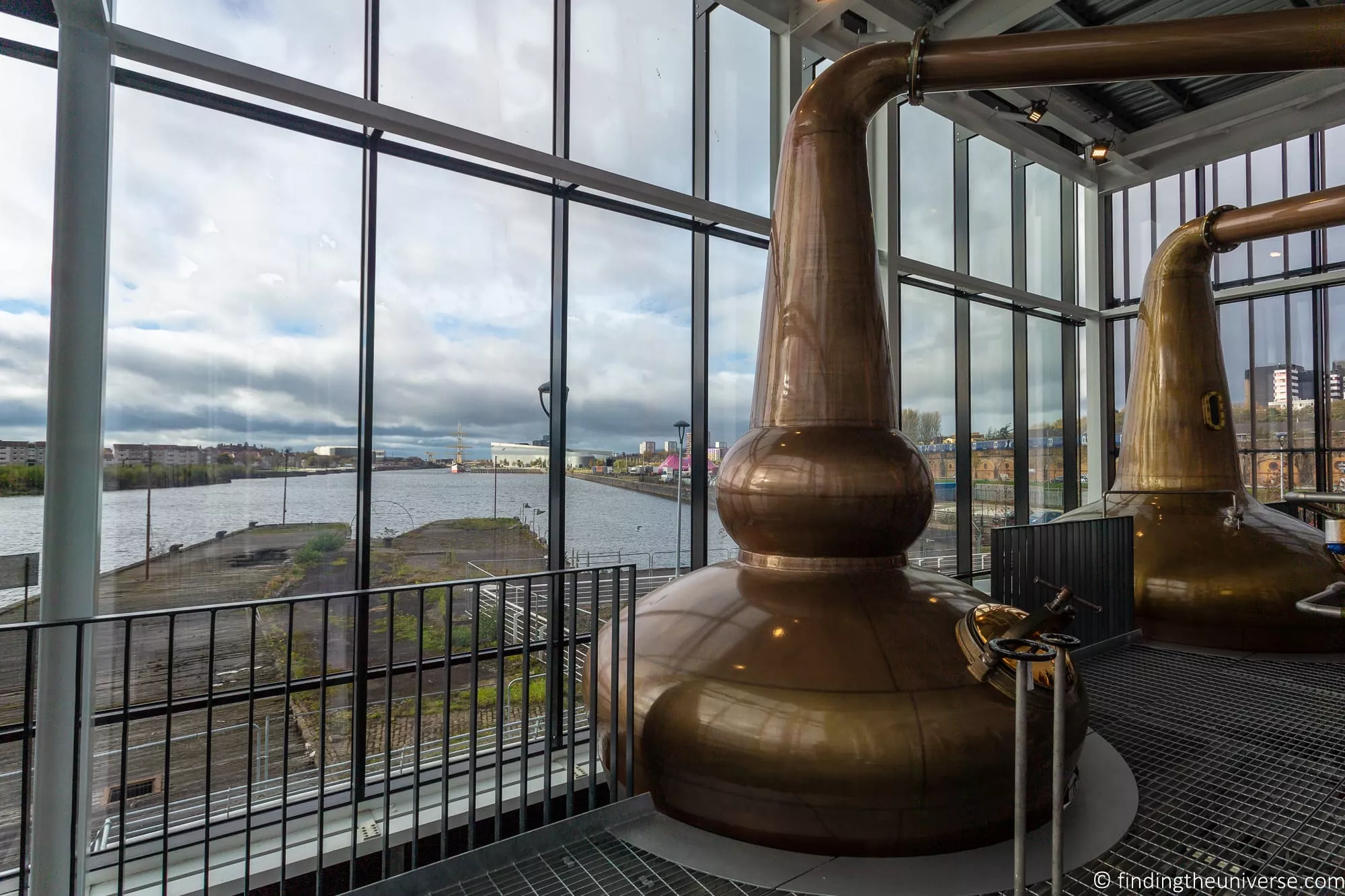
The Clydeside Distillery is Glasgow’s standout whisky experience. It opened in 2018 in a restored Victorian pumphouse on the banks of the River Clyde, and the views from the still house across the river are worth the visit alone. The tour is a fantastic introduction to all the Scottish whisky regions, not just their own. This is easy to get to from the city centre on foot or on Glasgow’s Hop on Hop off bus.
Glasgow Distillery opened in 2014 as the first independent single malt whisky distillery to operate in Glasgow for over 100 years. They also produce gin and vodka. Tours are offered but not as regularly, so check ahead. It’s about 40 minutes by public transport west of the city centre.
Auchentoshan Distillery is about ten miles west of Glasgow and has been producing whisky since 1823. It’s the only distillery in Scotland that triple-distils everything, giving it a smoother, more delicate flavour than most. It’s reachable by public transport or car from Glasgow.
You can also easily visit Glengoyne and Deanston from Glasgow (both mentioned in the Edinburgh section above). Tullibardine Distillery, about 45 minutes northeast of Glasgow, is another option. Founded in 1949, it produces Highland single malts and is open for tours.
Stirling Distillery is a newer addition, and was named a winner at the World Whiskies Awards Scotland 2025. If you’re passing through Stirling between Glasgow and the Highlands, it’s worth a stop.
For more Glasgow inspiration, see our guide to things to do in Glasgow and our guide to day trips from Glasgow.
Aberdeen and Speyside
Aberdeen is the natural base for Speyside, Scotland’s most famous whisky-producing region. With over 50 distilleries within a couple of hours’ drive, you’re spoilt for choice.
Glen Garioch Distillery is the most easterly of all the Scottish distilleries and the closest to Aberdeen at just 30 minutes’ drive. It has been producing Highland single malt since 1797 and is open for tours and tastings.
Strathisla Distillery in Keith was established in 1786 and is the oldest continuously operating distillery in the Scottish Highlands. It produces a Highland single malt and is also regarded as the home of Chivas Regal.
The Macallan Distillery has been distilling Speyside whisky since 1824. The spectacular visitor centre (opened 2018) is a destination in itself, with a wave-like roof that blends into the surrounding landscape. It’s open for tours and tastings.
Cardhu Distillery has been producing Speyside single malts since 1824 and was the first distillery bought by the Johnnie Walker company. It’s open for tours and tastings.
The Glenlivet Distillery has been operating since 1824 and is the most popular single malt whisky in the USA. Open for tours and tastings.
Glenfarclas Distillery is one of the few remaining independent, family-owned distilleries in Scotland and produces a range of heavily sherried single malts. If you appreciate a more intimate, personal tour experience, Glenfarclas is worth seeking out.
The Balvenie Distillery in Dufftown is known for having some of the best whisky tastings in Scotland. It’s one of the few distilleries that still has its own malting floor and cooperage. Tours are very popular and book out well in advance, so plan ahead.
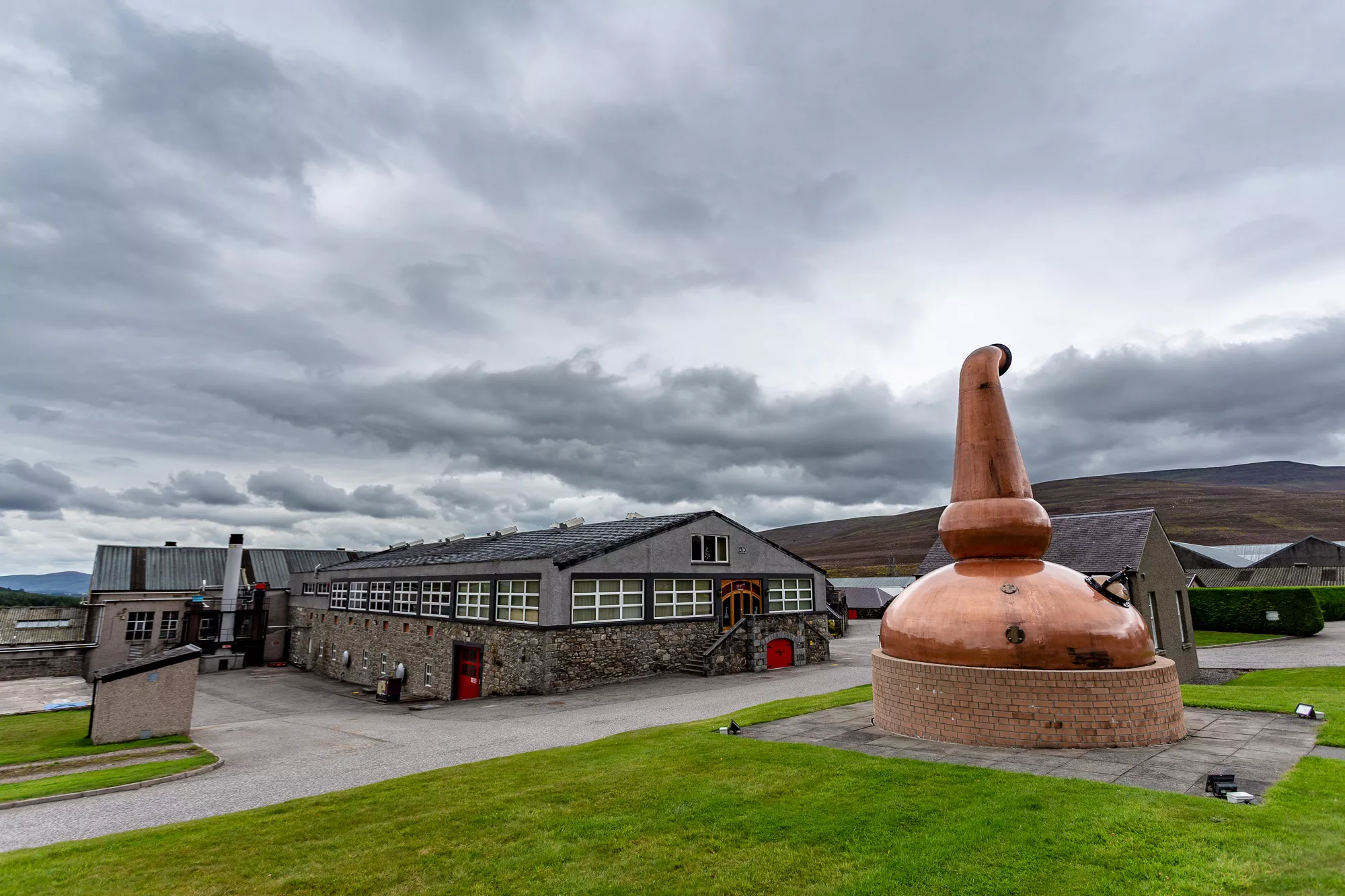
We’d also recommend visiting the Speyside Cooperage while you’re in the area, where you can learn about the art of barrel restoration. It’s a key part of the whisky-making process and fascinating to watch.
If you’re doing the North East 250 driving route from Aberdeen, you’ll pass through Speyside and have plenty of distillery options. If you’d prefer a dedicated trail, the Malt Whisky Trail links several Speyside distilleries and the cooperage into a self-drive route.
For more on the area, see our guide to things to do in Aberdeen, our favourite restaurants in Aberdeen, and our day trips from Aberdeen.
Inverness and the Highlands
Inverness is the capital of the Highlands and is close to a huge number of whisky distilleries in both the Highland and Speyside regions. Of all the cities in this guide, Inverness probably has the most distilleries within striking distance.
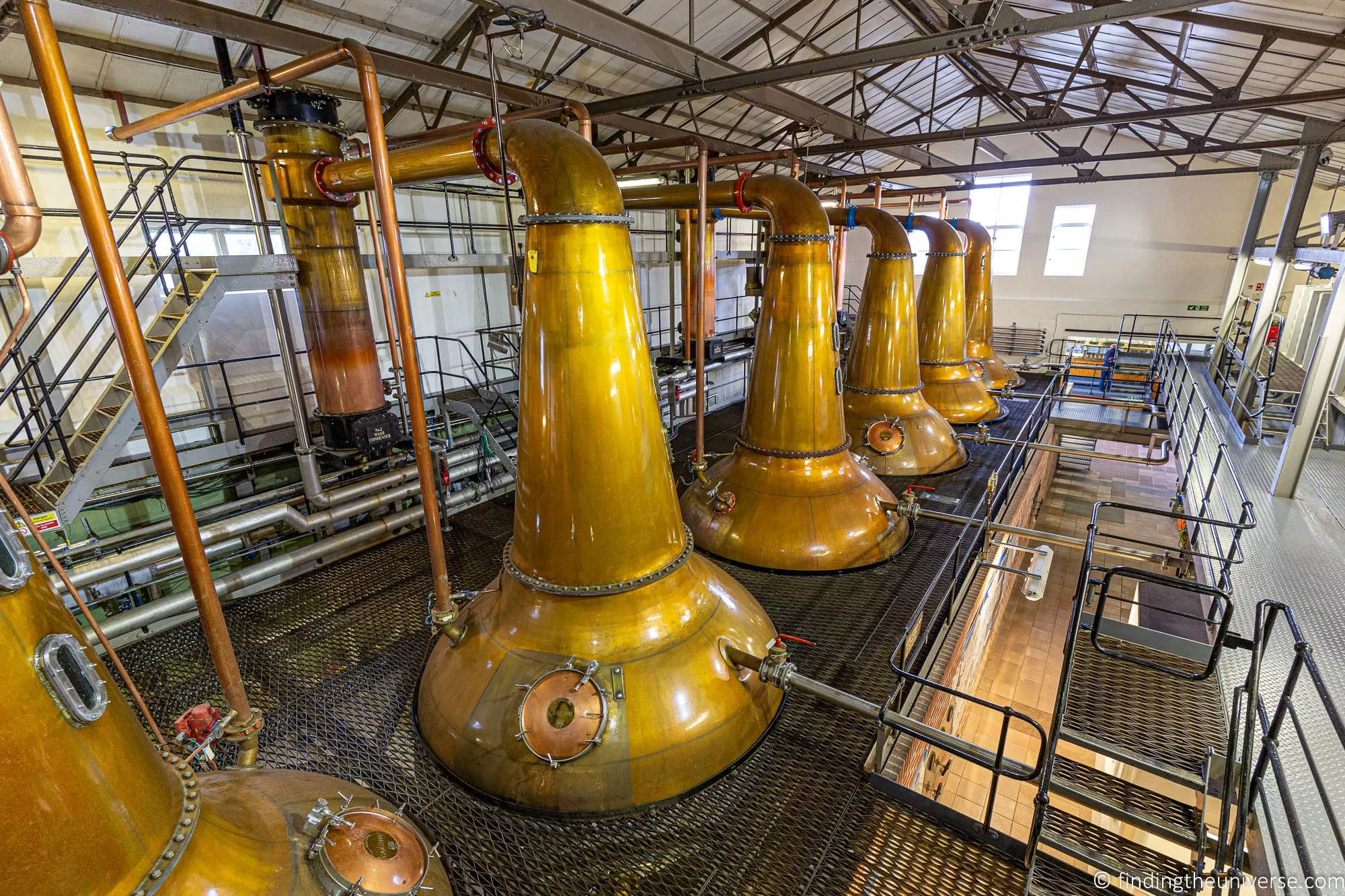
Glenfiddich Distillery in Speyside produces the world’s most popular single malt whisky and is on most visitors’ wish lists. The tour here was one of the best we’ve done. It’s thorough and well-paced, and I found their tall, long-necked stills particularly photogenic.
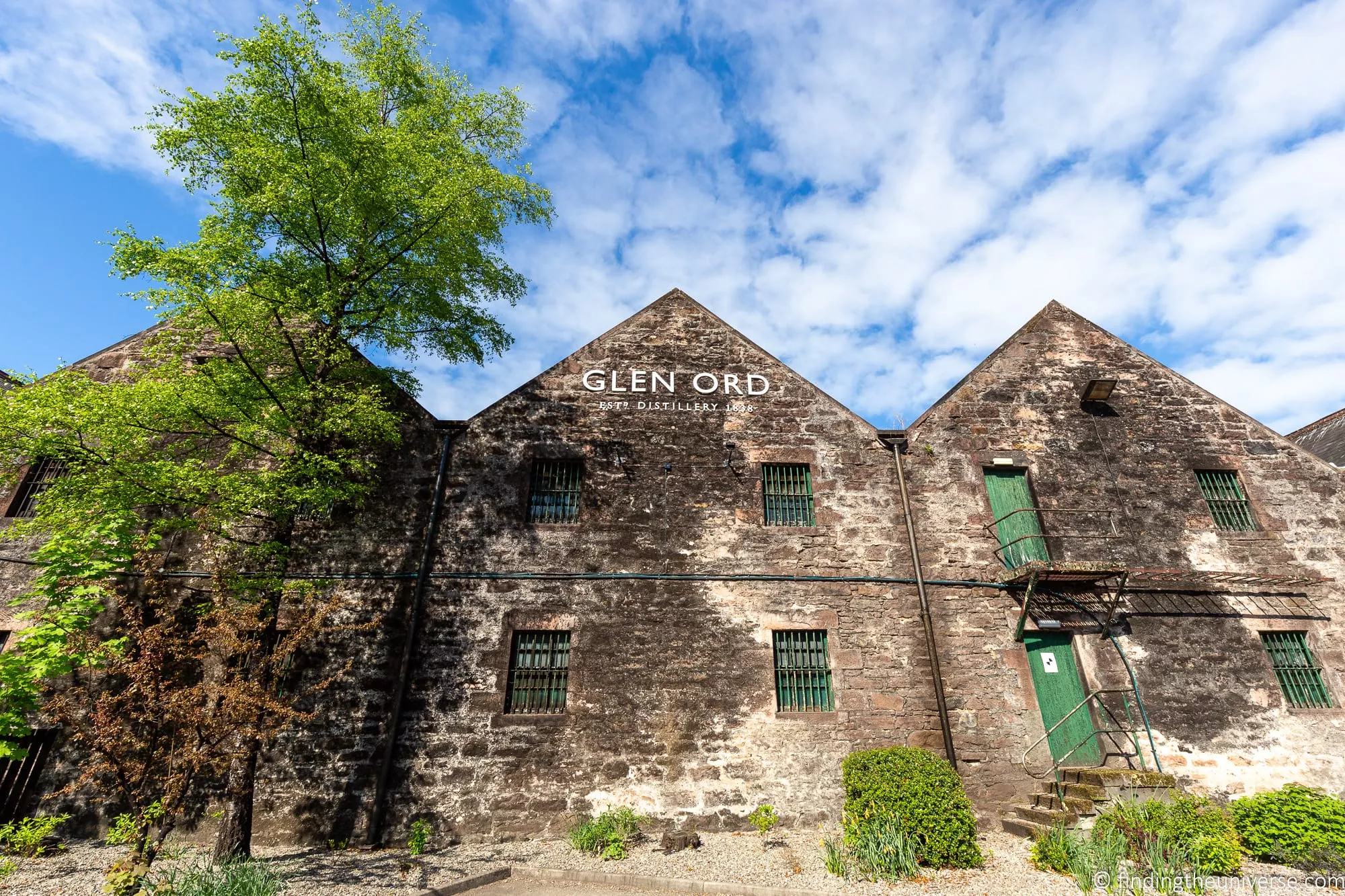
Glen Ord Distillery is the only distillery on the Black Isle and has been producing whisky since 1838. They produce the popular Singleton brand of single malts. We’ve visited several times and it’s a pretty solid, well-run tour.
Dalmore Distillery is about 30 minutes’ drive from Inverness and has been producing Highland single malt since 1839. The distillery reopened to visitors in April 2026 as a fully reimagined brand home, with private bespoke tours and curated tastings from the Principal Collection and Distillery Select.
Tomatin Distillery is 25 minutes south of Inverness, and it’s believed that whisky has been distilled on this location since the 16th century. The distillery was formally founded in 1897 and is open for tours and tastings.
Dalwhinnie Distillery is about an hour south of Inverness up in the Scottish Highlands and is the highest distillery in Scotland that you can visit. We’ve been there a few times, and the mountain setting is spectacular. It’s also accessible by train.
Dallas Dhu Distillery was a working distillery from 1899 until 1983 and is now a museum dedicated to the craft, history, and traditions of Scottish whisky making. Good for anyone interested in the history side of things.
Oban Distillery is a bit further afield (about 2 hours west of Inverness, or 3 hours from Glasgow by train) but is one of the oldest in Scotland, founded in 1794. The town of Oban actually grew up around the distillery. We stopped at the bar when we were waiting for a ferry, which wasn’t quite enough time for a full tour, but the whisky was excellent.
Edradour Distillery near Pitlochry is known as the smallest traditional distillery in Scotland. Dating from 1825, it has a colourful history (at one point it was controlled by an agent for a New York Mafia godfather!) and produces over 25 expressions of Highland single malt.
There’s also plenty to do in and around Inverness beyond whisky. See our guide to things to do in Inverness, day trips from Inverness and our guide to visiting Loch Ness.
The North Coast 500
The NC500 is one of Scotland’s most famous driving routes, and there are several whisky distilleries along the way, mainly along the east coast between Inverness and Thurso. If you’re planning to camp the full route, our NC500 campsites guide covers the best sites at each section. I’ve visited all of the ones open to the public.
We have a complete guide to whisky distilleries on the North Coast 500 with full details on each one. Here are the highlights:
Glenmorangie Distillery is about 45 minutes north of Inverness and produces one of the world’s most popular single malt whiskies. They have the tallest stills in Scotland, and tours and tastings are available.
Clynelish Distillery, near Brora, has an enormous amount of whisky history. The neighbouring Brora distillery (some of the rarest whisky in the world) reopened in 2021 and offers appointment-only tours from £225. There’s a lot of whisky heritage packed into this one location.
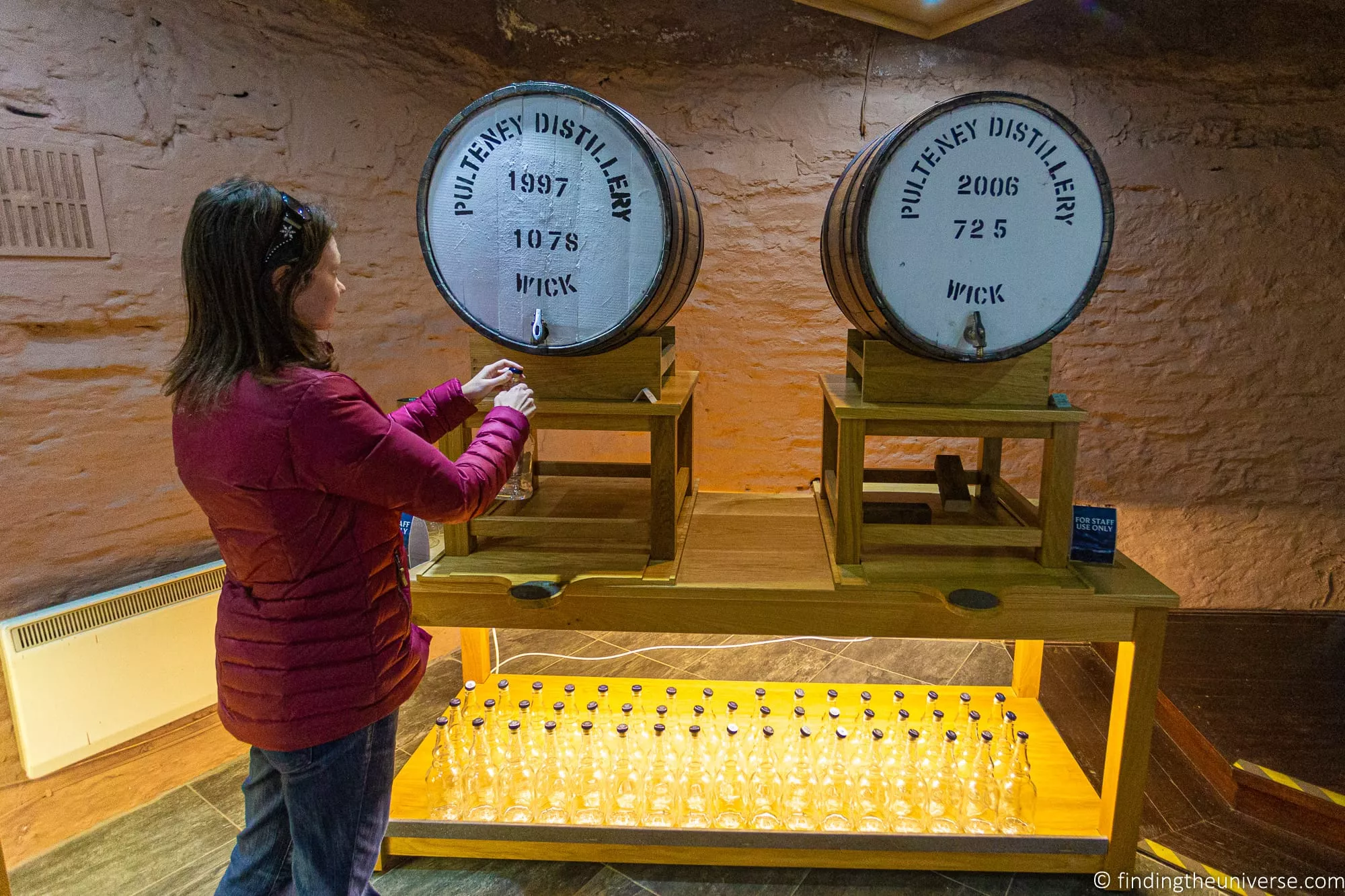
Pulteney Distillery in Wick has been producing Old Pulteney since 1826 and has a full visitor experience with a wide range of whiskies to taste.
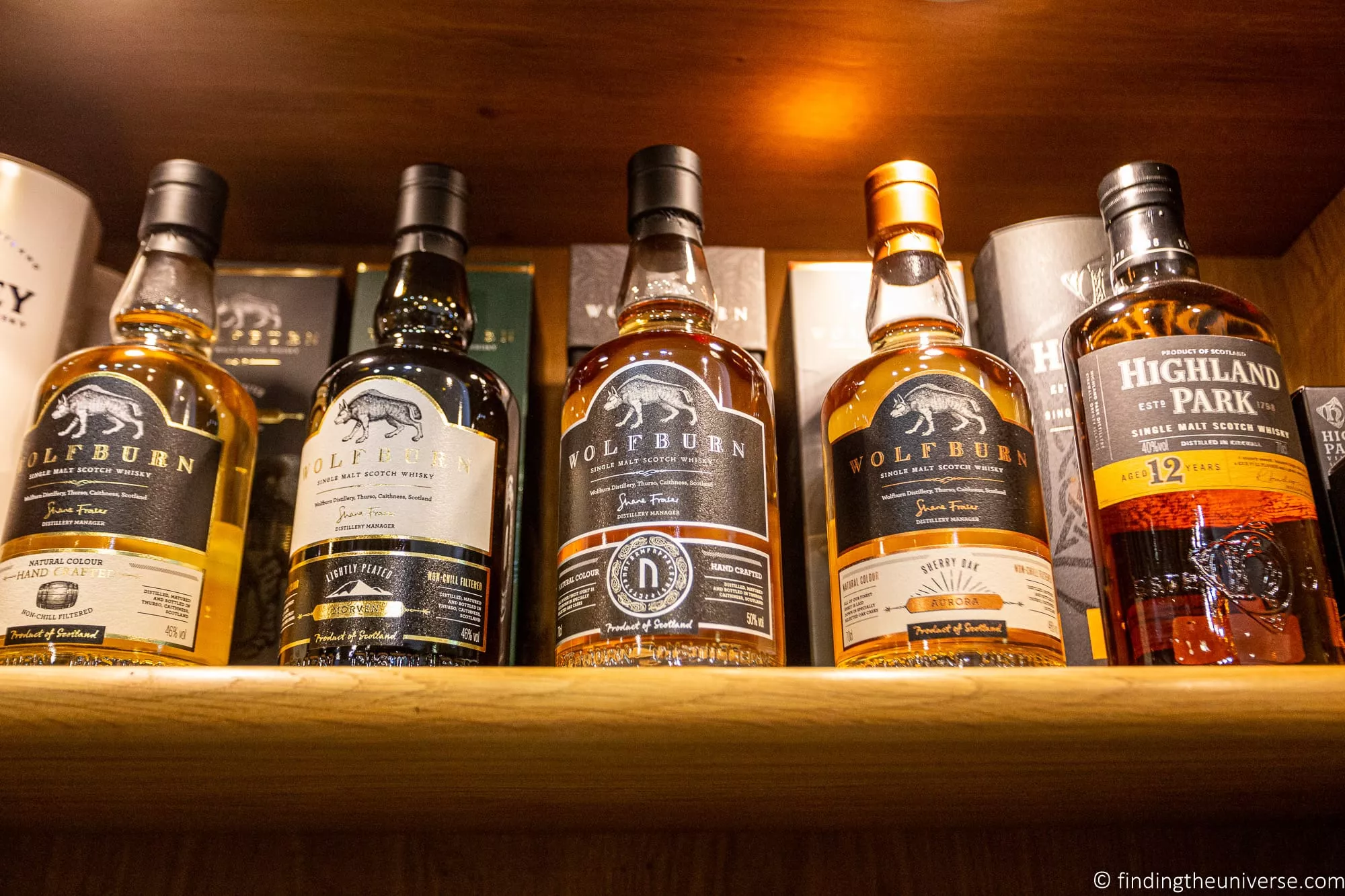
Wolfburn Distillery in Thurso is the most northerly distillery on mainland Scotland. They don’t have a formal visitor centre, but that’s part of the charm. The hands-on tour gives you a proper feel for how a small distillery operates.
Stannergill Distillery is the newest addition to the NC500 whisky scene, opened in November 2025 in a restored 200-year-old mill in Castletown (between Thurso and John O’Groats). It’s from the same team behind Rock Rose gin at Dunnet Bay Distillery. Tours are now running, with two daily slots (11am and 2pm) from Tuesday to Sunday between June and October. They cost £25 per person and last around an hour and a half. The shop and café are also open Thursday to Sunday.
GlenWyvis Distillery in Dingwall, half an hour from Inverness, is Scotland’s first community-owned distillery. They produce both whisky and gin using 100% renewable energy, and guided tours are available.
For more on the NC500, see our 5-day NC500 itinerary, our 7-day NC500 camping itinerary, and our NC500 photography locations guide. There’s also a detailed NC500 planning guide on ITC.
Isle of Skye
Skye is the most visited of the Scottish islands, famed for its beautiful landscapes, and it’s also home to a couple of whisky distilleries.
Talisker Distillery was founded in 1830 and is tucked away on a bay on the west side of the island. They make a wide range of Highland single malts known for their smoky, maritime character. It’s Skye’s most well-known distillery by far, and tours and tastings are available. It sits at Carbost, well off the main Skye touring route, so most day tours from Inverness don’t stop here and you’ll want your own transport. Book ahead during busy months.
Torabhaig Distillery started distilling in 2017 and is Skye’s other working distillery. It’s a good alternative if you want a quieter, less crowded experience. Open for tours and tastings.
If you’d prefer to escape the crowds of Skye, take the 20-minute ferry to the Isle of Raasay. As well as having a more peaceful feel, whisky lovers will be pleased to hear Raasay now has its own distillery, the Isle of Raasay Distillery. It started distilling in 2017 and is open for tours and tastings. They also have some lovely ensuite rooms if you want to stay overnight.
For more on Skye, see our guide to escaping the crowds on the Isle of Skye and our 5-day Scottish Highlands and Isle of Skye itinerary.
Islay
For a small island, Islay has an extraordinary concentration of whisky distilleries. At its peak there were 23 distillers here. Today there are nine active distilleries, and the island forms its own whisky region.
Islay whisky is famous for being heavily peated and smoky. It’s my favourite style, and Islay is one of my favourite places in Scotland. But not all Islay whiskies are quite so intense, so even if you’re not sure about peated whisky, you’ll find something to suit.
Laphroaig Distillery is where my favourite whisky is made, and the tour was one of the best I’ve done anywhere. Established in 1815, Laphroaig is one of the few distilleries that still has a working malting floor. I loved watching the peat being fired in the furnace, holding the malted grain in my hands, and breathing in that thick peaty smoke. The smell of a Laphroaig warehouse, that first hit of peat and sea air, is something you don’t forget. Make sure to sign up as a “Friend of Laphroaig” while you’re there.
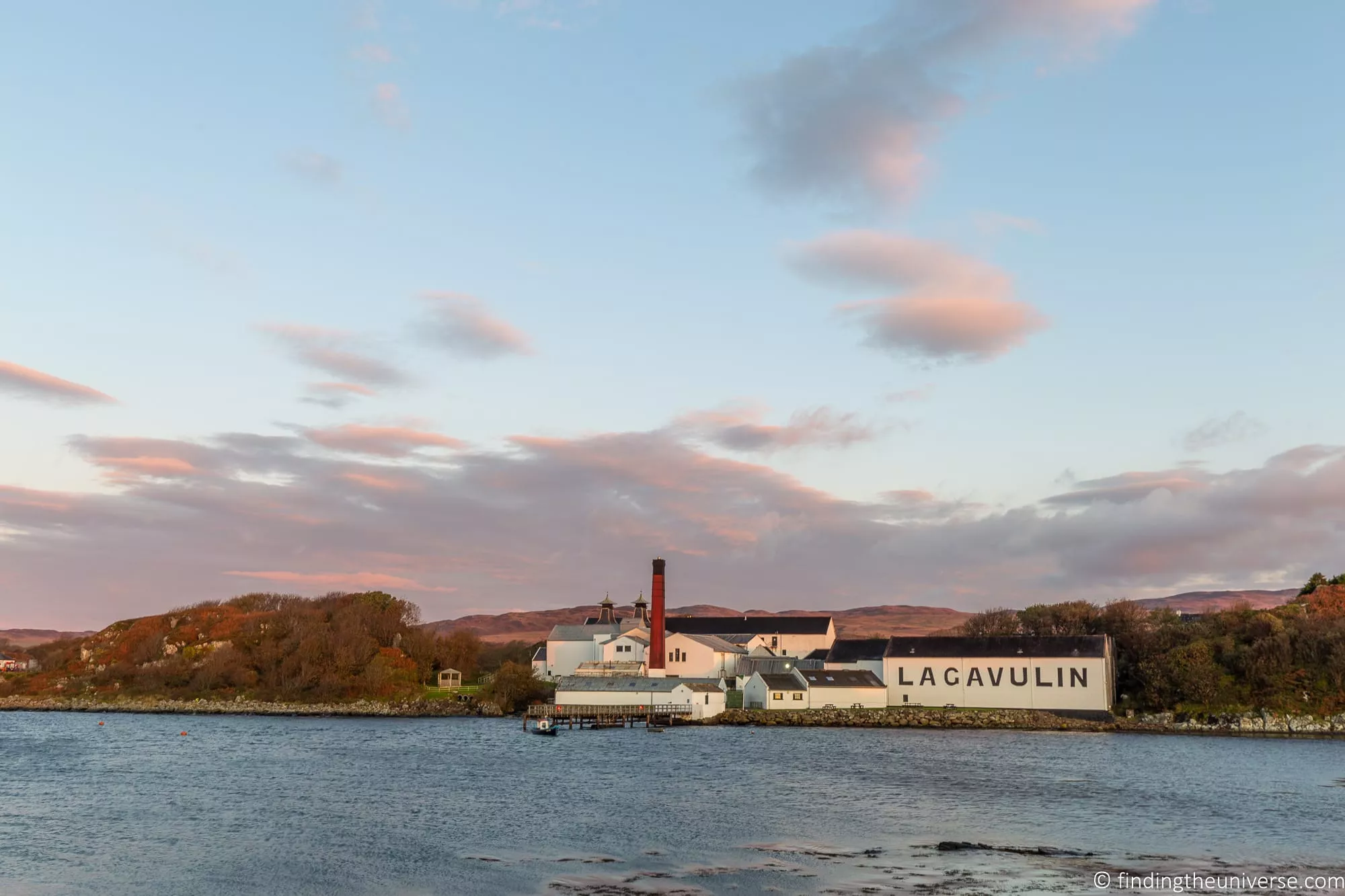
Lagavulin Distillery is a mile along the coast from Laphroaig. Founded in 1816, it’s another Islay icon, famed for its strong smoked peat flavour. Tours and tastings are available.
Ardbeg Distillery is a mile from Lagavulin, meaning there are three distilleries within two miles of each other on this stretch of coast. Founded in 1815, Ardbeg has built a devoted following (their fan club, the Ardbeg Committee, has over 120,000 members worldwide). Tours and tastings available.
Kilchoman Distillery was founded in 2005 and is the only independent farm distillery on Islay. Kilchoman is unusual in that it grows and malts all its own grain on site, so if you want to see a true field-to-bottle whisky operation, this is the one. Open for tours and tastings.
Bowmore Distillery was founded in 1779, making it one of the oldest distilleries in Scotland and the oldest on Islay. They produce a range of single malts with a smoother peat flavour than the south coast trio. Open for tours and tastings.
If you stay in Port Ellen, you can walk or take the public bus along the coast to Laphroaig, Lagavulin, and Ardbeg. There are also local tour operators on the island, including Islay Taxis. Or you can take a multi-day tour from Edinburgh like this one from Rabbie’s or this one on GYG.
From Islay, it’s a short ferry ride to the wild Isle of Jura, where you can visit the Jura Distillery. We found Jura wonderfully remote and quiet. We had a tour with basically just the two of us, which made for a really personal experience. Jura produces both peated and unpeated single malts, so there’s something for every palate.
For more on the island, see our complete guide to whisky distilleries on Islay, which also has a guide to things to do beyond whisky.
Other Scottish Islands
Beyond Skye and Islay, several other Scottish islands have distilleries worth visiting. I’ve listed these counter-clockwise around Scotland.
Lochranza Distillery on the Isle of Arran opened in 1995. The island has a long history of whisky distilling, though Lochranza was the first legal distillery to open since 1837. It produces a range of unpeated Highland-style single malts and is open for tours and tastings.
Lagg Distillery, also on Arran, opened in 2019 and aims to produce a heavily peated whisky as a contrast to Lochranza’s lighter style. It’s the sister distillery, both owned by Isle of Arran Distillers. Open for tours.
Tobermory Distillery on the Isle of Mull has been producing whisky since 1798, with some closures along the way. Today it produces both a peated and an unpeated single malt. We’ve visited and it’s a friendly little operation in a beautiful harbour town.
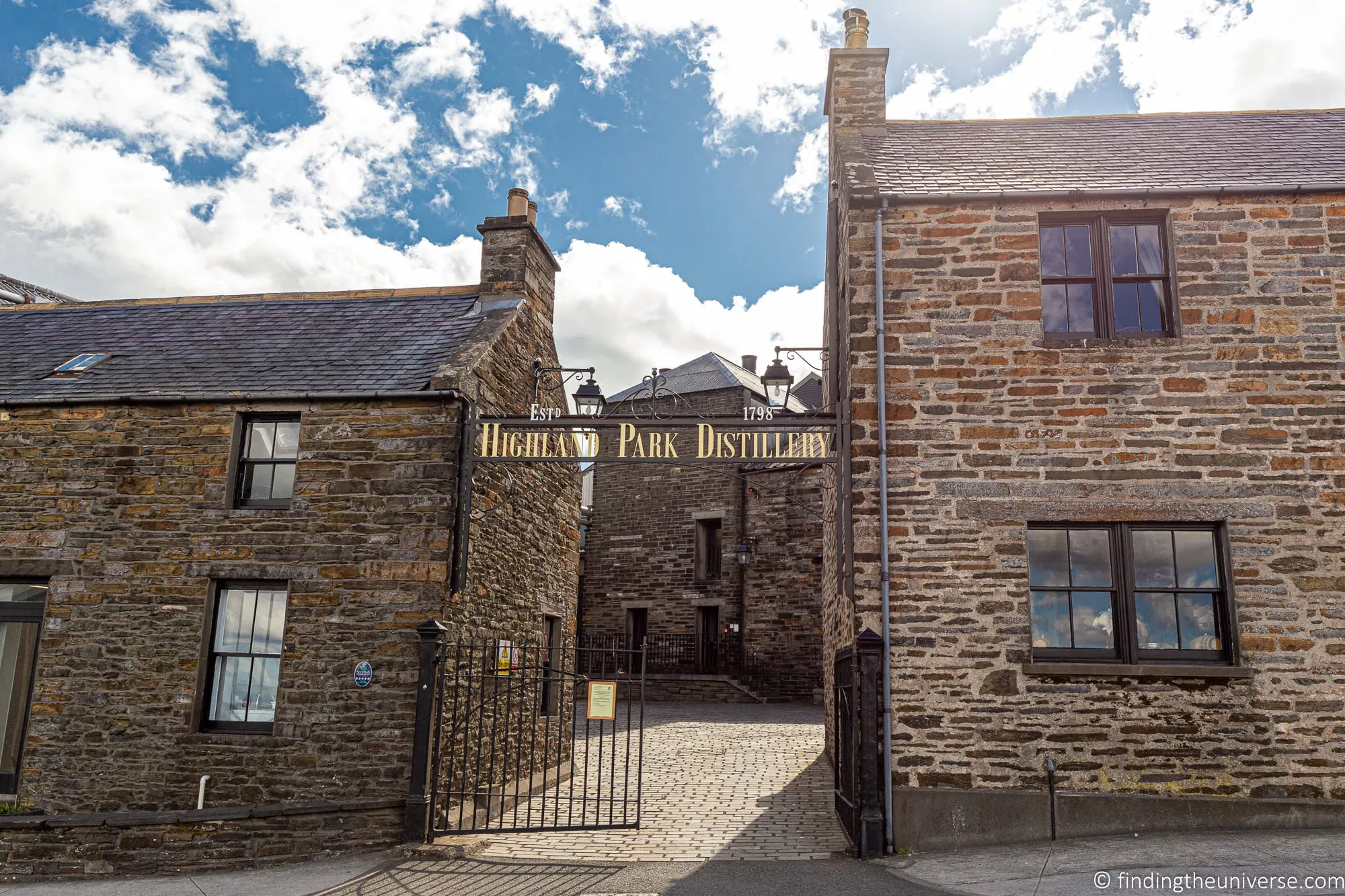
Highland Park Distillery in Kirkwall on Orkney is the most northerly single malt distillery in the world. They’ve been making whisky here since 1798 and it’s one of the most well-known single malt brands. Highland Park still has a traditional malting floor, which is rare in modern distilleries. Their whisky is peated with Orkney peat, giving it a distinctive smoky flavour. Open for tours and tastings.
Scapa Distillery, the second distillery on Orkney, was founded in 1885 and reopened in 2004. Their single malt isn’t peated, so if you prefer a lighter style, this is a good complement to Highland Park. Open for tours.
Map of Scottish Whisky Distilleries
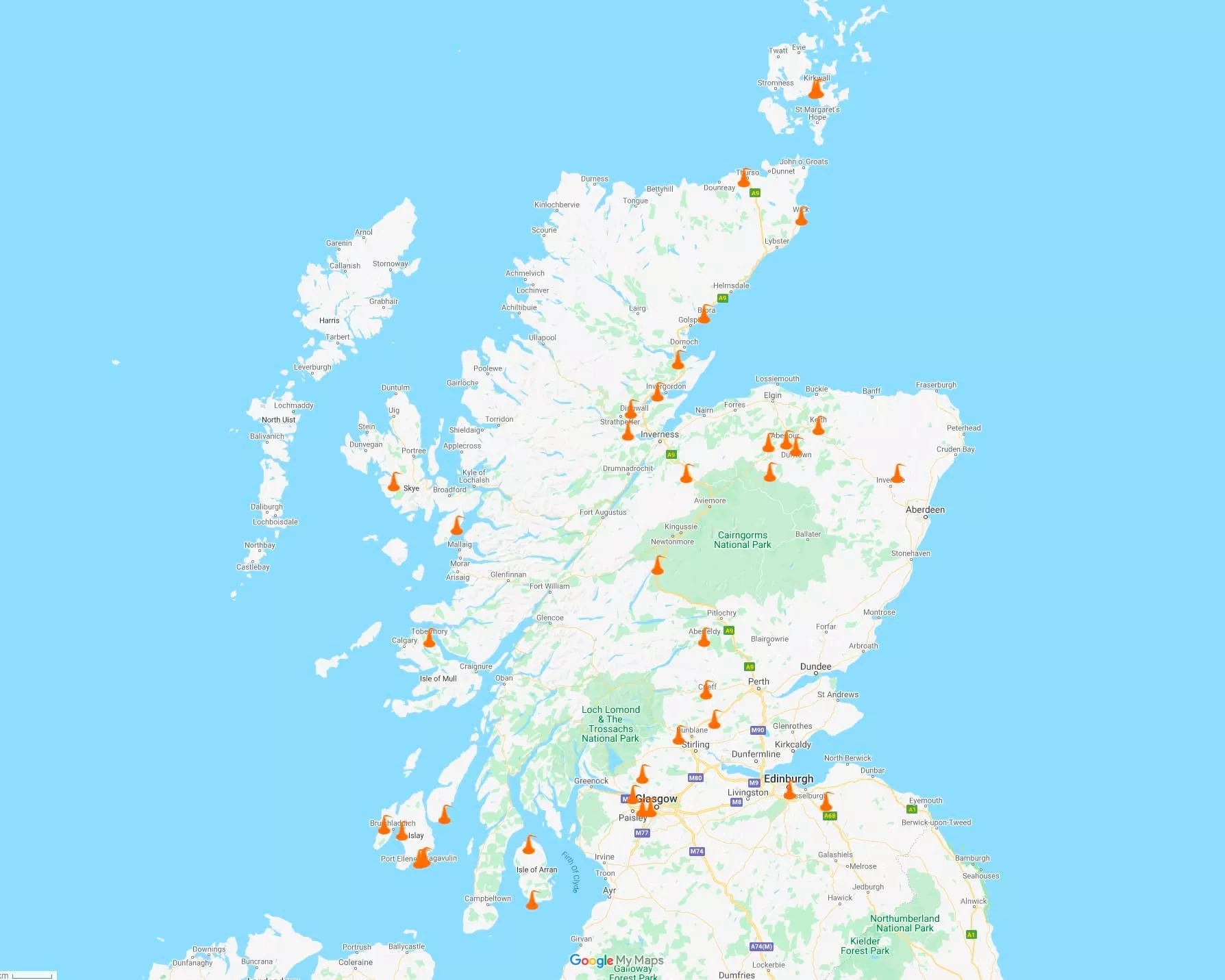
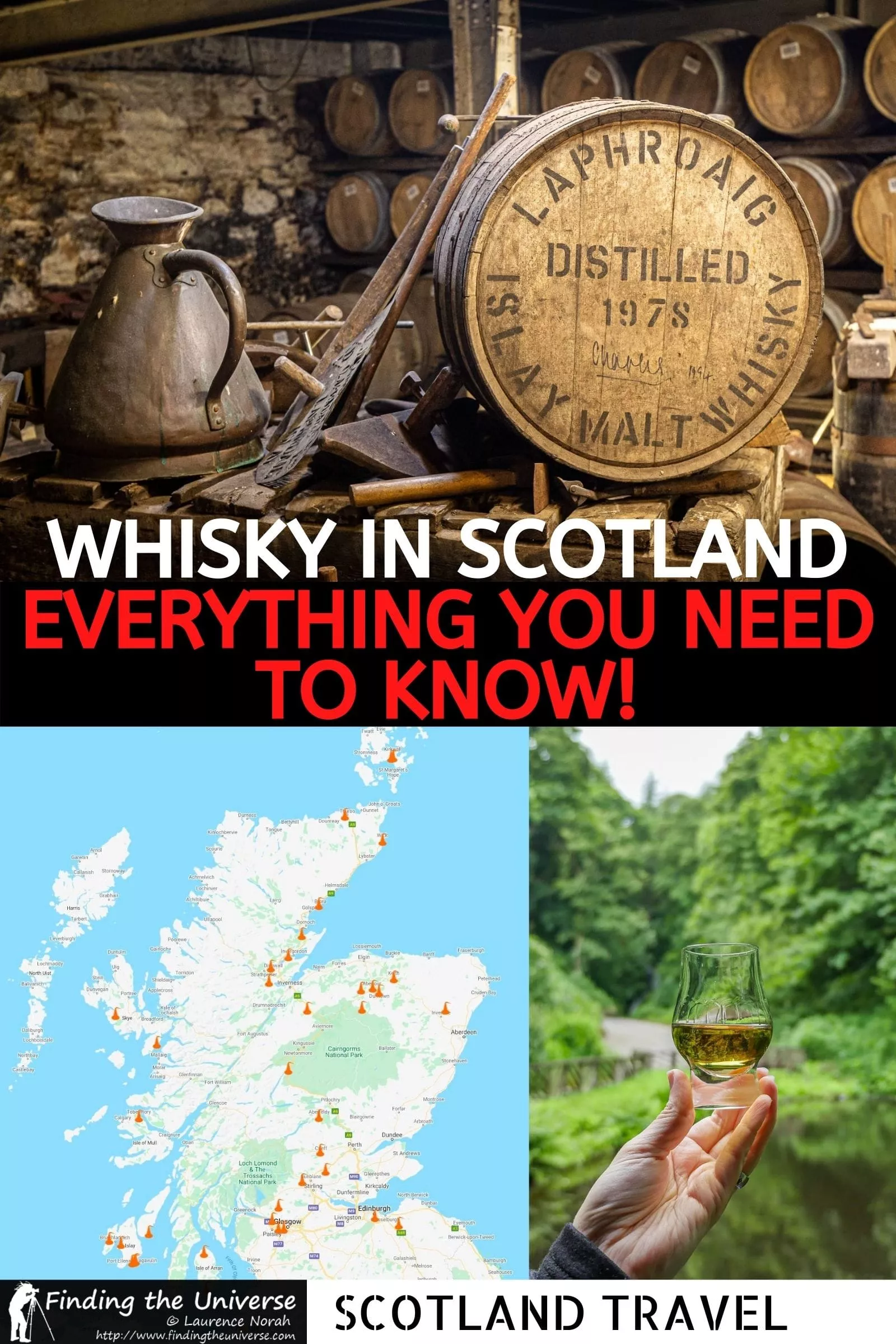
To help you plan your visits, we’ve mapped all the distilleries mentioned in this guide. You can also view this map on Google Maps here.
Whisky Hotels in Scotland
If whisky is a central part of your trip, you might want to plan your accommodation to match. Some hotels in Scotland are known for their extensive whisky collections, knowledgeable bar staff, and even special tasting events or whisky-paired dinners.
Here are some options we’d recommend:
Dornoch Castle is a 500-year-old castle on the NC500 route with an award-winning whisky bar featuring hundreds of malts. Tastings are available.
Raasay Distillery Hotel on the Isle of Raasay is a four-star hotel built into the distillery itself. Lovely rooms and a well-stocked bar, naturally.
The Craigellachie is a beautifully located 19th century hotel in Speyside hosting the Quaich bar, with over 900 single malt whiskies available.
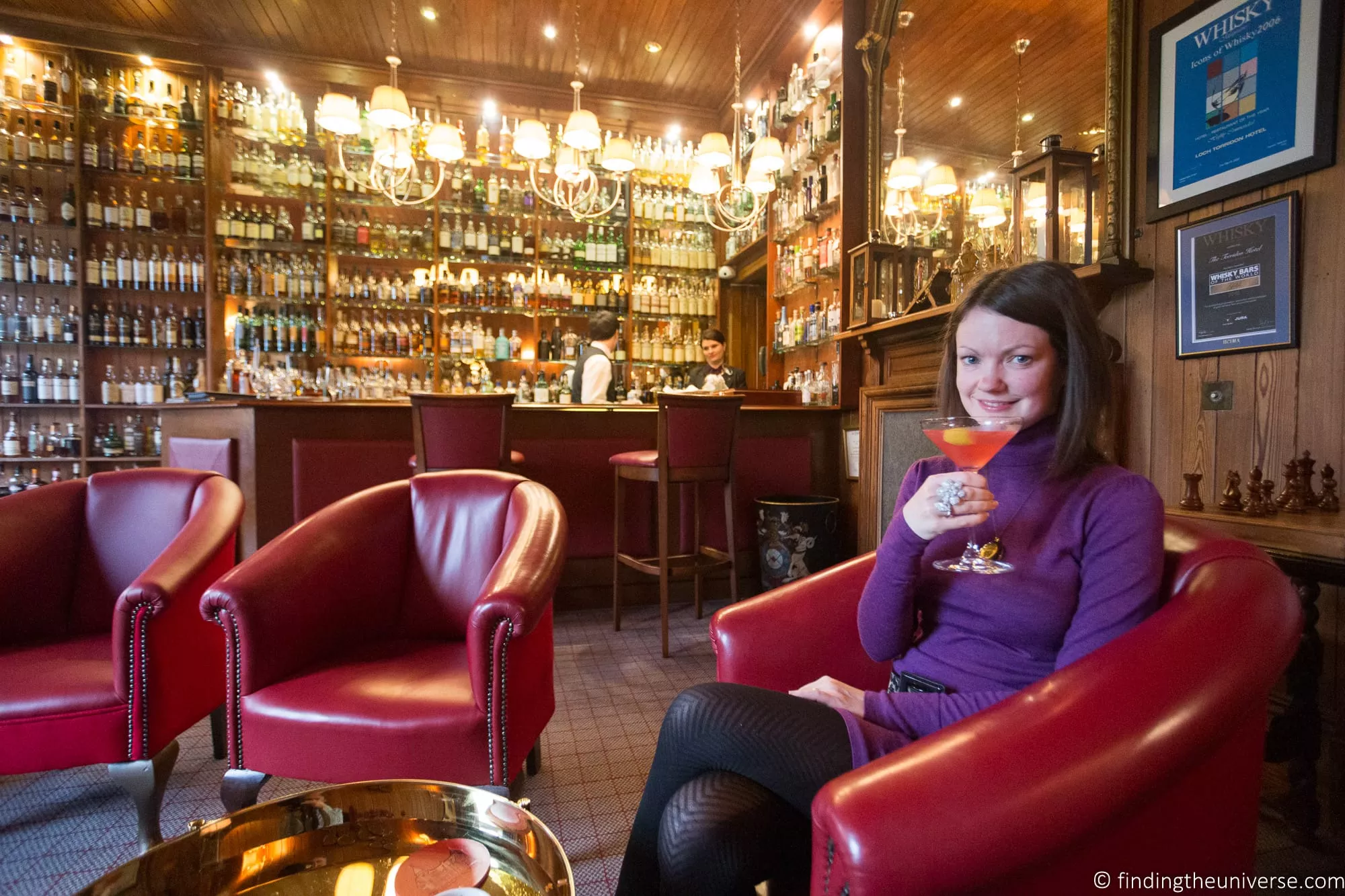
The Torridon is one of our favourite luxury hotels on the NC500, with over 300 malts on hand and knowledgeable staff who love talking whisky.
Glenmorangie House is a 4-star country house hotel owned and operated by the Glenmorangie Distillery, found 8 miles from the distillery itself. They offer many Glenmorangie varieties and even whisky tasting weekends.
Gables Whisky B&B in the heart of Speyside has a whisky lounge featuring almost 500 bottles of single malt whisky. Tastings available.
Whisky Vaults is well located for exploring Oban (and its distillery!) and has comfortable accommodation and an excellent whisky bar.
Frequently Asked Questions
How many whisky distilleries are there in Scotland?
There are over 140 active whisky distilleries in Scotland as of 2026, spread across five regions: the Lowlands, Highlands, Speyside, Campbeltown, and Islay. The number has been growing in recent years, with new distilleries opening regularly alongside the historic names.
Of these, a large proportion offer tours and tastings. Some require advance booking, and a few only offer tours on certain days, so it’s always worth checking ahead.
Which Scottish whisky distillery should I visit first?
If you’ve never visited a distillery before, I’d recommend starting with the Scotch Whisky Experience in Edinburgh. It covers all five whisky regions and lets you taste the differences, so you’ll know what style you prefer before committing to a specific distillery.
For your first actual distillery, Glengoyne near Glasgow is an excellent choice. It’s beautiful, the tour is well paced, and their unpeated Highland single malt is approachable for newcomers. If you’re near Inverness, Glenfiddich in Speyside is another great first visit.
Can you visit a whisky distillery without drinking?
Yes, and you’ll still have a great time. The tours cover the history, the process, and the craftsmanship behind each whisky. Jess doesn’t drink whisky at all but has enjoyed dozens of distillery tours with me. Almost every distillery is happy to accommodate non-drinkers, and many will offer a soft drink alternative during the tasting.
Do you need to book whisky distillery tours in advance?
For most distilleries, advance booking is recommended, especially during summer (June to September) and for smaller or more popular distilleries. Some offer walk-in tours during quieter periods, but you risk missing out. A few distilleries, like Balvenie in Speyside, book out months in advance for their most popular experiences.
What is the best time of year to visit Scottish distilleries?
Most distilleries are open year-round, though some smaller operations have reduced hours in winter. Summer (May to September) gives you the best weather and longest days, but also the biggest crowds. Spring and autumn are a good balance of decent weather and fewer visitors.
One thing to be aware of is the “silent season”, usually in January or February, when many distilleries shut down production for maintenance. Most still offer tours during this period, but you won’t see the stills in action.
What is the difference between single malt and blended Scotch whisky?
A single malt is made at one distillery from malted barley only. A blended whisky combines whiskies from multiple distilleries. Single malts get the most attention from enthusiasts, but blended whisky accounts for over 90% of all Scotch sold worldwide. Popular blends include Johnnie Walker, Chivas Regal, and Famous Grouse.
Neither is “better” than the other. It’s really just personal preference, and honestly, one of the fun things about visiting distilleries is discovering what you enjoy.
Further Reading
We have a lot of Scotland content that should help with planning your trip. Here are some starting points:
For Edinburgh, check out our 2-day Edinburgh itinerary, our guide to things to do in Edinburgh, and our favourite day trips from Edinburgh. We also have a guide to getting from London to Edinburgh.
For Glasgow, see our Glasgow and Loch Lomond itinerary, our guide to the best day trips from Glasgow, and our guide to things to do in Glasgow.
For Aberdeen, we have a guide to things to do in Aberdeen, our favourite restaurants in Aberdeen, and a guide to the best day trips from Aberdeen. From Aberdeen you can also tackle the North East 250.
For road trips, check out our detailed guide to the North Coast 500 and NC500 accommodation guide, as well as our photography highlights on the NC500 and our 7-day NC500 camping itinerary.
We have a guide to Loch Ness and our other favourite day trips from Inverness, a detailed guide to visiting Glen Coe, and an itinerary for visiting Skye and the Highlands.
If you’re driving in the UK for the first time, check out our tips for driving in the UK. We also have a guide to how much it costs to travel in the UK. For wider UK trip planning, see our suggested one week and two week UK itineraries.
If you’d like a guidebook for your time visiting Scotland, we recommend the Rick Steves Scotland guide.
And that’s our guide to whisky distilleries in Scotland! If you have any questions, or a favourite distillery we should know about, let us know in the comments below. Slàinte!
Miss Anna Laughlin says
Wow! I learned so much about whisky and the entire process. I can see how much work you put in to this article – it must have taken a very long time to compile and finish! Thank you so much for the informative and delightful read. Hoping one day to chase my ancestry in Ireland and then hop over to chase my fondness for whisky in Scotland. Cheers to you two, from Sweet Home Alabama.
Laurence Norah says
Hi Anna! Thank you very much 🙂 It did take a while, but thankfully much of the research involved visiting whisky distilleries which wasn’t too arduous. Compiling it all took some time – I rewarded myself with a dram of Laphroaig when it was all done!
I hope you are able to visit both Ireland and Scotland soon. Ireland is also home to some wonderful whiskey, so you can compare the two (for research purposes, of course!).
Stay well,
Laurence