

I'm Laurence, a professional travel photographer since 2010. Jess and I write this site from our own travels.
I’ve been taking photos since 1993 and have worked as a professional travel photographer since 2010, and the compact camera that actually lives in our travel photography kit is a Sony RX100 V. I get asked about compact cameras a lot, but the question has changed over the years. It used to be “is a point and shoot still worth it?” Now it’s “what can I actually get for a few hundred dollars?”
If you just want the answer, the Sony RX100 VII is the best compact camera you can buy in 2026, and the Panasonic Lumix ZS99 is the best value if what you want is a lot of zoom for the money.
If you’re on a tighter budget, the next section goes through what each price step gets you. The full picks start at about $160 and go up to around $1,800, roughly in price order.
For a few years I was telling most people to just use their phone. That’s changed. Manufacturers are making new compacts again, younger photographers are buying dedicated cameras instead of relying on their phones, and for the first time in a while there are decent options at several price points.
Our RX100 V is the older sibling of the RX100 VII picked here. The section on how we evaluate compacts explains how we judged the cameras we haven’t owned.
If you’re not set on a compact, we also have guides to the best mirrorless cameras and the best DSLR cameras, and my travel camera guide covers every type of camera if you’re not sure which suits you.
Table of Contents:
Quick Verdict: Our Top Picks at a Glance
In a hurry? These are the compact cameras I recommend most often. The full reviews and a comparison table follow below.
Best compact camera overall: the Sony RX100 VII. A 1-inch sensor, an 8x zoom (24-200mm) and a pop-up viewfinder in a 10.7 oz body. It’s the newer version of the RX100 V we travel with, with nearly three times the reach.
Best value travel zoom: the Panasonic Lumix ZS99. A 30x zoom (24-720mm) that fits in a jacket pocket. Panasonic has raised its US price since launch, so it’s no longer a budget camera, but nothing else here gets you that much reach for the money.
Best on a budget: the Kodak PixPro FZ55. Basic, but it’s the best conventional point and shoot at the very bottom of the price range, and a real camera rather than a toy.
Best waterproof: the OM System Tough TG-7. Rated waterproof to 15 metres, shockproof from 2.1 metres and freezeproof to -10°C, for beaches, pools, snow and anyone who’s hard on their kit.
Best image quality: the Fujifilm X100VI. An APS-C sensor and lovely straight-out-of-camera colour in a fixed-lens body, if you can find one in stock at a fair price.
Best pocketable premium: the Ricoh GR IV. APS-C image quality in a body small enough to slip into a trouser pocket. It’s one of the more expensive cameras here, and there’s no zoom at all.
The Best Point and Shoot Cameras Under $500
If $500 is your ceiling, here’s what each price step buys you over the phone you already have. There are four steps, and they’re four different propositions rather than four versions of the same camera.
Under $200: Kodak PixPro FZ55
Kodak lists the PixPro FZ55 at $159.99, which makes it the cheapest real camera here. Over a phone, it gets you a 5x optical zoom (28-140mm) and a camera you can hand to a child or knock about without worrying.
What it won’t get you is better image quality. The sensor is the small 1/2.3-inch type, and in dim light a recent phone will usually do better. It’s a camera for good light, gifts and first steps.
The Waterproof Step: Kodak PixPro WPZ2
For a little more you can have a camera that goes in the sea. Kodak’s PixPro WPZ2 is rated waterproof to 15 metres (49 feet), shockproof from 2 metres and dustproof.
Over a phone, that buys you a camera for the beach, the pool and the kids without risking your phone itself. Image quality is in the same small-sensor league as the FZ55. Kodak lists it at $199.99, and if you want something tougher and better built, the OM System TG-7 below is the step up.
Around $400: Canon PowerShot ELPH 360 HS A
Canon lists the PowerShot ELPH 360 HS A at $379.99. It’s small enough to really go in a pocket at 5.2 oz, and its 12x zoom (25-300mm) is the lightest way to get real reach into a coat pocket. Zoom in something you’ll actually carry is what you’re paying for over a phone.
But the insides date from 2016, so it’s slow by modern standards, and in low light a recent phone will probably beat it. Stock has been patchy too. At the end of October 2026, Canon’s own US store had it out of stock with a notify-me button and Amazon only had it through third-party sellers, so check B&H first.
Stretching Past $500: Panasonic Lumix ZS99
The Panasonic Lumix ZS99 launched at $499.99, and Panasonic’s own US store now sells it for $697.99, so it no longer fits a strict budget. If yours can flex, this is the biggest of the four steps. You get a 30x zoom (24-720mm) that no phone and no cheaper camera here can match, plus RAW files and 4K video.
Roughly speaking, under $200 you’re buying convenience and zoom, not image quality. Around $400 you’re buying pocketability. Above $500 you start buying image quality, and it gets expensive quickly.
How We Evaluate Compact Cameras
I’m a photographer, but when I look at a compact camera I’m not asking the questions I’d ask of the Canon full-frame cameras I shoot with for work.
I’m asking whether it’ll still be pleasant to use on day six of a two-week trip, when we’re tired and jet-lagged and just want to take pictures. Whether it wakes up fast enough to catch a moment in a market before it’s gone. Whether Jess can take it from me while she’s holding a coffee and a map. Whether it’ll give you a usable picture in a dim restaurant in Rome or on a dawn whale-watching boat off Iceland.
Here’s what I look for:
- Weight and pocketability after a full day of carrying it. A camera that feels fine in a shop can be a burden by the afternoon.
- One-handed operation. You’re often holding something else, and finicky mode dials and buried menus lose points.
- How fast it wakes up and how quickly it’s ready for the next shot. Travel photography is full of moments that last about two seconds.
- Low-light handling. Restaurants, churches, museums and dawn or dusk are where most compacts fall apart, and sensor size decides most of it.
- Whether the person you travel with can use it. If only one of you can operate it, half the household stops using it.
- Battery life across a sightseeing day. Spec sheet numbers are optimistic, to put it kindly!
I’ve been using compact cameras since the 1990s. I started with Kodak compacts, and the photo of a sooty tern below was taken on one of them, a Kodak DX3900, on Bird Island in the Seychelles in 2002. After that I moved to Canon’s IXUS line.

None of those cameras are on this list, of course, although part of me wishes I still had them to hand for the impressive resale value. The only camera here from a family we own is the RX100 VII, whose older sibling, the RX100 V, has been in our bag for years.
For the cameras we haven’t owned, each recommendation is built on three things:
- The manufacturer’s own published specification. Every spec cell in the comparison table was checked against it in October 2026.
- What the camera actually costs to buy at the end of October 2026, new and used, because for several cameras here the list price is fiction.
- Judgement about what a sensor that size, behind a lens that bright, will do in a dark church or from a moving boat. That’s the part three decades behind a camera is good for.
Do You Actually Need a Compact Camera in 2026?
Your smartphone camera is probably better than you think. The latest phones from Apple, Samsung and Google take excellent photos in good light, handle portrait mode well, and are always in your pocket. So before any recommendations, here’s when each one wins.
Your phone is probably enough if:
- You shoot mainly in good light, outdoors, on city trips and beach holidays.
- Your photos are for social media, group chats and prints up to 8×10.
- You don’t need to zoom in on distant subjects.
- You’d spend the camera money on the trip itself.
If that’s you, save the money. Read our photography composition guide and put the money towards an extra night somewhere nice. There’s no shame in shooting on a phone.
A compact camera is worth it if:
- You want real optical zoom for wildlife, distant architecture, or kids on a far-off playground. Phone “zoom” is cropping or switching between lenses, and quality drops off fast. If you want serious wildlife reach, our guide to bridge cameras covers fixed-lens cameras with far more zoom than any pocket model.
- You shoot a lot indoors, in dim restaurants, churches or museums. A 1-inch or larger sensor gives noticeably cleaner images than a phone in low light.
- You want to print larger than 8×10, sell or license images, or do meaningful editing.
- You enjoy photography as part of the trip and want a dedicated tool that makes you more deliberate about what you shoot.
- You want a viewfinder you can use in bright sunlight, where phone screens go invisible.
- You want a camera you can take into the sea without a second thought.
If you fit that second list, a dedicated compact is a real upgrade.
The Compact Camera Market in 2026
The compact camera market has been through quite a cycle. When this guide was first written there were dozens of models at every price point. Then smartphones got good, and manufacturers abandoned compacts almost entirely. Models were discontinued, the remaining stock went up in price, and for a few years the choice was pretty bleak.
Panasonic put the ZS99 on sale in February 2025, its first new ZS-series travel zoom in the US since the ZS80 in 2019, then announced the 1-inch ZS300 in March 2026 and the Four Thirds Lumix L10 in May.
Canon launched the PowerShot V1 in 2025 and marked 30 years of PowerShot with a graphite anniversary edition of the G7 X Mark III, on sale from April 2026. Ricoh launched the GR IV, and Fujifilm’s X100VI has been one of the most sought-after cameras of the last two years.
That Panasonic gap was in new models, not on the shelves. Panasonic kept the line going in between with refresh variants (the ZS80D, sold as the TZ95D in Europe and Japan, and the 1-inch ZS200D), so the gap you’ll see quoted is about new cameras rather than what you could buy.
The downside is that prices have gone up. Fujifilm raised the X100VI’s US list price from $1,599.95 to $1,799.95 on 1 August 2025, and the ZS99 went from $499.99 at launch to $697.99 within a few months, without Panasonic saying why. You won’t find a good compact for what you’d have paid ten years ago, but the cameras are better, and there are real options from under $200 to around $1,800.
Quick Comparison
Here’s a side-by-side look at all our picks. The “Best for” and “Skip if” columns are the quick decision, and the spec columns are there for reference.
| Camera | Best for | Skip if | Sensor | Zoom | Viewfinder | Weight | Price |
|---|---|---|---|---|---|---|---|
| Kodak PixPro FZ55 | Budget, a first camera, or a gift | You want good results in low light | 1/2.3″ | 5x (28-140mm) | No | 3.7 oz (body only) | Check price on Amazon |
| Canon ELPH 360 HS A | Pocketable everyday carry | You expect modern processor speed | 1/2.3″ | 12x (25-300mm) | No | 5.2 oz | $379.99 list |
| OM System Tough TG-7 | Water, sand, snow and rough handling | Low-light image quality matters to you more than toughness | 1/2.3″ | 4x (25-100mm) | No | 8.8 oz | Check price on Amazon |
| Panasonic ZS99 | The most zoom for the money | You shoot a lot in low light | 1/2.3″ | 30x (24-720mm) | No | 11.3 oz | Check price on Amazon |
| Panasonic Lumix ZS300 | 1-inch sensor with real zoom | You need a viewfinder | 1″ | 15x (24-360mm) | No | 11.9 oz | Check price on Amazon |
| Canon PowerShot V1 | Vlogging and video-first travel | You’re mainly a stills shooter | 1.4″ | 3.1x (16-50mm) | No | 15 oz | Check price on Amazon |
| Sony RX100 VII | The best all-round compact: a big sensor, real zoom and a viewfinder | Budget is the constraint | 1″ | 8x (24-200mm) | Yes (pop-up EVF) | 10.7 oz | Check price on Amazon |
| Panasonic Lumix L10 | A viewfinder and a Four Thirds sensor without giving up zoom | Budget is the constraint, or you want long zoom reach | Four Thirds | 3.1x (24-75mm) | Yes (OLED EVF) | 17.9 oz | Check price on Amazon |
| Fujifilm X100VI | Best image quality, no compromise | You want zoom or simplicity, or can’t wait for stock | APS-C | None (fixed 35mm) | Yes (hybrid OVF/EVF) | 18.4 oz | Check price on Amazon |
| Ricoh GR IV | Pocketable APS-C for street and minimalist travel | You want zoom or weather sealing | APS-C | None (fixed 28mm) | No | 9.2 oz | Check price on Amazon |
Weights in the table are the manufacturers’ published figures, which mostly means with battery and card fitted. The Kodak is the exception, because Kodak only publishes a body-only figure (3.7 oz) and no with-battery weight to compare. It’s the lightest camera here either way, so the ranking doesn’t change.
Zoom or Sensor Size? ZS99 vs ZS300 vs RX100 VII
Most people end up choosing between these three, and each one trades zoom against sensor size differently:
- The Panasonic ZS99 has a 30x zoom (24-720mm), a small 1/2.3-inch sensor and no viewfinder, for $697.99 from Panasonic. It has the most reach by a distance and is the weakest of the three indoors.
- The Panasonic ZS300 halves that reach to 15x (24-360mm) in exchange for a 1-inch sensor that’s far better in dim light. No viewfinder, and $899.99 at list.
- The Sony RX100 VII has the shortest zoom of the three at 8x (24-200mm). It also has a 1-inch sensor, a pop-up viewfinder, a brighter f/2.8-4.5 lens and the best autofocus here, and it’s the most expensive.
My call is the RX100 VII if you can afford it, because it’s the best camera of the three almost everywhere except at the long end of the zoom. If reach is what you’ll use most and $700 is your limit, buy the ZS99. The ZS300 sits between them. Buy it if you want a 1-inch sensor and real zoom without paying RX100 VII money, and you can live without a viewfinder.
Our Picks: The Best Compact Cameras of 2026
Here are the full reviews, roughly in price order.
Best Budget Compact: Kodak PixPro FZ55
If your budget is under $200 and you want a dedicated camera, the Kodak PixPro FZ55 is the best conventional point and shoot you can get. It’s a basic camera, though. The 16MP 1/2.3-inch sensor and 5x zoom (28-140mm) are modest, and it won’t blow you away with image quality. But it’s cheap, it weighs barely anything, and it works.

It makes sense as a first camera for a teenager interested in photography, a knockabout camera for places you wouldn’t risk anything pricier, or a dedicated camera for someone who just wants something other than their phone.
If you want to take a camera into a pool or on a beach, Kodak’s waterproof PixPro WPZ2 (in the under-$500 section above) is the more sensible buy at a similar price.
Key specs
- Sensor: 1/2.3-inch, 16MP
- Zoom: 5x optical (28-140mm equivalent)
- Viewfinder: None
- Screen: 2.7-inch LCD
- Weight: 3.7 oz / 106 g (body only)
Skip this if you shoot a lot in low light, want prints bigger than 8×10, or expect the speed and image quality of a modern phone. If you’re buying for serious use rather than fun, look further down this list.
Best Ultra-Compact: Canon PowerShot ELPH 360 HS A
Canon brought this classic back in 2025 as the ELPH 360 HS A, and the inside is essentially the 2016 original, with the same 20.2MP 1/2.3-inch sensor and 12x zoom (25-300mm). That’s a little disappointing given what Canon could have done with newer technology. But you get a camera that really does go in a pocket, with optical zoom, image stabilisation and 1080p video, at 5.2 oz.
The original ELPH 360 was $209.99 at launch in 2016, and Canon now lists the relaunched one at $379.99. So you’re paying a lot more for much the same camera, though it’s still one of the smallest ways to get real zoom. I wouldn’t pay much above list for it.
At the end of October 2026 Canon’s US store had it out of stock with a notify-me button, and on Amazon it was only available through third-party sellers, so B&H is the place to check.
Key specs
- Sensor: 1/2.3-inch, 20.2MP
- Zoom: 12x optical (25-300mm equivalent)
- Viewfinder: None
- Video: 1080p
- Stabilisation: Optical
- Weight: 5.2 oz / 146 g (with battery and card)
Skip this if you want modern processor speed, a viewfinder, RAW files, or decent low-light results. The 2016-era internals mean the autofocus, burst rate and high-ISO results are dated. If those things matter, the ZS99 is the better camera, though it costs nearly twice as much and doesn’t have a viewfinder either.
Check price at B&H
Best Waterproof Compact: OM System Tough TG-7
Every other pick on this list needs keeping dry. The OM System Tough TG-7 is built to get wet, dropped and frozen, and OM System rates it waterproof to 15 metres, shockproof from 2.1 metres, crushproof to 100 kg and freezeproof to -10°C. That covers snorkelling, beach days, ski trips and small children, which is most of the ways a camera dies on holiday.

We haven’t shot with a TG-series camera ourselves, so this pick rests on OM System’s own ratings and specs rather than on our experience.
The sensor is the same small 1/2.3-inch size as the budget cameras here, so image quality is in the same league as the ZS99, which means fine in daylight and weaker indoors. The lens helps a bit, opening to f/2.0 at the wide end, and the 4x zoom covers 25-100mm. What you’re really buying is a camera you never have to worry about.
OM System lists it at $649.99, and it was $579.99 on OM System’s own US store at the end of October 2026. If you want to dive deeper than 15 metres, OM System also sells an underwater housing for it, the PT-059.
If that’s more than you want to spend, the Kodak PixPro WPZ2 in the under-$500 section is the budget alternative. It’s rated to the same 15 metres and costs about a third of the TG-7’s list price, but it’s a much more basic camera.
Key specs
- Sensor: 1/2.33-inch
- Zoom: 4x optical (25-100mm equivalent), f/2.0-4.9
- Viewfinder: None
- Waterproof: 15 m
- Shockproof: 2.1 m
- Crushproof: 100 kg
- Freezeproof: -10°C
- Weight: 8.8 oz / 249 g (with battery and card)
Skip this if image quality in dim light matters to you more than toughness. The small sensor is the trade-off, and if you’re staying on dry land the ZS99 gets you far more zoom for similar money.
Check price on Amazon
Best Value Travel Zoom: Panasonic Lumix ZS99 / TZ99
If you want as much zoom as possible in a camera that fits in a jacket pocket, buy the Panasonic Lumix ZS99. Panasonic announced it at the end of 2024 and put it on sale in February 2025, and it’s one of the very few new point and shoot travel zooms you can buy.

You get a 30x optical zoom (24-720mm equivalent), which is enormous for a camera this size. That covers everything from a wide landscape to a bird across a lake or a detail high up on a building. The 20.3MP 1/2.3-inch sensor is the smallest type on this list, but outdoors in good light it does pretty well. Add Bluetooth, Wi-Fi, USB-C charging, RAW files, manual controls and optical stabilisation, and it’s a very capable travel camera.
There’s no viewfinder. Panasonic dropped the one the older ZS80 had, so you compose on the rear screen, which can be hard to see in bright sun. It’s also one of the heavier pocket cameras here at 11.3 oz with battery and card, though for that much zoom it’s a fair trade.
Price is why this isn’t our overall pick any more. It launched at $499.99, and within a few months Panasonic’s US price was $697.99, which is still what Panasonic’s own store charges. At that price it’s no longer a budget camera, and the 1-inch ZS300 ($899.99 at list) isn’t far above it.
Against the Sony RX100 VII, our overall pick, you get more than three times the zoom (720mm against 200mm) for a lot less money, but a much smaller sensor, no viewfinder and slower autofocus. If reach is the thing you’ll use most, nothing else here gives you as much of it per dollar. If you shoot indoors a lot, it’ll frustrate you.
Key specs
- Sensor: 1/2.3-inch, 20.3MP
- Zoom: 30x optical (24-720mm equivalent)
- Viewfinder: None
- Video: 4K
- RAW support: Yes
- Stabilisation: Optical
- Connectivity: Wi-Fi and Bluetooth
- Charging: USB-C
- Weight: 11.3 oz / 322 g (with battery and card)
Skip this if a lot of your shooting is indoors, in churches and museums or after dark, or if you want a viewfinder. The small sensor is the weak point in low light. If image quality matters to you more than reach, look at the ZS300 or the RX100 VII instead.
Best 1-Inch Sensor Travel Zoom: Panasonic Lumix ZS300 / TZ300
The Panasonic Lumix ZS300 (sold as the TZ300 outside the US) is one of very few new 1-inch compacts of 2026. It pairs a 20.1MP 1-inch sensor with a 15x zoom (24-360mm equivalent), and nothing else on this list offers that combination at its price.
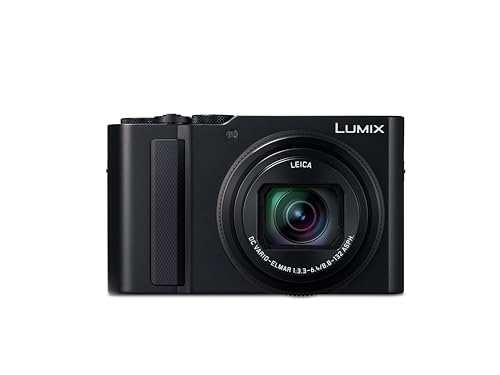
Panasonic announced it on 24 March 2026 at a US list price of $899.99, and it’s been shipping since May. It’s a fairly minor update to the ZS200 it replaces. The main gain is USB-C charging. The main loss is the electronic viewfinder, which the ZS200 had and the ZS300 doesn’t, and for shooting outdoors in bright sun that’s a real step backwards.
So why include it? Because the ZS200 has been hard to find at a sensible price for years, and the ZS300 is the way to buy a current 1-inch compact with real zoom without spending RX100 VII money.
The 1-inch sensor gives noticeably better results than the ZS99’s smaller one, especially indoors and in low light. You give up half the zoom to get it (360mm against 720mm), but that still covers distant architecture and casual wildlife. You also get 4K video, RAW files, manual controls, Wi-Fi and Bluetooth.
The RX100 VII is the better camera if you want a viewfinder and a brighter lens. But the ZS300 has nearly twice its reach, with the same size of sensor, for less money, and if you’re happy composing on the screen it’s a very sensible buy.
Key specs
- Sensor: 1-inch, 20.1MP
- Zoom: 15x optical (24-360mm equivalent), f/3.3-6.4
- Viewfinder: None
- Video: 4K
- RAW support: Yes
- Connectivity: Wi-Fi and Bluetooth
- Charging: USB-C
- Weight: 11.9 oz / 337 g (with battery and card)
Skip this if you shoot outdoors in bright sun a lot and want a viewfinder, or you want more than 15x of reach. The RX100 VII solves the first problem and the ZS99 the second, but neither of them solves both.
Best Vlogging Compact: Canon PowerShot V1
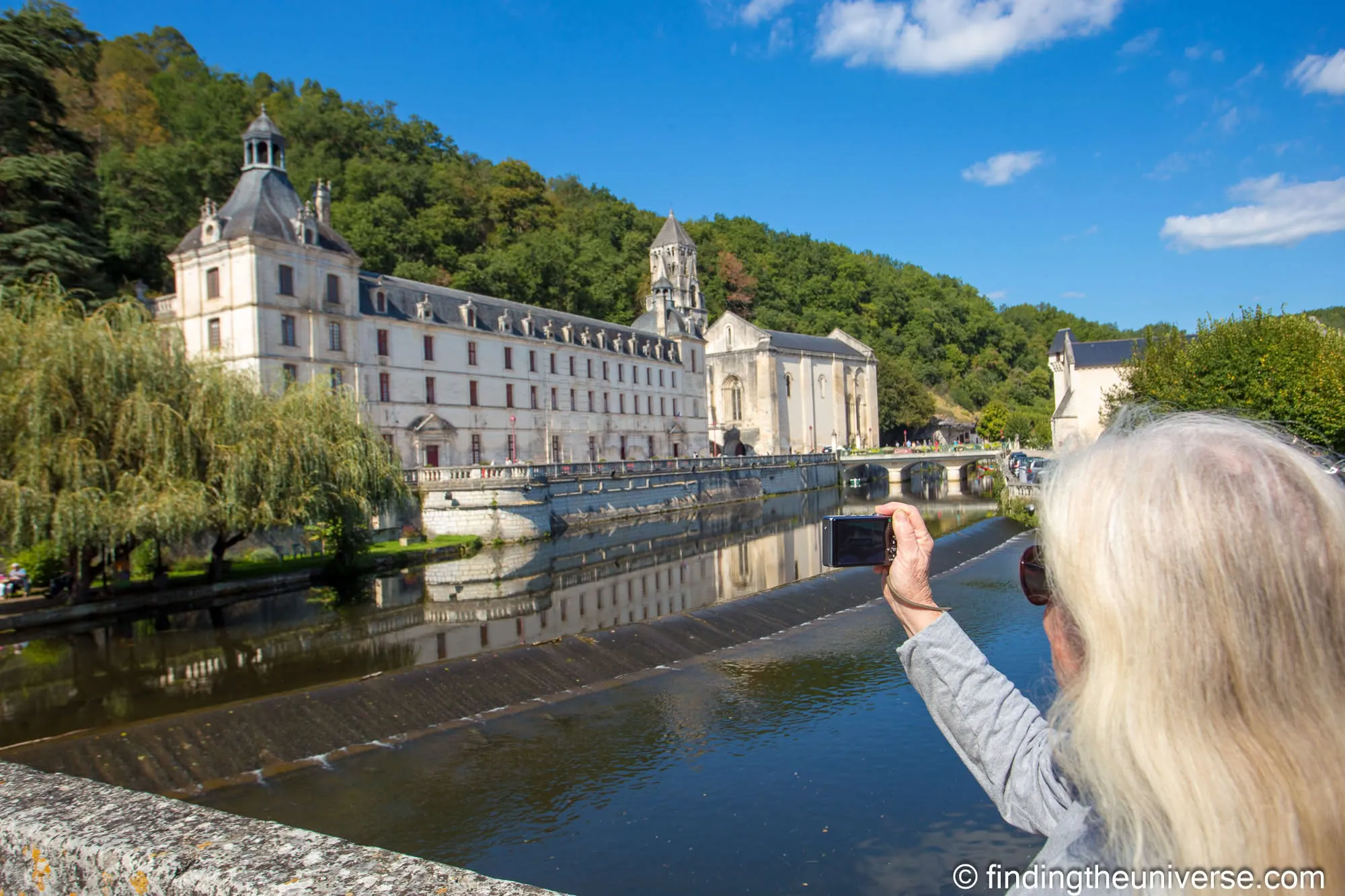
The PowerShot V1 is Canon’s 2025 entry into the compact revival, and it’s mainly a video camera. It’s built for vloggers and content creators, with a cooling fan for long recordings, a flip-out screen, a mic mount, and 4K video with Canon Log 3 (60p comes with a sensor crop).

It’s a capable stills camera too. The 1.4-inch sensor is close to Four Thirds in size, which makes it bigger than the 1-inch sensors in most compacts. It also uses the same DIGIC X processor as Canon’s mirrorless bodies, including the Canon R5 I shoot with, which gives it quick autofocus with subject tracking.
For travel stills there are two drawbacks. The lens is 16-50mm equivalent, a 3.1x zoom, which is wide enough for most situations but no use for anything distant. And there’s no viewfinder, so you’re composing on the screen, which can be hard in bright sun.
If video is the whole point and you’d like a gimbal-stabilised camera, the DJI Osmo Pocket 3 is the alternative. DJI’s newer Pocket 4 hasn’t been released in the US, and DJI says it doesn’t sell it through its official US channels, so the Pocket 3 is the one you can buy here with a US warranty.
Canon’s own US store had the standard V1 in stock at $849 at the end of October 2026, down from $1,029, and Canon’s price on it has moved around quite a bit, so it’s worth checking before you buy. If you’re mostly a stills shooter who takes the odd video, the RX100 VII is the better choice.
Key specs
- Sensor: 1.4-inch
- Zoom: 3.1x optical (16-50mm equivalent)
- Viewfinder: None
- Video: 4K with Canon Log 3 (60p is cropped)
- Processor: DIGIC X
- Cooling: Built-in fan
- Screen: Flip-out LCD
- Audio: Multi-function mic mount
- Weight: 15.0 oz / 426 g
Skip this if you’re mainly a stills shooter, you want zoom reach, or you want something small for everyday carry. At 15 oz it’s one of the heavier cameras here, and the video-first design means paying for features you may never use.
Best Compact Camera Overall: Sony RX100 VII
If I could only recommend one compact camera, it’d be the Sony RX100 VII. The RX100 line changed the compact market when it launched in 2012, and the VII is still the best all-rounder on this list. It has a 1-inch sensor, an 8x zoom (24-200mm), 20fps blackout-free burst shooting, very good autofocus, 4K video, RAW files, full manual controls and a pop-up viewfinder, in a body that weighs 10.7 oz.
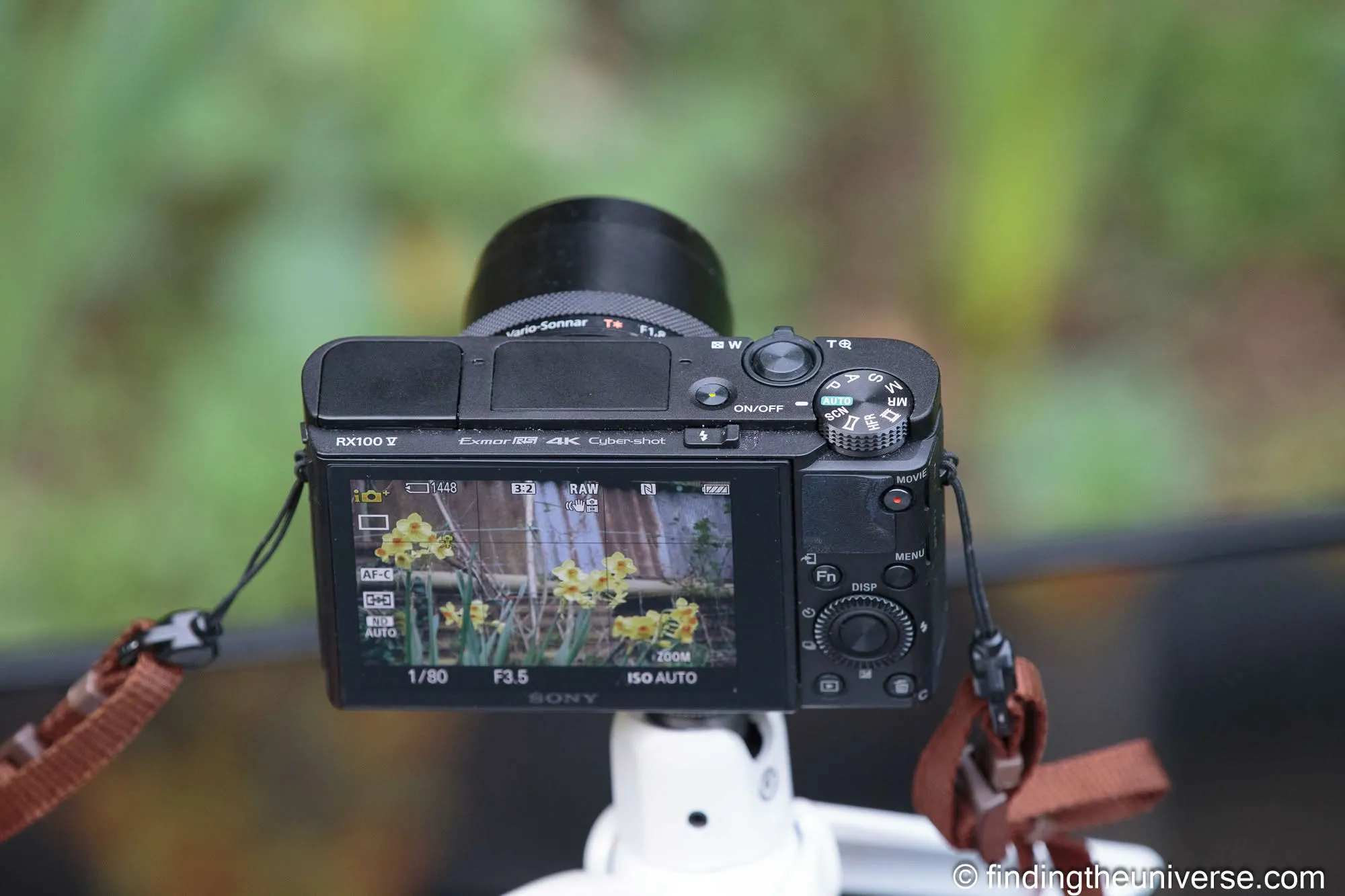
We’ve travelled with its older sibling, the RX100 V, for years, and it’s what goes in the bag when I want something small instead of the Canon. The VII adds a much longer zoom (the V stops at 70mm) and better autofocus. It uses the same small NP-BX1 battery as our V, so carry a spare.
The viewfinder is a big part of why this is our overall pick. You slide a switch and it pops up, then push the top down to stow it again. In bright sun, when every rear screen washes out, that makes a real difference to how many shots you get right.
Against the ZS99, you get less reach (200mm against 720mm), but a much bigger sensor, faster and more reliable autofocus, a brighter f/2.8-4.5 lens and that viewfinder. Those advantages show up in real photos, especially indoors and at dusk.
It’s also a lot more money. Even used, RX100 VII bodies at MPB were $1,129 in Good condition and $1,269 Like new when I checked at the end of October 2026, against $697.99 for a new ZS99 from Panasonic. If that gap is a stretch, buy the ZS99 or the ZS300 and spend the difference on the trip.
Key specs
- Sensor: 1-inch (13.2 x 8.8mm)
- Zoom: 8x optical (24-200mm equivalent), f/2.8-4.5
- Viewfinder: Pop-up electronic (OLED)
- Burst: 20fps blackout-free
- Video: 4K
- RAW support: Yes
- Controls: Full manual
- Stabilisation: Optical
- Weight: 10.7 oz / 302 g (with battery and card)
Skip this if budget is the constraint, or you specifically need long reach. For reach on a lower budget, the ZS99 is the better buy, and for a 1-inch sensor for less money, the ZS300.
Best Large-Sensor Zoom with a Viewfinder: Panasonic Lumix L10
The Lumix L10 answers a complaint that runs through this whole guide. The ZS99 dropped the viewfinder the ZS80 had, the ZS300 dropped the one the ZS200 had, and until the L10 arrived the only camera here that paired an eye-level finder with a zoom lens was the RX100 VII. The L10 pairs one with a Four Thirds sensor and a Leica zoom.

Panasonic announced it on 12 May 2026, and it’s been shipping since June. The 20.4MP Four Thirds sensor is roughly twice the area of the 1-inch sensors in the ZS300 and RX100 VII, and the Leica DC Vario-Summilux lens (24-75mm equivalent) opens to f/1.7 at the wide end. That’s the brightest lens on this list, and on a sensor that size it changes what you can shoot indoors and after dark.
The catches are price and reach. Panasonic sells the black and silver versions from $1,499.99, and the 3.1x zoom is a normal range rather than a travel-zoom range. If reach is why you want a compact, this is the wrong camera.
Stock has been thin. The Titanium Gold Special Edition ($1,599.99) is only sold through limited channels, mainly Panasonic’s own store, where it was showing as sold out at the end of October 2026. The black and silver versions are at normal retailers, but stock there has been patchy too.
The reader this is for wants a viewfinder, wants more sensor than a 1-inch chip, and still wants a zoom. Nothing else in this guide does all three.
Key specs
- Sensor: Four Thirds, 20.4MP BSI CMOS
- Lens: Leica DC Vario-Summilux 10.9-34mm f/1.7-2.8 (24-75mm equivalent)
- Zoom: 3.1x optical
- Viewfinder: 0.39-inch OLED
- Screen: 3.0-inch free-angle touchscreen
- Stabilisation: POWER O.I.S.
- Video: 4K 60p
- File formats: RAW and HEIF
- Weight: 17.9 oz / 508 g (with battery and card)
Skip this if you want zoom reach, or the price is a stretch. The RX100 VII keeps a viewfinder and gives you 8x zoom in a smaller, lighter body, and if you can live without a finder, the ZS300 gets you a 1-inch sensor and 15x zoom for a lot less.
Best Premium Compact: Fujifilm X100VI
If budget isn’t a concern and you want the best image quality you can get in a compact, buy the Fujifilm X100VI. It has a 40.2MP APS-C sensor, the same size used in many interchangeable-lens cameras, behind a fixed 23mm f/2 lens (35mm equivalent), and Fujifilm’s colour science gives you lovely images straight out of the camera.

You also get in-body stabilisation (up to 6 stops), a hybrid optical and electronic viewfinder, and a retro body that makes photography feel like fun again.
Fujifilm raised the US list price from $1,599.95 to $1,799.95 on 1 August 2025, and stock comes and goes. Fujifilm’s own US store had it out of stock at the end of October 2026. The fixed lens means no zoom at all, so you zoom with your feet. And it’s an enthusiast camera, with quite a lot more dials and menus than most people wanting a simple point and shoot will enjoy.
If you’re hoping to use it in the rain, Fujifilm only calls it weather-resistant with the AR-X100 adapter ring and PRF-49 filter fitted, and both are sold separately.
But if you’re serious about photography and want one compact that punches well above its size for image quality, this is it.
Key specs
- Sensor: APS-C, 40.2MP X-Trans CMOS 5 HR
- Lens: Fixed 23mm f/2 (35mm equivalent)
- Viewfinder: Hybrid optical/electronic
- Stabilisation: Up to 6 stops in-body
- Weight: 18.4 oz / 521 g (with battery and card)
Skip this if you want zoom, you want a simple point and shoot, or you’re not willing to wait for stock at list price. Waiting is cheaper than paying a reseller’s mark-up.
Best Pocketable Premium: Ricoh GR IV
The Ricoh GR IV is the camera for photographers who want the best possible image quality in the smallest possible body. It really is small enough for a trouser pocket, and yet it has an APS-C sensor and a sharp 18.3mm f/2.8 lens (28mm equivalent).
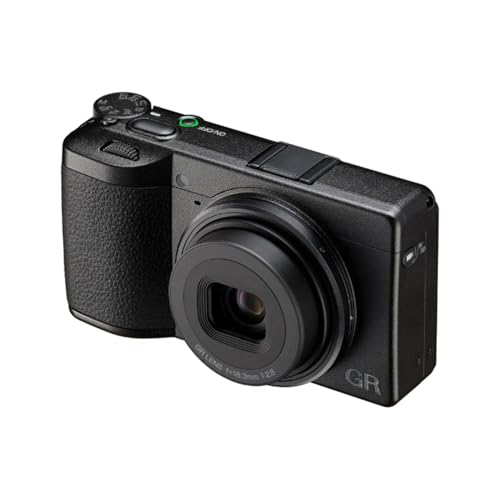
The GR series has a devoted following among street photographers and minimalist travellers, and the image quality from this sensor and lens is the reason. Snap Focus lets you preset a focus distance so the camera fires the instant you press the shutter, which suits spontaneous travel shooting.
Of course, the downsides mirror the X100VI’s. There’s no zoom (it’s fixed at 28mm), the autofocus struggles a bit in low light, and there’s no weather sealing. There’s no built-in viewfinder either, though Ricoh sells optional GV-1 and GV-2 external finders. Battery life is modest at around 250 shots. But if you want an APS-C sensor in a trouser pocket, nothing else here does it.
Key specs
- Sensor: APS-C (23.3 x 15.5mm)
- Lens: Fixed 18.3mm f/2.8 (28mm equivalent)
- Viewfinder: None built in (optional external GV-1 and GV-2 finders)
- Focusing: Snap Focus
- Battery: Around 250 shots per charge
- Weight: 9.2 oz / 262 g (with battery and card)
Skip this if you want zoom, weather sealing, or a battery that lasts a big shooting day. The GR IV rewards a particular kind of travel photographer, one who values a single fixed wide-angle lens above everything else.
Also Considered: Canon PowerShot G7 X Mark III and SX740 HS
The Canon G7 X Mark III used to be one of the most recommended compacts around, with a 1-inch sensor and a fast f/1.8-2.8 lens (24-100mm equivalent) that’s lovely in low light. It’s off our list because of the price. It launched at $749.99 in August 2019, and new copies now sell for around double that.
Buying used doesn’t rescue it either. MPB had used copies at $1,299 to $1,429 at the end of October 2026, which is more than a used RX100 VII was going for at the same time, and the Sony is the better travel camera.
Canon released a graphite 30th anniversary edition in spring 2026, but hasn’t announced a successor. What Canon has said about its next compact is in the What’s Coming Next section below.
If you’ve got your heart set on a G7 X, set a stock alert and look at the RX100 VII in the meantime. If you still want one, it’s on Amazon and B&H.
You’ll also still see the Canon PowerShot SX740 HS recommended for travel. We’ve left it off deliberately. Canon stopped taking orders for it in March 2025, so it’s no longer sold new, and secondhand copies often go for more than they’re worth. It’s an ageing small-sensor superzoom, and if you want reach in a small body the ZS99 is the better buy.
Five short emails over ten days, from me: the settings to change out of the box, keeping it powered and safe on the road, a test shoot before you fly, and backing up your photos while you travel.
You'll also get my monthly newsletter. Unsubscribe any time.
Buying These Used: When It Changes the Recommendation
Compact cameras hold their value differently from interchangeable-lens cameras, and the used market can shift the order on this list. The things to check when buying used are different too.
On an interchangeable-lens camera, shutter count is one of the first numbers people ask about. Many compacts don’t report one at all, and the parts that tend to wear first are the zoom mechanism, the battery and the screen.
What to check when you buy a compact used:
- Take a few test shots at f/8 or smaller against a plain white wall or the sky. Dust on the sensor shows up clearly, and on a sealed compact it can’t easily be cleaned.
- Run the zoom in and out a dozen times, listening for grinding or hesitation. The zoom mechanism is the most common point of failure on compacts that have been knocked around.
- Check the battery holds a charge. Compact batteries are small and wear out, so budget for a new one if the seller can’t vouch for it.
- Look at the screen and viewfinder for dead pixels, especially on a camera that’s lived in a hot bag.
- Check the lens for scratches and fungus. Fungus is a deal-breaker, as it can spread to other gear stored with it.
Here’s where used prices change the call, based on what MPB had listed at the end of October 2026:
- A used Sony RX100 VII was $1,129 in Good condition, $1,229 Excellent and $1,269 Like new. That’s a saving over new, but it’s more than a new ZS300 costs, so used no longer changes the RX100 VII versus ZS300 decision. If you’ve already decided on the VII, a used one saves you some money; it won’t turn it into a budget camera.
- A used Canon G7 X Mark III was $1,299 to $1,429, a little below new but nowhere near enough to fix its price problem.
- The Panasonic ZS200 is the ZS300’s predecessor, and it has the viewfinder the ZS300 lost. Used copies are scarce (MPB had eight, at $539 to $974), but the cheaper ones are worth a look.
- The Panasonic ZS80, the ZS99’s predecessor, has the built-in viewfinder the ZS99 dropped. At $184 to $699 it’s cheaper than a new ZS99 for all but the best copies, at the cost of an older sensor and processor.
- The Sony RX100 V is what we use ourselves, but it isn’t the bargain it was. Graded copies were around $1,000 to $1,180, which puts it in new ZS300 territory. The RX100 VI is closer to the VII’s feature set.
- The Canon G7 X Mark II is the older sibling of the Mark III, with the same 1-inch sensor class and fast lens but no 4K video. At $554 to $1,419 it largely sidesteps the Mark III’s price problem, at least for the lower-graded copies.
- The Ricoh GR III, the GR IV’s predecessor, has the same APS-C-in-a-pocket idea. Prices have held up because the GR line has a devoted following, so the saving isn’t big. Used GR IIIs were $1,029 to $1,469, and used GR IVs $1,419 to $1,529.
- The Fujifilm X100V came before the X100VI. Used prices for the V went up after the VI launched, because the VI is still hard to find at list price. Used copies were roughly $1,400 to $1,800, which overlaps the VI’s $1,799.95 list price, and the image quality is very close to the VI’s.
Used prices move around a lot, of course, so treat these figures as a starting point for your own search rather than a quote.
KEH is the other big used dealer in the US alongside MPB. Both grade their stock and offer a return window, which matters when you can’t inspect a camera in person.
Where We Have Changed Our Minds
This guide has been updated for years, and a few of its calls have aged badly. Here’s what we got wrong.
We told people to just use their phone for too long. From about 2018 onwards, our advice to most travellers was that a phone was enough. That was right at the time. It stopped being right somewhere around 2024, when manufacturers started making new compacts again, and we were slow to say so.
We had the ZS99 as our top pick. When the ZS99 launched at $499.99 it was a budget camera with an enormous zoom, and we made it our pick for most travellers. At $697.99 it isn’t a budget camera any more, and once it costs that much, the RX100 VII is the better recommendation for most people. The ZS99 is still our value pick if reach is what you want.
We kept recommending the Panasonic ZS200 after it became unbuyable. It was the right camera on paper for a long time, and we left it near the top of the list while its street price drifted further and further from anything sensible. A recommendation you can’t act on isn’t much use to anyone.
We quoted list prices as if they were what you’d pay. For several cameras here, list price and street price haven’t matched for years. We now say when a camera is selling well above list, and we give the used prices we found, with the date.
We had the used RX100 VII at $700 to $850. An earlier version of this guide said you could get one in excellent condition for that and called it the easy buy over a new ZS300. When I checked MPB at the end of October 2026, Good-condition copies started at $1,129. That advice has gone.
We had a spec wrong on our own top pick. An earlier version of this guide said the Panasonic ZS99 had an electronic viewfinder. It doesn’t, and our comparison table said otherwise for longer than it should have, until a reader pointed it out. Every spec cell in the table has since been checked against the manufacturer’s own published specification rather than against our previous version of the same table.
What’s Coming Next for Compact Cameras
Compacts are busier than they’ve been in years. Panasonic has done the most, with the ZS300 in March 2026 and the Lumix L10 in May, both covered above.
Ricoh announced in August 2026 that a GR IVx is in development, planned for winter 2026 or later. Sony hasn’t released an RX100 VIII, so the VII from 2019 is still the latest, though Sony told DPReview in March 2026 that it understands the requests for the series. OM System hasn’t announced a successor to the TG-7 either.
Canon told DPReview at CP+ 2026 that its next compact camera is in development, without saying what it is. As I write this in late 2026 there’s no announced model, specification or date, and Canon’s only PowerShot news this year has been the G7 X Mark III anniversary edition and a V1 video kit.
There’s also a story going round about several new PowerShots, but it traces back to a few rumour sites repeating each other, and I wouldn’t plan a purchase around it.
If you need a camera now, buy one of the cameras above. If you’re set on a Canon compact and you’re not in a rush, waiting to see what Canon announces is reasonable.
What About Mirrorless and DSLR Cameras?
If you’re reading this and wondering whether a compact is really the right choice, it might not be. Compacts are at their best when portability matters more than anything else. If you’re willing to carry a slightly bigger camera, a mirrorless camera gives you interchangeable lenses, larger sensors and more creative control.
DSLRs have largely been replaced by mirrorless cameras, but they’re still capable, and you can find good used options at fair prices. We have a DSLR camera guide if you’re thinking about that route.
For an overview of every camera type and how to choose between them, see my guide to the best travel camera.
Key Specs Explained
If you’re comparing cameras and the specifications are confusing, these are the ones that make a difference for travel photography.
Sensor size is the most important spec. Larger sensors capture more light, which means better image quality, especially indoors and in low light.
From smallest to largest on this list, there’s the 1/2.3-inch type (Kodak FZ55, Canon ELPH 360, OM System TG-7 and Panasonic ZS99), then 1-inch (ZS300 and RX100 VII), then the Canon V1’s 1.4-inch and the L10’s Four Thirds, which are close to each other in size, and finally APS-C (X100VI and GR IV). The jump from 1/2.3-inch to 1-inch is the most noticeable improvement.
Optical zoom tells you how much the lens can magnify a distant subject without losing quality. The ZS99’s 30x is exceptional for a compact. The ZS300’s 15x and the RX100 VII’s 8x are solid middle ground, paired with bigger 1-inch sensors. The X100VI and GR IV have no zoom at all, a deliberate choice for photographers who like working with one focal length.
Image stabilisation compensates for hand movement at slower shutter speeds. It helps most at long zoom settings and in low light, and most of the cameras here have some form of it, though how well it works varies.
Aperture is how wide the lens opens to let light in. A lower f-number means a wider opening and more light. The L10’s f/1.7 is very fast for a compact. Most of the others start at somewhere between f/2 and f/3.3.
RAW support means the camera can save the unprocessed image data, which you can edit much further in software like Adobe Lightroom. If you plan to edit your photos seriously, look for it. If you just want to share photos as they come out of the camera, it doesn’t matter.
Published weight is the spec people compare without checking how it was measured. Most manufacturers quote weight with the battery and memory card fitted, which is the number that matters for a camera you’ll carry all day. A few quote body only, which reads lighter for the same camera. Where the basis differs on this list, we say so.
Getting Better Photos from a Compact Camera
If you’ve just bought one of these, my guide to using a compact camera covers the settings to learn before your trip and how to get decent results in dim light.
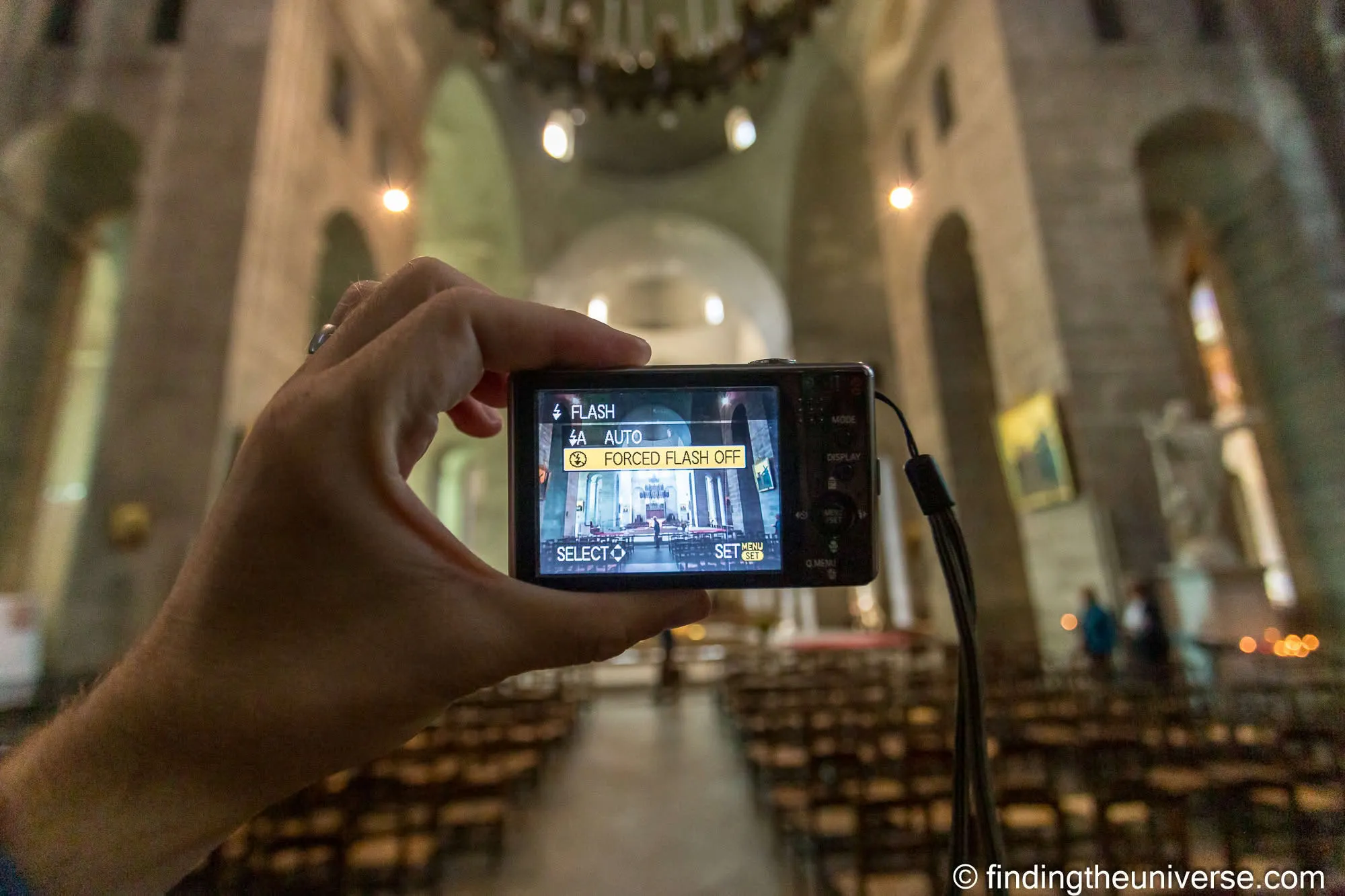
Before you go, spend a day learning the camera around home. The worst time to find out how to turn the flash off is in a museum with a tour group moving on without you. Shoot in good light where you can, and take your time over composition, which my guide to photography composition covers in detail. For editing I use Lightroom, and our list of the best photo editing software includes free options too.
Useful Camera Accessories
You don’t need much with a compact camera, but a few extras make life easier.
Carry at least one spare battery and a good memory card such as the SanDisk Extreme PRO 128GB. Batteries drain faster in the cold, which my cold weather photography tips cover, and our guide to the best memory cards for photography explains which speed rating you need.
A case or small padded bag keeps a compact safe in a daypack, and our guide to the best camera bags for travel has options for every size of camera.
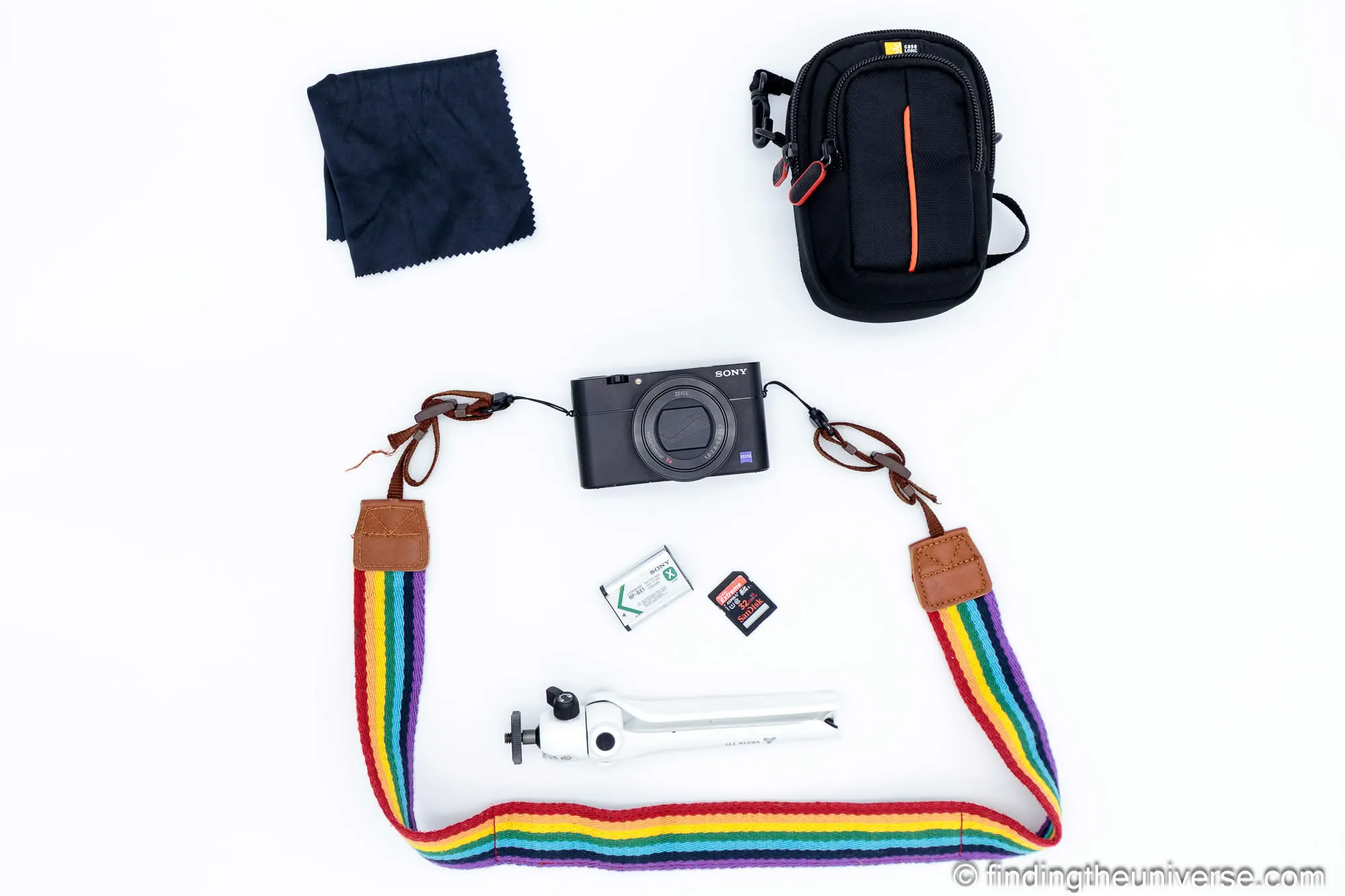
If you go for one of the heavier compacts, a wrist strap is worth having. I’ve used Peak Design straps since 2015, and the Peak Design Cuff wrist strap suits a compact well. For something more colourful, the handmade straps from iMo are lovely on lighter cameras.
For hiking, the Peak Design Capture Clip attaches to a backpack strap or belt so you can clip the camera in and out one-handed, rather than having it swing from a strap or buried in a bag. If you’re carrying something bigger than a compact, our guide to camera backpacks for hiking covers the full range.
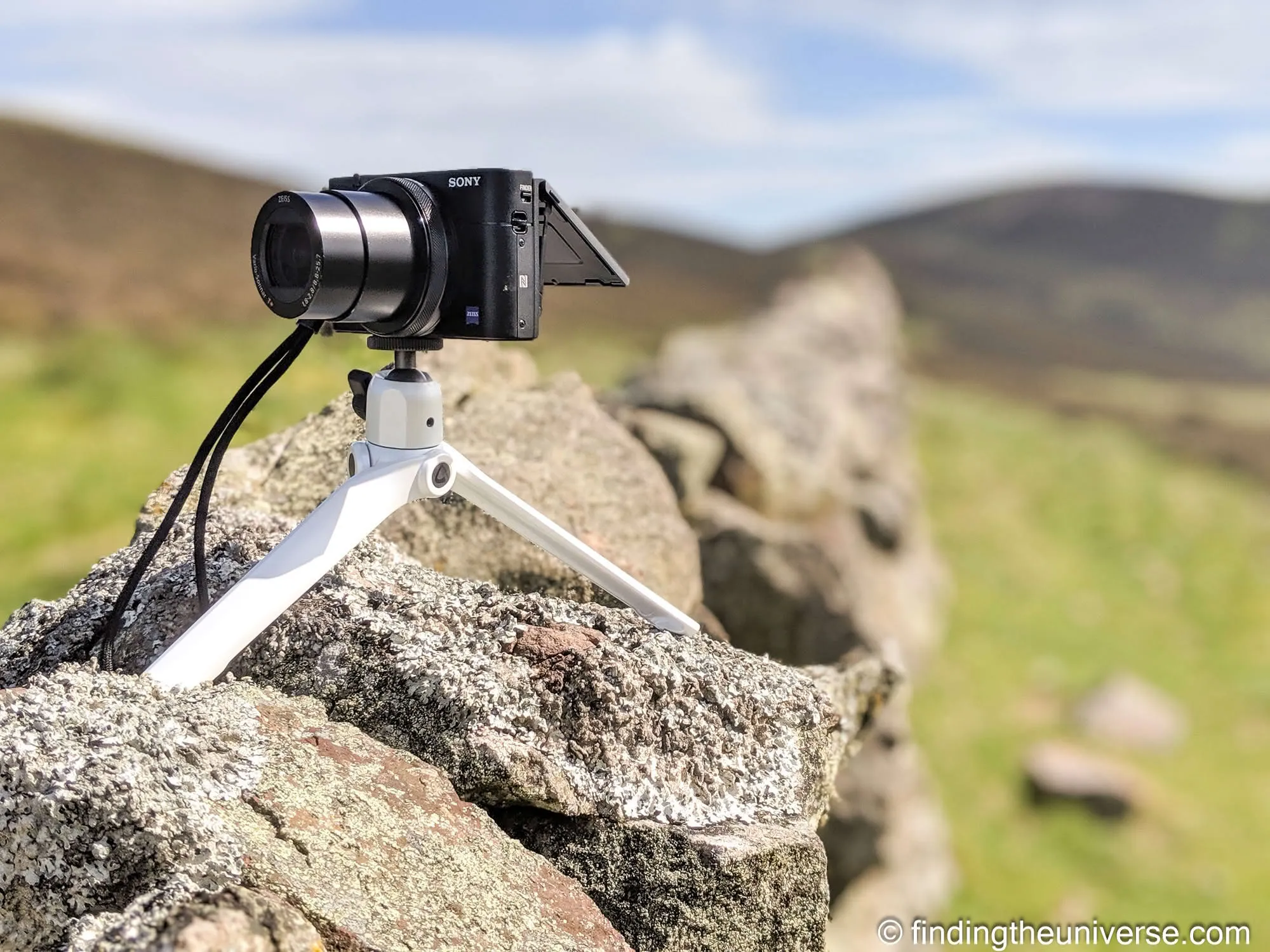
A small tripod helps with low-light shots and self-portraits, and our guide to the best travel tripods covers the small ones as well as full-size travel tripods.
Want to Take Better Travel Photos?
Picking the right camera is the first step. Knowing how to get the most out of it is the next one, and that's what my online travel photography course is for. It starts with how your camera works, then moves on to composition, light and editing, and I give you feedback on your photos as you go.
I've been teaching it since 2016, over 2,500 students have taken it, and it's a single payment for lifetime access.
See What the Course CoversJust bought a camera? I'll send you five free emails on getting it ready for your first trip.
Frequently Asked Questions
Is a compact camera better than a smartphone for travel photography?
For casual photos in good light, no. A modern smartphone is perfectly capable, and it’s already in your pocket.
A compact camera wins in three areas: optical zoom (real magnification without losing quality), sensor size (better image quality indoors and in low light), and the experience of using a dedicated camera.
If you regularly find yourself frustrated by blurry indoor photos or by not being able to zoom in on distant subjects, or you just want photography to feel more intentional, a compact is a worthwhile upgrade. If your photos are mainly for social media in good light, save the money.
What is the best compact camera under $500?
This got harder in 2025. The Panasonic ZS99 launched at $499.99, but Panasonic’s own US store now sells it for $697.99, so it no longer fits a firm $500 budget.
If your ceiling is firm, the Canon PowerShot ELPH 360 HS A ($379.99 list) is the most capable camera under it, though it runs on 2016-era internals and stock has been patchy. The Kodak PixPro FZ55 ($159.99) is the budget floor, and the Kodak PixPro WPZ2 ($199.99) is the one to look at if you want waterproof.
If you can stretch your budget, the ZS99 is the better long-term buy.
Is the Panasonic ZS99 or the Sony RX100 VII the better buy?
For most people who can afford it, the Sony RX100 VII. It has a bigger 1-inch sensor, better autofocus and a pop-up viewfinder, and it takes better pictures in almost every situation. That’s why it’s our overall pick.
The Panasonic ZS99 is the better buy if reach is what you want, or if your budget is closer to $700 than $1,200. It has more than three times the zoom (720mm against 200mm) for a lot less money, and it’s our value pick for exactly that reason.
Are compact cameras worth buying in 2026, or are they dead?
Compact cameras aren’t dead. They’re having a real revival.
Panasonic, Canon, Ricoh and Fujifilm have all released new compacts in the last couple of years, driven partly by younger photographers who want a dedicated camera rather than another phone feature. The selection is smaller and prices are higher than a decade ago, but the cameras available now are good.
What is the best compact camera for everyday use?
The Sony RX100 VII, if the budget allows. It’s small enough to carry every day and good enough that you’ll want to.
On a tighter budget, the Canon ELPH 360 HS A is the most pocketable camera here at 5.2 oz. And if your everyday involves beaches, pools or small children, the OM System TG-7 is the one that’ll survive it.
What is the best compact camera for low light?
For low light, sensor size matters most. The Fujifilm X100VI and Ricoh GR IV have the largest sensors here (APS-C) and will do best in dim conditions.
If you want a zoom as well, the Panasonic Lumix L10 is the strongest low-light option on this list, with a Four Thirds sensor and a lens that opens to f/1.7. The Sony RX100 VII is the more pocketable choice at 1-inch.
The Canon G7 X Mark III is strong in low light on paper, thanks to its f/1.8 lens, but at current prices it’s hard to recommend. Whichever camera you pick, a small tripod will improve your low-light results a lot.
Are any compact cameras weather sealed for shooting in rain?
The OM System TG-7 and the Kodak PixPro WPZ2 are the two fully waterproof cameras here, both rated to 15 metres. Of the rest, the Fujifilm X100VI is the only one with any weather-resistance claim, and Fujifilm only calls it weather-resistant with the AR-X100 adapter ring and PRF-49 filter fitted. Panasonic and Ricoh make no sealing claim for the L10, ZS99, ZS300 or GR IV, and I wouldn’t count on any of the others in heavy rain.
For travel in wet places (Scotland, Iceland, the Pacific Northwest, tropical rainy seasons), the realistic plan with a non-waterproof compact is a small rain cover and the discipline to put the camera away when it pours. A light drizzle is fine if you wipe the body down between shots.
If weather sealing is critical and you can carry a bit more, a weather-sealed mirrorless camera is the better choice. See our mirrorless camera guide for options.
What is the best waterproof compact camera?
The OM System Tough TG-7. OM System rates it waterproof to 15 metres, shockproof from 2.1 metres, crushproof to 100 kg and freezeproof to -10°C, and its f/2.0 lens is brighter than most cameras in this class.
If you want to spend a lot less, the Kodak PixPro WPZ2 is also rated to 15 metres and is shockproof from 2 metres, at $199.99 list. It’s a much simpler camera, but for pool and beach photos it does what you need.
What is the best compact camera for safari?
Compacts aren’t ideal for safari. Wildlife is often far away and the best light is at dawn and dusk, so a mirrorless camera with a long telephoto lens will give you noticeably better results.
If you’re set on travelling light, the Panasonic ZS300 is the reach option with a 1-inch sensor, going out to 360mm. The Sony RX100 VII only reaches 200mm, but gives you a viewfinder, a brighter lens and better autofocus for tracking animals. The Panasonic ZS99 gets you the most reach of all at 720mm, but its smaller sensor struggles in the dim light at either end of the day.
Pair any of them with a small bean bag or mini tripod for stability when shooting from a vehicle.
Sensor size or zoom range, which should I prioritise?
Where you shoot decides it.
If most of your photography is outdoors in good light and you want to photograph distant subjects (wildlife, architecture, landmarks across a square), prioritise zoom. The Panasonic ZS99’s 30x zoom gives you reach no 1-inch camera here can match.
If most of your photography is indoors, in dim restaurants, churches, museums or after sunset, prioritise sensor size. A 1-inch sensor (RX100 VII, ZS300) or APS-C (X100VI, GR IV) will give you noticeably cleaner images than a 1/2.3-inch one.
If you shoot roughly half and half, the RX100 VII is the best compromise on this list, with a 1-inch sensor, 8x zoom and a viewfinder. The ZS300 is the cheaper compromise, with more zoom and no viewfinder.
Do I need a compact camera with a viewfinder?
An electronic viewfinder (EVF) is useful but not essential. It makes composing in bright sunlight much easier, because you can see the image clearly without glare on the screen.
The Sony RX100 VII, Fujifilm X100VI and Panasonic Lumix L10 have viewfinders. The Panasonic ZS99 and ZS300 don’t, and most budget and mid-range compacts rely on the rear screen too.
If a viewfinder matters to you and the RX100 VII is out of budget, a used ZS80 is the cheapest route to a travel zoom that has one. If you mostly shoot indoors or in shade, you can do without.
Should I wait for new compact cameras to come out?
Probably not, unless you’re set on one brand. The two big launches of 2026, the Panasonic ZS300 and Lumix L10, are already out and covered above.
Canon has said its next compact camera is in development but hasn’t announced a model, a specification or a date, and Sony hasn’t announced an RX100 VIII. If you’re specifically interested in a Canon compact and aren’t in a rush, it may be worth waiting to see what Canon announces. If you need a camera now, everything in this guide is current.
What compact camera do you personally use?
Our compact is a Sony RX100 V, an earlier version of the RX100 VII recommended in this guide, and it’s been a reliable part of our kit for years.
My main cameras are Canon full-frame bodies with interchangeable lenses, but the RX100 is what we grab when we want something small to throw in a bag. If I were buying a compact new today, it would be the RX100 VII, or the ZS99 if I wanted the most zoom for the money.
Can I print photos from a compact camera?
Yes. Any camera on this list will give you prints that look great up to about 8×10 inches.
The cameras with bigger sensors, particularly the 1-inch models and above, will handle larger prints (11×14, 16×20) well. For standard photo sizes and anything shared online, every camera here does pretty well.
If you’ve got a question about a particular camera, or want a recommendation for your trip and budget, leave it in the comments below and I’ll do my best to help!
Leave a Reply