I lived in New Zealand for a year, and in that time I drove just about every road in this article, some of them more than once. So when I tell you that you can see both islands in two weeks but probably shouldn’t try, that comes from adding up the actual driving hours rather than looking at a map and hoping.
Two weeks across both islands means around 47 hours of driving and ferry time. Two weeks on the South Island alone means about 31 hours of driving, and a far better trip.
That’s the short answer. My recommended route is fourteen days on the South Island, flying in and out of Christchurch, and every leg of it below carries its own drive time plus a running total. The both-islands versions get the same treatment, of course, so you can check my working rather than take my word for it.
A word on where the numbers come from: every drive time here is either a figure I’ve checked against the operator or road agency that manages that stretch (RealNZ, DOC, the attraction itself), or one I’ve driven and padded to reflect reality. New Zealand drive times published around the internet are wildly unreliable, and while researching this piece I found reference tables that were wrong by a factor of two. Where a number is a minimum, I say so. Where it’s a planning figure with stops built in, I say that too.
Table of Contents:
New Zealand in Two Weeks: The Quick Take
Here are the three ways to spend fourteen days in New Zealand with a vehicle, and what each one really involves. Transit means driving plus ferry sailing plus terminal check-in plus shuttles, because that’s the number you’ll feel.
| South Island Only | Both Islands by Ferry | Both Islands by Flight | |
|---|---|---|---|
| Total transit | ~31 hours | ~47 hours | ~31 hours |
| Overnight bases | 6 | 9 | 8 |
| Worst single day | 5h 30m | ~9h (Milford day return) | The fly day |
| Rental contracts | 1 | 1 | 2 |
| What you give up | The North Island | Nothing named, which is the problem | Wellington, the West Coast, both glaciers, the crossing |
| My verdict | Do this | Only if you accept the hours | Same hours as the South Island route, fewer rewards |
If you just want the recommendation: spend your two weeks on the South Island, fly in and out of Christchurch, and save the North Island for another trip (or a longer one, in which case you want our month in New Zealand itinerary instead). The full day-by-day route is below, along with both alternatives in full.
Can You See Both Islands in Two Weeks?
You can, and plenty of people do, but the arithmetic is against you. New Zealand looks compact on a map but the drives take time. The roads are mostly two-lane, they wind, they cross mountain passes, and the scenery makes you stop far more often than you plan to.
A “five hour” leg is a seven hour day by the time you’ve had lunch and pulled over eleven times for photographs. Eleven is me being conservative. I pull over more than you’d believe, and a year of living there never taught me to build it into the estimate.
Add up a sensible both-islands route touching the places people fly to New Zealand for (Hobbiton, Rotorua, the Tongariro Crossing, the ferry, the glaciers, Queenstown, Milford Sound) and you get roughly 47 hours of transit in fourteen days.
That’s an average of well over three hours a day, every day, for your entire holiday, with nine different overnight bases. Five of those days run to four and a half hours or more. One of them, the Milford Sound day return from Queenstown, is about nine hours of driving. I said in my month itinerary that you don’t want to do Milford as a single day from Queenstown if you can avoid it, and I stand by that. The problem is that a fourteen-day both-islands route can’t avoid it, because there’s no room in the schedule to base yourself at Te Anau.
The South Island route below fixes exactly that. Milford is done from Te Anau, the way it should be, the worst driving days are two of the country’s great alpine passes rather than motorway slogs, and you sleep in six places instead of nine. You get time to actually go outside and do the things that make a New Zealand trip memorable, rather than watching it all pass by your window.
Yes, you give up the North Island, which is a real sacrifice, and I’ve listed exactly what that means further down.
One more piece of the arithmetic that’s easy to skip: day one doesn’t exist. You’ll arrive off a long-haul flight, having possibly crossed the international date line, into a hire car queue. Whatever you plan for that day, you’ll achieve a supermarket run and an early night. The realistic fourteen days is thirteen, and this route treats it that way.
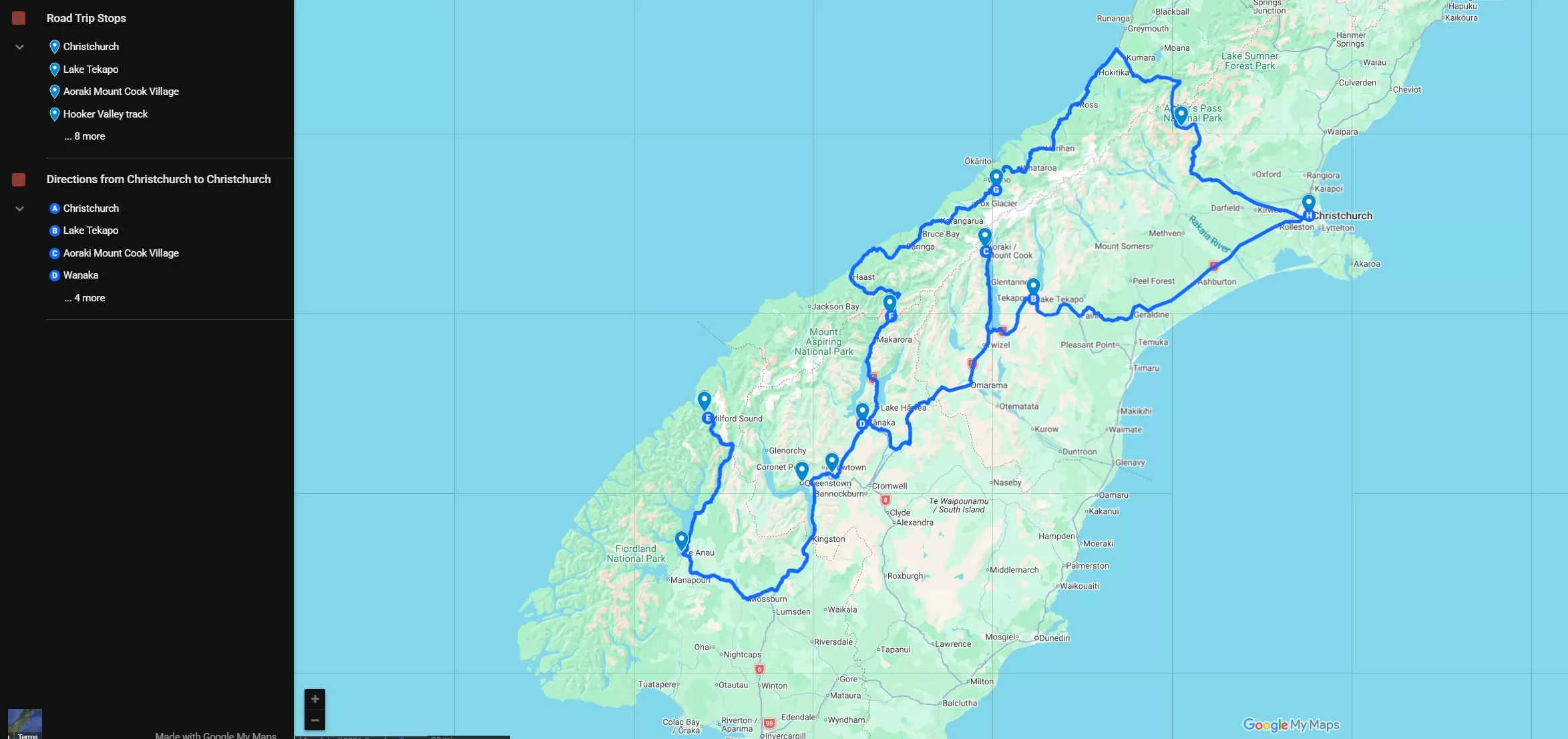
My Two Week New Zealand Itinerary: The South Island Route
This is the route I’d hand to a friend with fourteen days and a long-haul flight booked. It’s a loop from Christchurch, which means one rental contract, no one-way fees, and usually cheaper flights than an open-jaw ticket. You can of course pick and choose from it, and the running total column will tell you what each swap costs.
| Day | Plan | Driving | Running total | Night |
|---|---|---|---|---|
| 1 | Arrive Christchurch | 0h | 0h | Christchurch |
| 2 | Christchurch to Mount Cook, via Lake Tekapo | 4h | 4h | Mount Cook village |
| 3 | Hooker Valley Track | 0h 30m | 4h 30m | Mount Cook village |
| 4 | Mount Cook to Wanaka | 3h | 7h 30m | Wanaka |
| 5 | Wanaka: Roy’s Peak or a rest day | 0h 30m | 8h | Wanaka |
| 6 | Wanaka to Queenstown over the Crown Range | 1h 30m | 9h 30m | Queenstown |
| 7 | Queenstown | 0h 30m | 10h | Queenstown |
| 8 | Queenstown to Te Anau | 2h 15m | 12h 15m | Te Anau |
| 9 | Milford Sound day trip and cruise | 5h | 17h 15m | Te Anau |
| 10 | Te Anau to Queenstown | 2h 15m | 19h 30m | Queenstown |
| 11 | Queenstown to Franz Josef over the Haast Pass | 5h 30m | 25h | Franz Josef |
| 12 | Franz Josef and glacier country | 0h 30m | 25h 30m | Franz Josef |
| 13 | Franz Josef to Christchurch over Arthur’s Pass | 5h 30m | 31h | Christchurch |
| 14 | Fly out of Christchurch | 0h | ~31h |
Thirteen nights, six bases, seven bed changes, and around 31 hours of driving, of which the two longest days are the Haast Pass and Arthur’s Pass, two of the best drives in the country. If you want more detail on those roads, we have a whole guide to the most scenic drives in New Zealand, and this route includes most of them.
For accommodation, I’ve linked a search for each base. Book Queenstown, Te Anau and especially Mount Cook village well ahead in summer. There are very few beds at Mount Cook and they go early.
Day 1: Arrive in Christchurch
Pick up the car, find your accommodation, buy snacks and water for the road, and sleep. If you have energy left over, the Botanic Gardens and a wander around the rebuilt city centre are a gentle start, and Christchurch’s flat, quiet streets are a forgiving place to get used to driving on the left if that’s new to you. Don’t plan anything you’ll be sad to miss. Jet lag will win any argument you schedule for today.
You can browse places to stay in Christchurch here.
Day 2: Christchurch to Aoraki Mount Cook, via Lake Tekapo
An easy first driving day: about 3 hours to Lake Tekapo on good roads, with Geraldine as the natural coffee and fuel stop roughly halfway.
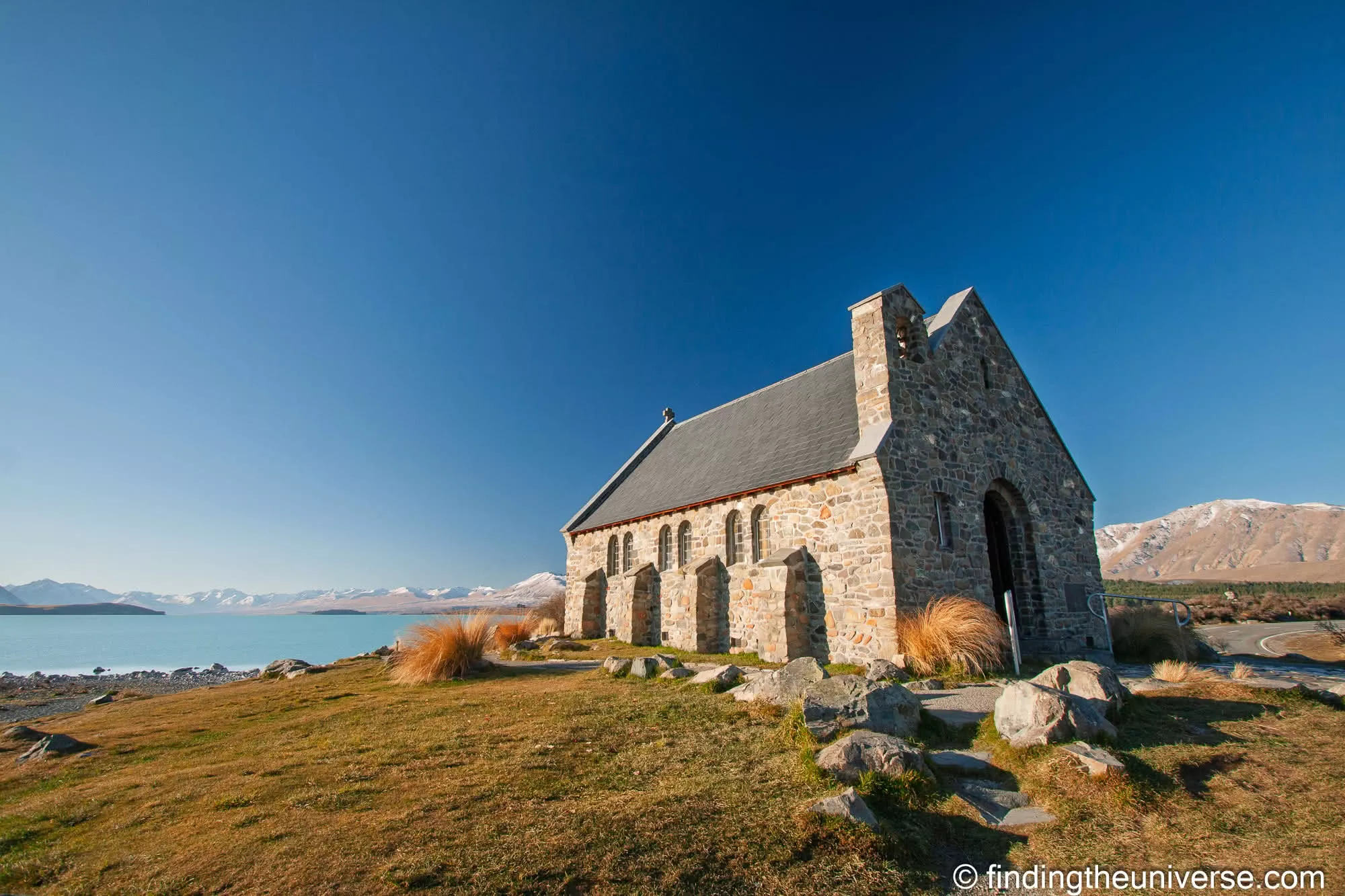
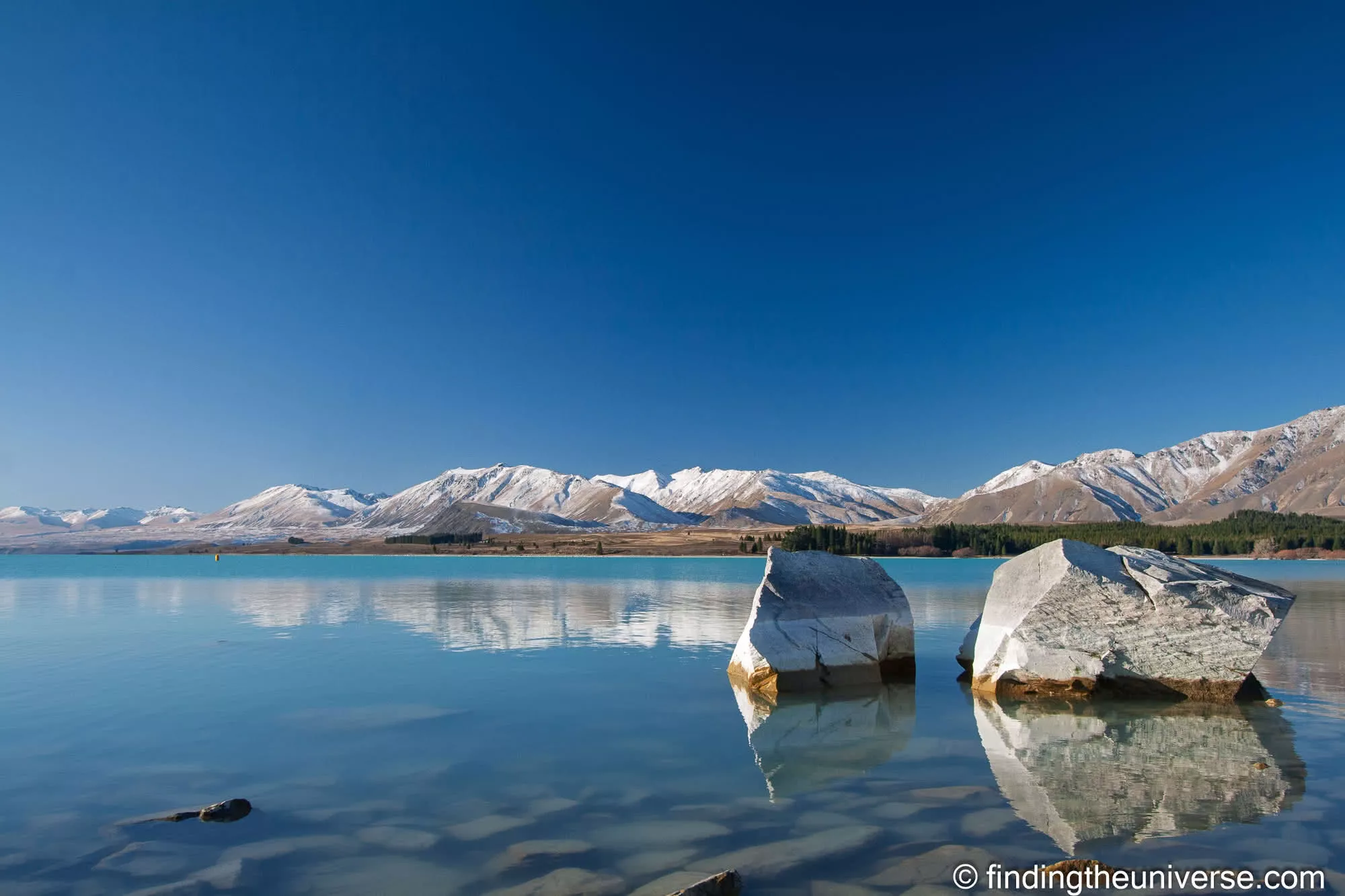
Tekapo really is that milky turquoise colour, brighter in person than most photos of it manage, and the little Church of the Good Shepherd on the shore is the classic photo stop. The Aoraki Mackenzie International Dark Sky Reserve covers the whole basin and Mount Cook National Park beyond it, and it’s the largest of its kind in the Southern Hemisphere, which matters for tonight.
From Tekapo it’s about another hour to Mount Cook village, and it’s one of the best hours of road in New Zealand: along the edge of Lake Pukaki with Aoraki Mount Cook, the country’s highest mountain, growing in your windscreen the whole way. Check in, have dinner, then go outside and look up. On a clear night the sky here is absurd!
Beds in the village are limited: the Hermitage Hotel is the big option, with a handful of lodges and a holiday park besides. Book this base first, before anything else on the trip. You can see more of the area in our Mount Cook photo guide.
Day 3: The Hooker Valley Track
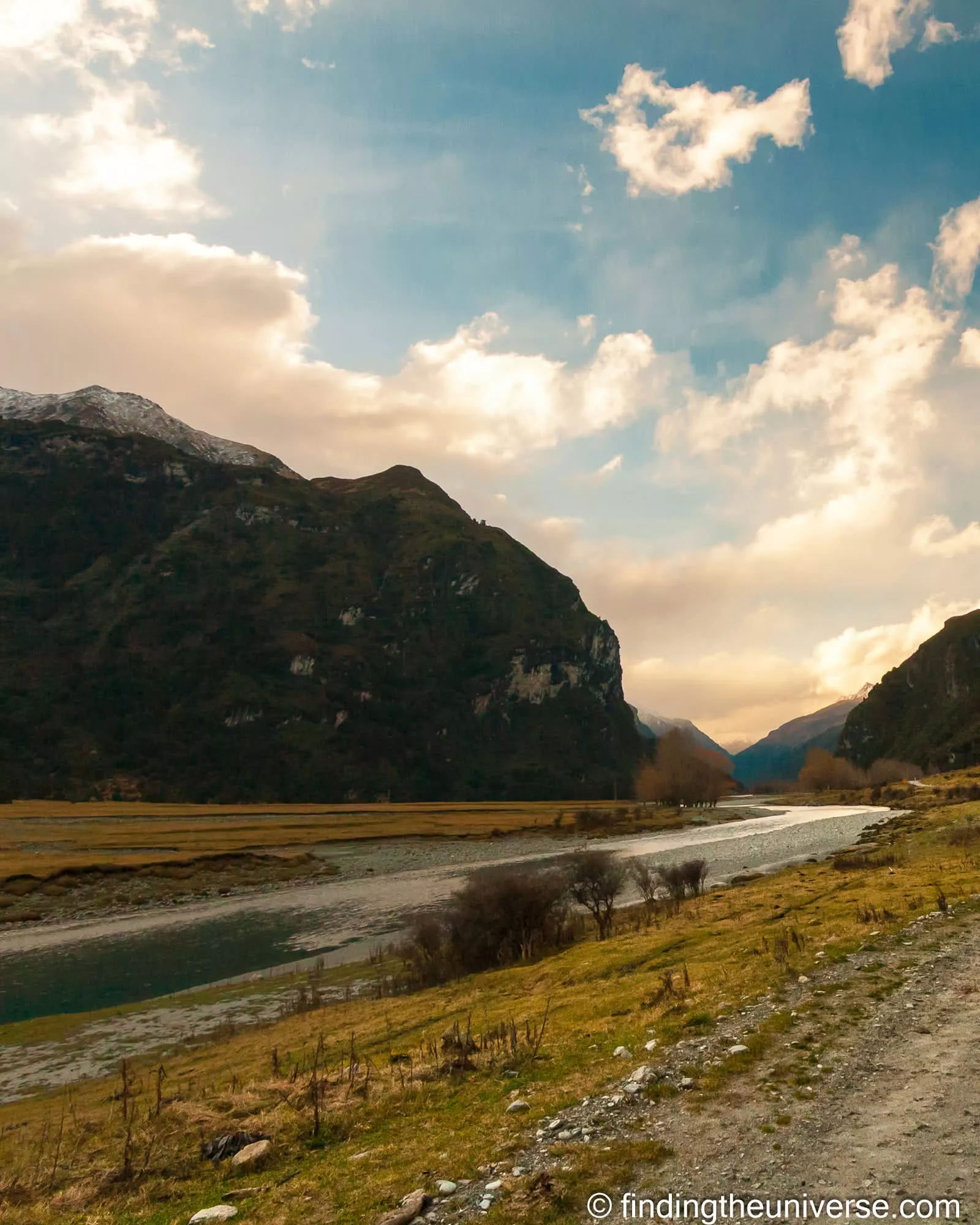
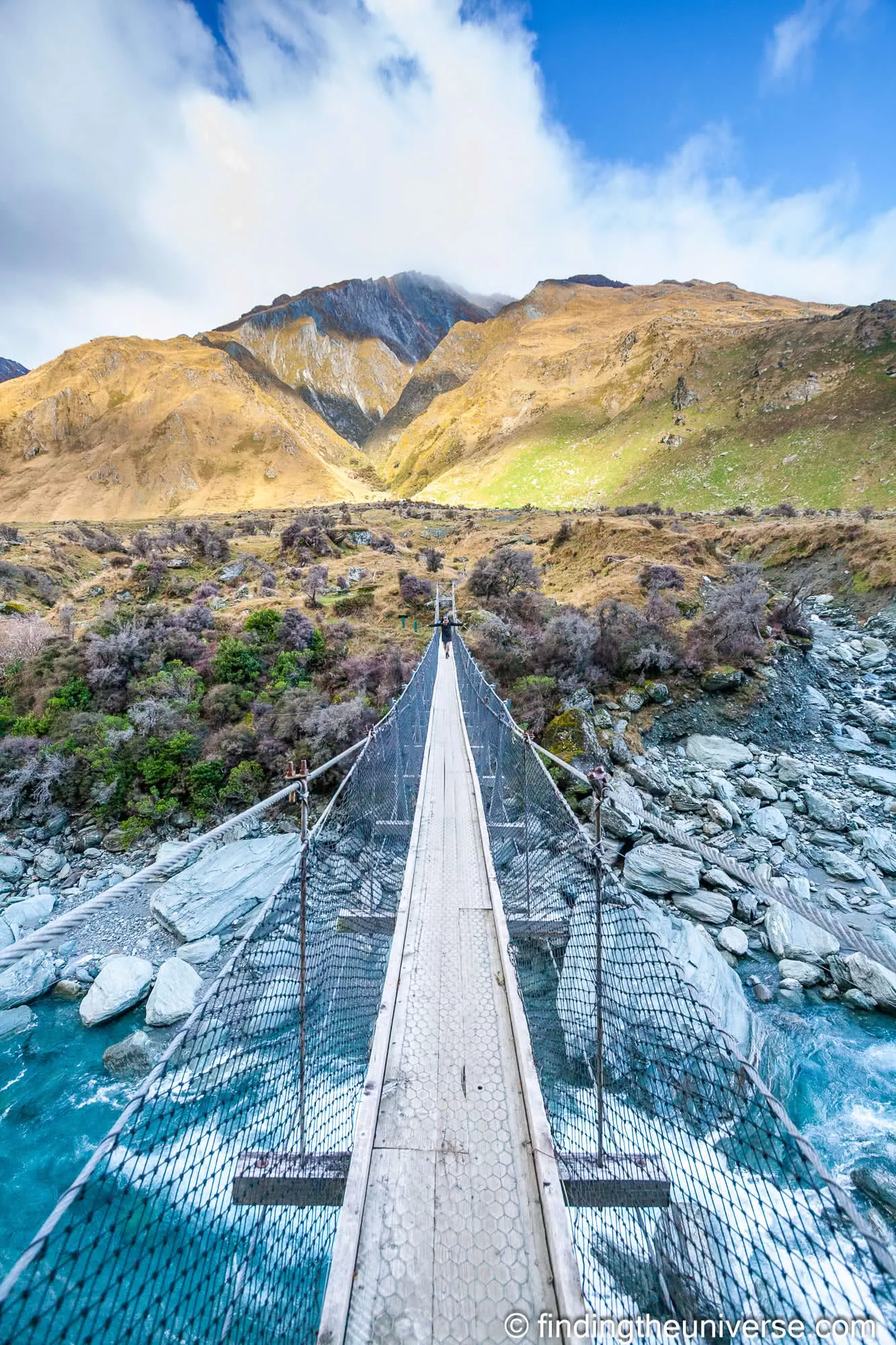
The Hooker Valley Track is the walk at Mount Cook: 10km return, three to four hours, mostly flat, across swing bridges with the mountain dead ahead for the second half. It has the best effort-to-reward ratio of any walk I did in a year of walking in New Zealand.
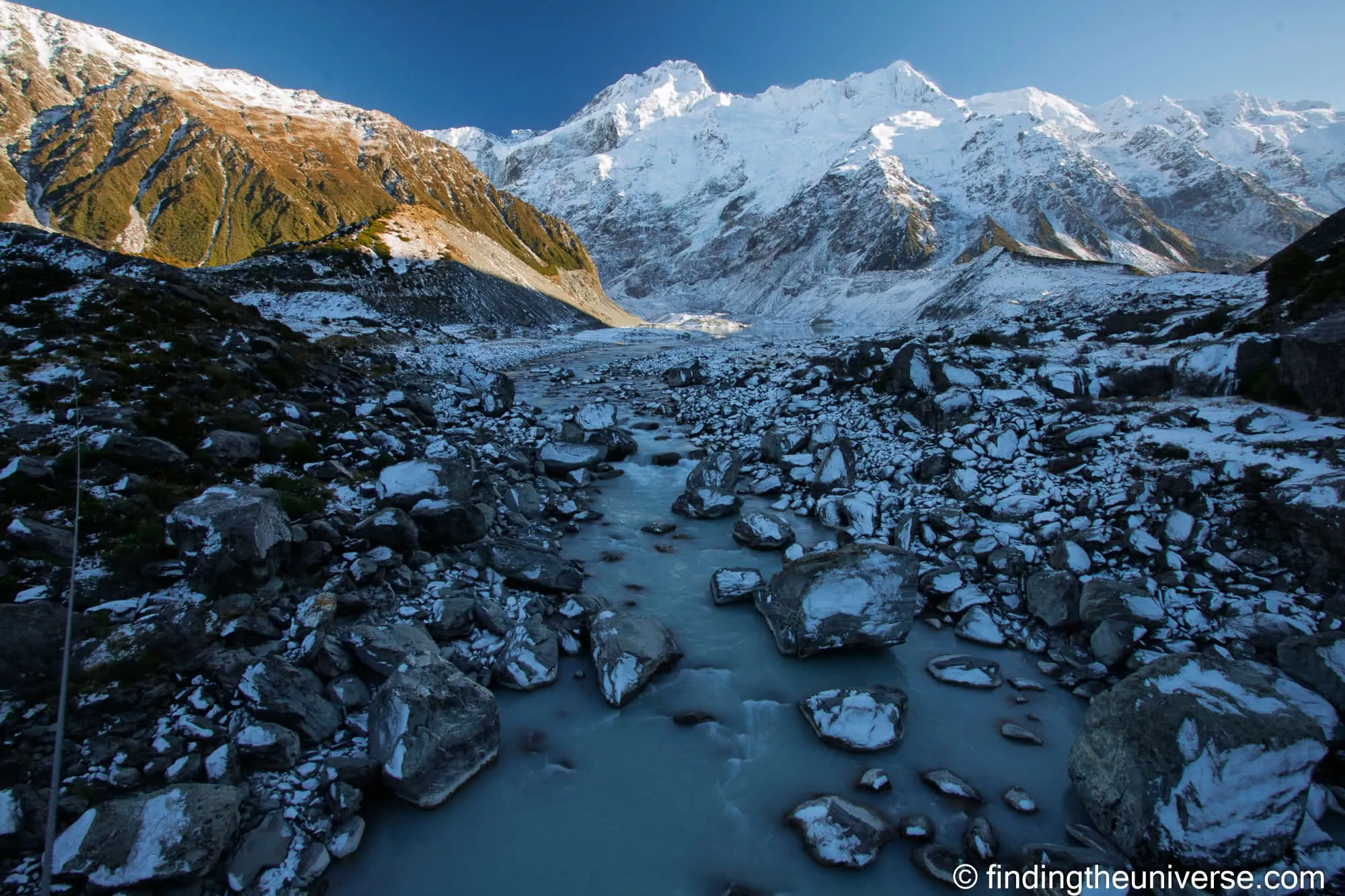
If the upper track is closed when you go, the shortened walk is still worth doing, and the Tasman Glacier viewpoint and Blue Lakes track on the other side of the valley make a good second half of the day. If you’re keen on more walking, several of the best day hikes in New Zealand are within reach of this base.
Days 4 and 5: Wanaka
Mount Cook to Wanaka is around 3 hours: back down Lake Pukaki, through Twizel and Omarama, then over the Lindis Pass, a lovely stretch of golden tussock country that carries ice in winter. Wanaka is Queenstown’s quieter sibling, a lakeside town that’s kept more of its own character, and it earns its two nights.
Day 5 is a choice. The famous option is Roy’s Peak: 11km return, five to six hours, a pretty relentless zigzag climb to one of the most photographed viewpoints in the country. It’s a real workout and the view over the lake and islands justifies every step.
My personal favorite walk in the area is the Rob Roy Glacier track. Sure, you don’t get the epic view of the lake, but it’s usually a bit quieter and the scenery is still just as epic.
The gentler option is a day around town: the lakefront, the lavender farm, a swim if it’s warm, and yes, the Wanaka Tree, a willow standing alone in the lake that you will queue to photograph if that’s your thing. To be fair, it is a very good tree.
Find accommodation in Wanaka here.
Days 6 and 7: Over the Crown Range to Queenstown
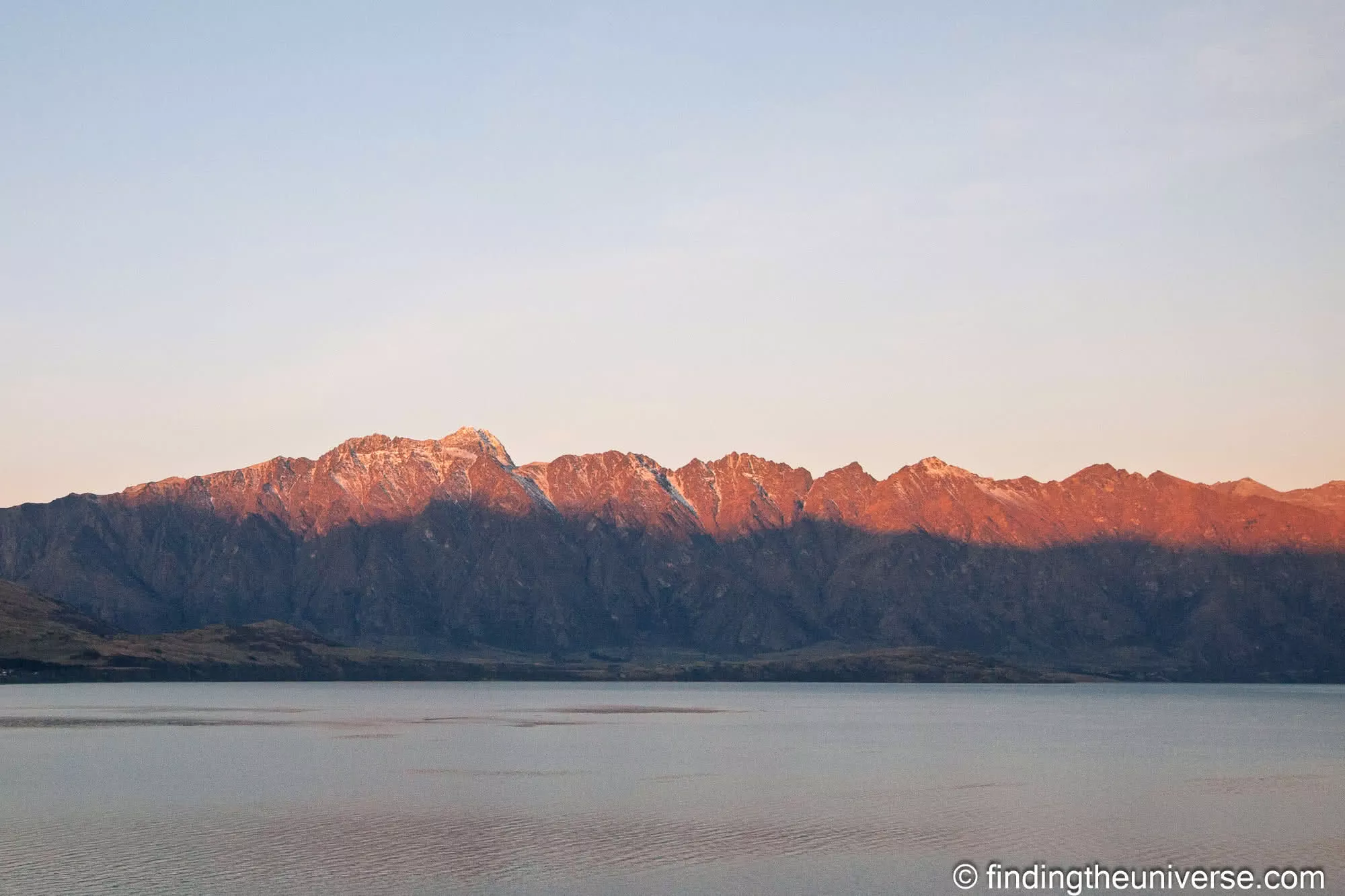
There are two roads from Wanaka to Queenstown, and I drove both several times in my year there; the Crown Range won every time the weather allowed. It’s about 70km and 1 hour 15 minutes to 1 hour 30 minutes, over the highest sealed through road in New Zealand, with a big view of the Wakatipu basin as you drop down the zigzags at the far end and the historic Cardrona Hotel as a stop on the way.
In winter it can carry snow and ice and sometimes requires chains, and some rental agreements restrict or exclude it, so check yours. If either applies, go round via Cromwell instead, about 117km on easier roads, and allow closer to 1 hour 45 minutes.
Queenstown itself needs no introduction from me. It’s the adventure capital of, arguably, anywhere, and whatever your appetite (bungy, jet boat, gondola, wine tasting in Gibbston, or a quiet lakefront walk with an ice cream) it’s catered for. With one full day I’d pick one big activity for the morning and spend the afternoon on the lake or up Ben Lomond. Several of our South Island must-dos cluster around this corner of the island, so have a look before you choose.
Queenstown accommodation spans hostels to lodges and sells out in peak season: browse Queenstown places to stay here.
Days 8 to 10: Te Anau and Milford Sound
This is the stretch where the geography punishes optimism. Milford Sound is 283km from Queenstown, and RealNZ, the main Fiordland operator, quotes that drive at 4 hours 25 minutes each way. There is one road in and one road out. Done as a day trip from Queenstown it’s around nine hours of driving wrapped around a two-hour cruise, and it turns the best sight in the country into an endurance event.
So don’t do that.
Drive to Te Anau on day 8: 170km and about 2 hours 15 minutes of driving, though RealNZ suggests allowing 2 hours 45 minutes, and the road along Lake Wakatipu past the Devil’s Staircase makes a good case for the slower plan and its viewpoints.
Make the pretty lakeside town your base for two nights. Day 9 is Milford: 121km up the Milford Road, which DOC calls a minimum of 2 hours with no stops, and for which 2 hours 30 minutes is a realistic planning figure.
Budget more, because the road itself is an event: the Eglinton Valley, the Mirror Lakes, and the Homer Tunnel, a rough-hewn single-lane hole through the mountain with traffic lights in summer and waits that can run 15 to 20 minutes. Note that a stretch between the Hollyford turn-off and The Chasm is a no-stopping avalanche zone, so get your photo stops in before it. DOC’s own advice is to treat the drive plus a cruise as an eight-hour day, and that matches my experience.
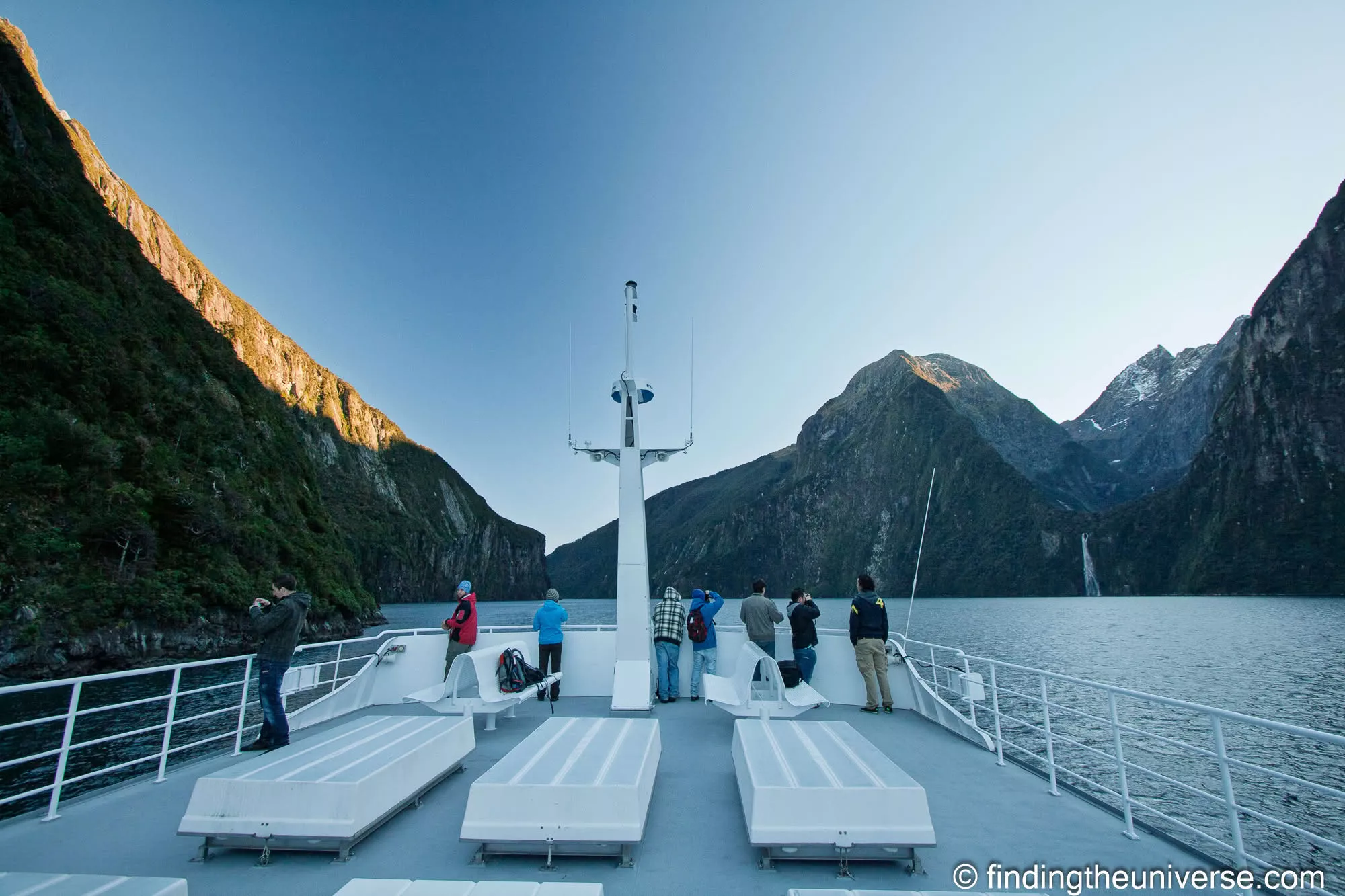
On the water, the boat you want is a smaller nature cruise rather than the biggest catamaran: closer to the waterfalls, more commentary, fewer people. You can book the Milford Sound nature cruise here, and I’d do it ahead in summer as sailings fill. Bring insect repellent; the sandflies at the foreshore are included at no extra charge. For much more on the fiord itself, see our full Milford Sound guide.
Day 10 is the drive back to Queenstown, which leaves the afternoon free for whatever you didn’t fit on day 7. If you’d rather trade the second Queenstown night for a detour, Doubtful Sound from Manapouri is the quieter, bigger fiord and worth researching. Find Te Anau accommodation here.
Days 11 and 12: The Haast Pass to Glacier Country
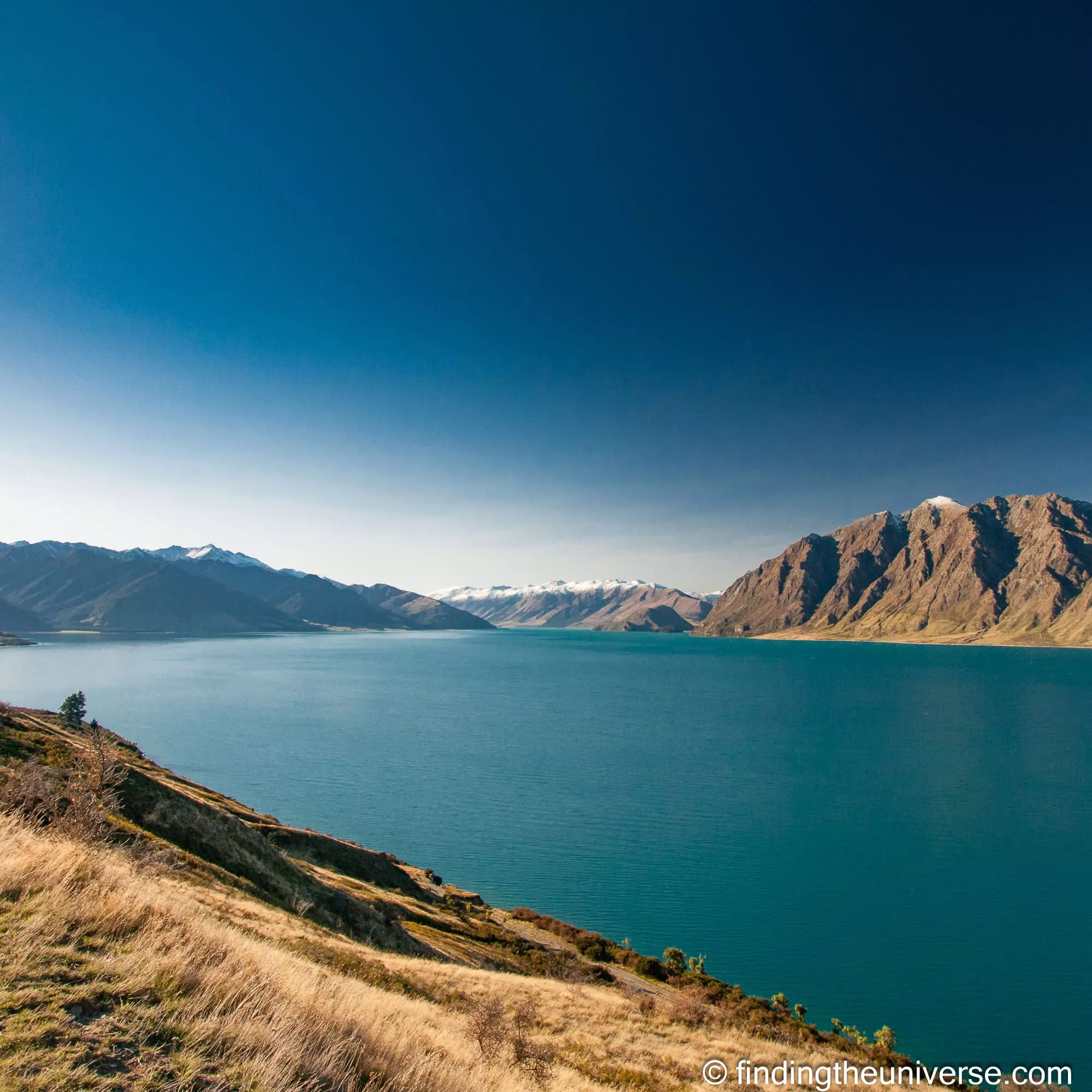
Day 11 is the long one: Queenstown to Franz Josef via the Haast Pass, about 5 hours 30 minutes of driving. It’s also the day the South Island shows off its full range, from dry Central Otago vineyards past the lakes at Wanaka and Hawea, through mossy rainforest over the pass, to a wild driftwood-strewn coastline.
Fill the tank before you leave, fill it again at Haast township, and check the road status before you set out: the pass is the only road on this side of the island and closes for weather and slips from time to time, with no practical detour.
Franz Josef and Fox are the two glacier townships. The valley walk at Franz Josef gets you to a viewpoint of the ice; standing on the glacier these days means a helicopter, either a scenic flight with a snow landing or a guided heli-hike, and both are weather-dependent, so treat them as a bonus rather than a promise.
Day 12 gives you room for that, or for the beautiful walk around Lake Matheson near Fox, famous for its mirror reflections of Aoraki and Tasman on a still morning. There’s more in our glacier country photo guide. Browse Franz Josef accommodation here.
Day 13: Arthur’s Pass to Christchurch
Another 5 hour 30 minute day, and another of the country’s great drives: up the coast to Hokitika (Franz Josef to Hokitika is 135km and about 1 hour 45 minutes, and it’s an easy run), then inland over Arthur’s Pass through the Southern Alps.
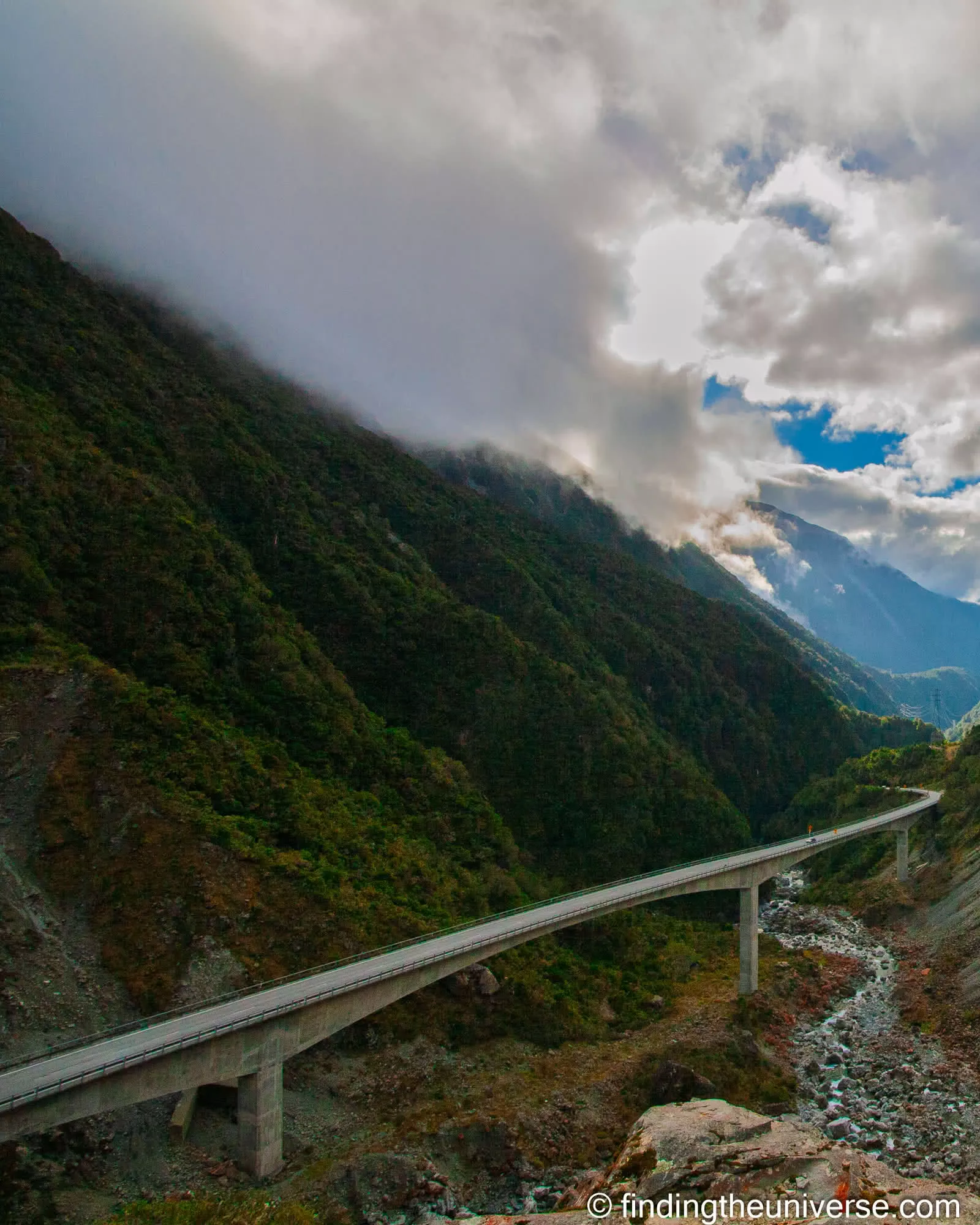
The Otira Viaduct viewpoint is the classic stop, and the kea (alpine parrots) in the car park will try to eat your aerial, your door seals, and your lunch, in that order. Don’t feed them, and don’t leave anything rubbery unattended. Like every alpine pass in this itinerary, Arthur’s can close for snow, so check before you drive.

You’ll roll into Christchurch by evening. If your flight out is late on day 14 you could instead overnight closer to the pass and do the drive in the morning, but I prefer the buffer: weather happens, and day 14 should have nothing in it that matters.
Day 14: Fly Out
Return the car, board the plane, and start planning the North Island trip! If your flight leaves in the evening, the International Antarctic Centre near the airport makes a surprisingly good couple of hours with luggage in the boot.
The Slower Version
If two 5 hour 30 minute pass days sound like more holiday-behind-glass than you want, there’s a simple fix, of course: drop glacier country. Skipping days 11 to 13 as written and returning from Queenstown via the east side instead (through Central Otago to Dunedin and its wildlife-rich peninsula, or the wonderfully empty Catlins coast, then up to Christchurch) leaves nothing on the schedule longer than about 4 hours 30 minutes, and puts penguins and sea lions where the glaciers were.
Fair warning from the running total: the overall hours barely drop, because the east-coast return is its own long road. What changes is the shape of the days, and the shape is the thing you feel.
We have a guide to a day in Dunedin if that version appeals. It’s the itinerary I’d point at anyone whose ideal day is one hike, one cafe and no particular hurry.
The Both-Islands Ferry Route in Full
Here’s the route most people have in their head when they book fourteen days: both islands, connected by the Cook Strait ferry. I’ve laid it out in full with every leg timed, because the total is the argument, and you deserve to see it before you commit to it. This was my routing logic for a month-long trip, and at that length it’s wonderful. At fourteen days it looks like this.
| Day | Plan | Transit | Running total | Night |
|---|---|---|---|---|
| 1 | Arrive Auckland | 0h | 0h | Auckland |
| 2 | Auckland to Rotorua, via Hobbiton | 3h | 3h | Rotorua |
| 3 | Rotorua geothermal sights | 0h 30m | 3h 30m | Rotorua |
| 4 | Rotorua to Tongariro National Park | 2h | 5h 30m | National Park |
| 5 | Tongariro Alpine Crossing (weather permitting) | 1h shuttle | 6h 30m | National Park |
| 6 | Tongariro to Wellington | 4h 30m | 11h | Wellington |
| 7 | Ferry to Picton, drive to Nelson | 6h 30m | 17h 30m | Nelson |
| 8 | Nelson to Franz Josef | 6h 15m | 23h 45m | Franz Josef |
| 9 | Franz Josef glacier morning | 0h 30m | 24h 15m | Franz Josef |
| 10 | Franz Josef to Wanaka | 4h | 28h 15m | Wanaka |
| 11 | Wanaka to Queenstown (Crown Range) | 1h 30m | 29h 45m | Queenstown |
| 12 | Milford Sound day return from Queenstown | ~9h | 38h 45m | Queenstown |
| 13 | Queenstown to Mount Cook | 4h 30m | 43h 15m | Mount Cook village |
| 14 | Mount Cook to Christchurch, fly out | 4h | ~47h 15m |
Read it the way you’d actually live it. Nine beds in thirteen nights. Five days at four and a half hours or more of transit. Wellington gets an evening and a breakfast, which is a poor way to treat a city that deserves two days (at the very least, look round Te Papa, the national museum, before the ferry). The Tongariro Crossing, a six-to-eight-hour alpine hike, sits directly before a four-and-a-half-hour drive. And Milford Sound arrives via the nine-hour day return I’ve already told you I avoid.
Every individual day on this route is achievable. The fortnight as a whole is a driving holiday with sightseeing attached, and nobody books New Zealand wanting that.
If you do run it, and with your eyes open it can be run, the North Island days are covered in far more depth in our North Island highlights guide. A few booking notes for this version:
- Hobbiton sits just outside Matamata, about 2 hours from Auckland and 1 hour from Rotorua by Hobbiton’s own reckoning. You can’t drive to the set: you park at Shire’s Rest and take their shuttle across the farm, on a guided tour only, so add a couple of hours of dwell time to the driving. Book Hobbiton tickets and tours here, well ahead in summer.
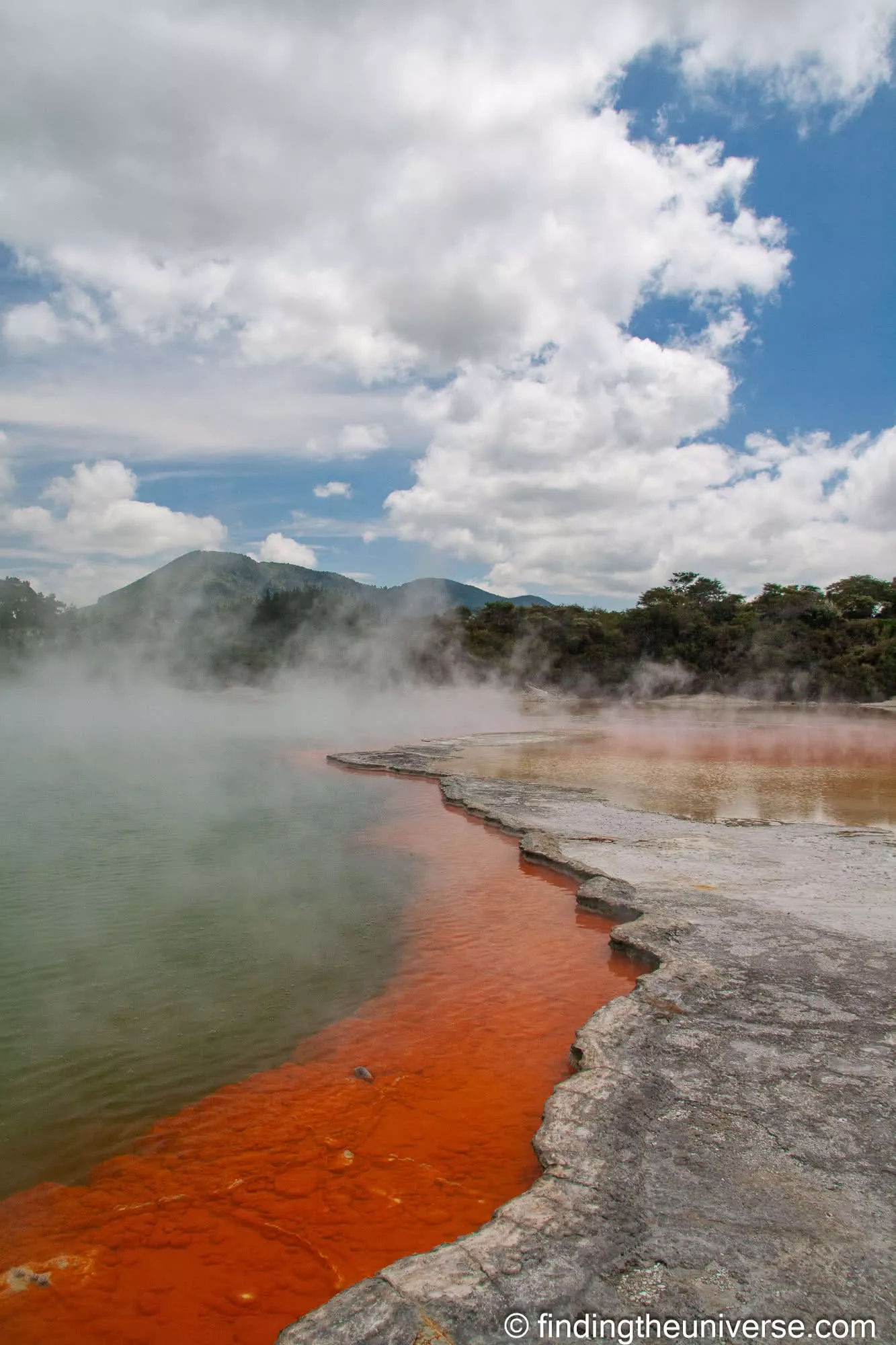
- Rotorua deserves its full day: Wai-O-Tapu for the geothermal colour, and an evening at Tamaki Māori Village for the cultural experience and hangi meal, which was one of the standout evenings of my year there. If you can stretch the schedule, the Waitomo glowworm caves slot in between Hobbiton and Rotorua, at the cost of an even fuller day 2.
- The Tongariro Crossing needs a plan B. It’s 19.4km point to point over an active volcanic landscape (the Mount Doom one; our climbing Mount Doom piece covers it in detail), and in summer DOC applies a “Not Recommended Today” advisory whenever conditions turn hazardous, which happens on a meaningful share of summer days. DOC recommends a free track booking for all walkers, requires one if you’re using a shuttle or guide, and states plainly that in summer there’s no parking at Mangatepopo for Crossing walkers, so book a shuttle and check the DOC Crossing page the night before. If the mountain says no, the Taranaki Falls loop and Tama Lakes track are fine consolation walks, and the route above survives the miss.
- The ferry gets its own section below, because it’s the biggest booking of the trip and the piece both-islands planners most often get wrong.
The Both-Islands Flight Route
The third option swaps the ferry and the Wellington leg for a domestic flight, usually Rotorua to Christchurch. Air New Zealand flies that route direct on a regional turboprop, about two hours in the air, with a handful of departures a day running mid-morning to late afternoon, so it’s a half-day door to door once you add airports at both ends.
Run the arithmetic on it, though, and the tidiness fades. With the same icons kept in (Hobbiton, Rotorua, Tongariro, Mount Cook, Wanaka, Queenstown, Milford from Te Anau rather than as a day return), it still comes to roughly 31 hours of transit across eight bases.
That’s the same total as the South Island loop, spent on two rental contracts (with the one-way and second-pickup costs that implies), a flight, and a schedule with no slack, in exchange for deleting Wellington, the entire West Coast, both glaciers and the Cook Strait crossing.
You can of course shave it towards 26 or 27 hours by dropping the Tongariro Crossing or settling for Milford as a Queenstown day return, but at that point it’s worth asking what the both-islands version is still buying you.
You’ll notice I haven’t given this one a day-by-day table like the other two. That’s deliberate. It isn’t a route I’d send you on, and the flight schedules shift around enough that I’d rather not print times I can’t stand behind.
Where I’d rate it: if Hobbiton or Rotorua’s geothermal country is the reason you’re coming to New Zealand at all, this is the least-bad way to bolt them onto a two-week trip. For everyone else, the South Island loop gives you the same hours with more to show for them, and the North Island becomes the excellent reason you come back.
The Cook Strait Crossing
The Wellington to Picton ferry is the single biggest logistical event of a both-islands road trip, and it deserves more respect than it usually gets. The numbers that matter:
- The sailing itself is 3.5 hours across Cook Strait and down the Marlborough Sounds, and the Sounds section is one of the scenic highlights of the whole country. Don’t spend it in the cafe. Be on deck.
- If you’re taking a vehicle, check-in closes 60 minutes before departure. That makes the crossing a 4.5-hour event minimum, before you add the drive to the terminal. Miss check-in and there’s no rolling onto the next boat like a city bus; the next vehicle space may be the next day.
- Vehicle spaces sell out. Interislander names the Christmas break, school holidays and long weekends among its peak periods and says last-minute bookings for private vehicles are unlikely then, and New Zealand’s summer school holidays cover most of late December to early February. Book the vehicle slot as soon as your dates firm up, and treat it like an international flight rather than a ticket you buy on the day.
- Most rental car companies don’t let you take their car across; the standard arrangement is to drop the car in Wellington and pick up a second one in Picton, walking on as a foot passenger. Campervans, on the other hand, do cross with you, which is one of the quiet arguments for a campervan on a both-islands trip.
Bluebridge runs the same crossing and is worth price-checking. Either way, if the forecast is rough and you’re prone to seasickness, take the tablets before you sail, not after.
Campervan or Car?
New Zealand is the campervan country, and the freedom of it is real: your bed travels with you, the vehicle crosses the strait when a rental car can’t, and waking up at a lakeside holiday park with the kettle on is a proper New Zealand experience. I travelled around New Zealand for a year in a small camper and is was wonderful.
The economics have changed, though, and the campervan’s reputation as the budget option is years out of date.
Campervan rental in summer is expensive, often more per day than a car and a mid-range motel room combined once you add insurance reduction, diesel road user charges and holiday park fees.
Camping for free is close to a non-option for most visitors: freedom camping rules are enforced, most desirable areas require certified self-contained vehicles, and the free spots that exist are scarce, remote and fill early.
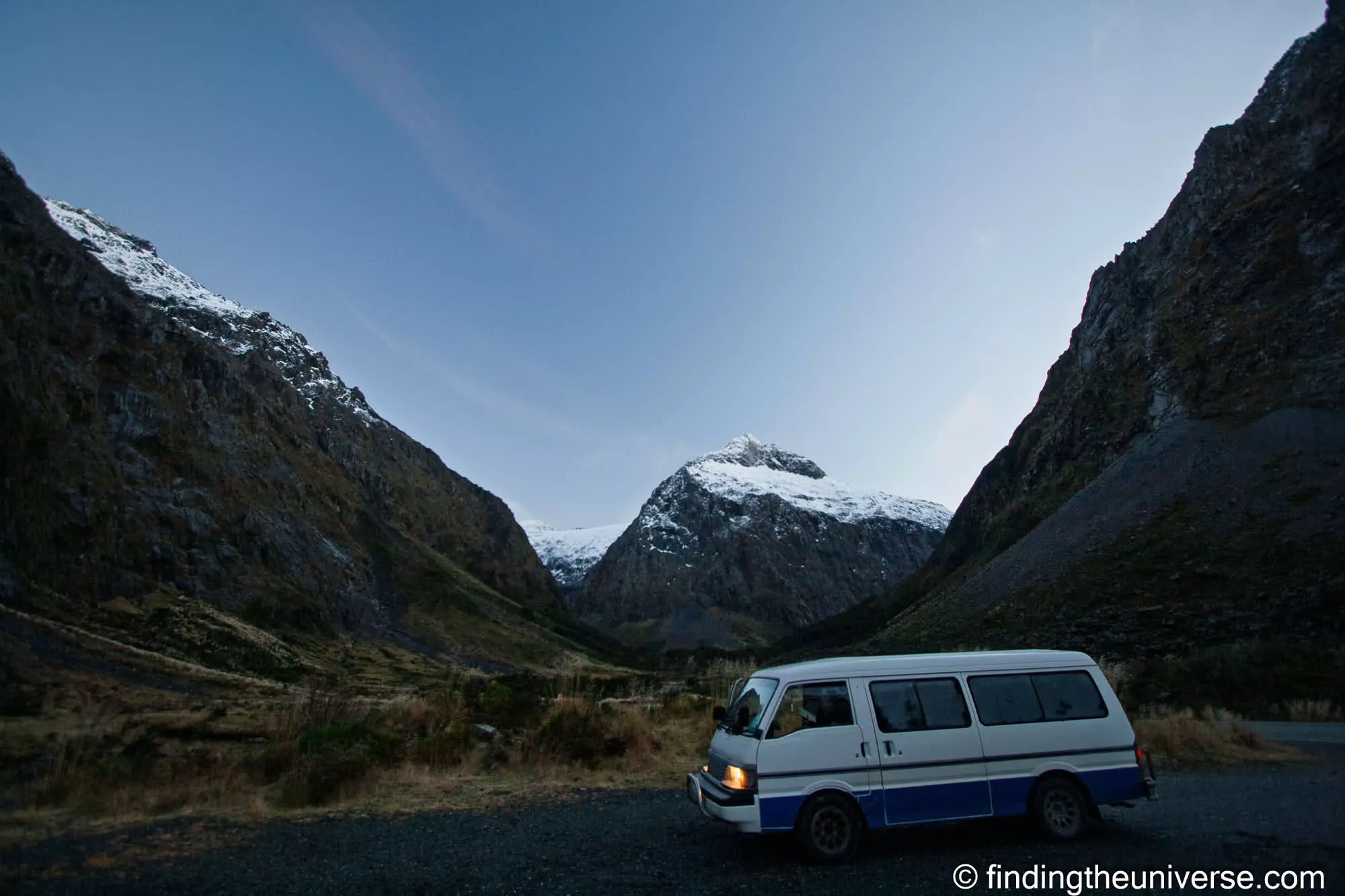
Budget instead for powered holiday park sites most nights, roughly NZ$45 to NZ$65 for two, or the basic DOC campsites, which are wonderful and cheap but bookable and busy in peak season. A campervan is also just a bit slower: add ten to twenty percent to every drive time in this article, and the Crown Range with a high-sided vehicle in a wind warning is no fun at all.
So: hire a campervan because you want the campervan trip, the holiday parks, the kettle, the lakeside mornings. It’s a great way to see the country, and it’s how I’d do a third or fourth New Zealand trip.
Don’t hire one because you think it saves money, because for most itineraries it doesn’t. You can compare campervan and motorhome prices across the rental companies at Motorhome Republic, and car hire at Discover Cars. Whichever you choose, book early for December to February; the fleets really do run out.
What Two Weeks Will Not Hold
Every itinerary is a list of things you’re not doing. Choosing the South Island route above means giving up, at minimum:
- The Bay of Islands and the Far North: the winterless north, dolphin cruises out to the Hole in the Rock, and the giant kauri trees, including Tāne Mahuta, estimated at somewhere between 1,250 and 2,500 years old.
- Rotorua and the volcanic heart of the North Island, plus Hobbiton and the Tongariro Crossing, all covered above in the ferry route and in our North Island guide.
- Wellington, the best small capital I know, and the Surf Highway and East Cape beyond it.
- Kaikōura, the whale watching town on the northeast coast (our Kaikōura guide covers it), plus Abel Tasman National Park and the top of the South Island.
- Stewart Island, Doubtful Sound and the deep south, unless you take the slower variant.
That’s a lot of country, and it’s exactly why the two-week trip should be planned as the first trip rather than the only one. If there’s any way to stretch to three weeks or more, the calculus changes completely and the both-islands version becomes the right answer: that’s the trip in our month in New Zealand itinerary.
Less Time, or More Time?
With one week, don’t attempt a loop at all. Fly into Queenstown, base yourself there and in Te Anau, and do the Queenstown, Wanaka, Milford triangle. You’ll drive around 13 hours all week and see the best corner of the country. It’s a trip that deserves its own guide, and it may well get one.
With ten to twelve days, run the route above and make the cuts in this order: first drop day 12 (the second glacier day), then compress Wanaka to one night, then drop glacier country entirely and return via Tekapo the way you came. Keep the two nights at Te Anau until last; the Milford day is the one part I’d protect at any trip length.
With three weeks or more, do both islands with the ferry, take the month article’s route and trim to fit. Three weeks is the length at which the crossing stops costing you things you care about.
When to Go
My pick for this itinerary is November to early December, or March. Both shoulders give you long-enough days, summer-grade access to the alpine walks, and noticeably fewer people and lower prices than the December to February peak. Of the two I’d lean March: the weather has more of its mind made up, and the Fiordland sandflies have taken the edge off. Late October can work, but spring in the mountains is a lottery, and it sits right on the seasonal boundary for the Tongariro Crossing if you’re running a both-islands version.
The constraint nobody builds into their plan: daylight is part of the route. In high summer you get light from around 6am to 9pm, and the 5-hour-plus days in this itinerary fit inside it with room for stops and a relaxed dinner. In winter you don’t.
Between May and September the long legs eat every available hour of light, the alpine passes carry snow and chain requirements, the Milford Road becomes a serious undertaking, and DOC treats the Tongariro Crossing as a winter alpine route where shuttles generally don’t run. A two-week winter trip to Queenstown for the skiing is a great holiday; this itinerary, in winter, is not. Plan it for October to April.
What Two Weeks in New Zealand Costs
New Zealand is not a cheap country to travel, so these are real 2026 numbers rather than comfortable ones. Per person, travelling as a couple and splitting rooms and fuel, covering accommodation, food, fuel and a paid activity here and there, and excluding international flights and the hire vehicle:
| Style | Per person, per day | What that looks like |
|---|---|---|
| Budget | NZ$100 to NZ$150 | Holiday parks, cabins and hostels, cooking most meals, picnic lunches, one or two big-ticket activities across the fortnight |
| Mid-range | NZ$150 to NZ$250 | Motels and three-star hotels, a cafe lunch and most dinners out, a paid activity every day or two |
| Comfortable | NZ$250 to NZ$400+ | Four-star hotels and lodges, restaurants chosen on appetite rather than price, tours and scenic flights as they appeal |
The hire vehicle sits on top of those bands, and it’s the piece that varies most with the season, which is one more reason to book it early. Mid-range accommodation runs NZ$150 to NZ$200 a night in the main tourist towns, but you’re splitting it, so it lands at NZ$75 to NZ$100 each. And a comparison tip: a lot of the New Zealand daily budgets you’ll find online fold the hire vehicle, and sometimes a paid activity every single day, into their per-person figure, which is how people end up frightened by numbers past NZ$400 a day. Check what a figure includes before you let it move your plans.
The big activities are where budgets quietly die: a Milford cruise, a Hobbiton tour, a heli-hike and a Queenstown adrenaline fix can together add NZ$700 or more per person, so pick your two or three before you go and let the rest be scenery, which is free.
A few ways to keep it down that don’t hurt: travel in the shoulders, book vehicles and the big activities early rather than cheap accommodation late, self-cater breakfasts and lunches even if dinners are out, and fill the tank in the bigger towns, since fuel on the West Coast and in Fiordland is priced for people who have no alternative, which is you.
The Booking-Ahead Checklist
In order of how much it hurts to leave late, for a summer trip:
- Mount Cook village accommodation: the fewest beds on the whole route. Book the moment your dates are fixed.
- The ferry vehicle slot (both-islands versions only): treat it like a flight. Interislander or Bluebridge.
- Your vehicle: car or campervan. Summer fleets sell out, and prices only move one way as the dates approach.
- Hobbiton (ferry and flight routes): guided tours only, and peak-season slots go well ahead.
- The Milford cruise: sailings fill in summer, and you want the time slot that fits the drive.
- The Tongariro shuttle (both-islands versions): a required booking if you’re using a shuttle, plus the free DOC track booking alongside it.
- Queenstown and Te Anau beds: not scarce like Mount Cook, but the good-value places go first. Browse New Zealand accommodation here.
A Short New Zealand Kit List
We’ll do a full New Zealand packing list separately, but three things are worth their place in the bag for this trip specifically, plus the guidebooks I’d carry.
New Zealand uses the same Type I sockets as Australia, so most visitors need an adapter; after years of buying single-country plugs I just travel with a universal one with USB-C ports, like this Epicka universal adapter.
A decent power bank matters more here than on a city trip, because your phone is your camera, your map and your DOC weather check on days when you’re a long way from a socket; I carry the INIU P63, which will also keep a laptop alive on the flight over. Insect repellent you can buy on arrival, and for Fiordland you should.
On guidebooks: I like having a paper book in the passenger seat for the evenings when planning by phone gets tiresome. The Lonely Planet New Zealand guide is the comprehensive option, the Rough Guide to New Zealand is the better read, and the DK Eyewitness New Zealand is the one to flick through before you go, when you’re deciding what kind of trip you want.



Frequently Asked Questions About Two Weeks in New Zealand
These are the questions I get asked most about planning a two-week New Zealand trip, answered with the same arithmetic as the rest of the guide.
Can You See Both Islands of New Zealand in Two Weeks?
You can, but I don’t recommend it. A both-islands route touching the main sights involves around 47 hours of driving and ferry transit in fourteen days, with nine overnight bases and a nine-hour Milford Sound day.
Two weeks on the South Island alone comes to about 31 hours of transit across six bases, and every big day is a scenic alpine pass rather than a slog. Save the North Island for a second trip, or come for three weeks or more and do both.
Is Two Weeks Enough for New Zealand?
Two weeks is enough for one island done well, and the South Island is the one I’d pick for a first trip. It isn’t enough for both islands without spending most of your holiday in the car.
A fortnight covers Christchurch, Mount Cook, Wanaka, Queenstown, Milford Sound and the West Coast glaciers at a pace that leaves room to walk, linger and take the detour that looks interesting, which is what New Zealand is for.
Which Island Should I Choose for Two Weeks?
The South Island, for scenery-first trips: it has the alps, the fiords, the glaciers and the big lakes, and this article’s route covers the best of it. The North Island wins if your priorities are Māori culture, geothermal country, Hobbiton and beaches.
My rule of thumb from a year living there: first trip, South Island; second trip, North Island; and if you can possibly manage three weeks or more, both.
Is One Week Enough for New Zealand?
One week is enough for one region, not one island. Fly into Queenstown and spend the week on the Queenstown, Wanaka, Te Anau and Milford Sound triangle: around 13 hours of total driving and the highest concentration of world-beating scenery in the country.
What one week is not enough for is a loop. Any seven-day route that includes Christchurch or the glaciers turns into a driving contest, and you’ll spend more time behind the windscreen than in front of the views.
How Much Does Two Weeks in New Zealand Cost?
Per person, travelling as a couple, budget NZ$100 to NZ$150 a day for a holiday-park-and-cooking trip, NZ$150 to NZ$250 for a mid-range motel-and-restaurants trip, and NZ$250 to NZ$400 or more for hotels and lodges, all excluding international flights and the vehicle.
For the full fortnight, a realistic mid-range budget for two people is around NZ$4,200 to NZ$7,000 plus flights and the vehicle. The paid activities are the swing factor, so pick your two or three big ones deliberately, and check whether any budget you compare against folds in the hire vehicle, because many do.
Is a Campervan Cheaper Than a Car in New Zealand?
Usually not. Summer campervan rates plus insurance, diesel road user charges and nightly holiday park fees typically add up to more than a car plus mid-range rooms, and free camping is scarce and heavily regulated.
Hire a campervan because you want that style of trip, the holiday parks, the flexibility, the kettle with a view. It’s a wonderful way to see New Zealand. It just isn’t the budget option any more.
How Far Ahead Should I Book the Interislander Ferry?
For a vehicle in the summer peak, as soon as your dates are fixed. Interislander names the Christmas break and school holidays among its busiest periods and says last-minute vehicle bookings are unlikely then, and New Zealand’s summer school holidays run from late December to early February.
Foot passengers have far more flexibility. Remember vehicle check-in closes 60 minutes before departure, so treat the 3.5-hour sailing as a 4.5-hour event when you plan the day.
How Long Is the Drive from Queenstown to Milford Sound?
RealNZ, the main Fiordland operator, quotes 283km and 4 hours 25 minutes each way, and that’s without meaningful stops. The Homer Tunnel’s summer traffic lights can add 15 to 20 minutes, and the road is worth stopping for constantly.
That’s why this itinerary bases you in Te Anau, two hours closer. From there Milford is 121km, a 2 hour 30 minute planning figure each way, and DOC suggests treating the drive plus a cruise as an eight-hour day.
Can I Do Milford Sound as a Day Trip from Queenstown?
You can: it’s around nine hours of driving wrapped around a two-hour cruise, and thousands of people do it every summer. It’s the wrong way to see the best sight in the country, and I’ve avoided it on every trip.
Better options are two nights in Te Anau (this itinerary), a coach-cruise day tour from Queenstown so at least you’re not the one driving, or a scenic flight one way if the budget stretches.
What Is the Best Month for a Two Week New Zealand Trip?
November or March. Both give you summer-grade access to the alpine walks and passes, long daylight, and fewer crowds and better prices than the December to February peak. I’d lean March for more settled weather and fewer sandflies.
December to February works well too if school holidays fix your dates; just book the vehicle, the ferry and Mount Cook accommodation months ahead rather than weeks.
Can You Do This Itinerary in Winter?
Not this one, no. Between May and September the alpine passes (Crown Range, Haast, Arthur’s, and the Milford Road) carry snow, ice and chain requirements, daylight shrinks to eight-ish usable hours, and the long legs stop fitting inside the day.
Winter is a great time for a different New Zealand trip: base yourself in Queenstown or Wanaka for the ski fields, do Milford on a tour when the road allows, and leave the grand loop for October to April.
Do I Need to Book the Tongariro Alpine Crossing?
DOC recommends a track booking for all walkers, and requires one if you’re using a shuttle or guided service. The booking is free. In summer there’s no parking at the Mangatepopo end for Crossing walkers, so a booked shuttle is the practical way onto the track.
Build in a weather buffer too: DOC posts a “Not Recommended Today” advisory when conditions are hazardous, and a meaningful share of summer days get one. Have a plan B walk ready and don’t argue with the mountain.
What Side of the Road Does New Zealand Drive On?
The left, with right-hand-drive cars, the same as the UK, Australia and Japan. If you’re coming from a drive-on-the-right country, give yourself a bit of time on Christchurch’s flat, quiet streets on day one before the mountain roads.
The habits that matter: the driver sits nearest the centre line, roundabouts go clockwise, and after any stop on an empty rural road, left is your default. Jet lag plus an unfamiliar side is the classic first-day error, which is another reason day one should contain nothing but a supermarket.
Can Rental Cars Drive the Crown Range?
Most can, but some rental agreements restrict or exclude it, especially in winter, so check yours before you plan the Wanaka to Queenstown leg over it. The Crown Range is New Zealand’s highest sealed through road and can require snow chains between May and September.
If your agreement rules it out or the forecast looks dicey, the Cromwell road is the alternative: about 117km against the Crown Range’s 70km, easier gradients, and roughly 1 hour 45 minutes instead of 1 hour 15 to 1 hour 30.
Should I Fly Between the Islands Instead of Taking the Ferry?
Flying saves real time (a Rotorua to Christchurch direct is about two hours in the air) but costs you Wellington, the Marlborough Sounds arrival and usually a second rental contract, since you can’t fly a car across.
Run the numbers for your own route before assuming the flight wins: with the same sights kept in, my flight-route arithmetic came out at the same total transit as the South Island loop. The ferry is slower and better; the flight is quicker and lesser; the South Island loop skips the question entirely.
Do I Need an International Driving Permit for New Zealand?
If your licence is in English (UK, US, Australian, Canadian and Irish licences all qualify), you can drive in New Zealand on it for up to 18 months from the date you last arrived. If your licence isn’t in English, you need an accurate English translation or an International Driving Permit, carried alongside your original licence rather than instead of it.
That 18 months is a temporary extension of an older 12 month rule, though, and NZTA says it reverts eventually without publishing a date, so do check their page before you travel. Motorcycle and truck licences are still 12 months.
Carry the physical licence, and note rental companies apply their own rules on top, including minimum age and, sometimes, road restrictions like the Crown Range one covered above.
How Many Days Do You Need for the South Island?
Ten days is the sensible minimum for the loop in this article without it feeling rushed, and fourteen is comfortable. With ten to twelve days, cut the second glacier day first, then a Wanaka night, and protect the two nights at Te Anau above everything else.
With fewer than ten days, don’t loop: fly into Queenstown, out of Queenstown, and keep to the bottom-left quarter of the island, which is conveniently the best quarter.
Further Reading for Your New Zealand Trip
We’ve written a lot about New Zealand over the years, and these are the pieces that pair best with this itinerary:
- A Month in New Zealand: My Perfect Itinerary, for when the two-week constraint lifts
- Tips for Your First Time in New Zealand, the practical groundwork this article assumes
- Five Must-Dos on New Zealand’s South Island
- Highlights of New Zealand’s North Island, for the second trip
- The Best Day Hikes in New Zealand
- The Top Five Scenic Drives of New Zealand, most of which this route includes
- Milford Sound in Depth
- The Top Five Scenic Toilets of New Zealand, because a year in the country leaves you with strong opinions on unexpected subjects
And that’s the trip. Two weeks, one island, about 31 hours of driving with every hour accounted for, and the best of it done properly rather than glimpsed from a car park. If you’ve got questions about your own version of the route, ask away in the comments; between the year I lived there and the trips since, there’s a fair chance I’ve driven whatever leg you’re wondering about.
Leave a Reply