
I almost went to university in Bristol, which would have been a great choice, as it’s a fantastically beautiful city. As life turned out, I ended up at Nottingham instead, home to some of the oldest pubs in Britain. Which wasn’t a deciding factor. Honest.
Still, Jess and I have ended up knowing Bristol quite well. We first explored it from Edinburgh, then we spent four years living in Bath, which is twelve minutes by train from Bristol Temple Meads (we did the journey rather a lot). So when we say we’ve explored Bristol thoroughly, what we actually mean is that we spent four years using it as our nearest “proper” city, and have wandered most corners of it at one point or another.
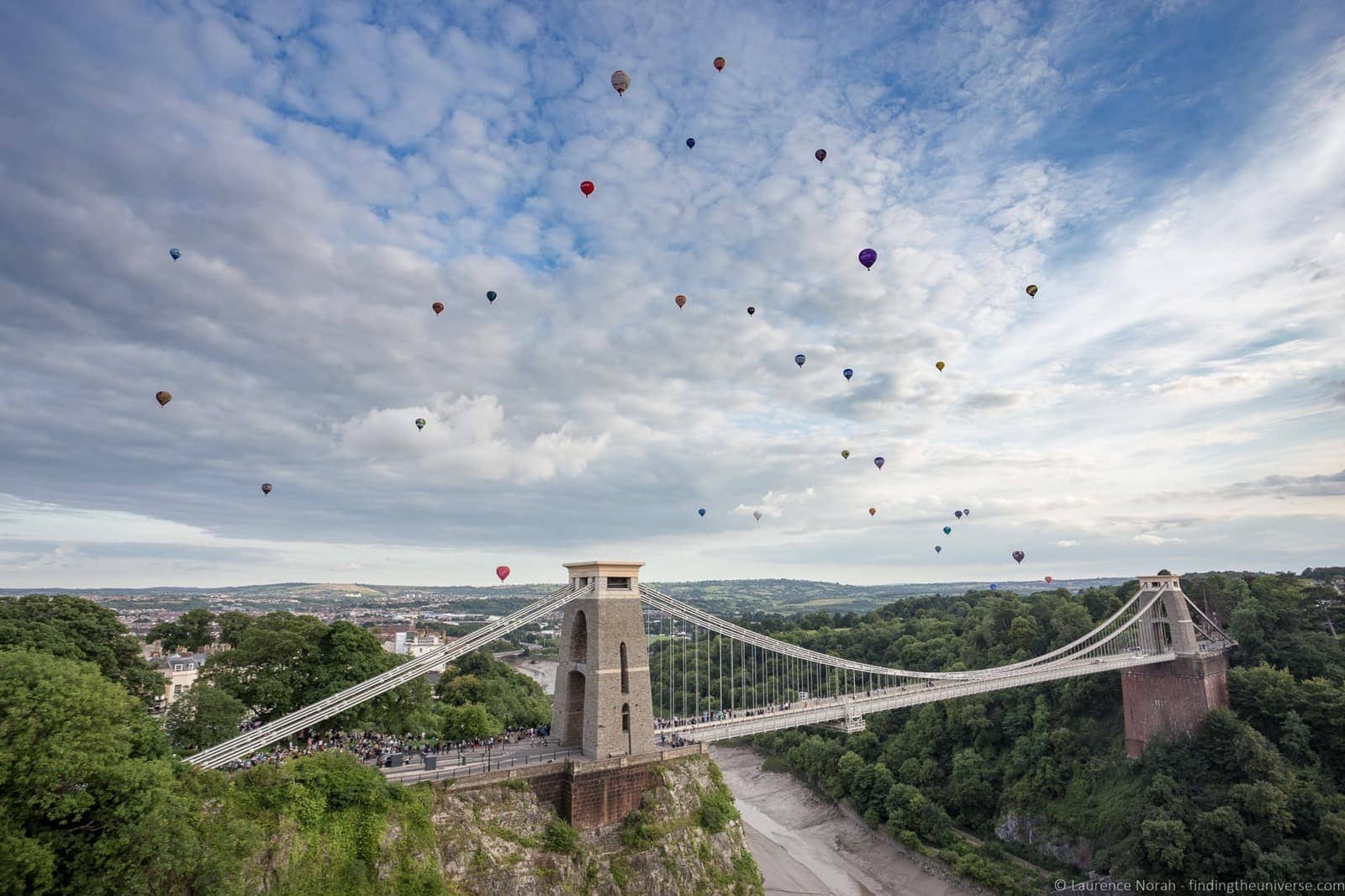
Bristol, to my mind, is the city of three Bs: Banksy, Brunel, and Balloons. The street artist who became the most famous artist alive grew up here. The Victorian engineer who built half the things that made the modern world possible designed his most iconic bridge here, then built his most iconic ship here too. And every August the sky over the city fills with hot air balloons in a way that has to be seen to be believed.
That’s a lot of identity for one mid-sized English city to carry. Bristol manages it.
What follows is our suggested itinerary for two days in Bristol, set out as a day-by-day plan with rough timings to help you pace yourself. We’ve also added our thoughts on which stops to skip if you’re short on time, where to eat (Bristol’s food scene has come on enormously), where to stay across three price tiers, and a proper rundown of the Balloon Fiesta if you’re trying to time a visit around it.
Table of Contents:
Quick Verdict: Should You Spend Two Days in Bristol?
Yes, if any of the following appeals to you: world-class street art, Victorian engineering, a great food scene built around an actual working harbour, walkable neighbourhoods with proper character, or hot air balloons in August.
Probably not, if you’re after big-name historic sites in the Bath/Oxford/York mould. Bristol’s appeal is more lived-in than that. It’s a city you wander rather than tick off, and the best bits (the street art especially) are constantly changing. If you’ve only got two days in this corner of England and you want stately Roman/Georgian architecture, Bath is thirteen minutes away by train and arguably the better single-day choice.
The honest answer for most first-time UK visitors who can spare the time: do both. Base yourself in Bristol for two nights, do Bath as a half-day trip (or vice versa). They’re very different cities and they complement each other well.
Things to Do in Bristol: Day 1
This first day takes you on a roughly downhill loop from the museum quarter at the top of Park Street, through the medieval old city, into the harbour area, and finishing at the Clifton Suspension Bridge for sunset. It’s all walkable, with the option of a bus or a quick taxi up to Clifton at the end if your feet are giving up.
A note on pacing: this day has eight stops in it, which is frankly ambitious. Pick six or seven that appeal most. Trying to do all eight will leave you knackered before dinner.
1. Bristol Museum and Art Gallery (9:30am)
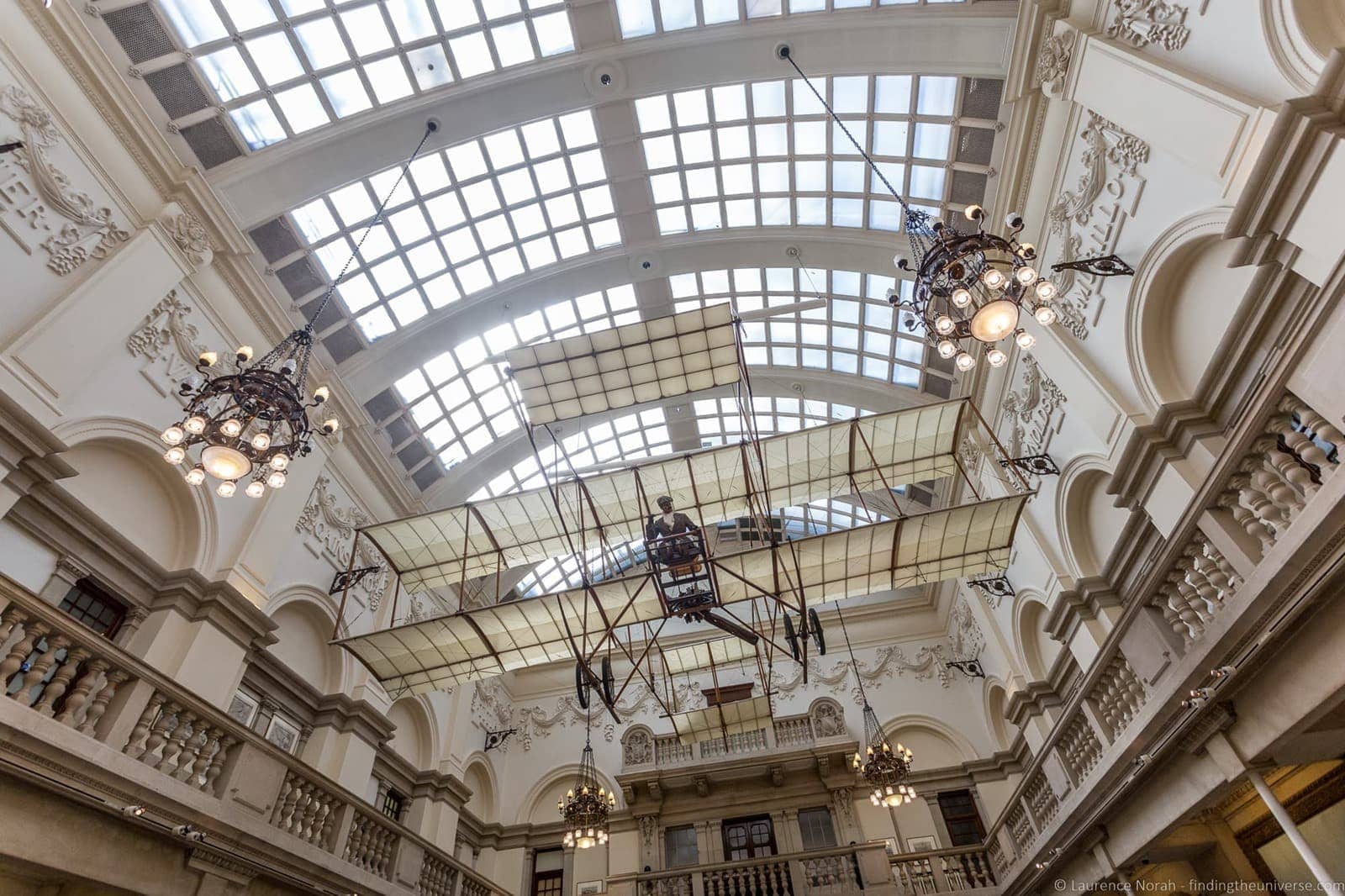
Start at the Bristol Museum and Art Gallery on Queen’s Road. It’s free (suggested donation), opens at 10am most days, and gives you a good ninety minutes of dinosaurs, Egyptology, regional fossils, and the obligatory Banksy (his “Paint Pot Angel” lives here, a leftover from his 2009 takeover of the museum which was, by all accounts, completely brilliant).
For a more Bristol-specific museum, you’ll want M-Shed in the harbour, which is on tomorrow’s plan. The Museum and Art Gallery is more of a “general curiosity” stop. Skip it if you’re more interested in the city’s working history than its dinosaur bones, and head straight to Cabot Tower instead.
Closed Mondays. If you’re in Bristol on a Monday, swap this for Brandon Hill (which is free and always open) and start your day at Cabot Tower.
2. Climb Cabot Tower (10:30am)
Five minutes’ walk uphill from the museum is Brandon Hill, and on top of Brandon Hill is Cabot Tower. I always like to get up high in an unfamiliar city to get my bearings. In Bristol, Cabot Tower is the place to do it.
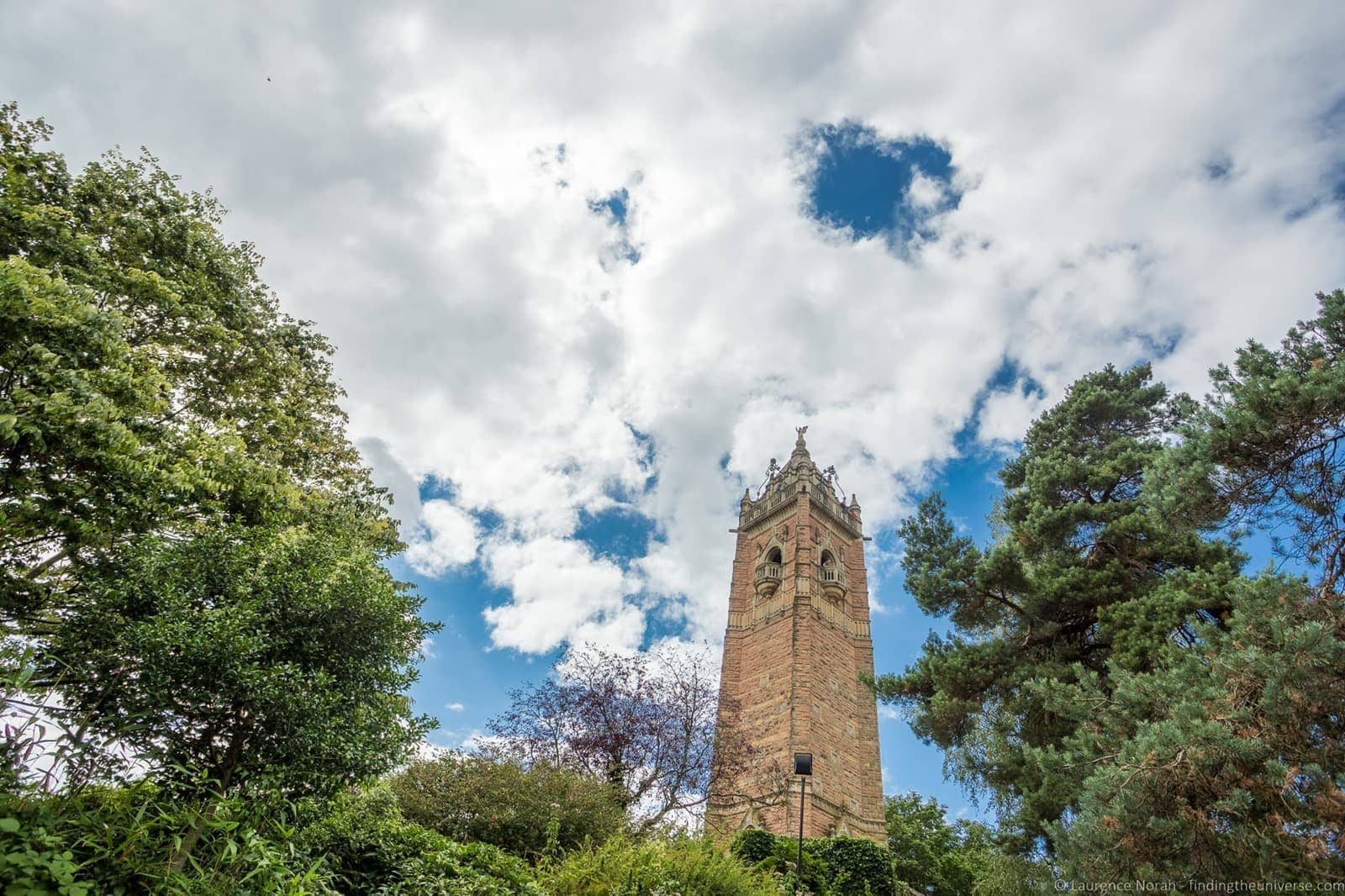
The 32-metre Victorian tower commemorates John Cabot’s voyage from Bristol to what would later become Canada in 1497, which Bristol has never quite stopped being proud of. Climbing the tower is free. The view takes in much of the city, the harbour, and on a clear day the suspension bridge in the distance. Allow thirty minutes including the spiral staircase up.
If the weather is properly terrible, the view loses some of its appeal and the staircase loses none of its calf-burn, so feel free to skip.
3. Georgian House Museum (11:00am)
Walking down the hill from Cabot Tower towards the city centre, you pass the Georgian House Museum on Great George Street. Built in 1790 for John Pinney, who owned sugar plantations in the Caribbean and the enslaved people who worked them, the house is a small but unflinching look at where Bristol’s eighteenth-century wealth actually came from.
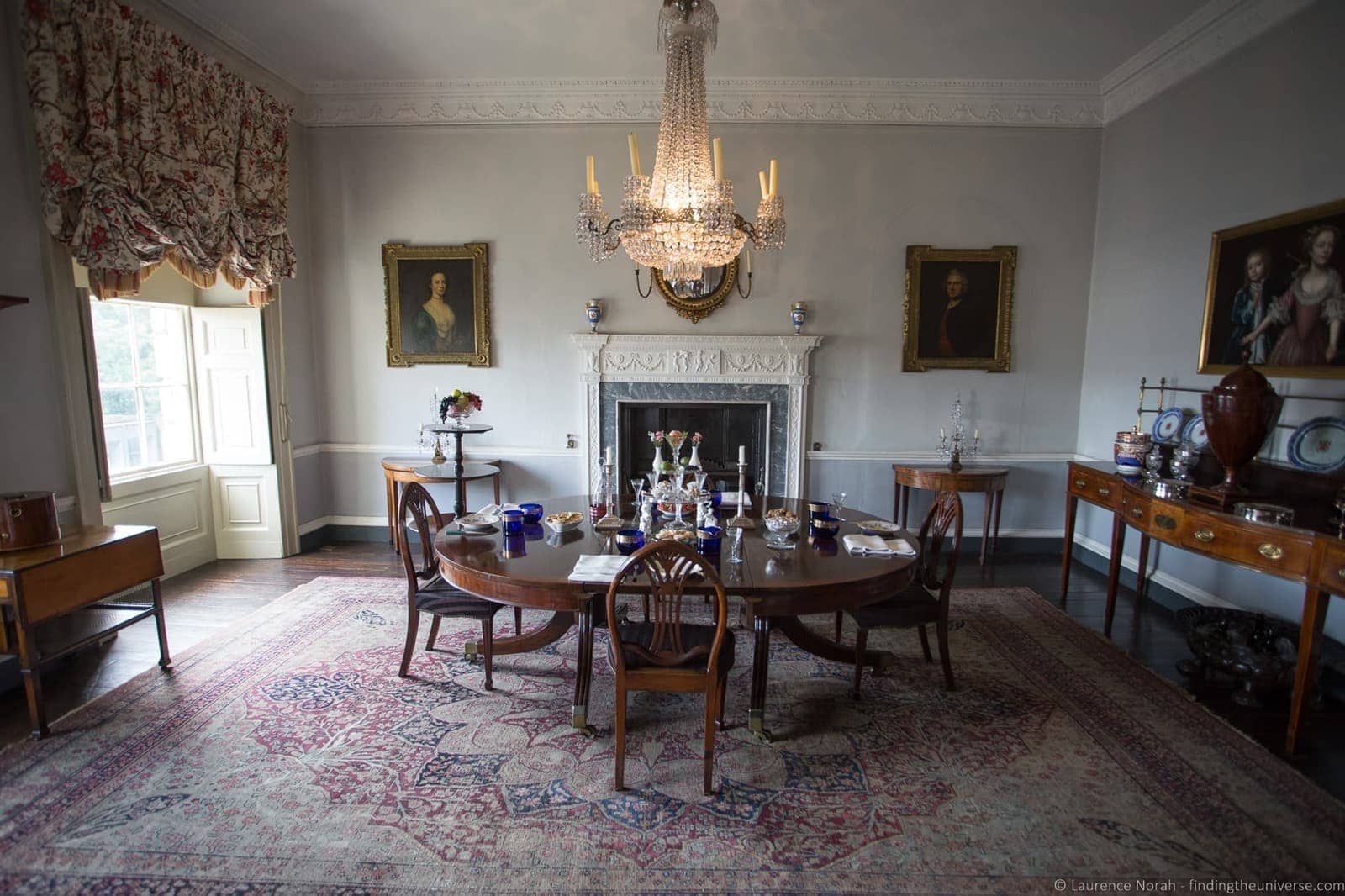
Bristol profited heavily from the slave trade. Slave ships were operated out of the city, running the so-called “slave triangle” of goods from the UK to Africa, enslaved people from Africa to the Americas, and plantation products back to the UK. The ships themselves were often built here. Eleven rooms across four floors at the Georgian House show what that wealth looked like at the top of the household, and what life was like for the people working below stairs to maintain it.
When Jess and I visited the deep south of the USA, we toured a number of plantations along the river road, and the Georgian House is a useful counterpoint to that experience. Same wealth, different end of the supply chain.
Entry is free. Allow thirty to forty-five minutes.
4. Christmas Steps (11:45am)
A short walk from the Georgian House brings you to Christmas Steps, a narrow 17th-century stepped lane lined with small old buildings, lopsided shopfronts, and (these days) independent galleries, cafes and shops.
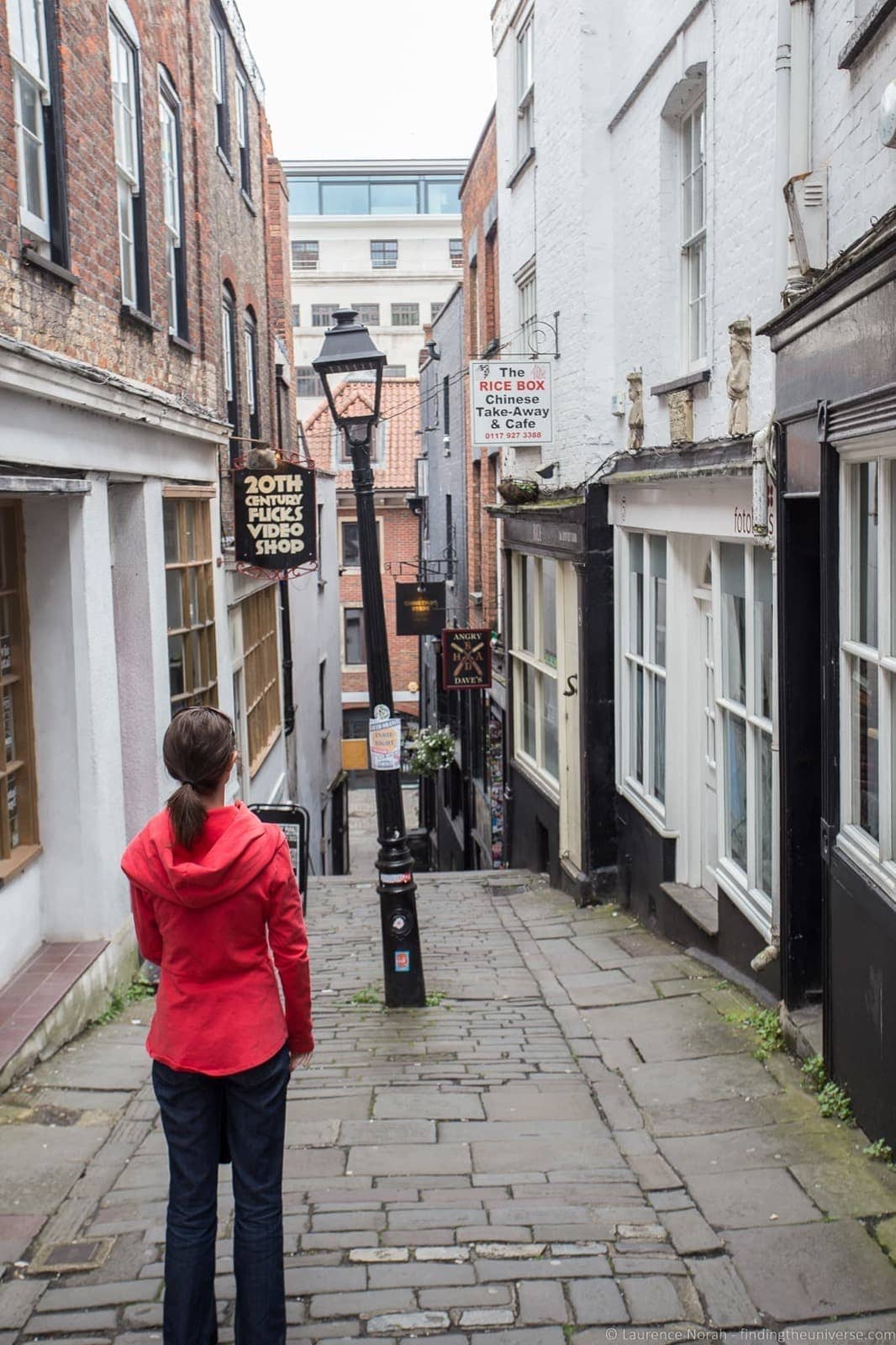
It’s the centrepiece of the Christmas Steps Arts Quarter, eight streets of independent businesses, and it’s a lovely photo stop. Fifteen to twenty minutes is enough unless you fall down the rabbit hole of one of the shops, in which case all bets are off.
5. Lunch at St. Nicholas Market (12:00pm)
Lunch is at the Glass Arcade inside St. Nicholas Indoor Market on Corn Street. The market itself dates back to 1743, the building is gorgeous, and the food court inside is the best cheap-eats experience in central Bristol.
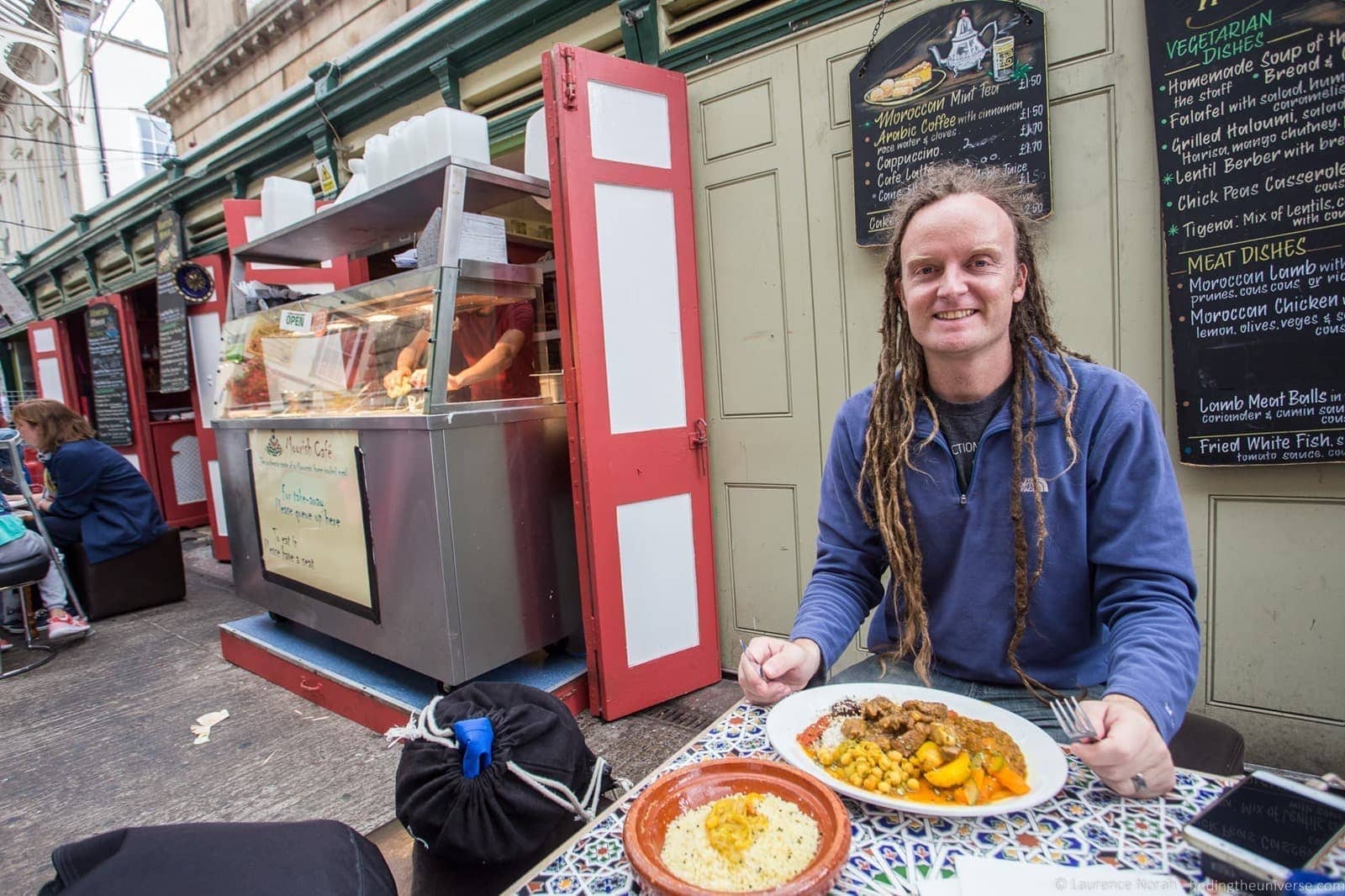
The Glass Arcade is a glass-roofed seating area surrounded by food stalls offering everything from Moroccan tagines at the Moorish Cafe to falafel, Caribbean, Italian, Pieminister pies, Thai curries, and a salad place called the Olive Works that Jess swears by. You can see the full list of stalls on the Bristol City Council site.
The market is open Monday to Saturday 9.30am-5pm, with the Street Food Market on Wine Street running 11am-2.30pm Tuesday to Friday. It’s closed Sundays, which would otherwise scupper this whole day-1 plan, so check before you go if you’re visiting on a weekend.
6. Wander the Old City (1:00pm)
Since you’ve landed in the middle of the medieval city, post-lunch is a good time to wander Bristol’s Old City for an hour or so before the afternoon’s main event.
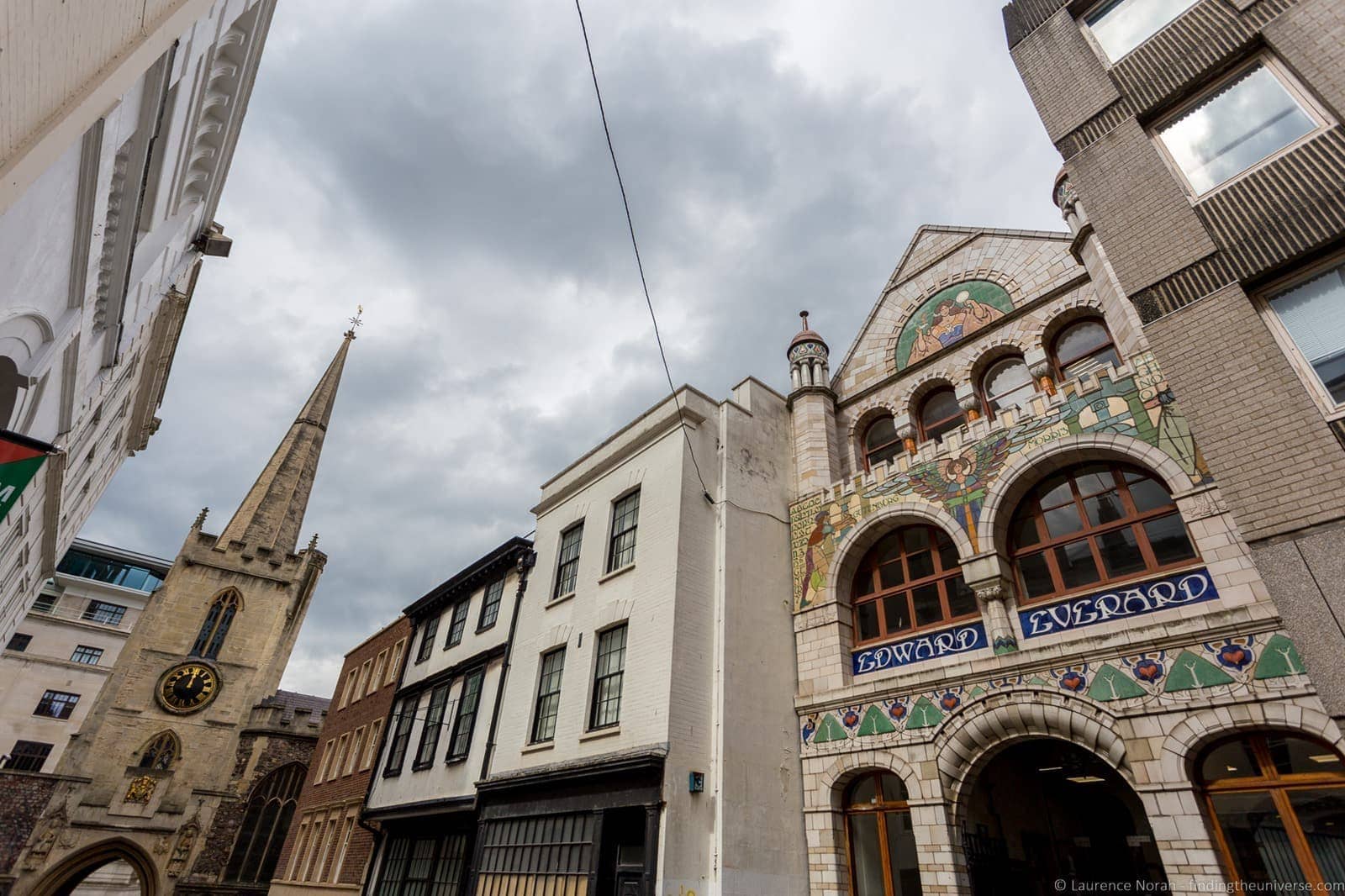
The crossroads of Corn Street and High Street was the centre of medieval Bristol, and you can still trace fragments of the old city walls and gates if you know where to look. The Llandoger Trow pub on King Street is supposedly where Daniel Defoe met the inspiration for Robinson Crusoe, which is a much better story than it probably deserves to be.
If you’d rather have some structure to your wander, this self-guided audio tour downloads to your phone and walks you around the old city with commentary. A good cost-effective option if you’re a “tell me what I’m looking at” type rather than a “wander and read plaques” type.
7. Take a Street Art Tour (2:00pm)
Bristol is famous for its street art, partly because of the sheer quality and quantity of it on display, and partly because Banksy started here. (His real identity is still officially unconfirmed, although by this point most of Bristol seems to have a pretty good idea.) Spending a couple of hours specifically looking at street art is one of the best things you can do in the city.
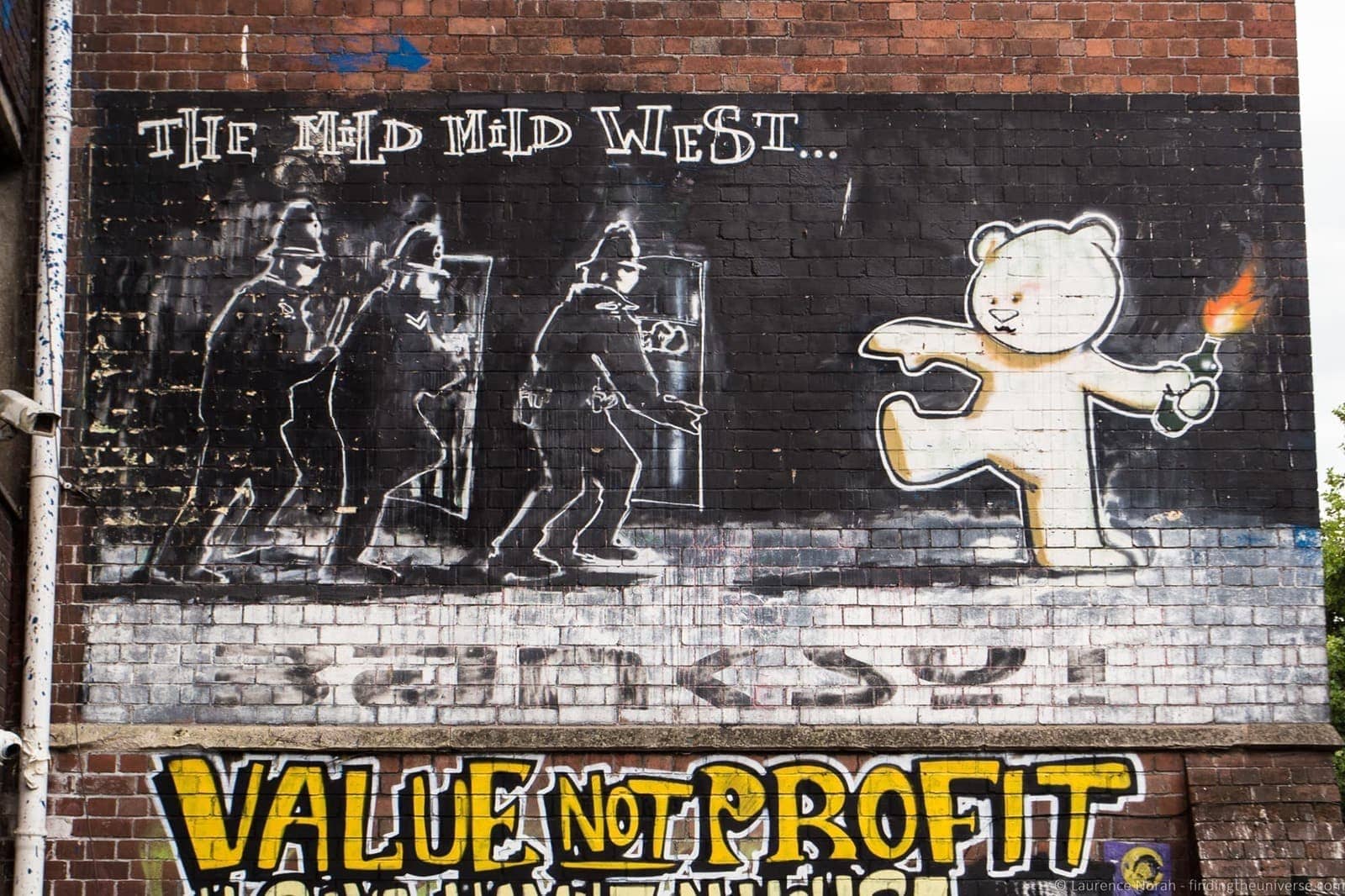
You have three good options here.
Option one: go on your own. Pick up a copy of the Bristol Street Art Map by Where the Wall from a tourist office (or download the digital version), and walk yourself around the major pieces. This is what I did, and I had a brilliant day with a camera and a map. I wrote up the highlights in my separate post on Bristol’s street art.
Option two: the Where the Wall walking tour. The original and best-regarded street art tour in Bristol, run by the longest-running street art tour company in the UK. It’s led by people who actually know Banksy personally (or know people who do), and the storytelling is excellent. The catch is the schedule: the public weekly tour runs every Saturday, plus weekdays during school holidays and half-terms. So this is your default if your visit happens to land on a Saturday, or in summer/Easter/October half-terms. Tickets via the Where the Wall booking site, with full info on the Where the Wall tours page.
Option three: the Blackbeard to Banksy walking tour. A daily two-hour walking tour that combines the street art with Bristol’s pirate and merchant history, which is more than just a gimmick. Bristol’s slave-trade past, its maritime culture, and its modern street art scene are connected stories, and a tour that joins them up is doing useful work. Runs every day at 11:30am, plus Thursdays/Fridays/Saturdays at 2:30pm, so it’s the more flexible option if you can’t make a Saturday. Book the Blackbeard to Banksy tour via GetYourGuide.
Whichever you pick, book in advance. These tours sell out, especially in summer. And if all the official tours are booked or you want something more interactive, you could even consider this range of other Bristol tours on GetYourGuide.
8. Sunset at the Clifton Suspension Bridge (5:00pm)
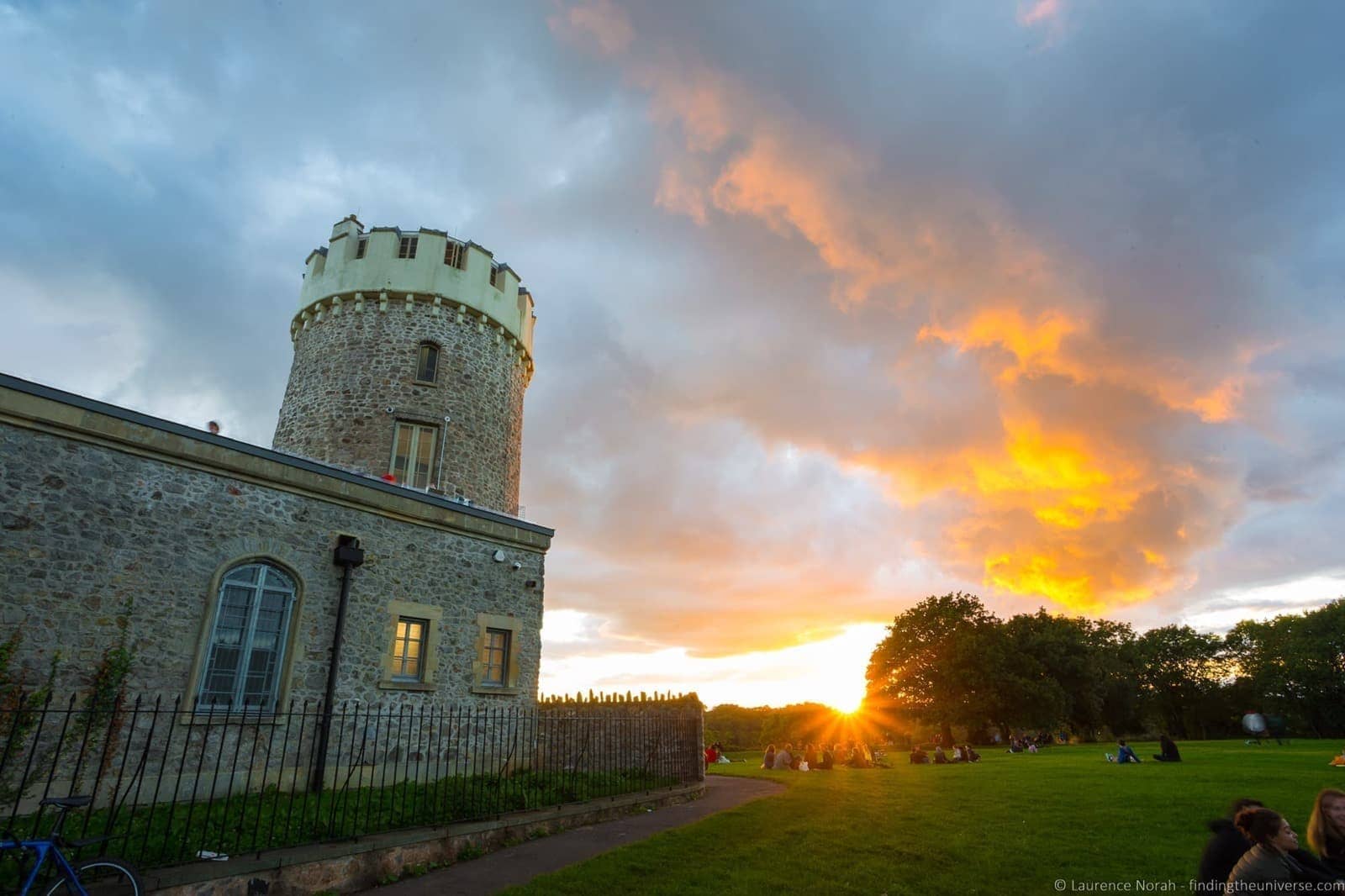
Sunset at the Clifton Suspension Bridge is a Bristol rite of passage. Get the bus up to Clifton Village (a 10-minute ride from the centre) or, if you’ve got the energy, walk the 30-ish minutes uphill. From the village, it’s a short walk to the bridge and to the Clifton Observatory above it on Observatory Hill.
The Clifton Suspension Bridge is the symbol of the city. Isambard Kingdom Brunel was 24 when he won the 1830 design competition for it, and dead at 53 before it opened. When it finally did, in 1864, it held the world record for longest single span. Today it carries traffic, pedestrians, and the gaze of every Bristolian who’s ever needed somewhere to take a date.
Head up to Observatory Hill on the Clifton side for the best view of both the bridge and the gorge it crosses. On warm summer evenings the place is packed with locals and visitors alike. After dark the bridge is lit up with thousands of LEDs, and the view across the gorge is worth hanging around for.
A note on timing: sunset in Bristol varies wildly by season. In late June, the sun sets around 9:30pm. In late December, it’s down by 4pm. If you’re visiting in winter, do this stop earlier in the day (say, after the street art tour at around 4pm) so you don’t end up climbing the hill in the dark. In summer, you can comfortably do dinner first and then head up for sunset.
For dinner, you have two good options. Either eat in Clifton Village (lots of independent restaurants and pubs, small and walkable, very pretty) or head back down to the harbour and eat at Wapping Wharf (more on this below). Both are good choices. Clifton wins on charm, Wapping Wharf wins on variety.
Things to Do in Bristol: Day 2
Day two is more compact. Most of it happens around the harbour, which means less walking and more flexibility. The trade-off is that you’ll be tempted to do all four big harbour-side attractions in one day, which is too many. Pick two, maybe three at a stretch. We’ll get to which ones below.
9. Bristol Cathedral (9:30am)
Start the day at Bristol Cathedral on College Green. Founded as an Augustinian abbey in 1140, the cathedral is one of the few churches in Britain designed as a “hall church”, where the nave, choir and aisles are all the same height. It gives the interior a grand, open feel that’s quite different from a traditional cathedral.
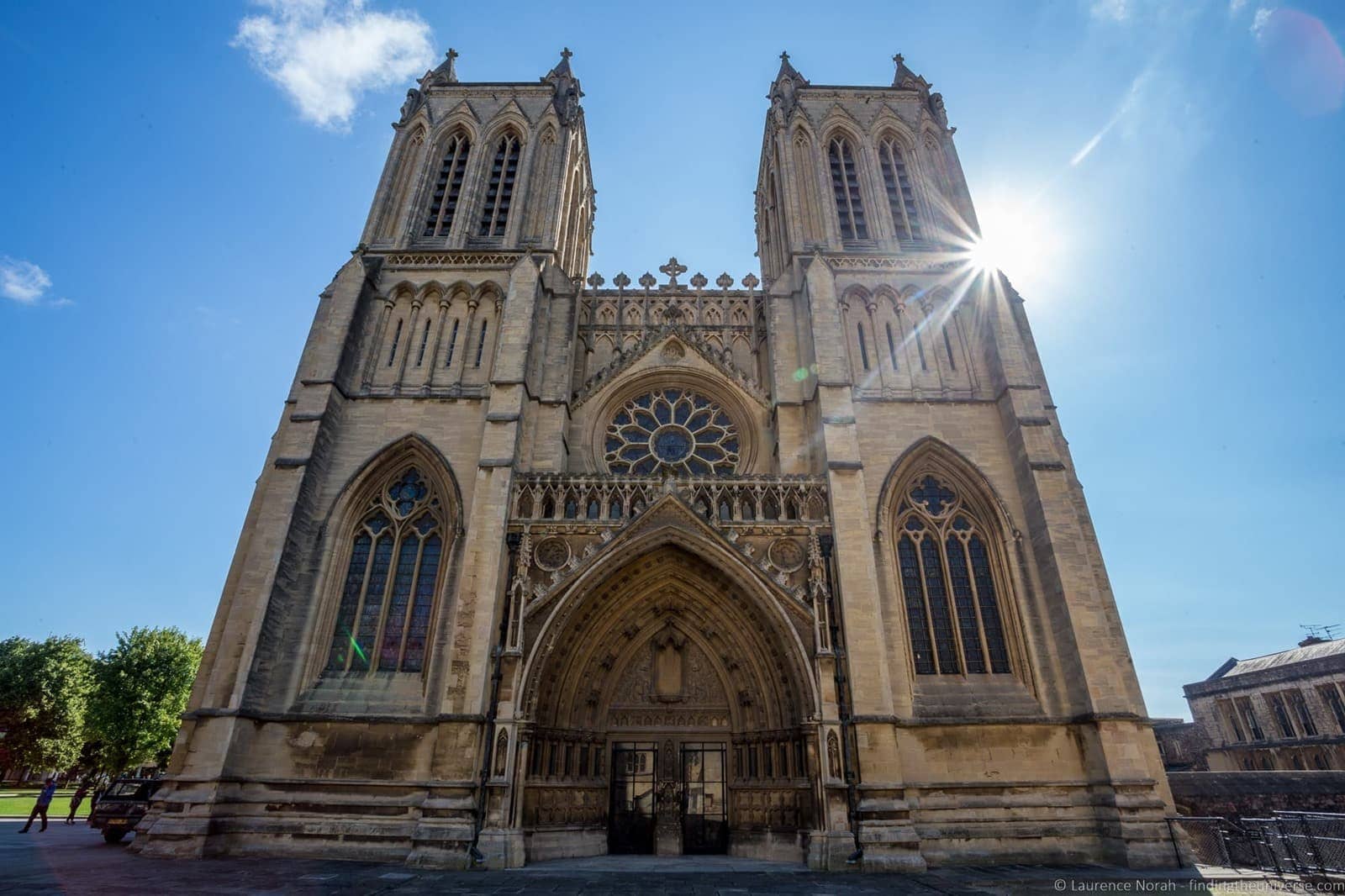
Most of what you see today is from work in the 14th-16th centuries, but the Chapter House (around 1160) and the Abbey Gatehouse survive from the original Norman building. The Elder Lady Chapel from around 1220 has carvings of beasts pretending to be people that are worth stopping to look at properly.
Entry is free (suggested £5 donation). Visiting hours are 10am-4pm Monday to Saturday and 11.30am-3pm on Sunday, with services outside those windows. At time of writing, parts of the North Transept and the Elder Lady Chapel are closed for essential monument work, so if the Elder Lady Chapel carvings are specifically why you’re visiting, check the plan your visit page first. There’s an on-site Pinkmans café (the Wapping Wharf name, same operator) if you need a coffee before facing the harbour. Allow forty-five minutes.
10. Pick One: Aquarium, We the Curious, or M-Shed (10:15am)
From the cathedral it’s a five-minute walk down to the harbourside, where three sizeable museum/attraction options sit within a couple of hundred metres of each other. Doing all three would consume your entire day and quite possibly your will to live. Pick one based on who you’re travelling with.
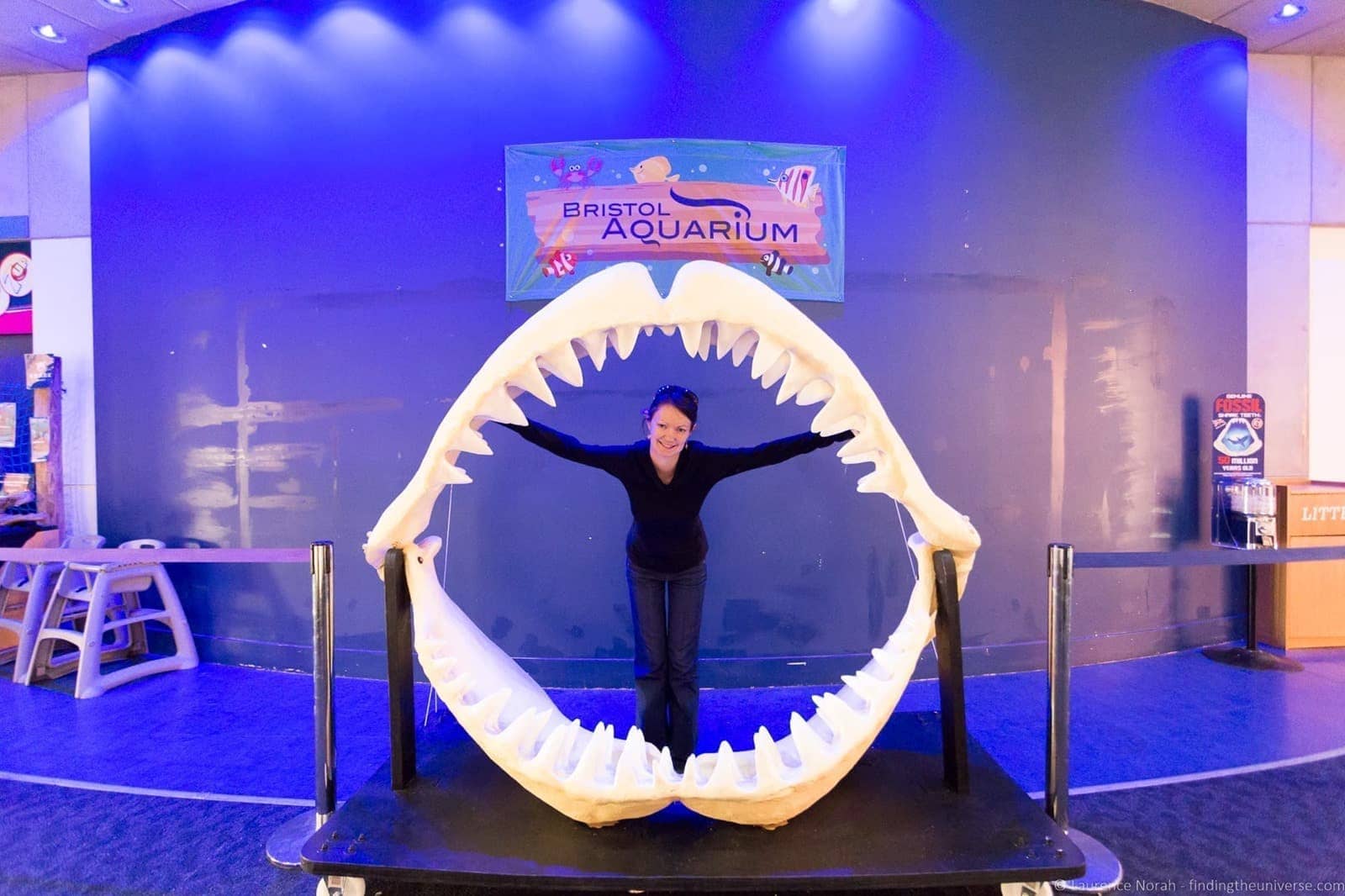
Bristol Aquarium. Best if you have kids. Forty-plus marine displays from local rockpools to tropical reefs, plus an unusual on-site botanical house you walk through as part of the visit. Adults will find it pleasant for ninety minutes. Kids will lose their minds in a good way. Open year round, see the official site for prices and hours.
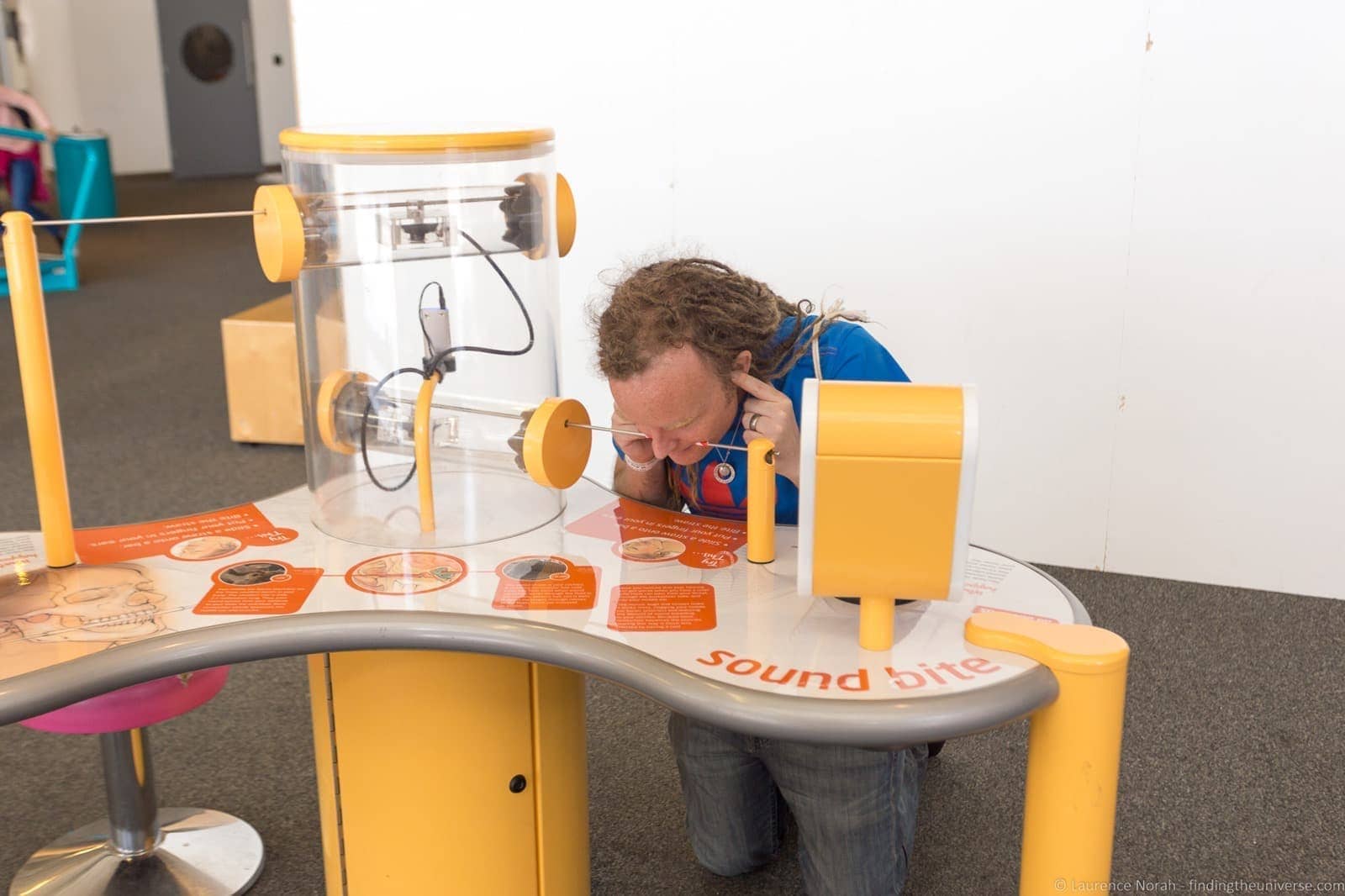
We the Curious. Best if you have older kids or are a hands-on science enthusiast. Formerly the At-Bristol Science Centre, it’s an interactive science museum with a whole section dedicated to animation, put together with Aardman Animations (the Bristol studio behind Wallace & Gromit and Morph). You can become an animator for an afternoon and create your own short film. Could easily fill three hours. Adults without kids will get about ninety minutes of fun out of it before the demographic mismatch starts to show. Check times and tickets on the official site.
M-Shed. Our pick for adults travelling without kids. Free entry, housed in a former harbourside transit shed, and entirely focused on telling the story of Bristol from prehistoric times to the present day. It’s where the city’s complicated history (the slave trade, the Bristol blitz, the Banksy connection, the post-war regeneration) gets told properly. The giant working dock cranes outside are still operational on certain days. M-Shed has its own Banksy on display (“The Grim Reaper”, originally painted on the side of the Thekla nightclub boat just along the harbour). Allow ninety minutes minimum, easily two hours if you read everything. Official site here.
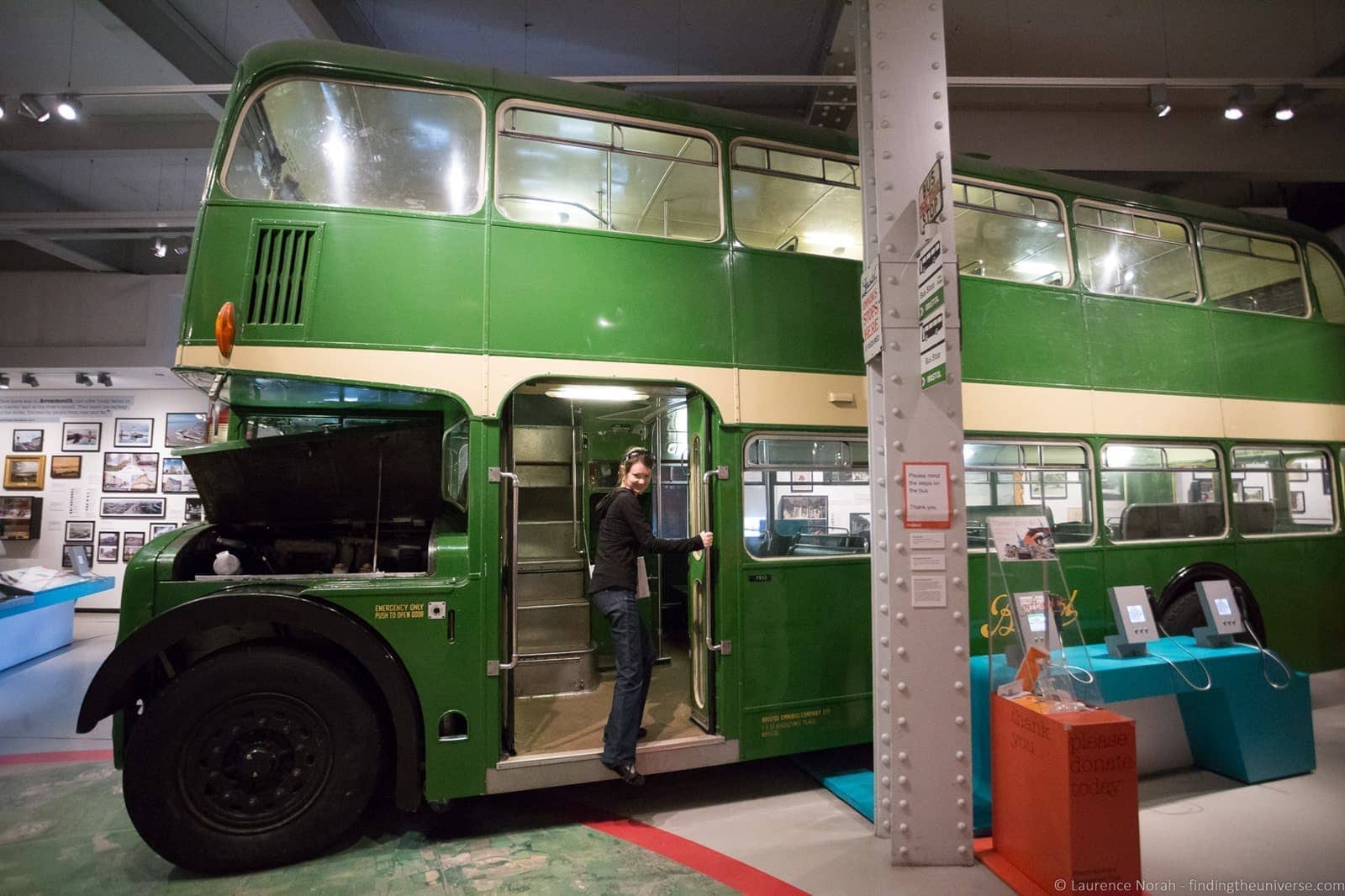
Closure note: M-Shed is closed Mondays. Bristol Aquarium is open daily. We the Curious is closed Mondays. If you’re visiting on a Monday, the Aquarium is your only option of the three, or you can flip days entirely and do Day 2 first.
11. Lunch at Wapping Wharf (12:30pm)
A short walk further west along the harbour brings you to Wapping Wharf, which is far and away the best lunch destination on this itinerary. It’s a former working dock area that’s been redeveloped over the last decade into a community of independent restaurants, bars, cafes, shops and a few flats. The CARGO project, two clusters of converted shipping containers stacked along the waterfront, is the visual centrepiece, and it’s where most of the food sits.
What’s good here: Pinkmans for coffee and pastries (their doughnuts have a cult following, and Jess can confirm); Gambas for Spanish-inspired tapas with a focus on seafood; RAGÙ for small-plate Italian sharing dishes; Root for veg-led modern British (Michelin Bib Gourmand, originally from the team behind Bristol’s Michelin-starred Pony & Trap); Salt & Malt for fish and chips; Cargo Cantina for Mexican street food. Plus several more.
Wapping Wharf works for both a casual lunch (grab a falafel wrap from one of the takeaway stalls and eat outside) and a sit-down meal. It’s also where we’d send you for dinner tonight if you’re not eating in Clifton.
12. The SS Great Britain (1:30pm)
No visit to Bristol is complete without a trip to the SS Great Britain, the city’s top visitor attraction and one of the most impressive engineering experiences in the country. It’s a ten-minute walk west along the harbour from Wapping Wharf.
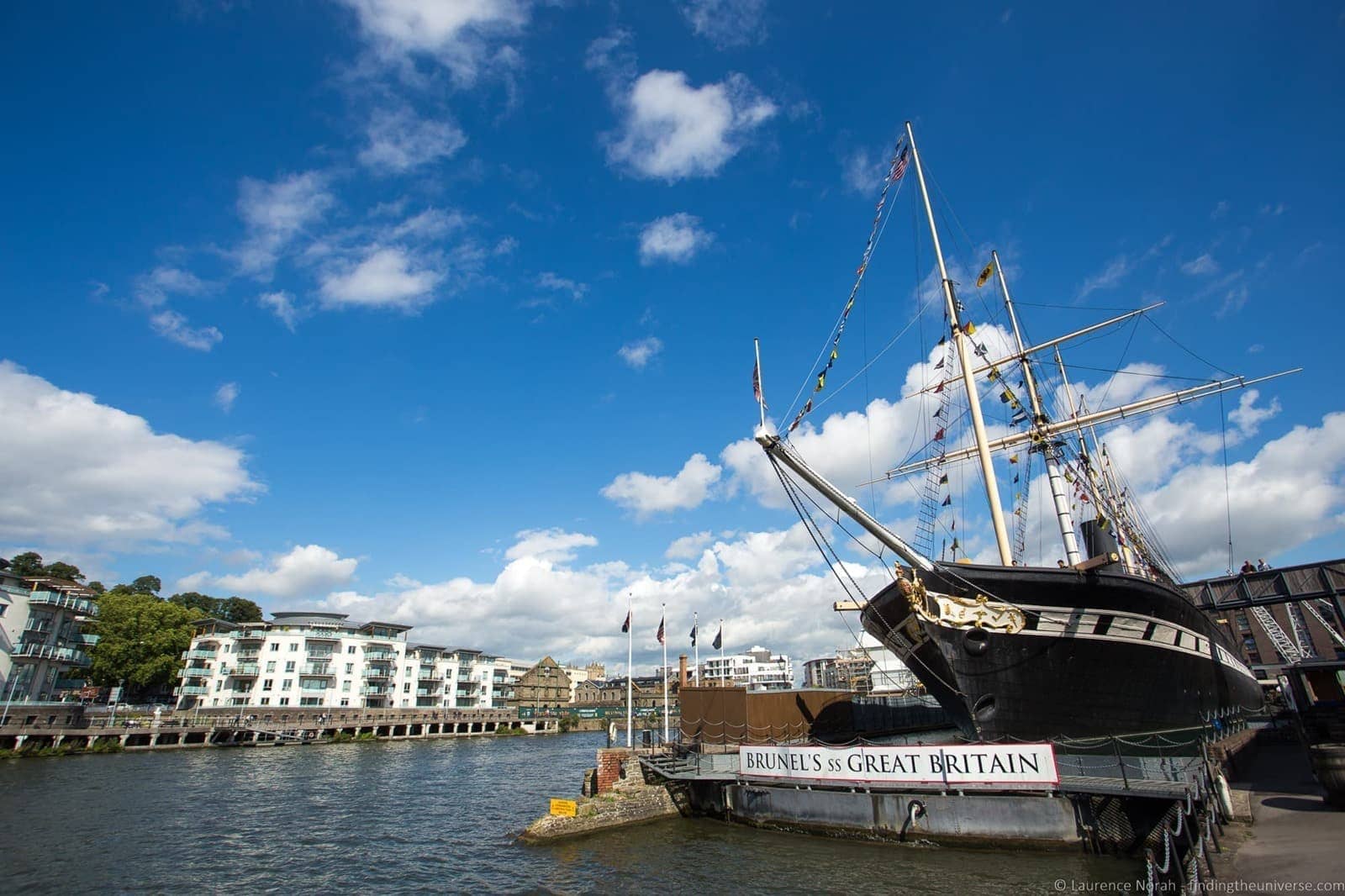
Designed (of course) by Brunel, the SS Great Britain was launched in Bristol in 1843 and entered service in 1845. She was the first ship in the world with both an iron hull and a screw propeller, and at the time of her launch she was also the longest passenger ship ever built. Building such a radical new design, then keeping her running through a series of mishaps including running aground, eventually bankrupted her owners.
What followed is one of those slow Victorian collapses that sounds invented. She spent twenty-four years carrying emigrants from Liverpool to Australia. She hauled coal. She was eventually beached and abandoned in the Falkland Islands in 1937, where she sat rusting for thirty-three years.
The story doesn’t end there, naturally, or there wouldn’t be much to visit. In 1970, in what reads like the script of a particularly determined Boy’s Own adventure, what remained of her hull was floated onto a pontoon and towed eight thousand miles back to her place of construction in Bristol. She has now been extensively restored and you can tour her in something close to her original state, including a glass “sea” that lets you walk under the hull and see the propeller and screw mechanism.
Tickets are valid for a year, which is generous, and slightly cheaper if you book online. See the tickets page. Allow at least two hours, ideally two and a half. This is the rare big-ticket attraction that deserves the time.
13. Photograph the Colourful Houses (4:00pm)
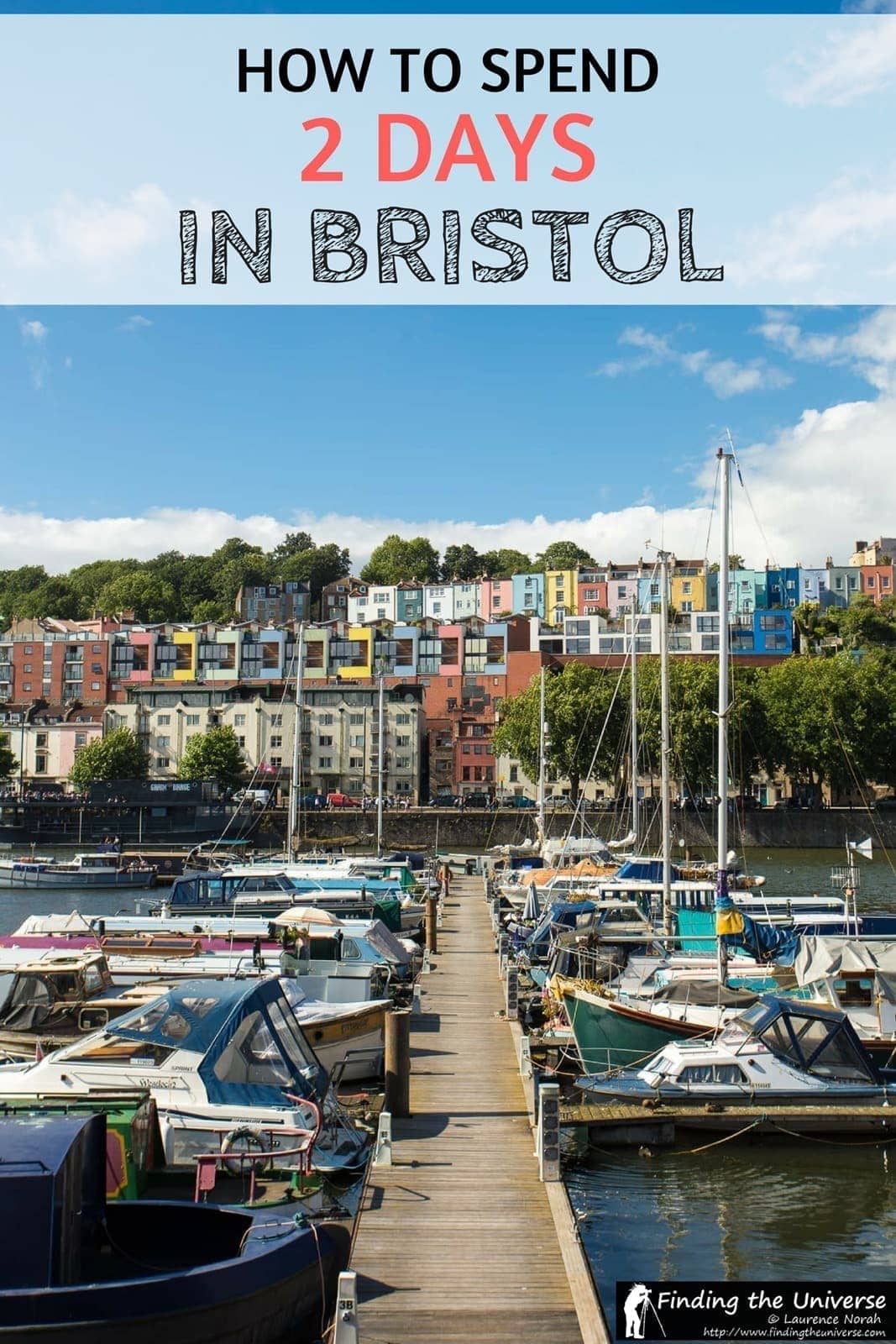
One of the things that catches every visitor’s eye in Bristol is the rows of brightly painted houses on the hillsides above the harbour. Mint green, salmon pink, mustard yellow, royal blue, the lot. They’re a Bristol signature, and you need to get a photograph.
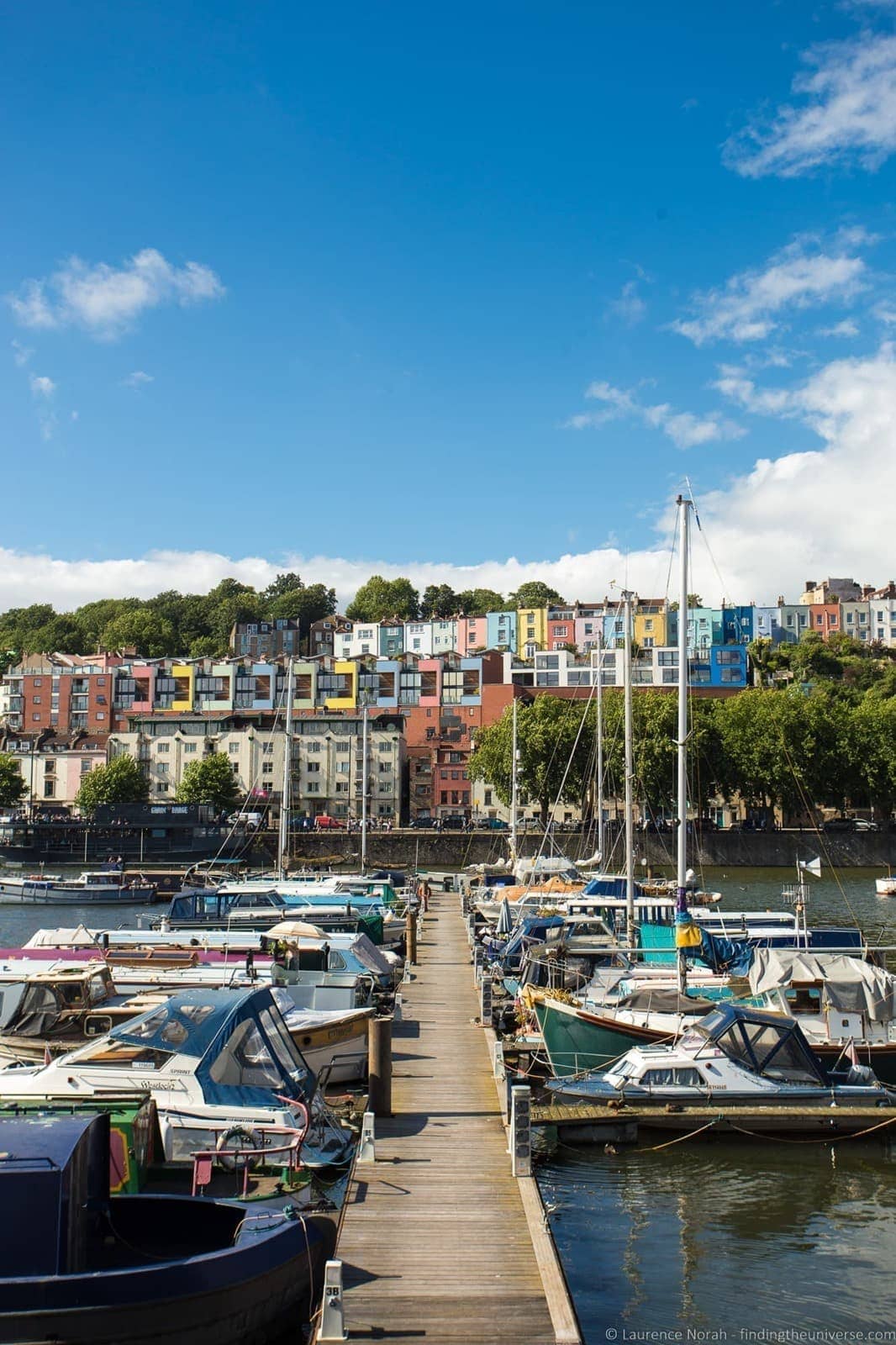
The best photo spot is from the south side of the harbour, looking back across the water at Cliftonwood and Hotwells. Walk a little further west from the SS Great Britain and you’ll find the angle. If you’re feeling energetic, you can also walk up into Cliftonwood itself and photograph the houses close up. The mosaics and the door colours alone are worth the effort.
We were lucky enough on one visit to see the houses from above during the Bristol Balloon Fiesta, which is a view I’d recommend if you ever get the chance.
14. Underfall Yard (4:45pm)
The last stop continues the marine theme. Underfall Yard is a working Victorian boatyard at the western end of the floating harbour, named after the sluice system Brunel devised to deal with the silt that was clogging up the harbour. The system is still in use today, which is the kind of detail that makes Brunel infuriating: he designed things that just kept working.
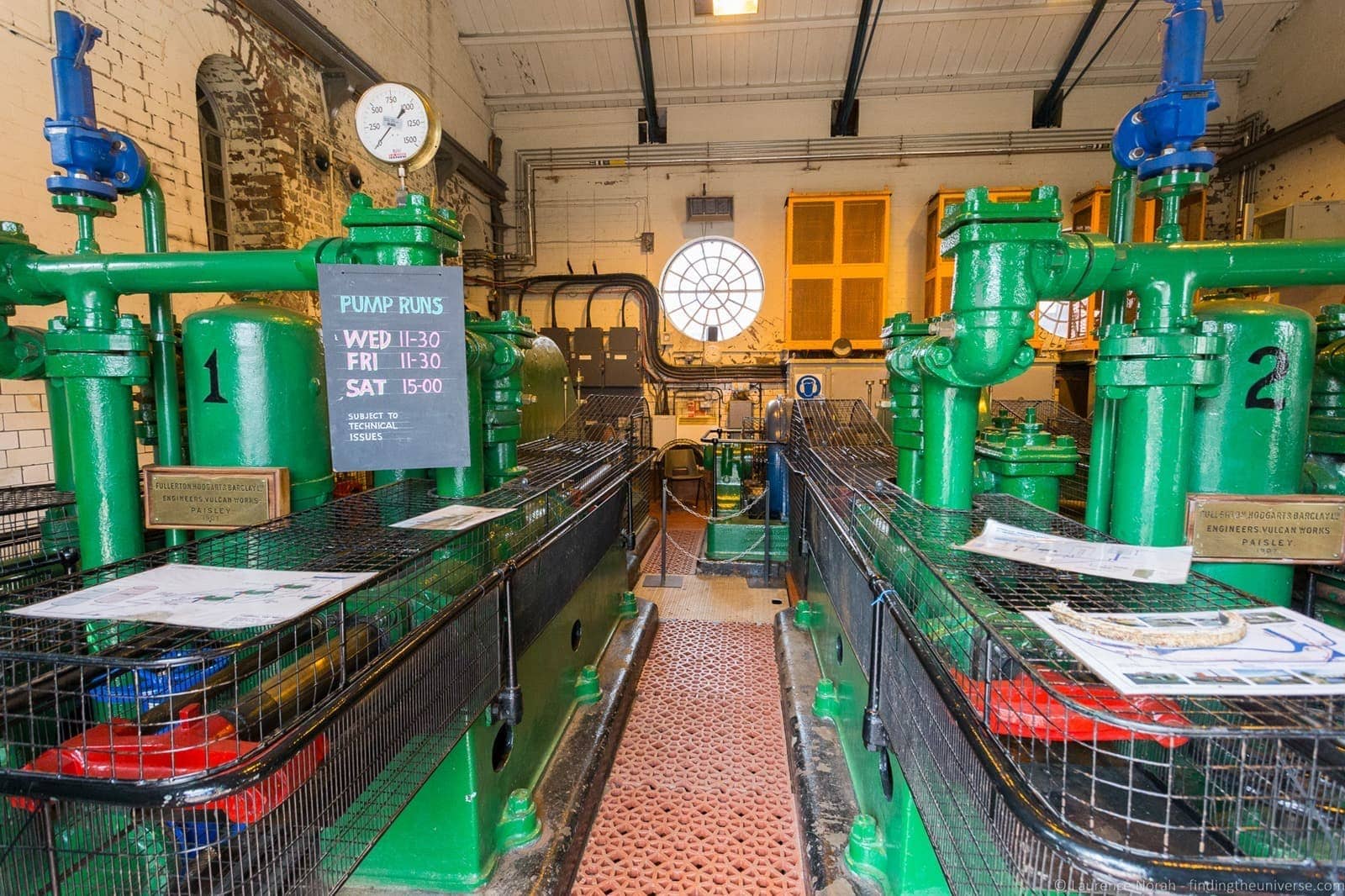
Much of the original yard has been preserved, and is now home to a boat-building cooperative, working maritime trades, and a visitor centre with exhibits on the history of the floating harbour and its sluicing technology. There’s also a really good cafe with a harbour view that does some of the best bacon baps in Bristol, by reputation.
One important note: Underfall Yard suffered a serious fire in 2023, with several boats and a maintenance shed destroyed in an arson attack. The yard is still in recovery, so if you visit, the donation tin is for a real and ongoing cause. The visitor centre and café are open Tuesday to Sunday from 10am, closed Mondays. Check the official page for current hours.
Whether to bother: if industrial Victorian engineering is your jam, Underfall is wonderful and you’ll spend an hour happily wandering. If it isn’t, you might prefer to skip this stop and head back to Wapping Wharf for an early dinner instead. There’s no shame in that. The colourful houses photo stop above is the more universally rewarding way to end the day.
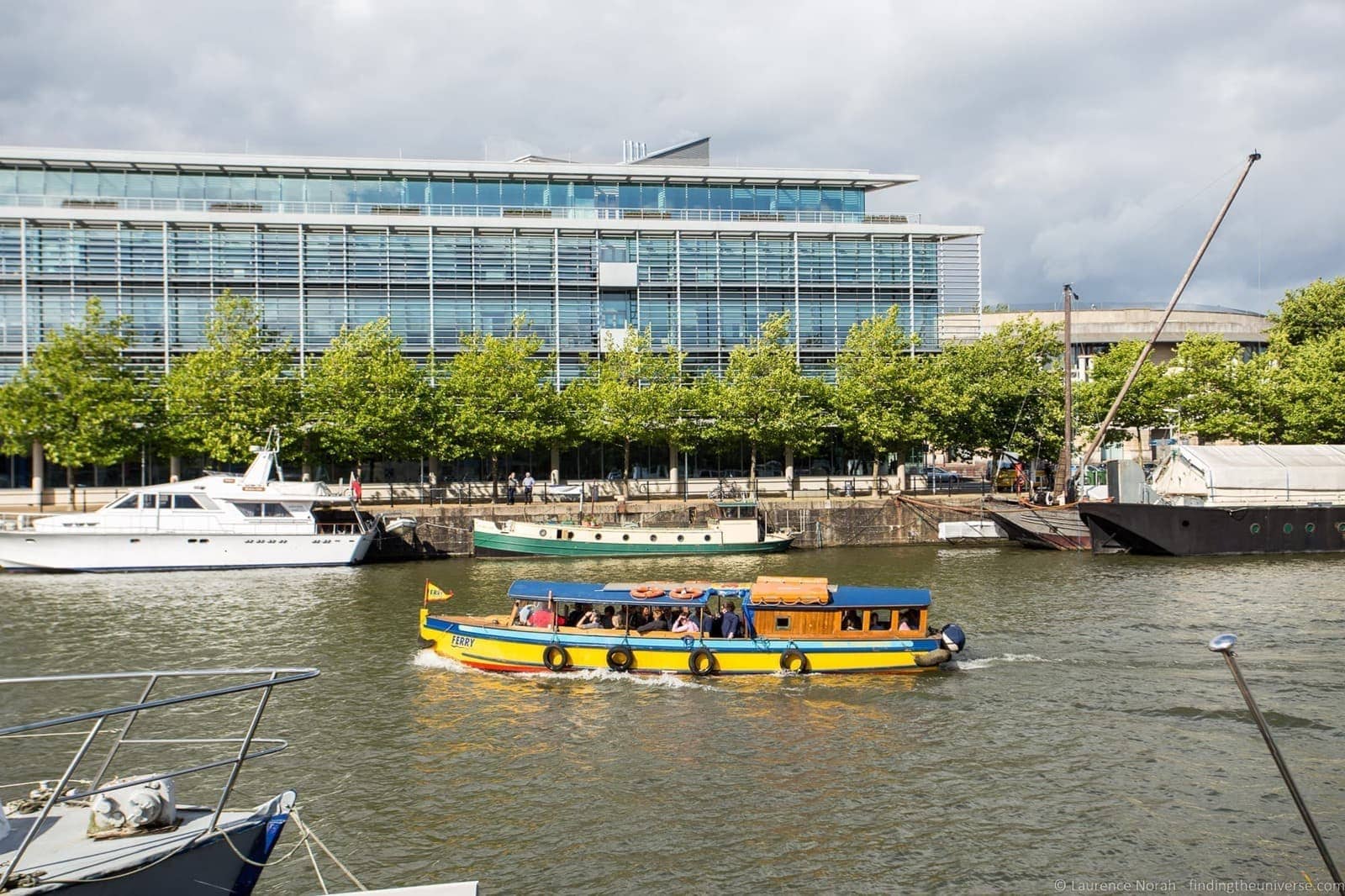
If you do skip Underfall, the Bristol Ferry stops nearby and runs all day across the harbour for a few pounds. It’s a lovely way to get back to the city centre without retracing your steps. The yellow boats are part of the Bristol scenery.
Where to Eat in Bristol
Bristol’s food scene has come on enormously over the last decade, helped by the harbour redevelopment and a steady supply of independent restaurants opening up in spaces the chains haven’t reached. Here are our picks across price points, focused on places that fit naturally into the itinerary above.
Lunch and Casual
St. Nicholas Market Glass Arcade. Already covered in the day-1 plan. Best cheap eats in central Bristol, and the building alone is worth a look. Closed Sundays.
Wapping Wharf. Already covered in the day-2 plan. The CARGO containers cluster of independents is the best concentration of food in the city. Pinkmans for coffee and pastries, Gambas for tapas, Salt & Malt for fish and chips, Cargo Cantina for Mexican.
Pieminister. The original Bristol pie shop chain, with several locations including one inside St. Nicholas Market. Pies, mash, gravy. Does what it says on the tin and does it brilliantly.
Dinner: Mid-Range
RAGÙ (Wapping Wharf). Small Italian sharing-plates restaurant with serious press credentials (The Guardian, Daily Mail, Good Food Guide). Quality ingredients, simple preparation, friendly room. Book ahead.
Root (Wapping Wharf). Veg-led modern British in a converted shipping container. Michelin Bib Gourmand. Head chef formerly at the Michelin-starred Pony & Trap. Probably the most interesting cooking on the harbour.
Primrose Cafe (Clifton Village). A Bristol institution rather than a destination dinner spot, but a brilliant Clifton-Village option for a casual evening meal with proper portions and homemade cake.
Dinner: Special Occasion
Bulrush. Michelin-starred, focused on seasonal foraged ingredients, tasting menus. Book well in advance.
Pasture. High-end steakhouse with a proper wine cellar. Touristy in the best way.
Drinks
Junction (Wapping Wharf). The Bristol Beer Factory’s harbourside pub. Local craft beer, terrace, harbour view. Hard to beat on a summer evening.
The Apple. A moored cider boat near Cascade Steps. Bristol takes its cider seriously, and this is the place to find out why.
Thekla. A moored cargo ship turned music venue and nightclub. If you want to go out properly in Bristol, you end up here.
The Pump House (Hotwells). Gastropub in a converted Victorian pump house, near the harbour entrance. Over 400 gins. Big outdoor terrace.
Where to Stay in Bristol
Bristol has accommodation options across every budget. We’ve tended to use apartment rentals on our own visits, since the flexibility of being able to cook a meal and do laundry pays off after a few days. But for shorter visits a hotel is usually the simpler call.
A few picks across price points:
Luxury
Hotel du Vin Bristol Avon Gorge. Sits on the edge of Clifton with a view of the suspension bridge that justifies the price on its own. The White Lion bar terrace is one of the best sundown spots in the city.
Bristol Harbour Hotel & Spa. Historic four-star in the city centre with a spa and good rooftop views. Closer to the action than the Avon Gorge if you’re prioritising harbour-walking.
Mid-range
The Clifton Hotel. Victorian house turned hotel right in Clifton Village. Walking distance to the suspension bridge, good restaurants on the doorstep.
Holiday Inn Express City Centre. Central, breakfast included, predictable. The right call if you want a known quantity in a walkable location.
Budget
Travelodge Bristol Central. Basic chain hotel, two central locations. Cheap and reliable, no frills.
The Full Moon Backpackers. Well-run hostel with both private and dorm rooms in a historic Bristol pub building.
Apartments and Self-Catering
Clifton Short Lets. Self-catering rooms and apartments in Clifton, particularly good value for stays of four nights or more.
Plum Guide. Curated apartment rentals across the city. We’ve used Plum Guide properties around the world; their listings tend to be of consistently high quality at a range of price points. See our Plum Guide review.
For more vacation rental options across the UK, see our guide to our favourite holiday rental websites in the UK.
Or browse all Booking.com listings for Bristol if you want to compare across the full range.
Getting to Bristol
Bristol is well-connected. There’s a fast train from London Paddington to Bristol Temple Meads that takes around 1 hour 40 minutes, and similarly direct trains from Birmingham, Manchester, Cardiff, and Edinburgh. Coach services from National Express and Megabus are slower but considerably cheaper.
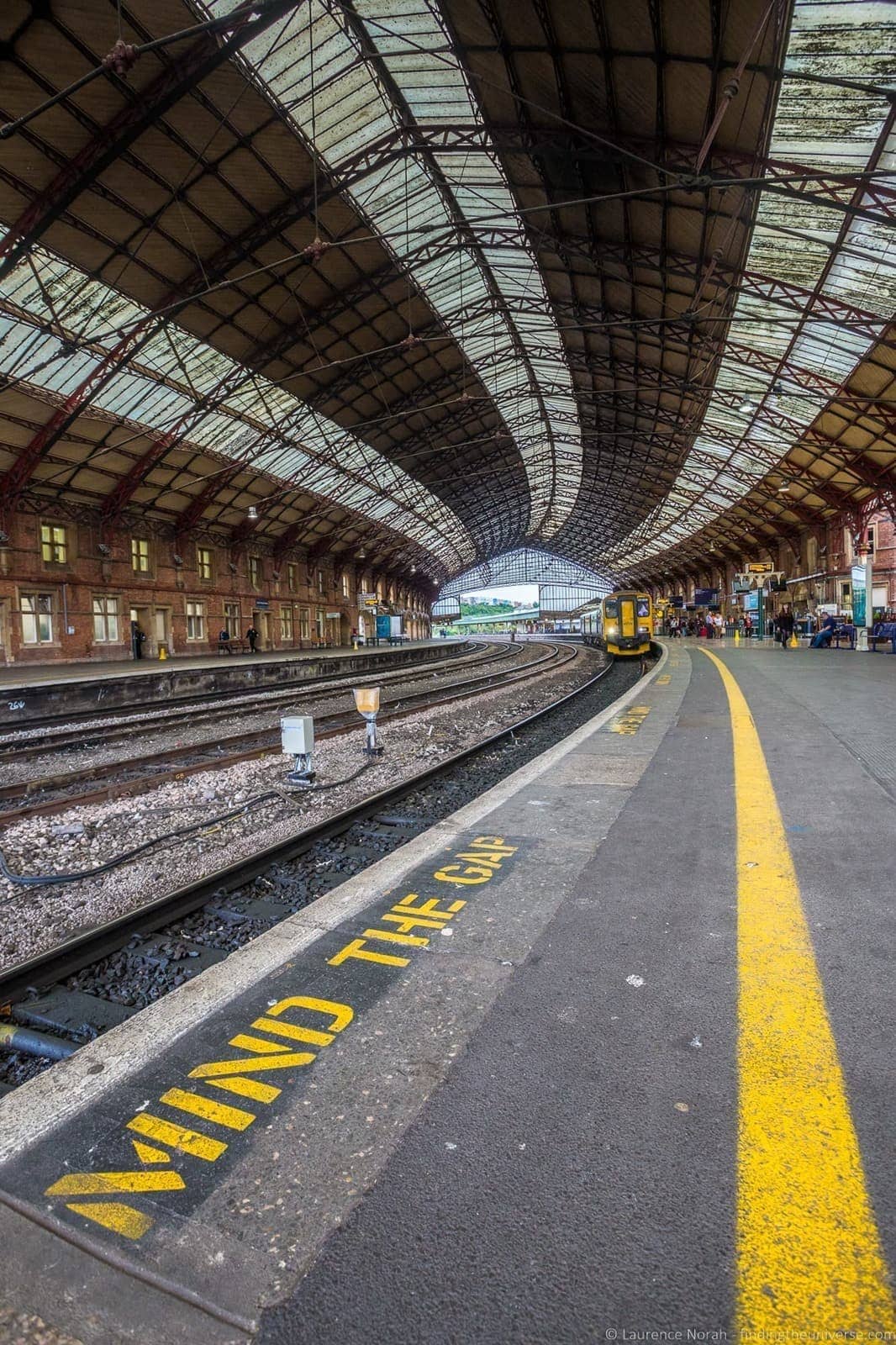
Bristol Airport is south of the city, with connections to a number of UK and European destinations. The Airport Flyer A1 bus runs into the city centre.
If you’re driving, you can drive easily enough to Bristol, but the city centre is a pain for parking and parking fees add up quickly. We’d recommend leaving the car at your accommodation (or one of the Park and Ride sites on the outskirts) and walking, busing or ferry-ing once you’re in town. Bristol introduced a Clean Air Zone in 2022 covering the central area, so check whether your vehicle is compliant or you’ll be paying a daily charge.
How to Get Around Bristol
Bristol is an easy city to get around on foot, although it has its share of hills (Park Street, Park Row, the climb to Clifton, all of which your calves will know about by Day 2). The itinerary above is largely set up to have you travelling downhill rather than up.
The city has a good bus network, with First Bus running most of the routes. Pay contactless on board.
The useful and slightly underrated option is the Bristol Ferry, the small yellow boats that crisscross the floating harbour. They run all day across multiple stops including Temple Meads station, the city centre, the SS Great Britain, and Hotwells. A single fare is a few pounds. We use them every time we’re in Bristol. They turn what would be a 25-minute walk back to the centre into a 10-minute boat trip with a view.
When to Visit Bristol
Bristol is a year-round city. There are enough indoor museums and harbour-side restaurants that bad weather doesn’t ruin a visit, and the city looks beautiful in winter too (the Bristol Light Festival in February has become a serious draw).
For the best chance of decent weather and long evenings, May to September is your window. June, July and August give you the longest daylight hours and the warmest weather. October can be glorious or grey depending on luck.
Visiting During the Bristol Balloon Fiesta
The big event in Bristol’s calendar is the Bristol International Balloon Fiesta, which takes place over three days in early August at Ashton Court Estate. In 2026 the dates are 7-9 August. It’s one of Europe’s largest hot air balloon festivals, and the mass ascents at 6am and 6pm, when over a hundred balloons launch together, are unlike anything else.
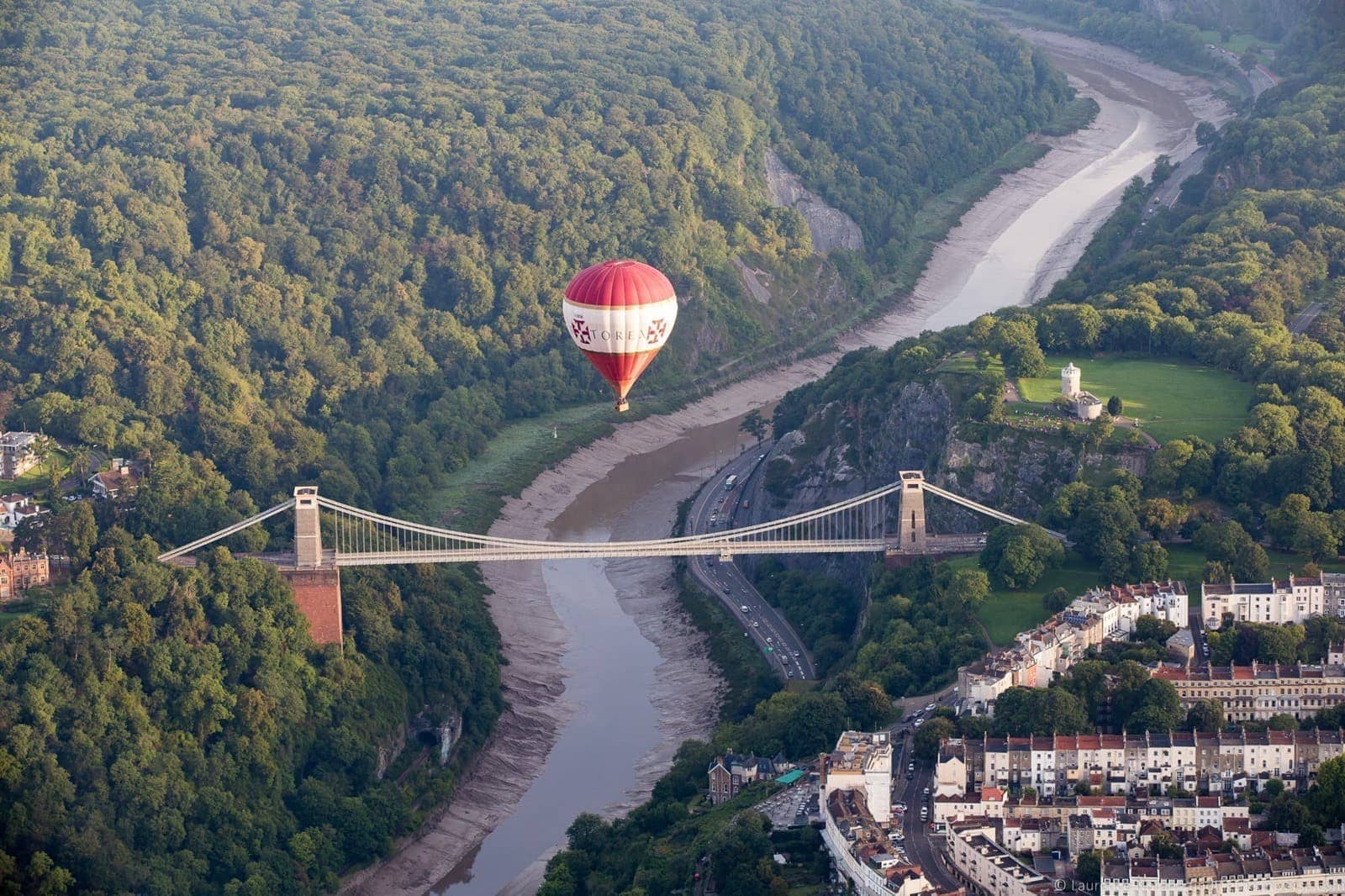
We were lucky enough to attend, and to go up in a balloon during one of the dawn ascents. The view of Bristol from a few hundred feet up, taking in the harbour, the suspension bridge and all those colourful houses, is something you don’t forget.
The honest trade-offs: accommodation books up months in advance and prices climb sharply, particularly anywhere near Ashton Court. The city itself is significantly busier than usual. The launches are weather-dependent, and they get cancelled about as often as they go ahead, so you need a few days’ buffer to give yourself a fair chance of seeing one. The nightglows (balloons lit up against the dark with music) happen on Friday and Saturday evenings only.
Worth doing? Yes, if you can plan ahead. Jess has written a much more detailed Bristol Balloon Fiesta guide on Independent Travel Cats covering everything from where to watch the ascents from to which accommodation to book and how the parking works. Read that before you commit.
If you can’t make the Fiesta but still want a balloon ride over Bristol, several local operators run dawn flights from March to October when the weather plays ball. They’re not cheap (around £200 a head), but they’re pretty unforgettable.
Otherwise, check the Visit Bristol events calendar for what’s on during your visit. Bristol has a strong festival culture and there’s almost always something going on.
Day Trips from Bristol
If you’ve got more than two days, Bristol makes a great base for exploring this part of England. A few easy day trips:
- Bath. Twelve minutes by train. Roman baths, Georgian architecture, world heritage status. Different from Bristol in every way that matters and a brilliant complement to a Bristol visit. We can vouch for it personally, having lived there for four years and never tired of it.
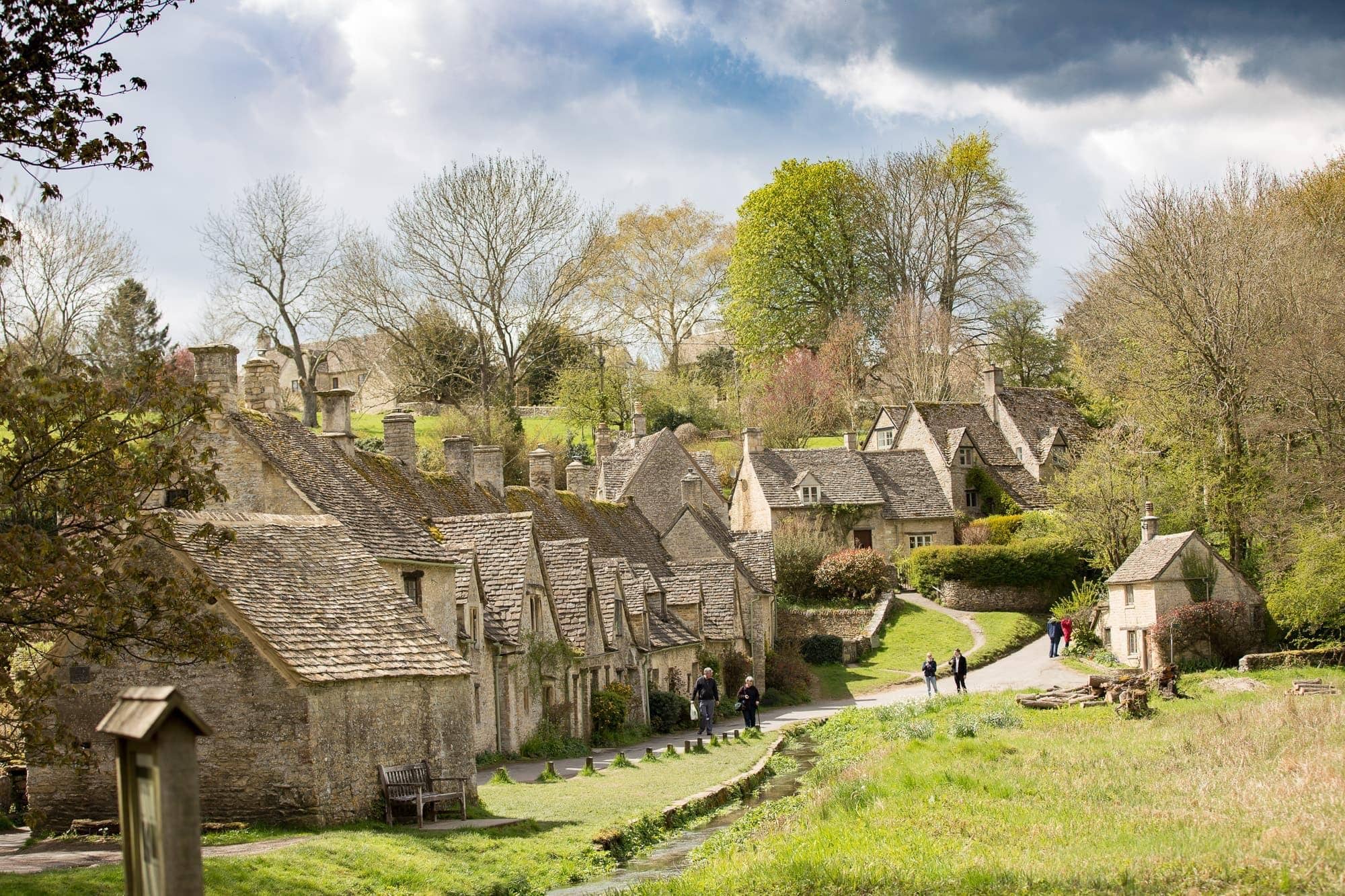
- The Cotswolds. Postcard-perfect honey-coloured villages and rolling countryside. Best with a car, but you can do guided day tours from Bristol. Rabbie’s run a combined Cotswolds and Stonehenge day trip that’s a popular option.
- Stonehenge. Easy to reach by car or, if you don’t have one, on the same Rabbie’s day tour as the Cotswolds.
- Cardiff. Capital of Wales, easy reach by train across the Severn (around 50 minutes from Temple Meads). Castle, museums, Cardiff Bay, plenty for a day. If you want a longer Welsh trip, see our Wales road trip itinerary and Wales planning guide.
- Glastonbury and Somerset. Glastonbury Tor, the ruined abbey, and the cluster of King Arthur legends that come with them. A day from Bristol can also take in Wells (the smallest cathedral city in England, with a particularly good cathedral) and Cheddar Gorge for some proper limestone drama. Drive yourself for maximum flexibility, or browse guided Somerset tours from Bristol.
Bristol FAQ
Is Bristol worth visiting for two days?
Yes, particularly if you’re into street art, Victorian engineering, food, or hot air balloons. Bristol is a city you wander rather than tick off, and two days gives you enough time to do the harbour, Clifton, and the old city without rushing.
Visitors who specifically want big-name historic sites may find Bath (13 minutes by train) a more obvious choice for a single day. The honest answer for most first-time visitors who can spare the time is to base yourself in Bristol and do Bath as a half-day trip.
Bristol or Bath: which should I visit?
Both, ideally. They’re 13 minutes apart by train, and they’re very different cities.
Bath is more compact, more uniformly historic (mostly Roman and Georgian), and easier to “complete” in a day. The Roman Baths and the Georgian crescents are the headline attractions and they live up to the billing.
Bristol is bigger, scruffier, more lived-in, and more interesting once you get past the surface. The street art, food scene, and harbour redevelopment give it a working-city feel that Bath doesn’t have.
If you only have time for one day in this part of England, choose based on what you want: Bath for headline historic sights, Bristol for character and food. If you have two or three days, do both.
How many days do you need in Bristol?
Two days is the sweet spot for a first visit. It lets you see the main sights (museums, harbour, Clifton, street art, SS Great Britain) without forcing you to march through a 15-stop checklist.
One day is workable but rushed. You’ll have to pick between the harbour and Clifton, and you won’t have time to eat properly.
Three days lets you add a Bath day trip or a deeper exploration of Bedminster and Stokes Croft. Beyond that, Bristol becomes more of a base for exploring the wider south-west than a destination in its own right.
When is the best time to visit Bristol?
May to September gives you the best weather and longest daylight hours. June and July are warmest. August adds the Balloon Fiesta but also the highest accommodation prices and crowds.
February is worth a mention for the Bristol Light Festival, which has grown into a serious winter draw. Otherwise, winter visits are perfectly viable thanks to plenty of indoor attractions, but be aware that sunset is around 4pm in December.
What’s Bristol famous for?
Three things, mainly. Banksy (the street artist grew up here, and the city remains the world’s leading street art destination). Brunel (the Victorian engineer designed the Clifton Suspension Bridge and the SS Great Britain, both of which dominate Bristol’s identity). And the Bristol International Balloon Fiesta, the largest hot air balloon festival in Europe, held every August.
Beyond the headline three, Bristol is also known for its independent food scene, its music heritage (trip-hop emerged here in the 1990s), and as the home of Aardman Animations (Wallace & Gromit, Shaun the Sheep, Morph).
Where should I stay in Bristol?
For a two-day visit, stay in Clifton or in the city centre near the harbour. Clifton is prettier and quieter with good independent restaurants on the doorstep; the city centre puts you closer to the museums and harbour attractions.
For luxury, the Hotel du Vin Bristol Avon Gorge in Clifton has the suspension bridge view; for mid-range, The Clifton Hotel or the Holiday Inn Express City Centre. For budget, Travelodge Bristol Central or the Full Moon Backpackers hostel. For longer stays, an apartment via Plum Guide or Clifton Short Lets is usually better value than a hotel.
How do I get from London to Bristol?
Train is the fastest option. Direct trains from London Paddington to Bristol Temple Meads take around 1 hour 40 minutes, with frequent departures throughout the day. Book ahead via Trainline or National Rail for the cheapest fares.
Coach is cheaper but slower (around 2.5 hours), with services from National Express and Megabus departing from London Victoria.
Driving takes around 2 to 2.5 hours depending on traffic, but you’ll then be dealing with Bristol parking and the Clean Air Zone. Train is almost always the better call for a short visit.
Is Bristol a walkable city?
Yes, mostly. Central Bristol, the harbour, and Clifton are all walkable from each other, though Clifton involves a hill. The day-1 itinerary above is mostly downhill from Brandon Hill to the city centre to the harbour, which is the kindest direction to do it in.
The Bristol Ferry covers the harbour route by water for a few pounds, which is a useful alternative when your feet need a break. For longer trips around the city (Bedminster, Easton, Stokes Croft) the bus network is reliable and contactless-payment-friendly.
Further Reading for Your Bristol Visit
That covers our suggestions for two days in Bristol. As you can see, there’s enough to see and do to easily fill two days, with plenty of room to extend if you have longer.
Some additional resources:
- The official Visit Bristol tourism page
- Our detailed guide to attending the Bristol Balloon Fiesta on Independent Travel Cats
- The official Bristol International Balloon Fiesta website
- The Rough Guide to Bath, Bristol & Somerset
- My guide to finding street art in Bristol, including most of the major Banksy pieces
- For wider UK trips, see our one-week UK itinerary or the two-week version
- For other UK city guides, we have detailed pieces on Cambridge, Stratford-upon-Avon, Oxford, York, and Portsmouth
- For London, see our 1-day London itinerary, 2-day London itinerary, 6-day London itinerary on ITC, our London Harry Potter sites guide, and tips on the London Pass
- A guide to 10 of the best stately homes in England for itinerary inspiration
- If you’re heading further afield, our guide to driving Scotland’s North Coast 500
- Getting online when travelling abroad can be a faff, so our guide to getting online while travelling covers the options
- For better travel photos, take a look at my online photography course, which covers everything from camera basics to composition and editing, whatever camera you have
And that’s it for our suggestions for two days in Bristol. Have you visited? Anything you’d add? Let us know in the comments below.
Joni says
Thank you so much for this wonderful itinerary! I’ll be traveling with my husband to Bristol from the US in about a month. It’ll be my first time in the UK. He’s going for his work so the first 4 days of our 10 day trip I’m on my own to explore. I may need to spread this out for 3-4 days vs. 2 but it looks like plenty to keep me busy seeing all the sights :)…Thank you!
Laurence Norah says
Hi Joni!
It’s my pleasure! I think you will easily be able to spread this out over a few days. However, as you have 4 days I can highly recommend jumping on the train and riding for 11 minutes or so from Bristol to the historic town of Bath which is a world heritage site and well worth a half day or full day of your time. It’s very different from Bristol, all Georgian architecture and lovely streets. Well worth it!
Safe travels!
Laurence
Macarena says
Thanks you so much for this guide! My husband and I are visiting UK for the first time from Argentina, and I was not very sure about including Bristol in our itinerary, but reading your blogue has convinced me!
best wishes!!
Macarena
Laurence Norah says
Thanks Macarena, have an awesome time in Bristol and the UK 🙂
Mark says
This is a lifesaver! My girlfriend is coming to Bristol for the first time over Christmas, and I had no clue where to take her until reading your blog. Thanks again.
Any to-do lists for Bath? 🙂
Laurence Norah says
Hi Mark,
It’s my pleasure! So we lived just outside Bath for three years, but haven’t really written much about it! However that’s not to say we don’t have recommendations. Obviously the town centre is pretty to walk around, and sights like the Royal Crescent, Circus and Bath Abbey are a must to see. There is an excellent free walking tour that meets most days in front of the Abbey that is worth doing. If you like walks, the Bath Skyline walk is really lovely. The Roman Baths are also of course worth a visit, and there also the thermal spa if you prefer a more relaxing experience. That should get you started hopefully!
Have a lovely Christmas 🙂
Laurence
Mahmud says
thank you so much Laurence and Jessica. We are on our way now. It was a fantastic blog really helpfull.
Thanks
Mahmud & Şendül
Laurence Norah says
Hey Mahmud & Şendül! Thanks so much guys 🙂 Have an awesome time in Bristol, what a great way to start 2022 🙂
All the best,
Laurence
Dory Merriman says
Thank you so much Laurence and Jessica for taking the time to put together this fantastic guide. It has helped me greatly for my forthcoming short visit to Bristol. Best wishes Dory
Laurence Norah says
Thank you so much Dory – have a wonderful trip to Bristol!