
I’m a professional travel photographer, and I’ve been shooting with action cameras since 2014. If you want a camera you can take anywhere, one that will survive snorkelling in the Caribbean, white water rafting in Colorado, skiing in the Alps, or just getting splashed on a boat trip, you’re in the right place.
I’m going to help you find the right action camera for your needs and budget in 2026.
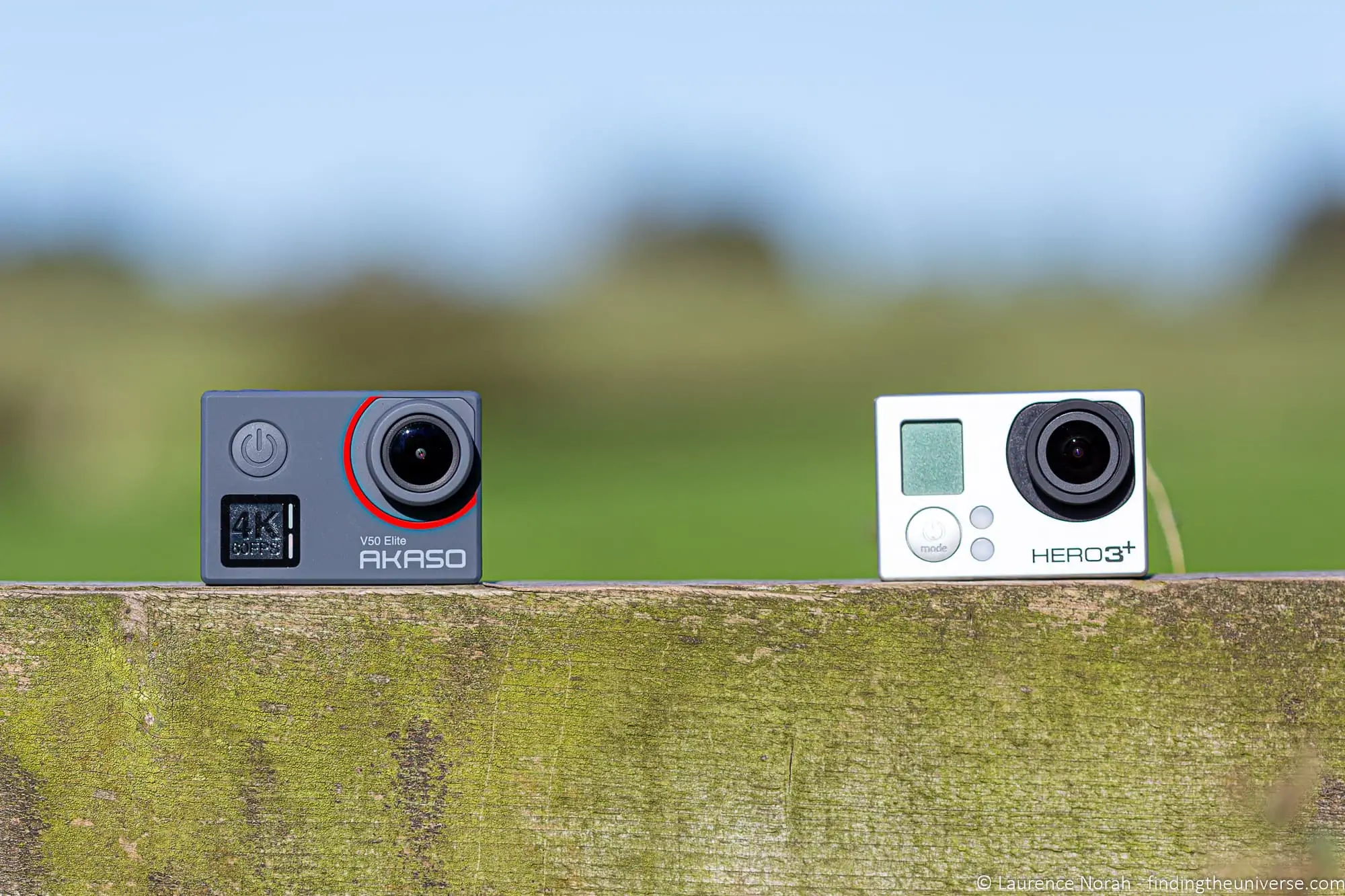
I bought my first action camera for a summer trip to Finland in 2014, when I knew I’d be doing a lot of water-based activities like swimming and kayaking. For that, I needed something sporty and waterproof. That first camera was a GoPro Hero 3, which did the job.
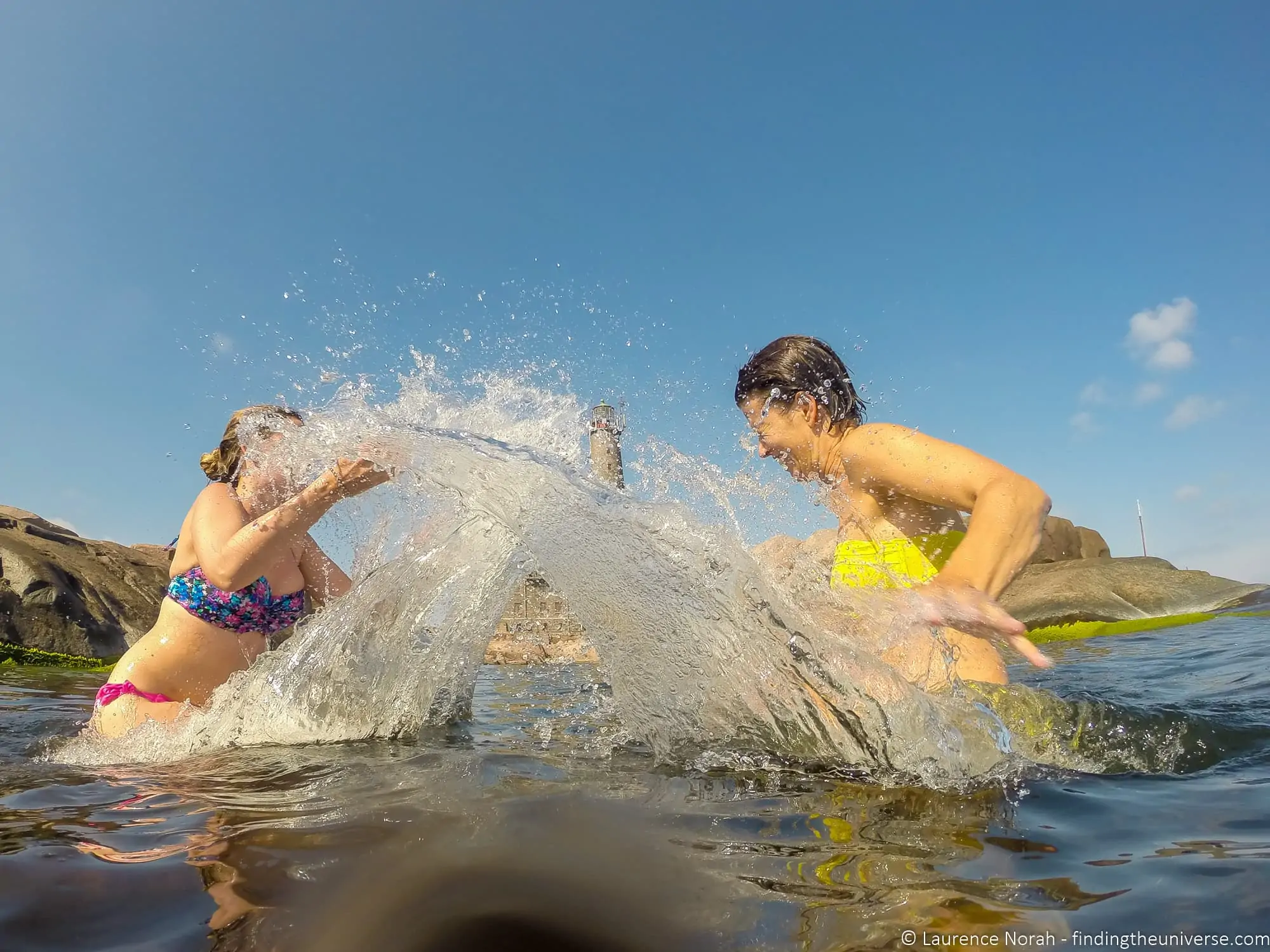
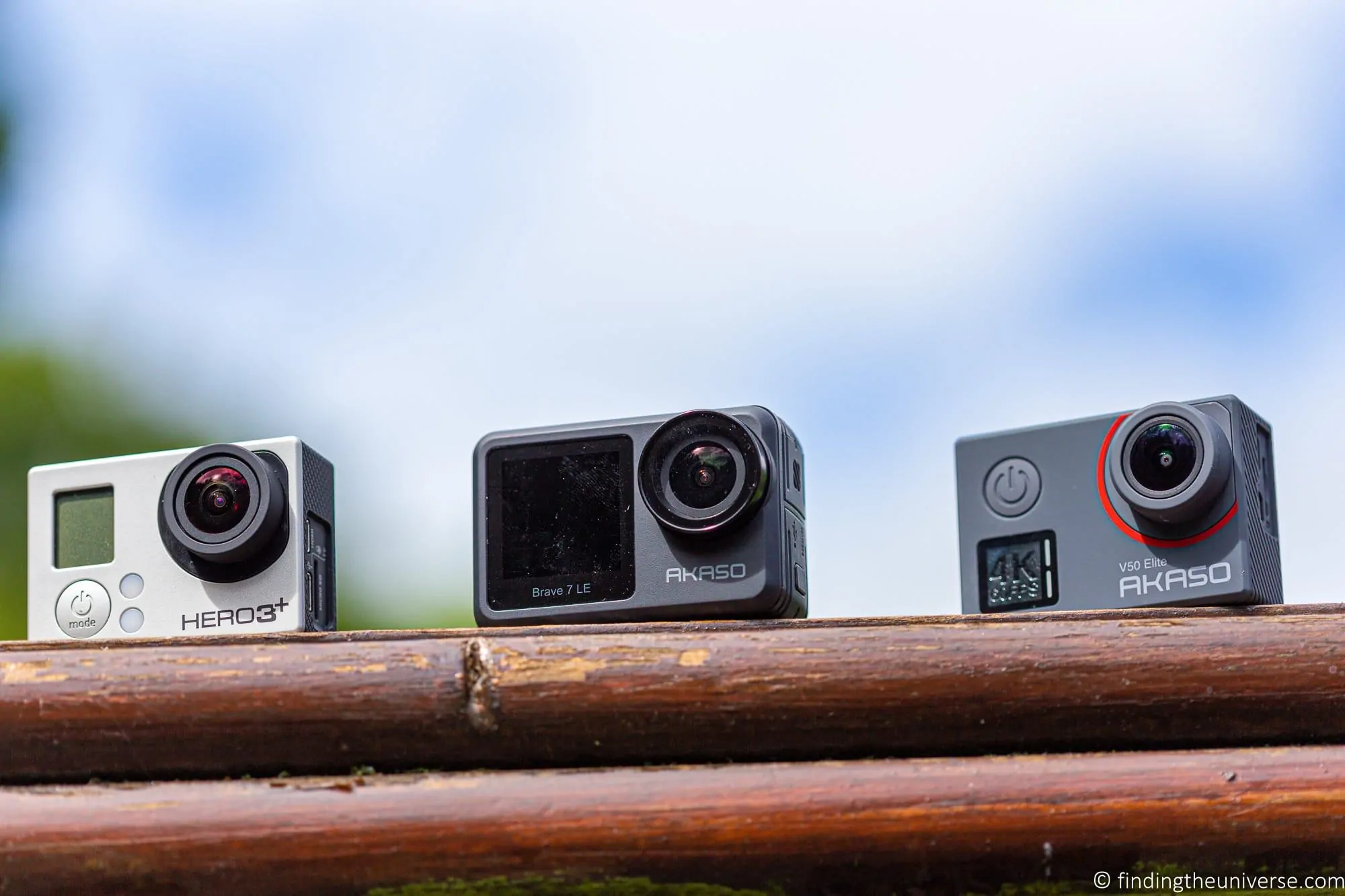
It started to age, so I upgraded to an AKASO Brave 7 LE. We took it snorkelling in Barbados and it did everything we needed, which for us is basically to perform in situations where I wouldn’t want to take my Canon R5. For our use case, a budget action camera works well, and I’d recommend that approach to anyone who just needs a camera for the occasional holiday adventure.
But I also spend my working life testing cameras and lenses, so I know what the more expensive options bring to the table. If you’re a content creator, a serious vlogger, or someone who films action sports regularly, you’ll want to look further up the range.
I’ll cover everything you need to look for in an action camera so you can make the right buying decision, and then give you my picks across every use case and budget. There are a lot of choices across a variety of manufacturers, from well-known brands through to some more affordable alternatives.
And while they’re all designed to withstand more extreme conditions than your average camera, they differ in price, features, and accessories. By the end of this post, you’ll know exactly what to look for, and have some ideas as to which camera is going to be best for you.
Of course, action cameras are just one type of camera. If you read through this guide and think an action camera isn’t for you, check out some of our other camera buying guides. These include our guide to the best travel camera, the best camera for backpacking and hiking, the best compact camera, the best mirrorless camera, and the best DSLR camera.
Now, let’s get started with our guide to the best action cameras, starting with what an action camera actually is.
Table of Contents:
Quick Picks: Best Action Cameras 2026
Short on time? Here are my top picks by use case. Scroll down for full reviews of each camera, or keep reading for my complete buyer’s guide on what to look for.
- Best overall: GoPro Hero 13 Black. The best stabilisation in the business, 5.3K60 video, interchangeable lens mods, and the widest accessory ecosystem.
- Best for low light and video quality: DJI Osmo Action 6. Variable aperture (a first for action cameras), a huge 1/1.1″ sensor, and 4 hours of battery life.
- Best value mid-range: DJI Osmo Action 5 Pro. Still an excellent camera at its new lower price since the Action 6 launched.
- Best for content creators: Insta360 Ace Pro 2. 8K video, Leica lens, flip screen, and AI-powered editing features.
- Best premium GoPro: GoPro Mission 1 Pro. GoPro’s new 1-inch sensor flagship, with the best image quality in the range, 8K video, and waterproofing to 20 metres.
- Best budget GoPro: GoPro Hero (2024). The smallest GoPro with a screen. 4K, waterproof, dead simple.
- Best ultra-budget: AKASO Brave 7 LE. Our personal pick for casual use. Does everything most people need.
- Best 360-degree camera: Insta360 X6. 8K 360-degree video at 50fps, replaceable lenses, waterproof to 20 metres.
- Best mini action camera: DJI Osmo Nano. Tiny, magnetic, and surprisingly capable with a 1/1.3″ sensor.
Action Camera Comparison Table (2026)
Here’s how the 2026 action cameras compare at a glance. I’ve included a stills column, because photo quality is something most action camera roundups skip over, and it matters if you want to pull frames or shoot the occasional photo as well as video.
| Camera | Sensor | Max video | Photo (stills) | Waterproof (no housing) | Weight | Price (USD) | Best for |
|---|---|---|---|---|---|---|---|
| GoPro Hero 13 Black | 1/1.9″ | 5.3K/60 | 27MP | 10m / 33ft | 157g | Check price on Amazon | Best overall |
| DJI Osmo Action 6 | 1/1.1″ | 8K/30 | 38MP | 20m / 65ft | 149g | Check price on Amazon | Low light and video |
| DJI Osmo Action 5 Pro | 1/1.3″ | 4K/120 | 40MP | 20m / 65ft | 146g | Check price on Amazon | Best value |
| Insta360 Ace Pro 2 | 1/1.3″ (Leica) | 8K/30 | 50MP | 12m / 39ft | 177g | Check price on Amazon | Content creators |
| GoPro Mission 1 Pro | 1″ | 8K/60 | 50MP | 20m / 66ft | 207g | Check price on Amazon | Best image quality |
| GoPro Mission 1 | 1″ | 8K/30 | 50MP | 20m / 66ft | 207g | $599 at launch | 1-inch sensor, lower cost |
| GoPro Hero (2024) | 1/2.8″* | 4K/30 | 12MP | 5m / 16ft | 86g | Check price on Amazon | Budget GoPro |
| AKASO Brave 7 LE | 1/2.3″* | 4K/30 | 20MP | 1m body (40m housing) | 127g | Check price on Amazon | Ultra-budget |
| Insta360 X6 | Dual 1/1.1″ | 8K/50 (360) | 120MP (360) | 20m / 66ft | 196g | Check price on Amazon | 360-degree |
| DJI Osmo Nano | 1/1.3″ | 4K/120 | 35MP | 10m / 33ft | 52g (124g with dock) | Check price on Amazon | Mini / POV |
* GoPro and AKASO don’t publish an official sensor size for these two models, so those figures are the best available third-party estimates. Prices update live from Amazon and will vary by retailer and bundle. The standard GoPro Mission 1 is not currently linked, so its launch price is shown.
What is an Action Camera?
An action camera is a camera designed for capturing photos and video of action, anything from swimming and diving to mountain biking, skiing, and skateboarding. They’re built to be waterproof and shockproof, so you can use one in situations where you wouldn’t risk your normal camera.
Best Action Cameras 2026
Here are my picks for the best action cameras available right now. I’ve organised them by use case so you can find the right camera for what you actually need, rather than just ordering by price.
Best Overall: GoPro Hero 13 Black
GoPro pretty much invented the action camera category, and the Hero 13 Black is why they’re still the default choice for most people.
The headline features are the HB-series interchangeable lenses, which are new to this generation. You can swap between an ultra-wide, macro, anamorphic, and ND filter lens, and the camera automatically detects which one is attached and adjusts its settings. It’s a clever system that adds real creative flexibility without making the camera more complicated to use day to day.

The 1/1.9″ sensor behind an f/2.8 lens captures 5.3K/60fps video and 27MP photos. That’s more resolution than most people will ever need, and it means you can crop in on footage without losing quality. Slow motion is available up to 400fps at 720p (called Burst Slo-Mo), 360fps at 900p, or 120fps at 5.3K for short bursts.
HyperSmooth 6.0 is still the standout for stabilisation in chaotic scenarios, the main reason GoPro footage looks so smooth even when the camera is getting thrown around on a mountain bike or a surfboard. The 360 Horizon Lock keeps your footage level even if the camera rotates completely.
The camera is waterproof to 10 metres (33 feet) without a housing. Battery life is around 90 minutes at 4K/30fps with the new 1900mAh Enduro battery (note: this battery isn’t compatible with older GoPros). You get GPS, HLG HDR video in 10-bit colour, voice control, and WiFi 6 for faster transfers.
The accessory ecosystem is massive, both official GoPro gear and thousands of third-party options. If you don’t want to spend time comparing specs and just want the safest, most well-rounded pick, this is it.
Check price on Amazon here and B&H here
Best for Low Light and Video Quality: DJI Osmo Action 6
DJI has been making excellent action cameras for years and the Osmo Action 6 is their most impressive yet. It has a couple of industry firsts that set it apart.
The variable aperture (f/2.0 to f/4.0) is the first on any action camera. In practice, this means the camera can let in more light in dark conditions (f/2.0) or stop down for sharper footage in bright light (f/4.0). You don’t need to think about this if you don’t want to, as the camera can handle it automatically, but it gives you more control than any other action camera if you want it.
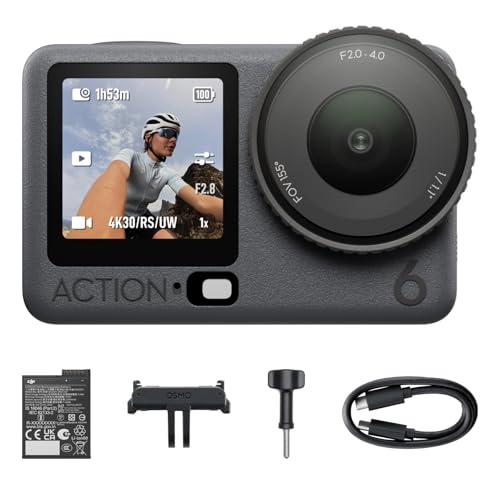
The 1/1.1″ sensor is large, at roughly 38MP, second in this lineup only to the 1-inch sensor in GoPro’s new Mission 1. That’s a square sensor, which is an interesting design choice: it means the camera captures a wider frame and you can crop into any aspect ratio (16:9, 9:16 for social, 4:3, etc.) in post. Combined with the wider aperture, low-light performance is noticeably better than the GoPro Hero 13. If you film a lot at dawn, dusk, or indoors, this matters.
Video resolution goes all the way up to 8K at 30fps, which is actually higher than the GoPro Hero 13’s 5.3K, though the 8K mode is 16:9 only and turns off some of the stabilisation options. For most shooting you’ll sit at 4K/120, which gives you smooth, croppable footage and lovely slow motion. There’s a SuperNight mode for low-light video up to 4K/60fps, and a Starburst mode that turns city lights into star patterns for creative night footage. Stabilisation via RockSteady 3.0+ and HorizonSteady is very good, though HyperSmooth still edges it in the most chaotic scenarios.
Waterproofing to 20 metres (65 feet) without a case is the best of any camera on this list. Battery life at up to 4 hours is roughly double what you get from a GoPro. There’s also 50GB of internal storage, so you can shoot even if you forget your memory card.
The audio capabilities are also worth a mention: the DJI OsmoAudio system lets you connect DJI microphone transmitters directly to the camera without a receiver, which is very useful for vlogging.
Check price on Amazon here and B&H here
Best Value Mid-Range: DJI Osmo Action 5 Pro
The DJI Osmo Action 5 Pro was the camera to beat through most of 2024 and 2025, and with the Action 6 now on sale, the price has dropped considerably. That makes it one of the best value propositions in the action camera market right now. Action cameras are one of the categories that do drop in the big Amazon sales, so it can pay to time your purchase. I flag the action-camera deals worth buying when one comes around.
You still get a large 1/1.3″ sensor (40MP), f/2.8 aperture, 4K/120fps video, excellent RockSteady 3.0 stabilisation, dual OLED screens, and waterproofing to 20 metres without a case. Battery life is around 4 hours, matching the Action 6.

What you miss compared to the Action 6 is the variable aperture and the slightly larger sensor. In practice, unless you’re shooting a lot of low-light footage or you specifically want the aperture control, the Action 5 Pro does 90% of what the Action 6 does for significantly less money.
If you’ve been eyeing a premium action camera and don’t need the absolute latest, this is a smart buy.
Check price on Amazon here and B&H here
Best for Content Creators: Insta360 Ace Pro 2
If your primary use for an action camera is creating content for YouTube, TikTok, or social media, the Insta360 Ace Pro 2 is built for that workflow.
The headline spec is 8K/30fps video, as high as resolution currently goes on an action camera. In practice, most people will shoot in 4K, but the extra resolution gives you room to crop and reframe in post without losing quality. The 1/1.3″ sensor is co-engineered with Leica, and combined with Insta360’s dual AI chip system (one chip for image processing, one for overall performance), the image processing is excellent. The PureVideo mode is particularly effective for low-light shooting, using AI to reduce noise in real time.
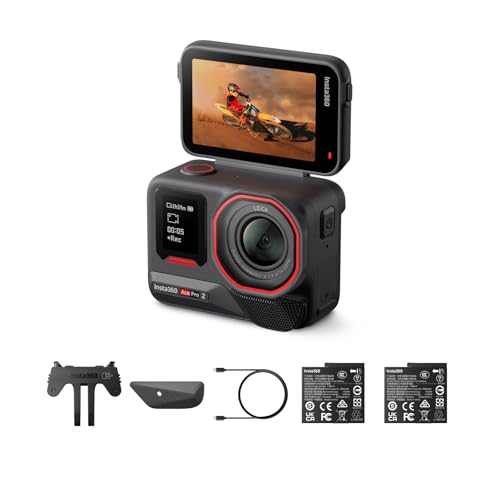
The 2.5″ flip-up touchscreen is the best screen design on any action camera. Flip it up and it becomes a front-facing screen for vlogging; leave it down and it’s a standard rear display. No need for two separate screens.
Photo resolution tops out at 50MP, matched only by the new GoPro Mission 1 among the single-lens cameras here. Stabilisation via FlowState is very good, and the 360-degree horizon lock keeps everything level. The camera is waterproof to 12 metres (39 feet) without housing.
One thing to be aware of for serious video work: the Ace Pro 2 records its I-Log footage in 8-bit, not 10-bit. For most creators that won’t matter, but if you do heavy colour grading, you have less tonal information to work with than a 10-bit camera would give you.
Insta360’s app is also particularly strong for content creators. It has AI-powered editing features that can automatically identify highlights, create edits, and apply effects. An AI Highlights Assistant can identify the best moments in your footage directly on the camera, without even opening the app. If you spend a lot of time editing action footage, these tools can save you real time.
Battery life is around 100 minutes at 4K, with fast charging to 80% in 18 minutes.
Check price on Amazon here and B&H here
Best Premium GoPro: GoPro Mission 1 Pro
GoPro shipped the Mission 1 and Mission 1 Pro at the end of May 2026, and they’re the most capable cameras the company has ever put in an action body. On paper, this is the new GoPro to beat for outright image quality.

The headline is the 1-inch, 50MP sensor, which is physically larger than the sensor in any other mainstream action camera, including the DJI Osmo Action 6. A bigger sensor gathers more light, and that means cleaner images and better detail, especially as the light drops. The Mission 1 Pro shoots 8K at up to 60fps, 8K open gate in 4:3 for reframing, and 4K at up to 240fps for slow motion. The standard Mission 1 sits just below it at 8K/30.
Despite how GoPro markets the wider Mission line as compact cinema cameras, this is a proper action camera. It’s waterproof to 20 metres (66 feet) without a housing, it takes the standard GoPro mounts you may already own, and battery life on the Pro is rated at around 5 hours, the best of anything here. The one practical catch is storage: there’s no internal storage, so it’s microSD only, where the DJI Osmo Action 6 gives you 50GB built in.
Either way, this is not the camera for casual users, and it’s more than most people need. But if you want the best stills and video quality you can get in something you can take underwater and strap to a helmet, this is now the one to look at. Just don’t confuse it with the Mission 1 Pro ILS, the version that takes interchangeable Micro Four Thirds lenses. That’s the one where GoPro’s cinema-camera framing actually fits: it’s weatherproof rather than waterproof, and it isn’t an action camera in any useful sense.
Check price on Amazon here
GoPro Mission 1 Pro vs DJI Osmo Action 6 vs GoPro Hero 13: Which Should You Buy?
This is the question I’d actually be wrestling with if I were buying at the top of the range in 2026, so here’s how I’d split it.
Buy the GoPro Mission 1 Pro if image quality is your priority and budget isn’t. The 1-inch sensor gives it the best stills and video of the three, it shoots the highest resolution at 8K/60, and its battery lasts longest at around 5 hours. You pay for it, and you give up internal storage.
Buy the DJI Osmo Action 6 if you want most of that quality for far less money. It’s smaller and lighter (149g versus 207g), it has 50GB of internal storage as a safety net, and DJI’s stabilisation and subject tracking are the most predictable in the business. Low light is close enough between these two that I wouldn’t decide on that alone.
Buy the GoPro Hero 13 Black if you want the safe, well-rounded choice with the widest accessory ecosystem. It’s the cheapest of the three, the stabilisation is still the best in chaotic conditions, and for most people it does everything they need without paying for a 1-inch sensor they’ll rarely push.
For most buyers, I’d point at the Osmo Action 6 or the Hero 13 long before the Mission 1 Pro. The Mission 1 Pro is the right call only if you specifically want the best image quality on the market and you’ll actually use the resolution.
Best Budget GoPro: GoPro Hero (2024)
In late 2024, GoPro released the simply-named “Hero”, which is the smallest and lightest GoPro with a screen. It’s the most affordable way to get into the GoPro ecosystem without going for the full Hero 13 Black.

It shoots 4K video, it’s waterproof to 5 metres (16 feet), it’s tiny (86 grams), and it’s simple. But its stabilisation isn’t the in-camera HyperSmooth you get on the Hero 13. Instead, you stabilise your footage afterwards in the free GoPro Quik app, which works well but is an extra step. There’s no front-facing screen and fewer video modes than the Hero 13 Black, but for most casual users, this covers what you actually need.
If you want a GoPro specifically and the Hero 13 Black is more than you want to spend, this is the one to get. It also makes a solid gift for someone getting into action sports or travel vlogging.
Check price on Amazon here and B&H here
Best Ultra-Budget: AKASO Brave 7 LE
This is the action camera Jess and I actually own and travel with. We took it snorkelling in Barbados, and it did everything we needed. For us, an action camera is for situations where I’d never take my main camera, and we don’t do enough extreme adventure activities to justify a premium model.
The Brave 7 LE has dual colour screens (front and rear), 4K/30fps video, 6-axis electronic image stabilisation, and the body itself is water-resistant to 1 metre for 30 minutes (IPX7 rated). For deeper water, there’s an included waterproof housing rated to 40 metres (131 feet). It also comes with a pile of accessories in the box: two batteries, a battery charger, remote control, and a wide variety of mounts.
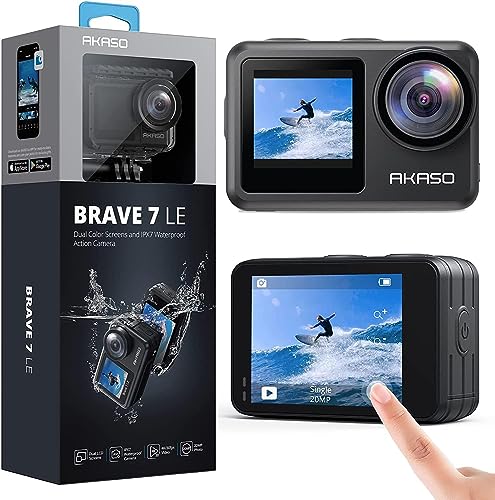
At a fraction of the price of a GoPro or DJI, it does everything most casual users need. You won’t get the video quality or stabilisation of a GoPro or DJI, and the low-light performance is limited. But for holiday snorkelling, boat trips, water parks, and the occasional adventure, it’s a lot of camera for the money.
AKASO also make the Brave 8 if you want a step up with better specs and a larger sensor, but for most people the 7 LE hits the sweet spot of price and performance.
Check price on Amazon here
Best 360-Degree Camera: Insta360 X6
Most action cameras capture what’s in front of them. The Insta360 X6 captures everything, in every direction, all at once.
The X6 uses dual 1/1.1″ sensors to record 8K 360-degree video at 50fps, and those sensors are a third larger than the X5’s, which is where the low-light gain comes from. You can also drop to a single lens for 5K at 60fps, or 4K at 120fps for slow motion. The workflow is the same as it has always been on this series: shoot everything, then use the Insta360 app to “reframe” the footage into a flat video, and you pick your angle and crop after the fact.

It’s waterproof to 20 metres (66 feet) without housing, up from 15 on the X5, or 60 metres with the optional dive case. The replaceable lenses carry over and are cheaper to swap this time, which matters, because the exposed lenses are the part that gets scratched.
I’ve owned Insta360 cameras going back years, but I haven’t shot with an X6 yet, so this pick rests on the specs and the launch reviews rather than my own testing. Those reviews are strong. TechRadar rated it best in class and called it the most capable small 360 camera they’ve tested. They had two complaints. It’s the priciest camera in its category by a clear margin, and the phone app crashed repeatedly during editing and exporting. That was on pre-release software and an iPhone 13, and Insta360’s own guidance is that you want an iPhone 15 or newer for a stable experience. If you’re on an older phone, budget for some frustration.
360-degree cameras are a different way of shooting. You’ll need to learn the reframing workflow, and the files are pretty large. But if you want to capture every angle of a moment and choose your shot later, the X6 is the best way to do it right now.
If you’d rather not pay flagship money, the X5 is still on sale and still shoots 8K. You give up the 50fps mode, some low-light performance and 5 metres of depth rating, which is a fair trade if the price gap matters to you.
Check price on Amazon here and B&H here
Best Mini Action Camera: DJI Osmo Nano
Mini action cameras are a newer category that’s emerged in the last couple of years: cameras small enough to clip onto a hat, attach to a pet, or mount in tight spaces where a full-size action camera won’t fit.
The DJI Osmo Nano weighs about 52 grams on its own (124 grams with the screen pod), and despite its size it packs a 1/1.3″ sensor, the same size as the much larger Osmo Action 5 Pro. It shoots 4K/120fps video, supports 10-bit D-Log M colour, and is waterproof to 10 metres (33 feet).

You can use the camera on its own without any screen, using magnetic mounts to stick it almost anywhere. Pop it into the included action pod and you get a touchscreen, extra battery life, and a more traditional form factor. Internal storage goes up to 128GB depending on the model, so you don’t necessarily need a memory card.
The video quality is surprisingly good for something so small, though stabilisation can struggle in dim conditions. If you want an ultra-portable camera for POV footage, creative angles, or just having a camera you can slip into a pocket and forget about until you need it, the Osmo Nano is worth a look.
Check price on Amazon here and B&H here
How to Choose: What Actually Matters
If none of my specific picks is quite right for you, here’s how I’d think about choosing an action camera. These are the things that actually change the decision, rather than the spec-sheet numbers manufacturers like to lead with.
Stabilisation Is What You’re Really Paying For
The single biggest difference between a cheap action camera and an expensive one is image stabilisation. GoPro’s HyperSmooth and DJI’s RockSteady turn shaky handheld footage into something that looks like it was shot on a gimbal, and once you’ve used good stabilisation you won’t want to go back. If you only care about one spec, make it this one. Budget cameras have improved a lot here, but the flagship GoPro, DJI, and Insta360 models are still a clear step ahead, and they also do a better job of keeping the horizon level when you tilt the camera.
It’s a Video Camera First
Action cameras can take photos, but they’re built around video. The small sensors mean photo quality is fine for daylight and social media but struggles in low light, so if stills are your priority you’re better off with a compact camera or your phone. Focus on the video resolution and frame rates that matter to you rather than chasing headline megapixel numbers. For most people 4K at 60fps is plenty. Higher frame rates are only worth it if you want slow motion, and 5.3K or 8K mostly matters if you plan to crop or reframe heavily in editing.
Battery Life and Overheating Are the Real Limits
This is the part the spec sheets gloss over. Action camera batteries are small, and shooting 4K or high frame rates drains them fast, often in well under an hour. The cameras can also overheat and shut down during long continuous recording, especially in hot weather or when they’re sitting in the sun. Plan for it: buy two or three spare batteries, carry a way to charge on the go, and don’t assume you’ll get a full day of recording from a single charge. For anything important, a spare battery in your pocket matters more than any feature on the box.
Waterproofing and Durability
Most modern action cameras are waterproof to around 10 metres without a case, which covers snorkelling, swimming, and watersports. If you want to go deeper, for scuba diving for example, you’ll need a dedicated dive housing rated for the depth. Check that rated depth before you buy if water is your main use, and remember it assumes the doors are properly closed and the seals are clean. The toughness is the whole point of the category, but it isn’t infinite.
Field of View Is Wider Than You Think
Action cameras shoot with a very wide angle of view, which is what makes point-of-view footage feel immersive, but it also stretches anything near the edges of the frame and makes faces look further away than they are. Most cameras now let you switch between a few digital lens settings like wide and linear, and the linear modes remove a lot of that fisheye look. It’s worth knowing going in, because the default ultra-wide look isn’t right for every shot.
Mounts and Accessories Matter More Than You Think
An action camera is only as useful as your ability to attach it to things. GoPro’s mounting system is the de facto standard, and both DJI and Insta360 work with it, so there’s a huge range of third-party mounts, grips, and accessories to choose from. Factor in the cost of the mounts you actually need, plus those spare batteries and a fast memory card, when you set your budget. A camera you can’t mount where you want it is a camera that stays in the bag.
Action Camera Accessories
Once you’ve bought your action camera, you’re going to need a few accessories to get the most out of it. Some cameras on our list come with a good set of accessories included, while others will require you to purchase these separately.
Fast Memory Cards
Unless your camera has built-in storage (the DJI Osmo Action 6 has 50GB, and the Osmo Nano has up to 128GB), you’ll need a memory card. All the cameras in this guide use MicroSD cards, so you’re going to want at least one.
For 4K video, you need a fast card. Fast means it supports write speeds of at least 80 to 100 megabits per second. A capacity of at least 64GB is recommended so you don’t run out of space mid-adventure. We’d recommend a UHS-I rated card at minimum. You can also get UHS-II cards, which are faster, but most action cameras don’t benefit from the extra speed, so the price premium usually isn’t justified.
For example, check out this SanDisk UHS-I MicroSD card.
Floating Hand Grip
If you plan on using your camera in or around water (and that’s a big reason to buy an action camera in the first place), a floating hand grip is close to essential. Drop your camera in the sea without one and it sinks. Drop it with a floating grip and it bobs on the surface where you can grab it. We always take ours snorkelling.
Mounting Systems
One of the main reasons to get an action camera is that it lets you get footage from angles that a normal camera can’t reach. But out of the box, most cameras need a few accessories to make this work.
For example, if you want to capture action hands-free, you might want a head strap, a chest strap, or a tube mount for a bike or pole.
There’s a huge range of accessories out there for action cameras, so figure out which is going to meet your requirements ahead of time, so you’re ready when the moment comes to capture your adventures.
Spare Batteries and Charger
If there’s one thing nearly every action camera has in common, it’s relatively poor battery life. Shooting high-resolution video, especially with stabilisation enabled, eats through batteries quickly.
The good news is that nearly every camera on our list has removable batteries, so if your battery runs low, you can swap to a fresh one and keep recording.
If you get an extra battery, you’ll also want an external charger so you can charge batteries while using the camera. If you’re using a GoPro Hero 13 Black, check out the official dual battery charger with two Enduro batteries, or grab a single spare battery.
Frequently Asked Questions
Which action camera should I buy in 2026?
For most people, the GoPro Hero 13 Black is the safest pick. It has the best stabilisation, the widest accessory ecosystem, and excellent overall video quality.
If low-light performance or battery life matter more to you, the DJI Osmo Action 6 is the better choice. For tight budgets, the AKASO Brave 7 LE does the job for casual use.
Is GoPro still the best action camera brand?
GoPro still makes the best all-round action camera, mostly because of HyperSmooth stabilisation and the accessory ecosystem. But DJI has caught up in video quality and beaten GoPro on battery life and sensor size. Insta360 leads in creative features and 360-degree video. For most people, GoPro is still the default, but if low-light and battery matter more to you than accessory breadth, DJI has closed the gap.
Do I need 4K for an action camera?
In 2026, yes. 4K is the baseline, and every camera on our list supports it. The extra resolution is especially useful with action footage because you can crop in on the interesting parts of the frame without the video looking soft. If you’re only sharing to social media, you might play back at 1080p, but shooting in 4K gives you that flexibility.
Are action cameras waterproof without a case?
Most modern action cameras are waterproof without additional housing, but the rated depth varies. The GoPro Hero 13 Black handles 10 metres (33 feet) and the Insta360 Ace Pro 2 goes to 12 metres (39 feet). The DJI Osmo Action cameras, the GoPro Mission 1 and the Insta360 X6 all reach 20 metres (66 feet). For deeper diving, all cameras need a dedicated waterproof housing.
How long do action camera batteries last?
Typically 60 to 100 minutes of continuous video recording, depending on the camera and the resolution you’re shooting at. The DJI Osmo Action 5 Pro and Action 6 are the exceptions, lasting up to 4 hours, and the GoPro Mission 1 Pro lasts around 5 hours. Always carry at least one spare battery, and buy an external charger so you can charge batteries while using the camera.
What’s the best action camera for snorkelling?
Any waterproof action camera will work for snorkelling. The DJI Osmo Action 6 is waterproof to 20 metres without a housing, which ties the Insta360 X6 as the deepest on this list and is more than enough for snorkelling. We’ve used our AKASO Brave 7 LE for snorkelling in the Caribbean and it worked well in its included housing.
What accessories do I need for an action camera?
At minimum: a fast MicroSD card (64GB or larger), a spare battery, and some sort of hand grip or mounting system. If you’re using the camera in water, a floating hand grip is close to essential. Beyond that, your use case decides: helmet mounts for cycling and skiing, chest straps for hiking, head straps for POV footage.
What is the best action camera for travel in 2026?
For most travellers, the GoPro Hero 13 Black is the best all-round pick. It’s small, rugged, and the stabilisation handles everything from walking-around shots to mounted footage on a bike or boat. If you want better battery life for longer days, the DJI Osmo Action 6 is the alternative. On a tight budget, the AKASO Brave 7 LE covers casual travel use.
What is the best budget action camera in 2026?
The AKASO Brave 7 LE is the best ultra-budget option, with a waterproof housing included and decent 4K video for casual use. If you want a GoPro specifically, the GoPro Hero 2024 is the cheapest current-generation model and benefits from the full GoPro accessory ecosystem. Both fall short of the flagship Hero 13 Black for stabilisation and low-light, but they’re more than capable for everyday filming.
What is the best action camera for beginners?
For beginners, the GoPro Hero 2024 is the best entry point. It uses the same auto modes and one-button operation as the flagship Hero 13 Black, but there’s less buyer’s remorse if you decide action cameras aren’t for you. The AKASO Brave 7 LE is an even cheaper alternative if you mostly want the camera for occasional travel or holidays rather than regular use.
What is the best action camera for photography in 2026?
For still photos specifically, look at sensor size and megapixels first. The GoPro Mission 1 Pro leads with its 1-inch 50MP sensor, followed by the Insta360 Ace Pro 2 (50MP) and the DJI Osmo Action 6 (38MP on a large 1/1.1-inch sensor). These give you the cleanest, most detailed stills, especially in lower light.
If you want to shoot RAW and edit your photos properly, check that the camera supports it before buying. Most of the premium models do. For casual snaps alongside your video, any of the cameras on this list will do the job, but the bigger the sensor, the better the result.
Is the GoPro Mission 1 Pro worth it?
It’s worth it if you specifically want the best image quality in an action camera and you’ll use the resolution. The 1-inch sensor and 8K/60 video put it ahead of everything else here for stills and detail, and the battery lasts around 5 hours.
For most people, though, it’s more camera than you need. The DJI Osmo Action 6 gets you most of the quality for a good deal less, and the GoPro Hero 13 Black is the better all-rounder for travel and general action use. Buy the Mission 1 Pro only if image quality is the thing you care about most.
Should I wait for the GoPro Mission 1?
There’s nothing to wait for: the GoPro Mission 1 and Mission 1 Pro shipped at the end of May 2026 and you can buy them now. They’re worth a look if you want GoPro’s best image quality, because they use a larger 1-inch sensor than the Hero 13 Black and shoot up to 8K.
They are full action cameras, waterproof to 20 metres without a housing and compatible with standard GoPro mounts, so they belong on your shortlist if your budget stretches that far. For most people, the cheaper Hero 13 Black is still the better buy.
The one GoPro to skip for action use is the Mission 1 Pro ILS, the version that takes interchangeable Micro Four Thirds lenses. It’s weatherproof rather than waterproof, and GoPro sells it as a compact cinema camera for filmmakers, not something you’d take snorkelling.
Further Reading
And that’s it for our guide to the best action cameras. Hopefully you found it useful. Before you go, here are some more resources we think you’ll find helpful.
- If you want more camera gear advice, we have detailed guides to the best travel camera, as well as specific guides for the best compact camera, best mirrorless camera, best DSLR camera, and best camera for hiking and backpacking.
- We also have a guide to the best camera lenses for those using mirrorless and DSLR cameras.
- We have a detailed guide to how to use a camera, and Jess has a beginner’s guide to photography to help you get started.
- Knowing how to compose a great photo is a key skill. See our guide to composition in photography for lots of tips.
- We have a detailed guide to the exposure triangle, which is a key photography concept to understand.
- We have a complete guide to depth of field in photography with tips on what it is and when you’d want to use it.
- If you have a lens with a zoom feature, you can take advantage of lens compression to make objects seem closer together.
- We’re big fans of getting the most out of your digital photo files, and to do that you’ll need to shoot in RAW. See our guide to RAW in photography to understand what RAW is and why you should switch to it.
- Whatever your camera, you’re going to need a way of editing your photos. See our guide to the best photo editing software, as well as our guide to the best laptops for photo editing.
- If you’re looking for advice on specific scenes, we have guides to Northern Lights photography, long exposure photography, fireworks photography, tips for taking photos of stars, and cold weather photography.
- We have a guide to why you need a tripod, and a guide to choosing a travel tripod.
- If you want to improve your photography overall, you can join over 2,000 students on my travel photography course. I’ve been running it since 2016, and it has helped lots of people take their photography to the next level.
And that’s it! As always, if you have any questions, comments, or feedback on this post, pop them in the comments section below, and we’ll get back to you as soon as we can!
Mark says
Great article!
Very interesting list you have here! These are fairly affordable yet of good quality action cameras. I have the AKASO one and it’s perfect for my motovlogging.
Stay cool and safe!
Cheers!
Laurence Norah says
Thanks Mark, you too 🙂
Dani says
Hello, What would be your recommendation for an action camera that would be good for sports and kayaking in the $175 to $200 price range max? use for both still photos and Youtube video footage. Thanks!
Laurence Norah says
Hey Dani,
At that price point I would have to recommend either the Akaso v50 Elite or the Akaso Brave 7.
Both cameras do 4K video as well as stills. The v50 offers higher frame rates, which is good for slow motion, whilst the slightly more expensive Brave 7 has a second front facing screen as well as some waterproofing without the case. That said, the case is likely going to be on anyway as many attachments use the case.
To get any meaningful jump in capabilities you would have to get the far more expensive GoPro Hero 8. This definitely has better image stabilization for video, but the price jump is significant. In addition, the Akaso cameras come with a whole range of accessories and two batteries, which are all additional costs on the GoPro.
I hope this helps!
Laurence
Miguel says
What do you think of the new Gopro 360 max, I am thinking to buy it for a family trip. I own a Canon 70D and an action camara Sony HDR 100as.
My main idea is to be able that everyone is on the picture every time, my main concern is the resolution…or would you upgrade to the Hero 8?
Laurence Norah says
Hi Miguel,
Definitely a benefit of a 360 camera is that it’s a lot easier to get everyone in frame, and you can basically pick and choose the subject you want after the fact. The lower resolution might be seen as an issue, but to be honest, most people are watching videos on small screens anyway. So unless you are planning on selling your content at super high resolutions, I don’t think that’s a factor. The GoPro 8 is a superb camera, with class leading stabilization. It’s a tough call to be honest, and really up to you as to which feature is more important.
Best of luck, and let me know what you decide!
Laurence