
Bridge cameras are the all-in-one solution for photographers who want a long zoom, manual controls, and good image quality without carrying a bag of lenses. They are popular with birdwatchers, wildlife enthusiasts, and travellers who want one camera that can handle everything from wide-angle landscapes to far-away animals.
I’ve been taking photos professionally for over fifteen years, and I’ve used just about every type of camera going. I teach photography at my online photography course, and one of the most common questions I get is whether a bridge camera is the right choice. The short answer: for a lot of people, yes.
In this guide, I’ll share my top picks for the best bridge cameras you can buy right now, explain what to look for when choosing one, and answer common questions about how they compare to other camera types. I’ve also included some sample photos shot on bridge cameras to give you a real idea of what they can do.
Table of Contents:
Quick Picks: Best Bridge Cameras in 2026
Here’s a quick summary of my recommendations before we get into the detail. If you already know what you’re looking for, this should help you decide quickly.
- Best budget bridge camera: Panasonic Lumix DC-FZ80D. 60x zoom, 4K video, USB-C, and a very reasonable price. The best starting point for most people.
- Best ultra-budget option: Kodak PixPro AZ528. 52x zoom at a rock-bottom price. No RAW support and no viewfinder, but if your budget is tight and you just want a big zoom, it does the job.
- Best for extreme zoom: Nikon Coolpix P1100. 125x zoom (24-3000mm). Nothing else comes close for sheer reach. Big and heavy, but if you need to photograph the moon or birds at 100 metres, this is the one.
- Best mid-range zoom: Nikon Coolpix P950. 83x zoom (24-2000mm) with better handling and lighter weight than the P1100. A good balance of reach and portability.
- Best image quality (if you can find one): Sony Cyber-shot RX10 IV. 1″ sensor, 24-600mm f/2.4-4 lens, 24fps shooting. Discontinued by Sony and now only available used, but still the best bridge camera ever made for pure image quality. Check MPB and KEH for used listings.
Bridge Cameras in 2026: What’s the Market Like?
I’ll be upfront: the bridge camera market has been stagnant for years. Most major manufacturers have moved their R&D budgets to mirrorless cameras, and the bridge cameras still on sale are largely the same models they were selling two, three, or even five years ago with minor tweaks like USB-C ports.
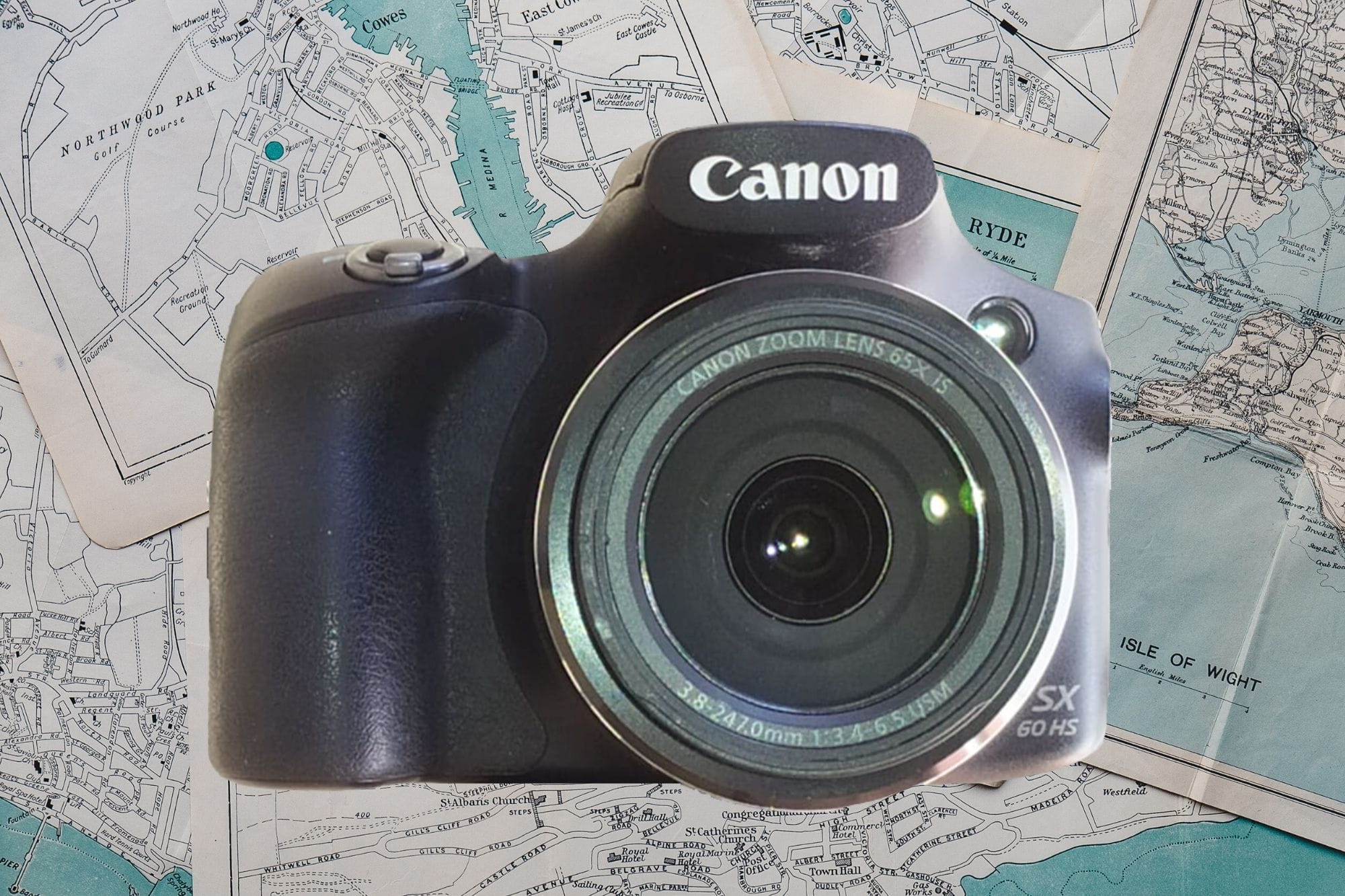
Nikon is still the most committed to the category, with the P950 and the P1100 (released in 2025 as a minor update to the 2018 P1000). Panasonic refreshed their budget FZ80D in 2024, again mostly a USB-C upgrade. Canon’s SX70 HS dates back to 2018 and is getting harder to find at retail.
The one surprise is Kodak. Well, JK Imaging, who license the Kodak name. They’ve been quietly releasing affordable bridge cameras over the past few years, and in April 2026 they’re launching the PixPro AZ653 with a 65x zoom, RAW support, and an EVF for around $450. It’s not going to challenge the Nikon or Sony cameras on image quality, but it’s good to see someone still making new bridge cameras at accessible prices.
Sony has pulled out of this space entirely. The RX10 IV, which was far and away the best bridge camera for image quality, was officially discontinued in early 2025 with no successor announced. If you want one, you’re looking at the used market, where prices can be inflated. I’ll cover this in more detail below.
The bottom line: if you’re buying a bridge camera in 2026, you’re choosing from a relatively small pool of models. The good news is that the ones that remain are solid options, and used prices on some of the older premium models have come down.
The Best Bridge Cameras: Detailed Reviews
Here are my picks for the best bridge cameras available in 2026, roughly ordered from most affordable to most expensive. I’ve included a mix of cameras that you can buy new today, cameras that are getting harder to find (worth looking for on sale or used), and one that’s used-market-only but too good to leave off the list.
Kodak PixPro AZ528
The Kodak PixPro AZ528 is the most affordable bridge camera in this round-up, and it’s the one I’d point my dad towards. In fact, it’s basically the kind of camera my dad would love: big zoom, simple to use, doesn’t cost a fortune.
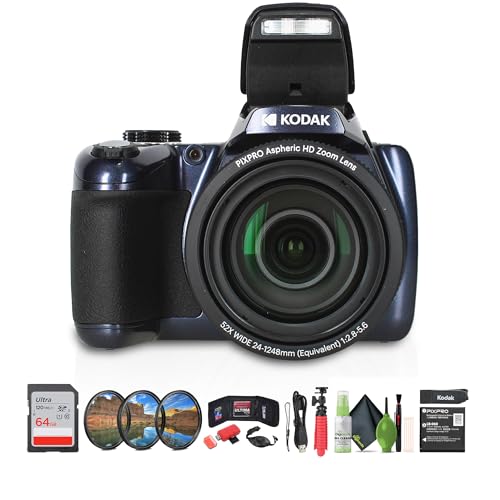
You get a 52x optical zoom covering 24-1248mm, which is a lot of reach for the money. There’s optical image stabilisation, Wi-Fi for transferring photos to your phone, and Full HD video recording.
Now, I do need to be upfront about the compromises. There’s no RAW support, no electronic viewfinder (just the rear LCD screen), and the 1/2.3″ 16MP sensor is basic. The maximum ISO is only 3200, so low light performance is limited. If you’re serious about photography and want to edit your images, the lack of RAW is a problem.
But here’s the thing: a lot of bridge camera buyers don’t shoot RAW. They want a camera that zooms in a long way, takes decent photos in good light, and doesn’t need a manual to figure out. The AZ528 does all of that at a price that’s hard to argue with. It runs on a rechargeable lithium-ion battery rather than AAs, which is a plus over some other budget Kodak models.
If you want a step up from Kodak, the new Kodak PixPro AZ653 is worth watching for. It’s due out in April 2026 with a 65x zoom (24-1560mm), RAW support, an EVF, and a tilt screen for around $450. That fills a gap between this camera and the Panasonic FZ80D.
Key Specifications: 24-1248mm (52x) focal length, f/2.8-5.6 aperture, 6 images/second, 16 megapixel 1/2.3″ sensor
Weight: 490g / 17.3oz
Battery life: ~200 shots
Price: Check latest price on Amazon here and B&H here
Panasonic Lumix DC-FZ80D / FZ82D
If I had to pick one bridge camera for most people, this would be it. The Panasonic Lumix DC-FZ80D (FZ82D in Europe) was refreshed in 2024, and while it’s really just a USB-C update to the 2017 original FZ80, it’s still a very well-rounded camera at a competitive price.

You get a stabilised 20-1200mm (60x) zoom lens with around five stops of stabilisation. That’s paired with an 18.1 megapixel 1/2.3″ sensor, 4K video, RAW support, full manual controls, and Wi-Fi. The camera weighs just 640g, which makes it very portable for the zoom range you’re getting.
The rear screen is fixed rather than tilting, which is a shame, but it is touch-enabled. There’s no weather sealing, which isn’t a surprise at this price point.
Where the FZ80D really earns its place is value. You’re getting 4K video, RAW support, a 60x zoom, and image stabilisation at a price that’s only a little more than the Kodak AZ528. For most people who want a “proper” bridge camera with the features a photographer would expect, this is the one to go for.
Key Specifications: 20-1200mm (60x) focal length, f/2.8-5.9 aperture, 10 images/second, 18.1 megapixel 1/2.3″ sensor
Weight: 640g / 22.58oz
Battery life: 300 shots
Price: Check latest price on Amazon here and B&H here
Canon PowerShot SX70 HS
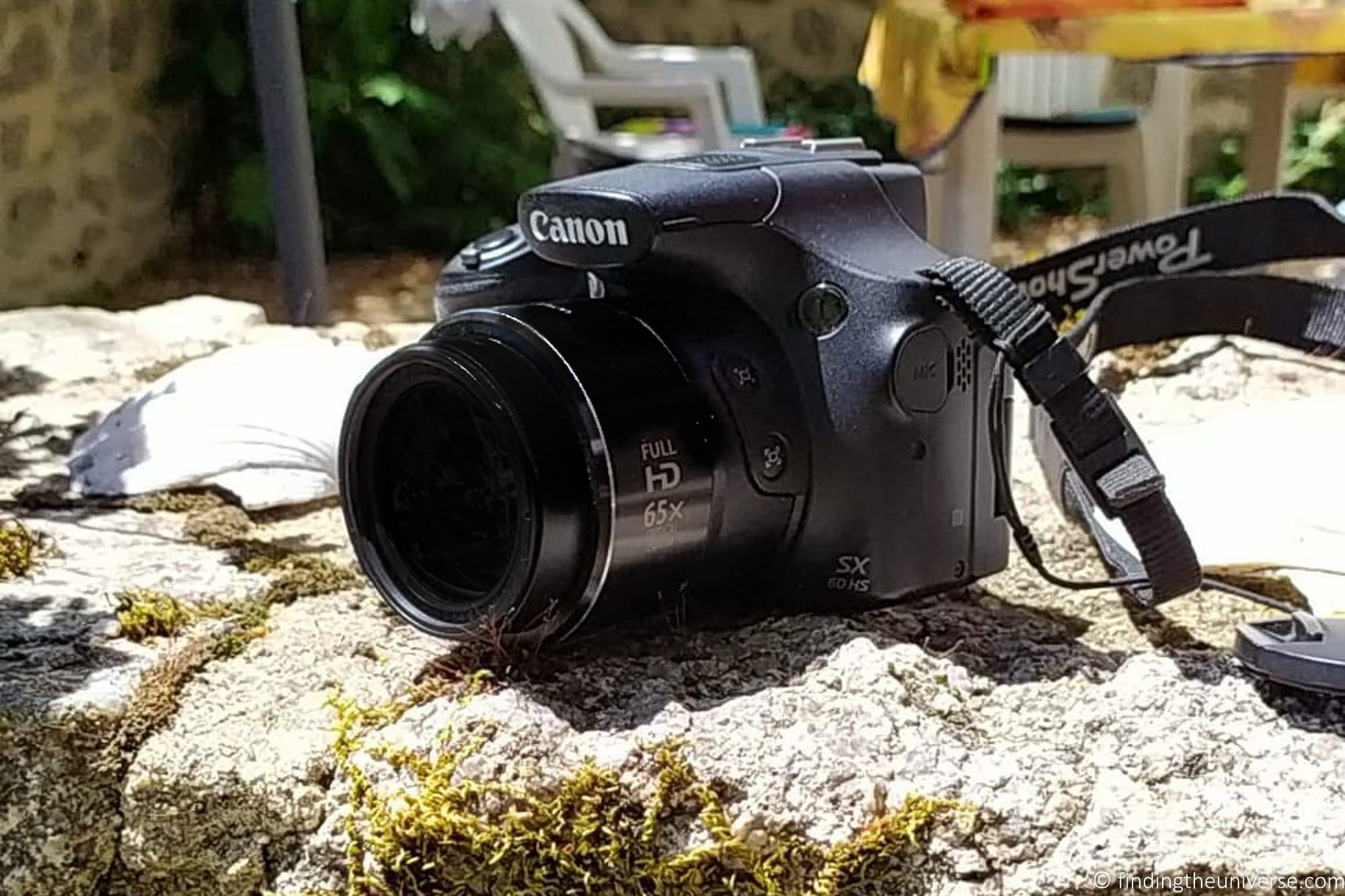
The Canon PowerShot SX70 HS has been around since 2018, and Canon hasn’t shown any signs of updating it. As a result, it’s getting harder to find new. If you can track one down at or near the original retail price, it’s still a solid option. If it’s marked up significantly, you’re better off with the FZ80D.

What makes the SX70 worth considering is its combination of a 21-1365mm (65x) zoom with Canon’s image processing, which produces pleasing colours. It’s also one of the lightest bridge cameras at just 610g. You get five stops of optical stabilisation, 4K video, RAW support, Bluetooth, Wi-Fi, and a flip-out screen.
The downsides: the f/3.4-6.5 aperture isn’t the widest, the screen isn’t touch-enabled, and there’s no weather sealing. Image quality softens a bit at the extreme wide and telephoto ends of the zoom. But in the middle range, it produces very nice results, and that Canon colour science is hard to beat at this price.
Key Specifications: 21-1365mm (65x) focal length, f/3.4-6.5 aperture, 10 images/second, 20 megapixel 1/2.3″ sensor
Weight: 610g / 21.5oz
Battery life: 325 shots
Price: Check latest price on Amazon here and B&H here. Note: this camera is increasingly hard to find new and may only be available used.
Nikon Coolpix P950
The Nikon Coolpix P950 is where things start getting serious in terms of zoom. Released in 2020, it packs a 24-2000mm (83x) zoom lens into a body that, while not small, is far lighter and more portable than the DSLR-plus-telephoto-lens setup you’d need for equivalent reach.
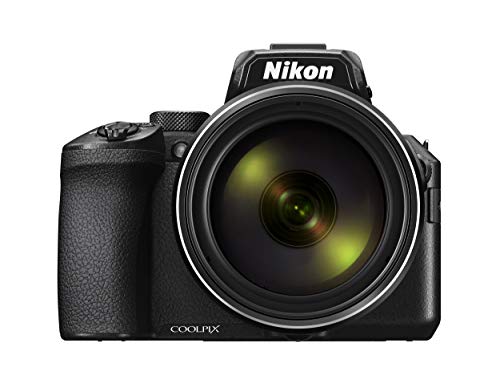
The lens starts at a wide f/2.8 and narrows to f/6.5 when fully zoomed in. Given the length of that zoom, this is to be expected. The stabilisation is excellent at 5.5 stops, which you’ll need when shooting handheld at 2000mm. The 1/2.3″ 16MP sensor offers a good balance between resolution and low-light performance, though image quality does soften as you push further into the zoom range. That’s physics, not a fault with the camera.
You get RAW support, full manual controls, 4K video, Wi-Fi, Bluetooth, and a flip-out screen. The screen unfortunately isn’t touch-enabled, which feels like an odd omission for a camera at this price. There’s no weather sealing either.
Battery life is a weak point at 290 shots, and the camera weighs just over 1kg. But if you want serious zoom without the crazy 3000mm reach (and weight) of the P1100, the P950 is probably the sweet spot.
It’s also worth knowing about the predecessor, the Nikon Coolpix P900. It has the same sensor and a similar lens, but lacks RAW support and 4K video. If you can find one used at a good price and don’t need RAW, it’s still a capable camera.
Key Specifications: 24-2000mm (83x) focal length, f/2.8-6.5 aperture, 7 images/second, 16 megapixel 1/2.3″ sensor
Weight: 1005g / 35.4oz
Battery life: 290 shots
Price: Check latest price on Amazon here and B&H here
Nikon Coolpix P1100
The Nikon Coolpix P1100 holds the title of the world’s longest zoom on a consumer camera. A 24-3000mm zoom range, which is 125x. Let that sink in for a moment. To get 3000mm of focal length on a DSLR or mirrorless system, you’d need a lens that probably doesn’t exist as a commercial product.

Released in 2025, the P1100 is really just a USB-C update to the 2018 P1000. That’s a bit disappointing, because camera technology has moved on considerably since 2018, and I’d have loved to see improved autofocus and sensor technology. But Nikon apparently doesn’t agree, so here we are.
The lens starts at f/2.8 at the wide end and stops down to f/8 when fully zoomed in. That f/8 maximum aperture at 3000mm means you need good light for sharp results at the long end, and a tripod helps enormously. The image stabilisation provides about five stops of correction, which is impressive given what it’s working with, but don’t expect tack-sharp handheld shots at 3000mm.
You get 4K video, RAW support, manual controls, Wi-Fi, Bluetooth, and a flip-out screen. The screen is not touch-enabled, which I find baffling. There’s no weather sealing. And at 1415g, this is a heavy camera. Heavier than many mirrorless setups.
I’d only recommend the P1100 if you specifically need that extreme zoom. If 2000mm is enough, the P950 is lighter, cheaper, and just as capable for most situations. If you don’t need the crazy reach, you’ll get better image quality per pound spent elsewhere on this list.
The predecessor P1000 is very similar (same sensor, same lens, micro-USB instead of USB-C) and may be available at a lower price if you can find one.
Key Specifications: 24-3000mm (125x) focal length, f/2.8-8 aperture, 7 images/second, 16 megapixel 1/2.3″ sensor
Weight: 1415g / 50oz
Battery life: 250 shots
Price: Check latest price on Amazon here and B&H here
Panasonic Lumix FZ1000 II (Used/Hard to Find)
The Panasonic Lumix FZ1000 II is worth including because it’s one of only two bridge cameras with a 1″ sensor (the other being the Sony RX10 IV). A larger sensor means better image quality, better low-light performance, and more detail in your photos. If image quality matters more to you than zoom range, this is a significant step up from the 1/2.3″ sensor cameras above.
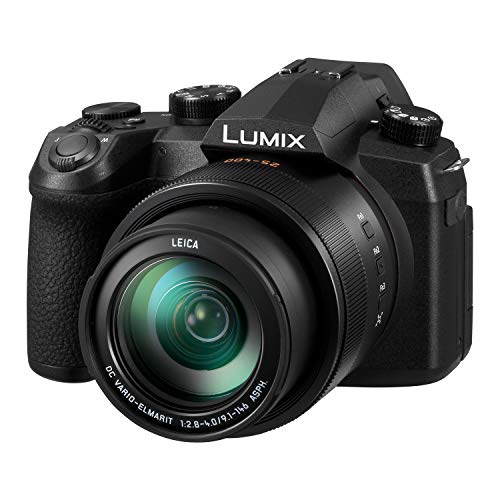
The trade-off is zoom range. The FZ1000 II has a 25-400mm (16x) zoom, which is far less than the Nikon cameras above. But 400mm is still equivalent to a high-end telephoto lens on a DSLR, and the f/2.8-4 aperture means more light reaches the sensor, especially when zoomed in.
You get a 20.1 megapixel 1″ sensor, a tilting touch-enabled screen, 4K video, Wi-Fi, Bluetooth, and good battery life at 440 shots. The camera weighs 810g, which is reasonable for what you’re getting.
The catch: the FZ1000 II was released in 2019 and is now out of stock at most retailers. If you see one at the original retail price, grab it. Otherwise, check the used market. The original FZ1000 (released 2014) has the same sensor and lens and may be even cheaper used, though you lose the touchscreen. Check MPB for used listings.
Key Specifications: 25-400mm (16x) focal length, f/2.8-4 aperture, 10 images/second, 20.1 megapixel 1″ sensor
Weight: 810g / 28.5oz
Battery life: 440 shots
Price: Check latest price on Amazon here (availability varies)
Sony Cyber-shot DSC-RX10 IV (Used Only)
The Sony RX10 IV is the best bridge camera ever made for image quality and performance. I’m including it here even though it’s been discontinued by Sony and is only available used, because it’s still in a league of its own.
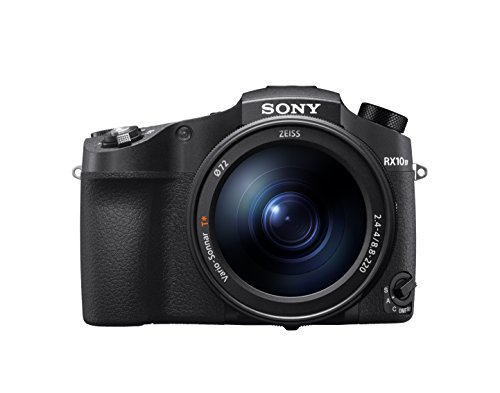
What makes it special: a 1″ sensor with 20.1 megapixels, a 24-600mm (25x) lens that starts at an incredibly wide f/2.4 and only narrows to f/4 at 600mm, a weather-sealed body, a touch-enabled screen, 24 frames per second continuous shooting, and one of the fastest autofocus systems you’ll find on any camera. Add in 4K video, Wi-Fi, Bluetooth, and full manual controls, and you can see why Sony had no trouble selling these for years at over $1,700.
The problem: Sony discontinued the RX10 IV in 2025 with no successor. New stock is essentially gone, and Amazon listings are now showing used prices well above the original $1,699 MSRP. Please don’t pay inflated prices for this camera. At that point, you’d be better off buying into a mirrorless system with a telephoto zoom lens.
Instead, look at the used market. MPB and KEH both sell used cameras with warranties, and you can often find an RX10 IV in good condition at a fair price. The earlier RX10 III has the same lens and sensor but a slightly slower autofocus and no touchscreen, and may be available for less.
If you find an RX10 IV at or below the original MSRP, it’s still an excellent buy. It’s the best bridge camera for low light, the best for action, and the best for overall image quality. It’s just a shame Sony chose to walk away from this category.
Key Specifications: 24-600mm (25x) focal length, f/2.4-4 aperture, 24 images/second, 20.1 megapixel 1″ sensor
Weight: 1095g / 38.6oz
Battery life: 400 shots
Price: Discontinued. Check MPB and KEH for used listings. Do not pay above $1,699 MSRP.
Which Bridge Camera Should You Choose?
With several options on the list, here’s how I’d narrow it down based on what you need.
If your budget is tight and you just want something with a big zoom that’s easy to use, go with the Kodak PixPro AZ528. It’s basic, but it does what it says at a price that’s hard to beat. If you can stretch a bit further, the Panasonic Lumix FZ80D is the better buy with RAW support, 4K video, and a viewfinder.
If zoom is your priority, the Nikon Coolpix P950 is the best balance of reach, quality, and weight. Only go for the P1100 if you specifically need that 3000mm reach and don’t mind the extra weight and cost.
If image quality matters more than zoom, look for a used Sony RX10 IV on MPB or KEH. The 1″ sensor makes a real difference, especially in lower light.
What is a Bridge Camera?
A bridge camera is a type of camera that sits between a compact point-and-shoot and an interchangeable lens camera like a DSLR or mirrorless camera. It looks like a small DSLR, with a protruding lens and a hand grip, but the lens is fixed and can’t be changed.
The main appeal is the zoom. Bridge cameras typically have very long zoom lenses, often 40x to 125x, which give you focal lengths far beyond what most DSLR or mirrorless lenses can achieve. Some bridge cameras offer the equivalent of 2000mm or even 3000mm of focal length, which is territory that professional wildlife photographers would need a small fortune to match with interchangeable lenses.
The trade-off is the sensor. Bridge cameras have smaller sensors than DSLRs and mirrorless cameras, which means lower image quality, especially in low light. But in good light, the results can be very good, and for many photographers the convenience of having one camera that does everything is worth that trade-off.
You might also see bridge cameras called “superzoom cameras,” which is a term that’s increasingly used instead of “bridge camera.” Both refer to the same type of camera.
Is a Bridge Camera Right for Me?
A bridge camera is a great choice if you want an all-in-one camera with a long zoom that takes good photos without the hassle of changing lenses. They’re particularly popular for wildlife photography, birdwatching, and travel.
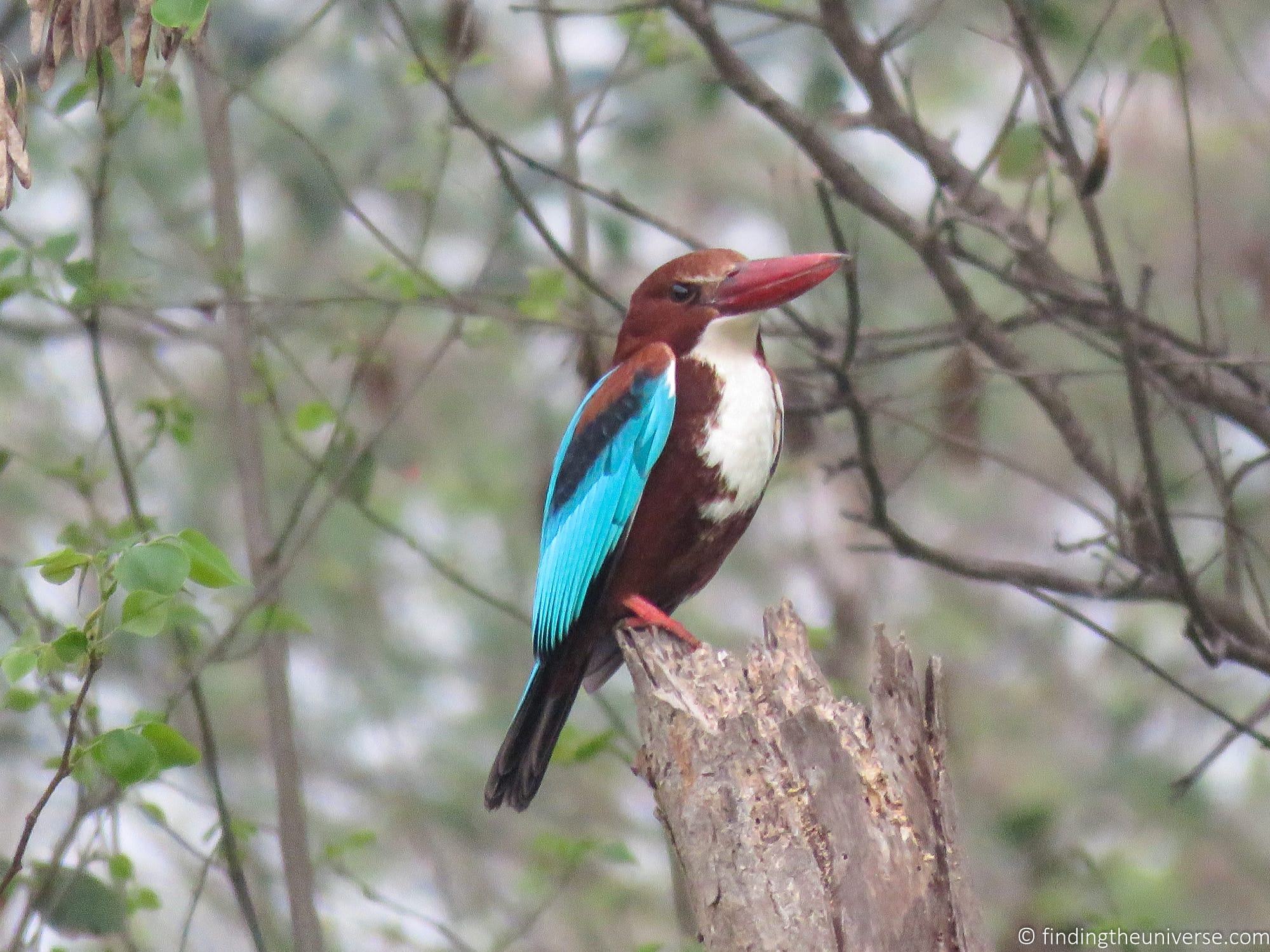
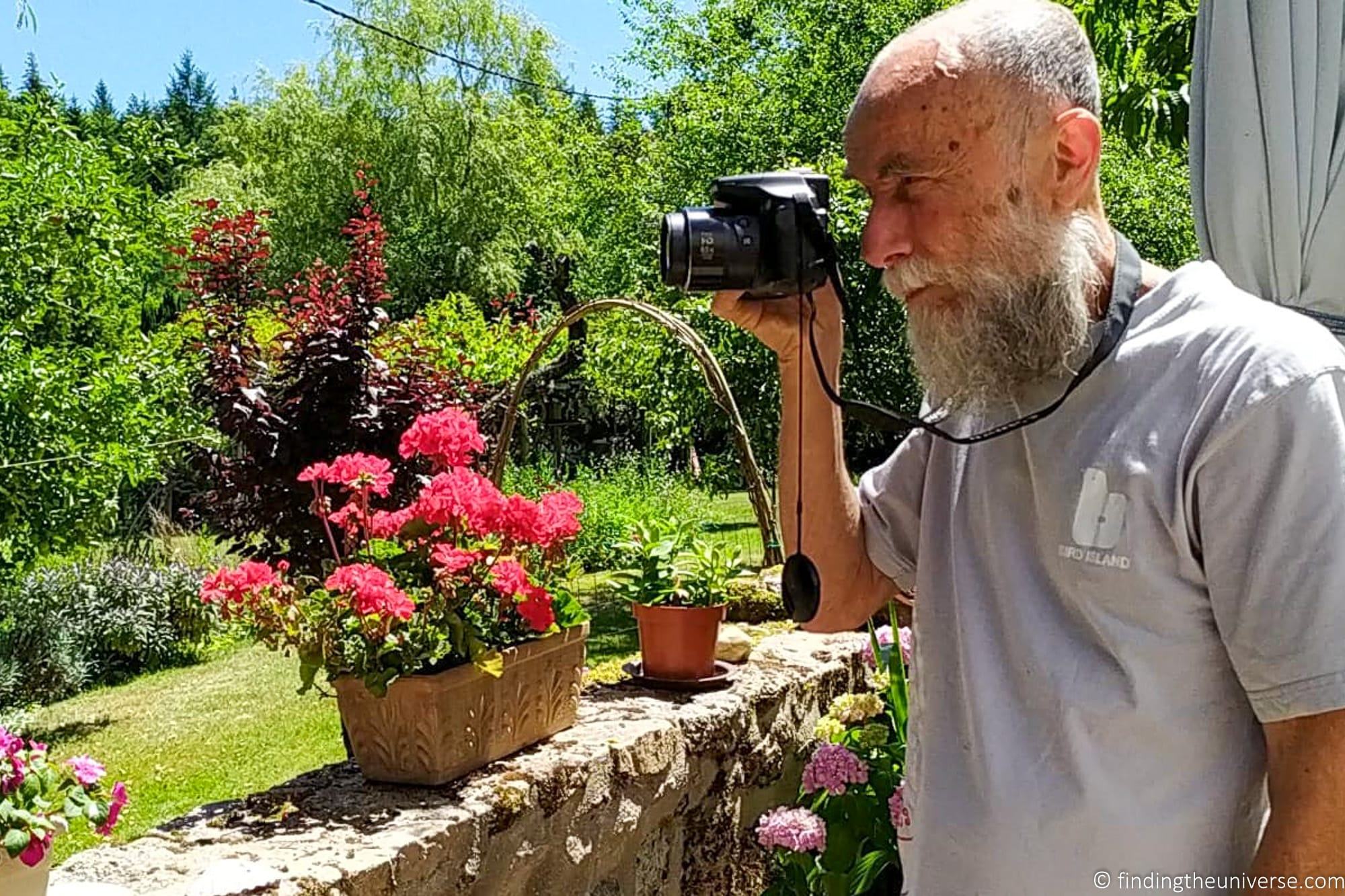
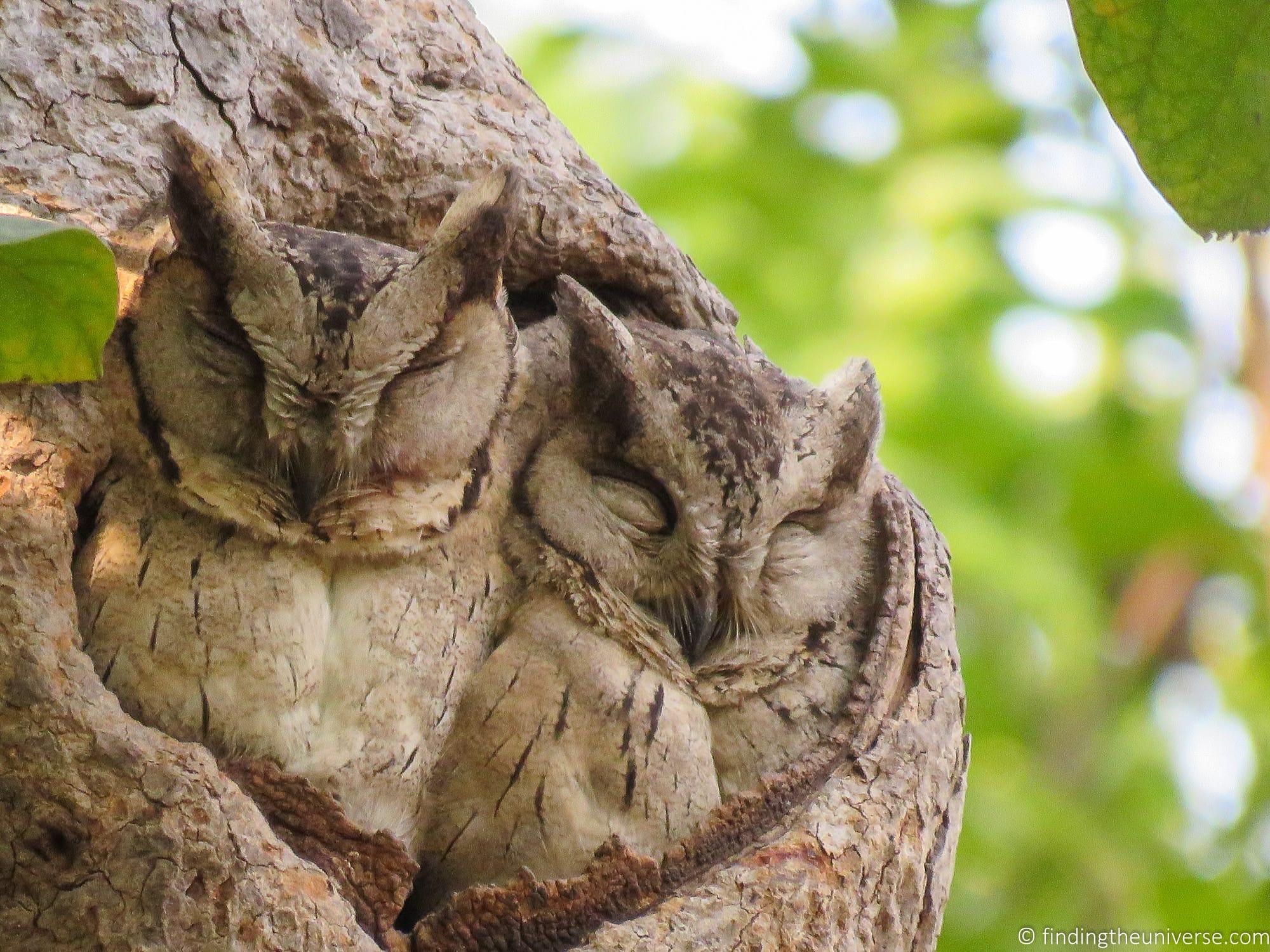
My parents are a good example. They recently went on a birdwatching trip to India, and a bridge camera was the perfect tool for them. The long zoom meant they could photograph birds and wildlife from a distance, while the wide angle let them capture landscapes. They didn’t want to deal with swapping lenses in dusty, moving situations, and they didn’t want to spend a fortune on a DSLR with a telephoto lens. Their bridge camera did everything they needed at a fraction of the cost and weight.
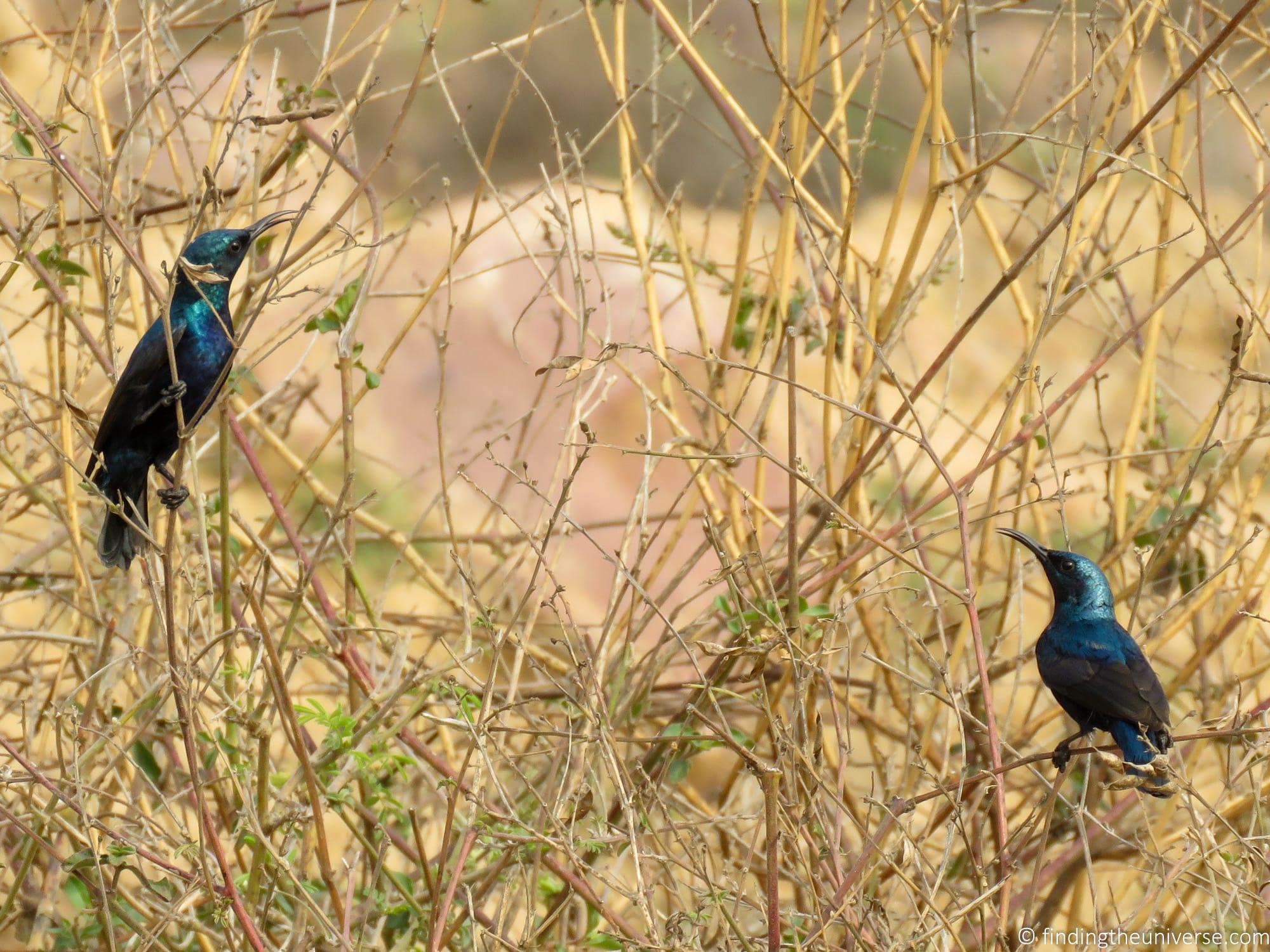
They’ve since used the same camera for backyard bird photography at home, and it works brilliantly for that too. I used some of their photos from trips overseas in this post to give you examples of what a bridge camera can do.
If you are heading out on safari, check out my guide to the best safari camera, and also my tips for getting great safari photos.
On the other hand, if you want the best possible image quality, the ability to use different lenses for different situations, or a camera that fits in your pocket, a bridge camera isn’t the right choice. For pocket-sized cameras, check out our compact camera recommendations.
Bridge Camera vs Smartphone
Compared to a smartphone, a bridge camera is larger and won’t fit in your pocket. But it has two big advantages: the zoom and the sensor.
Most smartphone cameras have very limited optical zoom, relying on digital zoom which quickly degrades image quality. A bridge camera with a 60x optical zoom will give you clear, detailed photos of subjects that a smartphone would render as a blurry blob. The larger sensor also performs better in low light than a phone camera.
The other advantage is battery life. A bridge camera is a dedicated device, so its battery only powers the camera. Your smartphone battery has to power everything else you do over the day.
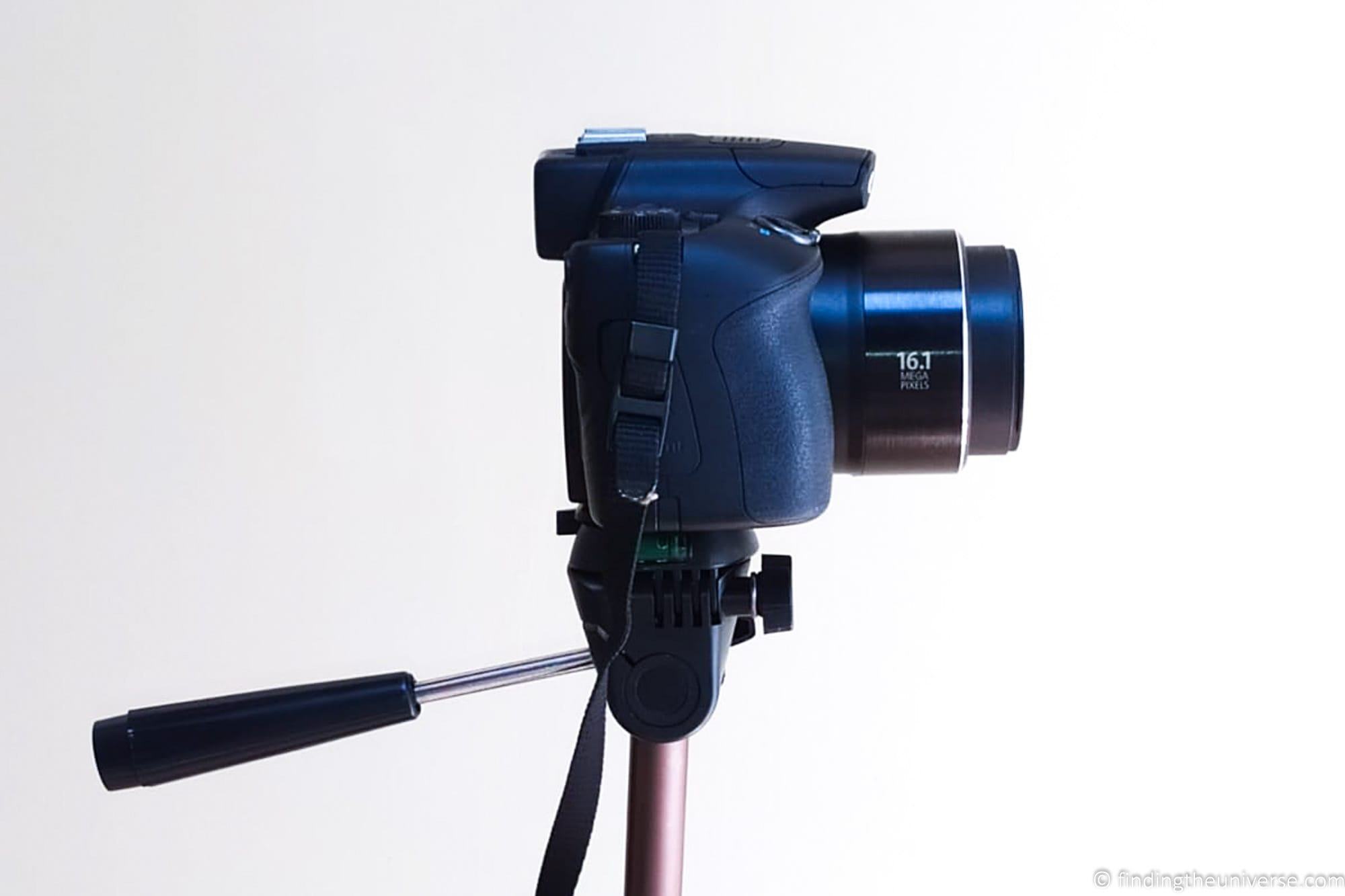
Bridge Camera vs Compact Camera
Bridge cameras and compact cameras share some features. Both have fixed lenses and come in similar sensor sizes (1/2.3″ or 1″). The main differences are size and zoom.
A compact camera is small enough to slip into a pocket. A bridge camera looks more like a small DSLR and won’t fit in a pocket. But the bridge camera’s larger body accommodates a much longer zoom lens, which is the whole point.
Bridge cameras also tend to have more manual controls and better viewfinders than compact cameras, though premium compacts can match them on these features. If you want the zoom, go bridge. If you want portability, go compact. If you want both, consider carrying one of each, which is exactly what my parents do.
For compact camera options, see our guide to the best compact cameras, as well as our guide to using a compact camera.
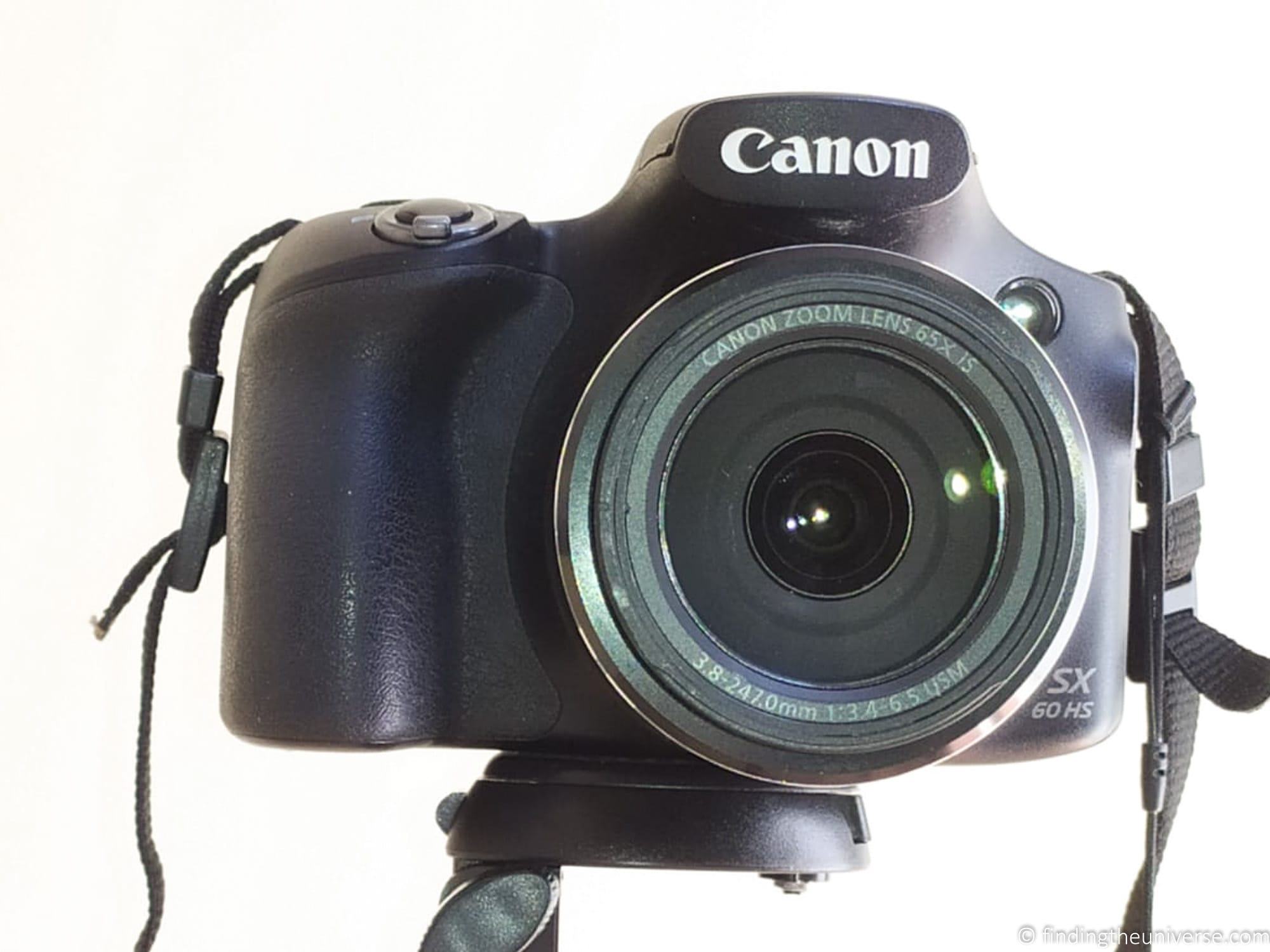
Bridge Camera vs Mirrorless Camera
In many ways, bridge cameras were the precursors to mirrorless cameras. Both use electronic viewfinders rather than the optical viewfinder you find on a DSLR, and they’re often a similar size.
The main difference is that you can change lenses on a mirrorless camera but not on a bridge camera. This gives mirrorless cameras more flexibility, but it also means buying multiple lenses, which adds cost and weight.
Mirrorless cameras also have much larger sensors (APS-C or full frame), which means better image quality and better low-light performance. If you want the best image quality and you’re happy to invest in lenses, go mirrorless. If you want one camera that does everything at a fraction of the cost and weight, go bridge.
One exception: if you want extremely long focal lengths (1000mm+), even high-end mirrorless lenses can’t match what bridge cameras offer, at least not without spending many thousands on specialist telephoto glass.
For mirrorless options, see our guide to the best mirrorless cameras, as well as our guide to using a mirrorless camera.
Bridge Camera vs DSLR
Bridge cameras were originally designed as a stepping stone to DSLRs. They share a similar shape and offer similar manual controls (shutter speed, aperture, ISO, shooting modes), but there are key differences.
You can’t change the lens on a bridge camera. A DSLR has larger sensors (APS-C or full frame) with better image quality and low-light performance. DSLRs also have optical viewfinders and generally better battery life.
On the other hand, a bridge camera is lighter, cheaper, and offers far more zoom in a single package. The total weight of a DSLR with a 600mm telephoto lens will easily exceed 4kg. A bridge camera with equivalent reach weighs around 1kg. The weight advantage alone is reason enough for many people to choose a bridge camera.
For DSLR options, see our guide to the best DSLR cameras, as well as our guide to using a DSLR camera.
What to Look for When Buying a Bridge Camera
If you’re evaluating bridge cameras beyond my recommendations, here are the specifications that matter most. I’ve focused on the things that actually affect your photos rather than marketing numbers.
Sensor Size
The sensor is the part of the camera that records the image. Larger sensors capture more light, which means better image quality, especially in low light.
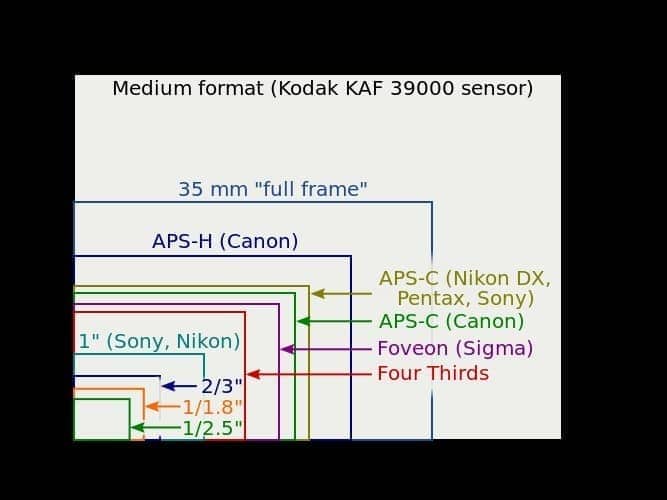
Bridge cameras come with two sensor sizes: 1/2.3″ (around 6mm x 5mm) and 1″ (around 13mm x 9mm). The 1″ sensor has roughly four times the area of the smaller sensor, which makes a real difference. But cameras with 1″ sensors tend to be more expensive and have shorter zoom ranges. The really long zooms (60x and above) are only available on cameras with the smaller sensor.
For reference, a full frame sensor (as found in professional DSLRs and mirrorless cameras) has about 30 times the area of a 1/2.3″ sensor. You can read more about how sensor size affects your photos in my guide to the exposure triangle.

Zoom Range and Focal Length
This is the headline feature of bridge cameras. The zoom is usually described in two ways: “optical zoom” (e.g. 60x) and “focal length” (e.g. 20-1200mm). The focal length is more useful for comparing cameras.
Here’s why: optical zoom is just the ratio between the widest and narrowest focal lengths. A camera with a 20-1200mm lens has 60x zoom. A camera with a 24-1200mm lens has 50x zoom. But both give you the same magnification at 1200mm. The first one just has a slightly wider angle when zoomed out.
If you want to compare maximum reach between cameras, look at the maximum focal length, not the zoom number. For rough reference, 50mm is approximately equal to human vision. A 600mm lens gives you about 12x magnification, and a 2000mm lens gives you about 40x. A good pair of binoculars is typically 8-12x.
My recommendation: aim for at least 600mm of focal length (12x magnification). You can go much higher, but image sharpness tends to drop off at the extreme end of the zoom range, and the really long zooms are only available on cameras with the smaller 1/2.3″ sensors.
Maximum Aperture
The aperture is the opening in the lens that lets light through to the sensor. It’s measured in f-numbers: the smaller the number, the larger the opening. f/2.8 lets in more light than f/6.5.
Most bridge camera lenses have variable apertures that get narrower as you zoom in. A lens might be f/2.8 at the wide end but f/6.5 when fully zoomed in. As the aperture gets smaller, less light reaches the sensor, which means you need brighter conditions or higher ISO settings (which add noise).
Look for at least f/2.8 at the wide end. Also pay attention to the maximum aperture when fully zoomed in, because that’s where you’ll often be shooting with a bridge camera. You can read more about aperture and how it affects your photos in my guide to the exposure triangle.
Image Stabilisation
When you’re shooting at 1000mm+ focal lengths, even tiny hand movements cause blurry photos. Image stabilisation compensates for this by physically moving elements inside the lens or sensor to counteract your movements.
Stabilisation is measured in “stops.” Each stop lets you use a shutter speed roughly twice as slow without blur. A camera with 5 stops of stabilisation shooting at 2000mm can produce sharp images at about 1/60th of a second instead of 1/2000th, which is a massive difference.
I’d suggest at least 4 stops of stabilisation. Otherwise you’ll need a tripod for anything beyond moderate zoom.
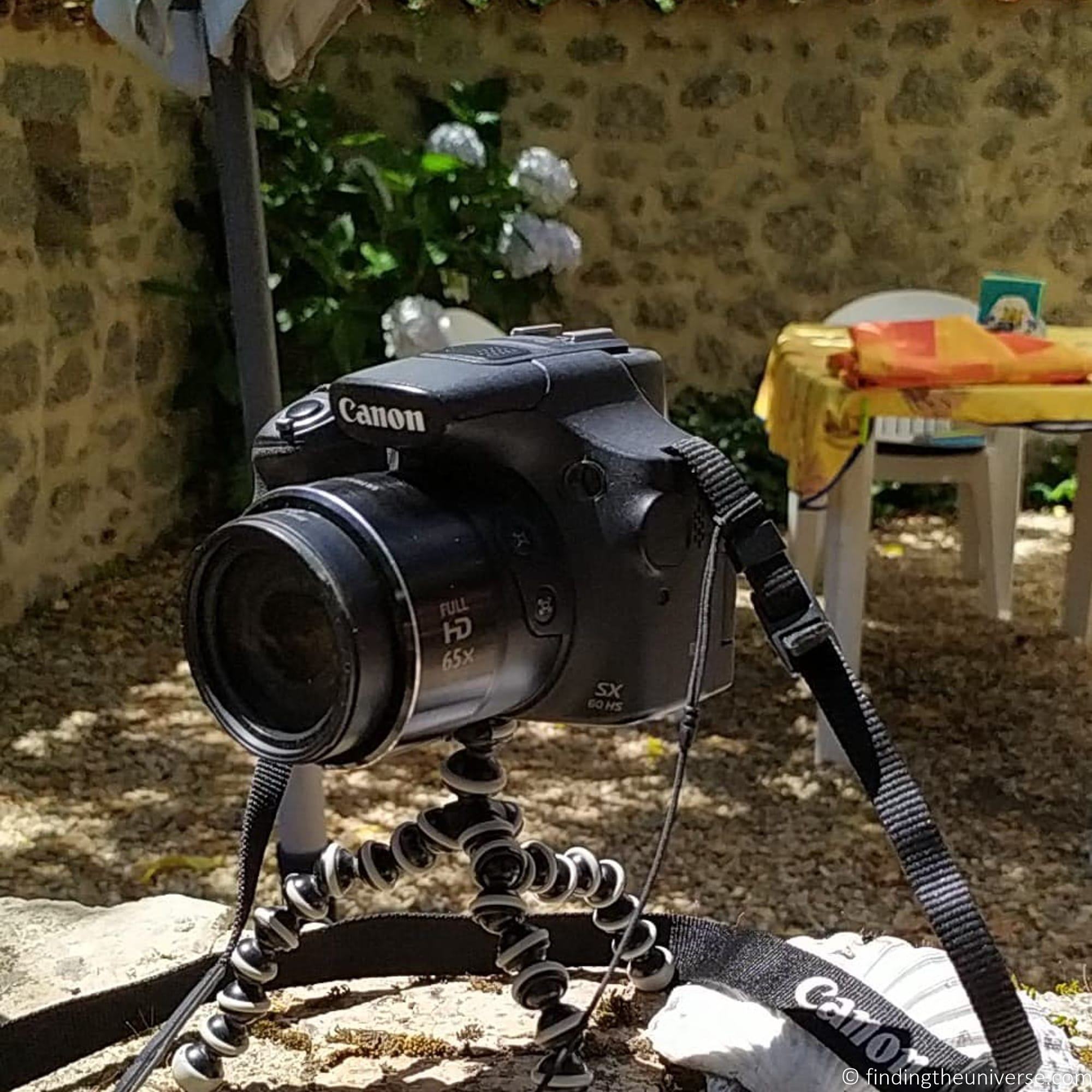
RAW Support and Manual Controls
Most bridge cameras offer full manual controls (shutter speed, aperture, ISO) and the ability to shoot in RAW. RAW files save all the image data from the sensor, giving you much more flexibility when editing. JPG files are compressed and throw away data you can’t get back.
If you plan to edit your photos at all, RAW support is a big deal. If you just want to point and shoot and share photos directly, JPG is fine. Either way, having manual controls gives you more creative options as you learn.
You can read more about why you should shoot in RAW here.
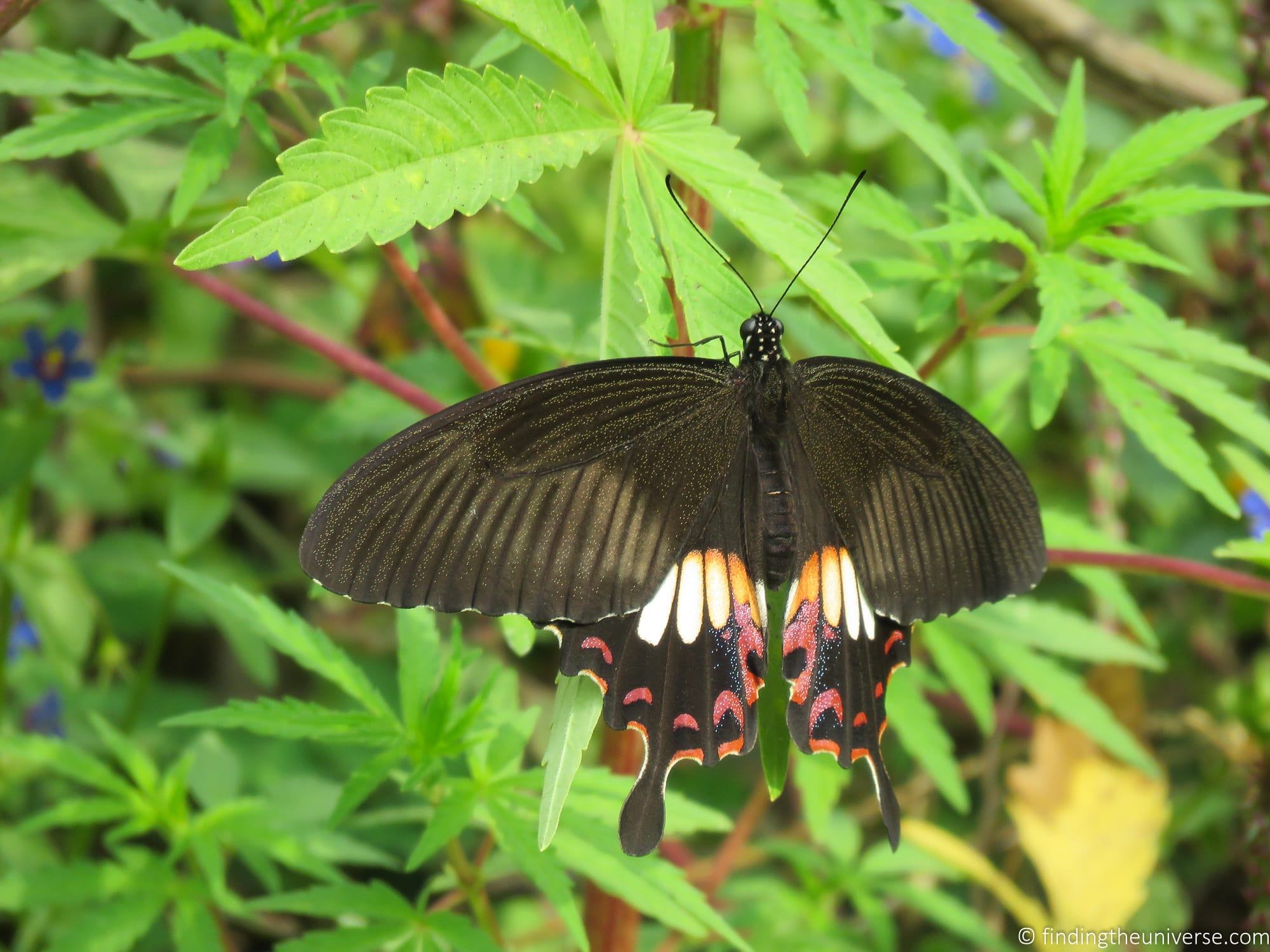
Video Features
Pretty much every bridge camera shoots video. At minimum, look for 1080p Full HD. Most current models also support 4K, which is a nice-to-have if you plan to shoot video regularly.
If video is a primary use case for you, pay attention to autofocus tracking during video (the camera needs to keep moving subjects in focus) and whether the camera supports external microphones. For dedicated video work, you might be better served by a video-focused mirrorless camera like the Panasonic Lumix GH7.
Other Features to Consider
A few other things worth checking before you buy:
Battery life varies significantly. Under 200 shots per charge is poor, 200-400 is average, and over 400 is good. I’d always recommend travelling with a spare battery regardless.
Weight ranges from around 500g to over 1400g. If you’re carrying the camera all day, this matters. The cameras with the longest zooms and largest sensors are the heaviest.
Weather sealing is a nice-to-have, but it’s only available on the more expensive models (the RX10 IV had it). It won’t make the camera waterproof, but it does give peace of mind in light rain. If you’re buying a camera for hiking, look for it.
Burst speed (frames per second) matters for action photography. 5fps is a reasonable minimum, but the RX10 IV’s 24fps is in another class entirely.
Connectivity: most current bridge cameras have Wi-Fi and/or Bluetooth, which lets you transfer photos to your phone or control the camera remotely. It’s handy, though not a deal-breaker if a camera lacks it.
Frequently Asked Questions
What is a bridge camera?
A bridge camera is an all-in-one camera with a built-in zoom lens that can’t be changed. It sits between a compact camera and a DSLR or mirrorless camera in terms of size, features, and image quality. The main appeal is the very long zoom range, which lets you photograph distant subjects without carrying heavy, expensive lenses.
They’re also called superzoom cameras. Most have manual controls, RAW support, and an electronic viewfinder, similar to a mirrorless camera.
Are bridge cameras good for bird photography?
Bridge cameras are one of the most popular choices for birdwatching and bird photography, and for good reason. The long zoom (often 60x to 125x) lets you photograph birds from a distance without disturbing them. You’d need a very expensive telephoto lens to get equivalent reach on a DSLR or mirrorless setup.
The Nikon P950 and P1100 are especially popular for birding, and the P1100 even has a dedicated bird-watching mode. For backyard birding and day trips, a bridge camera is hard to beat for value.
What’s the best bridge camera for travel?
For most travellers, the Panasonic Lumix FZ80D offers the best balance of zoom, weight, features, and price. It’s light enough to carry all day (640g), has a 60x zoom for distant subjects, shoots 4K video, and supports RAW for editing. If budget is tighter, the Kodak PixPro AZ528 is a capable option at a lower price.
Can a bridge camera replace a DSLR?
For casual and enthusiast photographers, a bridge camera can do the job of a DSLR for everyday shooting. Where bridge cameras fall short is image quality in low light (due to the smaller sensor), the ability to use specialised lenses, and outright image quality when you’re printing large or cropping heavily. Professional photographers will still want an interchangeable lens system, but for most people, a bridge camera does the job well.
Why are bridge cameras less popular than they used to be?
Two main reasons. First, smartphone cameras have improved dramatically, eating into the “casual photography” market that bridge cameras once served. Second, mirrorless cameras have become smaller, lighter, and more affordable, offering a more compelling upgrade path for serious photographers. Most major camera manufacturers have shifted their development budgets to mirrorless systems as a result.
That said, bridge cameras still fill a niche that nothing else covers: extreme zoom in a single affordable package. For birdwatchers, wildlife enthusiasts, and travellers who want reach without the bulk, they’re still a great option.
Should I buy a used bridge camera?
Used bridge cameras can be excellent value, especially for models like the Sony RX10 IV and Panasonic FZ1000 II that are no longer available new. Reputable used camera dealers like MPB and KEH include warranties and grade the condition of their stock. For more tips, see our guide to buying used cameras.
Further Reading
I hope you found this guide useful. Here are some more photography resources I’ve put together over the years:
- We have guides to how to use a compact camera, how to use a DSLR camera, and how to use a mirrorless camera, as well as a guide to how a DSLR works
- Knowing how to compose a great photo is a key photography skill. See our guide to composition in photography for lots of tips on this subject
- We have a guide to depth of field and when you would want to use it, as well as a guide to bokeh in photography
- We are big fans of getting the most out of your digital photo files, and to do that you will need to shoot in RAW. See our guide to RAW in photography to understand what RAW is and why you should switch to RAW as soon as you can
- We have a guide to the best photo editing software, as well as a guide to the best laptops for photo editing
- For specific photography scenarios, see our guides to Northern Lights photography, long exposure photography, fireworks photography, taking photos of stars, and cold weather photography
- Looking for a great gift for a photography lover? See our photography gift guide
- If you’re in the market for a camera, we have a detailed guide to the best travel cameras, plus specific guides for the best cameras for hiking, the best camera for safari, the best compact camera, best mirrorless camera, and best DSLR camera. We also have a guide to the best camera lenses
- If prices are a bit high, see our guide to where to buy used cameras and camera gear
- We have a guide to why you need a tripod, a guide to choosing a travel tripod, and a round-up of the best travel tripods
Looking to Improve Your Photography?
If you found this post helpful and you want to improve your photography overall, you might want to check out my online travel photography course.
Since launching the course in 2016, I’ve already helped over 2,000 students learn how to take better photos. The course covers pretty much everything you need to know, from the basics of how a camera works through to composition, light, and photo editing.
It also covers more advanced topics, including astrophotography, long exposure photography, flash photography, and HDR photography.
You get feedback from me as you progress through assignments, access to webinars, interviews and videos, as well as exclusive membership to a Facebook group where you can get feedback on your work and take part in regular fun photo challenges.
It’s available for an amazing one-off price for lifetime access, and I think you should check it out. Which you can do by clicking here.
And that’s it for my guide to the best bridge cameras! If you have any questions or feedback, just pop them in the comments below and I’ll get back to you as soon as I can.
Dominique Gagnon says
Thanks!!! This is great information.
We are leaving for a safari in Tanzania on January 14th and this is what I have: a IPhone 14 Pro, a Sony Bionz X 20x optical zoom and another Sony Alpha 6000 with a 55-210 zoom. What should I bring? I know that I need a better zoom but which one would you recommend? Thanks!
Laurence Norah says
Hi Dominique,
This is a great question. So first it’s important to be able to compare apples to apples when looking at these three options you have, and the first thing you need to know is the difference in zoom they can each offer you. As all three use their own way of reporting that, I’ve normalized them to an equivalent focal length so you can get a more useful comparison. This helps clear up the confusion, especially with something like the Sony 20x optical zoom, which doesn’t actually make things 20x bigger, despite sounding like it might.
The equivalent focal lengths for the cameras you mention are:
Sony Bionz X: 30mm – 481mm
A6000 with lens: 82.5mm – 315mm
Iphone 14 Pro: 13mm – 72mm
When looking at focal lengths, it’s generally accepted that human vision is 50mm. So when a lens offers a number smaller than 50mm, it will make things seem further away than they are. Anything over 50mm will be made bigger.
The other factors to consider are ease of use, portability, and image quality.
I would say that the A6000 will have the best image quality but the lowest portability and ease of use, followed by the iPhone and the Sony Bionz X.
If it was me, I would personally take the iPhone which I would use for landscape and wide shots, and the Sony a6000 for more distant shots. Whilst the Sony Bionz technically zooms further, the trade off with the smaller sensor means you’ll get lower image quality. However, if you are more confident with the Bionz and prefer its compact nature, then I would switch the a6000 for that.
I hope this helps answer your question! Have an amazing time in Tanzania and let me know if you have any follow up questions, or safari photography questions in general!
Laurence
Mike Cheesman says
Hi Lawrence – I’ve been following your travels and have found your articles really interesting and the information you provide excellent. I’ve been a user of Sony RX M4 for nature (mainly wildlife) photography for some years and my camera is showing signs of wear and tear which leaves me in a dilemma. Do I buy another M4 or wait for Sony to announce a model M5? Since the M4 was announced in 2017, and previous models were typically replaced every 2 years or so, I’m beginning to doubt that Sony have any plans for further development of this superb range of cameras. What are your views?
Mike
Laurence Norah says
Hi Mike,
This is a great question. I had previously advised readers to hold off on purchasing the M4 as there were rumours that the M5 was due to be released at the end of 2022. Obviously that rolled around with no news, and all of 2023 has subsequently passed. Sony certainly hasn’t been resting on their laurels with their other camera line ups, but their focus has definitely been on mirrorless. At this point it definitely seems like most brands have almost given up on the bridge camera and compact camera segments, which I think is a real shame as they are both very useful. At this point it is definitely looking unlikely that a Sony RX10 Mark V is ever going to be released. Of course, there is no official update from Sony and there’s always a chance that they will. A new camera could definitely offer improvements, especially with the leaps and bounds in autofocus capabilities the new Sony cameras have. A new sensor and processing chip would also be welcome. But I am not optimistic at the moment. Here’s hoping Sony prove me wrong.
Cheers!
Laurence
Mike Cheesman says
Hi Laurence – thank you for your very prompt reply which confirms my suspicions. I too think it’s a great shame. As you point out in your article, high quality bridge cameras such at the M4 are a boon when photographing nature and especially for fast moving subjects such birds in flight! I’m so happy with my M4 that I will continue to use it and, at the age of 80, it will hopefully last me out!
Best wishes,
Mike
Laurence Norah says
My pleasure Mike, and happy shooting!
Maggie says
Thank you again for your help and support.
I thought that might be the case but needed some guidance before making a purchase.
Budget is a consideration but will research those recommended cameras.
Kind regards Maggie
Maggie says
An absolutely superb article Laurence and very informative.
However, I am struggling with a decision. Although an amateur, and now reliant on a smart phone, I am very keen to pursue photography as a hobby. I would like to have a bridge camera that can take a range of photographs from close-up (animals/flora etc) to landscape.
Two factors that are really important to me is the weight of the camera, not too heavy, and one that is capable of capturing images in the semi-dark light.
Any feedback would be very much appreciated. Many thanks.
Maggie
Laurence Norah says
Hi Maggie!
Thanks very much! So if low light performance is important, then the sensor size and maximum aperture are two of the key specifications to look for. The wider the maximum aperture (a smaller number is a bigger aperture, don’t ask me who invented this system), the more light will come in. So ideally f/2.8 is what you are looking for. The next thing is sensor size, and again, the larger the better. With bridge cameras, they tend to top out at the 1 inch sensor size. So that really narrows it down to the Panasonic FZ1000 II or the Sony RX10 IV (or it’s predecessor). Now, a larger sensor will require a slightly larger camera body and lens setup, but I think that is not going to be that noticeable.
If you did have a budget in mind then that will also definitely narrow your choices down as well, although it’s also worth checking used camera stores to see what is available.
I hope this helps, let me know if I can offer any more advice!
Laurence
Cyndi says
Great article! So much helpful information. I’m still struggling on my decision. Thinking I’m between the Lumix fz80 and fz1000. I’m an amateur (although will definitely take advantage of your tips from your other articles & potentially take the online class)…don’t often take photos & when I do, it’s with my smartphone. However, I’m going to South Africa in a month and would love great memory pics from Cape Town & Krueger. I want to invest in a nice camera, but don’t want to break the bank as I’m not sure how often I’ll use it as I’m just an amateur. Any insight? (Open to other options as well.)
Laurence Norah says
Hi Cyndi,
Thanks very much! So the FZ1000 is definitely the better camera in my opinion. The larger sensor is going to give you better image quality, especally in low light, plus the articulating screen is nice. It doesn’t have as long of a zoom as the FZ80, but unless you are photographing far away birds I don’t think this will matter too much.
Of course, the cost is quite a big difference, and with anything photographic, there’s diminishing returns. The FZ1000ii is listed at twice the price of the FZ80 and I would say it is defiitely better but perhaps not twice as good. It will get you better results, but only you can decide if that is worth the additional cost.
I did want to mention another option, which would be a used Sony RX10 III (see prices on MPB here and KEH here). The Sony will give you faster autofocus and a longer zoom than the FZ1000, at a slight price bump. You can also check out used deals on the other cameras on your wishlist to see if you can save some money 🙂
Have an amazing safari and let me know if you have any more questions!
Laurence
Cyndi says
Very much appreciate the advice. I ended up with the Lumix FZ1000 – found one for $300! I leave for my safari in two weeks. Feeling a little overwhelmed as I’m used to a point and shoot. Is there an online course you recommend that would help me review the basics prior to my trip as I only have a short amount of time? Something a day or less in time perhaps.
Laurence Norah says
Hey Cyndi!
So obviously I do run my own course which you can check out here! It’s very comprehensive but the basics are covered in the first couple of modules. I’m also available on e-mail as part of the course to help out if you have any questions.
I also have a lot of guides on this site that are free, if you look at my photography tips page here and read the guide to using a mirrorless camera that should give you some starting points. A bridge camera is sort of a crossover between a point and shoot and a mirrorless camera, but leaning more towards the mirrorless camera, so I recommend checking that out first.
Let me know if you have any more questions I will do my best to help! The main things you are going to want to figure out are how to adjust shutter speed, ISO and aperture, and how to handle the focus. The focus is probably the most important thing to get right first 🙂
Laurence
Ken says
Laurence,
I will be taking an African safari and I’m interested in a bridge camera. I’m told that the road conditions can often be dusty. Would I be OK using a non-weather sealed camera? Any specific recommendations for a “safari” camera?
Thank you for your informative article.
Ken
Laurence Norah says
Hi Ken,
Sure thing. Yes indeed, the roads can be very dusty. However, if you have a reasonable camera bag that you can keep the camera in between use, then you should be ok. My father traveled with me on a safari recently with his Canon bridge camera and didn’t have any issues with dust. In terms of recommendations, honestly, a lot comes down to budget. All the cameras in this list would work for sure, with those in the mid-range prices generally offering the best balance between price and performance.
I have some more suggestions and things to think about in my guide to safari cameras, and I also have some tips for safari photography you might find helpful 🙂
I’ve also just published a guide to what to pack for safari which you might appreciate.
Have a great trip and do reach out if you have any more questions!
Laurence
Have a great time and let me know if you have any questions!
Michael Spino says
Laurence,
First Thank You for this article on Bridge Cameras it is very informative. Of course I would love the Sony but I have a much more modest budget. I have been looking at cameras in the sub $500 range. My wife and I are traveling on a Med Cruise for the first time in our lives with 10 ports of call. My wife loves to take selfies and is an amature birder, I on the other hand like to take landscapes and general photography of our surroundings. The Panasonic Lumix DMC – FZ300 looks to be a good fit but I have also been looking at a Minolta MND 67Z. we both like the articlating rear LCD feature for selfies and Vlogging. I’m just concerned that the older tech
of the Panasonic will leave me with what I am currently dealing with. Currently all I have is an old Olmpus TG610 -12MP and an even older Sony Mavica CD250. Niether really produce the kind of photo either of us are thrilled with. After paying for this cruise we are looking for Good Quaility, Long Lasting, and Inexpensive. I know, I can only choose 2 but we need some professional advice here. Thanks in advance
Laurence Norah says
Hi Michael,
It’s my pleasure, glad you found the article helpful!
So I am not very familiar with the Minolta camera you are talking about. I also can’t find any reviews on it. I do know that the Minolta brand which makes cameras these days is not the original one – a third-party company bought the rights to use it for camera branding, so that is who is making them. There are some user reviews online which seem to vary greatly.
One big difference between the Minolta and the Lumix is the aperture range. On the Lumix the aperture is fixed at f/2.8 even when zoomed in, whereas on the Minolta it goes from f/2.9 – f/6.7. What that means in practice is that as you zoom in it will let less light in, and so it will have to increase the ISO or reduce the shutter speed to make up for that, which will result in either noisier or blurrier images.
I think that personally I would go with the Lumix as it’s from a known brand and gets good reviews. I know it is a bit older but I think it still stands up pretty well.
Of course it is up to you. Some user reviews of the Minolta are positive.
Sorry not to be of more help, but I hope you have a great cruise!
Laurence
Akash Mech says
This was so helpful. I never came across a blog that was so informative.
Laurence Norah says
Thanks Akash!
Alex says
Hello
I got a Lumix tz95 currently and was thinking about getting a bridge camera for wildlife, walking around historic towns and also some macro shots.
The tz95 is 30x zoom so want better than that.
Which bridge camera would you recommend.
There so many around that it’s confusing.
Pictures mostly for my own use so don’t need a professional look but want them fairly crisp.
Thank you
Laurence Norah says
Hi Alex,
So the Lumix TZ95 is a very capable compact camera. Switching to a bridge camera might not yield a large jump in performance as the majority of bridge cameras have a similar sized sensor, the main difference is the lenses can be bigger and so let in a bit more light or offer a longer zoom. If zoom is the key criteria, then I’d recommend the Nikon P950. It has a big zoom, image stabilization and a wide aperture when zoomed out. So that would be my pick as a replacement, especially for further away wildlife.
Let me know if you have any follow up questions!
Laurence
Alex Benson-Wilson says
Thanks for the info
Might just hold fire until the right one comes along
Tz95 really good but full zoom it’s not amazing and I try shots from hides in nature reserves so a lot of the time they come out slightly off.
That being said it has served me very well so far and is handy for what I use it for.
It’s a minefield is camera buying.
As I said I ideally want a bridge with better specs and better zoom as the tz95
Thank you for replying and giving advice
Laurence Norah says
My pleasure!
Chad says
I was wondering if you could help me out. I loved reading this article on bridge cameras and I’m really trying to decide what to buy. I stopped using cameras years ago when smartphone cameras became good enough for the snapshots I generally take. My wife, on the other hand, uses a Nikon DSLR.
Recently, even though I use an iPhone and love it’s camera, I’ve come to notice that I might like something a little better. I’ll continue to use the iPhone to take shots, but I need something else as well I think.
The primary needs I’ve addressed are:
– A zoom good enough to take shots of animals and birds
– Ability to take pictures in poor lighting and at night
– Also ability to handle the elements, I live in Alaska and we spend time walking in both the snow and rain
I’ve looked at the weatherproofed cameras on this page, especially the Panasonic Lumix DMC-FZ300 and the Sony Cyber-shot DSC-RX10 IV. I also looked at the Olympus TOUGH when it showed up in a search about winter and the elements (though I’m not sure if it has enough zoom?)
I was wondering what you would recommend for me? My primary activities will be hiking, in Alaska, in all seasons and all weather conditions. I like taking pictures of vegetation and fungi as well as birds and wildlife. I often take shots of animals and trees at night or in very dim lighting, and that would be a primary duty of this camera as its something the iPhone can’t do so well.
I know a lot of my needs would be well answered by getting a DSLR, but I’m not interested in that level of commitment. I need to be fair for how I will use my camera. I’m going to keep it in AUTO 99% of the time and will hardly ever touch special settings, unless maybe it has a night mode that works well. I have no interest in a DSLR and a collection of lenses.
Thanks! Your pages have been a great help.
Laurence Norah says
Hey Chad,
Great to hear from you! So this is a great question. First, the Olympus is certainly a tough camera but it only have a 3x optical zoom which is not going to be enough for most wildlife encounters. So I would discount that. If your budget stretches to it I would definitely recommend the Sony RX10. It is heads and shoulders above the rest, with a combination of a super fast autofocus speed, relatively large sensor and a good balance of zoom and portability.
It is also the most expensive, but I personally think it is worth it. One thing I should mention is that rumours have started to swirl that Sony might be releasing a version V later this year. I am not sure if you are in a rush, but it might be worth waiting to see if those solidfy as it will likely either be an option to consider, or it will cause the price of the RX10 IV to come down. The IV is still a great camera, so if you were looking to buy in the near term then it’s still a great investment, however I didn’t want you to buy something only for something possibly better to come along in a few months!
Let me know if you have any further questions, happy to help!
Laurence
Chad says
Thanks for the reply Laurence. I’ve started watching Sony news to see if the fifth edition is going to come out or if I should grab a four while they are still available. It’s tricky, hard to tell if a five is coming at all 😉
Thanks for your help!
Laurence Norah says
My pleasure Chad! Yes, it’s definitely not clear yet. I would hope they do make one because it’s a great camera, but Sony have definitely slowed development on their compact and bridge cameras recently.
Elsie Fagan says
I am going on Safari this summer and really want a camera that has more zoom than my old point and shoot camera or my cell phone. I will also be trekking gorillas in the jungle so light may be low but should be plenty bright during my Safari drives. I am most definitely a beginner so I probably would not be using manual features. What would be your suggestion for a simple easy to learn bridge camera? $300 -$1000
Also this article was so informative.
Laurence Norah says
Hi Elsie!
Sounds like an awesome trip 🙂 So the good news is that other than the Sony RX10, all the cameras in this list should be within your budget. I would probably recommend the Panasonic Lumix FZ1000 II because it has a larger sensor, so you’ll get better results with the gorilla trekking. The zoom is equivalent to a 400mm, which is what I take on safari with me and it works great. You would only need a longer zoom if you were planning on photographing a lot of smaller birds.
You might also be interested in some of our other articles. We recently returned from gorilla trekking ourselves in Uganda and it was amazing. So I have a guide to gorilla trekking, and also some tips for getting great photos on safari. We also have a post all about safari cameras specifically which you might find useful too 🙂
Let me know if you have any more questions, I’m happy to help!
Laurence
Lisa says
Thank you for this great info! I’m a total novice with just an old iPhone. Because of where I live – with views of Mt Rainier over Puget Sound, spectacular sunrises, birdlife from hummingbirds to eagles, all kinds of interesting plant life and full moon rising over the water – I occasionally get lucky. That said, definitely time to step up to a “real” camera. I want to capture craters – on both the mountain and the moon. I want to see the the yellow beak and talons of the eagle and the rainbow throat feathers of the hummingbird. I want to capture dewdrops on roses as well as the wide expanse of the horizon at sunrise. You have provided some great advice and consideration for selecting a camera – any further recommendations for my aim would be greatly appreciated!
Budget = $800-1200
Thanks again!
Laurence Norah says
Hey Lisa! My pleasure 🙂 So it sounds that you are interested particularly in getting closer up, so a longer zoom is going to be necessary. At your budget I’d recommend either the Nikon CoolPix P950 or a used Sony RX10 III (see prices on MPB here and KEH here). The Sony will give you better image quality and faster autofocus, but doesn’t have quite the same zoom range as the Nikon. I think for your needs it will give better results, but if you want to get really close up to specific elements of a subject, the Nikon is a better option.
I hope this helps with your decision – let me know if I can be of any further help!
Laurence
Adam says
As far as 1/2.3′ sensor is concerned, the best is Lumix FZ300 hands down.
As for 1″ sensor, that would be Sony RX10 M4.
Laurence Norah says
Thanks for your input Adam!
Pyry says
Hi,
Hopefully you still read these comments. I read this article thoroughly and found the information very helpful, but I still might need some help.
I currently have a Sony DSC HX400V, that’s over five years old. It has worked quite well (once it was in warranty repair), but now it’s starting to break down. The image stabilizer has stopped working and there’s also loads of other minor faults. Now I would take it to a repair shop, but there isn’t a single store in Finland (where I live) that would fix Sony cameras. I’ve already asked this, and apparently all Sony cameras that need repairing would have to be sent to Sweden or Germany, and that would cost so much, that it’s probably wiser to just purchase a completely new bridge camera ( because all the hassle of changing lenses just doesn’t suit me)
My “wish list” includes:
– image stabilizer
– tilting screen that tilts up and down (doesn’t have to tilt sideways) so that I can basically film an object in front of me while looking down at the screen (if that makes sense, similar screen that the DSC HX400V has).
– as inexpensive as possible (I can’t even consider anything over 1000€)
– would like to have decent zoom capabilities, but doesn’t have to be anything crazy, something like 30x optical zoom would be fine
– weather protection would be nice, but with my budget, probably not necessary.
I film a lot of moving objects but also landscapes etc., so if the autofocus is slow then that’s probably a problem.
From your list, the Lumix FZ82 looked nice, but the screen doesn’t tilt. The Canon Powershot is a good option, but there’s no weather protection and the screen looked like a “vlogger type” screen that tilts out sideways but I’m not sure if it tilts vertically. I’ve tried to look for bridge cameras in different online stores, but the selection doesn’t seem very big! Do you think there’s any other cameras worth considering that aren’t in this list?
And one question about megapixels. The DSC HX400V that I have has 20.1 mp. If I’d take a photo of a same landscape with two different cameras (same settings also), the other camera has 20 megapixels and the other one 14 or 16. Is the image quality noticeably worse in the other camera, or is it barely visible? I’m not sure how much attention I should pay to the megapixel amount, you say 12-20 MP is fine, but my mom has a 10 MP camera, and compared to my 20 MP, her pictures don’t look sharp at all.
I appreciate your reply (if you see this)!
PS. About Sony cameras: I have nothing against them, and I might consider to purchase one, but it really is a problem if the camera breaks down right after the warranty has expired, and then I’d have to pay hundreds of euros to get it fixed in another country. I’m not sure if Panasonic cameras can be repaired in Finland either, I have to look into that
Laurence Norah says
Hi Pyry,
Great to hear from you! You’ll be pleased to hear I read and always try to respond to every comment 🙂
So I’m sorry to hear that your camera has started to fail, that is unfortunate. It definitely sounds like a new camera is going to be your best option.
As you have already noted, there is not a massive range of bridge cameras to choose from. They are a slightly niche product and manufacturers don’t seem to make them as much as they used to. However, based on your requirements for price / zoom, they are probably going to be your best bet. If you switch down to a point and shoot you might not get all the features, and especially the zoom you are after with sufficient image quality. If you go up to a mirrorless or DSLR camera then you are looking at a higher outlay for a range of lenses, plus more gear to carry around. So let’s try to focus on bridge camera options.
Based on your requirements, the FZ300 / FZ330 might be the best option. It is a bit older but it meets most of your requirements, with the exception being the zoom isn’t quite so big as you might want.
I can also confirm that the screen on the Canon SX70 flips out and tilts forwards and backwards, so it should meet your requirements in that regard, although it’s not weather proofed.
Another option if you can find it is to see if you can find a Sony RX10 III second hand. I appreciate you would prefer not to go down the Sony route again, but the RX10 is definitely the flagship bridge camera on the market today, and if you can find a good deal on the version 3 that is worth considering.
Regarding megapixels, I would say that the difference between 12MP and 20MP is not as big as you might think. In terms of physical dimensions, 12MP is 4000 x 3000 pixels, while 20MP is 5000 x 4000 pixels. So there will be a difference, especially if you start to crop or zoom to 100%, but unless you are printing your images regularly that shouldn’t be an issue. I suspect your mom might be using quite an old camera perhaps, and the sharpness is likely due to it being an older camera with not a very sharp lens, rather than the megapixel count.
I hope this starts to answer your question, but I am happy to discuss further if I can of course!
Laurence
Pyry says
Thank you so much for your reply! You’ve been very helpful! Looks like I have a decision to make now, but I’ll comment here if I have any further questions. Thanks!
Pyry says
Hi,
New question immediately. I’ve found a few compact cameras, that seem to match all my requirements (except weather protection) and still they’re considerably cheaper than most of the bridge cameras. Panasonic DC-TZ95EP and Canon Powershot SX 730HS are good examples. Both have 20.3 MP, 30-40x optical zoom, image stabilizer, tilting screen and the Panasonic even has 4K video.
So I’d like to ask, what is it that makes these so much cheaper than the cheapest bridge cameras? Am I missing something, because to me, apart from the size difference, the specs don’t look that much different? (okay, the Canon SX70 HS has bigger optical zoom but it’s still over 200€ more expensive than the SX730 HS compact camera).
I know I’d feel weird if I’d buy a compact camera like that, especially after having a bigger and heavier camera for 6 years. But they meet most of my requirements for much less money, unless there’s something I’m not taking into account?
Laurence Norah says
Hi Pyry,
So whilst the compact cameras you link (which are great compact cameras by the way) have the same size sensor as most bridge cameras (1/2.3″), the main difference is that the lens itself is not as physically big. That means that the aperture is usually narrower, especially when you zoom.
For example, looking at the FZ330, it has a fixed aperture of f/2.8 even when zoomed all the way in to the 600mm equivalent.
The Panasonic DC-TZ95EP has a variable aperture of f/3.3 – f/6.4. That means that when you are zoomed out you can set an aperture of f/3.3, and when you zoom in, the minimum aperture will increase to f/6.4. The downside of this is that less light will come in. So you have to either use a slower shutter speed or a higher ISO.
As an example, zoomed all the way in on the FZ330 you might set f/2.8, ISO 100 and shutter speed 1/400th.
With the DC-TZ95EP in exactly the same lighting conditions, you would have to set f/6.3 because that is the minimum. You could then set either shutter speed 1/80th and ISO 100 or, f/6.3, shutter speed 1/400th and ISO 500. I explain this more in my guide to the exposure triangle 🙂
I’d also encourage you not to look at the optical zoom number too much as that is mostly good marketing. What that number actually means is the difference between the widest equivalent focal length and the most zoomed in equivalent focal length. That’s why I list all the focal lengths in this post, because it makes it easier to actually compare.
To compare, the FZ330 has a 25mm – 600mm focal length. 600 divided by 25 is 24, so this camera has a 24x optical zoom.
The DC-TZ95EP you shared has a 26-780mm focal length. 780 divided by 26 is 30, hence the 30x optical zoom.
The Canon SX730HS has a 24mm – 960mm focal length, which works out to a 40x optical zoom. That one has an aperture range of f/3.3-6.9, so when zoomed in it’s even smaller.
Now, all the above said, these are both good cameras. It’s just good to know that when shooting at higher shutter speed zoomed in, you are going to have to use a higher ISO on a compact camera compared to a bridge camera because the aperture will be narrower.
I hope this makes sense!
Laurence
David Williams says
I’ve been struggling to choose among all the bridge cameras. I’d read multiple reviews, and found that my head was spinning! Each reviewer would highlight several good points and some drawbacks, but when I tried to compare cameras I found it difficult to work out the trade-offs. Eventually I set up a spreadsheet featuring a column of reviewers, and a row of cameras. This certainly helped, but then I found your review, which I think is unsurpassed (that means REALLY good! 🙂 ). Reading your description of trade-offs (the big one being sensor size vs zoom capacity), it all fell into place, On top of this, your summary of each camera gave a comprehensive description of the features with comments concerning important trade-offs as well. Brilliant! My head’s stopped spinning now, and I find I can easily justify the cost of the Sony RX10 IV to my wife – how good is that?! I’ll certainly be reading more of your articles to improve my photography knowledge. Thank you so much.
Laurence Norah says
Hi David!
Thank you so much for taking the time to leave such a nice comment. It is hugely appreciated. I think it is so important that instead of just providing a list, that readers are given the tools to make their own choices. The right camera is always based on individual circumstances, and my goal is to ideally help people out with figuring out what that is. Even if it’s not one on my list! In your case though, the RX10 IV is truly a superb option and I have no doubt you will put it to good use! Enjoy it, and if you have any more questions, feel free to reach out! I also have lots more photography content across the site and also my photography course 🙂
Happy photographing!
Laurence
Julia Bishop says
Hi!! I absolutely loved this info. It really helped me a lot. Perhaps you can help me find the right camera? I’m looking for EASY automatic, with 1” sensor, good zoom, touch screen, tilting screen, WiFi/Bluetooth, image stabilizer, video capability. What am I missing? Besides money lol. I’m looking to make an investment here. I’ll be shooting at zoos for starters and I want to capture the eyelashes on a giraffe! Having the camera weather protected sounds important too. Thoughts??? Thank you so much and again, GREAT INFORMATION.
Laurence Norah says
Hi Julia!
It’s my pleasure! So with those specs I’d probably recommend the Canon G3 X as mentioned by a previous commenter. That has everything you are looking for in a relatively compact body. It is missing an electronic viewfinder, although you can pick one up as an optional accessory.
The other two main contenders are the Panasonic FZ1000 and the Sony RX10, but I’m not sure what your budget is. The RX10 is by far the “best” in class when it comes to sheer speed and performance, but it’s also heavier and significantly more expensive. I have a compact Sony and the auto mode definitely works really well, so I would say the RX10 would be the same. The FZ1000 doesn’t have quite the same maximum zoom at the Canon or Sony, so you might feel limited by that.
I hope this helps – let me know if I can be of any further help!
Laurence
Kasha says
This is an outstanding article. I am looking at trading my Leica v-Lux 114. I notice you don’t review the Leica v-Lux 5. I’m torn between the Sony DSC-RX10 IV and the Leica. Your thoughts would be much appreciated!
Laurence Norah says
Hey Kasha!
So I didn’t review the Leica v-Lux 5 as it’s basically just a rebranded Panasonic Lumix FZ1000 II, which is in the round-up. So if you prefer the Leica version, that’s personal preference, but the performance should be similar to the Panasonic and the specs are essentially identical 🙂
Of the two you mention I would personally go for the Sony – you get a better autofocus, longer zoom and much faster burst rates. The only downside is that it is a tiny bit heavier.
Let me know if you have any more questions, I’m happy to help!
Laurence
Paul says
You should really add the Canon PowerShot G3 X to your list. I have found it phenomenal for birding photography and a nice balance between long lens and decent sensor.
kanak says
i want to purchase camera which have 1′ sensor and atleast 60X zoom with touchscreen lcd and veiwfinder..which camera will fulfil my requirement.My budget is between 50,000-75,000-00
Laurence Norah says
Hi Kanak,
Thanks for your comment. Unfortunately there aren’t any bridge cameras with a 1″ sensor and a 60x optical zoom. Those zoom lengths are only physically possible in a camera with a smaller sensor. As the sensors get larger, the lenses have to get larger too, and it’s just not possible to fit a 60x zoom onto a 1″ sensor camera. It’s also worth realising that a 60x zoom refers to the difference between the largest and smallest zoom, rather than magnification. A better number to look at when evaluating cameras is the equivalent focal length in mm.
You will have to decide if sensor size or maximum zoom is most important to you and then make a decision. There should be a few options at your price point that then suit.
Laurence
Jennifer says
I’m looking for a camera that is going to be very versatile. I have a granddaughter that I like to take pictures of and I thought my Canon SX740 HS would work. However with a little one any hand or foot movements cause a lot of blurring and I can’t seem to find the right settings to eliminate it. What would you recommend as a good all around camera that is quick and easy to setup? Budget wise I’m willing to go as high as the $1,700 dollar range. I just want an easy “all purpose” camera that will capture special moments with my granddaughter.
Laurence Norah says
Hi Jennifer!
So at that price point if you are looking for a bridge camera then the Sony RX10 IV is going to be the best option. It’s a bit heavier but it has a very fast autofocus and performs great in a variety of situations. Sony cameras are also great in automatic mode so whilst it has a lot of features, it should work well with minimal input.
However, before spending a lot of money, you could try adjusting the settings of your current camera to see if that helps. When taking shots of your granddaughter, my tip is to set a high shutter speed which will freeze the action, so even if she moves a bit you won’t get a blurry shot. With the SX740, I’d suggest trying either sports mode (which should set a high shutter speed automatically), or shutter AE where you can manually set the shutter speed yourself.
The Canon won’t be as good as the Sony as it has a smaller sensor and a narrower lens, so less light is going to be captured. But if you are shooting outdoors in a well lit environment it should be fine.
Happy to help if you have any more questions!
Laurence
Sharon Bennett says
Wish there a camara with at least a 1” sensor and 40-50 X zoom.I am leaning toward a mirrorless camara with maybe purchase a Len 70-200 mm for my zoom need ? I am a amateur photographer ,not going to spend to much for a camara ..maybe a cannon M50 ?
Laurence Norah says
Hi Sharon,
Ah, that would be wonderful. Unfortunately, the laws of physics make it quite difficult – a larger sensor needs wider lenses, and so it becomes rather a challenge to make a camera that has everything which is also relatively light and portable. The Sony 1″ RX10 camera is already pushing the limits of acceptable weight as it is!
The Canon M50 is a good camera, but you should be aware that a 70-200mm lens will be quite far from a 40-50x zoom. If you are looking for that sort of zoom, a bridge camera is going to be a better option. The Panasonic FZ1000 for example, has a 25-400mm lens, which is equivalent to a 16x zoom.
Another thing to be aware of is that this is the last year Canon are making the “M” range of cameras, so there won’t be many new lenses being released. If you are able to find lenses now that work, this won’t be a problem, but it’s worth keeping in mind for the future that your options might be limited should you want to upgrade a lens.
If you let me know your budget I am happy to provide some more options. You might for example consider the Panasonic range of MFT cameras – the sensor is larger than a 1″ sensor but smaller than that found in the Canon M50, and there is an excellent selection of lenses to choose from.
Laurence
Kevin knox says
How far away from the subject would the sony reach at 600mm
Laurence Norah says
Hi Kevin,
For real magnification, you need to divide the focal length in mm by 50. So 600/50 is equivalent to 12x. This is similar to a pair of high powered binoculars – hopefully this gives you an idea of the sort of magnification. In addition, there is some room to crop the image as well, for further zoom.
Best
Laurence
kevin says
Hi,thanks for the info,I like photographing birds and wildlife,im torn between the nikon p1000 and the sony rx1v, i like the zoom you get from the nikon,but the sonys pics are clear and crisp,can you point me in the right direction,thankyou kev
Laurence Norah says
Hi Kevin!
So this is a tricky decision. The P1000 will definitely give you more zoom, but at the expense of image quality. So unless you are regularly photographing very small or very far away birds, you will likely find that the Sony will work better. It has much better image quality, and the 25x zoom (600mm equivalent) will work in the majority of situations. Personally if it was me I would go for the Sony as it’s an all round better camera in my opinion, but of course everyone’s needs vary!
Let me know if I can help any more 🙂
Laurence