As professional photographers who also run an online photography course, we get a lot of questions from readers about what kind of camera would be best for them.
Of course, the answer is invariably: it depends! It depends on factors like budget and what you want to take pictures of, but also on when you want to use your camera and where you want to take it.
With this in mind, we’ve put together this guide specifically for the best cameras for hiking and backpacking.
I do quite a lot of hiking, and the camera equipment I put together when heading out for a hike is different to that which I might use for other situations. Weight becomes a very deciding factor!
As well as hiking, I have many years of backpacking experience, and I know the constraints that come with keeping all your gear on your back when travelling the world.
A high end mirrorless camera with multiple lenses might produce great images in a variety of environments, but it’s also going to be a challenge to carry around, and might be harder to keep safe when backpacking on a budget and staying in shared accommodation.
Taking all this into account, I’ve put together this guide to the best cameras for hiking and backpacking, across a variety of budgets. We’ve also included a section on what to look for when choosing a camera for hiking and backpacking, so you know what specifications and features to look for when picking a camera.
Table of Contents:
Quick Recommendations
Before we get into the full details, here are my top picks depending on what matters most to you:
- For the best image quality in a relatively compact package, my pick is the Sony Alpha 7C II. A full frame sensor in a body that barely weighs more than some APS-C cameras.
- If size and weight are your top priority but you still want good image quality, choose the Sony RX100 VII. It’s pocket-sized but packs a 1-inch sensor and a versatile zoom.
- For the best all-rounder mirrorless camera that balances image quality, weather sealing, weight and price, the Sony Alpha 6700 is hard to beat.
- If budget is your primary concern, think about using your existing smartphone or picking up the Panasonic Lumix ZS99.
- For adventure activities and rugged conditions, the GoPro Hero13 Black is waterproof, tiny, and takes great video.
- If you want a fully waterproof and shockproof dedicated camera, the OM System TG-7 can handle pretty much anything.
Now, read on for the full breakdown of each camera, plus what to look for when choosing a camera for hiking and backpacking.
What to Look for in a Camera for Hiking and Backpacking
Before going into our specific camera recommendations, I want to share what to look for in a camera. This will help you decide which camera is best for you, and will give you the knowledge you need to make a decision.
When you know which features to look for and which are important for you, then you can pick the right camera for your specific needs. It might not even be one on our list, and that’s fine too.
Here’s what to look for.
Price
One of the first considerations you’ll have is budget. How much you have to spend will likely make the biggest impact on your purchasing decision.
Cameras are available in a wide range of prices, from a couple of hundred dollars through to thousands of dollars. For a camera for backpacking and hiking, you might not want to get an ultra high-end system costing thousands of dollars.
The risk of damage or loss when hiking needs to be considered against an expensive purchase. The same applies when backpacking. It’s also worth knowing that high end equipment often isn’t covered by general travel insurance policies, which have relatively low single item limits. So if you want insurance that covers your gear, you might need a specialist policy.
We’d say that you should be able to get a good camera for hiking or backpacking in the USD $400 – $1,000 range. We’ve also provided some more budget and high end options to consider.
Weight
When you are hiking or backpacking, you are carrying all your gear with you all the time. So weight becomes a key consideration for everything you bring.
This is why you might decide against packing a bulky camera with you. Whilst a larger mirrorless or DSLR camera will likely produce better quality images, the trade-off of having to carry it might be too great.
If you purchase a camera with interchangeable lenses, you will need to consider the camera body as well as the lens (or lenses). Some lenses can weigh quite a lot, and this will quickly add to your overall load. You might find that a pair of prime lenses ends up weighing less than a single zoom lens.
When thinking about weight, consider the whole package rather than just the camera body. If you need spare batteries, a heavier camera with better battery life might actually save weight overall. Some cameras charge via USB-C, meaning you can use a power bank and cable you already have, rather than carrying a separate charger.
How much weight you are happy to carry will also depend on the type of trip. For shorter day hikes you might accept a heavier camera, whilst multi-day hikes and longer backpacking trips call for something lighter.
Weatherproofing
A feature to definitely consider is whether or not the camera has any weatherproofing.
A weather sealed camera will have rubber seals and additional engineering to protect the camera from water and dust. Water inside a camera can cause corrosion and stop it from working entirely.
It’s also possible to get fully waterproof cameras that can be used underwater to a certain depth. If you think you’ll be hiking in wet or tropical conditions regularly, these can be a good investment.
For hiking and backpacking, where you can get caught out in all kinds of weather, a camera with some form of weather proofing is a good investment.
Zoom
If you’re buying a compact camera, the optical zoom will usually be described as a number, for example 3x or 30x. The larger the number, the more the camera can zoom in on far away subjects.
We’d usually advise a minimum of 3x optical zoom for some flexibility. If you like to shoot wildlife, anything from 10x to 40x would be better.
If you are looking at a mirrorless or DSLR camera with interchangeable lenses, the zoom is described using focal length. A smaller focal length means less zoom, and a greater focal length means more zoom. For general travel use, a lens that covers around 18mm to 200mm will handle most situations well.
Note that a longer zoom usually means a heavier camera or lens. So zoom and weight are two factors you’ll have to trade off against each other.
Aperture
The aperture is the hole inside the camera lens which light passes through to hit the sensor. A wider aperture lets more light in, making the camera more useful in low light situations like indoors or darker environments outdoors.
Versatility is key for a camera for backpacking and hiking, where you’ll face a wide range of shooting situations.
The downside of a wider aperture is that it often limits how much zoom the camera can have. A wide aperture lens that also offers a long zoom requires a very heavy and large lens, which is far from ideal for hiking or backpacking.
Ideally you’d want a lens with an aperture around f/2.8 for hiking and backpacking, with a minimum of f/5.6. The closer the number is to 1, the wider the aperture. Many zoom lenses will have an aperture of around f/5.6, which lets a lot less light in.
It all comes down to compromise. If you want a long zoom lens with a wide aperture, it will be expensive and heavy. If you want a light lens with a wide aperture, it won’t zoom as far.
Read more about aperture and how it affects your image in our guide to the exposure triangle.
Sensor Size
You might be wondering why different size cameras matter, and what it is about a larger camera that allows it to produce higher quality images.
One major factor is that a larger camera can fit a larger sensor inside it. The sensor is the component that captures the light information and saves it as a digital image.
As a basic rule of thumb, a larger sensor will produce better images than a smaller sensor, particularly in low light. The downside is that a larger sensor costs more to produce and requires a larger camera body and larger lenses. So a larger sensor generally means a heavier and more expensive camera system.
Again, this comes down to personal preference in terms of price, weight, and image quality.
Battery Life
Battery life is a key consideration for hikers and backpackers, especially as you may be away from a power socket for a prolonged period.
Most cameras have an official rating for how many photos they’ll take on a full charge. At the lower end, a camera might manage around 200 shots, and at the higher end around 1,300 images.
DSLR cameras tend to be the most battery efficient, because you can shoot using the optical viewfinder without powering the screen. Mirrorless cameras and compact cameras use more battery as they have to power the screen and any motorised zoom.
You can always carry extra batteries, but they add weight. Our suggestion is to find a camera that manages at least 400 shots on a charge, or that takes very small batteries to make up for it. And if your camera charges via USB-C, a single power bank can keep both your camera and phone going.
Manual Controls
If you want to take more creative control over your images, then manual controls over things like aperture, shutter speed, and ISO are a must. If you are happy to let the camera do the work, then manual controls are less important.
We prefer to have a camera with full manual controls, but everyone is different. Generally, smartphones and budget compact cameras do not offer manual controls, whilst high end compact cameras and all mirrorless and DSLR cameras do.
If you choose a mirrorless or DSLR camera, we recommend packing just one versatile lens to save on space and weight. See our guide to some of the best travel lenses for ideas.
Other Features
There are plenty of other features that may matter to you. A touchscreen, a screen that tilts or flips, WiFi or Bluetooth, GPS tagging, image stabilisation, or video capabilities.
For video, you’ll want 4K support, a good autofocus system for tracking subjects, and a flip screen if you want to film yourself. An external microphone input is useful for better audio.
These are less specific to hiking and backpacking, but do make sure any must-have features are on your shortlist.
The Best Cameras for Hiking and Backpacking
This is our list of the best cameras for hiking and backpacking. It is roughly ordered by budget, with the less expensive cameras first, and the more expensive cameras towards the end. Pricing does change, so do click through to check the latest prices.
For those cameras with interchangeable lenses, we’ve also recommended a good versatile lens that might pair well with the camera for hiking and backpacking.
Best Budget Compact: Canon PowerShot Elph 360 HS A
If you just want a fairly basic point and shoot camera that doesn’t cost too much but will get reasonable results, then the Canon Powershot Elph 360 HS A is a good option.
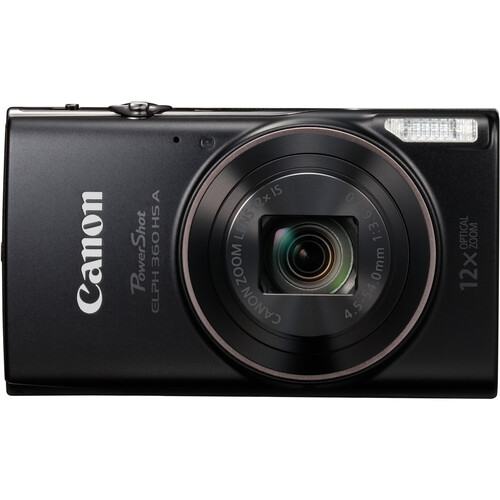
This camera was originally launched in 2016 as the Elph 360 HS, but due to popular demand Canon released an updated version in 2025, the 360 HS A.
It offers a 12x optical zoom, image stabilisation, a 20.2MP 1/2.3″ sensor and a variety of scene modes. It also shoots 1080p video. Be aware there are no features like a touchscreen or weather sealing. You could easily pick up a little waterproof compact camera bag for it for some protection against the elements though.
The main downside is the battery life, which is quite limited at 265 shots, and that’s in ECO mode. That said, this is not unusual for a compact camera at this price. You’ll want to pack a spare battery if planning an extended hiking trip. It also has a micro-USB port rather than the more modern USB-C, but it does support charging by USB which is useful.
Note that the original Elph 360 HS is still available for sale, but the price has skyrocketed due to limited availability. The MSRP of the Elph 360 HS A is $379 USD, so don’t pay more than that for this camera. As a comparison, when it launched in 2016 the original MSRP of the Elph 360 was $209 USD.
Weight: 5.19 oz / 147 g
Battery life: 265 shots
Price: Check latest price on Amazon here and B&H here
Best Ultralight: Insta360 GO Ultra
If you are primarily focused on weight saving, then the Insta360 GO Ultra is an incredibly lightweight option for hiking and backpacking.
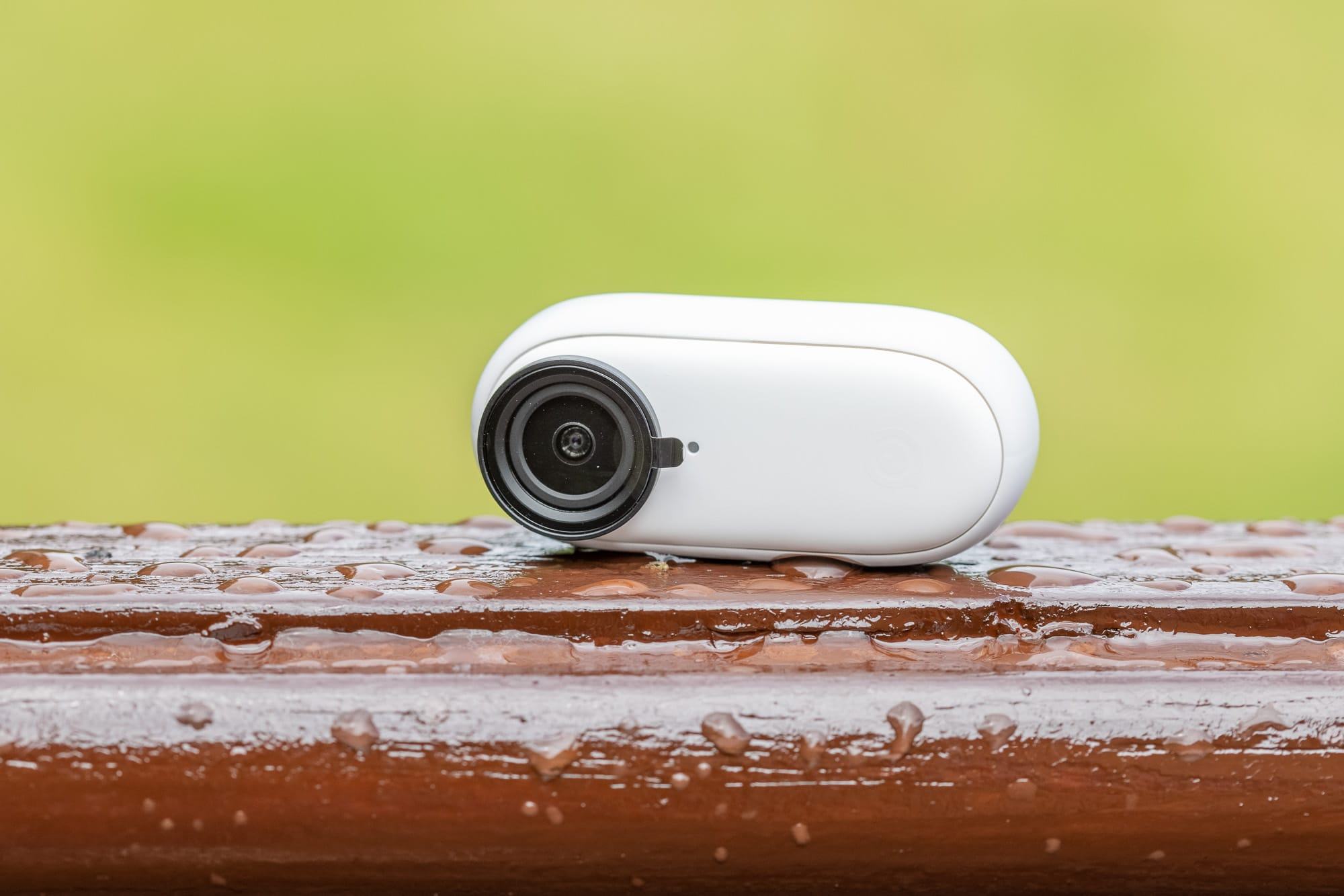

The GO Ultra is a big step up from the earlier Go models we used. It shoots 4K video at 60fps from a large 1/1.28″ sensor, which captures considerably more light than the older models. It also takes 50MP still photos, which is a big improvement.
The camera is waterproof down to 33ft / 10m, and the standalone camera weighs just 53g / 1.9oz. The Action Pod, which includes the screen and additional battery, does increase the weight, but the whole package is still very light.
Battery life is around 70 minutes for the standalone camera, or up to 200 minutes when using the Action Pod. It charges quickly too, going from flat to 80% in about 12 minutes.
One big change from the earlier Go models: the GO Ultra uses microSD cards rather than built-in storage, so you can swap cards if you fill one up on a longer trip.
If your goal is to capture memories of your trips but you really don’t want to carry much gear, this is a solid option. Picture quality from stills is not going to compete with a dedicated camera, and it’s primarily aimed at video creators. But the size is hard to argue with, and the magnetic mounting options mean you can clip it to a hat brim or backpack strap and shoot hands-free.
Weight: 1.9oz / 53g (camera only), 5.7oz / 161g (with Action Pod)
Battery life: 70 min camera / 200 min with Action Pod
Price: Check latest price on Amazon here and B&H Photo here.
Best Budget Zoom: Panasonic Lumix ZS99
The majority of camera manufacturers have stopped making compact cameras due to the rise of smartphones. Panasonic is one of the few still releasing new models, and the Lumix ZS99 (released in 2025) is a great option.

This camera offers an impressive 30x optical zoom, letting you get a lot closer to far away subjects. That lens has Panasonic’s excellent 5-axis O.I.S. image stabilisation, and the aperture varies from f/3.3 to f/6.4.
The sensor is a 20MP 1/2.3″, and the camera has a touchscreen tilting LCD. It also has built-in WiFi and support for 4K video, as well as manual controls and full RAW support.
Battery life is good for a compact camera, offering 380 shots per charge if you use the rear screen, and 250 shots if you use the viewfinder. It charges via USB-C, so you don’t need to carry an extra charger.
The main downside is that the longer lens does make it a little heavier than some compact models, and it has no weather sealing. But we think it’s a great option for a hiking or backpacking camera, and if you are looking for a compact camera this is one of the best choices available right now.
Weight: 11.36oz / 322g
Battery life: 380 shots
Price: Check latest price on Amazon here and B&H here
Best Rugged: OM System TG-7
If you want a camera that can stand up to pretty much anything you can throw at it, then you need to consider the OM System TG-7.

This is a waterproof camera (down to 50ft) that is also dustproof, crushproof (to 220lbf), shockproof for falls up to 7 feet, and freezeproof down to 14 degrees F (-10 C).
It also has a GPS, a pressure sensor, temperature sensor, and a compass. On the camera side, you get a 12MP 1/2.3″ sensor. While that might not sound impressive on paper, each pixel on the sensor is relatively large, which helps in low light.
The lens offers a wide f/2.0 aperture and a 4x optical zoom. The screen is fixed and not touch-enabled. It doesn’t have full manual controls, but you can shoot in RAW.
It’s fairly lightweight and lasts for a solid 330 shots per charge. The battery charges via USB, saving you from carrying a separate charger. It also supports 4K video.
If you are planning a hiking adventure in wild weather or rugged terrain, this is the camera to look at. It also works underwater, making it very versatile.
Weight: 8.8oz / 249g
Battery life: 330 shots
Price: Check latest price on Amazon here and B&H here
Best Action Camera: GoPro Hero13 Black
If size is a major consideration, then you will definitely want to consider the GoPro Hero13 Black.

These super compact cameras are rugged and waterproof down to 33ft / 10 metres, and offer a wide range of photo and video modes. We’ve used multiple GoPro models over the years, and the range offers class leading video quality, though at a relatively high price.
The Hero13 Black offers 27MP images from its 1/1.9″ sensor and shoots 5.3K video at 60fps. It has HyperSmooth 6.0 stabilisation, which is incredibly effective. There’s also a new interchangeable lens system (HB-Series Lenses) that lets you swap to ultra-wide, macro, or anamorphic lenses.
The battery is a larger 1900mAh unit that provides up to 2.5 hours of continuous recording at 1080p, and it charges via USB-C. A magnetic latch mounting system makes it easy to attach to accessories. Both the front and rear screens are touchscreens, and the camera supports RAW photos.
At 5.6oz, it’s one of the lightest options in our list. If an action camera sounds right for you, check out my guide to the best action cameras for more options.
Weight: 5.6 oz / 159g
Battery life: Up to 2.5 hours video (1080p)
Price: Check latest price on Amazon here and B&H here
Best Smartphone Camera: Google Pixel 10
A bit of a curveball here. If you don’t want to invest in a dedicated camera, or don’t think you’d carry one around all day, then invest in a smartphone with a great camera.

The chances are that you’ll carry your smartphone everywhere you go, and the best camera is always the one you have on you.
The Google Pixel 10 is a great camera phone, especially for the price. It takes good pictures in all lighting situations, including in low light with its dedicated night mode.
Camera wise, you get three main cameras on the back: a 48MP wide angle camera with macro (1/2″ sensor, f/1.7), a 13MP ultrawide (1/3.1″ sensor, f/2.2), and a 10.8MP 5x telephoto (1/3.2″ sensor, f/3.1). On the front there’s an ultrawide 10.5MP selfie camera.
You also get 4K video, built-in image stabilisation, RAW support, and the phone is water resistant. Being a smartphone, you can also edit and share your photos instantly.
You can also upgrade to the Pixel 10 Pro which increases the megapixel count on the ultrawide and telephoto lenses, widens the aperture slightly, and gives you a 42MP front facing camera.
Weight: 7.2oz / 204g
Battery life: Up to 24 hours with regular use
Price: Check latest price on Amazon here.
Best Premium Compact: Sony RX100 Range
If you’re looking for a high-quality compact camera, then the Sony RX100 range is worth checking out.
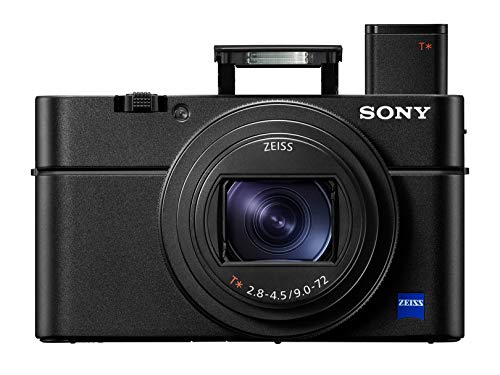
There are seven iterations of this camera on the market, and we’d recommend looking specifically at versions IV, V, VI and VII. They all feature a 1-inch sensor packed into a relatively lightweight 300g / 10.5oz body.
The key difference between the models is price and features. Versions VI and VII are the most expensive, and feature a tilting touchscreen, electronic viewfinder, and a stabilised 8x optical zoom with an f/2.8-f4.5 aperture.
Versions IV and V are available at a lower price. They lose the touchscreen and the longer zoom, with a 3x optical zoom available. But they have a faster f/1.8-f/2.8 aperture, making them slightly better in low light.
All the cameras offer full manual controls, RAW support, WiFi connectivity and 4K video. Battery life varies from 280 shots on version IV to 220 shots on version V. None of the cameras offers weather sealing.
We personally have the Sony RX100 V, which we think is the perfect camera for when we don’t want to take our heavier cameras out with us. The main downside for us is that it doesn’t have a longer zoom or touchscreen controls. If you are on a budget, the earlier versions are also excellent value if you can find them in stock.
Just be aware that the most recent version, the VII, was released in 2019, so availability of the different models can vary.
Weight: 10.5oz / 300g
Battery life: 220 – 280 shots
Price: Check latest price on Amazon here and B&H here
Best Vlogging Compact: Canon PowerShot V1
Canon has not completely abandoned the small camera market, and in 2025 released some new portable models that suit hiking and backpacking well.
The Powershot V1 is primarily marketed at video creators, but it still makes an excellent stills camera.

You get a large 22 megapixel 1.4 inch sensor, roughly equivalent to a micro four thirds sensor and one of the largest in a compact camera. That’s paired with a 16-50mm (3x) optical zoom that goes from f/2.8 when zoomed out to f/4.5 when zoomed in. That’s not the longest zoom reach, but for general photography it will do the job.
You also get optical image stabilisation, a built in neutral density filter, and Canon’s fast DIGIC X image processor. That same processor is found in Canon’s high end mirrorless cameras like the Canon R5, which means the autofocus can track all sorts of subjects with ease.
RAW support, a touch screen, fast burst shooting, and Wi-Fi support are all included. At 426g with the battery, it’s reasonably lightweight. Battery life is rated at up to 400 shots, and you can charge by USB-C.
If image quality matters more to you than optical zoom, this is a good option. One omission is weather sealing, which it doesn’t have.
Canon has signalled that more PowerShot models are coming in 2026, including what’s rumoured to be a superzoom compact. So if you’re not in a rush to buy and would prefer more zoom, it might be worth waiting to see what gets announced.
Weight: 426g / 15oz
Battery life: 400 shots
Price: Check latest price on Amazon here and B&H here
Best Budget Mirrorless: Panasonic G97
We’re stepping up a level now to mirrorless camera options. These offer a larger sensor and the option to switch lenses, but do weigh more than a compact camera. The trade-off is higher image quality and lens flexibility.
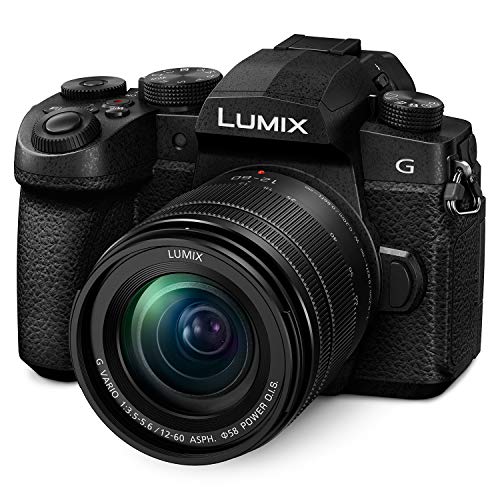
The Panasonic G97 is the 2025 successor to the popular G95, and it keeps everything that made its predecessor a good hiking camera whilst adding some useful updates.
It has a 20MP micro four thirds sensor, which is smaller than the APS-C sensors found in some other mirrorless cameras on this list, but much larger than the sensor in a compact camera or smartphone. You get better images in low light as a result.
The camera features 5-axis in-body image stabilisation, a 3 inch tilting touchscreen with a higher resolution display than the G95, full 4K video support with no recording time limit, manual controls, RAW support, WiFi connectivity and weather sealing.
A key upgrade over the G95 is USB-C charging, so you can top up from a power bank on the trail. It comes as a kit with a 12-60mm lens (24-120mm equivalent) which has an f/3.5-5.6 aperture. This is a solid lens for hiking and backpacking. You can see more lens options in our guide to the best travel lenses.
Battery life is reasonable at around 290 shots, and the camera weighs 484g / 17oz without a lens.
Weight: 484g / 17oz (no lens), ~746g / 26.3oz (with 12-60mm lens)
Battery life: 290 shots
Price: Check latest price on Amazon here and B&H here
Best DSLR: Pentax KF
When you think of DSLRs, Canon and Nikon probably come to mind first. But Pentax has some tricks up its sleeve that earn this camera a spot on our list.

The KF has several features that make it stand out as a mid-range DSLR for hiking and backpacking. First, it is fully weather-sealed, which is unusual at this price point. It also has built-in image stabilisation, which is also rare in a DSLR at this price.
It even features a night vision mode for astrophotography, where the interface turns red to save your night vision.
The sensor is a 24.2MP APS-C, and there’s a tilting screen (though it isn’t touch enabled). It generally ships in a kit with an 18-55mm f/3.5-5.6 lens, which is a good starter lens if a little short on the telephoto end.
Battery life is 410 shots, which is respectable but not amazing for a DSLR. Charging is via an external charger rather than USB, so that’s another thing to carry.
A DSLR does tend to be heavier than a mirrorless camera. You’re looking at 684g / 24.1 oz for the body alone, making it one of the heavier choices in our list.
We would probably suggest picking a mirrorless camera or a more compact camera over a DSLR for most hikers. Mirrorless cameras have largely overtaken DSLRs in terms of features, autofocus performance, and weight. But you do get a lot of camera for your money with the Pentax KF, the optical viewfinder uses almost no battery, and Pentax remains one of the few manufacturers still actively supporting DSLRs. If you want a DSLR, this is a solid pick.
Weight: 684g / 24.1oz (no lens)
Battery life: 410 shots
Price: Check latest price on Amazon here and B&H here
Best APS-C Mirrorless: Sony Alpha 6700
Sony has been making excellent mirrorless cameras for a while, and our guide to the best mirrorless cameras for travel features a number of Sony models.
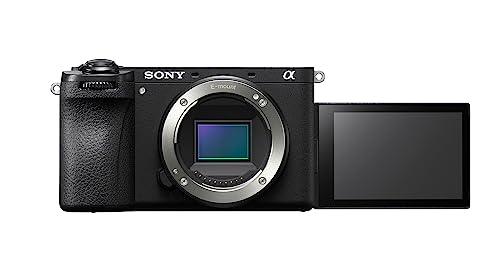
The Sony Alpha 6700 is a solid option for hiking and backpacking. It features a 26MP APS-C sensor with in-body image stabilisation, a tilting touchscreen, electronic viewfinder, and a weather sealed design.
You get full manual controls, RAW support, and 4K video. It’s often sold as a kit with a Sony 16-50mm lens (24-75mm equivalent) which has a variable f/3.5-5.6 aperture. This is compact and lightweight, making it a good pairing. You can see more travel lens options here.
Battery life is very good at 550 shots, making it one of the longest-lived options in our round-up. It also charges via USB-C.
The camera body weighs 493g / 17.3oz, and with the 16-50mm lens the whole package comes in at 609g / 21oz. That’s fairly manageable for the image quality you get.
There are also several other variants in the Sony a6xxx line, including the a6000 (2014, discontinued but still findable), a6500 (2016), a6100 (2019, discontinued), a6400 (2019), and a6600 (2019, discontinued). The a6600 and a6700 are the only ones with in-body image stabilisation, whilst the a6700, a6600, a6500 and a6400 offer some degree of weather sealing.
It’s worth looking at the different models to decide which is best for you and your budget. We think the combination of weather sealing, battery life and image stabilisation make the a6700 the better pick for hiking and backpacking, but the a6400 in particular is a lighter option worth checking out.
Weight: 493g / 17.3oz (no lens), 609g / 21oz (with 16-50mm lens)
Battery life: 550 shots
Price: Check latest price on Amazon here and B&H here
Best APS-C for Wildlife: Fujifilm X-T5
The Fujifilm X-T5 has become a favourite among hiking photographers, and for good reason.
It has a 40MP APS-C sensor, which is the highest resolution APS-C sensor on this list. That extra resolution means you can crop into images heavily and still have plenty of detail, which is brilliant for wildlife shots on the trail where you can’t always get close enough.
The body is weather-sealed, weighs 557g / 19.6oz, and has Fujifilm’s distinctive retro styling with dedicated dials for shutter speed, ISO, and exposure compensation. If you’ve ever used a film camera, the controls will feel instantly familiar.
One of the features that makes the X-T5 particularly good for hiking is Fujifilm’s film simulations. These let you get great looking photos straight out of the camera without needing to edit them. Classic Chrome, for example, produces muted, filmic tones that look fantastic for landscapes. This is a real advantage when you’re on a multi-day hike and don’t want to spend evenings editing on a laptop.
Battery life is rated at around 580 shots using the rear screen, which is very competitive. The camera charges via USB-C. It has a 3-way tilting screen (not a fully articulating flip screen), full manual controls, dual card slots, and shoots 4K video.
Fujifilm’s X-mount lens system has plenty of compact options. You could pair it with the Fujifilm XF 18-55mm f/2.8-4 kit lens for a versatile hiking setup, or go even lighter with one of their compact prime lenses.
Weight: 557g / 19.6oz (no lens)
Battery life: 580 shots
Price: Check latest price on Amazon here and B&H here
Best Canon Mirrorless: Canon EOS R7
The Canon EOS R7 was launched in 2022 and has a number of features that make it an excellent choice for hiking and backpacking.
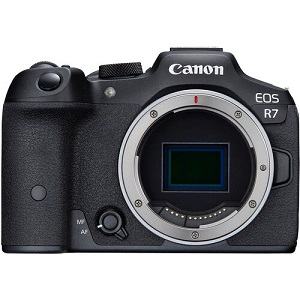
At the heart of this camera is a 32.5MP APS-C sensor. It’s fully image stabilised, and supports shooting at 15 frames per second (mechanical) and 30 frames per second (electronic).
Perhaps the most impressive feature is the autofocus. It can identify and track a range of subjects, including animals and birds. I have used this system extensively and it is amazing how well it can lock onto even a fast moving subject to get sharp shots every time.
From a hiking and backpacking point of view, the camera has a good battery life of 660 shots when using the rear screen. The battery can be charged by USB-C. The camera is weather-sealed. The weight without a lens is 612g / 21.58oz.
You also get a touch-enabled flip screen, Wi-Fi and Bluetooth, and compatibility with the massive range of Canon RF lenses. You could pair it with the Canon RF 24-105 f/4-7.1 IS lens which weighs 395g / 13.93oz for a fairly lightweight package overall.
There are lots of other cameras in the Canon R range at various prices. But I feel the R7 offers a good balance of size, weather sealing, affordability and performance, which make it my personal pick for this category.
Weight: 612g / 21.58oz (no lens), 1007g / 35.51oz with Canon RF 24-105 lens.
Battery life: 660 shots
Price: Check latest price on Amazon here and B&H here
Best Compact Full Frame: Sony Alpha 7C II
Whilst this camera from Sony looks very similar to the a6xxx series, it is actually quite a step up because it has a full frame sensor. Somehow, Sony managed to fit a full frame sensor into this relatively compact frame, which is only a few grams heavier than the a6600.
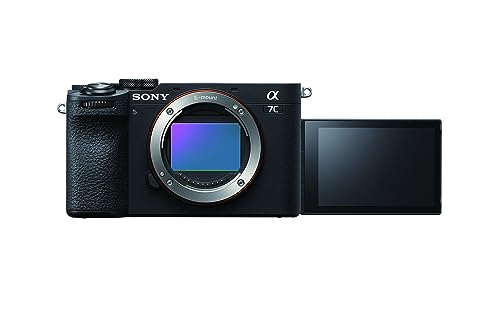
Despite the small size, you get a lot of camera. There’s a 33 megapixel sensor with in-body image stabilisation. It shoots at up to 10fps. The battery lasts for 540 shots. It supports 4K video, and has built in WiFi and Bluetooth. There’s a vari-angle touchscreen. It has Sony’s fantastic eye tracking autofocus. It charges via USB-C. It’s even dust and moisture resistant.
The only downside is that all this technology in such a small package does come at a price premium. But it is a very compelling option, and if budget is no concern, this would be my pick for the best hiking camera you can buy.
Weight: 514g / 18.1 oz (no lens), 940g / 33.1 oz with Sony 28-70mm lens
Battery life: 540 shots
Price: Check latest price on Amazon here and B&H here
Best Full Frame Value: Sony Alpha a7 IV / Sony Alpha a7 V
Last on our list are two full frame mirrorless cameras from Sony: the a7 IV and its newer sibling, the a7 V.

Both cameras share a 33MP full frame sensor, 5-axis in-body image stabilisation, weather sealing, a touchscreen, WiFi, and 4K video. They charge via USB-C and weigh around 658g / 23.2oz (a7 IV) and a similar weight for the a7 V.
The a7 V (released late 2025) improves on the a7 IV with upgraded autofocus, a newer BSI sensor design for better low light performance, and 7.5 stops of IBIS compensation (up from 5.5 on the a7 IV). It’s priced at around $2,900.
The a7 IV is now available at a lower price and is still an excellent camera. Battery life is impressive at 580 shots on the screen, and the dual card slots are useful for longer trips.
Pairing either camera with a Sony 28-70mm f/3.5-5.6 lens (426g / 15oz) gives you a package that is relatively lightweight for a full frame system.
If you want the latest and greatest, go for the a7 V. If you’d rather save some money and still get a very capable full frame camera, the a7 IV is a smart buy.
Weight: 658g / 23.2oz (a7 IV, no lens)
Battery life: 580 shots (a7 IV screen) / 520 shots (EVF)
Price: Check a7 IV price on Amazon and B&H. Check a7 V price on Amazon and B&H.
Camera Accessories for Hiking and Backpacking
Now that you’ve picked the perfect camera, here are some accessories you might find useful.
Spare Batteries / Battery Charger
If your camera takes fewer than around 400 shots per charge, we recommend picking up a spare battery. This will save you if you spend time away from a power source.
If your camera charges by USB, an external USB power bank is a great investment. You can use it to charge your camera and phone.
If your camera doesn’t support USB charging, a third party manufacturer may have made a USB battery charger for your specific battery type. That way you can still charge from a power bank, even off the grid.
Lightweight Tripod
As you get more serious about your photography, you’ll start to realise you need a tripod for some shots. You can find out why you need a tripod here.
The good news is that there are some very lightweight tripods available. You can get a mini-tripod like this, or check out our guide to the best travel tripods for a full range of options across different budgets.
Another option is a monopod which doubles as a hiking pole. Whilst not as capable as a tripod, the dual functionality can be useful.
Lens Filters
If your camera supports lens filters, we recommend picking up at least a UV filter. This won’t affect the image, but it will protect the lens from scratches and damage. Replacing a lens filter is much cheaper than repairing a lens.
If you want some creative effects, consider a Neutral Density filter, which will let you take long exposure photos.
Bag
We’d recommend finding a good case or bag for your camera. Even a small compact camera will benefit from a case to keep it protected.
For larger cameras, we use this backpack from Vanguard which carries all our gear and is comfortable for all day use. See also our guide to the best travel backpacks for more options.
Camera Strap
In my experience, the strap that comes with your camera isn’t going to be comfortable for prolonged use.
I use Peak Design camera straps, which I’ve hiked with for years carrying heavy camera gear with no issues.
Waterproof Cover
Even weather-sealed cameras aren’t fully waterproof, so it can be a good idea to invest in some sort of waterproof cover for your camera or camera bag.
A waterproof backpack cover will keep all your gear dry. Alternatively, a waterproof camera cover will let you keep shooting in the rain.
Locks for Your Bags
If you are travelling and staying in shared accommodations, campsites or hostels, you might want a small lock for your bag. A lock like this won’t stop a determined thief, but should deter an opportunistic one.
Frequently Asked Questions
What is the best camera for hiking and backpacking?
It depends on your priorities. For the best image quality in a compact package, we’d pick the Sony Alpha 7C II. For the best all-round value in a mirrorless camera, the Sony Alpha 6700 is excellent. If you want something pocket-sized, the Sony RX100 VII or the Panasonic Lumix ZS99 are great compact options.
What matters most is that you actually carry and use the camera. A lighter camera that you always have with you will get better photos than a heavy one sitting at the bottom of your pack.
Do I need a dedicated camera for hiking or is my phone good enough?
Modern smartphones take very good photos, and for many hikers a phone is all you need. Where a dedicated camera still has an advantage is in zoom range, low light performance, battery life (a phone camera drains your phone battery), and creative control through manual settings and interchangeable lenses.
If you mostly shoot in good light and share on social media, your phone is probably fine. If you want to print large, shoot in challenging light, or photograph wildlife at a distance, a dedicated camera will make a real difference.
What is the best lightweight camera for backpacking?
For the absolute lightest option with good image quality, the Sony RX100 VII at 300g is hard to beat. If you want interchangeable lenses, the Sony Alpha 6700 with a kit lens comes in at around 609g, which is very manageable for an APS-C mirrorless system. And if video is your main goal, the Insta360 GO Ultra at just 53g is almost weightless.
Are mirrorless cameras better than DSLRs for hiking?
In most cases, yes. Mirrorless cameras are typically lighter, offer better autofocus, and have more advanced features than DSLRs at the same price. The main advantage a DSLR still has is battery life, since the optical viewfinder doesn’t need power. But modern mirrorless cameras have improved battery life significantly, and USB-C charging from a power bank mostly eliminates the issue.
What features matter most in a hiking camera?
Weight, weather sealing, and battery life are the three biggest factors specific to hiking. After that, image quality and zoom range come into play depending on what you like to photograph. If you hike in wet conditions regularly, weather sealing should be near the top of your list.
Is the GoPro good for hiking photography?
GoPros are excellent for video, and the Hero13 Black takes decent 27MP stills. But they have a very wide fixed lens with no optical zoom, which limits your options for landscape composition or wildlife photography. If you primarily want to record your hikes on video, a GoPro is a great pick. For stills photography, a compact camera or mirrorless will give you much more flexibility.
What is the best waterproof camera for hiking?
The OM System TG-7 is the most capable waterproof camera you can buy for hiking. It’s waterproof to 50 feet, shockproof, crushproof, and freezeproof. If you hike in conditions where your camera might get submerged or dropped, this is the one to get.
If you need waterproofing but mainly want video, the GoPro Hero13 Black is waterproof to 33 feet and weighs much less.
How do I protect my camera while hiking?
A good camera bag or case is the first line of defence. For weather protection, a waterproof backpack cover or dedicated camera rain cover will keep things dry. If you’re using an interchangeable lens camera, a UV filter on the lens protects against scratches and dust. And if you’re crossing rivers or hiking in heavy rain, putting your camera in a waterproof dry bag inside your pack is the safest option.
Further Reading
That’s our guide to the best cameras for hiking and backpacking. We hope you found it useful.
Before you go, here’s some other content we’ve written about photography that we think you’ll find useful:
- We have a beginner’s guide to photography to help you get started
- Our guide to composition in photography covers one of the most important photography skills
- We have a detailed guide to the exposure triangle, which is key to understanding camera settings
- Our guide to depth of field in photography explains what it is and when to use it
- You can take advantage of lens compression to make objects seem closer together than they are
- To get the most out of your digital photos, shoot in RAW. Our guide to RAW in photography explains why
- You’ll need some way of editing your photos. See our guide to the best photo editing software, our guide to the best laptops for photo editing, and our guide to the best monitors for photo editing
- We have a guide to improving Adobe Lightroom Classic performance
- For specific photography tips, see our guides to Northern Lights photography, long exposure photography, fireworks photography, taking photos of stars, and cold weather photography
- Our guide to back button focus explains what it is and how to start using it
- For landscape photography, our guide to ND filters covers what you need
- Looking for a gift for a photographer? See our photography gift guide
- For more camera advice, we have guides to the best travel camera, the best safari camera, and the best action camera. We also have specific guides for the best compact camera, best mirrorless camera and best DSLR camera. Plus a guide to the best camera lenses and the best desktop for photo editing
- We have a detailed guide to how to use a DSLR camera
- We have a guide to why you need a tripod, and a guide to choosing a travel tripod
- Finally, if you want to improve your photography overall, you can join over 2,000 students on my travel photography course. I’ve been running this since 2016, and it has helped lots of people take their photography to the next level.
And that’s it! As always, we’re happy to hear your comments, feedback and questions. Just pop them in the comments section below, and we’ll get back to you as soon as we can!
Tara Hall says
Well, y’all’ve taught me more in the 5 articles I’ve read than in 30 years of taking pictures! Finally, I understand aperture and focal length! 🙂 With all of our kids grown, it’s time to take photography seriously. I have bought a new camera every 3-5 years over the past 3 decades and seem to use them for 6 months, then I go back to just using the phone. We’re celebrating our 30th anniversary by hiking in Scotland in September with all our kids- time for a new camera. My budget needs to stay under 3k for lens and body or single with fixed lens…I’ve considered these: Fufifilm XT4, Sony a7Riiia- all those letters get confusing, Fujifilm x100v, and Nikon zf c- honestly because it would be fun to shoot- I think a lens and camera would serve me better- but read the original Sony a7iii had shutter issues after a few thousand shots- so wanted to look at the models that were released more recently. I think all of these have weather seals and are somewhat weather resistant- is there one that jumps out at you as being a good option for someone who wants to finally do more than just point and shoot? I’ll try my best to buy off a link from your page- you deserve any bonus points I can send your way!
Laurence Norah says
Hey Tara,
Delighted to have been able to help! Aperture and focal length are definitely important, and I’m pleased I was able to explain that for you 🙂
Sounds like you have a great trip coming up! So yes, all the cameras you mention are definitely a good choice. For hiking / backpacking though, the Sony might be a little large, especially when you factor in a lens. I’d probably consider either the Fuji XT4, or if you want to go down the full frame Sony route, the Alpha 7C. Just be aware that when buying a full frame camera, the lenses are always bigger and heavier than a camera with a smaller sensor like the Fuji. The Fuji cameras do take great photos though and they have lots of useful dials. The X100v is a nice camera but it’s a fixed lens design so you lose a bit of flexibility in that regard.
I hope this helps – let me know if I can offer further input, and have a great trip!
Laurence
Frank Sellin says
Gentle correction to your weather comment about the Sony a6400: it is in fact sealed to keep out dust and moisture. It’s also only 403g for the body for the truly weight-conscious backpackers still seeking high image quality.
One other thought to perhaps draw out for readers: two well-chosen primes can weigh less than a zoom and deliver better low-light capability. Admittedly, that can be more expensive but you can usually find perfectly fine lenses on the used sections of major vendors and save a few hundred dollars across both lenses.
Laurence Norah says
Thanks very much Frank. I got a tiny bit confused there, but you are correct, the a6400 does offer weather sealing whilst the a6100 does not. So I’ve updated the post and highlighted the extra weight saving. I also think your prime lens tip is an excellent point, I’ve made a note of that in the weight section.
Thanks again for taking the time to leave a comment and improve the content, it’s appreciated!
Laurence
Bill Wilderman says
Hello Laurence!
I am an older but active traveler in my early 70’s and former backpacker! I love hiking and hill walking and still do some camping. I would love to find a camera that is good for outdoorsy travel but also has large buttons and easy to read/use features. My current camera’s buttons are tiny and a bit hard for me now. Would appreciate your insights!
Nothing fancy but something that is versatile, fairly compact, has manual controls (as well as Auto) and can shoot in RAW when needed. But something that if my wife or grandkids use in Auto it would be fairly simple to take a decent photo. Can have interchangeable lenses or just be a point-and-shoot style — I have experience with both.
I’ve a healthy budget of up to $750 (USD) although very happy to spend less. thanks!!!
Laurence Norah says
Hi Bill!
Thanks for your comment 🙂 I will do my best to help out. So I have to say, the camera industry appears to be missing a trick here, as there seems to be a focus on ever shrinking products which has the side effect of ever shrinking buttons!
My suggestion would be something like the Panasonic G85. The reason I say this is because it has a touchscreen as well as a number of control dials, which make for faster and easier adjustment than a lot of buttons. It’s also weather sealed and offers image stabilization. Being a couple of years old now it also is available for a good price, and the 12-60mm lens it comes with makes for a good package. You also have the option to add lenses down the line if you want.
My other choice would be something from the Fuji range, as these often have more “old-school” controls, with dials for aperture, shutter speed and ISO directly on the camera. However, I am struggling to find a great option within budget.
In terms of compact cameras, while there are some great options out there, not many of them are weather sealed or particularly rugged. I also think they are likely to have even more fiddly buttons. The Canon G3X would probably by my pick, but that is a little over budget, and it’s not exactly compact either.
I appreciate this might not have been the definitive response you were after, but I am happy to try and help further if I can of course 🙂
Best
Laurence